
Reviewed · DHARAVI SLUM TOURS
Dabbawala, Dhobi Ghat & Dharavi slum Tour with Local Train Ride
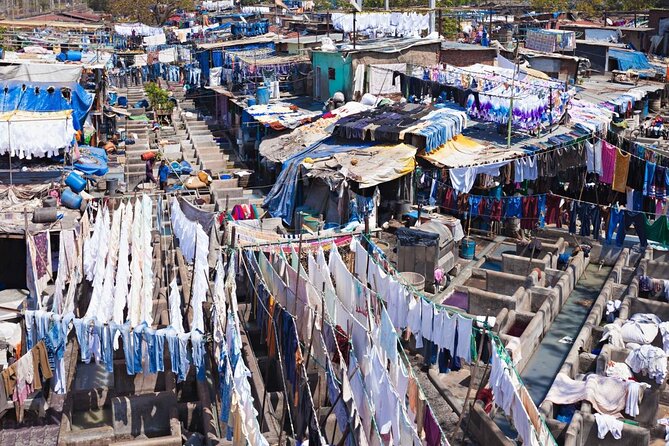
Mumbai’s working life comes into focus on this four-hour tour. You ride the local train, watch clothes being washed at Mahalaxmi Dhobi Ghat, learn how lunch-box carriers sort and deliver meals, then walk through Dharavi with a guide who knows the area personally. Dharavi is not presented as a spectacle, but as a place where homes, workshops, schools, and small businesses share tight quarters.
I like two things right away: the local train ride makes the city part of the tour, and the stops show three very different forms of work. The small groups, capped at 15 people, also give you room to ask questions. The main consideration is simple: this is a walking tour through a dense residential and industrial area, so bring water, wear comfortable shoes, and expect heat, crowds, narrow lanes, and a serious subject.
In This Review
- Key points to know before booking
- Why this tour offers a useful side of Mumbai
- Starting at Churchgate and getting onto the train
- Dharavi: work, homes, and skill in tight quarters
- Mahalaxmi Dhobi Ghat and Mumbai’s open-air laundry
- Meeting Mumbai’s dabbawalas
- What the small group changes
- Guides, language, and the feel of the visit
- Timing, comfort, and what to bring
- Who will get the most from this experience
- Is the $35.79 price fair?
- Should you book this Mumbai tour?
- FAQ
- How long does the Dabbawala, Dhobi Ghat, and Dharavi tour last?
- Where does the tour begin?
- Where does the tour end?
- Is local train transport included?
- How large can the group be?
- Are food and drinks included?
- Can most people participate?
- Can I cancel for a full refund?
Key points to know before booking
- Dharavi with a resident guide: See leather work, pottery, soap making, bakeries, dye work, plastic recycling, homes, schools, and hospitals.
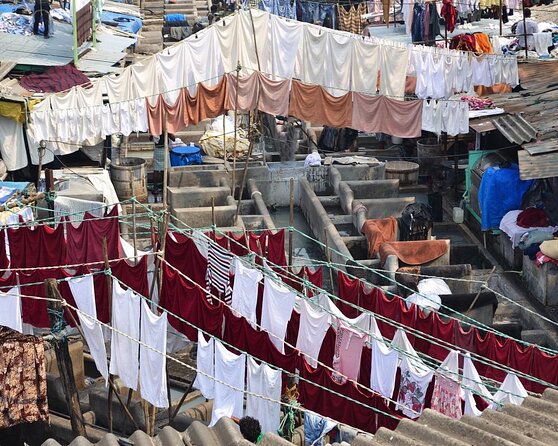
- Mahalaxmi Dhobi Ghat: Look down on Mumbai’s famous open-air laundry and watch dhobis handle clothes from hotels and homes.
- Dabbawala culture: Learn how Mumbai’s lunch-box delivery workers move packed meals around the city.
- Local trains included: The train rides connect the stops and give you a practical taste of Mumbai transport.
- Small-group format: The maximum group size is 15, with personal attention from the guide.
- Strong guide record: Rakesh, Abhishek, Sagar, Hardik, and Dinesh are among the guides praised for clear English, local ties, humor, and care.
Why this tour offers a useful side of Mumbai
Mumbai can be easy to reduce to grand buildings, film connections, and waterfront views. This experience points you toward the people who keep the city fed, clothed, and working. You see how jobs fit into neighborhoods, and how a crowded city makes use of every available space.
The price is $35.79 per person. For roughly four hours, that includes a guide and local train transport, which makes it a fair value if you want context rather than a quick photo stop. Food and drinks are not included, so you should plan for water before you begin.
The tour is also useful for first-time visitors who want a direct introduction to Mumbai’s daily rhythm. It is not a luxury outing, and it does not hide the hard parts of city life. That honesty is part of its value, but it also means you should approach Dharavi with respect and keep your camera use discreet.
More Dhobi Ghat and dabbawala tours:
- Mumbai: Dharavi Slum, DhobiGhat, and Dabbawallas Tour
★ 4.9 · 689 reviews - Mumbai: Dhobi Ghat Laundry and Dharavi Slum Tour with Local
★ 5.0 · 469 reviews - Mumbai: Dharavi Slum & Dhobi Ghat Laundry Tour
★ 5.0 · 352 reviews
Starting at Churchgate and getting onto the train
The meeting point is on Maharshi Karve Road near Churchgate. From there, the experience uses Mumbai’s local train system to link the main stops. That transport choice matters. Instead of moving between sights in a private vehicle, you get a short look at one of the systems that carries Mumbai through its daily routine.
Your guide handles the route and explains what you are seeing along the way. Since the group can include up to 15 people, stay close when moving through stations and platforms. Mumbai’s rail network is an important part of the experience, but train travel can also mean crowds, noise, and a fast pace.
The train ride is included, so you do not need to arrange that part separately. Still, practical preparation helps: wear shoes that are comfortable for walking and keep your belongings secure. The tour description says most people can participate, but it does not promise a low-effort route or special access arrangements.
Dharavi: work, homes, and skill in tight quarters

The Dharavi portion lasts about two hours and is the heart of the tour. A resident guide leads you through streets and small lanes, explaining the area’s industries and living spaces. The emphasis is on how people earn a living and organize daily life in a place often described too simply.
You may see leather industries, pottery, soap making, bakeries, color dye work, and plastic recycling. These are not abstract examples. They show how small-scale production operates close to homes, and how different trades can exist side by side in a compact neighborhood.
The tour also points out houses, schools, hospitals, and the smaller alleys that shape movement through Dharavi. That mix is important. You are not visiting an empty work zone or a staged display. You are walking through a residential community where work and home life are close together.
A guide with local ties can make this visit more appropriate and easier to understand. Rakesh is praised for his links with local people and for explaining community life in a comfortable way. Sagar, who grew up in Dharavi, is also praised for his personal connection to the area and his ability to explain its daily life with energy and care.
One particularly personal account describes a visit to Sagar’s family home and a homemade meal. You should not assume that this is part of every departure, since the listed inclusions do not promise a home visit or food. Treat it as a possible guide-specific experience, not a standard feature you are buying.
The tour also refers to Dharavi’s connection with the film Slumdog Millionaire. That may interest film fans, but it is not the main reason to book. The stronger focus is on residents, trades, and the complex economy around you.
You should also consider the ethics of a slum tour. The best way to take part is to listen, ask respectful questions, avoid treating residents as scenery, and follow any photography guidance from your guide. The supplied information describes the tour as safe and appropriate under its guides, but your own conduct remains important.
Mahalaxmi Dhobi Ghat and Mumbai’s open-air laundry
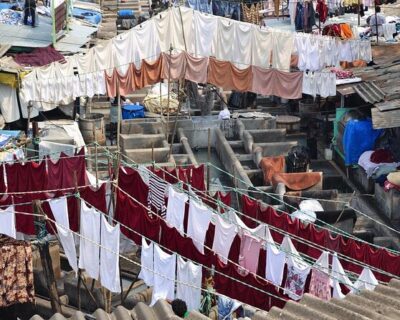
The Dhobi Ghat stop lasts about an hour. At Mahalaxmi, you look over a large open-air laundry where dhobis wash clothes connected with Mumbai hotels and homes. The sight is striking because the operation is both public and highly organized, with work taking place in a setting very different from a modern commercial laundry.
Your guide explains what happens there and how the laundry fits into city life. The value is not only the view. You get a practical example of a service that supports Mumbai’s hotels, households, and businesses.
This stop is usually easier to grasp than Dharavi because the work is visible at a glance. You can see the scale of the operation and then ask how the workers manage the clothing, washing, and delivery process. The guide’s explanation turns a visually unusual stop into a lesson about labor and city services.
Photography may be tempting, but use common sense. You are looking at a real workplace, not a museum display. Ask your guide before taking close photographs, and do not block workers or platforms.
More Dharavi walking tours:
- Dharavi slum tour in Mumbai by Female tour guides of the slum
★ 5.0 · 1,976 reviews - Dharavi Slum Tour
★ 5.0 · 625 reviews - Dharavi Slum tour in Mumbai by local resident
★ 5.0 · 572 reviews - Mumbai: Dharavi Slum Slumdog Millionaire Tour with a Local
★ 4.9 · 529 reviews
Meeting Mumbai’s dabbawalas
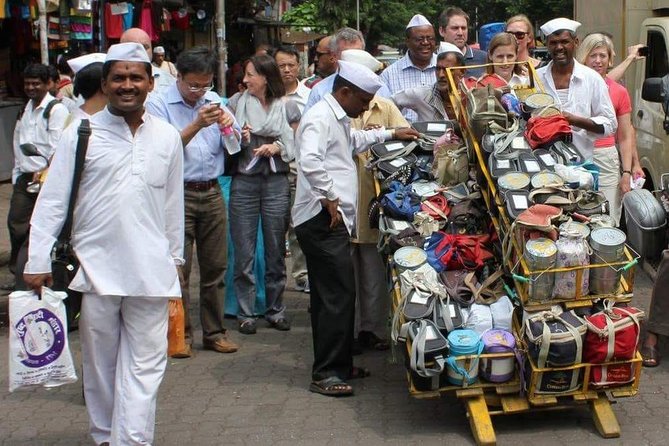
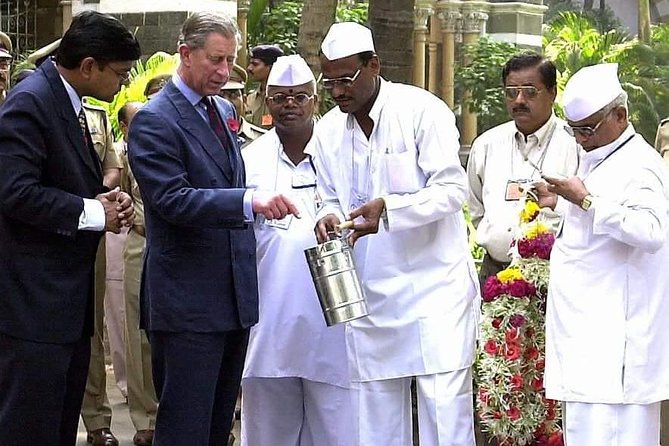
The final main subject is the dabbawala, the worker who delivers packed lunches across Mumbai. The tour includes a stop at the Dabbawala Tribute Statue and an explanation of how these lunch carriers serve the city.
The dabbawalas are a useful contrast with Dhobi Ghat. The laundry workers deal with clothing, while the dabbawalas move food from homes to workplaces and back again. Together, the stops show the human systems behind ordinary city routines.
The tour does not include food or drink, but you learn about the workers who transport homemade lunches. That distinction is worth noting when booking. You are studying the delivery network, not receiving a meal or cooking demonstration.
Guides such as Abhishek are praised for making this part entertaining while still answering detailed questions. Rakesh and Dinesh are also described as clear and helpful when explaining local life. Guide assignments can change, so book for the structure of the tour rather than expecting one specific person.
What the small group changes
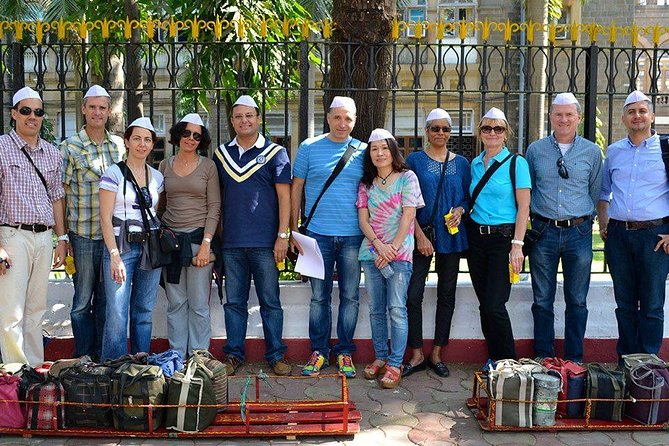
A maximum of 15 people is a sensible limit for this route. Narrow lanes and working areas are difficult for a large group, and a smaller party lets you hear the guide without constant crowding.
You also have a better chance to ask about things you notice. That could mean questions about a pottery workshop, plastic recycling, local schools, the dabbawalas, or how the Dhobi Ghat operates. Guides have been praised for being friendly, patient, and willing to adapt to group needs.
The experience is strongest when you treat it as a conversation. You will get more from it if you ask thoughtful questions instead of rushing from one photo opportunity to the next.
Guides, language, and the feel of the visit
The guide is the key variable on a tour like this. Names associated with the experience include Rakesh, Abhishek, Sagar, Hardik, and Dinesh. The praise attached to these guides centers on clear English, local knowledge, humor, communication skills, and a strong sense of responsibility toward the group.
Sagar’s connection to Dharavi is especially personal because he grew up there. Rakesh is praised for his friendships and familiarity with local life. Hardik is described as pleasant and informative, while Dinesh is noted for helping the group feel safe and waiting with visitors after the tour while they arranged onward transport.
That does not mean every guide will deliver the same style. Some may be more serious, some more talkative, and some more playful. What you can reasonably expect is a guide-led explanation of the places, rather than a self-guided walk through unfamiliar streets.
The tour has earned a five-star rating from 102 reviews, with 100 percent recommending it. Ratings cannot remove the need for respectful behavior or good preparation, but they do point to a consistent strength: the guides make complicated subjects easier to follow.
Timing, comfort, and what to bring

The full experience lasts about four hours. Dharavi takes about two hours, Dhobi Ghat about one hour, and the dabbawala section about one hour. The schedule gives you enough time to understand each stop without turning the outing into a full-day commitment.
Bring extra water. One guide-focused account gives that advice, and it is practical for a walking tour in Mumbai. Comfortable shoes matter just as much, since you will use trains and walk through small lanes and active work areas.
Weather can affect the mood and comfort of the day. One account describes the guide keeping the trip informative despite poor weather. Even so, dress for conditions and expect the route to remain an outdoor urban experience.
Food and drinks are not included. Eat beforehand or make your own plan around the tour, and do not count on the experience providing refreshments.
The ticket is mobile, and confirmation arrives when you book. The meeting point is near public transport at Churchgate, while the listed end point is Sai Multispeciality Hospital and Research Centre on 90 Feet Road in Dharavi. That means the tour does not return you to Churchgate, so plan your next journey from Dharavi.
Who will get the most from this experience
I would choose this tour if you want to understand how Mumbai works at street level. It suits people interested in work, transport, urban communities, and local stories more than people looking for monuments or polished sightseeing.
It is also a good fit for experienced visitors who have already seen the Gateway of India and major central sights. The Dharavi portion asks for maturity and respect, so it may not suit someone looking for a light, purely entertaining outing.
Families and older participants should consider the walking and train sections carefully. The information says most people can participate, but the tour is not described as fully accessible or designed for limited mobility.
If you are short on time, the four-hour format works well. You see three connected subjects in one outing, and the local train makes the movement between them part of the lesson.
Is the $35.79 price fair?
At $35.79, the tour is priced below many private Mumbai sightseeing outings, while still giving you a guide, local train transport, and several hours of explanation. The value comes from access to local context, not from entrance fees, since the listed stops have no separate admission charge.
The tour is especially good value if you would otherwise visit Dharavi, Dhobi Ghat, and the dabbawala statue without knowing what you were seeing. A guide helps connect the sights and gives you a clearer sense of how each service supports Mumbai.
The price does not cover food or drinks, and the tour ends in Dharavi rather than at the starting point. Add those small planning details to your budget and schedule.
Should you book this Mumbai tour?
Book it if you want a direct, human look at Mumbai’s working communities and you are comfortable with a serious walking tour. The best reasons are the resident connection in Dharavi, the local train ride, the Dhobi Ghat laundry operation, and guides such as Rakesh, Sagar, Abhishek, Hardik, and Dinesh.
Skip it if you want a relaxed sightseeing loop, air-conditioned transport, or a tour built around grand landmarks. For everyone else, $35.79 buys a focused four-hour introduction to parts of Mumbai that are easy to miss and difficult to understand without local guidance.
Free cancellation is available if you cancel at least 24 hours before the start time. Changes or cancellations inside that window are not accepted for a refund.
FAQ
How long does the Dabbawala, Dhobi Ghat, and Dharavi tour last?
The experience lasts approximately four hours.
Where does the tour begin?
It begins at Maharshi Karve Road, Churchgate, Mumbai, Maharashtra 400020, India.
Where does the tour end?
The listed end point is Sai Multispeciality Hospital and Research Centre on 90 Feet Road in Dharavi, Mumbai.
Is local train transport included?
Yes. Transport by local train is included in the experience.
How large can the group be?
The maximum group size is 15 people.
Are food and drinks included?
No. Food and drinks are not included.
Can most people participate?
The tour information says most people can participate, and the meeting point is near public transportation.
Can I cancel for a full refund?
Yes. You can cancel at least 24 hours before the experience start time for a full refund. Cancellations and changes made less than 24 hours before the start time are not accepted.
More Local Train and Transport Tours
- Mumbai Local – Best Seller from Mumbai Magic
★ 5.0 · 87 reviews - Mumbai Street Food & Bazaar Tour with Local Transport
★ 5.0 · 51 reviews - Local Transport & Dabbawallah Tour
★ 5.0 · 40 reviews - Mumbai Group City Tour – (Mumbai On Wheels) with Government Licensed Guide
★ 5.0 · 29 reviews
Just added around Mumbai
- Temples & Vineyards: Private Tour to Nashik from Mumbai★ 4.5 · 3 reviews
- Mumbai: Private City sightseeing and Dharavi Slum Tour★ 5.0 · 3 reviews
- Mumbai: Full Day City Sightseeing with Lunch, Car & Guide★ 4.3 · 3 reviews
- Elephanta Island Private Speedboat Tour from Mumbai – 6pax★ 5.0 · 3 reviews
- Mumbai: Elephanta Island and Elephanta Caves Guided Tour★ 4.4 · 3 reviews
- Mumbai Sightseeing Tour by Public Transport with family Lunch★ 5.0 · 3 reviews
- Mumbai by Dawn★ 4.5 · 3 reviews
- Mumbai Dharavi Slum Community Tour★ 5.0 · 3 reviews
Dharavi Slum Tours, compared.
Dharavi slum tour in Mumbai by Female tour guides of the slum
Read our review →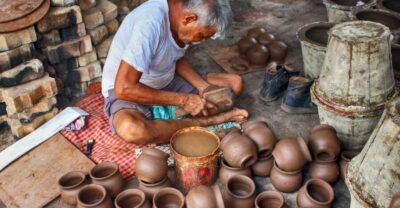
Dharavi Slum Slumdog Millionaire Tour with a Local
Read our review →
Mumbai Slum Tour – Visit Dharavi Slum with Local Guide
Read our review →
Dhobi Ghat Laundry and Dharavi Slum Tour with Local
Read our review →
Browse the lists this tour appears in