
Reviewed · DHARAVI SLUM TOURS
2-Hour Guided Tour of Dharavi
Dharavi is not a backdrop of misery. It is a proud working neighborhood where homes, schools, bakeries, pottery workshops, and small industries share a tight web of lanes. This two-hour walk helps you see the people and enterprise behind Mumbai’s most misunderstood area, with a local guide leading the way.
I like the local connection, especially when guides such as Razak, who grew up in Dharavi and still lives there, lead the walk. I also like the small, private format and the chance to see everyday work rather than simply viewing the neighborhood from a car. The main consideration is that this is a walking tour through crowded residential and industrial lanes, so you need water, sensible shoes, and an open mind.
In This Review
- Key points to know before you book
- Dharavi beyond the movie image
- A walk through homes, work, and local industry
- What the two hours feel like
- The ethics of visiting a residential neighborhood
- Why the local guide matters most
- Price, transfers, and what you receive
- Preparing for the lanes
- Who should book this Dharavi walk
- Should you book the 2-Hour Guided Tour of Dharavi?
- FAQ
- How long is the Dharavi tour?
- Where does the tour start?
- Where does the tour end?
- Is hotel transportation included?
- Is this a private tour?
- What will I see in Dharavi?
- Will I meet local residents?
- Can most people participate?
- What are the tour operating hours?
- Can I cancel for a refund?
Key points to know before you book
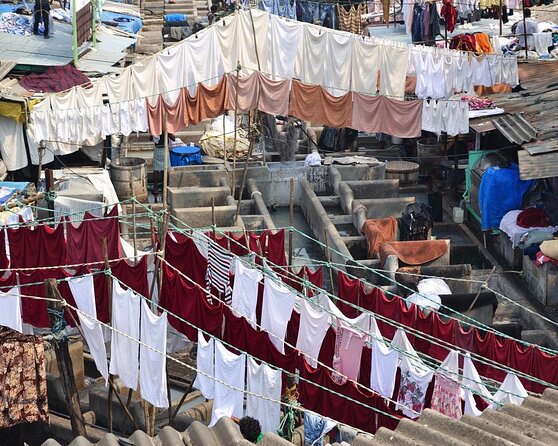
- See Dharavi as a working community: The route includes residential lanes, schools, bakeries, pottery areas, and workshops.
- Local guides add meaning: Guides including Razak, Faisan, Adil, Touseef, and Abir have been praised for their personal stories and clear explanations.
- Expect a stereotype-breaking visit: The focus is on work, family life, and community rather than shock value.
- Private participation: Only your own group takes part, allowing more room for questions and personal attention.
- Hotel transfers are offered: The experience includes advertised round-trip transport from your hotel, while the stated meeting point is at Third Wave Coffee in Mahim.
- Good value at $22.32: For two hours with a local guide and transport, the price is modest, though the walk is short and does not include a meal or major attraction ticket.
Dharavi beyond the movie image

Dharavi became widely known after Slumdog Millionaire, but a film set is a poor guide to the place itself. If you arrive expecting only poverty and despair, this walk is designed to correct that picture.
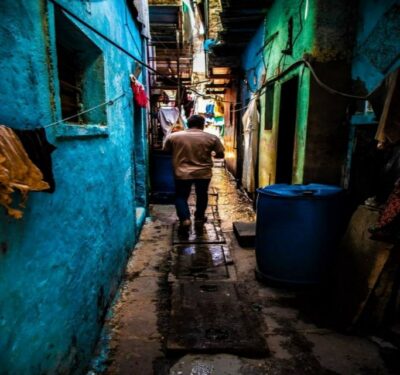
You will see a neighborhood where people live close to their jobs, often in very small homes, and where workshops operate near family spaces. That closeness can feel intense at first. Yet it also explains how the area functions: daily life, trade, school, and social ties all sit within a compact part of Mumbai.
The tour’s value comes from this change in viewpoint. You are not being shown a collection of sad scenes for entertainment. You are being guided through a place where people work hard, raise families, study, relax, and maintain local businesses.
That does not mean the conditions are easy. The description of whole families living in a small room gives you a clear sense of the limits of space. The useful part of the tour is that it can hold both facts at once: Dharavi has real hardship, and it is also a proud, productive community.
More Dharavi walking tours:
- Dharavi slum tour in Mumbai by Female tour guides of the slum
★ 5.0 · 1,976 reviews - Mumbai: Dharavi Slum, DhobiGhat, and Dabbawallas Tour
★ 4.9 · 689 reviews - Dharavi Slum Tour
★ 5.0 · 625 reviews
A walk through homes, work, and local industry
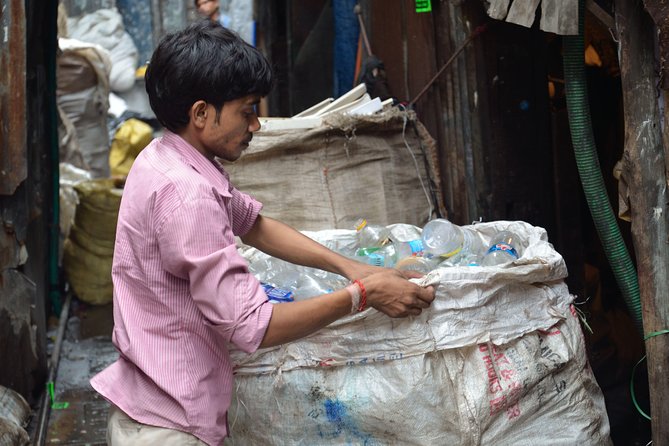
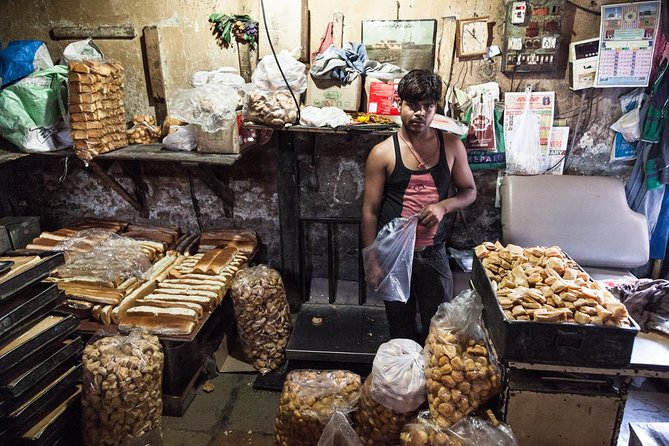
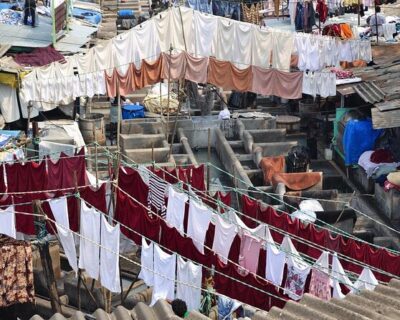
The main stop is Dharavi itself, and the two-hour route brings several sides of the area together. You will pass through industrial sections with small businesses that serve Mumbai, including bakeries whose products are distributed across the city.
You will also see residential lanes, local schools, and pottery areas. Kumbhar Wada, near Sion Hospital, is given as the ending point, and the pottery industry is one of the distinctive parts of the visit. The route is not built around one grand sight. Its subject is the ordinary activity taking place around you.
That makes your guide especially important. A lane full of workshops can look confusing if you walk through it alone. A local guide can explain what you are seeing, how work and homes fit together, and why the neighborhood matters to Mumbai.
Past guides have included Razak, Faisan, Adil, Touseef, and Abir. Razak is described as having grown up in Dharavi and continuing to live there. That kind of personal connection can give the walk a sense of place that a guide reading facts from a card cannot easily match.
Faisan has been praised for answering many questions, while Adil has been described as courteous and attentive throughout the visit. Abir is noted for knowing the lanes well and for telling stories that connect Dharavi with the wider city. Guide assignments can change, so book this experience for the local format rather than for a guaranteed individual guide.
What the two hours feel like
Two hours is enough to gain a clear introduction, but not enough to understand every part of Dharavi. The pace will likely be shaped by narrow lanes, working areas, and stops to explain what you are seeing.
You should expect an active walk rather than a sightseeing bus ride. You may be close to workshops, families, schoolchildren, animals, and other daily activity. One account describes lanes with workers, children, geese, goats, homes, and workshops of many kinds. That gives you a useful picture of the sensory variety you may encounter, without pretending that every group sees the exact same scene.
The walk can feel personal because your group is private. You are not combined with a large public party, and the operator describes the experience as limited to your own group. That matters in Dharavi, where a large crowd would make the visit more awkward for both you and local residents.
The route finishes at Kumbhar Wada in Dharavi. The stated starting point is Third Wave Coffee at Tip Road, Unit 58, Ground, Ram Mahal, Senapati Bapat Marg, Mahim. Hotel pickup and return transfers are also advertised, so confirm the exact pickup arrangement when you book. The information gives both a meeting point and hotel transfers, and the practical details may depend on your reservation.
The ethics of visiting a residential neighborhood
A tour of a low-income community requires care. You are entering a place where people live and work, not an open-air museum. The strongest feature of this experience is its stated aim to lift stereotypes and focus on local industry and community life.
Your guide is the bridge between curiosity and respect. Listen to explanations, ask questions politely, and avoid treating homes or workplaces as photo props. The supplied information does not promise photography stops or permission to photograph residents, so you should ask before taking pictures and be ready to put your camera away.
The small private format helps. It reduces the feeling of a large group moving through someone else’s neighborhood and gives you a chance to speak quietly with your guide. The tour also supports local guides, including young people from the neighborhood who may be working toward college. That gives the fee a purpose beyond transport and narration.
Still, no guided walk can remove every ethical concern. You may feel uncomfortable seeing cramped homes or difficult working conditions. That discomfort can be useful if you let it lead to questions about housing, work, education, and city growth rather than reducing Dharavi to a label.
One particularly timely point comes from the changing future of the area. A recent account refers to a newly approved skyline project that may transform Dharavi. The tour therefore offers a look at a community that could change greatly. Conditions and routes may shift as development moves forward, so do not expect the neighborhood to look exactly the same in years to come.
A few more Mumbai tours and experiences worth a look
- Vibrant Markets of Mumbai (2 Hours Guided Walking Tour)
★ 4.4 · 44 reviews - Mumbai: 2-Hour Guided Bandra Walking Tour
★ 4.8 · 34 reviews - Mumbai: Dharavi Slum 2-Hour Walking Tour
★ 4.9 · 13 reviews - Mumbai Street Food Crawl (2 Hours Guided Food Tasting Tour)
★ 3.5 · 6 reviews
Why the local guide matters most
The guide is the heart of this experience. The sights themselves are modest: lanes, workshops, schools, homes, bakeries, and pottery. What turns them into a meaningful visit is the explanation of how they connect.
A guide who grew up in Dharavi can discuss the area as a home, not just as a tour stop. Razak’s background is especially relevant because he was raised there and still lives there. Other guides have been described as young local students planning to attend college, with tour income helping support their education.
You should ask about daily routines, local industries, schooling, housing, and the future of the neighborhood. The tour description specifically promises interaction with locals, but that does not mean every person you pass will stop for a conversation. Think of interaction as guided contact with the community, not a staged performance.
The best approach is to stay curious without demanding personal information. Ask your guide what you are seeing, how a business works, or how families use the available space. A thoughtful guide can help you understand details that would otherwise pass too quickly.
Price, transfers, and what you receive
At $22.32 per person, this is a reasonably priced two-hour experience in Mumbai. The fee covers the guided visit, and the advertised hotel transfers add value if they are arranged for your booking. You are also paying for a local perspective that would be difficult to gain by walking into Dharavi without context.
The value is strongest for a first visit to Mumbai or for anyone who wants to understand how ordinary work and housing fit into the city. The tour is less useful if you want a long, slow exploration, a food experience, or a formal museum-style presentation. It does not include a meal, and there is no separate admission charge listed for the Dharavi stop.
A private booking can cost more than joining a large shared group, but the listed price remains modest for a private two-hour walk. You get room to ask questions and avoid being folded into a very large party. That is important in a residential area.
The operating hours shown are 10:00 AM to 4:00 PM, Monday through Sunday. Confirmation is normally provided when you book, although reservations made within one day of the visit are confirmed as soon as possible, subject to availability.
Preparing for the lanes
Bring water. One direct piece of practical advice from the experience is to arrive hydrated and ready to keep an open mind. Mumbai can be hot, and the walk takes place through active lanes rather than an air-conditioned attraction.
Wear comfortable shoes. The supplied information does not list a required fitness level, and most people can participate, but you should still be comfortable walking for about two hours. The route can be busy and close-packed, so leave bulky items behind if possible.
Use public transport if you are not taking the offered hotel transfer. The meeting point is near public transportation, at Third Wave Coffee in Mahim. Because the end point is Kumbhar Wada near Sion Hospital, confirm whether your booking includes a return to your hotel or whether you need to arrange your own onward travel.
The experience requires good weather. If poor weather causes cancellation, you will be offered another date or a full refund. You can cancel for a full refund up to 24 hours before the start time. Cancellations or changes made within 24 hours are not refunded or accepted.
Who should book this Dharavi walk
I would choose this tour if you want to understand Mumbai through its people and working neighborhoods rather than only through grand buildings and famous sights. It suits curious adults, families with older children, students, and anyone willing to question the usual movie image of a slum.
It is also a good choice if you value a local guide and prefer a private format. The personal stories connected with Razak, Faisan, Adil, Touseef, and Abir show how much the experience depends on the person leading you.
You may want to skip it if you dislike walking in crowded residential areas or if you expect a polished attraction with fixed displays. This is not a comfortable, predictable sightseeing stop. It is a direct look at a complicated neighborhood, and parts of it may challenge you.
The tour is also not a replacement for a broader Mumbai visit. Two hours can introduce Dharavi, but it cannot explain every industry, community, or development issue in the area.
Should you book the 2-Hour Guided Tour of Dharavi?
Book it if you want a short, low-cost introduction led by someone connected to Dharavi. The strongest reasons are the local guides, the private group format, and the chance to see schools, homes, bakeries, pottery, and workshops in one compact walk.
Go with respect, not with the expectation of spectacle. Bring water, confirm the pickup details, ask permission before taking photographs, and allow the neighborhood to be more than the label attached to it. At $22.32, this is a worthwhile choice for a thoughtful introduction to one of Mumbai’s most misunderstood communities.
FAQ
How long is the Dharavi tour?
The experience lasts approximately two hours.
Where does the tour start?
The stated meeting point is Third Wave Coffee, Tip Road, Unit 58, Ground, Ram Mahal, Senapati Bapat Marg, Mahim, Mumbai.
Where does the tour end?
The tour ends at Kumbhar Wada in Dharavi, near Sion Hospital.
Is hotel transportation included?
Round-trip transfers from your hotel are advertised as part of the experience. Confirm the exact pickup arrangements when booking because the stated meeting point is also listed separately.
Is this a private tour?
Yes. Only your own group participates in the activity.
What will I see in Dharavi?
You will see residential areas, workplaces, local schools, bakeries, pottery industries, and other industrial areas.
Will I meet local residents?
The experience is designed to let you interact with locals and learn about local industry, with a professional guide leading the visit.
Can most people participate?
Yes. The available information states that most people can participate and that the meeting point is near public transportation.
What are the tour operating hours?
The listed hours are Monday through Sunday, from 10:00 AM to 4:00 PM.
Can I cancel for a refund?
You can cancel at least 24 hours before the start time for a full refund. Cancellations or changes made less than 24 hours before the start time are not refunded or accepted. If poor weather cancels the experience, you will be offered another date or a full refund.
Just added around Mumbai
- Temples & Vineyards: Private Tour to Nashik from Mumbai★ 4.5 · 3 reviews
- Mumbai: Private City sightseeing and Dharavi Slum Tour★ 5.0 · 3 reviews
- Mumbai: Full Day City Sightseeing with Lunch, Car & Guide★ 4.3 · 3 reviews
- Elephanta Island Private Speedboat Tour from Mumbai – 6pax★ 5.0 · 3 reviews
- Mumbai: Elephanta Island and Elephanta Caves Guided Tour★ 4.4 · 3 reviews
- Mumbai Sightseeing Tour by Public Transport with family Lunch★ 5.0 · 3 reviews
- Mumbai by Dawn★ 4.5 · 3 reviews
- Mumbai: Dhobi Ghat & Dharavi Slum tour★ 4.7 · 3 reviews
Dharavi Slum Tours, compared.
Dharavi slum tour in Mumbai by Female tour guides of the slum
Read our review →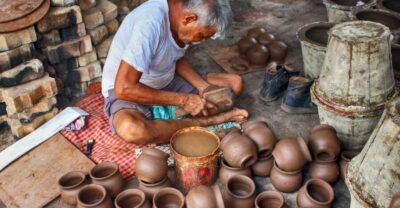
Dharavi Slum Slumdog Millionaire Tour with a Local
Read our review →
Mumbai Slum Tour – Visit Dharavi Slum with Local Guide
Read our review →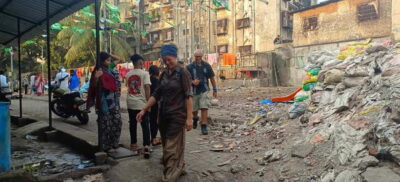
Dhobi Ghat Laundry and Dharavi Slum Tour with Local
Read our review →Browse the lists this tour appears in