
Reviewed · DHARAVI SLUM TOURS
Dharavi Slum tour in Mumbai by local resident
Dharavi is not a backdrop for a quick photograph. It is a working Mumbai neighborhood, and this two-hour walking tour takes you into both its commercial and residential areas. A local English-speaking guide leads you through narrow lanes and working factories, explaining a side of the city you would be unlikely to understand on your own.
I like the direct access to small-scale industry, from plastic recycling to soap, bag, and leather work. I also like the low price, about $4.46 per person, and the clear return to the same meeting point. The main drawback is the possible group size, which can reach 99 people, so the experience may feel less personal than the local guide concept suggests.
In This Review
- Key points at a glance
- Why this Dharavi walk is different
- Meeting near Mahim and getting started
- Plastic recycling and the working side of Dharavi
- Soap, plastic bags, and everyday production
- Leather drying and finished goods
- Residential lanes and the human picture
- What the price really gets you
- Timing, transport, and practical comfort
- Who will enjoy this experience most
- A respectful way to take the tour
- Should you book the Dharavi walk?
- FAQ
- How long does the Dharavi tour last?
- Where does the tour start?
- Where does the tour end?
- Is pickup available?
- What will I see in Dharavi?
- Is the tour conducted in English?
- How much does the tour cost?
- Can I cancel the tour for a refund?
Key points at a glance
- Local perspective: Your English-speaking guide comes from Dharavi and leads the walk through familiar streets.
- Working industries: See plastic recycling, soap production, plastic bag making, leather drying, and other workshops.
- Two sides of Dharavi: The route covers both commercial activity and residential lanes.
- Low-cost Mumbai outing: At about $4.46 per person, the tour offers a lot of access for very little money.
- Simple meeting point: Meet at Third Wave Coffee on Tip Road near Mahim, then return there at the end.
- Plan for a crowd: The maximum group size is listed as 99, a useful point to consider before booking.
Why this Dharavi walk is different
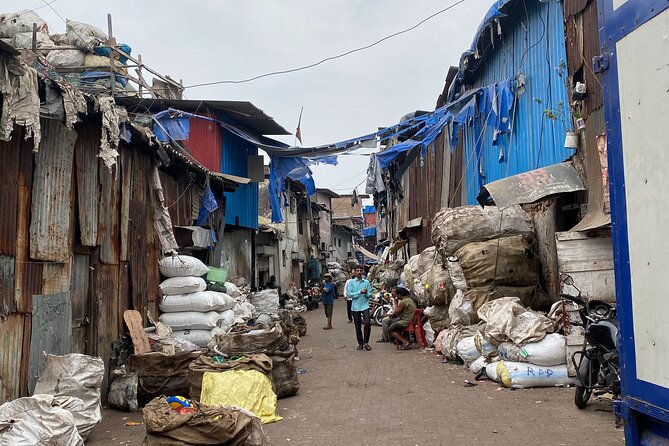
Many Mumbai sightseeing tours keep you on the main roads. This one turns into the lanes of Dharavi and focuses on how people work and live in the neighborhood. That change in scale is the point. You are not simply looking at Dharavi from a vehicle window. You are walking through the places where goods are processed, made, dried, stored, and sold.
The tour presents Dharavi as more than a residential settlement. Its commercial side is central to the experience. You might see raw materials being sorted, products being made, and workshop activity packed into small spaces. The route also includes the residential area, giving you a fuller picture of daily life rather than showing only factories.
I would choose this walk if you want an encounter with working Mumbai, not just a checklist of monuments. It is also a useful option if you have already seen the Gateway of India, Marine Drive, and other classic sights and want to understand how another part of the city functions.
The guide matters here. A local resident can help you read the neighborhood with more care than a guide who only passes through it. The supplied information does not give the guide’s name, but it does specify a local English-speaking guide from Dharavi. That is important because the value of the tour rests on explanation, context, and respectful access.
More Dharavi walking tours:
- Dharavi slum tour in Mumbai by Female tour guides of the slum
★ 5.0 · 1,976 reviews - Mumbai: Dharavi Slum, DhobiGhat, and Dabbawallas Tour
★ 4.9 · 689 reviews - Dharavi Slum Tour
★ 5.0 · 625 reviews
Meeting near Mahim and getting started
The stated starting point is Third Wave Coffee, Tip Road, Unit no. 58, Ground, Ram Mahal, Senapati Bapat Marg, Marinagar Colony, Station, Mahim, Mumbai, Maharashtra 400016. The wording is detailed, but Mumbai addresses can still take a moment to match with your map. I would arrive early and check the exact meeting instructions before setting out.
Pickup is offered, but the supplied information also gives a fixed meeting point. Do not assume pickup is automatic. Confirm the arrangement when booking, especially if you are staying outside Mahim or planning the tour around another Mumbai activity.
The tour ends back at the meeting point. That is handy because you do not need to work out a new pickup location after walking through unfamiliar lanes. It also makes the timing easier to plan if you have a train, meal, or second tour afterward, though I would leave some buffer rather than scheduling something immediately.
The tour runs for about two to three hours, with the walking portion listed as two hours. That is a useful length for Dharavi. You get enough time to see several types of activity, but the outing should not consume an entire day. Wear practical shoes and expect a walking-focused visit, since the core experience is on foot.
Plastic recycling and the working side of Dharavi
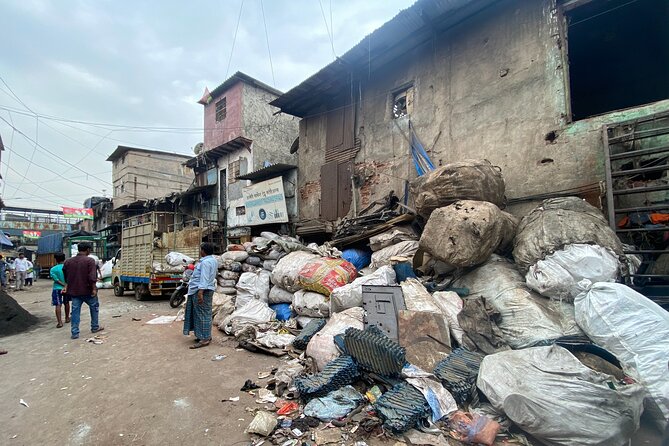
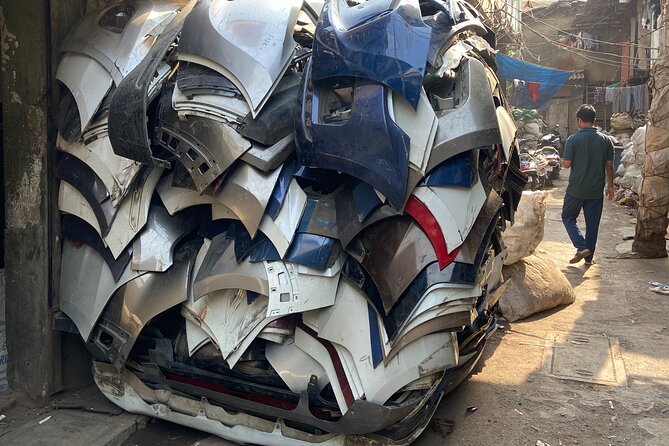
One of the most specific parts of the route is the plastic recycling area. This gives the tour a clear purpose from the start. You are looking at a local production chain, not a staged cultural display.
Recycling work can be visually striking because the process is physical and easy to understand. Plastic is collected, sorted, handled, and prepared for further use. The details you receive from the guide will help you make sense of what you are seeing, since a visitor walking alone might only notice piles of material and busy workshop spaces.
This is also where the tour’s ethical question appears. You are entering a place where people live and work. Keep your attention on the guide rather than treating the neighborhood as a photo set. Ask before taking pictures, follow instructions, and avoid blocking lanes or workshop entrances.
The supplied route does not promise a hands-on activity or a chance to purchase recycled goods. You should think of this as an observation and explanation tour. The reward is understanding how an urban neighborhood supports real industry in limited space.
Soap, plastic bags, and everyday production
The walk continues through areas connected with soap and plastic bag production. These stops give you a closer look at the range of work inside Dharavi. The neighborhood is not centered on one craft. It contains many small operations, each serving a practical market.
Soap making is a useful stop because it shows how ordinary household goods can be produced in compact workshops. Plastic bag production offers another view of the same small-business economy. The contrast between materials and processes keeps the route from feeling repetitive.
I like this part of the tour because it turns a broad idea, such as informal industry, into specific examples. You can connect what you see to objects used in daily life. The guide’s role is to explain how these businesses fit into the neighborhood and why the work matters.
The trade-off is that factory visits can be basic. This is not a polished industrial museum with display panels and safety rails. Conditions may feel crowded, and the route is designed around an active neighborhood rather than visitor comfort. If you need a carefully controlled attraction, this may not be your ideal outing.
A completely different way to spend a day in Mumbai:
- Mumbai: Full-Day Sightseeing Tour of Mumbai
★ 4.9 · 1,822 reviews - Private Mumbai Sightseeing Tour (Traveller’s Choice Award Winner)
★ 5.0 · 1,565 reviews - Elephanta Caves & Island Guided Private Tour
★ 5.0 · 1,327 reviews - Group Guided Walking Tour in Fort and Colaba
★ 5.0 · 1,073 reviews
Leather drying and finished goods
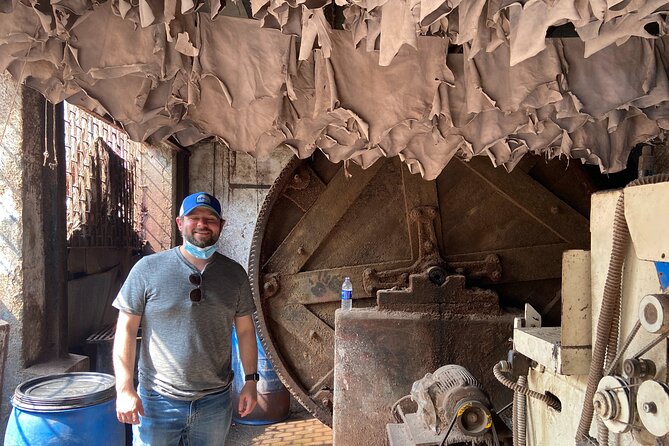
The route also includes an area where leather is dried. This stop adds another material and another stage of production. It helps show how the neighborhood handles work that requires space, time, and repeated processing.
You may find the smell and appearance of leather drying more intense than the earlier stops. That is part of seeing real production, but it can also be a consideration for visitors who are sensitive to strong odors or industrial settings. The supplied information does not promise a particular level of comfort, so go in expecting a practical working area.
The tour includes a shop selling objects made in Dharavi, but the experience is described without pressure to buy. That is a welcome detail. You can look at finished products and connect them to the workshops you have just visited without feeling that the walk is mainly a sales trip.
If you do want to purchase something, treat it as an optional way to support local makers. If you do not, you can still take the educational value of the stop. The important distinction is that the shop is part of the route, not a compulsory purchase point.
Residential lanes and the human picture
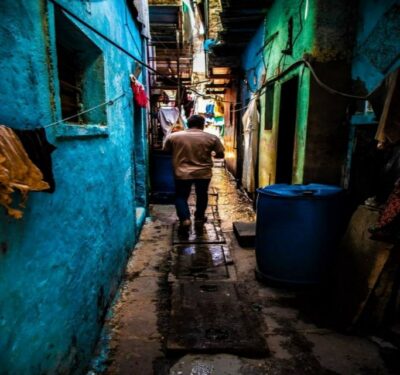
The residential section keeps the experience from becoming a factory tour. After seeing commercial activity, you walk through areas where people live. This change helps you understand that work and home are closely linked in Dharavi.
The route description does not promise entry into private homes, so you should expect to view the residential area from public lanes. That is the right boundary. A local guide can explain what you are seeing while helping the group move through the neighborhood with basic respect.
I find this part important because statistics and labels can flatten a place. Walking through residential lanes reminds you that Dharavi is a community, not simply a business district or a poverty display. At the same time, the tour does not claim to show every part of life there. Two hours can offer an introduction, not a complete portrait.
The best approach is to listen, keep your group together, and let the guide set the pace. Avoid loud conversation, intrusive photographs, or treating residents as part of the attraction. The experience is strongest when you pay attention to the neighborhood’s ordinary routines.
What the price really gets you
At about $4.46 per person, this is one of the least expensive guided experiences you can book in Mumbai. The low price makes it an easy addition to a city visit, especially if you want a local walking tour without committing to a full-day excursion.
The value comes from access and interpretation. You receive a guide, a route through commercial and residential sections, and visits connected with several types of production. Admission is included, and the walk returns to its starting point. For this price, that is a strong package.
The low cost also tells you what not to expect. This is not a private tour with a custom route, luxury transport, or a long sit-down discussion. Pickup is offered, but you should confirm how it works rather than assume a private vehicle. The main product is the guided walk.
Group discounts may make the price even more useful if you are booking for several people. Still, the maximum group size of 99 deserves attention. A large group can make it harder to hear every explanation and may reduce the personal feel of a neighborhood tour. If group size is important to you, ask the provider before booking.
Timing, transport, and practical comfort
The location near Mahim makes the meeting point practical for people using public transportation. The activity is listed as being near public transport, but no specific train station, bus route, or travel time is provided. Use the exact address rather than relying only on the neighborhood name.
You receive confirmation at the time of booking, which should help you verify the meeting details. A mobile ticket is available, so you can keep the booking on your phone. I would still save the address and start time where you can reach them quickly, since navigating Mumbai can take longer than expected.
The tour is suitable for most participants, and service animals are allowed. No detailed mobility information is provided. Because the experience is a walking tour through working commercial and residential areas, you should contact the provider if you have specific mobility needs or require a particular accommodation.
There is free cancellation if you cancel at least 24 hours before the local start time. Cancellations made less than 24 hours ahead are not refunded, and late changes are not accepted. That policy is simple, but do not leave cancellation decisions until the last day.
Who will enjoy this experience most
I would recommend this tour to you if you want:
- A low-cost way to see a less polished side of Mumbai
- A local guide rather than a self-guided walk
- Real examples of recycling and small-scale manufacturing
- A two-hour activity that fits around other sightseeing
- A route covering both work areas and residential lanes
- An introduction to Dharavi without arranging access yourself
You may want to choose something else if you prefer grand architecture, air-conditioned transport, or a private guide. You should also think twice if you are uncomfortable walking through dense working areas or if you expect a formal museum-style presentation.
Families, first-time Mumbai visitors, and curious urban explorers may find the tour especially useful, provided everyone understands that Dharavi is a lived-in neighborhood. It is best approached with patience and respect, not as a spectacle.
A respectful way to take the tour
Your attitude will shape the experience. Listen to the guide, stay with the group, and ask before photographing people, homes, or workplaces. A small amount of courtesy goes a long way in a place where private life and business activity share the same streets.
Try to notice the systems behind what you see. Plastic recycling, soap production, bag making, leather drying, and finished-goods sales are not isolated curiosities. Together, they show how many forms of work can operate within one dense neighborhood.
The guide can explain more than you can gather by sight alone. Ask clear questions about the industries, the layout, and the relationship between the commercial and residential areas. Keep questions respectful and avoid turning poverty into a topic for entertainment.
The shop stop deserves the same approach. Browse if you wish, but do not feel obliged to buy. The no-pressure format makes it easier to focus on the work and products rather than worrying that the tour is designed around sales.
Should you book the Dharavi walk?
I would book it if you want a direct, affordable introduction to Dharavi and are comfortable with a walking tour through active work and residential areas. The mix of plastic recycling, soap, bag making, leather drying, workshops, lanes, and a local English-speaking guide gives the outing more substance than a simple drive-by visit.
The strongest reasons to go are the local guide, the access to both sides of Dharavi, and the remarkable price. The main caution is group size. With up to 99 people, the tour may not provide the quiet, personal conversation some visitors want.
Book this as an educational neighborhood walk, not a polished attraction. Confirm pickup details, arrive at the Mahim meeting point on time, wear practical footwear, and leave room in your schedule. If that sounds right for you, this is a worthwhile way to see how Mumbai works beyond its postcard sights.
FAQ
How long does the Dharavi tour last?
The experience lasts approximately two to three hours. The Dharavi walking portion is listed as two hours.
Where does the tour start?
The meeting point is Third Wave Coffee, Tip Road, Unit no. 58, Ground, Ram Mahal, Senapati Bapat Marg, Marinagar Colony, Station, Mahim, Mumbai, Maharashtra 400016, India.
Where does the tour end?
The activity ends back at the same meeting point.
Is pickup available?
Pickup is offered. The supplied information also lists a fixed meeting point, so confirm the pickup arrangement when booking.
What will I see in Dharavi?
The route includes commercial and residential areas, plastic recycling, soap production, plastic bag production, leather drying, factories, and a shop selling objects made in Dharavi.
Is the tour conducted in English?
Yes. The tour is led by a local English-speaking guide from Dharavi.
How much does the tour cost?
The listed price is approximately $4.46 per person. Group discounts are available.
Can I cancel the tour for a refund?
Yes, you can receive a full refund if you cancel at least 24 hours before the experience’s start time. Cancellations or changes made less than 24 hours ahead are not accepted or refunded.
Just added around Mumbai
- Temples & Vineyards: Private Tour to Nashik from Mumbai★ 4.5 · 3 reviews
- Mumbai: Private City sightseeing and Dharavi Slum Tour★ 5.0 · 3 reviews
- Mumbai: Full Day City Sightseeing with Lunch, Car & Guide★ 4.3 · 3 reviews
- Elephanta Island Private Speedboat Tour from Mumbai – 6pax★ 5.0 · 3 reviews
- Mumbai Sightseeing Tour by Public Transport with family Lunch★ 5.0 · 3 reviews
- Mumbai by Dawn★ 4.5 · 3 reviews
- Mumbai: Elephanta Island and Elephanta Caves Guided Tour★ 4.4 · 3 reviews
- Mumbai Dharavi Slum Community Tour★ 5.0 · 3 reviews
Dharavi Slum Tours, compared.
Dharavi slum tour in Mumbai by Female tour guides of the slum
Read our review →
Dharavi Slum Slumdog Millionaire Tour with a Local
Read our review →
Mumbai Slum Tour – Visit Dharavi Slum with Local Guide
Read our review →
Dhobi Ghat Laundry and Dharavi Slum Tour with Local
Read our review →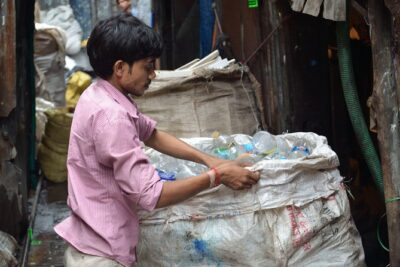
Browse the lists this tour appears in