

Reviewed · DHARAVI SLUM TOURS
Mumbai: Private City sightseeing and Dharavi Slum Tour
Mumbai’s most revealing moments happen when grand colonial buildings, packed streets, working neighborhoods, and small workshops appear in the same day. This private city and Dharavi tour gives you that full contrast, moving from the Gateway of India and Taj Mahal Palace to Dharavi’s narrow lanes and working industries.
I especially like the two-hour Dharavi walk, where the guide himself lives in the area, and the chance to see Dhobi Ghat, an open-air laundry that turns an ordinary city service into a public spectacle. The possible drawback is pace: you cover a great deal in eight hours, so several landmark stops are brief, usually around 5 to 20 minutes.
In This Review
- Key points at a glance
- Two Mumbais in one long day
- Starting in Dharavi: work, homes, and community
- Dhobi Ghat and Mumbai’s working side
- CST, colonial buildings, and the city center
- Oval Maidan and the city’s favorite sport
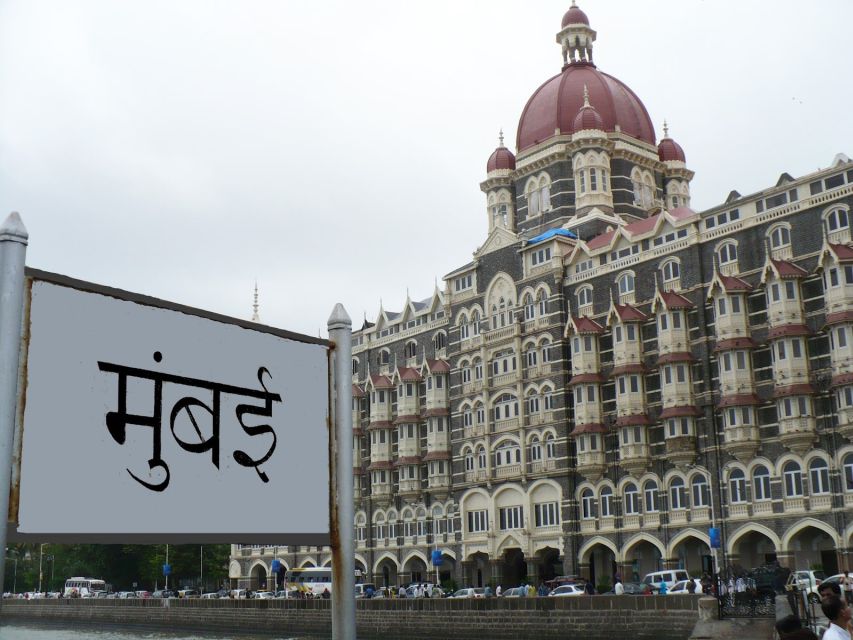
- Gateway of India and the Taj Mahal Palace
- Marine Drive, Chowpatty, and the city from above
- Mani Bhavan and Gandhi’s Mumbai
- How the schedule feels in practice
- Who gets the most from this tour
- Should you book this Mumbai tour?
- FAQ
- How long does the Mumbai city and Dharavi tour last?
- How much does the private tour cost?
- Is hotel pickup included?
- What language is the tour conducted in?
- How long is the Dharavi visit?
- Are entry tickets included?
- Is food included?
- What should I bring?
- Can I cancel the booking?
Key points at a glance
- Dharavi with a local resident guide: Walk through small industries, homes, markets, schools, and narrow lanes with a guide who lives in the community.
- Mumbai’s major landmarks in one day: See the Gateway of India, CST, Marine Drive, Mani Bhavan, Oval Maidan, and more.
- A private group price: At $109 for up to three people, the cost works out well when shared by a small party.
- Hotel pickup and drop-off: Your day begins and ends at your Mumbai accommodation, with the pickup and drop-off details arranged through WhatsApp.
- Entry tickets and water included: You receive admission tickets where required and a mineral water bottle, but food and other drinks are extra.
- A fast-moving schedule: Expect many short photo and sightseeing stops, plus a longer, more focused walk through Dharavi.
Two Mumbais in one long day
Mumbai can feel like several cities at once. The southern districts present grand British-era buildings, ceremonial waterfronts, museums, and famous hotels. Dharavi, farther north, shows another side of the city, one built around homes, workshops, recycling, trade, and tightly packed community life.
This tour links those settings without pretending they are the same. That is its central value. You see the polished public face of Mumbai, then spend two hours walking through a working settlement where people make, repair, recycle, sell, and live in close quarters.
The contrast is useful, but Dharavi should not be treated as a human zoo. The tour description points to local artisans, entrepreneurs, social enterprises, schools, hospitals, and family homes. Go with an attentive attitude. Listen to the guide, follow instructions about photography, and remember that the lanes are part of someone’s everyday neighborhood.
The experience is private for your group of up to three, which gives you more room to ask questions than a large coach tour. It also makes the $109 price easier to assess. Shared three ways, it is about $36 per person for eight hours, including transport, a guide, entry tickets, and water. For one person, the cost is less attractive, but the convenience of private pickup still has value in a city where traffic can eat up time.
More Dharavi walking tours:
- Dharavi slum tour in Mumbai by Female tour guides of the slum
★ 5.0 · 1,976 reviews - Mumbai: Dharavi Slum, DhobiGhat, and Dabbawallas Tour
★ 4.9 · 689 reviews - Dharavi Slum Tour
★ 5.0 · 625 reviews
Starting in Dharavi: work, homes, and community
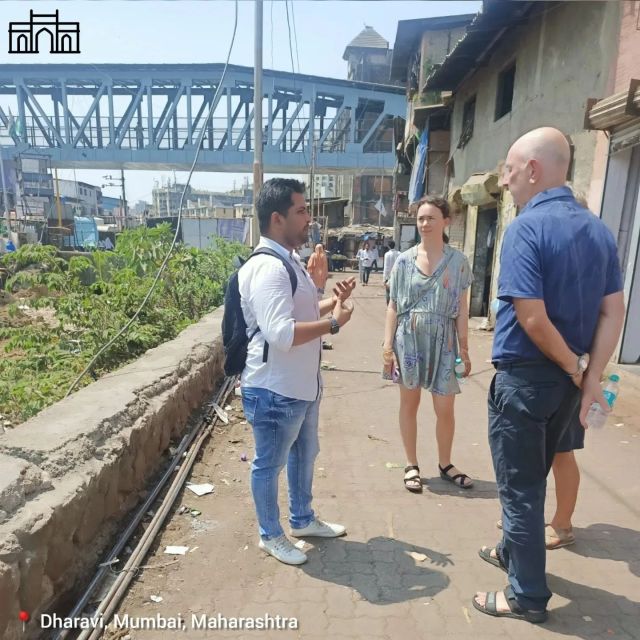
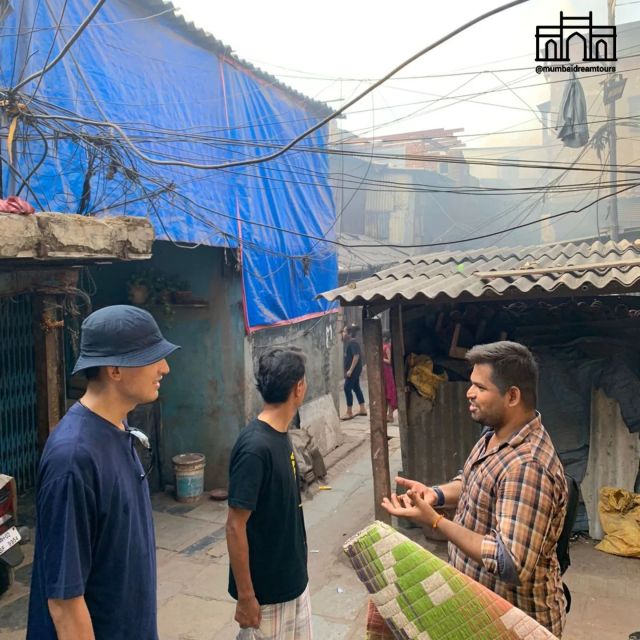
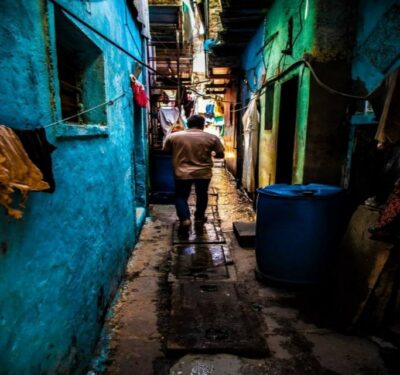
The Dharavi portion lasts about two hours and includes guided walking and sightseeing. This is the tour’s most distinctive section, since you are not simply viewing the neighborhood from a vehicle. You enter its narrow lanes and see the places where daily life and small-scale production sit side by side.
The route includes leather industries, pottery, soap making, bakeries, color dye work, plastic recycling, and the recycling of vegetable oil cans. These details matter because they show Dharavi as a place of employment and production, not only a place defined by poverty.
You may also see a slum market, small alleys, schools, hospitals, houses, and a shrine being made by Muslim residents for Hindus. That last detail points to the mixed religious and social life the tour aims to explain. The experience is less about collecting dramatic photographs and more about understanding how a dense neighborhood functions.
The guide’s local connection is important here. The named guide associated with this experience is Rakesh, and the tour is designed around a guide who lives in Dharavi. That can give you context that a guide passing through from elsewhere might not have. It also means you should allow the guide to set the tone and boundaries of the walk.
The description includes locations connected with Slumdog Millionaire. Treat that as a minor point, not the main reason to book. The film connection may interest movie fans, but the real substance is the working community and its industries.
Wear comfortable shoes. The walk takes place in narrow lanes, and the day includes several other stops where you will be on your feet. Food and drinks are not included, so plan to buy or carry anything you need beyond the supplied mineral water.
Dhobi Ghat and Mumbai’s working side

After Dharavi, the tour visits Dhobi Ghat for about 20 minutes. This open-air laundry is one of Mumbai’s most recognizable working scenes, with clothes washed in public view rather than behind the walls of a modern commercial facility.
A 20-minute visit is enough to see the setup and hear the guide explain it, but not enough for a long, relaxed exploration. That short timing fits the overall plan: this is a city overview, not a single-site study tour.
Dhobi Ghat also balances the grander landmarks later in the day. Mumbai’s postcard sights are impressive, but places like this explain how the city operates. You see labor, service, and routine rather than only monuments.
CST, colonial buildings, and the city center
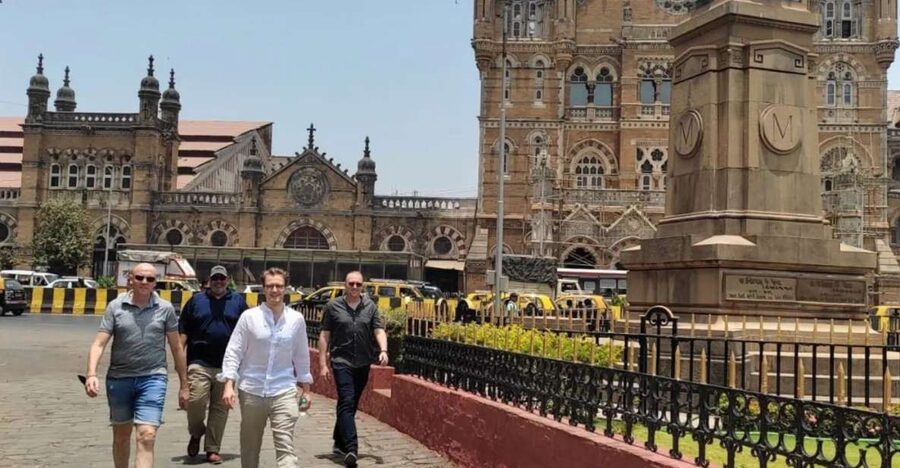
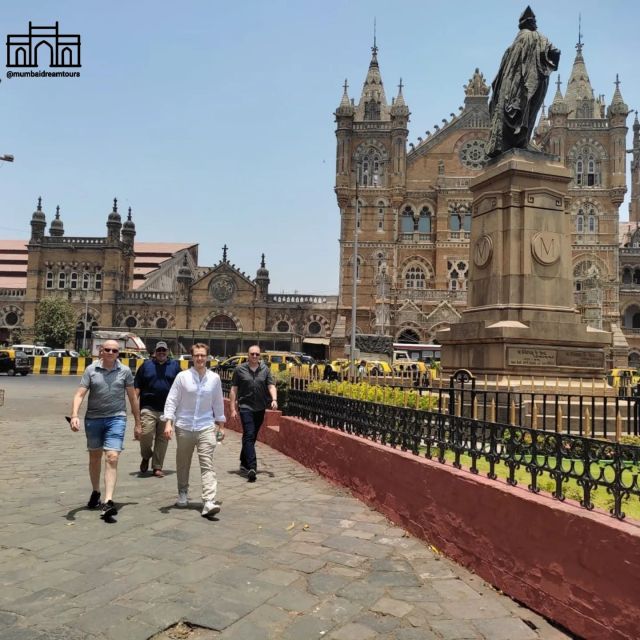
Chhatrapati Shivaji Maharaj Terminus, often called CST, receives about 20 minutes. The station is a UNESCO World Heritage Site and one of Mumbai’s most striking British-era buildings. Even if you only have time for exterior sightseeing, the architecture makes this a worthwhile stop.
The city tour also passes or pauses near several other colonial landmarks. These include Mumbai University, built in 1857, the Rajabai Clock Tower, sometimes nicknamed the Big Ben of India, Bombay High Court, the Municipality Building, Flora Fountain, Hutatma Chowk, the Telegraph Office, the India Post Office Building, and the Kala Ghoda district.
Some of these are drive-by views rather than full visits. That distinction matters. You get a broad sense of Mumbai’s architectural center, but you should not expect a long interior tour of every building.
The itinerary gives around five minutes to Kala Ghoda and short sightseeing stops of about 10 minutes at several unnamed points. Those brief pauses work well for orientation and photographs. They will feel rushed if you want detailed architectural study, so bring a camera, listen for the key stories, and accept that the day favors range over depth.
More full city sightseeing tours:
- Mumbai: Full-Day Sightseeing Tour of Mumbai
★ 4.9 · 1,822 reviews - Private Mumbai Sightseeing Tour (Traveller’s Choice Award Winner)
★ 5.0 · 1,565 reviews - Highlights of Mumbai Sightseeing Tour: TRAVELLERS CHOICE AWARDED
★ 5.0 · 915 reviews - Highlights of South Mumbai Guided Private Tour in AC Vehicle
★ 5.0 · 620 reviews
Oval Maidan and the city’s favorite sport
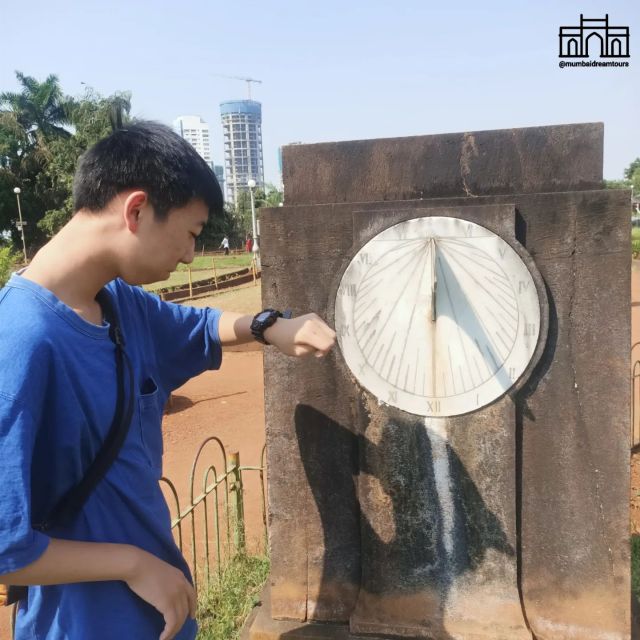
Oval Maidan receives about 10 minutes. This large cricket ground offers a quick look at one of India’s most beloved sports and its place in public life.
The stop is not a cricket match or a long sporting visit. It is a chance to see the open ground within the historic city center and understand how a major urban space is used. If cricket interests you, ask the guide about local playing traditions while you are there.
Gateway of India and the Taj Mahal Palace
The Gateway of India gets about 20 minutes of walking, sightseeing, and guiding. The arch was built to welcome King George V and Queen Mary to India, giving the site a direct link to the final period of British imperial ceremony.
Today, its waterfront setting makes it one of the easiest places to connect Mumbai’s past with its present public identity. You will have time to look closely, take photographs, and hear the basic story without spending half the day at one monument.
The Taj Mahal Palace is next, with around 10 minutes of guided sightseeing. The hotel is tied to a famous local story: Jamshedji Tata was refused entry to Watson’s Hotel, then built the Taj Mahal Hotel. The visit appears to be a sightseeing stop rather than an overnight hotel experience or a meal, so plan accordingly.
The combination of Gateway and Taj Mahal Palace works well. One represents imperial arrival, while the other reflects Indian enterprise and a city determined to define itself on its own terms.
Marine Drive, Chowpatty, and the city from above

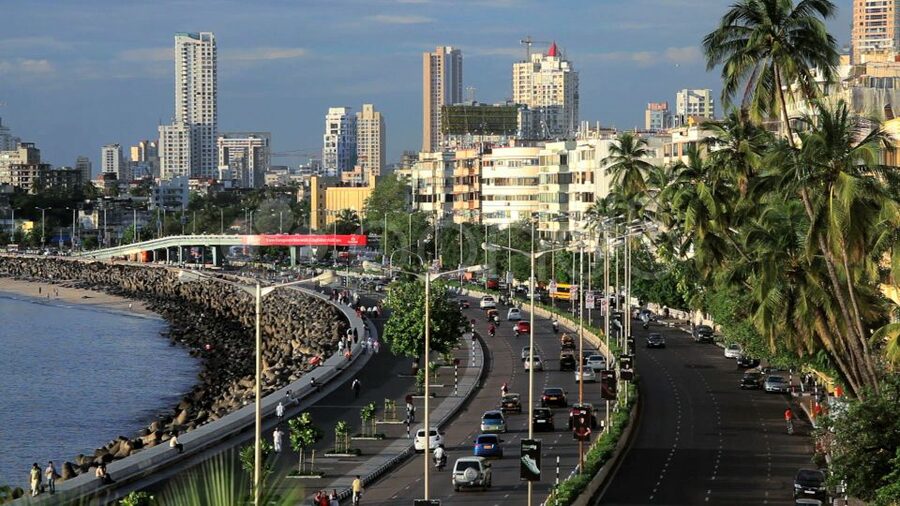
The tour drives past Marine Drive and Chowpatty Beach, with about 10 minutes specifically assigned to Marine Drive. Marine Drive is best understood from the road and waterfront views, where the long curve of the bay gives you one of Mumbai’s defining city scenes.
Chowpatty Beach is included as a drive-past sight rather than a beach outing. Do not expect time for swimming, a long promenade walk, or a meal there. The benefit is seeing how the shoreline fits into the city’s daily rhythm.
Kamala Nehru Park and the Hanging Gardens bring a different view. The itinerary includes a skyline outlook and the Old Woman’s Shoe, a well-known shoe-shaped structure, at Kamala Nehru Park. The Hanging Gardens were built above water tanks near the Tower of Silence, a Parsi burial place.
These stops take about 20 minutes at the Hanging Gardens, while Kamala Nehru Park is part of the listed sightseeing route. They offer a little breathing room after the dense lanes and busy roads. The views are useful for understanding Mumbai’s shape, though the exact visibility depends on conditions and timing.
Mani Bhavan and Gandhi’s Mumbai
Mani Bhavan receives about 30 minutes, making it one of the longer stops outside Dharavi. It is connected with Mahatma Gandhi and is described as a Gandhi museum.
That extra time is welcome. A museum visit needs more than a quick photograph, and 30 minutes gives you a chance to look at the displays and connect Gandhi’s political work with Mumbai. If modern Indian history interests you, this may be one of the day’s most rewarding stops.
It also changes the rhythm of the tour. After the visual rush of stations, roads, waterfronts, and markets, Mani Bhavan gives you a quieter place to pause and think.
How the schedule feels in practice
The advertised duration is eight hours, with pickup and drop-off in Mumbai. Transport matters here because the route covers separate areas, from Dharavi to the southern historic districts and the western waterfront.
The schedule includes many short stops: roughly 5, 10, or 20 minutes at several landmarks, followed by longer periods at Dharavi and Mani Bhavan. I would choose this tour if you want a first broad look at Mumbai and prefer having a guide explain the city as you move through it.
I would choose something slower if you already know Mumbai’s main sights and want long visits inside museums, monuments, or historic buildings. The tour gives you a strong overview, but it cannot provide a detailed visit at every stop in one day.
Pickup is included, and you are asked to send your pickup and drop-off location. The provider supplies a WhatsApp contact, which is useful for confirming the practical details before the day begins. English is the listed tour language, and a live English-speaking guide leads the experience.
Entry tickets are included, along with a mineral water bottle. Food and drinks are not included, so check with the guide about when a meal break fits the route. The supplied details do not specify a restaurant, menu, or exact lunch stop.
Who gets the most from this tour
This experience suits a first-time visitor who wants Mumbai’s famous sights and a serious look at everyday working life in one day. It is also a good match for a couple or small family group that values private transport and the ability to ask questions along the way.
The tour is especially useful if you have limited time in Mumbai. You see the major southern landmarks, the waterfront, Dhobi Ghat, Mani Bhavan, and Dharavi without having to piece together separate taxi rides and guides.
You should think twice if you dislike walking in tight urban spaces or feel uncomfortable visiting a residential neighborhood. Dharavi is not a staged attraction. The route includes homes and workplaces, and respectful behavior matters.
Comfortable shoes are essential. The day combines vehicle sightseeing with walks, and the Dharavi portion alone lasts two hours. Keep your belongings secure and follow the guide’s directions, particularly around photography and private homes.
The cancellation terms are flexible: you can cancel up to 24 hours in advance for a full refund. You can also reserve now and pay later, which helps if your Mumbai schedule is still changing.
Should you book this Mumbai tour?
Book it if you want breadth with a strong local focus. The private format, hotel pickup, included tickets, and eight-hour route make $109 a fair group price, especially with three people sharing the cost.
Its greatest strength is the pairing of landmark Mumbai with working Mumbai. The Gateway of India, CST, Marine Drive, and Taj Mahal Palace give you the city’s familiar symbols. Dharavi and Dhobi Ghat show how people work and live beyond the postcard view.
Skip it if you want a slow museum day or detailed interior access at every monument. The itinerary moves quickly, and many stops are short. For a first visit, though, this is an efficient and thoughtful introduction, particularly if Rakesh is your assigned guide and you want a guide with a direct connection to Dharavi.
FAQ
How long does the Mumbai city and Dharavi tour last?
The tour lasts eight hours, including pickup and drop-off in Mumbai.
How much does the private tour cost?
The listed price is $109 per group of up to three people.
Is hotel pickup included?
Yes. Hotel pickup and drop-off in Mumbai are included. You should send the provider your pickup and drop-off locations.
What language is the tour conducted in?
The listed language is English, and the experience includes a live English-speaking guide.
How long is the Dharavi visit?
The guided Dharavi walk and sightseeing portion lasts about two hours.
Are entry tickets included?
Yes, entry tickets are included in the tour price.
Is food included?
No. Food and drinks are not included. A mineral water bottle is provided.
What should I bring?
Bring comfortable shoes, since the tour includes walking, especially in Dharavi and at several city landmarks.
Can I cancel the booking?
Yes. You can cancel up to 24 hours in advance for a full refund. The activity also offers a reserve-now, pay-later option.
Just added around Mumbai
- Temples & Vineyards: Private Tour to Nashik from Mumbai★ 4.5 · 3 reviews
- Elephanta Island Private Speedboat Tour from Mumbai – 6pax★ 5.0 · 3 reviews
- Mumbai: Full Day City Sightseeing with Lunch, Car & Guide★ 4.3 · 3 reviews
- Mumbai: Elephanta Island and Elephanta Caves Guided Tour★ 4.4 · 3 reviews
- Mumbai Sightseeing Tour by Public Transport with family Lunch★ 5.0 · 3 reviews
- Mumbai by Dawn★ 4.5 · 3 reviews
- Mumbai Dharavi Slum Community Tour★ 5.0 · 3 reviews
- Mumbai: Dhobi Ghat & Dharavi Slum tour★ 4.7 · 3 reviews
Dharavi Slum Tours, compared.
Dharavi slum tour in Mumbai by Female tour guides of the slum
Read our review →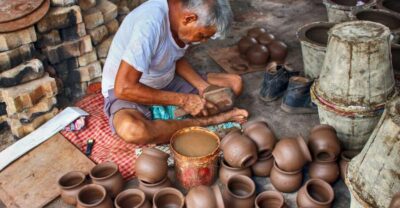

Dharavi Slum Slumdog Millionaire Tour with a Local
Read our review →
Mumbai Slum Tour – Visit Dharavi Slum with Local Guide
Read our review →
Dhobi Ghat Laundry and Dharavi Slum Tour with Local
Read our review →
Browse the lists this tour appears in