
Reviewed · DHARAVI SLUM TOURS
Mumbai: Dharavi Slum, DhobiGhat, and Dabbawallas Tour
Mumbai’s Dharavi neighborhood is not simply a place to look at from a vehicle window. This tour takes you on foot through its working lanes, then brings you inside Dhobi Ghat, the city’s famous open-air laundry, before showing you how the dabbawallas sort and move lunchboxes near Churchgate. The public train rides are part of the lesson: this is Mumbai as residents use it.
I like two things in particular. First, guides such as Loki, Maze, Bharti, and Alam bring local experience, with some guides living in or near Dharavi and knowing the people and workshops along the route. Second, the tour connects three very different systems: neighborhood industry, commercial laundry, and lunch delivery. The result is a useful look at how Mumbai works, not just a visit to a famous sight.
The main consideration is comfort. You will walk for about 100 minutes in Dharavi, use crowded public transport, and enter narrow residential and work areas. Photography is not allowed inside Dharavi, and dabbawallas do not operate on Sundays or public holidays, so the final part may be missing on those dates even though the price remains the same.
In This Review
- Key points at a glance
- Why this tour is different from a standard Mumbai sightseeing trip
- Churchgate to Dharavi by local train
- Walking through Dharavi for about 100 minutes
- Dhobi Ghat and the work behind Mumbai’s clean clothes
- Watching dabbawallas near Churchgate
- How the timing works
- The guide makes or breaks the experience
- Is $14 good value?
- Who should book this experience?
- My verdict: book it for the working city
- FAQ
- How long does the Mumbai Dharavi tour last?
- What locations does the tour visit?
- Is transportation included?
- Where does the tour start?
- Is hotel pickup included?
- Is photography allowed inside Dharavi?
- Can I see the dabbawallas on a Sunday?
- Are dabbawallas available during Diwali?
- Is the tour offered in English?
- Is this suitable for young children?
Key points at a glance
- Local guides with lived experience: Guides including Loki, Maze, Bharti, and Alam offer personal explanations of Dharavi’s homes, workshops, crafts, and daily life.
- A real public-train ride: The journey takes roughly 20 minutes each way and adds a practical taste of Mumbai’s transport system.
- Inside Dhobi Ghat: You do not only view the laundry from outside. The tour includes a 20-minute walk inside the working site.
- Dharavi beyond stereotypes: The route covers homes, community life, and small industries, including crafts and hosiery work.
- Dabbawallas near Churchgate: You can watch lunchbox delivery workers sort tiffins and organize their routes, when they are operating.
- Strong value at $14: Guide service, transport, Dharavi, Dhobi Ghat, and the dabbawalla stop are included in a three to four-and-a-half-hour outing.
Why this tour is different from a standard Mumbai sightseeing trip
Mumbai has grand sights, but its daily systems often tell you more about the city than its monuments. This outing focuses on work, transport, housing, and community. You see how people earn a living, how clothes move through a large laundry operation, and how meals travel across the city.
The word slum can create a narrow picture. Dharavi certainly includes hardship, crowded housing, and limited resources, but it is also a place where people live, work, run businesses, and maintain strong community ties. A good guide helps you hold both sides of that picture at once.
The guide matters here more than on a simple photo stop. Dharavi’s lanes can feel confusing, and the significance of a workshop or residential area is not always obvious on your own. Guides such as Maze and Loki are praised for explaining the area with humor, care, and personal detail. Bharti and Bharathi are noted for their close local connections and clear English, while guides including Ganesh, Dawood, Kavitha, Dinesh, and Sajid have also led well-received outings.
You should expect a walking tour rather than a polished attraction. That is its strength, but also its demand. The experience asks you to pay attention, listen carefully, and avoid treating residents as scenery.
More Dhobi Ghat and dabbawala tours:
- Mumbai: Dhobi Ghat Laundry and Dharavi Slum Tour with Local
★ 5.0 · 469 reviews - Mumbai: Dharavi Slum & Dhobi Ghat Laundry Tour
★ 5.0 · 352 reviews - Mumbai: Dharavi Slum and Dhobi Ghat Laundry Tour
★ 5.0 · 317 reviews
Churchgate to Dharavi by local train
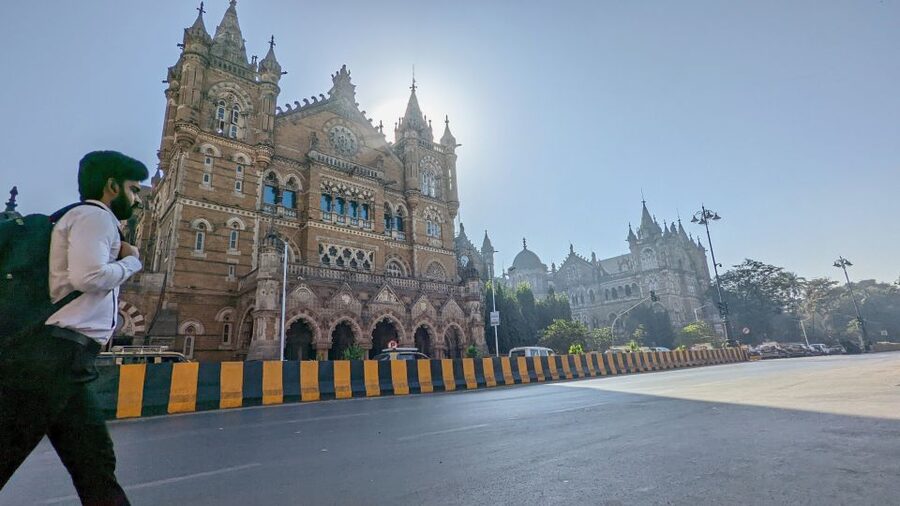
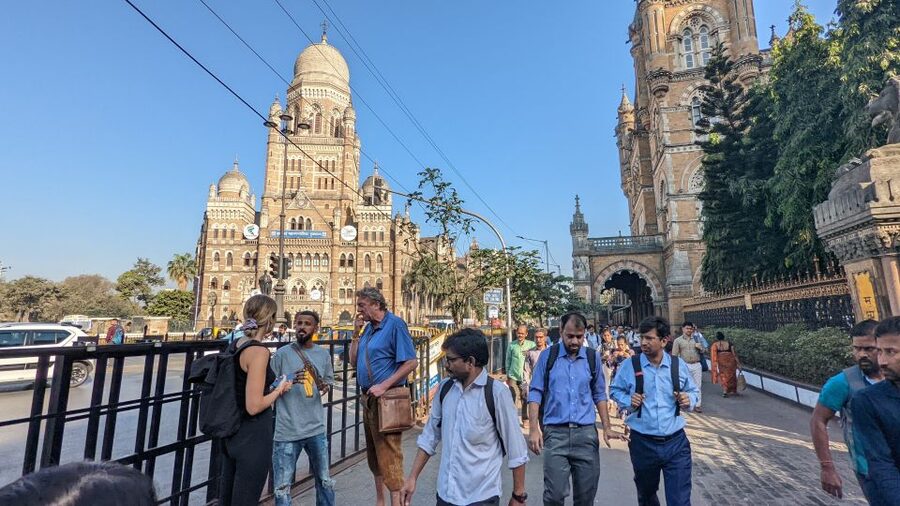
Depending on the option you book, you meet at Churchgate Railway Station or another stated starting point. From there, the guide leads you onto a local train for a ride of about 20 minutes toward Dharavi.
This is not just a transfer. Mumbai’s trains are central to the city’s daily movement, and using one gives you a quick look at the scale and rhythm of local commuting. You need to stay close to your guide, especially when boarding and getting off. One guide keeps the mood light by reminding visitors that there may be only about 21 seconds to board or leave the train, so listen for instructions and keep your belongings secure.
The train can be crowded. A morning or late-morning departure may suit you better than the busiest commuting periods, though exact crowd levels depend on the time and day. One available tour time mentioned by a visitor is 11:15, which was considered a comfortable choice.
The route may also involve a shared cab, according to the selected arrangements. Check the specific meeting and transport details before booking if you prefer to avoid surprises.
Walking through Dharavi for about 100 minutes
The Dharavi portion is the heart of the experience. You spend roughly 100 minutes walking through working and residential areas, with the guide explaining the neighborhood’s industries, homes, services, and community life.
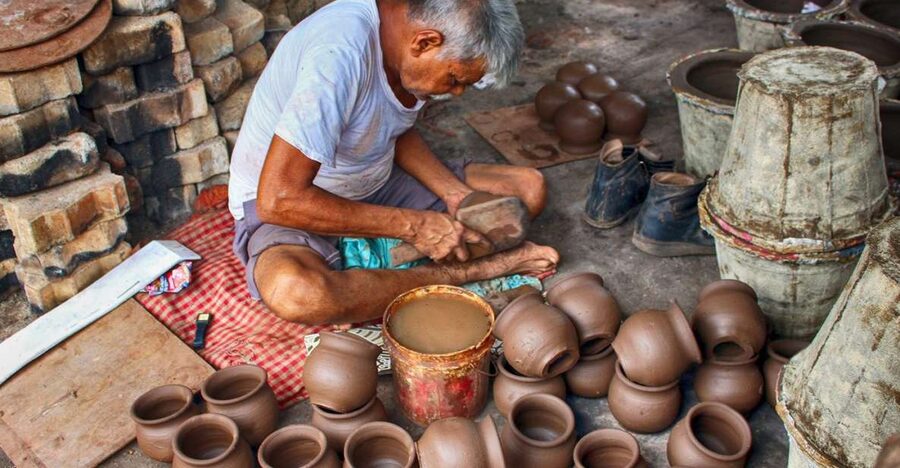
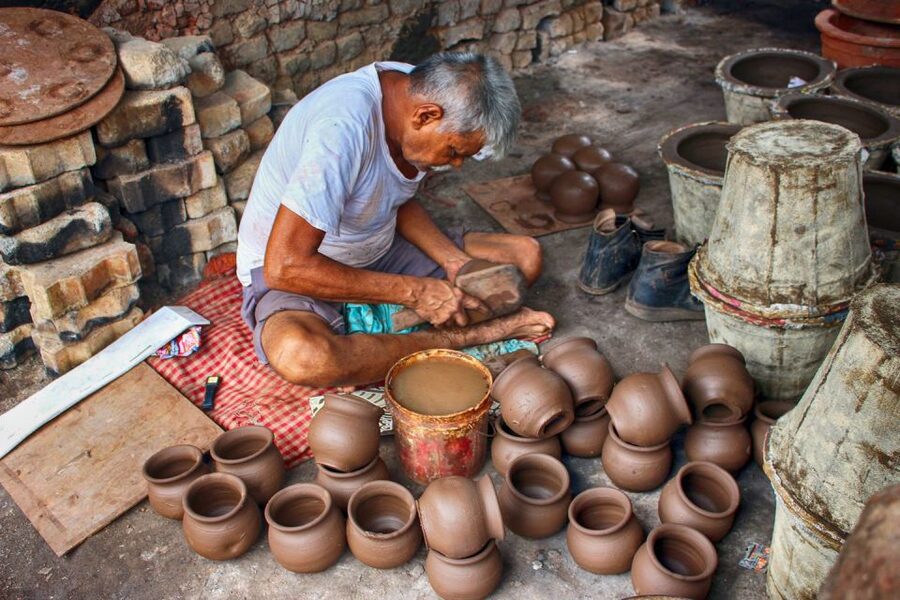
You might see workshops connected to textiles, hosiery, pottery, recycling, or other small-scale production. The exact route can vary, but the point is consistent: Dharavi is not only a housing area. It is also a place of work, with businesses operating close to homes and narrow lanes.
A guide with local ties can explain details that are easy to miss. You may learn how residents use limited space, how different communities share the area, and how workers organize their day. Guides who live in Dharavi can also challenge the idea that the neighborhood is defined only by poverty. The more accurate picture includes economic activity, talent, family life, education, health concerns, and housing pressure.
This is where the tour’s respectful approach matters. Photography is forbidden inside Dharavi. Follow that rule closely. It protects residents’ privacy and keeps the visit focused on listening rather than collecting images.
You should wear practical shoes and bring a sun hat. The tour information does not promise air-conditioned transport or frequent rest stops, though one guide has been known to include a tea and restroom break during the walk. Do not count on that as a fixed feature. The route is active, and children under four and pregnant women are not considered suitable for this experience.
Dhobi Ghat and the work behind Mumbai’s clean clothes
After Dharavi, the tour moves to Dhobi Ghat, usually known as one of the world’s largest open-air laundries. The visit lasts around 20 minutes and includes entry inside the laundry area, not simply an outside view.
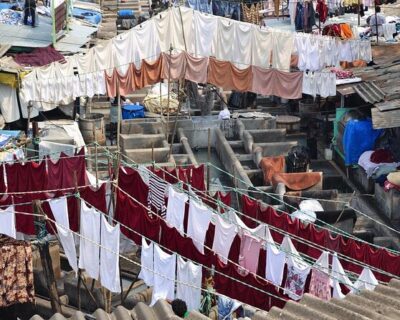
Dhobi Ghat is compelling because the work is easy to understand but impressive at scale. Clothes are collected, sorted, washed, dried, and returned through a tightly organized process. From inside, you get a closer sense of the labor involved and the way the operation functions as a workplace.
The stop is shorter than Dharavi, so expect a brisk explanation rather than a long visit. Your guide helps connect the laundry to Mumbai’s wider service economy and points out how the workers handle the flow of clothing.
Photography is allowed outside Dharavi, but always follow the guide’s instructions around workers and private areas. You are entering an active workplace, not a staged exhibit.
More Dharavi walking tours:
- Dharavi slum tour in Mumbai by Female tour guides of the slum
★ 5.0 · 1,976 reviews - Dharavi Slum Tour
★ 5.0 · 625 reviews - Dharavi Slum tour in Mumbai by local resident
★ 5.0 · 572 reviews - Mumbai: Dharavi Slum Slumdog Millionaire Tour with a Local
★ 4.9 · 529 reviews
Watching dabbawallas near Churchgate
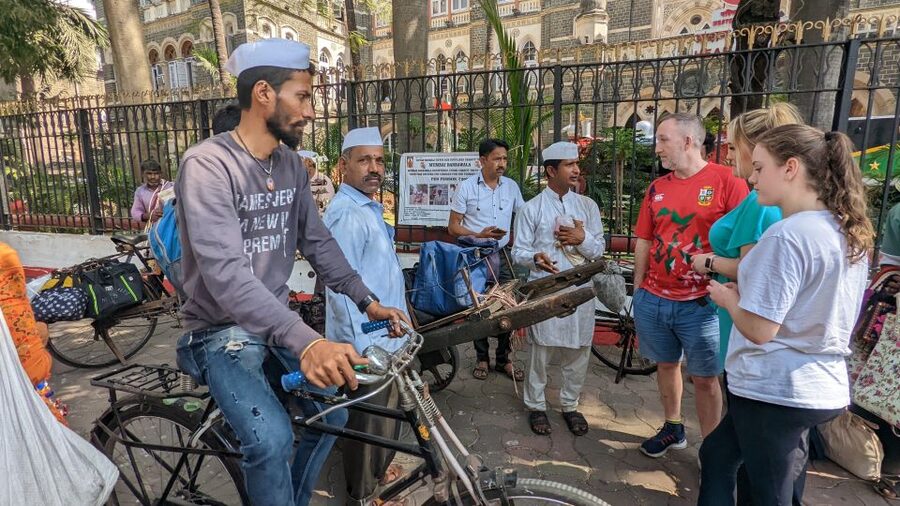
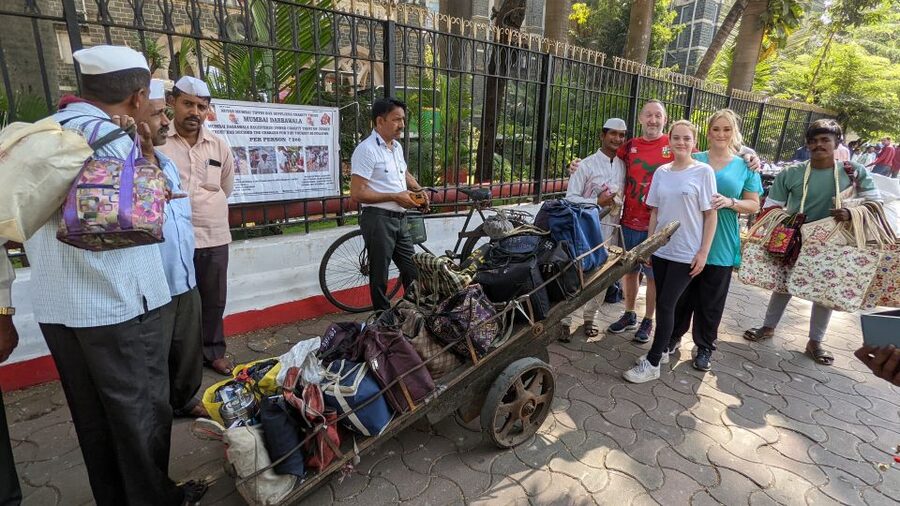
The final stop takes place near Churchgate Railway Station and lasts about 10 minutes. Dabbawallas, the lunchbox delivery workers, sort tiffins and organize them for delivery across Mumbai.
This system is fascinating because it depends on coordination, timing, labels, trains, bicycles, and teamwork. The short stop will not explain every detail of the operation, but it gives you a chance to see the workers and lunchboxes in action rather than hearing about them only in a museum or guidebook.
Timing is essential. Dabbawallas do not operate on Sundays or public holidays. They also take Diwali leave during the specified period of October 31 to November 4, 2024, so bookings on those dates did not include the sighting. If seeing the lunchbox system is important to you, choose a regular working day and confirm the current operating schedule before reserving.
This is the one part that can disappoint if you do not check the calendar. The Dharavi and Dhobi Ghat visits still provide the main substance of the tour, but the dabbawalla stop is not available every day.
How the timing works
The advertised duration is three to four-and-a-half hours. A typical outline looks like this:
- About 20 minutes on the train to Dharavi
- About 100 minutes walking through Dharavi
- About 20 minutes inside Dhobi Ghat
- About 15 minutes on the return train
- About 10 minutes near Churchgate to see the dabbawallas
Allow extra flexibility if the group moves slowly or transport conditions change. The tour is compact, but it covers a lot. You are moving between neighborhoods, using public transport, and walking through active areas rather than spending the morning in one controlled site.
Drop-off points may include Churchgate, Churchgate Railway Station, Mahalaxmi Station, Ballard Pier, Alexandra Dock, or Green Gate, depending on the option. Hotel pickup and drop-off are not included.
The guide makes or breaks the experience
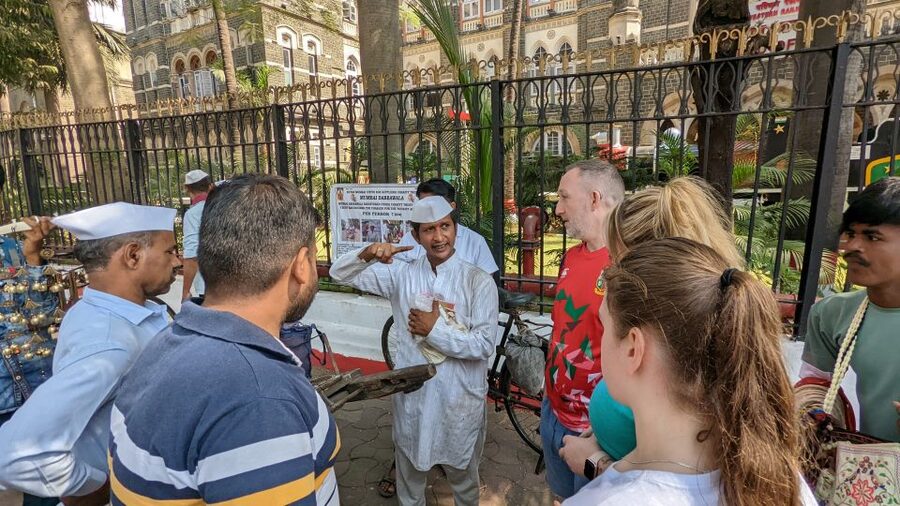
This tour depends heavily on the person leading it. A guide who simply recites facts could make Dharavi feel like a quick stop. A guide with local knowledge can explain why a lane matters, introduce the people and work connected with it, and answer difficult questions about poverty, housing, education, and healthcare.
Loki is repeatedly praised for clear English, safety, organization, and personal insight. Maze is described as warm, funny, and proud of his Dharavi background, with a strong talent for storytelling. Bharti and Bharathi are valued for their local connections and ability to explain the area in a direct, understandable way.
Ganesh, Alam, Dawood, Kavitha, Dinesh, and Sajid are also named as capable guides who explain the history, industries, and everyday life clearly. Since guide assignments can vary, you cannot necessarily request one particular person. Still, the repeated strength of the guiding team is a major reason this outing earns a 4.9 rating from 689 reviews.
Private and small-group options are available. A small group gives you more room to ask questions and makes it easier to stay together in busy areas. A private booking may suit you if you want more control over pace and discussion, but the core route remains active and crowded.
Is $14 good value?
At $14 per person, this is a strong-value tour if you want local context and public transport rather than a private car and standard landmarks. The cost includes the guide, transport, the Dharavi walk, entry inside Dhobi Ghat, and the dabbawalla viewing stop when it operates.
The price is especially fair because the tour links several locations that would be awkward to combine independently. You would need to find Dharavi, understand where to enter, manage the train connections, locate Dhobi Ghat, and time the Churchgate dabbawalla stop. A guide removes much of that uncertainty.
Do not judge the value by the number of formal attractions. This is not a ticketed monument tour. You are paying for access, interpretation, navigation, and the chance to see working areas in a respectful way.
The tradeoff is that comfort is limited. There is no hotel pickup or drop-off, and the tour does not promise a private vehicle. If you prefer a slow, climate-controlled city tour, spend more elsewhere. If you want a short, inexpensive look at Mumbai’s working life, the price is hard to argue with.
Who should book this experience?
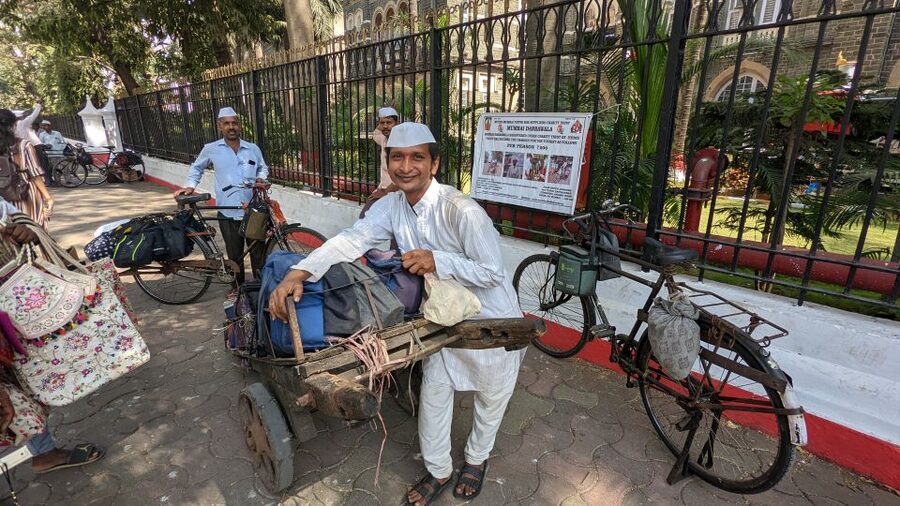
I would recommend it to first-time Mumbai visitors who want to move beyond the Gateway of India and the city’s grander sights. It is also useful for repeat visitors who want to understand the city through its workers, neighborhoods, and transport network.
You should book it if you are comfortable walking, curious about ordinary urban life, and willing to follow privacy rules. It suits solo visitors, couples, and small groups who want a guide to handle the train and explain what they are seeing.
Think twice if you dislike crowds, narrow lanes, public transport, or walking in the sun. Families with children under four and pregnant women should not book this activity. Also reconsider a Sunday or public holiday booking if the dabbawallas are a priority.
Free cancellation is available up to 24 hours before the experience, and you can reserve now and pay later. Those policies help if your Mumbai schedule is still shifting, but they do not remove the need to check your date and meeting point carefully.
My verdict: book it for the working city
Book this tour if you want a thoughtful look at Mumbai’s daily systems at a very low price. The strongest parts are the local guide, the long Dharavi walk, the inside visit at Dhobi Ghat, and the train rides that connect the whole outing.
The dabbawalla stop is a useful bonus, not the sole reason to go. Schedule the tour on a working weekday, bring a sun hat, wear shoes suited to walking, and keep your camera away inside Dharavi.
For an honest introduction to a side of Mumbai that many visitors miss, this is a worthwhile choice. Go with respect, listen more than you photograph, and you will leave with a fuller picture of a neighborhood and city that cannot be understood from the main sights alone.
FAQ
How long does the Mumbai Dharavi tour last?
The tour lasts between three and four-and-a-half hours, depending on the selected option and availability.
What locations does the tour visit?
It visits Dharavi, Dhobi Ghat, and the area near Churchgate Railway Station where you can see the dabbawallas operating.
Is transportation included?
Yes. Transportation is included, including train travel. Some arrangements may also use a shared cab.
Where does the tour start?
The meeting point depends on the option booked. Churchgate Railway Station is one stated meeting point.
Is hotel pickup included?
No. Hotel pickup and drop-off are not included.
Is photography allowed inside Dharavi?
No. Photography is not allowed inside Dharavi. It is allowed elsewhere on the tour, subject to local instructions.
Can I see the dabbawallas on a Sunday?
No. Dabbawallas do not operate on Sundays or public holidays, so this part is not included on those dates.
Are dabbawallas available during Diwali?
The stated information says dabbawallas were on leave from October 31 to November 4, 2024, so tours during that period could not include them.
Is the tour offered in English?
Yes. The live tour guide language is English.
Is this suitable for young children?
Children under four are not considered suitable for the tour. Pregnant women are also listed as unsuitable for this activity.
Just added around Mumbai
- Temples & Vineyards: Private Tour to Nashik from Mumbai★ 4.5 · 3 reviews
- Mumbai: Private City sightseeing and Dharavi Slum Tour★ 5.0 · 3 reviews
- Mumbai: Full Day City Sightseeing with Lunch, Car & Guide★ 4.3 · 3 reviews
- Elephanta Island Private Speedboat Tour from Mumbai – 6pax★ 5.0 · 3 reviews
- Mumbai by Dawn★ 4.5 · 3 reviews
- Mumbai: Elephanta Island and Elephanta Caves Guided Tour★ 4.4 · 3 reviews
- Mumbai Sightseeing Tour by Public Transport with family Lunch★ 5.0 · 3 reviews
- Mumbai Dharavi Slum Community Tour★ 5.0 · 3 reviews
Dharavi Slum Tours, compared.
Dharavi slum tour in Mumbai by Female tour guides of the slum
Read our review →
Dharavi Slum Slumdog Millionaire Tour with a Local
Read our review →
Mumbai Slum Tour – Visit Dharavi Slum with Local Guide
Read our review →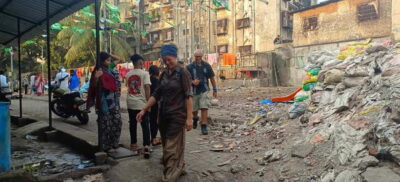
Dhobi Ghat Laundry and Dharavi Slum Tour with Local
Read our review →
Browse the lists this tour appears in