
Reviewed · DHARAVI SLUM TOURS
Mumbai: Dhobi Ghat Laundry and Dharavi Slum Tour with Local
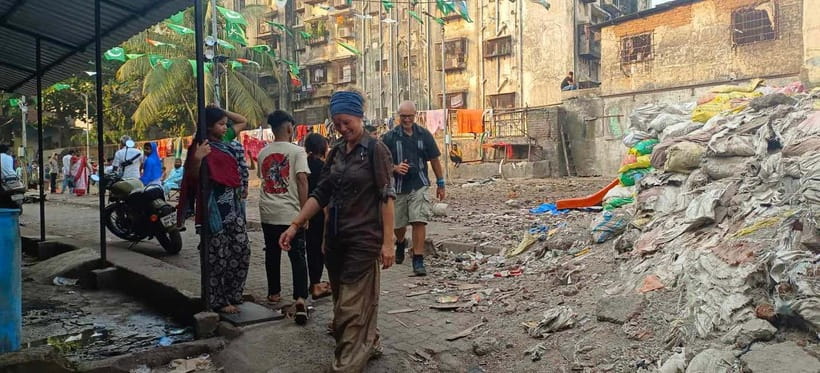
Dharavi is not simply a place to look at. It is a working part of Mumbai, where homes, workshops, shops, recycling units, and family life fit together in a dense urban community. This tour helps you see that complexity with someone who lives there, rather than relying on movie scenes or outside guesses.
I like the local guides, many of whom grew up in Dharavi and can explain daily life with personal insight. I also like the route through plastic recycling, garment and leather work, followed by Dhobi Ghat’s open-air laundry. The main consideration is ethical: you must be ready to walk quietly, avoid intrusive photographs, and treat homes and workplaces as private spaces.
In This Review
- Key points to know before booking
- Why Dharavi is more than a movie location
- Meeting a guide who knows Dharavi from the inside
- Walking through Dharavi’s workshops and homes
- Going beyond Slumdog Millionaire
- Dhobi Ghat and Mumbai’s open-air laundry
- Is a slum tour ethical?
- Safety, comfort, and group size
- What you get for about $4.45
- Who will get the most from this tour?
- Should you book the Dharavi and Dhobi Ghat tour?
- FAQ
- How long does the Mumbai Dharavi and Dhobi Ghat tour last?
- What language does the guide speak?
- Is the tour private or shared?
- Does the tour include Dhobi Ghat and Dharavi?
- Are food and drinks included?
- Can I cancel the booking?
Key points to know before booking
- Dharavi is a working community: See recycling, textiles, garments, leather work, markets, homes, and family spaces rather than a staged display.
- Local guides make the difference: Guides including Bharti, Abi, Ansh, Anshika, and Alkama have strong ties to the area and explain it from inside the community.
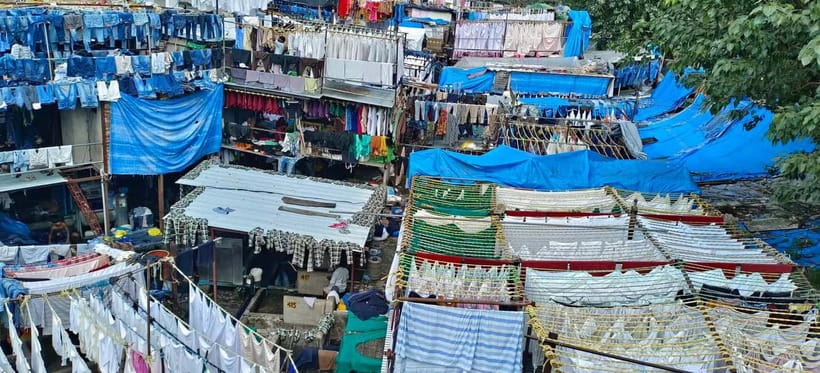
- Dhobi Ghat adds a second side of Mumbai: Learn how the open laundry works and see the scale of the operation up close.
- A local train ride may be part of the route: Several tour accounts describe train travel between Dharavi and Dhobi Ghat.
- The tour challenges film stereotypes: You visit a place linked with Slumdog Millionaire, then go beyond the narrow picture shown on screen.
- It is a remarkable bargain: At about $4.45 per person for three hours, the price is unusually low, though the exact meeting point and route can vary by booking option.
Why Dharavi is more than a movie location
The word slum can flatten a complicated place into one grim image. Dharavi is certainly crowded, and the tour does not pretend that living conditions are easy. But it also reveals a busy economy, close social ties, and a wide range of work done by people supporting their families.
Your guide may take you through residential lanes, working areas, markets, and small industrial spaces. Plastic recycling is one important part of the story. Used material is sorted, processed, and turned into something useful again. Garment and textile work, leather production, and other small businesses also operate within the community.
The stated annual economy of Dharavi is about 1 billion US dollars. That figure helps explain why this area matters to Mumbai. You are not walking through an abandoned district. You are seeing homes and enterprises sharing the same tight urban space.
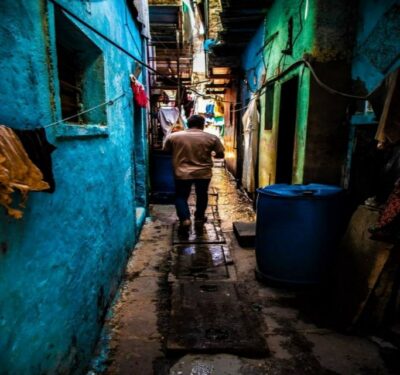
That contrast is the heart of the experience. A doorway may lead to a family home, while a nearby room serves as a workshop. Children play, adults work, neighbors meet, and goods move through narrow passages. Your guide provides the context that makes these details meaningful.
More Dhobi Ghat and dabbawala tours:
- Mumbai: Dharavi Slum, DhobiGhat, and Dabbawallas Tour
★ 4.9 · 689 reviews - Mumbai: Dharavi Slum & Dhobi Ghat Laundry Tour
★ 5.0 · 352 reviews - Mumbai: Dharavi Slum and Dhobi Ghat Laundry Tour
★ 5.0 · 317 reviews
Meeting a guide who knows Dharavi from the inside
The strongest part of this experience is the guide. The operator uses local English-speaking guides, and several named guides have been praised for their personal connection to Dharavi.
Bharti is described as having grown up in the area and knowing its lanes and residents well. Abi and Abhishek are also local guides who explain the working and residential sections in detail. Ansh, Anshika, Alkama, Faizan, Aarti, Ridhi, and Zee have led tours as well. The exact person you receive depends on availability, but the local connection is central to the experience.
This matters for two reasons. First, a local guide can explain details you would miss on your own. Second, a guide with community ties can help you move through the area with better judgment and respect.
Several guides are also praised for excellent English and a relaxed teaching style. Questions are welcomed, and the pace can be adjusted. One guide helped a visitor arrange onward transport, while another changed the plan when a train delay affected the route. Those small acts of care are useful in a city where movement can be confusing.
You should still remember that this is a three-hour walking tour through a dense area. Wear comfortable shoes, carry water, and dress for Mumbai’s heat. Water is included, but food and other drinks are not.
Walking through Dharavi’s workshops and homes
The Dharavi portion is not a single viewpoint. It is a walk through several kinds of space, each showing another piece of the community.
In the industrial sections, you may see plastic recycling, garment and textile work, leather production, and other local businesses. The point is not just to identify each trade. Your guide explains how work fits into the area’s economy and how people make a living in limited space.
The recycling section can be especially useful. From outside, waste is easy to view only as a problem. Inside Dharavi, recycling also provides work and turns discarded material into an economic resource. The process gives you a practical look at how urban industry works at a small scale.
The garment and textile areas show another side of the district. Production happens near homes, so the line between workplace and neighborhood is not always clear. Leather work and other trades add to the sense that Dharavi is a collection of linked industries, not one type of business.
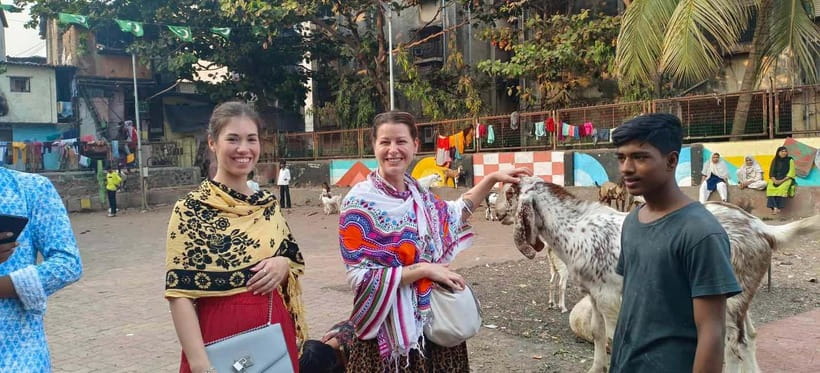
The residential lanes bring a different tone. You may see where families live, where children play, and how people use shared public areas for everyday tasks. This is the point where respectful behavior matters most. Do not treat someone else’s doorway, meal, conversation, or workday as a photo opportunity.
The tour aims to avoid sensational scenes. Guides are expected to explain what is happening rather than push you toward uncomfortable encounters. Still, Dharavi is a real neighborhood, not a museum. You may see poverty and crowding alongside energy and enterprise. The most honest approach is to hold both facts at once.
Going beyond Slumdog Millionaire
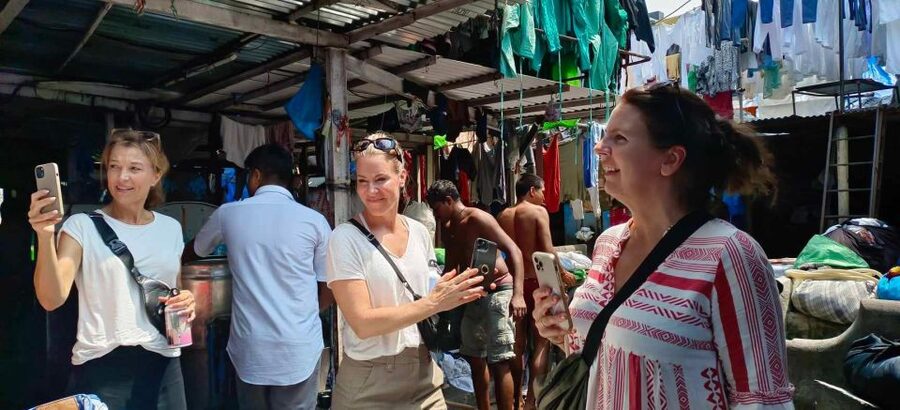
Dharavi has a strong connection to the movie Slumdog Millionaire, and the route includes a place where the film was shot. That can be a useful reference point, especially if the film shaped your first impression of the area.
But the film is only one narrow window. This tour tries to widen the view by showing workplaces, community routines, markets, residential sections, and local businesses. You get a chance to ask how real life compares with what appears on screen.
The movie connection can attract attention, but it should not become the whole reason for visiting. If you arrive expecting a film set or a dramatic scene, you will miss the stronger lesson. Dharavi is not defined by a single story. It is a place where people work, raise children, trade goods, and build a life in difficult conditions.
I appreciate that the tour directly challenges stereotypical depictions. That does not mean the guide hides problems. It means you are encouraged to see the area as a community with agency and economic purpose, not as a backdrop for poverty tourism.
More Dharavi walking tours:
- Dharavi slum tour in Mumbai by Female tour guides of the slum
★ 5.0 · 1,976 reviews - Dharavi Slum Tour
★ 5.0 · 625 reviews - Dharavi Slum tour in Mumbai by local resident
★ 5.0 · 572 reviews - Mumbai: Dharavi Slum Slumdog Millionaire Tour with a Local
★ 4.9 · 529 reviews
Dhobi Ghat and Mumbai’s open-air laundry
Dhobi Ghat gives the tour a clear change of subject. Here, the focus turns from Dharavi’s mixed economy to Mumbai’s long-running laundry system.
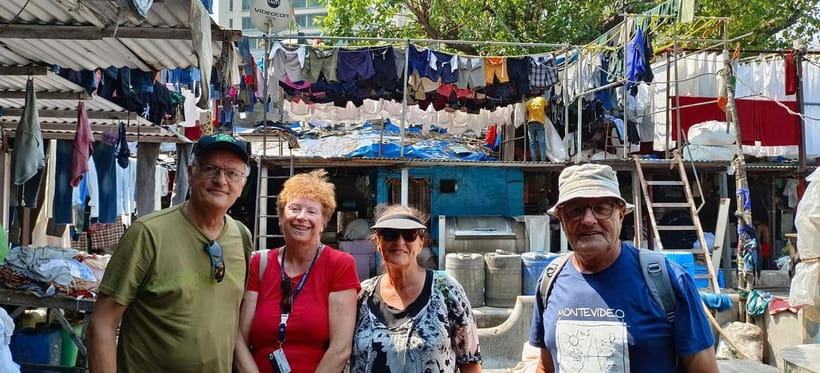
The open-air laundry is one of the city’s most memorable working sights. Clothes are washed, handled, and organized on a large scale, creating a system that is hard to understand fully from a distant photo. A guide explains how the operation works and why it has become such a distinctive part of Mumbai.
This stop is valuable because it shows another form of urban labor. Like Dharavi’s workshops, Dhobi Ghat depends on organization, skill, and a steady flow of work. You are seeing people perform a service that keeps the city running, not a decorative attraction designed for visitors.
The tour may take you inside or close to the laundry area, depending on the route and conditions. That closer view can be fascinating, but remember that people are working. Listen to your guide about where to stand and when photography is appropriate.
The train ride between the two areas is an added part of the experience on many departures. Riding with your guide gives you a practical taste of Mumbai’s rail system and links the two stops in a way that feels more like city life than a private vehicle transfer.
Train travel can also make the outing less predictable. Delays or building works may require a taxi or a route change. That is not necessarily a flaw, but you should avoid scheduling an important appointment immediately after the tour.
Is a slum tour ethical?
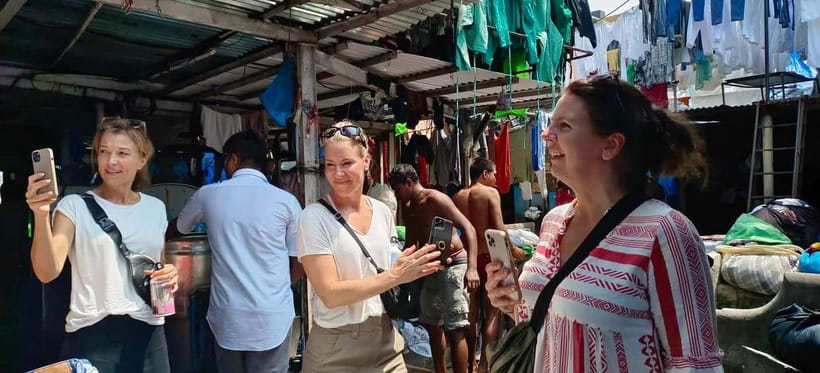
This is the question to ask before booking. Some people feel uncomfortable paying to enter a low-income neighborhood. That concern is reasonable, and the answer depends on how the tour is run and how you behave during it.
This experience is designed around local guides, many of whom live in or grew up in Dharavi. The stated purpose is to challenge stereotypes and explain how people live and work. That is different from treating residents as scenery.
Your own conduct still matters. Keep your voice low in residential areas. Ask before taking photographs, and accept a no without argument. Do not touch goods or equipment in workshops. Avoid staring at families and children. Listen more than you speak.
A good guide should explain the area’s challenges without turning hardship into entertainment. The named guides are praised for being respectful, patient, and careful about privacy. Some visitors have felt unsure at first, then more comfortable once the tour began because the guide set a considerate tone.
I would not book this if you want shocking photographs or a dramatic poverty story. I would book it if you want to understand the relationship between housing, work, recycling, transport, and community life in Mumbai.
Safety, comfort, and group size
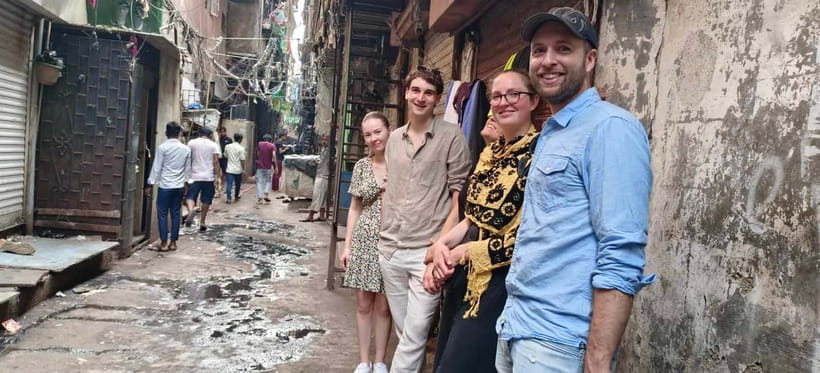
The tour is offered as a private or shared experience, with private and small-group options available. A small group is useful here because the lanes can be tight and questions are easier to handle. A private booking gives you more control over pace and discussion, though the exact price may differ by option.
Safety is another reason to use a local guide. The route passes through areas that can be difficult to navigate alone, and a guide can handle the practical details. Numerous accounts describe feeling safe, including solo female visitors and families with children aged 8 and 11.
That does not mean you should switch off your common sense. Stay with the guide, keep valuables secure, and follow local instructions. The experience includes walking and may include trains, so it is not the best choice for someone seeking a quiet, climate-controlled outing.
Heat can affect the pace. One guide was praised for checking that the walking speed suited the group on a hot day. Comfortable clothing, sensible footwear, and the included water will help.
The tour lasts three hours. That is long enough to cover both Dharavi and Dhobi Ghat without turning the day into an exhausting marathon. Since the meeting point can vary by the option selected, check the booking details carefully before you set out.
What you get for about $4.45
At roughly $4.45 per person, this is an exceptional price for a three-hour guided experience in Mumbai. The fee includes an English-speaking local guide, entry tickets, travel fees, water, and either a private or shared format depending on the option you select.
The value is not just in the number of stops. You are paying for local orientation, explanations, and help with transport. Without a guide, you might see a train platform or a laundry wall, but you would have less sense of how the parts connect.
The low price also means you should keep expectations realistic. This is not a luxury tour with meals, air conditioning, or a polished visitor center. Food and drinks are not included, and the day takes place in active neighborhoods.
Reserve now and pay later is available, and cancellation is free up to 24 hours before the start for a full refund. Starting times depend on availability, so check the current schedule rather than assuming a particular departure.
Who will get the most from this tour?
I would recommend it to first-time visitors who want to see Mumbai beyond famous monuments and hotel districts. It is also a strong choice if you are interested in urban economies, recycling, small manufacturing, transport, or the realities behind popular films.
Families can benefit if children are old enough to understand the need for respect. The experience has been done with children aged 8 and 11, but parents should prepare them in advance. Explain that residents are not part of a show and that questions should be directed to the guide, not shouted at people in the street.
Solo visitors may appreciate the local escort and the help with finding onward transport. A private or small-group option is especially useful if you want time for questions or prefer a gentler pace.
I would be more cautious about booking if you dislike walking, heat, crowds, or public transport. The tour is also not a fit for anyone mainly interested in taking photographs of poverty. You will get more from it if you arrive curious and willing to listen.
Should you book the Dharavi and Dhobi Ghat tour?
Yes, if you want a grounded look at how Mumbai’s people live and work. The mix of Dharavi’s recycling, garment, textile, leather, residential, and market areas with Dhobi Ghat’s laundry operation gives you more range than a single neighborhood visit.
The best reason to book is the local guide. Ask for someone with a strong connection to Dharavi if the booking system allows requests, though guide assignments are not guaranteed. Bharti, Abi, Ansh, and Alkama have each been praised for clear explanations, warmth, and personal knowledge of the area.
Book it with respectful expectations. Keep your camera away when asked, listen carefully, and allow the guide to explain what you are seeing. At this price, the tour offers remarkable value, but its real worth comes from the human context, not from collecting dramatic images.
FAQ
How long does the Mumbai Dharavi and Dhobi Ghat tour last?
The tour lasts three hours. Starting times depend on availability when you book.
What language does the guide speak?
The live tour guide speaks English. An optional English audio guide may also be available.
Is the tour private or shared?
Both options are available. You can select a private or shared tour, with small-group formats offered as well.
Does the tour include Dhobi Ghat and Dharavi?
Yes. The experience covers Dharavi and the Dhobi Ghat open-air laundry. The route may also include a local train ride between the two areas.
Are food and drinks included?
No. Food and drinks are not included, although water is provided.
Can I cancel the booking?
Yes. You can cancel up to 24 hours in advance for a full refund. Reserve now and pay later is also available.
Just added around Mumbai
- Temples & Vineyards: Private Tour to Nashik from Mumbai★ 4.5 · 3 reviews
- Mumbai: Private City sightseeing and Dharavi Slum Tour★ 5.0 · 3 reviews
- Mumbai: Full Day City Sightseeing with Lunch, Car & Guide★ 4.3 · 3 reviews
- Elephanta Island Private Speedboat Tour from Mumbai – 6pax★ 5.0 · 3 reviews
- Mumbai Sightseeing Tour by Public Transport with family Lunch★ 5.0 · 3 reviews
- Mumbai by Dawn★ 4.5 · 3 reviews
- Mumbai: Elephanta Island and Elephanta Caves Guided Tour★ 4.4 · 3 reviews
- Mumbai Dharavi Slum Community Tour★ 5.0 · 3 reviews
Dharavi Slum Tours, compared.
Dharavi slum tour in Mumbai by Female tour guides of the slum
Read our review →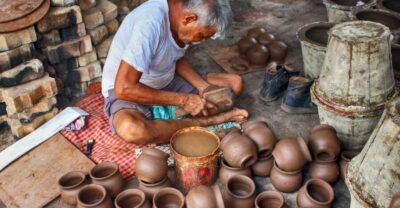
Dharavi Slum Slumdog Millionaire Tour with a Local
Read our review →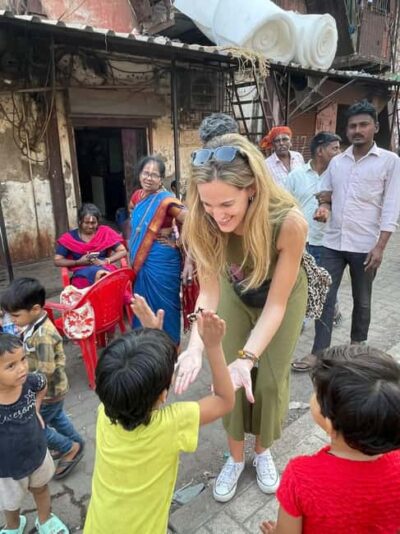
Mumbai Slum Tour – Visit Dharavi Slum with Local Guide
Read our review →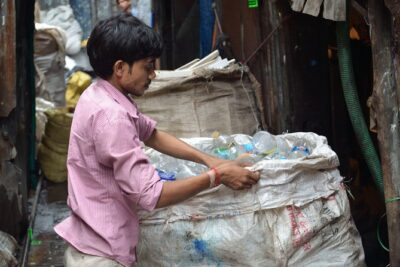
Browse the lists this tour appears in