
Reviewed · DHARAVI SLUM TOURS
Mumbai: Dharavi Slum & Dhobi Ghat Laundry Tour
Mumbai’s Dharavi and Dhobi Ghat tour gives you a close look at the work that keeps the city moving. In Dharavi, you’ll walk through residential lanes and working areas, see small industries in action, and learn how local businesses operate. At Dhobi Ghat, you’ll watch clothes being washed by hand in one of Mumbai’s best-known working sights.
I like two things in particular: the short local-train ride adds a real slice of Mumbai life, and the guides often make the tour personal rather than merely factual. Priti, Ruba, Subhan, and Ruqaiyya are named as guides, and Ruba and Ruqaiyya are especially praised for their calm, clear help.
The main consideration is that this is a walking tour through a crowded, working community, not a polished sightseeing attraction. You’ll need to be thoughtful with photography, and the quality of the commentary may depend on your guide. One past experience found Subhan’s English and delivery less strong than expected.
In This Review
- Key points to know before booking
- Why Dharavi is more than a sightseeing stop
- Walking through Dharavi with a local guide
- Kumbhar Wada, recycling, and the work behind Mumbai
- Dhobi Ghat and the rhythm of hand-washing
- The 15-minute Mumbai train ride
- Is $9.29 good value?
- Meeting point, timing, and practical planning
- Who will get the most from this tour?
- Should you book the Dharavi and Dhobi Ghat tour?
- FAQ
- How long does the Dharavi and Dhobi Ghat tour last?
- Where does the tour start and end?
- Is transportation included?
- What will I see in Dharavi?
- Is Dhobi Ghat included in the price?
- What is the cancellation policy?
Key points to know before booking
- Dharavi is a working community: See leather production, plastic recycling, pottery, and other small-scale businesses rather than a staged cultural display.
- Dhobi Ghat is a working laundry: More than 100,000 clothes are washed there each day using methods passed down over generations.
- The train ride is part of the story: A 15-minute ride shows you how ordinary Mumbai residents move through the city.
- Guides make a major difference: Priti, Ruba, Subhan, and Ruqaiyya are among the guides named for this tour.
- The group stays small: A maximum of 15 people makes it easier to hear explanations and ask questions.
- The price is low: At $9.29 per person, the tour offers three hours of guided sightseeing, bottled water, Dhobi Ghat access, and the local-train segment.
Why Dharavi is more than a sightseeing stop
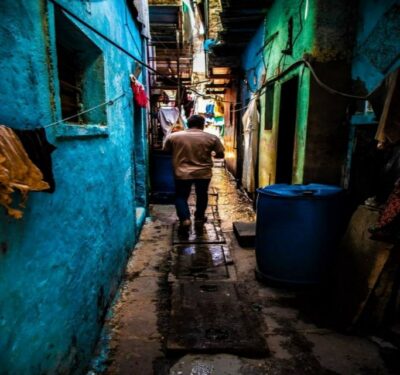
Dharavi is often reduced to a single label, but this tour gives you a fuller picture. You’ll see homes, workshops, lanes, and businesses sharing the same close quarters. The area is presented as a place where people work hard, adapt quickly, and build businesses on a small scale.
That matters because the tour is not only about hardship. It also looks at the entrepreneurial energy that helps drive Mumbai’s economy. You may see working areas connected with leather, plastic recycling, and pottery, including the centuries-old pottery community of Kumbhar Wada.
The tour description identifies an important leather-production area as Asia’s largest leather factory. You’ll also learn how recycling and other local industries function. Specific workshop access can vary, so you should expect to observe from the route rather than assume you’ll enter every business.
I like this focus because it gives you useful context for what you’re seeing. A narrow lane is not simply a narrow lane when your guide explains how homes, workshops, storage areas, and trade all fit into the same space.
More Dhobi Ghat and dabbawala tours:
- Mumbai: Dharavi Slum, DhobiGhat, and Dabbawallas Tour
★ 4.9 · 689 reviews - Mumbai: Dhobi Ghat Laundry and Dharavi Slum Tour with Local
★ 5.0 · 469 reviews - Mumbai: Dharavi Slum and Dhobi Ghat Laundry Tour
★ 5.0 · 317 reviews
Walking through Dharavi with a local guide
The Dharavi portion lasts about two hours. You’ll walk through both residential zones and working parts of the community, with your guide explaining daily routines, local industries, and the area’s development.
A local English-speaking guide can make a big difference here. Priti is praised for explaining life and business in Dharavi clearly. Ruba is described as confident and helpful, including with practical advice about Mumbai trains and platform details. Ruqaiyya is noted for her calm pace, patience, and ability to answer questions. Subhan receives strong praise for being friendly and informative, though one person found his English limited and his facts too plainly delivered.
That mixed point is worth taking seriously. The tour company uses several guides, so the tone may vary. You might get a warm storyteller who welcomes questions, or a guide whose English and presentation feel more basic. The subject itself remains worthwhile, but your enjoyment will depend partly on how well the guide connects the facts to what you see.
The route is also not designed for quick photo stops at every corner. You are moving through a real neighborhood where people live and work. Ask before taking pictures, avoid photographing people at close range without permission, and keep your camera from turning the community into a display.
One review described feeling uncomfortable as a Western visitor with a camera. That reaction is understandable, and it points to the right approach: watch first, listen carefully, and take fewer photographs. The tour is at its best when you treat residents as people going about their day, not as scenery.
Kumbhar Wada, recycling, and the work behind Mumbai
The most useful part of Dharavi is the range of work packed into a small area. The tour includes an introduction to plastic recycling, leather production, and the pottery community of Kumbhar Wada.
Kumbhar Wada offers a link to older traditions. The tour presents it as a centuries-old pottery community, giving you a chance to see how traditional work remains part of modern Mumbai. The details you receive will depend on the guide and the pace of the group, but this stop helps show that Dharavi is not defined by one industry.
Plastic recycling brings a different lesson. It points to the practical, often unseen work that supports a large city. You’ll see how small-scale industry can operate alongside homes and narrow residential lanes. The experience is useful for anyone who wants to understand Mumbai through its workers and local economy rather than only through monuments.
I would not book this expecting a quiet museum-style visit. The route is active, close-packed, and practical. You may find the surroundings confronting, especially if you have never walked through a neighborhood where living and working spaces are so closely linked.
Dhobi Ghat and the rhythm of hand-washing
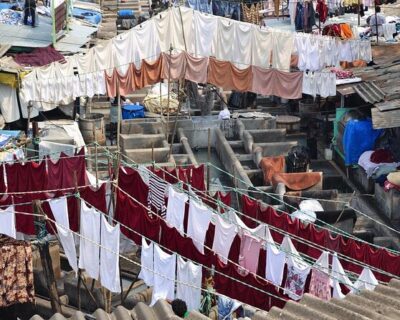
After roughly two hours in Dharavi, the tour turns to Dhobi Ghat for about an hour. This is Mumbai’s famous outdoor laundry, where more than 100,000 garments are washed each day using traditional methods.
The sight is striking because the work is both repetitive and highly organized. You’ll see a large-scale laundry operation carried out by hand, with methods passed along through generations. The tour explains the techniques and the role of the people who keep this long-running system working.
Dhobi Ghat gives the tour a different pace from Dharavi. In Dharavi, your attention moves from workshops to homes to local businesses. At the laundry, the central subject is the work itself: washing, handling, and processing huge amounts of clothing in an open-air setting.
The stop is included in the tour price, and it is one of the strongest reasons the $9.29 cost feels fair. You receive a guided explanation at a famous Mumbai sight without paying for a separate attraction. Still, you should keep your expectations sensible. This is an active laundry, not a performance arranged for visitors, and the best view or level of access may depend on the route and conditions that day.
More Dharavi walking tours:
- Dharavi slum tour in Mumbai by Female tour guides of the slum
★ 5.0 · 1,976 reviews - Dharavi Slum Tour
★ 5.0 · 625 reviews - Dharavi Slum tour in Mumbai by local resident
★ 5.0 · 572 reviews - Mumbai: Dharavi Slum Slumdog Millionaire Tour with a Local
★ 4.9 · 529 reviews
The 15-minute Mumbai train ride
The local-train segment lasts about 15 minutes and adds welcome movement between the two main parts of the tour. It gives you a brief look at the transport system used by people across Mumbai and puts the day’s walking into a wider city context.
I like this inclusion because it is not just a transfer. A short train ride can tell you something about Mumbai’s pace, density, and daily routines in a way that a private vehicle cannot. You’ll be moving as local commuters do, even if only for a few stops.
The tour does not include private transportation. You should therefore expect to use public transport as part of the plan. The precise train details are not specified in advance, but one guide, Ruba, has helped people with train and platform advice after the tour. That kind of practical assistance can be useful if you plan to continue around Mumbai independently.
You may find the train portion brief, especially if you are hoping for a long ride across the city. It is best viewed as a compact part of the tour, not the main attraction.
Is $9.29 good value?
At $9.29 per person, this is an unusually inexpensive way to spend three hours in Mumbai. The price includes a guide, bottled water, the Dhobi Ghat portion, and the local-train segment. Group discounts may also be available.
The value comes from the range of subjects covered. You get Dharavi’s community and industries, the pottery area of Kumbhar Wada, plastic recycling, leather work, Dhobi Ghat, and a short train ride. A private guide or a dedicated visit to each subject would cost more, so this works well if you want a broad introduction.
The low price also explains why you should not expect a private, highly customized tour. Groups can reach 15 people, and that is small enough for questions but large enough that you may need to stay close to the guide. If your group moves slowly or stops often, the three-hour schedule may feel full.
Bottled water is included, which is a useful touch during a walking tour. You should still plan for ordinary city walking and a route that may include crowded areas. The information provided does not specify hotel pickup, so you’ll need to reach the meeting point yourself.
Meeting point, timing, and practical planning
The tour begins at Third Wave CoffeeTip Road, Unit 58, Ground, Ram Mahal, Senapati Bapat Marg, Marinagar Colony, Station, Mahim, Mumbai, Maharashtra 400016. It ends back at the same meeting point.
The address is detailed, but one person had trouble finding the café after arriving from an overnight flight. I would allow extra time to locate the exact entrance and avoid arriving at the last moment. Confirmation is provided when you book, so keep the booking details available.
The tour lasts approximately three hours. Dharavi takes about two hours, Dhobi Ghat about one hour, and the train ride forms part of the overall movement between locations. Since private transport is not included, you should be prepared for a public-transport and walking format.
The group limit is 15 people. That is a reasonable size for this kind of route. You can ask questions without being lost in a huge crowd, though you should stay aware of the group in narrow lanes and at transport stops.
Most people can take part, according to the activity information. No special accessibility details are given, so anyone with specific mobility concerns should ask the provider before booking. Free cancellation is available if you cancel at least 24 hours before the start time. Cancellations within 24 hours are not refunded.
Who will get the most from this tour?
I would choose this tour if you want to understand how Mumbai works at street level. It suits you if you enjoy local transport, working neighborhoods, traditional trades, and guides who explain social and economic life as you walk.
It is also a good fit for a first visit to Mumbai. The route covers several subjects in one morning or afternoon, giving you a useful base for exploring the city on your own. You’ll see a famous laundry, ride a local train, and learn about Dharavi without spending much money.
You may not enjoy it as much if you want a relaxed sightseeing outing with plenty of open space. Dharavi is a real community, and the route can feel intense. Photography requires care, and the guide’s communication style may vary.
Families with older children, students, photographers who can work respectfully, and anyone interested in urban economies could find the tour useful. I would be more cautious about booking it for very young children if they are not comfortable with crowded walking routes, though the supplied information does not give a specific age recommendation.
Should you book the Dharavi and Dhobi Ghat tour?
I would book it for the combination of local insight and low cost. The tour covers more ground than its price suggests, and the train ride makes it feel connected to everyday Mumbai rather than separated from it.
Book with the understanding that Dharavi is not a theme park and Dhobi Ghat is not a staged show. You are visiting active places where people work and live. Go with respect, listen more than you photograph, and stay open to a guide whose job is to add context rather than provide constant entertainment.
If possible, arrive early at the Third Wave Coffee meeting point and confirm the exact location. The strongest guide experiences appear to come from people such as Priti, Ruba, and Ruqaiyya, while the mixed comments about Subhan show why the guide can shape the day. Even with that variable, the itinerary offers a rare look at Mumbai’s work, movement, and community life for $9.29.
FAQ
How long does the Dharavi and Dhobi Ghat tour last?
The tour lasts approximately three hours. About two hours are allocated to Dharavi and one hour to Dhobi Ghat, with a 15-minute local-train ride included in the overall experience.
Where does the tour start and end?
The tour starts at Third Wave CoffeeTip Road, Unit no. 58, Ground, Ram Mahal, Senapati Bapat Marg, Marinagar Colony, Station, Mahim, Mumbai, Maharashtra 400016, India. It ends back at the same meeting point.
Is transportation included?
Private transportation is not included. The tour does include a 15-minute ride on Mumbai’s local train.
What will I see in Dharavi?
You’ll learn about residential life and small-scale industries, including leather production, plastic recycling, and the pottery community of Kumbhar Wada. The route covers both working and residential areas.
Is Dhobi Ghat included in the price?
Yes. The Dhobi Ghat visit is included, along with bottled water and the guided tour.
What is the cancellation policy?
You can cancel for a full refund up to 24 hours before the start time. Cancellations or changes made less than 24 hours before the experience are not refunded or accepted.
Just added around Mumbai
- Temples & Vineyards: Private Tour to Nashik from Mumbai★ 4.5 · 3 reviews
- Mumbai: Private City sightseeing and Dharavi Slum Tour★ 5.0 · 3 reviews
- Mumbai: Full Day City Sightseeing with Lunch, Car & Guide★ 4.3 · 3 reviews
- Elephanta Island Private Speedboat Tour from Mumbai – 6pax★ 5.0 · 3 reviews
- Mumbai: Elephanta Island and Elephanta Caves Guided Tour★ 4.4 · 3 reviews
- Mumbai Sightseeing Tour by Public Transport with family Lunch★ 5.0 · 3 reviews
- Mumbai by Dawn★ 4.5 · 3 reviews
- Mumbai Dharavi Slum Community Tour★ 5.0 · 3 reviews
Dharavi Slum Tours, compared.
Dharavi slum tour in Mumbai by Female tour guides of the slum
Read our review →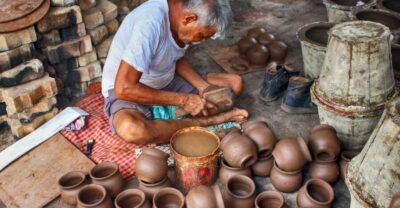
Dharavi Slum Slumdog Millionaire Tour with a Local
Read our review →
Mumbai Slum Tour – Visit Dharavi Slum with Local Guide
Read our review →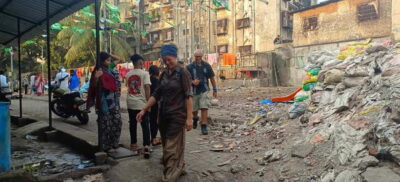
Dhobi Ghat Laundry and Dharavi Slum Tour with Local
Read our review →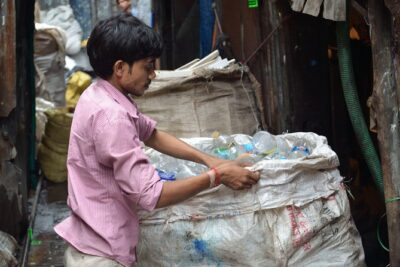
Browse the lists this tour appears in