
Reviewed · DHARAVI SLUM TOURS
Walking Tour of Dharavi Slum in Mumbai
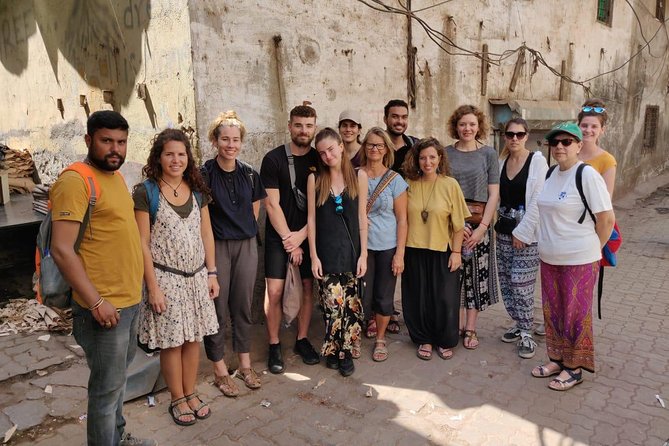
Dharavi is not just a place of cramped lanes and difficult living conditions. It is also a working neighborhood where recycling, pottery, leather, soap, embroidery, and garment production take place in remarkably small spaces. This small-group walking tour gives you a local guide’s view of that daily work and the community around it.
I like the tour’s focus on working industries rather than sightseeing from a vehicle. I also like that guides such as Ganesh, Alam, and Dawood have been praised for clear explanations, safety, and a respectful approach. The main consideration is that photography is restricted in some locations, and the walking route may feel hot, crowded, and physically demanding.
In This Review
- Key points to know before you book
- Seeing Dharavi as a living neighborhood
- Meeting near Mahim Station
- Inside the 90-minute walking route
- Plastic recycling and small-scale industry
- Leather work in Dharavi
- Pottery around Kumbhar Wada
- Garments, soap, embroidery, and religious diversity
- Guides who make the difference
- Is $12 a fair price?
- Who should choose this walk?
- Booking, timing, and cancellation details
- Should you book the Dharavi walking tour?
- FAQ
- How much does the Dharavi walking tour cost?
- How long does the tour last?
- Where does the tour start?
- Where does the tour end?
- Is hotel pickup included?
- What is included in the price?
- How large is the group?
- Can children join the tour?
- Can I take photographs during the walk?
Key points to know before you book
- Small groups of up to 15 people: The limited group size makes it easier to hear the guide and ask questions in narrow lanes.
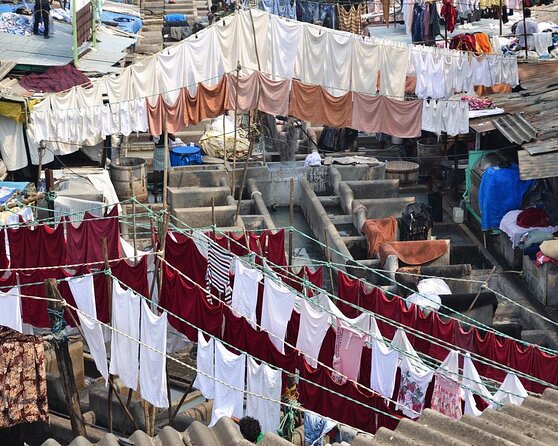
- A working neighborhood, not a staged attraction: You may see plastic recycling, leather work, pottery, soap-making, embroidery, and garments being made.
- Local guides shape the experience: Ganesh, Alam, Dawood, and other guides have been praised for their English, care, and personal explanations.
- Photography rules matter: Do not assume you can take pictures. Some places prohibit photography to protect residents’ privacy.
- Plan for a 90-minute to two-hour walk: The route begins near Mahim Station and ends opposite Sai Multispeciality Hospital in Dharavi.
- Good value at $12: The price covers a local guide and a focused introduction to one of Mumbai’s most misunderstood communities.
Seeing Dharavi as a living neighborhood
The word slum can create a narrow picture in your mind. This tour works best when you arrive ready to replace that picture with something more complete. Dharavi faces serious housing and infrastructure challenges, but it is also home to almost one million people, many of whom work in small businesses that serve Mumbai and other markets.
Your guide leads you on foot through a place where homes, religious buildings, workshops, shops, and community spaces sit close together. The route brings you near temples, mosques, and churches, showing the mix of people who have come to Dharavi from across India.
I appreciate the tour’s stated aim of challenging negative stereotypes. That does not mean pretending hardship is absent. It means looking at the neighborhood as a place where people live, earn money, raise families, and maintain strong community ties.
The best guides keep that balance. The strongest experiences described here do not treat Dharavi as a curiosity. They explain how businesses function, why certain industries developed here, and how residents make use of very limited space.
You should also remember that this is someone’s home and workplace. Dress modestly, listen to instructions, and avoid treating the walk like a photo hunt. The no-photo rule is not a small nuisance. It is part of making the experience more respectful.
More Dharavi walking tours:
- Dharavi slum tour in Mumbai by Female tour guides of the slum
★ 5.0 · 1,976 reviews - Mumbai: Dharavi Slum, DhobiGhat, and Dabbawallas Tour
★ 4.9 · 689 reviews - Dharavi Slum Tour
★ 5.0 · 625 reviews
Meeting near Mahim Station
The tour starts in the morning near Mahim Station, in the Mahim area of Mumbai. The supplied meeting information names a coffee shop location, with one description referring to Cafe Coffee Day and the detailed address identifying Third Wave Coffee at Tip Road, Unit No. 58, Ground, Ram Mahal, Senapati Bapat Marg, Marinagar Colony, Mahim, Mumbai 400016.
Because those names do not match exactly, I would confirm the precise meeting point before setting out. Mahim Station is the useful landmark, and the tour is close to public transportation, but you do not want to spend the first minutes of your morning searching for the correct cafe.
Hotel pickup and drop-off are not included. You need to reach Mahim on your own and arrange your return from Dharavi after the walk. The route ends opposite Sai Multispeciality Hospital and Research Centre on 90 Feet Road, behind Sion Hospital, in the Kumbhar Wada area of Dharavi.
That end point is useful to know if you have another Mumbai activity planned. You are not returning to Mahim, so allow time for onward transport. The tour itself lasts about one hour and 30 minutes to two hours, depending on the pace and the questions asked.
Inside the 90-minute walking route
The main Dharavi walk takes about one hour and 30 minutes, followed by short looks at particular industries. The exact order can vary with the guide and local conditions, but you should expect a steady walk through working areas rather than a series of formal museum stops.
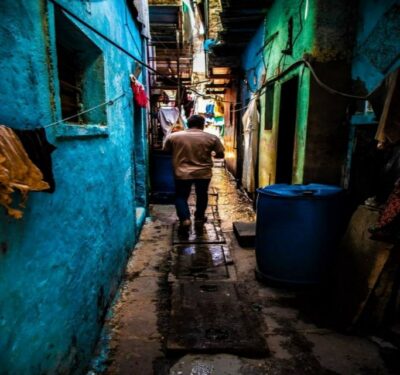
Narrow lanes are part of the experience. You may see workshops operating beside homes, with materials being sorted, shaped, washed, stitched, or stored in limited spaces. The guide’s explanation is what turns these scenes into something useful. Without context, a quick look at a workshop tells you little. With context, you begin to understand how the work fits into local life.
The group limit of 15 people is helpful here. A huge group would be awkward in tight passages and would make it harder to hear. Even with a small group, stay close to the guide and be ready for a walking pace that does not always feel leisurely.
The tour requires moderate physical fitness. The supplied information does not promise seating, rest stops, or a smooth route, so sensible shoes and water are important. One guide stopped at a shop so people could buy bottled water, but I would bring your own rather than count on that happening.
Plastic recycling and small-scale industry
Plastic recycling is one of the most interesting parts of the route. You may see materials being handled and processed in confined workspaces, with the guide explaining the techniques used and the role this industry plays in the local economy.
This is where the tour can offer a useful correction to the idea that Dharavi is simply a place of poverty. Recycling requires organization, labor, and practical skill. The work may not look polished, but it is part of a functioning network of small businesses.
Some people may find the industrial areas more compelling than the residential lanes because there is a clear process to follow. Others may find the sights and smells intense. The tour does not appear to be designed as a comfort-first outing, and that is worth accepting before booking.
If plastic recycling is a priority for you, tell the guide early. One account of the tour felt that too much time was spent on this topic and not enough on other areas. That is a useful reminder that the route can feel different depending on the group’s interests and the guide’s emphasis.
More guided walks on foot:
- Group Guided Walking Tour in Fort and Colaba
★ 5.0 · 1,073 reviews - Private Guided Walking Tour in Fort & Colaba
★ 5.0 · 895 reviews - Private Guided Walking Tour in Bandra Queen of Suburbs
★ 5.0 · 383 reviews - Private Guided Spiritual Walk in Banganga Hindu Temples
★ 5.0 · 271 reviews
Leather work in Dharavi
Leather is described as Dharavi’s most dominant industry, making it a central part of the walk. A short section of the route is devoted to leather production, where you may learn how materials are handled and how workshops operate.
This stop is valuable because it shows the relationship between cramped space and practical production. Dharavi’s businesses do not rely on large, modern factories. Instead, many use compact rooms and improvised systems to keep work moving.
You should be prepared for an industrial setting rather than a shopping stop. The tour includes a local guide, but food, drinks, and purchases are not included. If you are interested in buying leather goods, the supplied information does not promise a retail visit, so do not book the walk on that assumption.
The guide’s commentary is especially important here. A quick pass through a workshop could feel intrusive or confusing. A good explanation helps you understand what you are seeing without turning workers into a display.
Pottery around Kumbhar Wada
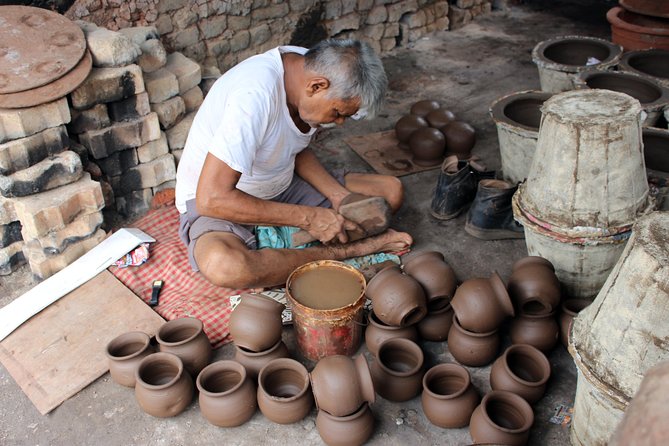
Pottery is another notable industry on the route. The itinerary allows about 10 minutes for a pottery-related stop, described as a place where pottery is made and sold.
The pottery area gives the tour a different rhythm from recycling and leather. Instead of sorting industrial material, you may see a craft shaped by hand and fire, carried out in a neighborhood where production and home life remain close together.
The short timing means this is an introduction, not a full pottery lesson. You will not have time for a long workshop or detailed demonstration unless the guide adjusts the route. Still, the stop helps show that Dharavi’s economy is not built around one trade.
A guide may also connect pottery to the Kumbhar Wada area named at the tour’s endpoint. Do not expect a staged cultural show. The value comes from seeing real work in its everyday setting.
Garments, soap, embroidery, and religious diversity
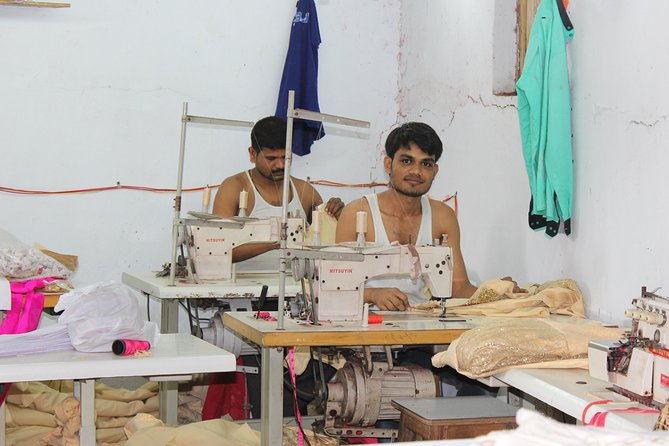
The tour can also include garment-making, embroidery, and soap production. One particularly memorable account described an invitation into a garment-making workshop, while another praised a guide for explaining several types of small manufacturing in one walk.
These stops show how varied Dharavi’s work can be. You may move from one small business to another, with each using different tools, materials, and skills. The point is not to count factories. It is to see how many livelihoods can fit into a compact neighborhood.
The community side of the tour is just as important. Temples, mosques, and churches are found close to one another, reflecting the many parts of India represented in Dharavi. Your guide can explain that diversity in a way a map or passing taxi cannot.
The experience may include contact with residents, but you should keep your behavior low-key. Do not photograph people without permission, and follow the guide’s directions about where cameras are forbidden. The tour’s privacy rules are one of its strongest ethical features.
Guides who make the difference
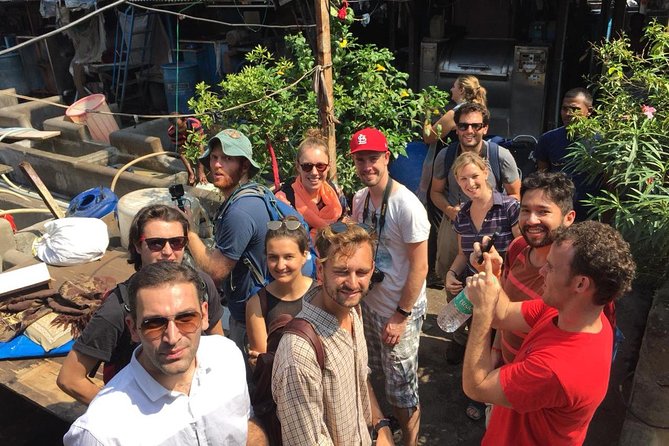
The guide is the heart of this experience. Names connected with highly praised tours include Ganesh, Alam, and Dawood. Ganesh was described as especially effective at explaining the history of Dharavi, its plastic recycling, and ceramics. Alam was praised for safety and clear information about the community. Dawood was described as reassuring, clear, and careful about showing key parts of the neighborhood.
Those details matter because Dharavi is not a place you should explore without context on a first visit. A local guide helps you understand what you are seeing and how to behave around homes and workplaces.
The small group also allows some flexibility. A solo booking was adapted to the person’s interests and limited schedule, showing that the pace may be adjusted when the group is tiny. Do not count on a private tour, but a smaller booking can make conversation easier.
English ability has been praised, though no language guarantee is provided in the supplied details. If language is important to you, confirm it at booking.
Is $12 a fair price?
At $12 per person, this is an inexpensive way to spend up to two hours with a local guide in Mumbai. The fee includes the guide but not transport, food, drinks, or hotel pickup.
I see good value here because the experience focuses on access and explanation rather than expensive entry tickets. You are paying for a guided introduction to a neighborhood that would be difficult to understand from the outside. The small maximum group of 15 also adds value.
The price does not cover a meal or a workshop activity. One account described a guide taking the group for lunch in a Dharavi apartment, but that should not be treated as a standard inclusion. Bring water and carry money only if you want to buy something independently.
Group discounts are available. If you are traveling with family or friends, check the final price for your party. The tour is often booked 33 days ahead on average, so popular morning dates may need early planning.
Who should choose this walk?
I would recommend it to you if you want a human and economic view of Mumbai, not only grand buildings and famous landmarks. It suits curious adults, older children, and anyone willing to walk, listen, and accept a less polished setting.
Children must be accompanied by an adult, and the minimum age is five. That does not mean every five-year-old will enjoy the walk. Young children may struggle with the heat, the pace, narrow lanes, or industrial surroundings, so think about your child’s comfort and attention span.
The tour is also a good fit if you care about responsible tourism. The local guide, photography limits, and focus on community life encourage a more respectful visit. It is less suitable if you want unrestricted photography, a relaxed stroll, or a predictable sightseeing route.
Wear clothing that covers you appropriately. Very short clothes are discouraged. You should also have moderate physical fitness, since the experience is on foot and the route may be demanding in places.
Booking, timing, and cancellation details
You receive confirmation at booking unless you reserve within 12 hours of the start. Last-minute confirmation then depends on availability.
Free cancellation is available up to 24 hours before the local start time for a full refund. Inside that 24-hour window, cancellations and changes are not accepted for a refund.
The tour is offered by Amaze Mumbai Tour. Since the meeting details name both Cafe Coffee Day and Third Wave Coffee, I would check the final confirmation carefully and contact the operator if the location is unclear.
Should you book the Dharavi walking tour?
Book this tour if you want to see Dharavi as a working, diverse community and you are comfortable walking through a crowded urban neighborhood with strict privacy rules. At $12, it offers strong value, especially when the guide explains recycling, leather, pottery, garments, and local religious life with care.
Skip it if your main goal is photography, shopping, or a gentle sightseeing morning. The best reason to go is not to collect dramatic images. It is to leave with a more accurate understanding of how people live and work in one of Mumbai’s most misunderstood areas.
FAQ
How much does the Dharavi walking tour cost?
The listed price is $12 per person. Group discounts are available.
How long does the tour last?
The experience lasts approximately one hour and 30 minutes to two hours.
Where does the tour start?
The meeting point is near Mahim Station, in the Mahim area of Mumbai, outside or near the named coffee shop location. The detailed address lists Third Wave Coffee at Tip Road, Unit No. 58, Ground, Ram Mahal, Senapati Bapat Marg, Marinagar Colony.
Where does the tour end?
The tour ends opposite Sai Multispeciality Hospital and Research Centre on 90 Feet Road in Dharavi.
Is hotel pickup included?
No. Hotel pickup and drop-off are not included.
What is included in the price?
A local guide is included. Food and drinks are not included.
How large is the group?
The tour has a maximum of 15 travelers.
Can children join the tour?
Children must be accompanied by an adult, and the minimum age is five.
Can I take photographs during the walk?
Photography is not allowed at certain locations. Follow the guide’s instructions and respect residents’ privacy.
Just added around Mumbai
- Temples & Vineyards: Private Tour to Nashik from Mumbai★ 4.5 · 3 reviews
- Mumbai: Private City sightseeing and Dharavi Slum Tour★ 5.0 · 3 reviews
- Mumbai: Full Day City Sightseeing with Lunch, Car & Guide★ 4.3 · 3 reviews
- Elephanta Island Private Speedboat Tour from Mumbai – 6pax★ 5.0 · 3 reviews
- Mumbai by Dawn★ 4.5 · 3 reviews
- Mumbai: Elephanta Island and Elephanta Caves Guided Tour★ 4.4 · 3 reviews
- Mumbai Sightseeing Tour by Public Transport with family Lunch★ 5.0 · 3 reviews
- Mumbai Dharavi Slum Community Tour★ 5.0 · 3 reviews
Dharavi Slum Tours, compared.
Dharavi slum tour in Mumbai by Female tour guides of the slum
Read our review →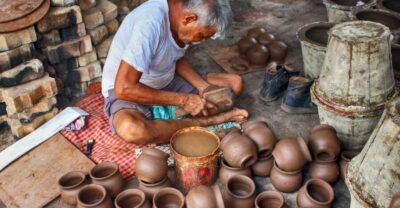
Dharavi Slum Slumdog Millionaire Tour with a Local
Read our review →
Mumbai Slum Tour – Visit Dharavi Slum with Local Guide
Read our review →
Dhobi Ghat Laundry and Dharavi Slum Tour with Local
Read our review →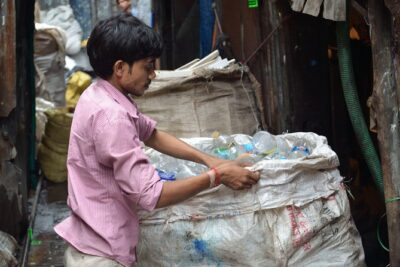
Browse the lists this tour appears in