
Reviewed · MUMBAI TEMPLE & SPIRITUAL TOURS
Private Guided Spiritual Walk in Banganga Hindu Temples
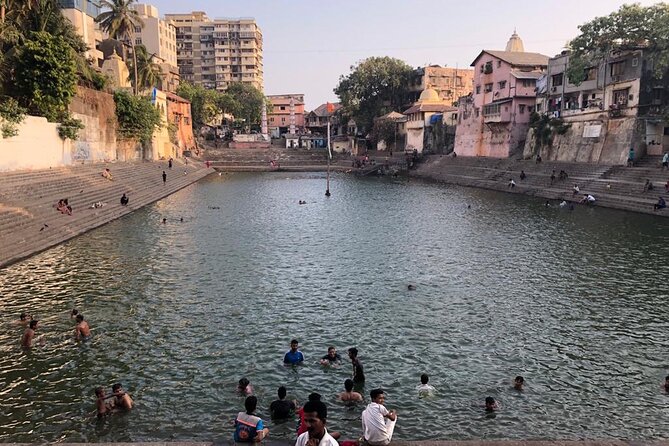
Banganga Tank feels like a quiet pocket of old Mumbai tucked into Malabar Hill. Around its rectangular freshwater pool, stone steps lead to temples, shrines, guesthouses, and small corners where religious life continues. The setting gives you something most city sightseeing does not: a close look at how faith, local tradition, and urban life share the same small space.
I like the private format, since your guide can shape the pace and answer the questions that interest you most. I also like the storytelling. Guides including Vasant Sanzgiri, Sudhakar, Ajay, Sonali, and Jimmy have been praised for bringing together mythology, history, science, architecture, and the social life around the tank.
The main consideration is time. The tour is advertised at about two hours, but some walks run closer to two and a half hours, and the ground around the temples may not suit anyone wanting a very easy, fully seated outing. Temple admission is not included, so carry a little extra money if entry is required.
In This Review
- Key points before you book
- Why Banganga feels different from central Mumbai
- Starting on Walkeshwar Road
- Circling Banganga Tank
- Exploring the Walkeshwar Temple Complex
- The guides make or break the walk
- What the private format is worth at $36.81
- Timing, effort, and what to bring
- Who will enjoy this experience most
- How to make the most of Banganga
- Should you book the Banganga spiritual walk?
- FAQ
- How long does the Banganga spiritual walk last?
- Where does the tour begin and end?
- Is this a private tour?
- Is temple admission included?
- Can most people participate?
- What happens if the weather is poor?
Key points before you book
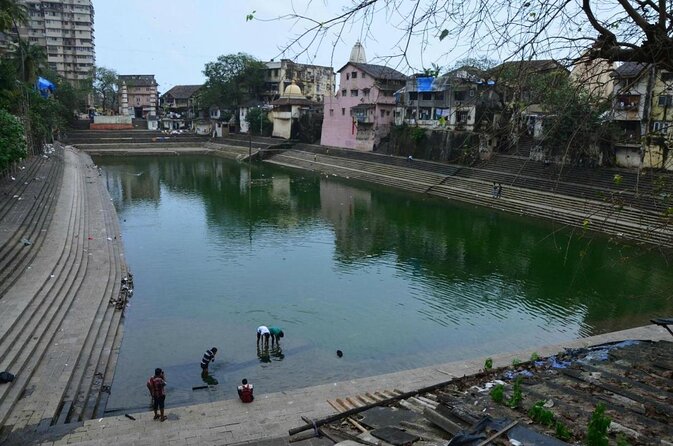
- Banganga Tank is the heart of the walk: You circle a sacred freshwater pool surrounded by steps, shrines, and temples.
- The Walkeshwar Temple Complex adds context: The tour looks beyond one monument at the wider religious district.
- A private guide changes the experience: Only your group takes part, allowing for a more personal pace and conversation.
- Storytelling is the main attraction: Expect mythology, faith, science, architecture, and local customs rather than a simple photo stop.
- The walk can last longer than two hours: Plan for up to roughly two and a half hours if your guide pauses often.
- The price is moderate for a private tour: At $36.81 per person, the value improves with two or more people sharing the experience.
Why Banganga feels different from central Mumbai
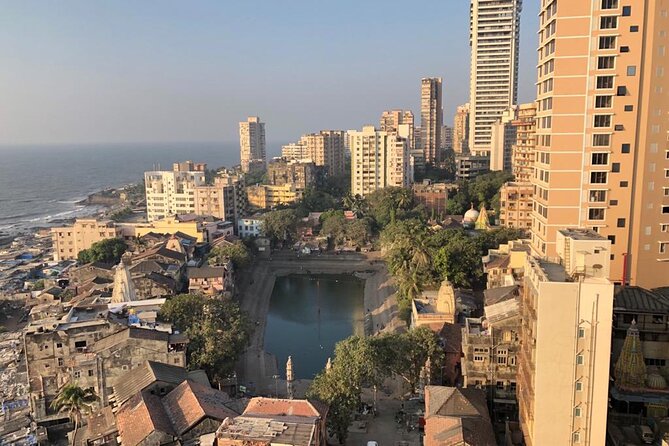
Mumbai is often introduced through grand railway buildings, busy markets, colonial streets, and waterfront views. Banganga offers another side of the city. Here, the focus is not a single grand structure but a sacred water body and the district that grew around it.
The rectangular tank sits at the center of a holy temple area on the tip of Malabar Hill. Its steps bring you close to the water and create a clear route for walking around the site. Temples and shrines line the edges, including parts of the Walkeshwar Temple Complex.
I find this kind of place especially useful early in a Mumbai visit. It helps you understand that the city is not only a modern commercial center. Its identity also comes through pilgrimage, ritual, family traditions, local housing, and the many ways a religious site continues to function inside a dense city.
The guide is important here because Banganga is not a place you can fully understand by looking at the stones alone. Without context, you may see a tank, a few temples, and a set of steps. With a strong guide, the same space becomes a sequence of stories about belief, custom, architecture, and the people who live around it.
More temple and shrine visits:
- Mumbai: Kanheri Caves and The Golden Pagoda Temple
★ 4.7 · 108 reviews - Sanjay Gandhi National Park(SGNP) + Kenheri Caves + Lion Safari + Jain Temple
★ 5.0 · 88 reviews - Mumbai Markets and Temples Tour
★ 5.0 · 59 reviews
Starting on Walkeshwar Road
The meeting point is on Walkeshwar Road in Teen Batti, Malabar Hill. The activity ends at the same place, which makes the outing easier to fit into a day of sightseeing. You do not need to arrange a second pickup point or work out where to go after the walk.
The area is near public transportation, but the supplied details do not specify a particular station, bus route, or pickup service. I would confirm your exact meeting instructions after booking, especially if you are using a taxi or ride-hailing service. The booking confirmation is issued within 48 hours, subject to availability.
Because this is a private activity, your group is the only group taking part. That matters more here than it would on a standard city walk. Banganga is a place where you may want to pause, ask about a ritual, or request more explanation about a shrine. A private guide can spend time on those questions instead of moving a large group along.
The pace is described as a walking tour, so wear practical shoes. You may encounter steps and uneven surfaces around the tank and temples. The information says most participants can take part, but it does not promise wheelchair access or a fully accessible route.
Circling Banganga Tank
The first listed stop is Banganga itself, a sacred water body at the center of the temple district. The scheduled stop is shown as 10 minutes, but the full walk includes movement around the tank and time spent hearing the stories connected to it.
The best way to approach this stop is not as a quick photograph. Look at the relationship between the water, the steps, and the buildings around it. The tank gives the district its shape, while the surrounding temples and shrines give it religious purpose.
Your guide may explain how mythology and local belief connect the tank to the spiritual identity of the area. The experience is designed to cover more than religious legend. It can also touch on science, visual details, traditions, and the changing social life of the neighborhood.
That mix is one of the strongest reasons to book this walk. You do not have to share the faith to appreciate the setting. The guide can help you observe respectfully and understand why the place matters to people who come here for prayer and pilgrimage.
A walk around the tank is also a good lesson in scale. Banganga is not presented as a vast complex that takes a full day to cover. Its appeal comes from concentration. Within a compact area, you see water, stone, temples, steps, shrines, and community life close together.
If you are taking photographs, be thoughtful. This is an active religious site, not a museum display. Follow your guide’s advice about customs, people, and places where photography may not be suitable. One guide, Jimmy, has been specifically praised for being mindful of religious customs and the environment, a useful quality for this kind of visit.
Exploring the Walkeshwar Temple Complex
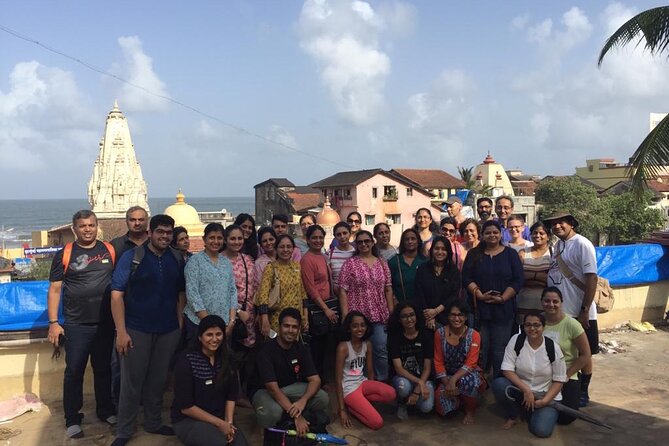
The second listed stop is Walkeshwar Temple, with admission not included in the tour price. The exact admission cost is not provided, so ask your guide about current entry arrangements and any rules on the day.
Walkeshwar is important because it gives the tank a wider setting. You are not simply looking at an isolated pool. You are walking through a district of temples and shrines where the religious life of the area extends beyond the water.
The tour may bring out details you would likely miss alone. These can include the way buildings face the tank, the role of smaller shrines, the visual language of the stone temples, and the customs that shape movement through the complex.
The strongest guides appear to make this section conversational rather than overly formal. Ajay has been praised for mixing history with trivia and keeping the walk suitable for different ages. Sonali has been noted for explaining not only spiritual beliefs but also the social and economic life around the temples, including guesthouses.
That wider view is valuable. Sacred places are also working neighborhoods. People may live, worship, work, host pilgrims, and maintain traditions in the same few streets. If you want a tour that treats the area as a living community rather than a collection of monuments, this is the part that should appeal to you most.
The information does not promise entry into every temple or access to every interior. Temple admission is not included, and customs may limit what you can see. Consider that a normal part of visiting an active religious district rather than a flaw in the experience.
More guided walks on foot:
- Group Guided Walking Tour in Fort and Colaba
★ 5.0 · 1,073 reviews - Private Guided Walking Tour in Fort & Colaba
★ 5.0 · 895 reviews - Private Guided Walking Tour in Bandra Queen of Suburbs
★ 5.0 · 383 reviews - Mumbai: Dharavi Slum Walking Tour by First Female Tour Guide
★ 4.9 · 192 reviews
The guides make or break the walk
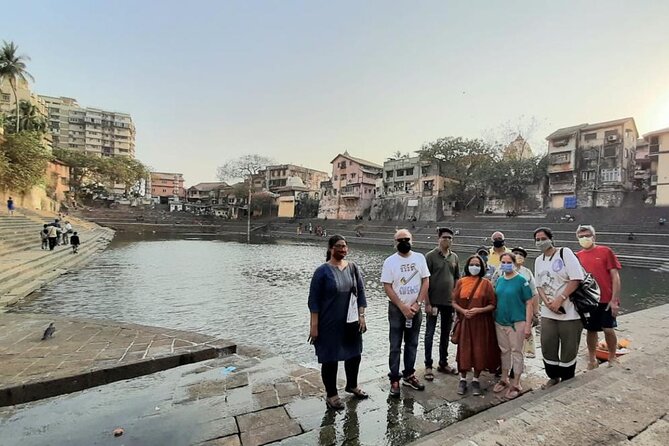
The tour is operated by M/s Khaki Tours, with several guides associated with this walk. The name assigned to your booking may vary, so you should not assume that one particular guide will lead your group.
Vasant Sanzgiri is associated with detailed, passionate storytelling. His approach appears especially suited to you if you want the walk to connect mythology, faith, and science rather than treating each subject separately. He has also led longer versions of the experience, with the storytelling extending the walk beyond the advertised two hours.
Sudhakar is associated with a quieter style. That can suit you if you prefer a calm explanation of the pilgrimage route and the practice of walking around the tank, known as a parikrama. His approach is less about theatrical performance and more about creating a thoughtful visit.
Ajay is a good fit for history fans and anyone who enjoys small facts and local trivia. Sonali brings attention to religion as well as the social and economic setting around the temples. Jimmy is noted for handling customs and the surroundings with care while still keeping the walk engaging.
These different styles matter because a private tour is only as good as the person guiding it. The experience has a 4.9 rating from 271 ratings and a 99 percent recommendation figure, which points to consistently strong guide-led delivery. Still, your experience will depend on the guide assigned, your questions, and the amount of time you want to spend at each point.
What the private format is worth at $36.81
The listed price is $36.81 per person. For a large group tour, that might feel high for a two-hour walk. For a private activity, the calculation is different.
You are paying for a guide who works only with your group, not for a long list of included attractions. The main value is interpretation: understanding what you are seeing, asking questions without holding up strangers, and adjusting the walk to match your interests.
The price becomes more attractive when two or more people share the booking. Group discounts are available, though the exact discount is not provided. Check the final price for your group size before booking.
I would consider this a good use of money if you have already seen Mumbai’s major landmarks and want a more personal look at local religious life. It is also useful if you enjoy cultural history but do not want a full-day excursion.
The value is weaker if you only want a quick temple visit, a long list of monuments, or a tour with entrance fees included. The walk focuses on one compact district, and temple admission is separate.
Timing, effort, and what to bring
The advertised duration is about two hours. Several accounts describe the walk lasting close to two and a half hours, especially when the guide spends time on stories and questions. I would keep at least half a morning or afternoon free rather than scheduling a tight connection immediately afterward.
Good walking shoes are sensible. You may use steps around the tank and move through temple areas where the surface is not designed like a modern attraction. Light, respectful clothing is also a practical choice for a religious setting.
Bring water, especially in warm weather. The tour requires good weather, and poor conditions can lead to a new date or a full refund. Since the walk takes place outdoors and around an active temple district, a weather check on the day is worthwhile.
The meeting point and ending point are the same, which helps with planning. The activity is near public transportation, and most people can participate, but the provided information does not give a detailed accessibility assessment. If you have mobility needs, ask Khaki Tours about steps, surfaces, and temple access before reserving.
Who will enjoy this experience most
I would recommend the walk to you if you enjoy:
- Religious sites explained through local customs and stories
- Mumbai history that goes beyond famous landmarks
- Small-group or private guiding
- Architecture, shrines, water structures, and neighborhood life
- Tours where questions and conversation matter
- A compact outing that fits into a larger Mumbai itinerary
It is especially useful for history fans. Ajay’s style, in particular, has been praised for trivia and historical detail, while Vasant’s storytelling suits anyone interested in the meeting point of mythology, faith, and science.
Families and mixed-age groups may also find the private setup helpful. You can ask the guide to slow down, explain an unfamiliar practice, or spend less time on a subject that does not interest everyone.
I would be more cautious if you want a completely relaxed walk with no steps, or if you expect a major monument with extensive interiors. Banganga is meaningful because it is active and compact. That also means the experience depends on observation, listening, and respect rather than spectacle.
How to make the most of Banganga
Go in with a few questions. Ask how the tank functions today, how the temples relate to it, and how local traditions have changed over time. A private guide is most useful when you treat the walk as a conversation.
Give yourself permission to pause. The listed stops are short, but the total walk allows time to look closely at the water, stonework, shrines, and streets around the complex. If the guide offers a longer explanation, it may be worth accepting rather than rushing to the next sight.
Be attentive to the difference between legend and historical evidence. The experience brings mythology, faith, and science together, which can make the site more interesting. You can enjoy the stories while still asking how each part is understood as belief, tradition, or documented history.
Plan another nearby activity before or after only if you allow generous travel time. The official duration is approximate, and the walk can stretch when the guide is explaining the area in detail.
Cancellation is free up to 24 hours before the start time for a full refund. Cancellations or changes made within 24 hours are not refunded, and bad weather may result in another date or a full refund.
Should you book the Banganga spiritual walk?
Book it if you want to understand a less obvious side of Mumbai and prefer a guide who can connect sacred stories with architecture, local customs, and everyday community life. The private format, strong rating record, and range of guide styles make $36.81 per person reasonable, especially when shared by a small group.
Skip it if you want a fast photo stop, guaranteed temple interiors, or an attraction with all admissions included. Banganga asks for patience and respectful attention.
For the right visitor, this is a memorable two-hour look at Mumbai as a pilgrimage city. The tank is small, but the ideas around it are not. With a good guide, you leave knowing not only what you saw, but why this place still matters.
FAQ
How long does the Banganga spiritual walk last?
The advertised duration is approximately two hours. The walk can sometimes take closer to two and a half hours when the guide spends extra time on stories and questions.
Where does the tour begin and end?
It begins on Walkeshwar Road in Teen Batti, Malabar Hill, Mumbai. The activity ends back at the same meeting point.
Is this a private tour?
Yes. Only your group participates, allowing the guide to offer a more personal pace and answer your questions directly.
Is temple admission included?
No. Admission to Walkeshwar Temple is not included in the tour price. The current entry cost is not provided.
Can most people participate?
The available information says most people can participate. It does not provide a full accessibility description, so ask the provider about steps and walking surfaces if you have mobility concerns.
What happens if the weather is poor?
The experience requires good weather. If it is canceled because of poor conditions, you will be offered a different date or a full refund. You can also cancel for a full refund up to 24 hours before the start time.
Just added around Mumbai
- Temples & Vineyards: Private Tour to Nashik from Mumbai★ 4.5 · 3 reviews
- Mumbai: Private City sightseeing and Dharavi Slum Tour★ 5.0 · 3 reviews
- Mumbai: Full Day City Sightseeing with Lunch, Car & Guide★ 4.3 · 3 reviews
- Elephanta Island Private Speedboat Tour from Mumbai – 6pax★ 5.0 · 3 reviews
- Mumbai: Elephanta Island and Elephanta Caves Guided Tour★ 4.4 · 3 reviews
- Mumbai Sightseeing Tour by Public Transport with family Lunch★ 5.0 · 3 reviews
- Mumbai by Dawn★ 4.5 · 3 reviews
- Mumbai Dharavi Slum Community Tour★ 5.0 · 3 reviews
Mumbai Temple & Spiritual Tours, compared.
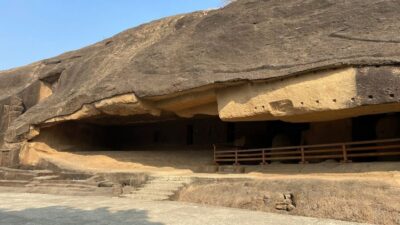
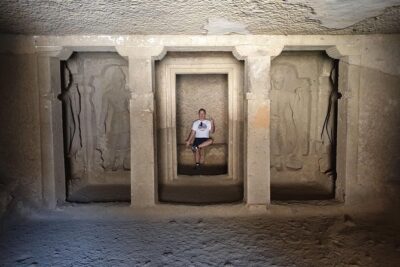
Sanjay Gandhi National Park(SGNP) + Kenheri Caves + Lion Safari + Jain Temple
Read our review →
Sanjay Gandhi National Park+ Kanheri Caves + Temple +Tigar Safari
Read our review →
Buddhist Kanheri Caves with Golden Pagoda Temple
Read our review →
Spiritual & City Highlights: Private Mumbai Temple Tour by AC Car
Read our review →Browse the lists this tour appears in