
Reviewed · DHARAVI SLUM TOURS
Mumbai: Dhobi Ghat Laundry & Dharavi Slum Tour with a Local
Mumbai’s most revealing sights here are not monuments. They are working neighborhoods. At Dhobi Ghat, you see laundry washed, dried, ironed, and sent back into the city. In Dharavi, a resident guide leads you through homes, workshops, recycling businesses, and streets shaped by daily work.
I like the tour’s low price and its local point of view. I also like that the three-hour route connects two very different places and includes travel by Mumbai train, rather than keeping you inside a sightseeing vehicle. The main consideration is that Dharavi is a real residential and work district, not a polished attraction, so you need to walk respectfully and stay open to an experience that may feel confronting.
In This Review
- Key points to know before booking
- Why Dhobi Ghat is more than a photo stop
- Crossing into Dharavi with a local guide
- The small businesses that change the picture
- Taking Mumbai’s local train
- What the three-hour schedule feels like
- The ethics of visiting Dharavi
- Is $9.49 good value?
- Who should book this Mumbai tour?
- Should you book it?
- FAQ
- How long does the tour last?
- Where does the tour begin?
- Where does the tour end?
- Is transportation included?
- Is a guide included?
- What can I see in Dharavi?
- How many people can join the tour?
- What is included, and is food provided?
Key points to know before booking
- Dhobi Ghat in one focused hour: See the city’s outdoor laundry system and learn how clothes are washed, dried, ironed, and delivered.
- A resident guide in Dharavi: Guides such as Zeeshan and Faizan bring personal knowledge of the neighborhood and explain work and family life from inside the community.
- Small-scale industry up close: The route can include plastic recycling, leather, garment, and textile businesses.
- Local train travel included: The tour uses Mumbai’s public transport as part of the experience, not just as a way to get from one stop to another.
- A small group of up to 15: That is a manageable size for narrow lanes and questions, though it is not a private tour.
- Very low cost: At $9.49 per person, the tour offers strong value if you want a social and working side of Mumbai rather than a standard city sightseeing route.
Why Dhobi Ghat is more than a photo stop
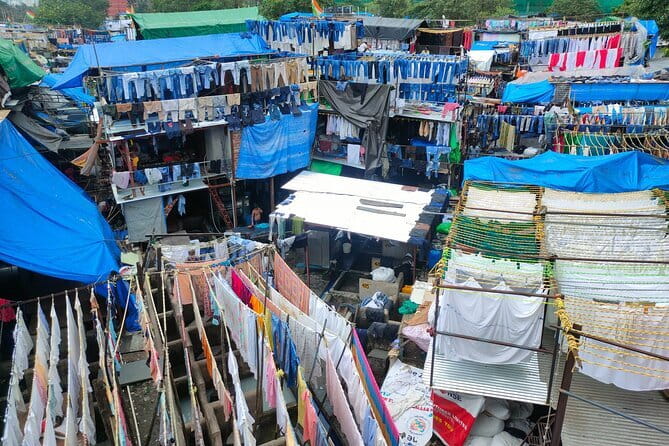
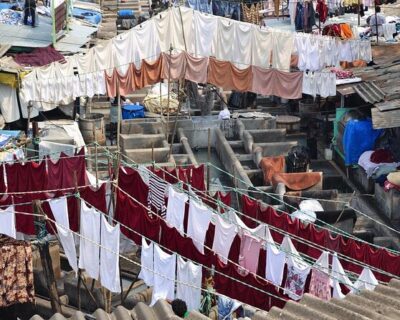
Dhobi Ghat is often photographed from above, with rows of concrete washing pens and clothing spread out to dry. The useful part of this tour is that you do not just look at the place. Your guide explains how the laundry work operates.
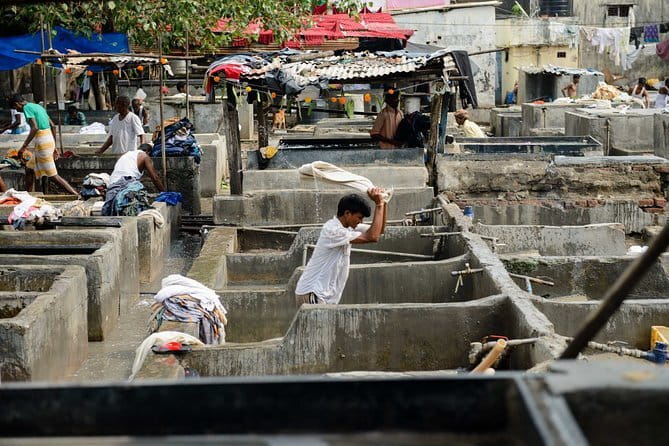
You can expect to learn how clothes are washed, where they are dried, how ironing is handled, and how garments make their way back to customers. That turns a famous Mumbai image into a working system you can understand.
The stop lasts about one hour, which feels sensible. You get enough time to take in the setting and ask questions without spending half a day on one activity. The attraction is visually striking, but the real interest is practical: this is a place where labor, timing, sorting, and delivery all matter.
I would bring comfortable walking shoes and keep your belongings secure in crowded public areas. The tour information specifically recommends comfortable shoes, and the route involves walking between public places and working streets.
Dhobi Ghat is also a good first stop because it prepares you for the rest of the tour. You begin by looking at one city service from the outside, then move into Dharavi to see how work and home life fit together in a much larger neighborhood.
More Dhobi Ghat and dabbawala tours:
- Mumbai: Dharavi Slum, DhobiGhat, and Dabbawallas Tour
★ 4.9 · 689 reviews - Mumbai: Dhobi Ghat Laundry and Dharavi Slum Tour with Local
★ 5.0 · 469 reviews - Mumbai: Dharavi Slum & Dhobi Ghat Laundry Tour
★ 5.0 · 352 reviews
Crossing into Dharavi with a local guide
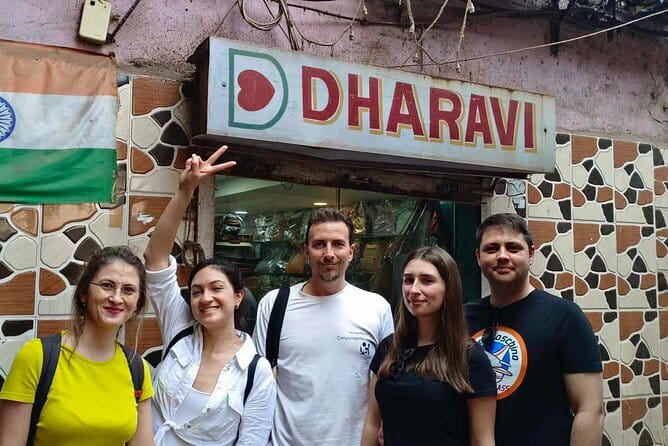
Dharavi is known around the world because of Slumdog Millionaire, but the film is only one small part of the area’s public image. This tour aims to move past that single story and show you the district as a place where people live, work, raise families, and run businesses.
The Dharavi portion takes about two hours. That gives your guide time to explain the area and lead you through examples of local work. You may see plastic recycling, leather production, garment and textile activity, and other small businesses. The exact order and detail can depend on the day and guide.
The most valuable feature is the guide’s connection to the area. Several guides associated with this experience, including Zeeshan and Faizan, grew up in Dharavi or come from the local community. That matters because you are not simply being shown poor housing from a distance. You are hearing explanations from someone who knows the streets, businesses, and social life firsthand.
Zeeshan is described as especially strong at explaining the setting and its history, while Faizan has been praised for discussing working and living conditions in clear English. Bharti, Rakesh, and Alkama are also named as guides connected with highly positive experiences. You cannot assume a particular guide will lead your departure, but the local guide model is central to the tour.
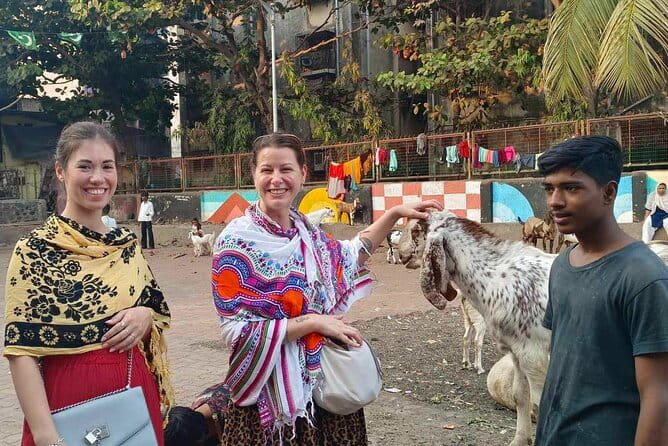
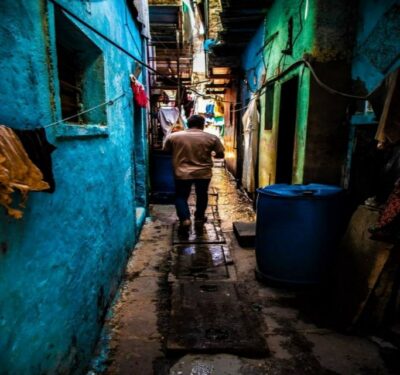
Expect narrow passages, busy roads, working areas, and ordinary residential life. This is not a staged village or a museum exhibit. You may see children playing, families living close to workplaces, and businesses operating in tight spaces. The point is not to treat poverty as entertainment. The point is to understand the skill, trade, and community life that are often missed when Dharavi is reduced to the word slum.
The small businesses that change the picture
One of the strongest parts of the route is its focus on work. Dharavi is not presented only as a place of hardship. Your guide explains the industries that support local families and connect the neighborhood to Mumbai’s wider economy.
Plastic recycling is one example. You may learn how discarded material is sorted and processed. Leather, garments, and textiles offer other windows into the district’s work. These are not abstract subjects. You see the spaces where production takes place and gain a clearer sense of how local businesses operate.
This is where the tour can challenge simple assumptions. A neighborhood can face serious housing and infrastructure problems while also having businesses, skills, family networks, and strong community ties. You should not expect a tidy or complete account of every issue in three hours, but the route offers more context than a quick drive past the area.
The guide’s role matters greatly here. A good explanation keeps the visit from becoming a string of shocking sights. The strongest named guides are praised for answering questions, adding personal stories, and helping visitors understand the difference between outside stereotypes and everyday reality.
Taking Mumbai’s local train

The tour includes travel fees and a local train ride. That is a useful touch because Mumbai’s trains are part of ordinary city life, not just a tourist attraction. You get a practical look at how people move through the city between the two main parts of the experience.
The train portion also adds a bit of energy and uncertainty to the route. You are using public transport during a compact tour, so allow yourself to pay attention to where the group is going and follow your guide closely. The tour is designed for most people who can participate in ordinary walking and public transport, but it will not feel like a slow, private car outing.
For many visitors, this is one of the best-value details. A private vehicle would keep you separated from the city. The train places you in the same transport system used by residents and makes the route feel connected to real Mumbai rather than arranged around isolated attractions.
The meeting point is at Third Wave Coffee on Tipu Road, near Mahim, at Unit 58, Ground, Ram Mahal, Senapati Bapat Marg, Marinagar Colony, Mahim. The tour ends at Mahalaxmi, on K K Road. At the end, the guide can help arrange an Uber or local transport to your hotel or next stop.
That start and finish matter when planning your day. You do not return to the original meeting point, so check where you want to go afterward. A mobile ticket is accepted, and confirmation is sent when you book.
More Dharavi walking tours:
- Dharavi slum tour in Mumbai by Female tour guides of the slum
★ 5.0 · 1,976 reviews - Dharavi Slum Tour
★ 5.0 · 625 reviews - Dharavi Slum tour in Mumbai by local resident
★ 5.0 · 572 reviews - Mumbai: Dharavi Slum Slumdog Millionaire Tour with a Local
★ 4.9 · 529 reviews
What the three-hour schedule feels like
The timing is fairly tight but well used. About one hour goes to Dhobi Ghat and two hours to Dharavi. You will spend much of the time walking, listening, crossing public areas, and moving between points rather than sitting in one place.
The group limit is 15 people. That is small enough for a guide to answer questions and manage the group in narrow lanes, though it is not the same as having a private guide. If you are traveling with family, the format can work well. One family specifically found that the guide was patient with a nine-year-old and helped the group feel safe around busy roads and public spaces.
The tour is conducted in English. The named guides are described as easy to understand, but accents and street noise can still affect how clearly you hear every detail. Stay near the guide and ask for clarification when needed.
There is no food included. Bring water, although a water bottle is included in the tour package. Since the activity runs for roughly three hours, eating beforehand is a sensible choice.
Mumbai’s heat can make the walking feel harder than the timetable suggests. The meeting point’s coffee shop has air conditioning, which can be welcome before setting out, but the main route takes place outdoors and in working neighborhoods. Light clothing, comfortable shoes, and a flexible attitude will help.
The ethics of visiting Dharavi
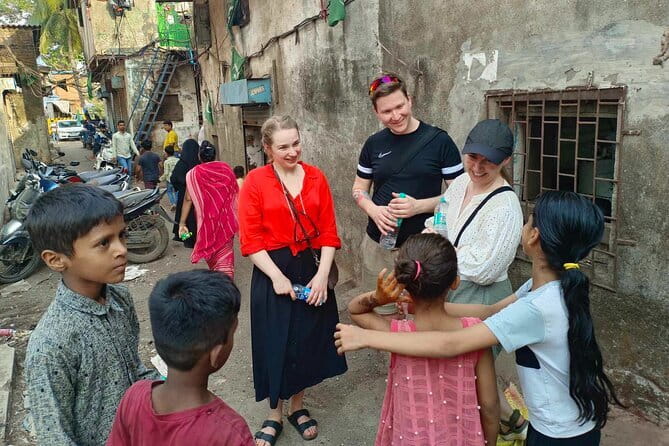
A tour through a low-income neighborhood requires more care than a normal sightseeing walk. You should listen first, avoid treating homes and workers as scenery, and follow the guide’s instructions about where to walk and what is appropriate.
The value of this experience comes from context. You see that Dharavi is not simply a movie location or a place defined by hardship. It is also a neighborhood with work, family life, recycling, manufacturing, and local knowledge.
The description says the tour is designed to challenge negative stereotypes and go beyond the film. That is a worthwhile goal, but no three-hour visit can represent every person in Dharavi. Keep your expectations realistic. You are receiving one guided introduction, not a full account of the neighborhood’s history or social conditions.
I would choose this tour only if you are willing to engage with the place as a community. If your main aim is dramatic photography, this is the wrong approach. If you want to understand how people live and work in a part of Mumbai that many visitors never see, the resident guide gives the visit a much stronger purpose.
Is $9.49 good value?
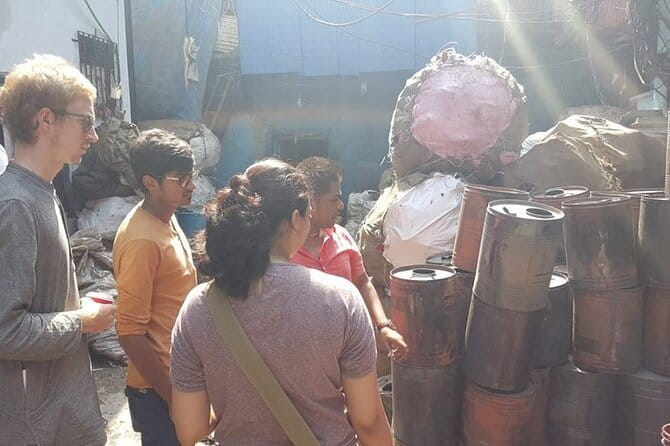
At $9.49 per person, this is unusually inexpensive for a three-hour guided experience that includes a local English-speaking guide, transport fees, entry fees, a water bottle, Dhobi Ghat, Dharavi, and train travel.
The price is especially good if you are comfortable with a group format and public transportation. You are paying for access and explanation, not luxury. There is no meal, private vehicle, hotel pickup, or air-conditioned sightseeing coach listed.
Group discounts may be available, which can make the tour useful for families or friends traveling together. The maximum group size is 15, so the experience should remain reasonably personal without carrying the cost of a private tour.
The price also means you should judge the tour by its content rather than expecting polished production. The important factor is the guide. A strong local guide can make the route thoughtful and memorable, while a weaker explanation would make the same streets feel less meaningful.
Who should book this Mumbai tour?
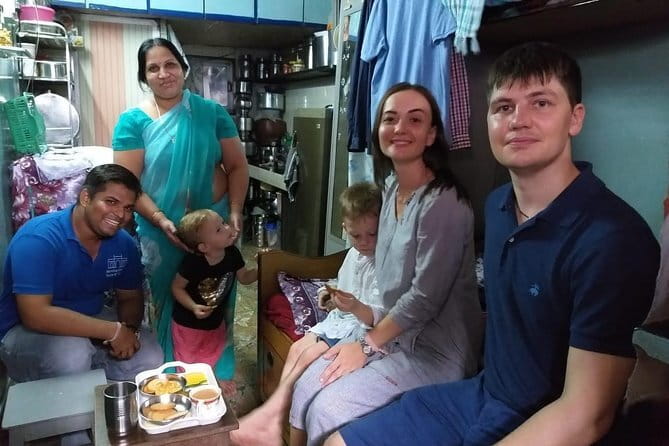
I would recommend it to first-time visitors who want to see how Mumbai works beyond major landmarks. It suits people interested in urban life, local industry, public transport, and community stories.
Families can book it, especially if children are old enough to handle several hours of walking and unfamiliar surroundings. The guide’s patience with a nine-year-old is a helpful sign, though children should be prepared for a serious look at working and living conditions.
It is also a good fit for budget-conscious visitors. The low price covers the main practical costs, and the three-hour length leaves room for another activity afterward.
You may want to skip it if you dislike walking, find public transport stressful, or want a private, polished sightseeing experience. It may also feel uncomfortable if you are not prepared to think carefully about the ethics of visiting a residential neighborhood.
Cancellation is free if you cancel at least 24 hours before the start time. Within 24 hours, the payment is not refunded, and changes are not accepted. The cut-off uses Mumbai local time.
Should you book it?
Book this tour if you want a direct, affordable introduction to Dhobi Ghat and Dharavi, with a guide who can connect what you see to real work and daily life. The strongest reason to go is the resident perspective, especially when guides such as Zeeshan or Faizan explain the community with personal detail.
The tour is not a luxury outing, and Dharavi should never be treated as a curiosity park. Go with respect, wear good shoes, stay close to the guide, and expect a working neighborhood rather than a staged attraction. For $9.49 and three hours, it offers an honest look at a side of Mumbai that standard sightseeing often misses.
FAQ
How long does the tour last?
The tour lasts approximately three hours. About one hour is allocated to Dhobi Ghat and about two hours to Dharavi.
Where does the tour begin?
It begins at Third Wave Coffee, Unit 58, Ground, Ram Mahal, Senapati Bapat Marg, Marinagar Colony, near Mahim Station in Mumbai.
Where does the tour end?
The tour ends at Mahalaxmi on K K Road, Mahalakshmi, Mumbai.
Is transportation included?
Yes. Travel fees are included, and the experience includes a local train ride. The guide can also help you arrange an Uber or local transport after the tour.
Is a guide included?
Yes. The tour includes a local English-speaking guide from Dharavi. Guides connected with this experience include Zeeshan, Bharti, Rakesh, Faizan, and Alkama, but a particular guide is not guaranteed.
What can I see in Dharavi?
You can learn about where people live, work, and spend time, as well as see local businesses connected with plastic recycling, leather, garments, and textiles. The tour also includes places connected with Slumdog Millionaire.
How many people can join the tour?
The maximum group size is 15 travelers. Group discounts may be available.
What is included, and is food provided?
Entry fees, travel fees, a local English-speaking guide, and a water bottle are included. Food is not included.
Just added around Mumbai
- Temples & Vineyards: Private Tour to Nashik from Mumbai★ 4.5 · 3 reviews
- Mumbai: Private City sightseeing and Dharavi Slum Tour★ 5.0 · 3 reviews
- Mumbai: Full Day City Sightseeing with Lunch, Car & Guide★ 4.3 · 3 reviews
- Elephanta Island Private Speedboat Tour from Mumbai – 6pax★ 5.0 · 3 reviews
- Mumbai: Elephanta Island and Elephanta Caves Guided Tour★ 4.4 · 3 reviews
- Mumbai Sightseeing Tour by Public Transport with family Lunch★ 5.0 · 3 reviews
- Mumbai by Dawn★ 4.5 · 3 reviews
- Mumbai Dharavi Slum Community Tour★ 5.0 · 3 reviews
Dharavi Slum Tours, compared.
Dharavi slum tour in Mumbai by Female tour guides of the slum
Read our review →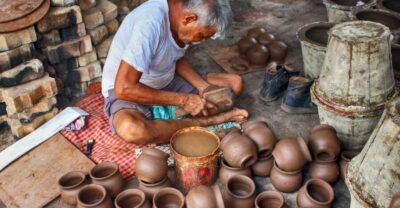
Dharavi Slum Slumdog Millionaire Tour with a Local
Read our review →
Mumbai Slum Tour – Visit Dharavi Slum with Local Guide
Read our review →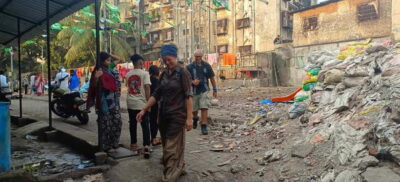
Dhobi Ghat Laundry and Dharavi Slum Tour with Local
Read our review →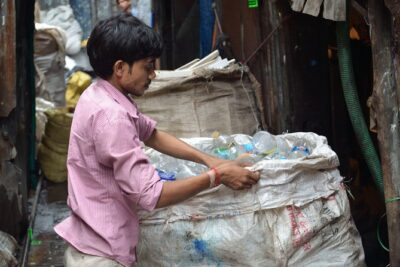
Browse the lists this tour appears in