
Reviewed · DHARAVI SLUM TOURS
Mumbai: Dhobi Ghat & Dharavi Slum tour
Mumbai’s Dhobi Ghat and Dharavi tour shows you two very different kinds of work. In Dharavi, small factories and workshops operate beside family homes. At Mahalaxmi, rows of clothes are washed by hand in the open air. The short local train ride links these places and gives the outing a useful slice of ordinary Mumbai life.
I like the local Dharavi guides, who bring personal knowledge and speak English or Hindi. I also like the low $13 price, which covers the train ticket, bottled water, and Dhobi Ghat entry. The main caution is timing: one booking finished after only 90 minutes instead of the advertised three hours, and Kumbharwada could not be reached when a bridge was damaged.
In This Review
- Key points to know before booking
- Why Dharavi is more than a headline
- A two-hour walk with a local guide
- Kumbharwada and the limits of the route
- The local train to Mahalaxmi
- Seeing Dhobi Ghat from the viewing deck
- What the $13 price covers
- How the timing really works
- Respectful conduct in Dharavi
- Who will get the most from this tour
- Practical details that matter
- Should you book the Dharavi and Dhobi Ghat tour?
- FAQ
- Where does the tour start?
- Where does the tour finish?
- How long does the experience last?
- What languages are available?
- Is hotel pickup included?
- Is the train ticket included?
- Is Dhobi Ghat entry included?
- Is bottled water provided?
- Will I visit Kumbharwada?
- Can I cancel the booking?
Key points to know before booking
- Dharavi comes first: Spend about two hours walking through its industrial and residential areas.
- Local guides lead the way: Guides including Sajid and Jay have received especially strong praise for clear, friendly explanations.
- Kumbharwada is not guaranteed: The pottery community is part of the planned experience, but access can change.
- The train ride is part of the tour: A roughly 30-minute ride from Dharavi to Mahalaxmi connects the two main sights.
- Dhobi Ghat is a short final stop: Expect about 15 minutes at the viewing deck for photographs and an overview.
- The meeting point is easy to miss: Meet at Third-wave Coffee Shop in Ram Mahal building, opposite Mahim railway station on the west side.
Why Dharavi is more than a headline
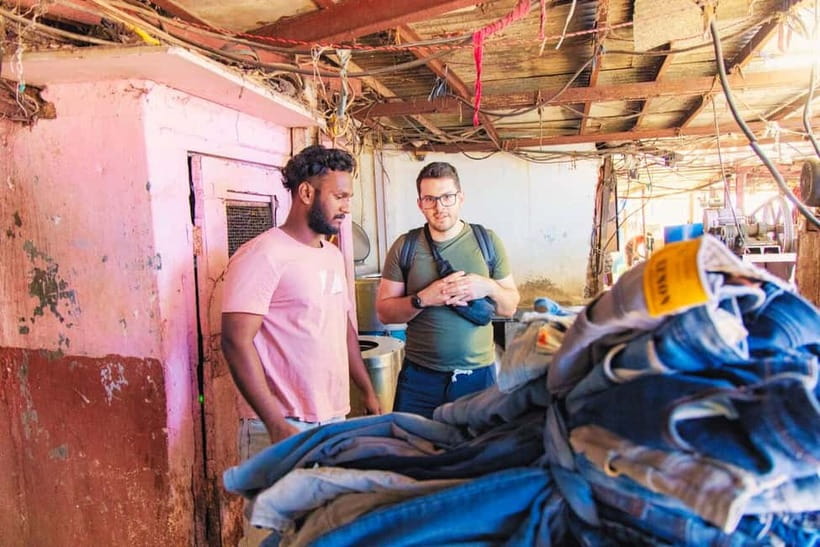
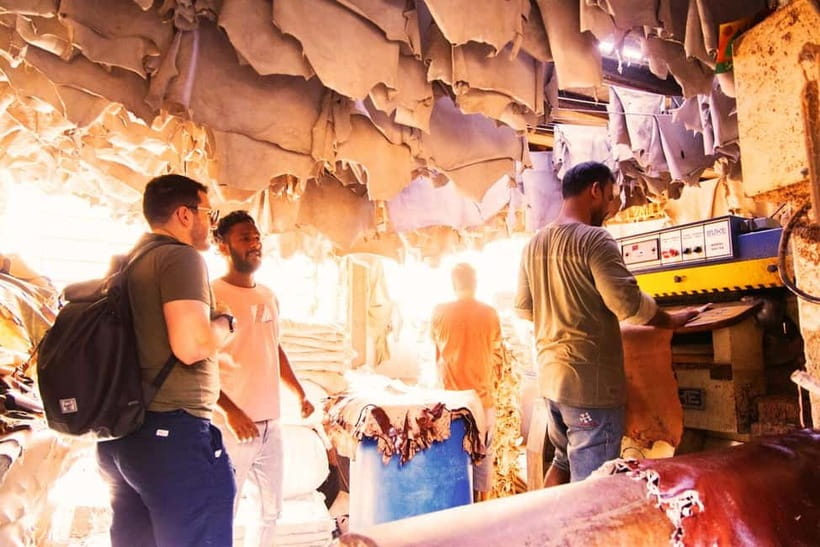
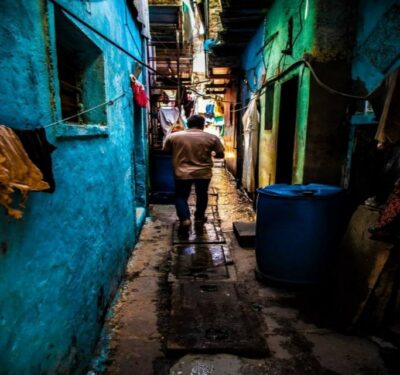
Dharavi is often reduced to a single label, but a walk through the area gives you a more useful picture. It is a place where homes, workshops, family businesses, and narrow lanes fit close together. The tour begins in the industrial section, where you can see small factories and workspaces in operation.
That first section is the strongest reason to book. You are not simply looking at buildings from a vehicle. You walk through the area and learn how people earn a living there. The tour focuses on practical details: the work being done, the way businesses function, and the resourcefulness required in a crowded part of Mumbai.
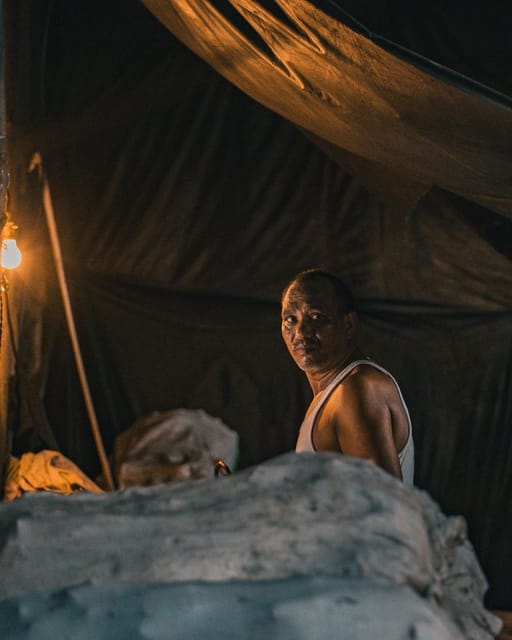
The residential section changes the tone. Your guide explains daily routines, family traditions, and the problems people face. The aim is not to turn poverty into a spectacle. Small groups and local guides help keep the visit more respectful, although you should still behave with care and avoid treating people’s homes or workplaces as photo props.
I like that the tour presents Dharavi through its residents and workers rather than only through statistics. The area is home to more than a million people, but the number matters less than the human scale of the walk. You begin to see a neighborhood made up of individuals, families, craftspeople, and business owners.
More Dhobi Ghat and dabbawala tours:
- Mumbai: Dharavi Slum, DhobiGhat, and Dabbawallas Tour
★ 4.9 · 689 reviews - Mumbai: Dhobi Ghat Laundry and Dharavi Slum Tour with Local
★ 5.0 · 469 reviews - Mumbai: Dharavi Slum & Dhobi Ghat Laundry Tour
★ 5.0 · 352 reviews
A two-hour walk with a local guide
The Dharavi portion lasts about two hours, making it the main body of the experience. Wear comfortable shoes because the tour is on foot and moves through lanes rather than along a standard sightseeing route.
Guide quality matters here. Sajid received very strong praise for his professional explanations and for showing every part of the area available to him. Jay was also praised for making the experience informative and warm. One 18-year-old guide was described as friendly and capable in English, which is a reminder that your guide may be young but still well prepared to lead the visit.
The tour is offered in English and Hindi. If you want to ask questions about working life, housing, family customs, or the local economy, English-speaking guides can make the walk much easier to follow. You should expect conversation and explanation, not a formal museum-style presentation.
The small-group format is important. It makes it easier to stay with the guide in tight lanes and reduces the feeling of a large crowd passing through. Still, you are entering a working neighborhood. Keep your voice low, follow instructions, and ask before taking close-up photographs of people.
Kumbharwada and the limits of the route

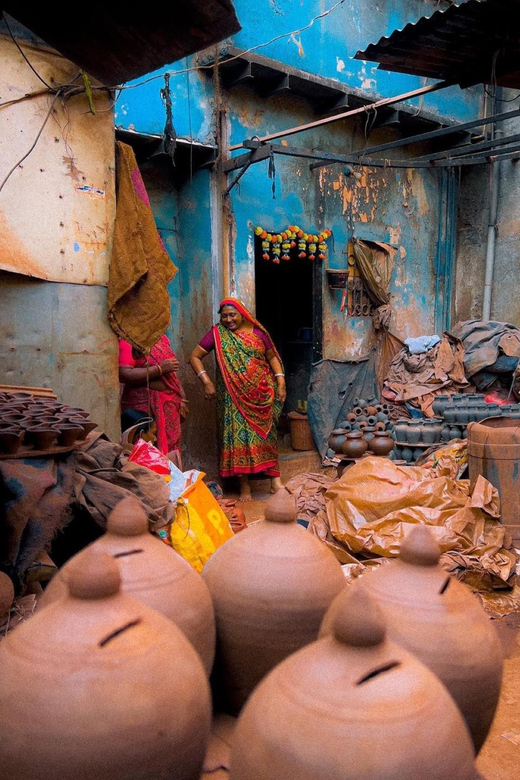
Kumbharwada, the potter’s community, is one of the advertised highlights. It adds another layer to the Dharavi visit because it focuses on a particular craft tradition rather than the area as a whole.
You should treat this stop as subject to local conditions. One visit could not include the pottery community because a bridge had collapsed. That detail matters more than it may seem. This is a working neighborhood, not a fixed museum route, so construction, damaged access, or local conditions can alter the walk.
If Kumbharwada is open during your visit, it may be one of the most memorable parts of the tour. If it is not, the Dharavi walk still includes industrial and residential areas, but you should not book solely for a guaranteed pottery demonstration or pottery stop.
The local train to Mahalaxmi
After Dharavi, you ride a local train to Mahalaxmi station. The train portion takes about 30 minutes and is included in the price.
This transfer is more than a way to get from one sight to another. It gives you a brief look at one of Mumbai’s everyday forms of transport. You are moving through the city as residents do, rather than relying on a private vehicle between tourist stops.
The train ride also breaks up the walking portion. After two hours in Dharavi, you get a chance to sit or stand during the transfer before reaching Dhobi Ghat. Since this is public transport, stay close to your guide and listen carefully to instructions.
The meeting point and route require some attention. You begin at Third-wave Coffee Shop in Ram Mahal building, opposite Mahim railway station on the west side. The tour does not include hotel pickup or drop-off, so you need to make your own way there and arrange your return from Dhobi Ghat.
More Dharavi walking tours:
- Dharavi slum tour in Mumbai by Female tour guides of the slum
★ 5.0 · 1,976 reviews - Dharavi Slum Tour
★ 5.0 · 625 reviews - Dharavi Slum tour in Mumbai by local resident
★ 5.0 · 572 reviews - Mumbai: Dharavi Slum Slumdog Millionaire Tour with a Local
★ 4.9 · 529 reviews
Seeing Dhobi Ghat from the viewing deck
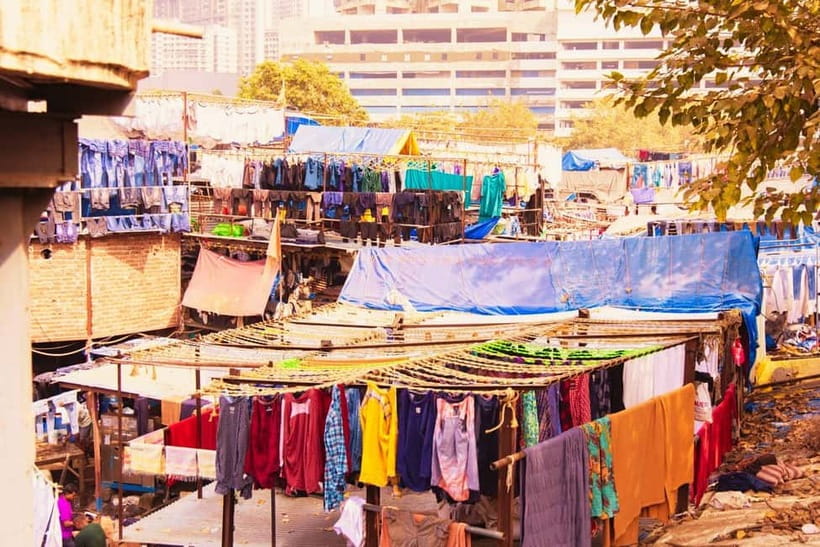
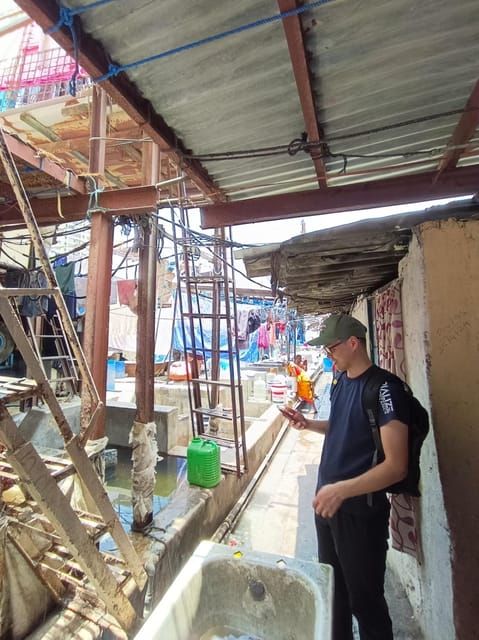
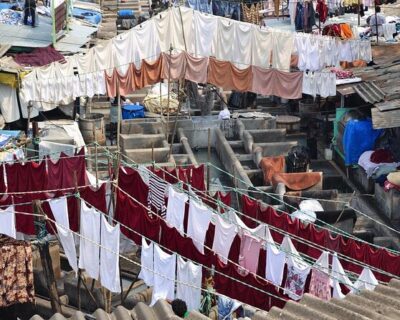
Dhobi Ghat is Mumbai’s famous open-air laundry, with rows of washing areas and colorful clothes handled by hand. The tour ends at the Dhobi Ghat viewing deck, where you have about 15 minutes for the main view and photographs.
This is a short stop, so set your expectations correctly. You will not spend a long time walking through the laundry operation. Instead, you get an elevated view that helps you understand the size and order of the site. The lines of clothing and repeated washing stations create a memorable picture of work carried out on a large scale.
I like the contrast with Dharavi. Dharavi shows many kinds of small-scale production spread through a neighborhood. Dhobi Ghat presents one highly recognizable work environment in a single view. Together, the stops show how much of Mumbai’s character comes from people working with practical skill and limited space.
The visit is mainly a photo stop, so keep your camera ready, but do not let the final 15 minutes define the whole tour. The Dharavi walk provides the context and conversation. Dhobi Ghat supplies the striking final image.
What the $13 price covers
At $13 per person, this is an inexpensive way to combine a guided neighborhood walk, a local train ride, and a Dhobi Ghat visit. The price includes:
- A packaged water bottle
- Train tickets
- Entry fees at Dhobi Ghat
- A live guide in English or Hindi
The value comes from the combination rather than from any one admission ticket. You are paying for a guide who can explain what you are seeing and for the practical transport between the two areas. A self-guided visit might cost less in theory, but it would not give you the same access to local explanations or the planned route.
The low price also means you should not expect a private tour, hotel transport, or a long visit at every stop. Pickup and drop-off are not included. You need to reach Mahim at the start and leave Dhobi Ghat independently at the end.
For a three-hour outing, the cost is strong. But confirm the starting time and allow flexibility in your day. One booking lasted only 90 minutes, far shorter than promised. That appears to have been an exception, but it is the most important service concern in the available feedback.
How the timing really works
The advertised schedule is three hours:
- About two hours in Dharavi
- About 30 minutes on the train
- About 15 minutes at Dhobi Ghat
- Remaining time for meeting, transitions, and stops
This is a compact experience. You get a focused introduction rather than an entire day devoted to Mumbai’s working neighborhoods.
The schedule works best if you want a clear route with a strong central theme. It is less suitable if you prefer to linger, take many photographs, or ask extended questions at each stop. The Dharavi walk takes most of the time, while Dhobi Ghat is brief.
Since the route depends on local access, train conditions, and the condition of bridges or lanes, leave some room around the booking. The provider offers free cancellation up to 24 hours before departure and allows you to reserve now and pay later, which helps if your Mumbai plans are still shifting.
Respectful conduct in Dharavi
A tour of a low-income neighborhood needs a different attitude from a standard sightseeing walk. You are entering someone’s home area and workplace. The most respectful approach is to listen more than you photograph.
Ask your guide when photography is appropriate. Do not take close pictures of residents without permission. Avoid blocking lanes, touching work materials, or turning private family moments into entertainment.
The tour’s use of local guides helps. Someone from Dharavi can explain the neighborhood with more care and detail than a guide passing through from elsewhere. It also gives you a person to follow when the lanes become confusing or conditions change.
You may find parts of the visit uplifting, especially when you see the skill and effort behind local businesses. You may also find it uncomfortable. That is normal. The area’s working life exists alongside serious economic challenges, and a good tour should allow you to hold both truths at once.
Who will get the most from this tour
This outing suits you if you want to see Mumbai beyond major monuments and shopping streets. It is especially useful for first-time visitors who want a guided introduction to local work, housing, transport, and community life in one short experience.
You will probably enjoy it most if you:
- Are comfortable walking through narrow, active lanes
- Want direct explanations from a local guide
- Are interested in working communities and everyday city life
- Do not need hotel pickup
- Can accept that the route may change
- Prefer a small group to a large coach tour
It may not suit you if you want a polished sightseeing route, guaranteed access to every listed stop, or a long visit at Dhobi Ghat. It also may not be right if you are uncomfortable visiting a neighborhood facing poverty, even when the tour is designed to be respectful.
Practical details that matter
Meet at Third-wave Coffee Shop in Ram Mahal building, opposite Mahim railway station on the west side. This is the starting point, not a hotel pickup location, so check your route before leaving.
Bring comfortable footwear and keep your belongings secure. The tour includes bottled water, but you may want additional water depending on the weather and your own needs. The walk and train ride make light packing sensible.
English and Hindi are the available guide languages. Guides such as Sajid and Jay have been praised for clear explanations and friendly service, but the specific guide assigned to your departure is not stated in advance.
The experience finishes at the Dhobi Ghat viewing deck. Since hotel return transport is not included, plan the next part of your day from there.
Should you book the Dharavi and Dhobi Ghat tour?
Book it if you want a short, low-cost look at the people and work that keep Mumbai moving. The best parts are the local guide, the two-hour Dharavi walk, and the useful contrast between small workshops and the organized rows of Dhobi Ghat.
Go in with realistic expectations. Kumbharwada may be missed if access is blocked, Dhobi Ghat is only a brief photo stop, and the actual duration may not always reach three hours. If those limits are acceptable, the $13 price offers good value and a more personal look at Mumbai than a standard city sightseeing trip.
The strongest evidence from the available feedback points to the guides. Sajid, Jay, and the unnamed young English-speaking guide were praised for friendliness, clarity, and effort. That human connection is the reason to choose this tour, not simply the chance to take a photograph of Dhobi Ghat.
FAQ
Where does the tour start?
The meeting point is Third-wave Coffee Shop in Ram Mahal building, opposite Mahim railway station on the west side.
Where does the tour finish?
The tour finishes at the Dhobi Ghat viewing deck.
How long does the experience last?
The advertised duration is three hours. The planned schedule includes about two hours in Dharavi, 30 minutes on the train, and 15 minutes at Dhobi Ghat.
What languages are available?
The live tour guide speaks English or Hindi.
Is hotel pickup included?
No. Hotel pickup and drop-off are not included.
Is the train ticket included?
Yes. Train tickets are included in the tour price.
Is Dhobi Ghat entry included?
Yes. Entry fees at Dhobi Ghat are included.
Is bottled water provided?
Yes. One packaged water bottle is included.
Will I visit Kumbharwada?
Kumbharwada is one of the planned highlights, but access is not guaranteed. A bridge was damaged during one visit, preventing access to the pottery community.
Can I cancel the booking?
Yes. You can cancel up to 24 hours in advance for a full refund. You can also reserve now and pay later.
Just added around Mumbai
- Temples & Vineyards: Private Tour to Nashik from Mumbai★ 4.5 · 3 reviews
- Mumbai: Private City sightseeing and Dharavi Slum Tour★ 5.0 · 3 reviews
- Mumbai: Full Day City Sightseeing with Lunch, Car & Guide★ 4.3 · 3 reviews
- Elephanta Island Private Speedboat Tour from Mumbai – 6pax★ 5.0 · 3 reviews
- Mumbai: Elephanta Island and Elephanta Caves Guided Tour★ 4.4 · 3 reviews
- Mumbai Sightseeing Tour by Public Transport with family Lunch★ 5.0 · 3 reviews
- Mumbai by Dawn★ 4.5 · 3 reviews
- Mumbai Dharavi Slum Community Tour★ 5.0 · 3 reviews
Dharavi Slum Tours, compared.
Dharavi slum tour in Mumbai by Female tour guides of the slum
Read our review →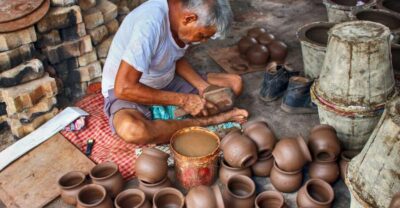

Dharavi Slum Slumdog Millionaire Tour with a Local
Read our review →
Mumbai Slum Tour – Visit Dharavi Slum with Local Guide
Read our review →
Dhobi Ghat Laundry and Dharavi Slum Tour with Local
Read our review →
Browse the lists this tour appears in