
Reviewed · DHARAVI SLUM TOURS
Mumbai: Dharavi Slum Walking Tour with Local Slum Dweller
Dharavi is not simply a place of poverty. It is a working neighborhood where recycling, leather making, pottery, food production, and small factories support an estimated $1 billion economy each year. This walking tour puts you beside that daily work, with a local resident explaining what you are seeing.
I like the chance to see Dharavi through a person who grew up there, rather than through a bus window. I also like the practical focus: recycling workshops and small-space industries show how residents turn limited room and materials into useful businesses.
The main consideration is that this is a walking tour through narrow lanes, working areas, and homes. You need to be comfortable visiting a poor neighborhood without treating it like a spectacle. Closed-toe shoes and a respectful manner are essential.
In This Review
- Key points before you book
- Dharavi is a neighborhood, not a movie set
- Meeting your guide at Third Wave Coffee
- Small workshops that make limited space work
- Dharavi’s recycling economy
- Homes, markets, schools, and everyday routines
- The Slumdog Millionaire filming location
- Optional pottery in Kumbharwade
- Optional vegetarian lunch with a local family
- What the $14 price really gives you
- Practical advice for a respectful visit
- Who will get the most from this Dharavi walk?
- Should you book the Mumbai Dharavi Slum Walking Tour?
- FAQ
- Where does the Dharavi walking tour start?
- Where does the tour end?
- Is an English-speaking guide included?
- Is lunch included?
- Is the pottery workshop included?
- What should I bring?
- Is water included?
- Can I cancel for a full refund?
Key points before you book
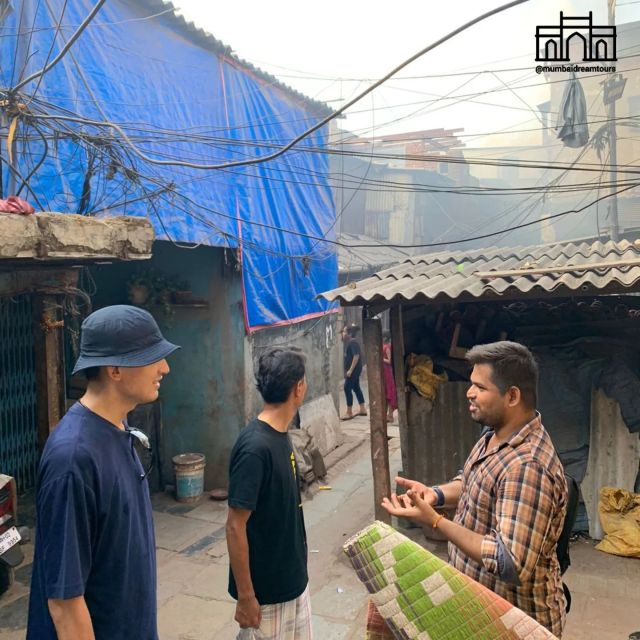
- A local guide leads you through working Dharavi: Guides such as Abhishek, Bharti Dharavi, Rakesh, Dhruvesh, and Hardik Tank have been praised for their friendly, personal approach.
- The recycling story is a major part of the walk: You see how plastic and vegetable oil cans are reused, sorted, and turned into income.
- The tour includes real daily life: Expect homes, schools, hospitals, bakeries, markets, workshops, and religious cooperation along the route.
- You can add hands-on pottery: At a local potter’s workshop, you learn the basics and try throwing clay on a wheel.
- A vegetarian family lunch is available: The optional meal takes place in a local home, with food eaten while sitting on the floor and using your hands.
- The price is low for a private-feeling cultural visit: At $14 per person, the basic tour offers strong value, though lunch and pottery depend on the option you choose.
Dharavi is a neighborhood, not a movie set
Many people first hear about Dharavi through Slumdog Millionaire. The tour does take you to a place connected with filming, but that is only a small part of the story.
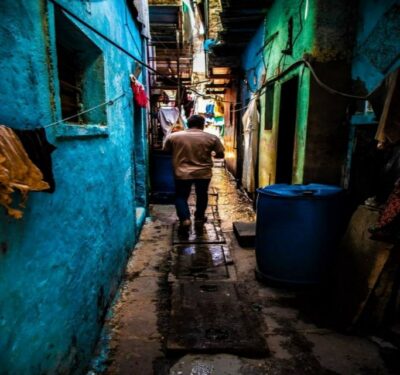
The more useful lesson is seeing Dharavi as a place where people live and work. Its lanes hold houses, schools, hospitals, bakeries, markets, and workshops close together. Space is tight, but the district is not idle. People make, repair, sort, sell, and recycle goods every day.
That matters because the word slum can flatten a complicated place into one gloomy picture. Your guide helps replace that picture with something more accurate: Dharavi has hardship, but it also has skill, trade, family life, faith, and strong local networks.
You should still expect basic conditions. The lanes are narrow, the working spaces are small, and the setting may feel crowded and intense. This is not polished sightseeing. That is precisely why the guide matters.
More Dharavi walking tours:
- Dharavi slum tour in Mumbai by Female tour guides of the slum
★ 5.0 · 1,976 reviews - Mumbai: Dharavi Slum, DhobiGhat, and Dabbawallas Tour
★ 4.9 · 689 reviews - Dharavi Slum Tour
★ 5.0 · 625 reviews
Meeting your guide at Third Wave Coffee
The tour begins at Third Wave Coffee, where you meet the English-speaking guide. The exact guide can vary, but several guides have earned especially warm praise for making the walk personal and easy to follow.
Abhishek is described as welcoming and proud of his roots. He has sometimes shown visitors his home and introduced them to his family. Hardik Tank, only 18 according to one account, has been praised for his thoughtful explanations and for taking care not to disturb people at work.
Other named guides include Bharti Dharavi, Dhruvesh, Rakesh, and Abhi. The common thread is a local point of view. Instead of hearing a generic lecture about Mumbai, you can ask how work, family, faith, and business fit together in Dharavi.
That personal connection is one of the tour’s strongest features. Ask questions, but let your guide set the tone when you approach residents or enter a work area. A good visit depends on respect on both sides.
The walk ends back at the same meeting point. Since no duration is provided, check the current booking details before setting up another activity immediately afterward.
Small workshops that make limited space work
One of the most striking parts of Dharavi is the way people produce useful goods in tiny spaces. The tour may take you past leather workshops, soap makers, colored dye producers, bakeries, and other small businesses.
The leather work is a highlight for anyone interested in craft or shopping. You see how a local industry operates inside a dense neighborhood, with workers producing quality leather goods rather than merely selling imported products.
The point is not just to watch a product being made. You begin to understand why Dharavi has such a large economic output despite its cramped conditions. Businesses are often close to homes, and different stages of production can exist within a short walk of each other.
You may also see soap and dye production. These stops help show the range of work found in the area. The tour is strongest when you pay attention to the practical details: what materials are used, how goods move through the neighborhood, and how people earn money from limited room.
Photography deserves care here. The supplied information does not set out a formal photography policy, so ask your guide before taking pictures of people, homes, or workshops. A resident’s workplace is not a backdrop.
Dharavi’s recycling economy
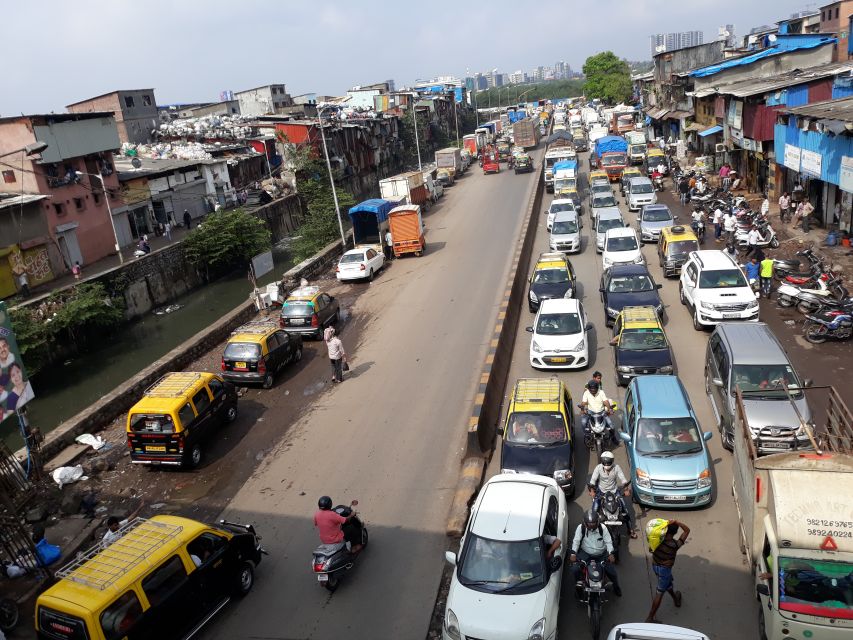
The recycling section gives the tour its clearest lesson in resourcefulness. Plastic recycling is an important part of Dharavi’s economy, and your guide explains how discarded materials are sorted and reused.
You may see vegetable oil cans being put to new uses. This kind of practical reuse is easy to overlook from outside, but it reveals how residents reduce waste while creating products and income.
The tour also helps you see recycling as work, not just an environmental slogan. Materials have value because people know how to sort, process, repair, and sell them. That skill supports households and feeds a wider chain of local business.
I particularly like this part because it challenges the idea that innovation needs expensive equipment or large factories. Dharavi’s solutions often come from necessity, experience, and close cooperation.
The conditions may be demanding, and the work can be messy. Do not expect a modern recycling center with neat signs and a visitor gallery. You are seeing an active local industry in a dense residential area.
More guided walks on foot:
- Group Guided Walking Tour in Fort and Colaba
★ 5.0 · 1,073 reviews - Private Guided Walking Tour in Fort & Colaba
★ 5.0 · 895 reviews - Private Guided Walking Tour in Bandra Queen of Suburbs
★ 5.0 · 383 reviews - Private Guided Spiritual Walk in Banganga Hindu Temples
★ 5.0 · 271 reviews
Homes, markets, schools, and everyday routines
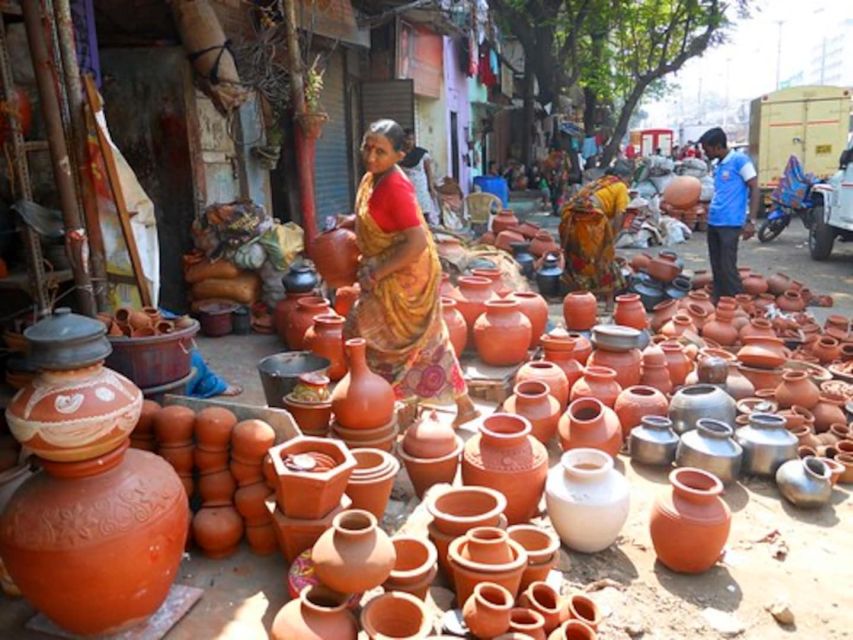
The route moves through narrow alleyways where daily life is close at hand. You may pass houses, schools, hospitals, bakeries, and market stalls as your guide explains how the community functions.
The market gives you a clearer sense of local commerce. It is not presented as a separate attraction, but as part of the neighborhood’s normal rhythm. Your guide can explain what is sold and why the market matters to nearby families.
This section is valuable because it keeps the tour from focusing only on workshops. Dharavi is also a place where children go to school, people seek medical care, families cook, and neighbors know one another.
The community spirit appears in small but memorable details. One example included in the route is Muslims making a shrine for Hindus. That moment offers a useful picture of cooperation that is more revealing than a broad speech about tolerance.
Still, you should remember that you are walking through someone’s home area. Keep your voice low when appropriate, follow your guide’s lead, and avoid blocking lanes. The best approach is curious but quiet.
The Slumdog Millionaire filming location
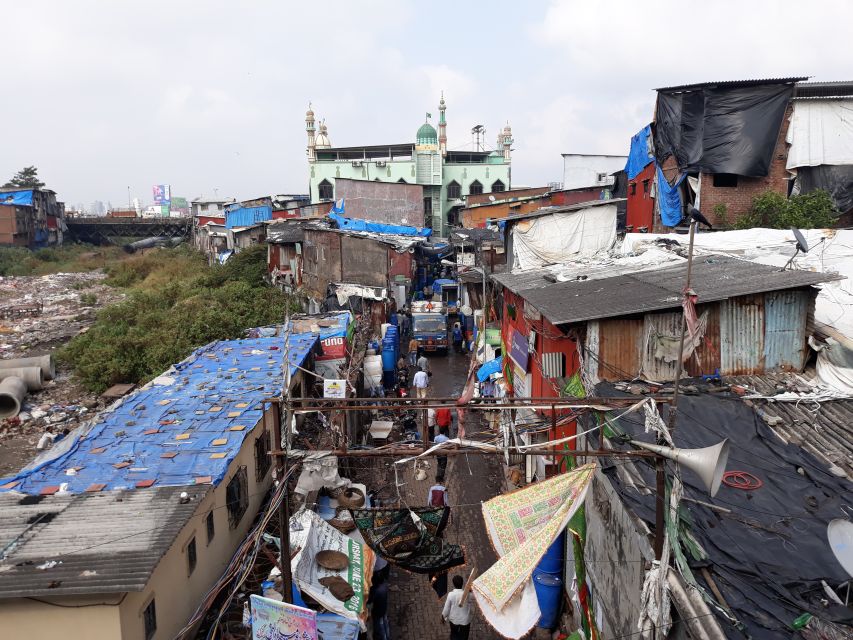
The film connection is likely to interest anyone who has seen Slumdog Millionaire. The tour takes you to the location where parts of the movie were shot.
Treat this as a brief point of reference rather than the main reason to book. The film may shape your expectations, but the neighborhood you see is a living place, not a recreated set. The tour’s value comes from what surrounds the filming location: work, family life, markets, and recycling.
This stop can help you compare movie images with everyday reality, but your guide’s explanation is more important than the photo opportunity. Dharavi cannot be understood through a film scene alone.
Optional pottery in Kumbharwade
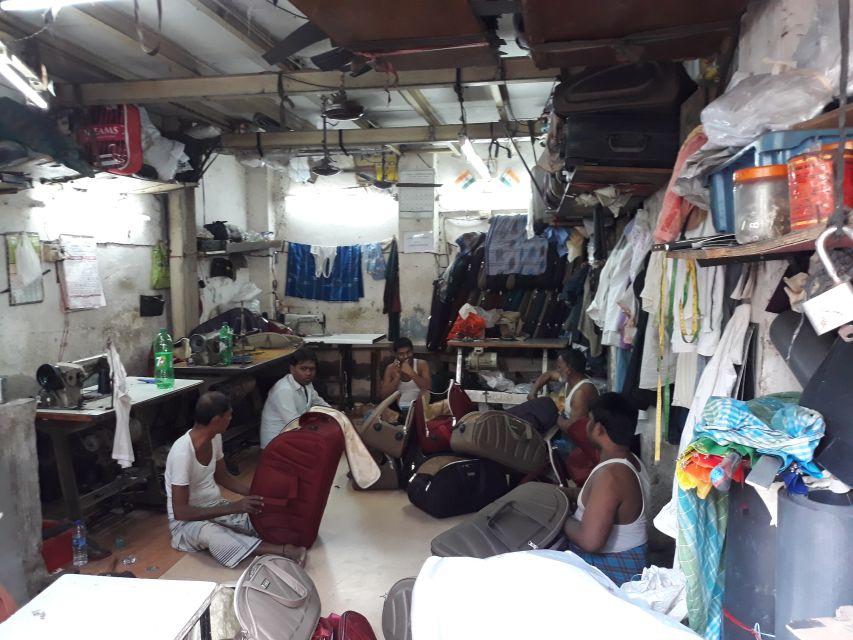
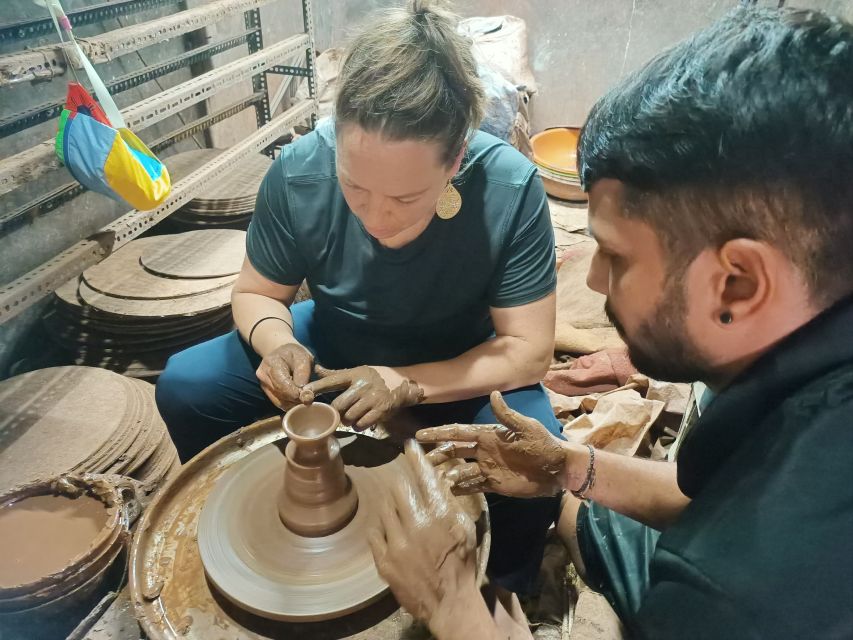
If you select the pottery option, you visit a local potter’s workshop and receive a general introduction to the process. You then try throwing clay on a wheel and make a piece of Kumbharwade art.
This is a good choice if you prefer doing something with your hands instead of only watching. Pottery also adds another layer to the tour’s central theme: skilled work carried out in a limited urban space.
Do not expect a long formal ceramics course. The information describes an introduction followed by a chance to try the wheel. Your piece is part of the experience, not a guarantee of professional results.
The pottery option will suit families, creative visitors, and anyone who wants a clear activity within the walk. If your main interest is social history or local business, the standard route may already give you enough.
Optional vegetarian lunch with a local family

You can also choose a vegetarian lunch with a local family. The meal takes place in a home, with you sitting on the floor and eating with your hands.
This is more personal than stopping at a restaurant. It gives you a chance to experience a familiar way of eating and spend time in a family setting rather than only passing through work areas.
At the same time, accept the invitation with humility. A family meal is not a staged food show. Follow your guide’s instructions, eat at a comfortable pace, and remember that the home belongs to the family.
Food is included only with the relevant option. If you book the basic tour, food is not included. Water is included in the tour.
What the $14 price really gives you

At $14 per person, this is an inexpensive way to see a side of Mumbai that is difficult to understand on your own. The price covers the walking tour, an English-speaking guide, and water. Pottery and lunch depend on the option selected.
The value comes from access and context. You are not merely walking past Dharavi. A local resident explains the work, points out important places, introduces you to people when suitable, and answers questions about life in the area.
The low price does not mean the setting is easy. You are paying for guidance, not comfort. There is no promise of air-conditioned transport, a polished visitor center, or a tidy route. If you want a smooth sightseeing day, this may feel demanding.
If you want a direct look at a major part of Mumbai’s working life, the price is strong. The optional lunch or pottery workshop may make sense if you want more personal contact, but the extra cost is not provided here, so check the selected package before booking.
Practical advice for a respectful visit
Wear closed-toe shoes. The route passes through narrow lanes and working areas, so sturdy footwear is more useful than sandals.
Bring a scarf. It is listed as an item to bring and can be useful for comfort and personal coverage during the walk.
Dress simply and respectfully. The supplied information does not give a formal dress code, but you are entering homes, workshops, and a close-knit residential area. Modest clothing and a calm manner are sensible.
Do not treat residents as scenery. Ask before taking photographs, avoid photographing children without clear permission, and let your guide decide when an introduction is appropriate.
The tour is in English. If you need another language, this experience may not be the right fit.
The meeting point and end point are both Third Wave Coffee. Build in enough time to find the starting point, and confirm the current meeting instructions when you book.
You can reserve now and pay later, which helps if your Mumbai plans are still changing. Cancellation is free up to 24 hours in advance for a full refund.
Who will get the most from this Dharavi walk?
I would recommend this to you if you want local contact, social context, and a close look at work that most city tours skip. It is especially suitable for curious adults, older children who can behave respectfully, photographers who ask permission, and visitors interested in recycling, craft, and urban economics.
The optional pottery workshop suits hands-on people. The family lunch suits anyone who wants a slower and more personal meal experience.
I would be cautious about booking it if you dislike narrow walking routes, basic conditions, or visits that may feel emotionally challenging. It is also not the best match if you want a detached view from a vehicle.
Guide quality is central to the experience. Abhishek, Abhi, Bharti Dharavi, Dhruvesh, Hardik Tank, and Rakesh are among the guides associated with especially personal and caring visits, but the guide assigned to your booking may differ. The strongest guides explain Dharavi with pride while still being honest about its problems.
Should you book the Mumbai Dharavi Slum Walking Tour?
Book it if you want to replace a simple stereotype with a closer look at how people live and earn a living in Dharavi. The recycling work, leather production, markets, homes, and shared religious life provide more substance than a quick photo stop.
Choose the pottery or lunch option if you want hands-on contact and extra time with local people. Stick with the standard walk if your main goal is to understand the neighborhood’s industries and community life.
For $14 per person, the basic tour offers good value, provided you bring patience and respect. This is not poverty tourism at its best or worst by default. Its quality depends on how the guide handles introductions and how you behave as a visitor. Book it for the conversation and context, not for a dramatic spectacle.
FAQ
Where does the Dharavi walking tour start?
Meet your guide at Third Wave Coffee in Mumbai.
Where does the tour end?
The activity ends back at the meeting point at Third Wave Coffee.
Is an English-speaking guide included?
Yes. The tour includes an English-speaking guide. Guides associated with this experience include Abhishek, Abhi, Bharti Dharavi, Dhruvesh, Hardik Tank, and Rakesh.
Is lunch included?
A vegetarian lunch with a local family is included only if you select the lunch option. Food is not included with the other option.
Is the pottery workshop included?
The pottery workshop is included only with the option that features it. You visit a local potter, learn the general process, and try throwing clay on a wheel.
What should I bring?
Bring a scarf and wear closed-toe shoes.
Is water included?
Yes. Water is included with the tour.
Can I cancel for a full refund?
Yes. You can cancel up to 24 hours in advance for a full refund. You can also reserve and pay later, according to the booking terms provided.
Just added around Mumbai
- Temples & Vineyards: Private Tour to Nashik from Mumbai★ 4.5 · 3 reviews
- Mumbai: Private City sightseeing and Dharavi Slum Tour★ 5.0 · 3 reviews
- Mumbai: Full Day City Sightseeing with Lunch, Car & Guide★ 4.3 · 3 reviews
- Elephanta Island Private Speedboat Tour from Mumbai – 6pax★ 5.0 · 3 reviews
- Mumbai by Dawn★ 4.5 · 3 reviews
- Mumbai: Elephanta Island and Elephanta Caves Guided Tour★ 4.4 · 3 reviews
- Mumbai Sightseeing Tour by Public Transport with family Lunch★ 5.0 · 3 reviews
- Mumbai Dharavi Slum Community Tour★ 5.0 · 3 reviews
Dharavi Slum Tours, compared.
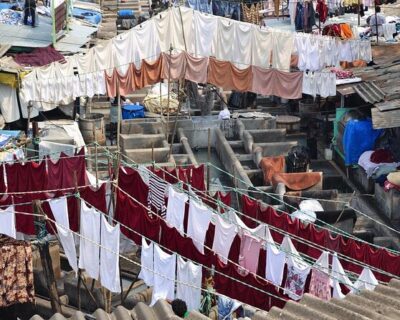
Dharavi slum tour in Mumbai by Female tour guides of the slum
Read our review →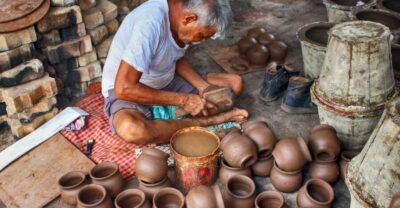
Dharavi Slum Slumdog Millionaire Tour with a Local
Read our review →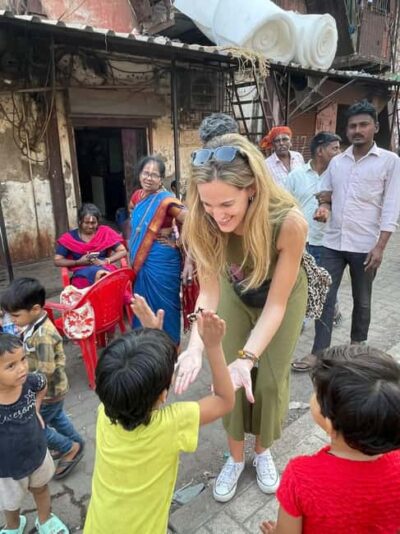
Mumbai Slum Tour – Visit Dharavi Slum with Local Guide
Read our review →
Dhobi Ghat Laundry and Dharavi Slum Tour with Local
Read our review →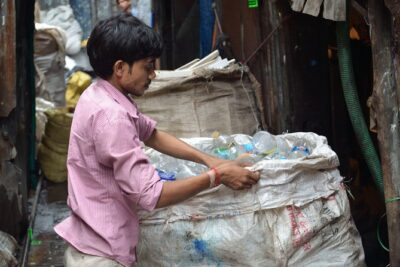
Browse the lists this tour appears in