
Reviewed · DHARAVI SLUM TOURS
Mumbai: Dharavi Slum Walking Tour by First Female Tour Guide
Dharavi is not simply a place of poverty to view from a passing car. It is a huge working community in the middle of Mumbai, where recycling, manufacturing, trade, education, and family life share a tight maze of streets. This 2.5-hour walking tour takes you inside that world with a local female guide, including guides such as Pooja, Sneha, Anu, and Varsha.
I like the focus on local businesses and working life, from plastic and paper recycling to leather, pottery, soap, and clothing production. I also like the personal touch: several guides, including Varsha, Pooja, and Sneha, grew up in Dharavi or still live there, giving you a view that goes well beyond a map pin.
The main consideration is that this is a walking tour through a dense residential and industrial area, not a polished sightseeing attraction. You need an open mind, respect for local privacy, and comfort with seeing difficult living conditions alongside remarkable enterprise.
In This Review
- Key points to know before you go
- Why Dharavi is worth seeing with a local guide
- Meeting at Third Wave Coffee
- Recycling and manufacturing in Dharavi
- Schools, colleges, markets, and homes
- Stories that change your view of a slum
- What the two and a half hours feel like
- The value of a $5 Dharavi tour
- Which guide might suit your style?
- Ethical questions and respectful behaviour
- Who should book this walk?
- Should you book this Dharavi walking tour?
- FAQ
- Where does the Dharavi walking tour begin?
- Where does the tour finish?
- How long does the experience last?
- What language is the tour conducted in?
- What can you see during the walk?
- Is bottled water included?
- Is a private group available?
- Can I cancel or pay later?
Key points to know before you go
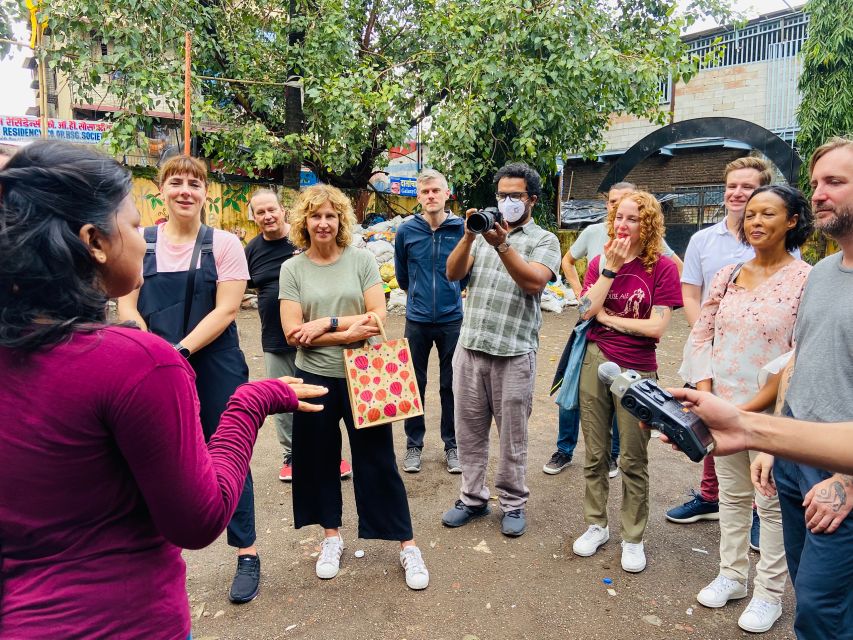
- A local female guide leads the walk: Guides such as Pooja, Anu, Sneha, Varsha, Anushka, and Mahek explain Dharavi through personal experience and clear English.
- You see working industries up close: The route can include plastic, paper, and aluminium recycling, soap factories, cloth production, leather work, and pottery.
- The tour covers more than workshops: You also pass schools, colleges, markets, commercial areas, and residential lanes.
- It challenges the usual image of a slum: Dharavi appears as a place of work, education, trade, family life, and self-reliance, as well as hardship.
- It is excellent value at $5: For two to two and a half hours with a guide and bottled water, the cost is remarkably low.
- You return to the starting point: The meeting and finish are at Third Wave Coffee, making the route simple to plan.
Why Dharavi is worth seeing with a local guide
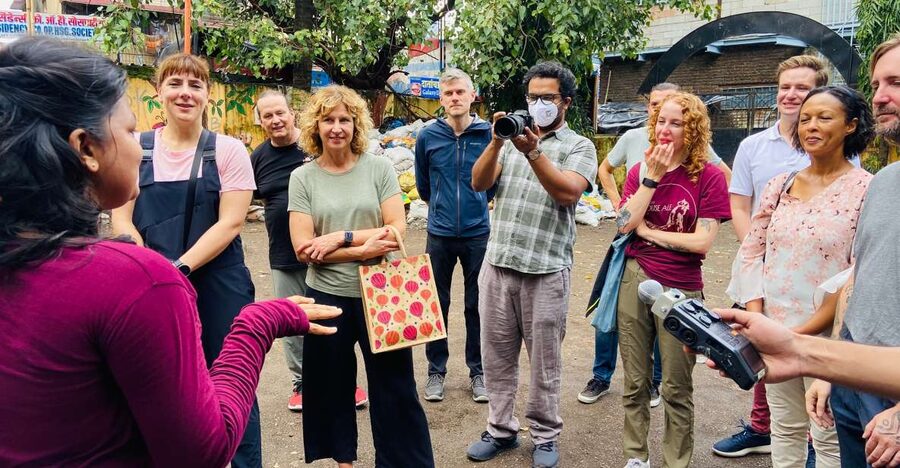
Dharavi sits in the heart of Mumbai and has become one of the city’s most discussed areas. Its fame can make it easy to reduce the place to a single label, but the walking route gives you a more useful picture. You see people earning a living, children and young adults pursuing education, and families making homes in a very limited amount of space.
I find the local guide especially important here. Dharavi is not an area you can understand by walking in alone for a few minutes. Its streets, businesses, homes, and social spaces are closely packed, and a guide helps you understand what you are seeing without treating it as a spectacle.
The women leading these tours bring different personal backgrounds and styles. Pooja is described as funny, energetic, and easy to talk with. Anu is praised for patience and clear explanations. Sneha has guided people through both the commercial and residential sections, while Varsha is known for her first-hand understanding of the area and strong English.
That personal connection matters. Instead of seeing a recycling unit as a curiosity, you can learn how it fits into the local economy. Instead of passing a school or home without context, you can ask how education and family life work in Dharavi. The result is a more human and less one-dimensional visit.
More Dharavi walking tours:
- Dharavi slum tour in Mumbai by Female tour guides of the slum
★ 5.0 · 1,976 reviews - Mumbai: Dharavi Slum, DhobiGhat, and Dabbawallas Tour
★ 4.9 · 689 reviews - Dharavi Slum Tour
★ 5.0 · 625 reviews
Meeting at Third Wave Coffee
The tour begins outside Third Wave Coffee. This gives you a clear, easy-to-find meeting point and a chance to arrive a little early for coffee or a short rest before the walk. The tour ends back at the same café, so you do not need to arrange a second pickup point.
The meeting point is also close to a station, which is useful in Mumbai’s heavy traffic. If you are coming by car, allow extra time. One practical tip is simple: do not cut your arrival too close, since road traffic can be slow and unpredictable.
Your guide will meet you outside the shop. The activity is conducted in English, and private groups are available if you prefer a more personal outing. The standard format is a small walking experience, though the exact group size is not specified.
From the café, you head into Dharavi on foot. The change from a modern coffee shop to narrow working lanes is part of the experience, but the contrast can be sharp. It helps to arrive ready to listen rather than expecting a conventional sightseeing route.
Recycling and manufacturing in Dharavi
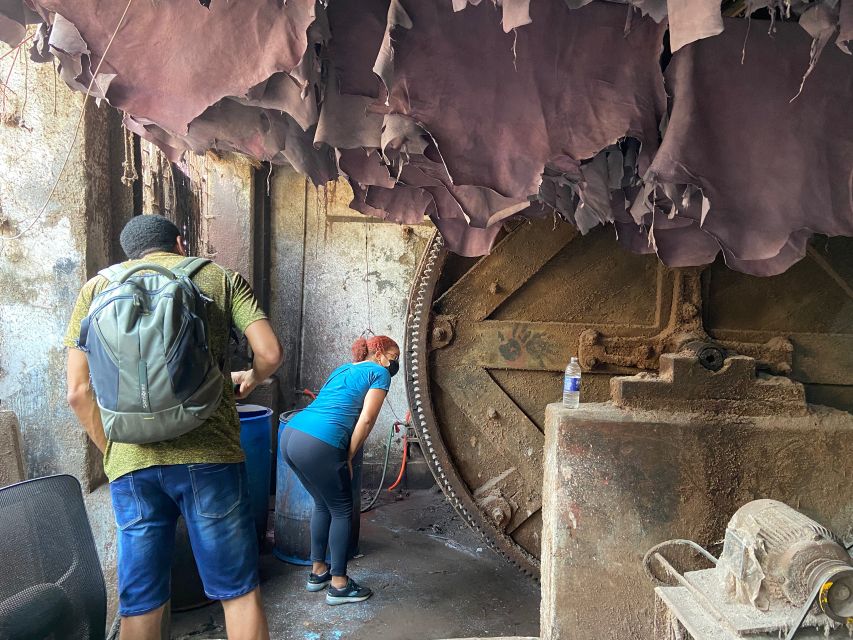
One of the strongest parts of the walk is the industrial side of Dharavi. The route may take you through plastic recycling, paper recycling, and aluminium recycling areas, showing how discarded materials become part of a working supply chain.
This is a useful correction to the idea that Dharavi is only a residential settlement. It is also a place where materials are sorted, processed, repaired, reused, and sold. You can see why the area has an important economic role in Mumbai.
The tour may also include soap factories, cloth manufacturing, leather industries, and pottery. Each activity gives you a different look at local skill and business. Some work is small-scale and hands-on, while other operations are part of wider commercial networks.
You should not expect a museum-style presentation. These are working places, and conditions may be basic. The value comes from seeing real production in context and from having your guide explain what happens there.
The industrial lanes can also be noisy, crowded, or uncomfortable at times. That is part of the honest picture. You are not being shown a staged replica. You are walking through a functioning part of Mumbai where people are trying to make a living.
Schools, colleges, markets, and homes
The route is not limited to factories. You also visit or pass schools, colleges, markets, commercial places, and residential areas. This wider mix is what gives the tour its balance.
Education is an important part of the story. Seeing schools and colleges in the same community as workshops helps you understand that Dharavi is not frozen in one condition. Families work, study, shop, and build futures here.
The markets add another layer. They show how residents buy daily goods and how commercial activity fits into the narrow streets. You might see the shift from an industrial lane to a residential one within a short walk, with homes and businesses sharing the same compact space.
The residential sections require the most sensitivity. You are entering places where people live, not an abandoned district or public exhibit. Keep your voice low, follow your guide, and ask before taking photographs of people or private spaces.
That approach is not just polite. It changes the quality of your visit. You are more likely to have a respectful exchange and less likely to turn someone’s home or work into a backdrop.
More guided walks on foot:
- Group Guided Walking Tour in Fort and Colaba
★ 5.0 · 1,073 reviews - Private Guided Walking Tour in Fort & Colaba
★ 5.0 · 895 reviews - Private Guided Walking Tour in Bandra Queen of Suburbs
★ 5.0 · 383 reviews - Private Guided Spiritual Walk in Banganga Hindu Temples
★ 5.0 · 271 reviews
Stories that change your view of a slum
The best guides do more than point out buildings. They connect what you see with the people who live and work there. Guides who grew up in Dharavi can explain the area from a personal point of view, while also keeping the tour organised and clear for first-time visitors.
Several guides have been praised for answering questions in detail and making people feel comfortable. That is useful because you may arrive with assumptions about what a slum is. The walk can replace those broad ideas with a more complicated picture.
You will still see hardship. Limited space and basic conditions are part of Dharavi’s reality. But you will also see ambition, work, education, humour, and local pride. The important point is not to swap one oversimplification for another. Dharavi is neither a romantic success story nor simply a place of deprivation.
The tour’s most meaningful lesson is the combination of both sides. People are creating businesses and supporting families in difficult conditions. That is why the experience can feel eye-opening without being a simple poverty tour.
What the two and a half hours feel like
The walk lasts about two to two and a half hours. That is long enough to cover several parts of Dharavi without turning into a full-day commitment. I think the timing works well for a first day in Mumbai, when you are still building a sense of the city.
Expect to walk continuously through close-packed streets. The tour does not use a vehicle between stops, and the itinerary returns to Third Wave Coffee at the end. Wear comfortable shoes and bring water, although bottled mineral water is included.
The route includes both commercial and residential sections, so the pace is shaped by the streets and the places being visited. Your guide may pause to explain a business, answer questions, or point out an aspect of daily life that you would otherwise miss.
One benefit of a guided walk is that you do not have to spend your time figuring out where to turn. A guide familiar with Dharavi can take you to places you would not easily find on Google or by wandering in from the edge.
The experience is available with a live English-speaking guide. Private groups are offered, which may suit couples, families, or anyone who wants more time for questions. If you travel with teenagers, the subject matter can prompt useful conversations about work, recycling, inequality, and city life, though parents should judge whether the directness of the visit suits their children.
The value of a $5 Dharavi tour
At $5 per person, this is unusually inexpensive for a guided experience lasting around two and a half hours. The price includes the walking tour, a live guide, and bottled mineral water.
The real value is not in the amount of sightseeing packed into the route. It is in the interpretation. Without a guide, you could pass workshops, homes, and markets without knowing what they do or how they fit together. A local guide turns a confusing walk into a connected story.
The low price also makes this easy to add to a Mumbai itinerary. You can pair it with other city sights without using a whole day or spending heavily. It is a strong choice if you want one experience that shows you a side of Mumbai beyond monuments and grand buildings.
Still, low cost should not make you expect luxury. This is not a comfort-focused excursion. You are paying for access and explanation, not air-conditioned transport, a formal visitor centre, or a polished attraction.
The activity offers free cancellation up to 24 hours in advance, and you can reserve now and pay later. Those options help if your Mumbai plans are still changing.
Which guide might suit your style?
The guide assigned to your booking can vary, so you should not assume a particular person will lead every departure. The female guides associated with this experience include Anu, Sneha, Pooja, Varsha, Anushka, Mahek, and Sarah.
If you value personal connection, guides such as Sneha and Varsha have first-hand ties to Dharavi. If you like a lighter tone, Pooja is known for humour while still handling serious subjects. Anu has been praised for patience and care, and Mahek received strong comments for clear explanations even on an early solo tour.
The common thread is the combination of local insight, good English, and attention to the group. Guides have helped quiet participants engage, kept distracted walkers together, and made people feel safe during the route.
You cannot choose every detail of the guide’s personality, but the format gives you a direct conversation rather than a recorded commentary. Ask questions. The more curious and respectful you are, the more useful the experience becomes.
Ethical questions and respectful behaviour
A tour of a low-income community always raises an ethical question: are you learning about a place, or simply looking at people’s hardship? The answer depends partly on how the tour is conducted and partly on how you behave.
This experience places local women in the guiding role and focuses on work, education, commerce, homes, and personal stories. That wider approach is more responsible than reducing Dharavi to poverty alone.
You should still treat the area as a living community. Do not photograph people without permission. Avoid blocking doorways or work areas, and listen when your guide explains what is appropriate. A good tour should leave you with greater respect, not just dramatic images.
I also suggest asking questions about the businesses you see rather than asking intrusive questions about individual families. The strongest conversations are about the community, work, education, recycling, and change.
Who should book this walk?
I would recommend it to first-time visitors who want a fuller view of Mumbai. It suits people who prefer local stories and working neighbourhoods to a checklist of famous monuments.
It is also a good match for students, photographers who can work respectfully, families with older children, and anyone interested in recycling, small businesses, urban development, or women’s opportunities.
You may want to skip it if you dislike walking through crowded areas or if you are looking for a relaxed, highly polished attraction. It is not designed to keep you at a comfortable distance from the realities of city life.
The tour is also not a substitute for visiting Mumbai’s major landmarks. Think of it as a different piece of the city, one that helps you understand how people work and live behind the postcard views.
Should you book this Dharavi walking tour?
Yes, if you want an affordable and direct way to understand one of Mumbai’s most complex communities. The mix of recycling, manufacturing, markets, education, homes, and local stories gives the walk real substance.
I especially like that female guides from Dharavi can lead the conversation in their own community. That does not erase the ethical questions around slum tourism, but it gives the experience a stronger local voice and a more balanced purpose.
Book it for your first or second day in Mumbai if you want the city to make more sense afterward. Just bring comfortable shoes, patience, and respect. At $5, the financial risk is tiny. The bigger question is whether you are ready to look carefully, listen well, and accept a view of Mumbai that is both difficult and inspiring.
FAQ
Where does the Dharavi walking tour begin?
The guide meets you outside Third Wave Coffee in Mumbai.
Where does the tour finish?
The walking tour returns to Third Wave Coffee.
How long does the experience last?
The tour lasts about two to two and a half hours.
What language is the tour conducted in?
The live tour guide speaks English.
What can you see during the walk?
The route can include plastic, paper, and aluminium recycling, soap factories, cloth manufacturing, leather industries, pottery, schools, colleges, markets, commercial areas, and residential areas.
Is bottled water included?
Yes. Bottled mineral water is included with the walking tour and guide.
Is a private group available?
Yes. A private group option is available.
Can I cancel or pay later?
You can cancel up to 24 hours in advance for a full refund. You can also reserve your place and pay later.
Just added around Mumbai
- Temples & Vineyards: Private Tour to Nashik from Mumbai★ 4.5 · 3 reviews
- Mumbai: Private City sightseeing and Dharavi Slum Tour★ 5.0 · 3 reviews
- Mumbai: Full Day City Sightseeing with Lunch, Car & Guide★ 4.3 · 3 reviews
- Elephanta Island Private Speedboat Tour from Mumbai – 6pax★ 5.0 · 3 reviews
- Mumbai: Elephanta Island and Elephanta Caves Guided Tour★ 4.4 · 3 reviews
- Mumbai Sightseeing Tour by Public Transport with family Lunch★ 5.0 · 3 reviews
- Mumbai by Dawn★ 4.5 · 3 reviews
- Mumbai Dharavi Slum Community Tour★ 5.0 · 3 reviews
Dharavi Slum Tours, compared.
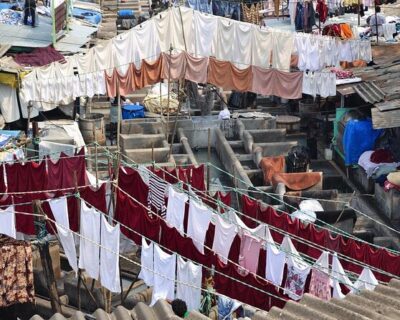
Dharavi slum tour in Mumbai by Female tour guides of the slum
Read our review →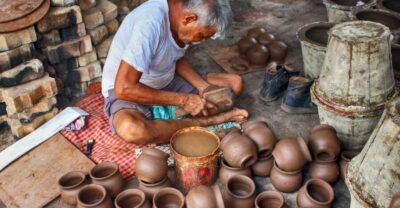
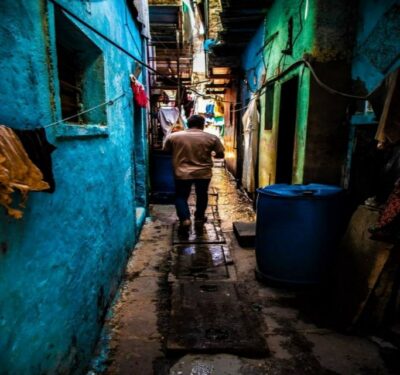
Dharavi Slum Slumdog Millionaire Tour with a Local
Read our review →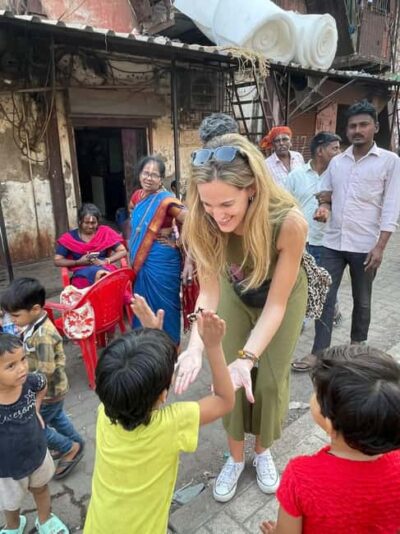
Mumbai Slum Tour – Visit Dharavi Slum with Local Guide
Read our review →
Dhobi Ghat Laundry and Dharavi Slum Tour with Local
Read our review →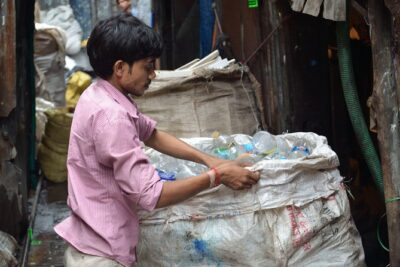
Browse the lists this tour appears in