
Reviewed · DHARAVI SLUM TOURS
Mumbai Dharavi Slum, Dhobi Ghat & Dabbawala Lunchbox Tour
Mumbai’s famous sights are only part of the story. This tour shifts your attention to the city’s working systems: lunchboxes moving across town, clothes washed in a huge open-air laundry, and Dharavi’s homes and small industries packed into one neighborhood. It is a close look at how ordinary Mumbai functions.
I like the small maximum group of 15, which should make it easier to hear your guide and ask questions in narrow or busy areas. I also like the chance to meet people connected with the dabbawala system and see Dhobi Ghat from close range, rather than simply passing both places from a taxi window.
The main consideration is that this is not a polished sightseeing tour. Dharavi involves walking through a dense residential and work area, and some visitors may find the subject matter confronting. You should come with respect, comfortable shoes, and an open mind.
In This Review
- Key points to know before booking
- Why these three places explain Mumbai so well
- Starting near Churchgate at 11:30 am
- The dabbawala tribute statue and Mumbai’s lunchbox network
- Dhobi Ghat after 35 minutes
- Walking through Dharavi with a local guide
- How the small group changes the experience
- What the $18.33 price really covers
- Practical details that shape your day
- Who will get the most from this tour
- Should you book the Dharavi, Dhobi Ghat, and dabbawala tour?
- FAQ
- How long does the Mumbai Dharavi, Dhobi Ghat, and Dabbawala tour last?
- What time does the tour start?
- Where does the tour begin?
- Where does the tour finish?
- How many people can join the tour?
- Is transportation included?
- Is bottled water included?
- Is lunch included?
- Can I cancel for a full refund?
Key points to know before booking
- Three working institutions in one tour: See the dabbawala lunchbox network, Dhobi Ghat, and Dharavi in about three and a half hours.
- Guides who focus on local routines: Javed and Subhan are among the guides associated with the experience, with an emphasis on how people live and work.
- A small group, capped at 15: The group size allows more room for questions and personal attention.
- Churchgate to Mahim: Meet near Churchgate at 11:30 am and finish opposite Mahim Railway Station.
- Transport and water included: The tour includes transportation used during the visit, bottled water, fees, and taxes.
- Strong value at $18.33: For three stops that are difficult to arrange alone, the price is low, though alcohol and any separately purchased food are not included.
Why these three places explain Mumbai so well
I like the design of this tour because the stops are linked by work. The dabbawalas show how meals move through a huge city. Dhobi Ghat shows the physical labor behind clean clothes. Dharavi adds the human setting, where homes, workshops, and businesses share a tightly packed urban space.
This gives you more than three unrelated photo stops. You get a practical look at Mumbai’s daily systems and the people who keep them running. The tour is also useful if you have limited time and want something beyond the standard list of monuments and markets.
The order begins with the dabbawala tribute statue, then moves to Dhobi Ghat, and finishes in Dharavi. The full experience lasts about three hours and 30 minutes, but the actual time at the three stops adds up to about two hours and 30 minutes. The remaining time is used for transport and moving between locations, so the pace should feel active rather than leisurely.
More Dhobi Ghat and dabbawala tours:
- Mumbai: Dharavi Slum, DhobiGhat, and Dabbawallas Tour
★ 4.9 · 689 reviews - Mumbai: Dhobi Ghat Laundry and Dharavi Slum Tour with Local
★ 5.0 · 469 reviews - Mumbai: Dharavi Slum & Dhobi Ghat Laundry Tour
★ 5.0 · 352 reviews
Starting near Churchgate at 11:30 am
The meeting point is at the Burger King Express Building near Churchgate Railway Station, at 14E IMC Marg. It is opposite Churchgate, a central spot with public transportation nearby.
You should allow a little extra time to find the exact building and meet your guide. The start time is fixed at 11:30 am, and the group may need to leave promptly to keep the three-stop schedule on track.
This is a useful starting point for anyone staying in central Mumbai. The finish is on the other side of the city, at Third Wave Coffee opposite Mahim Railway Station, so do not plan on returning to the Churchgate area as part of the tour. Your guide can assist with returning to your hotel or continuing to another destination from Mahim.
The dabbawala tribute statue and Mumbai’s lunchbox network
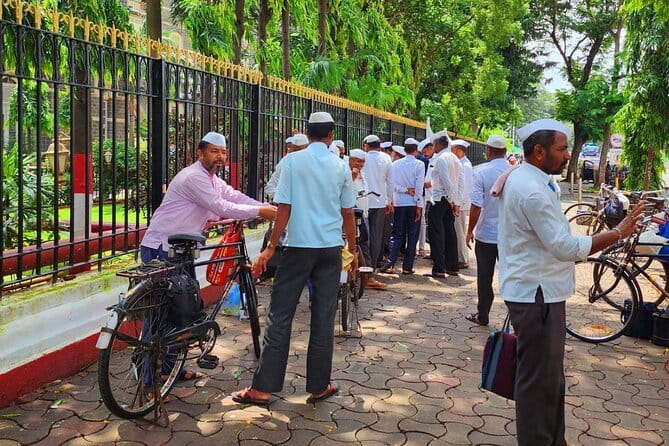
The first stop lasts about 40 minutes and has no separate admission charge. Here, your guide introduces Mumbai’s dabbawalas, the delivery workers who carry home-cooked lunchboxes across the city.
The system has operated for more than 130 years and is famous for moving thousands of meals each day. The value of this stop is not simply learning a delivery statistic. You begin to see how food, work, rail lines, neighborhoods, and office routines connect in Mumbai.
Guides such as Javed have explained the system through the daily routines of the workers and have allowed visitors to interact with people involved in the service. That human contact can make the operation easier to understand than a short explanation from a guidebook.
The stop is centered on the tribute statue and the dabbawala system. You should not assume that a meal is included just because the tour focuses on lunchboxes. The listed inclusions cover bottled water, transportation, fees, and taxes, not lunch or another meal.
This section suits you if you enjoy seeing how a city works behind the scenes. It also gives the tour a clear opening: before entering Dharavi, you have already seen one example of Mumbai’s organized, demanding working life.
Dhobi Ghat after 35 minutes
The second stop lasts about 35 minutes and includes admission. Dhobi Ghat is known as the world’s largest open-air laundry, where washermen, known as dhobis, clean thousands of clothes each day.
The setting offers a very different picture from the dabbawala network. Instead of following food through the city, you see clothing being handled, washed, and prepared in a shared work environment. Your guide can explain the tradition and the daily rhythm of the site while you watch the activity from close range.
The short visit is a strength and a limit. It fits neatly into a half-day schedule and keeps the tour moving, but 35 minutes will not allow a long, slow exploration. You will get an introduction and a clear view of the work, not an extended workshop or a full independent visit.
Dhobi Ghat can also be a good reminder to keep your camera secondary. The main value is understanding the labor and the people who do it. Ask your guide where photography is appropriate, and follow that advice.
More Dharavi walking tours:
- Dharavi slum tour in Mumbai by Female tour guides of the slum
★ 5.0 · 1,976 reviews - Dharavi Slum Tour
★ 5.0 · 625 reviews - Dharavi Slum tour in Mumbai by local resident
★ 5.0 · 572 reviews - Mumbai: Dharavi Slum Slumdog Millionaire Tour with a Local
★ 4.9 · 529 reviews
Walking through Dharavi with a local guide
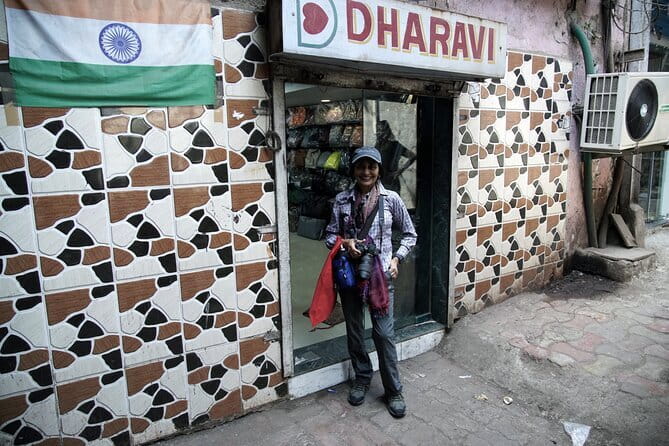
The Dharavi segment is the longest, at about one hour and 15 minutes. It is also the part that requires the most thought from you as a visitor.
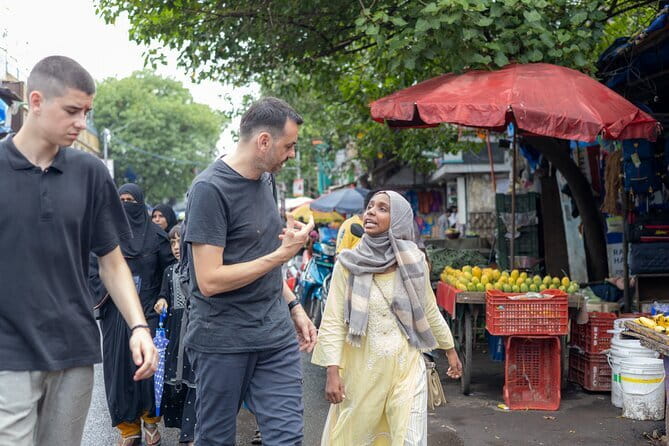
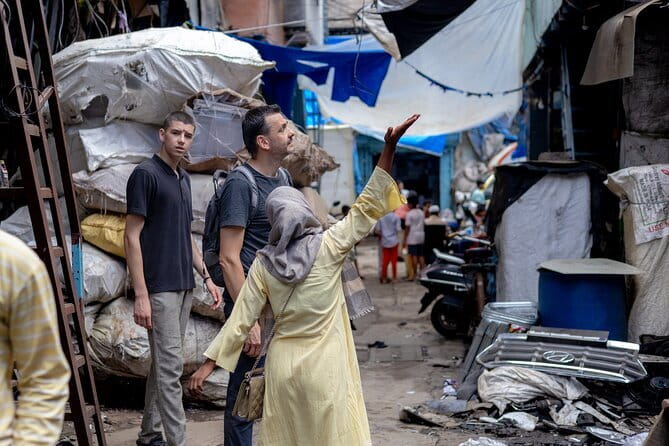
Dharavi is described as one of Asia’s largest slum areas, but that label alone gives an incomplete picture. It is also a place where people live, work, run small industries, and maintain daily routines. A local guide helps you approach the area as a community rather than as a backdrop.
The tour promises access to places that are difficult to find independently and presents the walk in a safe, organized way. That matters here. Dharavi is a dense area with many lanes and working spaces, and a guide who knows the community can help you move through it with better context and fewer awkward moments.
Subhan is one of the guides associated with this experience. His approach has been described as welcoming and careful, with attention to local stories and the way people work. Javed is also associated with the tour and has focused on daily routines, local trains, the dabbawalas, Dhobi Ghat, and Dharavi.
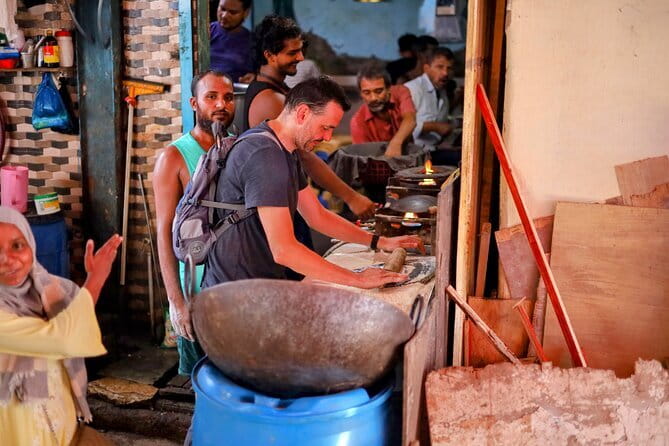
You should expect a walking tour rather than a sightseeing ride. The description does not promise a particular workshop, shop, meal, or purchase, so keep your expectations centered on observation and explanation. The most worthwhile part may be the chance to see how homes and workspaces exist side by side, and to understand the effort required to make a living in a crowded part of Mumbai.
This is not the right tour if you want a comfortable, carefully staged attraction. It can feel eye-opening, but you should never treat hardship as entertainment. Listen to your guide, ask before taking photographs, and remember that people here are living their normal lives.
How the small group changes the experience
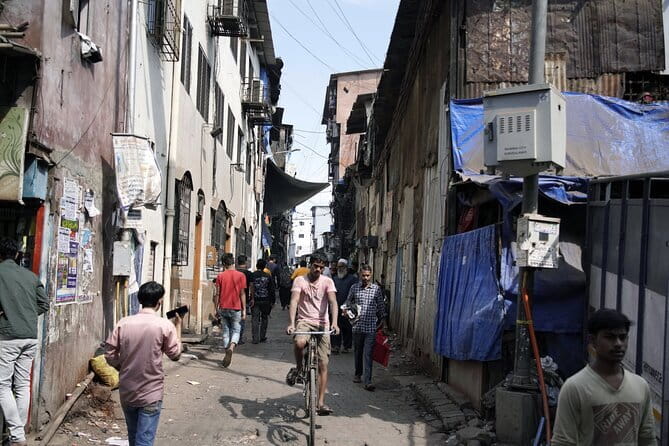
The group limit is 15 people. That is not a private tour, but it is small enough to offer a better chance of hearing the guide at each stop.
A small group matters most at Dhobi Ghat and in Dharavi, where the setting can be noisy or compact. It also helps when you want to ask about local work, transportation, or household routines without holding up a large crowd.
The experience has received a 5 out of 5 rating from 43 reviews, with 100 percent recommending it. Those figures suggest a consistently positive response, especially to the guiding. The names Javed and Subhan are worth noting because the guide can shape the tone of a tour like this more than any individual stop.
Still, a small group does not guarantee a private conversation at every location. The tour has a fixed route and timing, and the guide must keep everyone together. If you want long one-on-one discussions, ask about a private option before booking.
What the $18.33 price really covers

At $18.33 per person, this is inexpensive for a three-and-a-half-hour guided experience across central Mumbai. The price includes transportation used during the tour, bottled water, all fees, and taxes.
That makes the tour a good value if you want an organized introduction to three places that are not easy to arrange on your own. You are paying for the route, local contacts, transport between stops, and the guide’s knowledge of the city’s working neighborhoods.
The price does not include alcoholic beverages. It also does not list lunch, snacks, or other food, so bring the assumption that your own meals are separate. The title refers to the dabbawala lunchbox system, not necessarily a lunch served to you.
Group discounts are available, which may improve the value for families or friends booking together. With more than five bookings recorded in the last month, the experience appears to have ongoing demand, though the maximum group size remains 15.
Practical details that shape your day
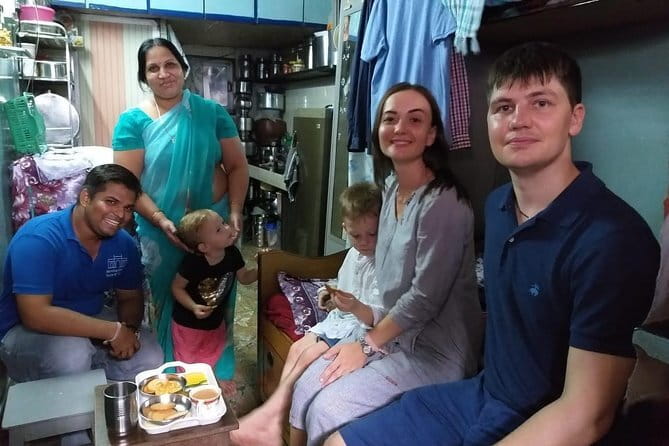
The tour is mobile-ticket enabled, and confirmation is received at booking. It is near public transportation at the starting point and ends directly opposite Mahim Railway Station, making the finish useful for onward travel.
Transportation during the tour is included, but the exact vehicle or mode is not specified. You should follow the meeting instructions closely and keep your phone charged so you can access the mobile ticket and contact details if needed.
Most people can participate, according to the supplied information. However, the schedule includes movement between three sites and a Dharavi walk. If you have concerns about walking, crowds, or the physical demands of the route, ask the provider before booking rather than assuming the tour can be adjusted.
Wear practical clothing and shoes. You may be walking through working areas, and the tour is more about seeing real daily life than looking polished for photographs. Bottled water is supplied, but you may still want sun protection and any personal items you normally need during a half-day outing.
The cancellation terms are reasonable: you receive a full refund if you cancel at least 24 hours before the local start time. Cancellations or changes made within 24 hours are not refunded or accepted.
Who will get the most from this tour
I would recommend this experience to you if you want to understand Mumbai through its workers, neighborhoods, and daily systems. It is especially useful during a first visit when you want local context that the city’s major sights cannot provide.
It suits curious adults, older children who can handle serious subject matter, and anyone interested in urban life, transport, labor, or community industries. The guide’s explanations are a central part of the experience, so you will get more from it if you ask questions.
You may want to choose another activity if you dislike walking, want a quiet luxury outing, or prefer attractions designed mainly for photography. Dharavi is a residential community, not a theme park, and the tour asks for maturity and restraint.
The schedule also works well for a free afternoon. Starting at 11:30 am and ending at Mahim Station means you can connect it with other plans, though you should leave enough time after the tour in case transport between stops takes longer than expected.
Should you book the Dharavi, Dhobi Ghat, and dabbawala tour?
Book it if you want a low-cost, small-group look at the working side of Mumbai and you value a local guide over a polished attraction. The strongest reasons are the three-part route, the manageable group size, the included transport, and guides such as Javed and Subhan, who focus on everyday routines and local work.
Go in knowing that the experience may challenge you. Dharavi requires respect, and the Dhobi Ghat visit is brief. If you approach both places with care, this tour can give you a more useful understanding of Mumbai than another quick photo stop. At $18.33, it offers strong value for a short, tightly scheduled introduction to the city’s people and working institutions.
FAQ
How long does the Mumbai Dharavi, Dhobi Ghat, and Dabbawala tour last?
The tour lasts approximately three hours and 30 minutes.
What time does the tour start?
It starts at 11:30 am.
Where does the tour begin?
The meeting point is Burger King Express Building, Railway Station, No 14E, IMC Marg, opposite Churchgate, Churchgate, Mumbai, Maharashtra 400020, India.
Where does the tour finish?
The tour finishes at Third Wave Coffee, directly opposite Mahim Railway Station, at Tip Road, Unit 58, Ground, Ram Mahal, Senapati Bapat Marg, Marinagar Colony, Station, Mahim, Mumbai, Maharashtra 400016, India.
How many people can join the tour?
The maximum group size is 15 people.
Is transportation included?
Yes. Transportation used during the tour is included in the price.
Is bottled water included?
Yes. Bottled water is included.
Is lunch included?
The listed inclusions do not include lunch. The tour explains Mumbai’s dabbawala lunchbox system, but food is not listed as part of the price.
Can I cancel for a full refund?
Yes. You can receive a full refund if you cancel at least 24 hours before the experience start time. Cancellations or changes made less than 24 hours before the start are not refunded or accepted.
Just added around Mumbai
- Temples & Vineyards: Private Tour to Nashik from Mumbai★ 4.5 · 3 reviews
- Mumbai: Private City sightseeing and Dharavi Slum Tour★ 5.0 · 3 reviews
- Mumbai: Full Day City Sightseeing with Lunch, Car & Guide★ 4.3 · 3 reviews
- Elephanta Island Private Speedboat Tour from Mumbai – 6pax★ 5.0 · 3 reviews
- Mumbai by Dawn★ 4.5 · 3 reviews
- Mumbai: Elephanta Island and Elephanta Caves Guided Tour★ 4.4 · 3 reviews
- Mumbai Sightseeing Tour by Public Transport with family Lunch★ 5.0 · 3 reviews
- Mumbai Dharavi Slum Community Tour★ 5.0 · 3 reviews
Dharavi Slum Tours, compared.
Dharavi slum tour in Mumbai by Female tour guides of the slum
Read our review →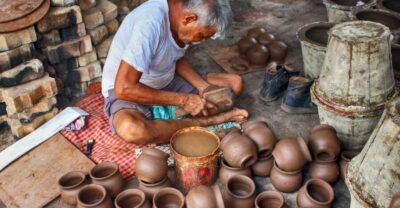

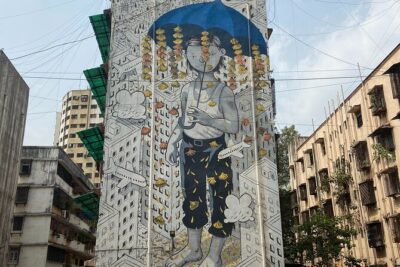
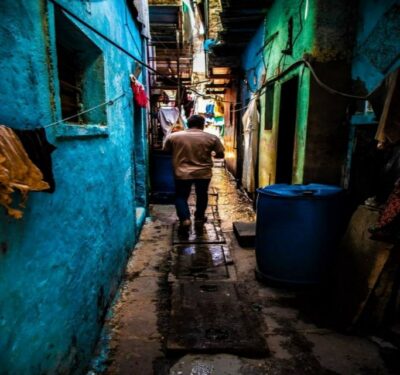
Dharavi Slum Slumdog Millionaire Tour with a Local
Read our review →
Mumbai Slum Tour – Visit Dharavi Slum with Local Guide
Read our review →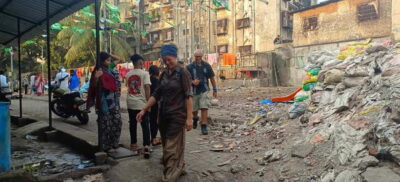
Dhobi Ghat Laundry and Dharavi Slum Tour with Local
Read our review →
Browse the lists this tour appears in