
Reviewed · DHOBI GHAT & DABBAWALA TOURS
Mumbai City + Dabbawala aka Lunchbox + Train Ride Tour – The Unfeigned Mumbai.
Mumbai’s famous lunchbox network is the heart of this tour. At Churchgate Railway Station, you get a close look at the dabbawalas, the delivery workers who move fresh meals from homes and restaurants to office workers across the city. You also ride a local train, the best way to understand how Mumbai moves.
I like the private format, since your guide can explain what you are seeing instead of rushing a large group along. I also like the mix of daily life and major sights, from open-air laundry at Dhobi Ghat to Gandhi’s former Mumbai headquarters, followed by Marine Drive and the Gateway of India. The main drawback is pace: five hours covers a lot, so most stops are brief, and lunch is not included.
In This Review
- Key points to know before booking
- Why the dabbawalas make this more than a sightseeing drive
- Dhobi Ghat and the work behind clean clothes
- Mani Bhavan gives Gandhi the most time
- Hanging Gardens and Kamala Nehru Park
- Marine Drive and Mumbai’s famous curve
- Gateway of India and the colonial city center
- Rajabai Clock Tower and the High Court
- Chhatrapati Shivaji Maharaj Terminus closes the city story
- What the private vehicle adds
- Is $69.99 a fair price?
- Who should book this Mumbai tour?
- The final call
- FAQ
- How long does the Mumbai City and Dabbawala tour last?
- Is this a private tour?
- Is hotel pickup included?
- Does the tour include a local train ride?
- Is lunch included?
- What is included in the tour price?
- Can I cancel for a full refund?
Key points to know before booking
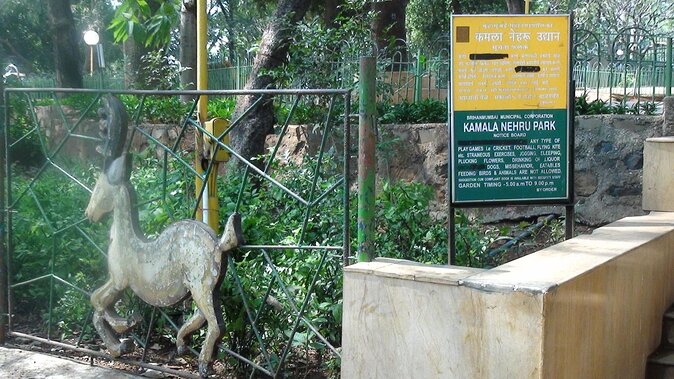
- Churchgate and the dabbawalas: See Mumbai’s celebrated lunchbox delivery system near one of the city’s main railway stations.
- A real local train ride: Travel with your guide rather than viewing Mumbai only from an air-conditioned vehicle.
- Dhobi Ghat from close range: Watch the city’s traditional laundry work in an open-air setting.
- Gandhi’s Mumbai home base: Spend 30 minutes at Mani Bhavan, the longest museum visit on the schedule.
- Classic south Mumbai views: Reach Marine Drive, the Gateway of India, Rajabai Clock Tower, the High Court, and CSMT.
- Useful all-in pricing: The $69.99 fee covers private transport, entrance fees, water, tea, coffee, and taxes, but not lunch.
Why the dabbawalas make this more than a sightseeing drive
Many city tours show Mumbai’s monuments. This one begins with a system that reveals how the city works.
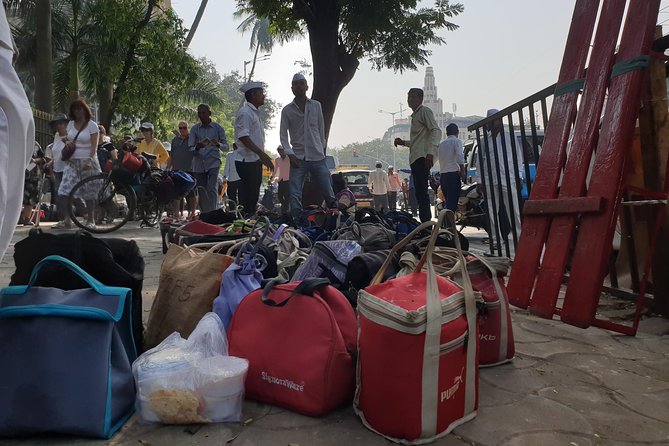
The dabbawalas collect and deliver freshly prepared meals, traditionally packed in metal lunchboxes, to office workers. Churchgate Railway Station is an important setting for seeing this network in action. You are not simply looking at a historic building or taking a photo of a monument. You are watching an everyday service tied to Mumbai’s homes, workplaces, trains, and strict delivery routines.
The stop is scheduled for about 15 minutes, so keep your expectations sensible. This is an introduction rather than a long study of the lunchbox system. Your guide should provide the context that makes the activity easier to follow, especially if you have never seen the dabbawala markings or understood how meals move across the city.
The train ride matters for the same reason. Mumbai’s suburban railway is part of ordinary life, not a tourist display. Riding with a guide lets you see the city from street level and gives you a better feel for the distance between its neighborhoods. It also breaks up the private-vehicle portion of the tour.
The exact train timing and route are not specified, so ask about the planned ride when you book or when pickup begins. A local train can be crowded, and the experience may feel more functional than scenic. That is part of its value, but it also means you should wear practical shoes, keep belongings secure, and be ready to move at the city’s pace.
More Dhobi Ghat and dabbawala tours:
- Mumbai: Dharavi Slum, DhobiGhat, and Dabbawallas Tour
★ 4.9 · 689 reviews - Mumbai: Dhobi Ghat Laundry and Dharavi Slum Tour with Local
★ 5.0 · 469 reviews - Mumbai: Dharavi Slum & Dhobi Ghat Laundry Tour
★ 5.0 · 352 reviews
Dhobi Ghat and the work behind clean clothes
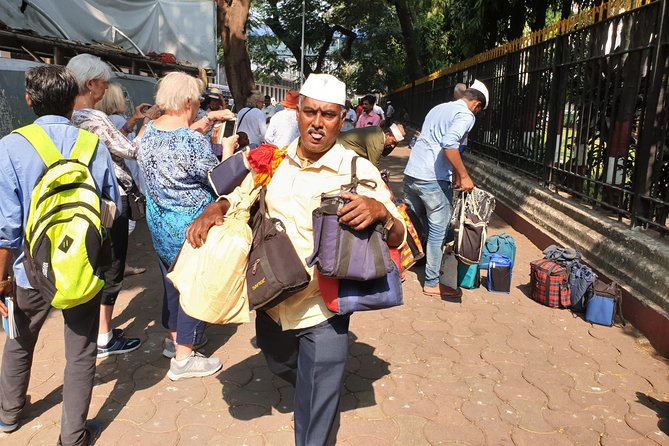
The short stop at Mahalaxmi Dhobi Ghat introduces another side of Mumbai’s daily economy. Dhobis wash clothes and linens in an open-air laundry area, serving homes as well as hotels and hospitals.
From a visitor’s point of view, the appeal is not glamour. It is the chance to see a working neighborhood and a long-established service that remains visible in the city. Laundry is sorted, washed, dried, and returned through a process that most visitors would otherwise never encounter.
You have about 15 minutes here. That is enough for an explanation and a look, but not enough for a slow visit or detailed photography session. Be respectful. This is a workplace, not a staged attraction, and people are carrying out their jobs while you observe.
Dhobi Ghat also gives the tour a useful balance. The dabbawalas show how Mumbai distributes food. The dhobis show how it handles clothing and linens. Together, the two stops make the tour about working systems, not only grand architecture.
Mani Bhavan gives Gandhi the most time
Mani Bhavan is the most substantial museum stop, with about 30 minutes set aside. Mohandas Gandhi used the house as his Mumbai headquarters for roughly 17 years, from 1917 to 1934. The mansion belonged to Revashankar Jagjeevan Jhaveri, Gandhi’s friend and host in the city.
This is the place where the tour slows down. The museum offers historical context that the quick exterior stops cannot provide, and its connection to Gandhi gives the visit weight even if you have limited time in Mumbai.
I would pay attention to your guide’s explanation here rather than trying to race through every display. Half an hour is a useful amount of time for a first visit, though anyone with a strong interest in Gandhi may want a longer independent visit on another day.
The tour’s focus on real city life works well at Mani Bhavan. Gandhi’s public role is familiar around the world, but this house connects him to Mumbai in a specific way. It turns a broad historical figure into a person with a home base, local relationships, and years spent working in the city.
Hanging Gardens and Kamala Nehru Park
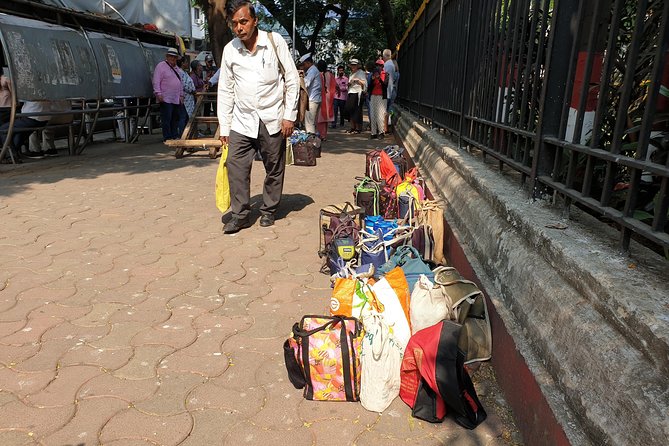
The two hilltop garden stops are short, but they provide a change of pace after the railway station and Dhobi Ghat.
Hanging Gardens, also called Pherozeshah Mehta Gardens, were first built in 1881. The gardens were created over one of Mumbai’s main water reservoirs, with the aim of protecting the water from pollution. You have about 15 minutes here.
Kamala Nehru Park is one of Mumbai’s older parks and is named after Kamala Nehru, Jawaharlal Nehru’s wife. The park is known for its large shoe structure, inspired by the nursery rhyme about the old woman who lived in a shoe. The scheduled stop is only 10 minutes.
These visits are best treated as quick viewpoints and city pauses, not full garden tours. The schedule does not promise a long walk, extended free time, or a separate botanical focus. Still, they help you see Mumbai from its higher southern neighborhoods and give your guide room to explain the city’s public spaces and landmarks.
If you are comparing this experience with a tour devoted only to monuments, these gardens are a useful sign that the day is built around variety. If you prefer longer visits at fewer places, the brief timings may feel hurried.
More local train and transport tours:
- Dabbawala, Dhobi Ghat & Dharavi slum Tour with Local Train Ride
★ 5.0 · 102 reviews - Mumbai Local – Best Seller from Mumbai Magic
★ 5.0 · 87 reviews - Mumbai Street Food & Bazaar Tour with Local Transport
★ 5.0 · 51 reviews - Local Transport & Dabbawallah Tour
★ 5.0 · 40 reviews
Marine Drive and Mumbai’s famous curve
Marine Drive is a 3.6-kilometer road and promenade along the water. It is also known as Netaji Subhash Chandra Bose Road, so you may hear both names during the tour.
The stop lasts about 10 minutes. That is enough to see the broad curve of the road, take photographs, and get a quick sense of why Marine Drive is one of Mumbai’s best-known public spaces. It is not enough for a long promenade walk.
I like having this stop after the gardens because it opens the view and changes the feel of the tour again. You move from working railways and laundry to a wide urban waterfront. The contrast explains Mumbai better than a string of similar monuments would.
Your vehicle and guide remain important here because the stop is brief. If Marine Drive is a priority for you, plan to return separately for a longer walk. This tour gives you an introduction, not an evening at the promenade.
Gateway of India and the colonial city center
The Gateway of India is one of Mumbai’s most recognizable monuments. It was built in the Indo-Saracenic style to commemorate the 1911 visit of King George V and Queen Mary, who landed at Apollo Bunder.
The scheduled visit is about 15 minutes. You get time to view the arch, understand its imperial purpose, and take in the setting near the harbor. The stop is particularly useful for first-time visitors who want to place Mumbai’s old waterfront in the wider story of British India and the city’s later identity.
The Gateway can be crowded, and a short stop leaves little room to linger. That is not a flaw unique to this tour. It is simply the trade-off of fitting many major sights into five hours. Your private guide can help you focus on the key details instead of spending the whole visit finding the right photo angle.
Rajabai Clock Tower and the High Court
The tour continues past two important buildings in the historic center: Rajabai Clock Tower and the Bombay High Court.
Rajabai Clock Tower rises within the University of Mumbai grounds. Architect Sir George Gilbert Scott designed it in 1878, and the founder of the Bombay Stock Exchange financed it. The stop is listed at about 10 minutes, so expect an exterior view and a concise explanation rather than a tower visit.
The Bombay High Court was established on August 14, 1862, under the Indian High Courts Act of 1861. Its work began with seven judges. The building adds another layer to the city’s British-era civic center, where education, law, commerce, and government developed close together.
These stops reward listeners more than collectors of long visits. You may not have time to enter, and the available information does not promise interior access. Still, they make the drive through south Mumbai more meaningful. Instead of passing old buildings without context, you learn why they were built and what roles they played.
Chhatrapati Shivaji Maharaj Terminus closes the city story
Chhatrapati Shivaji Maharaj Terminus, commonly shortened to CSMT or CST, is the final listed major sight. It was once described as the most expensive structure in Mumbai, and it remains one of the city’s defining railway buildings.
The stop is about 10 minutes. That is short for a building of this scale, so expect an outside look and a quick orientation. The station also brings the tour back to the railway theme introduced at Churchgate. At the beginning, you see the rail network as part of the dabbawala delivery system and daily commuting. At the end, you see one of its grandest architectural symbols.
This closing stop works especially well if you have just taken a local train. You can compare the practical railway experience with the monumental terminus, one built for movement and one designed to express civic power and ambition.
If you want a full architectural visit to CSMT, you will need more time than this tour allows. The strength here is connection: the station is not an isolated photo stop, but part of the day’s story about how Mumbai moves and grows.
What the private vehicle adds
The tour includes private transportation in an air-conditioned vehicle, hotel pickup from select Mumbai hotels, bottled water, tea, and coffee. All fees and taxes are also included.
That combination is useful in Mumbai, where several short visits can otherwise require repeated negotiations over transport. You can cover Churchgate, Mahalaxmi, central Mumbai, the hilltop gardens, Marine Drive, and the historic center without arranging separate rides between each stop.
The private format is the biggest practical advantage. Only your group participates, so the guide can adjust explanations and keep the day moving according to your interests. If one landmark matters more to you, ask how much time can be shifted, though the listed schedule is clearly designed to cover many places.
The air-conditioned vehicle also gives you a break from the heat and traffic. Still, do not assume the whole experience is seated and quiet. The train ride is a central feature, and the stops involve getting out, walking short distances, and staying alert around stations and busy public areas.
Pickup is offered only from select Mumbai hotels, so confirm that your accommodation qualifies. The tour is near public transportation, and most people can participate. Service animals are allowed.
Is $69.99 a fair price?
At $69.99 per person, this is not the cheapest way to see Mumbai. It is also not simply a sightseeing transfer. You are paying for a five-hour private experience with a guide, private transport, the local train element, bottled water, tea, coffee, entrance fees, and taxes.
The value is strongest if you have only one day in Mumbai or want a guided introduction before exploring independently. One published rating gives the experience 4.8 out of 5 from six reviews, and the praise focuses on its ability to introduce the city in a single day. That matches the structure: you see daily work, Gandhi’s connection to Mumbai, public gardens, the waterfront, colonial buildings, and CSMT in one compact outing.
The value is weaker if you want long museum visits, a relaxed lunch, or extended time at Marine Drive and the Gateway of India. Lunch is not included, so budget separately for food. The schedule does not name a restaurant or promise a meal stop.
Group discounts may improve the price for several people, while solo visitors should compare the private-tour cost with a larger group option. The private setting is worth more when you value direct explanations and flexible attention.
Who should book this Mumbai tour?
I would recommend it to a first-time visitor with limited time, especially someone who wants more than a parade of famous buildings. The dabbawalas, Dhobi Ghat, and train ride give you a useful look at Mumbai’s working routines, while Mani Bhavan and the major south Mumbai sights fill in the historical picture.
It also suits families and small groups that prefer their own vehicle and guide. Pickup, water, tea, coffee, and included taxes make the day easier to manage.
I would be more cautious if you dislike tight schedules or crowded public transport. The tour covers many stops in about five hours, and several visits last only 10 or 15 minutes. You should also skip it if your main goal is an in-depth visit to one museum, a long walk along Marine Drive, or a leisurely meal.
Free cancellation is available if you cancel at least 24 hours before the start time. Changes made less than 24 hours before departure are not accepted, so keep that cutoff in mind when planning.
The final call
Book this tour if you want Mumbai explained through both its people and its landmarks. Its best moments are not limited to the Gateway of India or CSMT. They come from seeing lunchboxes move through Churchgate, laundry being handled at Dhobi Ghat, and commuters using the railway as part of everyday life.
Choose another experience if you want a slower day. At $69.99, this is a fair buy for a private, all-in introduction to several parts of Mumbai, but its success depends on accepting the brisk pace. Ask about the train timing, confirm hotel pickup, and plan your own lunch. Do that, and you will get a useful first reading of a very large city.
FAQ
How long does the Mumbai City and Dabbawala tour last?
The tour lasts approximately five hours.
Is this a private tour?
Yes. Only your group participates in the activity.
Is hotel pickup included?
Pickup is offered from select Mumbai hotels. You should confirm that your hotel is within the pickup area.
Does the tour include a local train ride?
Yes. A local train ride with the guide is one of the main features of the experience.
Is lunch included?
No. Lunch is not included in the price.
What is included in the tour price?
The price includes bottled water, coffee and/or tea, an air-conditioned vehicle, private transportation, all fees and taxes, and the listed tour services.
Can I cancel for a full refund?
Yes, if you cancel at least 24 hours before the experience start time. Cancellations or changes made less than 24 hours before the start time are not accepted for a refund.
Just added around Mumbai
- Temples & Vineyards: Private Tour to Nashik from Mumbai★ 4.5 · 3 reviews
- Mumbai: Private City sightseeing and Dharavi Slum Tour★ 5.0 · 3 reviews
- Mumbai: Full Day City Sightseeing with Lunch, Car & Guide★ 4.3 · 3 reviews
- Elephanta Island Private Speedboat Tour from Mumbai – 6pax★ 5.0 · 3 reviews
- Mumbai: Elephanta Island and Elephanta Caves Guided Tour★ 4.4 · 3 reviews
- Mumbai Sightseeing Tour by Public Transport with family Lunch★ 5.0 · 3 reviews
- Mumbai by Dawn★ 4.5 · 3 reviews
- Mumbai Dharavi Slum Community Tour★ 5.0 · 3 reviews
Dhobi Ghat & Dabbawala Tours, compared.

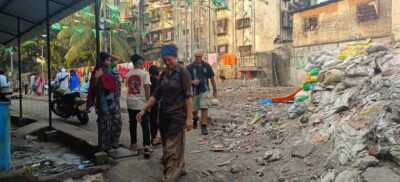
Dhobi Ghat Laundry and Dharavi Slum Tour with Local
Read our review →
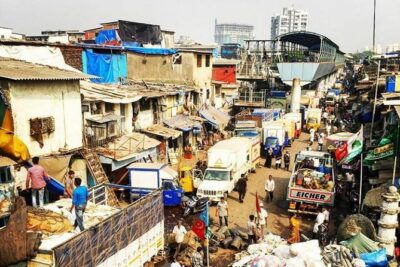
Private Combo Tours Sightseeing + Dharavi Slum + Dhobi Ghat & Dabbawalas
Read our review →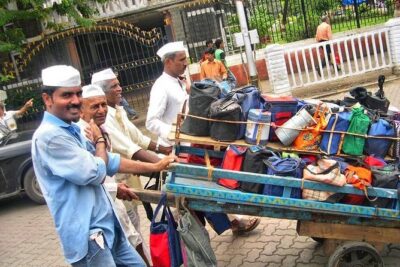

Dabbawala, Dhobi Ghat & Dharavi slum Tour with Local Train Ride
Read our review →
Mumbai Gems: 2-Day Private Tour with Elephanta, Slum & Dabbawala
Read our review →Browse the lists this tour appears in