
Reviewed · DHARAVI SLUM TOURS
Dharavi Slum & Dhobi Ghat Mumbai: Private Guided Tour
Mumbai’s most revealing tour may be the one that takes you away from grand monuments and into working neighborhoods. This private visit links Dharavi’s small industries with Mahalaxmi Dhobi Ghat, showing how people make, wash, recycle, and sell goods in the middle of one of India’s biggest cities.
I like the focus on enterprise rather than poverty, especially the pottery workshops in Kumbharwada, leather work, and plastic recycling. I also like the private format, since guides such as Priti, Shruti, Max, and Ruba have been praised for answering questions and adapting to the group. The main consideration is that this is a walking tour through narrow lanes, and Dhobi Ghat is viewed from outside rather than entered.
In This Review
- Key points at a glance
- Why Dharavi is more than a poverty story
- Kumbharwada and the work behind the lanes
- Mahalaxmi Dhobi Ghat in a 15-minute stop
- What a private three-hour tour changes
- Starting in Mahim and finishing at Dhobi Ghat
- Is $17.57 good value?
- Who will enjoy this Mumbai experience?
- Booking and cancellation details
- Should you book this private Dharavi and Dhobi Ghat tour?
- FAQ
- How long does the tour last?
- What is the price?
- Is this a private tour?
- What is included?
- Where does the tour start?
- Where does the tour end?
- Can you enter Dhobi Ghat?
- What is the cancellation policy?
Key points at a glance
- Dharavi’s working economy: See pottery, leather production, recycling, and textile work in active neighborhood workshops.
- Mahalaxmi Dhobi Ghat: Watch the famous open-air laundry from a designated viewpoint, with explanations of its daily work.
- Private group format: Only your party takes part, allowing more time for questions and a pace suited to your group.
- Local English-speaking guide: Guides named Priti, Shruti, Max, and Ruba have received praise for being friendly, clear, and attentive.
- Three hours for $17.57: The price includes bottled water, train tickets, and a professional guide, making it a fairly low-cost way to add local context to Mumbai.
- One-way finish: The tour ends at Dhobi Ghat, where you can arrange an Uber or take a train onward.
Why Dharavi is more than a poverty story
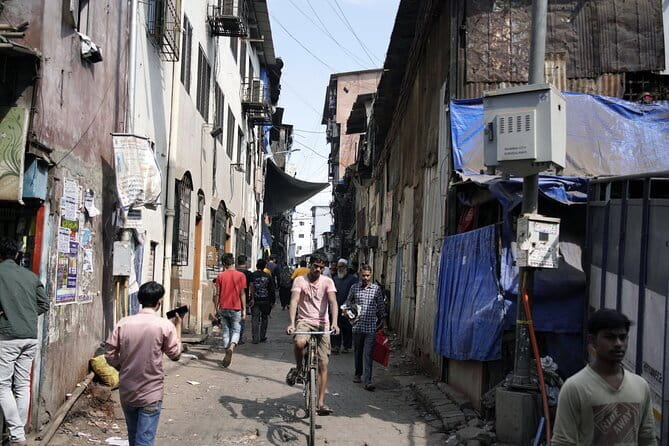
Dharavi is often reduced to a label. This tour gives you a better frame: it presents the area as a dense residential district and a major center of small-scale production. That difference matters.
As you walk with a local guide, you are meant to see work in progress, not simply housing conditions. The route covers leather, pottery, plastic recycling, textiles, and other small businesses. These operations form part of Mumbai’s wider economy, and the tour explains how residents create livelihoods with limited space and modest tools.
I appreciate this approach because it gives you something useful to look at and think about. The narrow lanes are not just a backdrop for photographs. They are places where goods are made, sorted, repaired, and prepared for sale.
The tour also aims to handle a sensitive subject with care. A responsible guide should explain the area’s challenges without turning residents into a spectacle. The supplied description makes dignity and local enterprise central to the experience, and the individual guide comments reinforce the value of clear explanations and thoughtful answers.
You should still treat the visit as a cultural walk, not an amusement ride. Ask before taking photographs, follow your guide’s instructions, and keep your attention on the people and businesses around you. A little courtesy goes a long way in a place where homes and workplaces sit close together.
More Dhobi Ghat and dabbawala tours:
- Mumbai: Dharavi Slum, DhobiGhat, and Dabbawallas Tour
★ 4.9 · 689 reviews - Mumbai: Dhobi Ghat Laundry and Dharavi Slum Tour with Local
★ 5.0 · 469 reviews - Mumbai: Dharavi Slum & Dhobi Ghat Laundry Tour
★ 5.0 · 352 reviews
Kumbharwada and the work behind the lanes
One of Dharavi’s most distinctive areas is Kumbharwada, known for pottery. Here, the point is not merely to see finished objects. You get a look at the craft as part of a working trade.
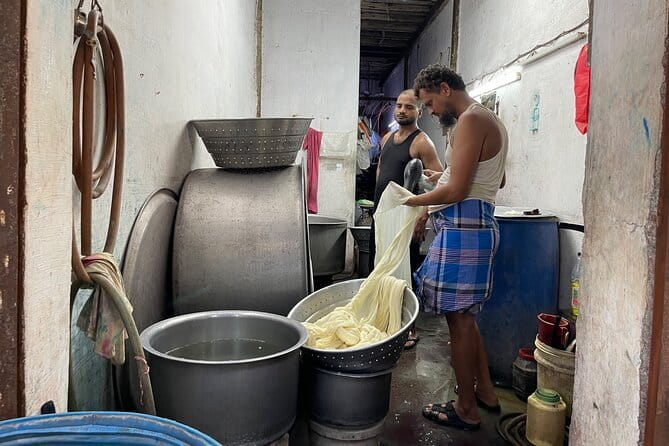
The tour description also highlights leather workshops and plastic recycling units. These are important details because they show the range of activity in Dharavi. You are not walking through one single industry. You are seeing a network of family and small-business operations that handle production, processing, and reuse.
Plastic recycling is especially interesting for visitors who want to understand the practical side of city life. The tour presents these units as sophisticated operations rather than a simple pile of discarded material. Your guide can connect the process to Mumbai’s wider economy and explain why these businesses matter.
Textiles also form part of the route. The information provided does not promise a particular factory visit or a hands-on demonstration, so you should expect to observe businesses from the route rather than assume a workshop experience. That is a useful distinction when deciding if this tour fits your interests.
The route lasts about two hours in Dharavi. That gives the guide enough time to explain several types of work, but it also means you should be ready to walk for most of the visit. Comfortable footwear is a sensible choice, and you should expect the setting to feel close and active rather than spacious.
Mahalaxmi Dhobi Ghat in a 15-minute stop
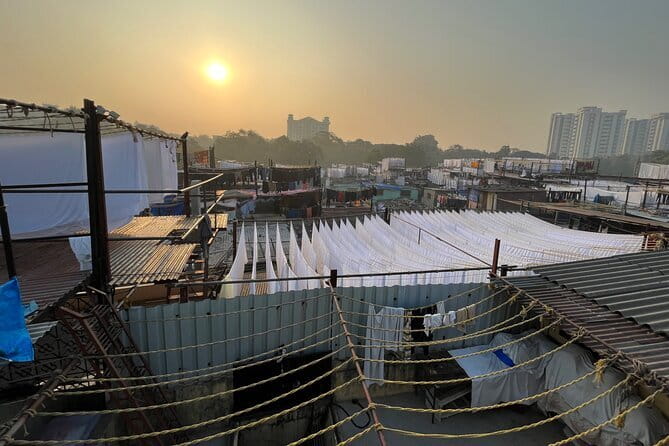
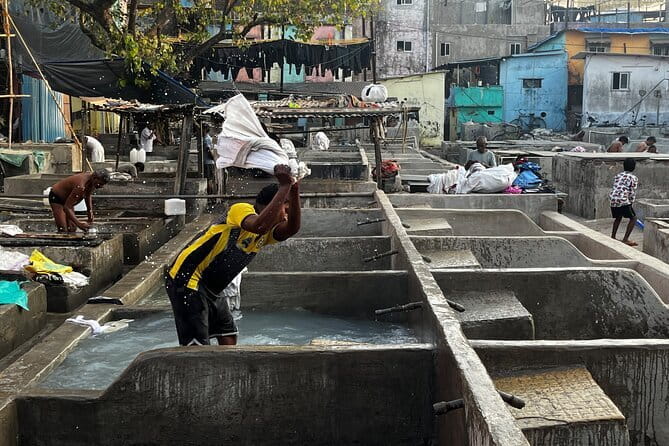
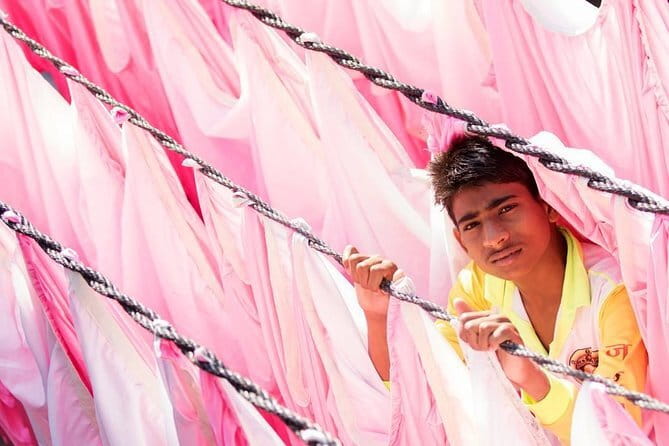
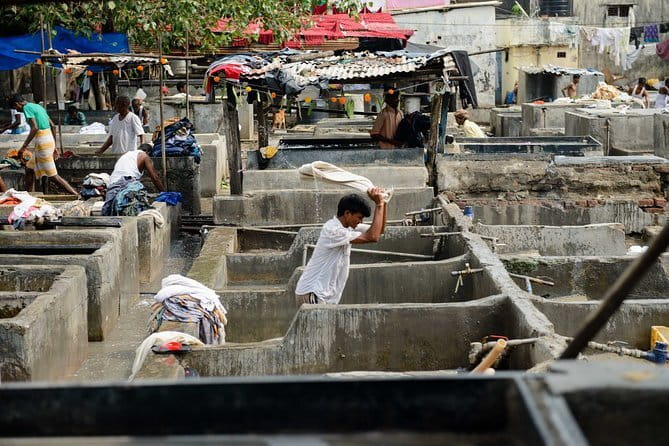
The visit to Dhobi Ghat is brief but worthwhile. You spend about 15 minutes at a designated viewpoint, looking into the world’s largest open-air laundry while your guide explains how the washermen, known as dhobis, work.
You will not enter the laundry area. Instead, you get a clear outside view of the rows of washing, drying, and pressing. The operation serves hotels, hospitals, and households across Mumbai, so this is more than a colorful photo stop. It is part of the city’s service system.
The guide explains the manual methods, daily routines, history, and challenges connected with the laundry. That context helps you understand what you are seeing. Without it, the scene could look like a jumble of clothing and concrete basins. With it, you can follow the scale and order of the work.
The short time is both a strength and a weakness. It keeps the tour focused and leaves room for the longer Dharavi walk, but anyone hoping to spend a long time photographing the laundry may find 15 minutes tight. The designated viewpoint is useful for seeing the site, yet this is not an inside visit or an extended photo session.
The tour ends at Dhobi Ghat, which makes the stop practical as well as educational. From there, you can catch an Uber or take a train back to your hotel.
What a private three-hour tour changes
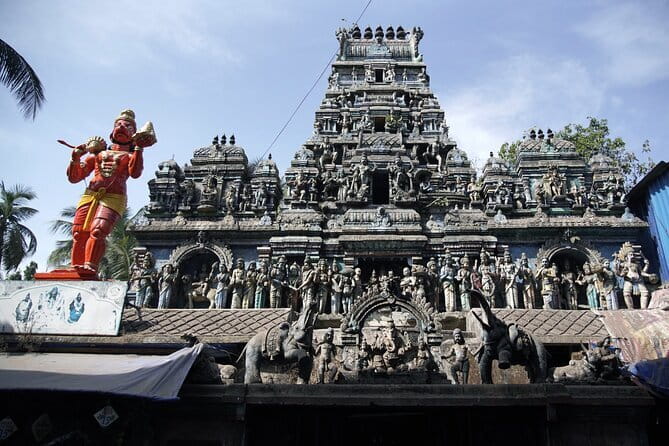
Private does not mean luxurious here. It means only your group participates, which can make a big difference in narrow lanes and during conversations with your guide.
You can ask more questions without holding up a large party. If you want extra explanation about recycling, pottery, or the laundry system, you have a better chance of getting it. The guides praised in the individual comments, including Priti, Shruti, Max, and Ruba, were described as prompt, friendly, informative, and attentive to questions.
Guide quality matters a great deal on this type of outing. The physical route is only half the experience. The other half is the story told around it. A good guide can explain why a business exists, how it fits into Mumbai, and what you should notice without resorting to stereotypes.
The tour is conducted in English by a professional English-speaking guide. Specific guide assignment may vary, so if you particularly want Priti, Shruti, Max, or Ruba, ask the operator about availability rather than assuming a named guide is guaranteed.
The approximate duration is three hours. The stated stops account for about two hours and 15 minutes, leaving time for walking and transport between parts of the experience. That makes it easy to fit into a larger Mumbai sightseeing day, though you should avoid booking it too close to another fixed appointment.
More Dharavi walking tours:
- Dharavi slum tour in Mumbai by Female tour guides of the slum
★ 5.0 · 1,976 reviews - Dharavi Slum Tour
★ 5.0 · 625 reviews - Dharavi Slum tour in Mumbai by local resident
★ 5.0 · 572 reviews - Mumbai: Dharavi Slum Slumdog Millionaire Tour with a Local
★ 4.9 · 529 reviews
Starting in Mahim and finishing at Dhobi Ghat
The meeting point is Third Wave CoffeeTip Road, Unit 58, Ground, Ram Mahal, Senapati Bapat Marg, Marinagar Colony, near the station in Mahim, Mumbai 400016.
The tour finishes at Dhobi Ghat in Shanti Nagar, Lower Parel. This one-way arrangement is worth noting. You do not return to the starting café, so plan the rest of your day from the Lower Parel end of the route.
Train tickets are included, along with bottled water and the professional guide. The tour information also describes private air-conditioned transfers, but the included list specifically names train tickets rather than detailing a separate vehicle transfer. I would confirm the exact transport arrangement before booking if air conditioning or private road transfers are important to you.
The meeting point is near public transportation, and the end point offers access to trains and ride-hailing. That makes the tour reasonably practical for a first visit to Mumbai, provided you are comfortable navigating back afterward.
Because the walk passes through narrow lanes, you should expect a city experience rather than a polished sightseeing route. Most people can participate, according to the booking information, but the description does not provide a detailed accessibility assessment. If you need step-free access or have limited walking ability, contact the operator before reserving.
Is $17.57 good value?
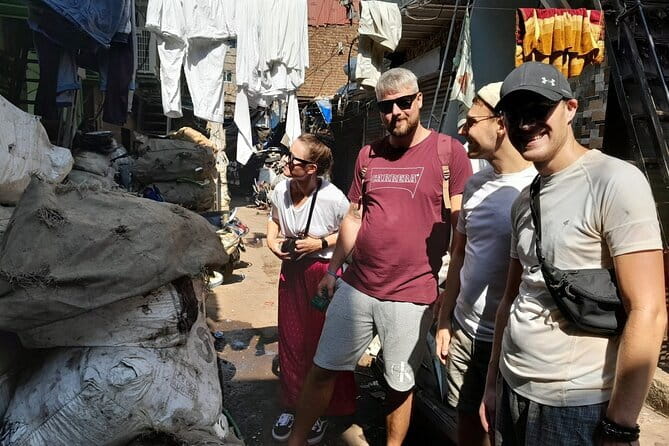
At $17.57 per person, this is priced well for a private three-hour experience in Mumbai. The cost includes the guide, train tickets, and bottled water, so you are not paying only for transport to a viewpoint.
The strongest value is the time spent with a local English-speaking guide. Dharavi can be difficult to understand from a passing drive or a short independent walk. The guide gives the area structure and explains the work taking place around you.
The private format improves the value for couples, families, and small groups who want to ask questions. It may be less important to you if you prefer to walk alone or explore at your own pace. Since the tour covers a sensitive residential area, many people will find the local guide more useful than an independent visit.
There are limits. This is not a luxury tour, a food tour, or a workshop class. You should not expect long visits inside every business, a guaranteed meeting with workers, or extended time at Dhobi Ghat. The value comes from interpretation, access to the route, and the chance to see working Mumbai in a respectful way.
Group discounts are available, though the amount is not specified. If you are booking for several people, check the final per-person price before paying.
Who will enjoy this Mumbai experience?
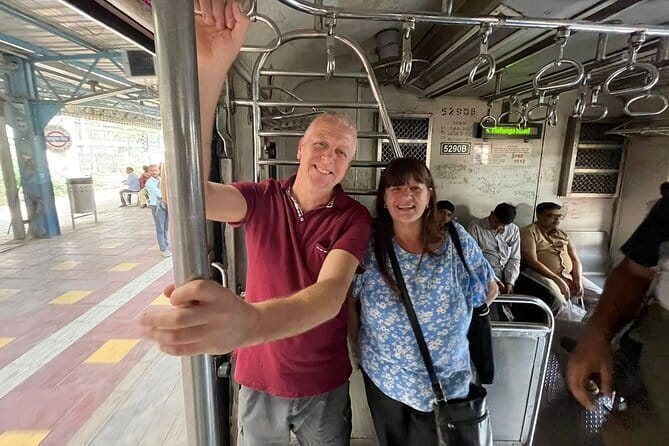
I would recommend this tour to you if you want to understand how Mumbai works at street level. It suits people interested in local business, recycling, craft, urban life, and the practical routines behind a major city.
It is also a good choice if you prefer a guide-led experience with room for questions. The feedback connected with Priti, Shruti, Max, and Ruba puts particular emphasis on information, promptness, friendliness, and attention to requests. Those qualities are valuable here because the setting can be confusing without context.
Families may appreciate the private format, though parents should decide if their children will be comfortable with a long walk through tight lanes and working areas. Photographers will find plenty to observe, but the Dhobi Ghat stop has a limited 15-minute window and is from a viewpoint.
You may want to skip it if you want a conventional monument tour, a relaxed vehicle ride, or a highly structured attraction with indoor facilities. You should also reconsider if you are uncomfortable visiting a residential district where people are working and living close to the route.
The tour’s strongest message is simple: Dharavi is not defined only by hardship. It is also shaped by skill, trade, recycling, and enterprise. That is a useful lesson, as long as you approach it with respect.
Booking and cancellation details
Confirmation is provided at the time of booking, and free cancellation is available up to 24 hours before the experience begins. Cancel at least 24 hours ahead for a full refund.
Cancellations or changes made within 24 hours are not accepted for a refund. The cut-off follows Mumbai local time, so check the start time carefully if you are booking from another time zone.
Should you book this private Dharavi and Dhobi Ghat tour?
Book it if you want a low-cost, guide-led look at Mumbai’s working economy, especially pottery, leather, recycling, and textiles. The private format, included train tickets, and guides who are praised for answering questions make it a practical choice for a first visit.
Go in with realistic expectations. Dhobi Ghat is an outside viewing stop, the Dharavi portion is a walking tour, and the transport details deserve confirmation if you expect private air-conditioned transfers. For a respectful introduction to two important parts of Mumbai that many sightseeing routes overlook, this tour offers strong value.
FAQ
How long does the tour last?
The experience lasts approximately three hours. About two hours are allocated to Dharavi, and the Dhobi Ghat visit takes about 15 minutes, with the remaining time used for walking and transport.
What is the price?
The listed price is $17.57 per person. Group discounts are available, though the discount amount is not specified.
Is this a private tour?
Yes. Only your group participates in the activity.
What is included?
The tour includes bottled water, train tickets, and a professional English-speaking guide.
Where does the tour start?
It starts at Third Wave CoffeeTip Road, Unit 58, Ground, Ram Mahal, Senapati Bapat Marg, Marinagar Colony, near the station in Mahim, Mumbai, Maharashtra 400016.
Where does the tour end?
The guide concludes the tour at Dhobi Ghat in Shanti Nagar, Lower Parel, Mumbai. From there, you can take an Uber or a train back to your hotel.
Can you enter Dhobi Ghat?
No. You view the laundry from a designated vantage point. The guide explains the washing, drying, and pressing work from outside.
What is the cancellation policy?
You can cancel at least 24 hours before the start time for a full refund. Cancellations or changes made less than 24 hours before the experience are not refunded or accepted.
Just added around Mumbai
- Temples & Vineyards: Private Tour to Nashik from Mumbai★ 4.5 · 3 reviews
- Mumbai: Private City sightseeing and Dharavi Slum Tour★ 5.0 · 3 reviews
- Mumbai: Full Day City Sightseeing with Lunch, Car & Guide★ 4.3 · 3 reviews
- Elephanta Island Private Speedboat Tour from Mumbai – 6pax★ 5.0 · 3 reviews
- Mumbai: Elephanta Island and Elephanta Caves Guided Tour★ 4.4 · 3 reviews
- Mumbai Sightseeing Tour by Public Transport with family Lunch★ 5.0 · 3 reviews
- Mumbai by Dawn★ 4.5 · 3 reviews
- Mumbai Dharavi Slum Community Tour★ 5.0 · 3 reviews
Dharavi Slum Tours, compared.
Dharavi slum tour in Mumbai by Female tour guides of the slum
Read our review →
Dharavi Slum Slumdog Millionaire Tour with a Local
Read our review →
Mumbai Slum Tour – Visit Dharavi Slum with Local Guide
Read our review →
Dhobi Ghat Laundry and Dharavi Slum Tour with Local
Read our review →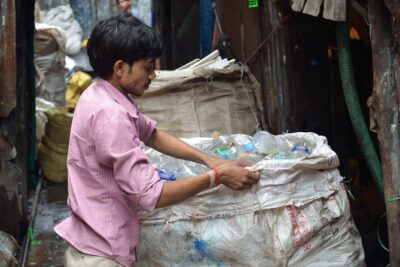
Browse the lists this tour appears in