
Reviewed · DHARAVI SLUM TOURS
Small Group Tour of Dharavi Slum
Dharavi is not a museum of poverty. It is a working part of Mumbai, where homes, workshops, shops, schools, and places of worship fit into a very small area. This two-hour guided walk takes you into that daily world, with visits to production areas, residential lanes, and Kumbharwada’s pottery quarter.
I like the chance to see the local economy behind the headlines, including work connected with plastics, leather, suitcases, and religious shrines. I also like that guides such as Sneha, Pooja, Divya, and Rahul bring local knowledge, with several guides described as residents or former residents of Dharavi. The main consideration is that this is a close, crowded urban walk, and it may feel confronting rather than easygoing.
In This Review
- Key points to know before you book
- Seeing Dharavi beyond the movie stereotype
- A two-hour route through homes and workshops
- Kumbharwada and the pottery quarter
- Why the guide can make or break the experience
- The $15 price and what it covers
- Getting to Churchgate and the Dharavi office
- What the visit feels like in practical terms
- The ethical question: sightseeing or understanding?
- Who will get the most from this tour?
- Booking, cancellation, and final practical checks
- Should you book the Dharavi walk?
- FAQ
- How long does the Dharavi tour last?
- What is included in the price?
- Are taxi or Uber charges included?
- Where does the tour start?
- Where does the tour finish?
- What places do you visit in Dharavi?
- Is food included?
- Can I cancel for a full refund?
Key points to know before you book
- Dharavi is a working neighborhood: You see homes and businesses side by side, not a staged attraction.
- The local guide matters: Guides including Sneha, Pooja, Divya, and Rahul have been praised for explaining daily life and local industry.
- Workshops are part of the route: Expect an introduction to production involving items such as plastics, leather, suitcases, and Hindu shrines.
- Kumbharwada adds a craft focus: The pottery area receives about 15 minutes of the visit.
- Churchgate transport can help: Train transportation is included if you are picked up from Churchgate.
- The price is modest: At $15 per person, the tour offers a lot of context for a short visit, though food, drinks, and taxi costs are extra.
Seeing Dharavi beyond the movie stereotype
Dharavi is widely known outside India because of Slumdog Millionaire. That connection may draw you here, but it is not the most useful way to understand the place. The tour’s value comes from showing Dharavi as a neighborhood where people live, work, study, worship, and run businesses within the same tightly packed district.
The area covers just over 2.1 square kilometers. Population figures vary, with the information for this experience giving a figure of about 700,000 and also describing Dharavi as home to more than a million people. Either way, the point is clear: this is one of the most densely settled parts of Mumbai, with very little spare space.
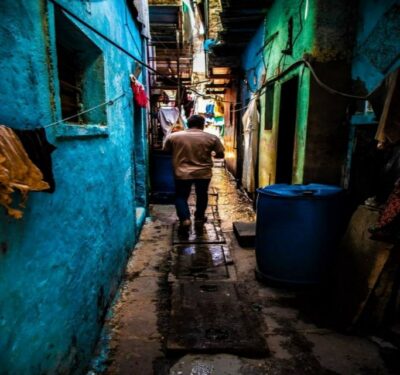
You should expect narrow lanes and a close-up look at ordinary routines. The walk is not designed to give you a distant view from a vehicle. You move through the district with a guide who can explain what you are seeing and help you understand how homes and workspaces fit together.
That distinction matters. Without local explanation, a visitor might see only cramped streets and difficult conditions. With context, you can begin to see the effort, enterprise, and practical systems that keep the neighborhood going.
More Dharavi walking tours:
- Dharavi slum tour in Mumbai by Female tour guides of the slum
★ 5.0 · 1,976 reviews - Mumbai: Dharavi Slum, DhobiGhat, and Dabbawallas Tour
★ 4.9 · 689 reviews - Dharavi Slum Tour
★ 5.0 · 625 reviews
A two-hour route through homes and workshops
The main Dharavi portion lasts about two hours. The pace and exact order can vary, especially since the description allows some customization, but the main subjects are clear.
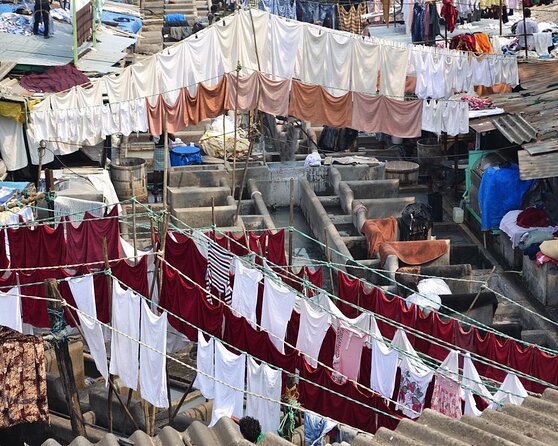
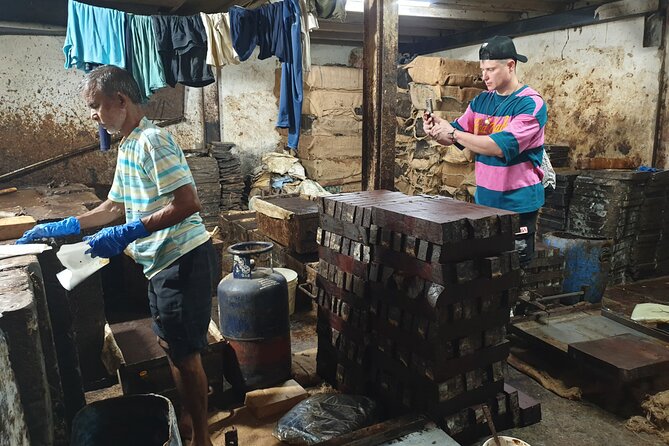
You can expect to pass through areas connected with small-scale manufacturing. The tour highlights factories producing goods ranging from suitcases to Hindu shrines, while specific guide commentary has also covered plastics and leather. These are useful examples of how production in Mumbai reaches far beyond large industrial estates.
The scale is part of the lesson. A workshop may sit close to a family home, with daily life continuing nearby. The tour helps you see how the district’s economy operates within its residential fabric instead of in a separate business zone.
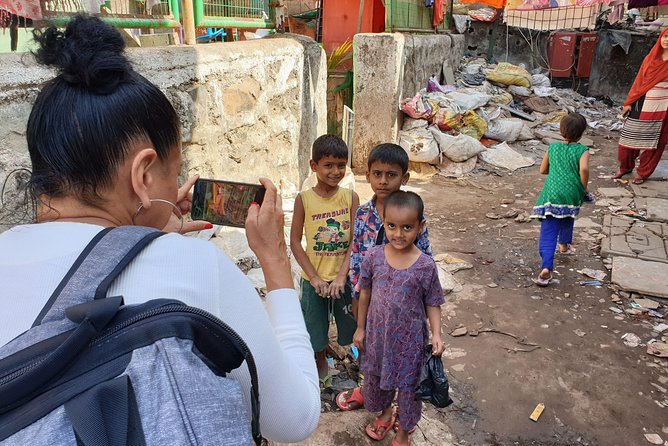
You will also visit a residential section. This is the most sensitive part of the experience. People are not scenery, and you should follow the guide’s instructions about photography, personal space, and where to pause. Look, listen, and ask questions politely. The purpose is to understand the setting, not to collect dramatic images.
A school is included among the possible highlights. The available information does not give visiting hours, so you should not assume you will enter a classroom or meet pupils. Still, the school reference is important because it places education alongside work and housing, showing the district as a complete community rather than a single-issue attraction.
Guides have also explained facts about Dharavi’s internal economy and daily routines. Pooja, for example, has been singled out for explaining how the local economy works, while Sneha has been praised for describing everyday life as someone from Dharavi. That kind of personal connection can make the walk more useful than a standard sightseeing circuit.
Kumbharwada and the pottery quarter
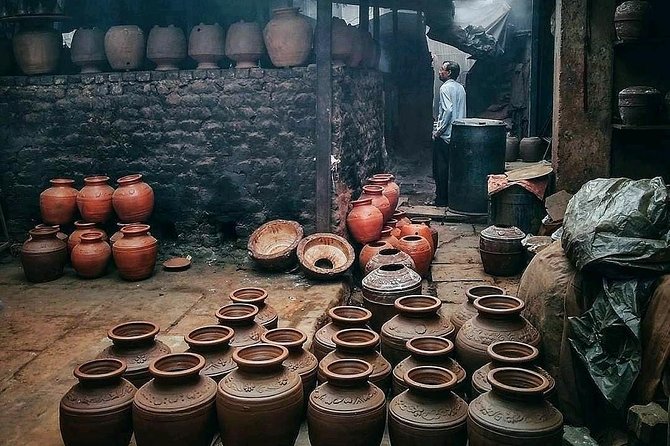
The second named stop is Kumbharwada, known as Dharavi’s pottery area. You spend about 15 minutes here, so think of it as a focused part of the walk rather than a long workshop visit.
Pottery gives the tour a clear craft angle. It also shows that Dharavi is not defined only by recycling, leather, or industrial production. Different trades and communities have their own spaces and routines, and Kumbharwada offers a look at one of those specialized areas.
The stop is short, which is worth keeping in mind. If you are hoping for a full pottery demonstration or time to shop, that is not promised in the details provided. The strength of this section is its place within the larger story of work and settlement.
The tour returns to the Young Tours and Travel office on 90 Feet Road in Muslim Nagar, Kumbhar Wada. The stated meeting point and end point are the same, but your onward journey may still require planning.
Why the guide can make or break the experience
This tour depends heavily on the person leading it. The route itself is interesting, but the guide provides the social and economic context that turns a walk through unfamiliar lanes into a useful visit.
Several guides connected with the experience have been praised for their local ties. Sneha is described as a Dharavi resident who explains daily life clearly. Divya has been described as someone who lives in Dharavi and can show the area beyond its negative reputation. Pooja has been praised for answering questions about life and the local economy. Rahul has been noted for clear commentary during a Dharavi visit and sightseeing.
Guide assignments can change, so you should not book on the assumption that one particular person will lead your walk unless the operator confirms it. Still, the repeated strength of the guides is a reason to consider this experience over an unguided visit.
English and regional-language ability has also been highlighted. That can help you ask practical questions and understand details that a short printed explanation would miss. Do not be shy about asking how a workshop functions, how homes and workspaces share the area, or what a particular building is used for.
At the same time, a local guide does not remove every ethical concern. You are still entering a real community. Keep your behavior low-key, avoid treating residents as subjects, and accept a no if someone does not want to be photographed or interrupted.
A completely different way to spend a day in Mumbai:
- Mumbai: Full-Day Sightseeing Tour of Mumbai
★ 4.9 · 1,822 reviews - Private Mumbai Sightseeing Tour (Traveller’s Choice Award Winner)
★ 5.0 · 1,565 reviews - Elephanta Caves & Island Guided Private Tour
★ 5.0 · 1,327 reviews - Group Guided Walking Tour in Fort and Colaba
★ 5.0 · 1,073 reviews
The $15 price and what it covers
At $15 per person, this is an inexpensive way to add social and economic context to a Mumbai visit. The cost includes the guided experience and mineral water bottles. If you are picked up from Churchgate, train transportation is included.
That is good value if you want a short, focused introduction rather than a full-day Mumbai tour. The two-hour-15-minute duration is long enough to cover several parts of Dharavi without taking over your day.
The price does not include food, cold drinks, taxi fares, or Uber charges. Those exclusions are easy to manage, but they affect your real budget. Carry some money for your onward transport, especially if you do not plan to return by train.
The description says the activity has a maximum of one traveler. That wording suggests the possibility of a private booking, but it is unusual for a product called a small group tour. Confirm the group arrangement before paying if having other people with you matters.
Getting to Churchgate and the Dharavi office
Churchgate is useful as a transport reference point. Train transportation is included when the pickup is from Churchgate, so this option may suit you if you are already near that station or can reach it easily.
The actual stated meeting point is the Young Tours and Travel office at 90 Feet Road, Muslim Nagar, Kumbhar Wada, Dharavi. The tour ends at the same office. The operator notes that the starting point and your final destination may be far apart, so you should not treat the end of the walk as a convenient drop-off at your hotel.
The guide can help you get back by taxi, bus, train, or on foot. If you need the nearest railway station, the guide will accompany you there. For most people, a taxi after the tour will be the simplest choice, but include that cost in your plans.
Confirm the pickup details at booking. The information specifically says that Churchgate transport is included if the guest is picked up there, not that transport from every Mumbai hotel is included.
What the visit feels like in practical terms
This is a walking experience in a very dense neighborhood. Wear comfortable shoes and be prepared for a close urban setting. The tour information does not promise air-conditioned transport throughout, rest stops, or hotel drop-off.
Mineral water is provided, which is useful in Mumbai’s heat. Food and cold drinks are not included, so eat beforehand or plan a stop afterward. Since the walk lasts a little over two hours, a small amount of preparation will make the experience easier.
The route may be demanding for people who dislike crowded places or who need a slow, highly accessible path. The information says most people can participate, but it does not provide details about wheelchair access, restrooms, stair-free routes, or specific mobility arrangements. Contact the operator if any of those points are important to you.
Photography deserves care. The data does not set out a formal camera policy, so the safest approach is to ask before taking pictures of people, homes, schools, or workshops. Your guide can tell you where photographs are appropriate.
The ethical question: sightseeing or understanding?
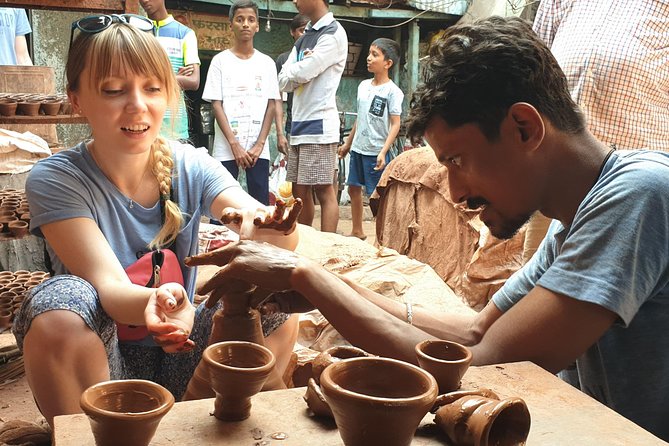
A slum tour can easily become uncomfortable if it turns hardship into entertainment. The better reason to book this walk is to learn how residents build ordinary lives and businesses in difficult conditions, not to seek shocking images.
The route includes factories, homes, a school, shrines, and pottery. That range helps prevent the visit from being reduced to poverty alone. You see a place with problems, but also with work, skills, family life, faith, and local organization.
Your attitude matters as much as the route. Ask questions about systems and routines rather than pressing people for personal stories. Follow the guide’s lead, keep your voice down in residential areas, and remember that the people around you are going about their day.
This approach also makes the visit more rewarding. Dharavi becomes easier to understand when you pay attention to how space is used and how work supports households. The tour can change your first impression, but it should not pretend that difficult living conditions are unimportant.
Who will get the most from this tour?
I would choose this tour if you want a brief, guided introduction to a part of Mumbai that most standard sightseeing routes leave out. It suits curious adults, first-time Mumbai visitors, and anyone interested in urban economies, local enterprise, or the practical side of city life.
It also works well if you value conversation. The guides have been praised for answering questions and explaining the district in English and regional languages. A private or very small arrangement, if confirmed, would be especially useful for asking questions at your own pace.
You may want a different activity if you prefer polished attractions, broad city views, or a relaxed sightseeing outing. This walk is not a conventional highlight reel. It can be confronting, and the setting is crowded and intensely active.
Families should make their own call based on the ages and sensitivities of their children. The information says most people can participate, but it does not give a specific minimum age or child-focused format.
Booking, cancellation, and final practical checks
Confirmation is provided at the time of booking. You can cancel for a full refund up to 24 hours before the local start time. Cancellations or changes made within 24 hours are not accepted for a refund.
Before booking, confirm three points: where you will meet, how you will reach Churchgate or the Dharavi office, and what group size to expect. Also ask who is likely to guide the walk if a particular guide, such as Sneha, Pooja, Divya, or Rahul, is important to you.
Should you book the Dharavi walk?
Book it if you want a grounded look at how Dharavi works, and if you can approach the community with respect. The $15 price, local guide, mineral water, and possible Churchgate train connection make it a strong-value short activity.
I would especially recommend it to you if you want more than the familiar Mumbai landmarks. Just allow for taxi costs, prepare for a dense walking route, and keep your expectations realistic. You are not visiting a set piece. You are being shown a living neighborhood, one workshop, lane, home area, and pottery quarter at a time.
FAQ
How long does the Dharavi tour last?
The experience lasts approximately two hours and 15 minutes. About two hours are allocated to Dharavi, with around 15 minutes at Kumbharwada pottery area.
What is included in the price?
Mineral water bottles are included. Train transportation is included if you are picked up from Churchgate.
Are taxi or Uber charges included?
No. Taxi and Uber charges are not included. The operator says the guide can help you return to your location by taxi, bus, train, or on foot.
Where does the tour start?
The stated meeting point is Young Tours and Travel, 90 Feet Road, Muslim Nagar, Kumbhar Wada, Dharavi, Mumbai, Maharashtra 400017.
Where does the tour finish?
The tour finishes at the same Young Tours and Travel office. If you need the nearest railway station, the guide will accompany you there.
What places do you visit in Dharavi?
The route includes Dharavi itself, with factory areas, a residential area, a school, and Hindu shrines among the highlighted subjects. It also includes Kumbharwada, the pottery area.
Is food included?
No. Food and cold drinks are not included. Mineral water is provided.
Can I cancel for a full refund?
Yes. You can cancel at least 24 hours before the experience start time for a full refund. Cancellations and changes made less than 24 hours before the start time are not accepted for a refund.
Just added around Mumbai
- Temples & Vineyards: Private Tour to Nashik from Mumbai★ 4.5 · 3 reviews
- Mumbai: Private City sightseeing and Dharavi Slum Tour★ 5.0 · 3 reviews
- Mumbai: Full Day City Sightseeing with Lunch, Car & Guide★ 4.3 · 3 reviews
- Elephanta Island Private Speedboat Tour from Mumbai – 6pax★ 5.0 · 3 reviews
- Mumbai: Elephanta Island and Elephanta Caves Guided Tour★ 4.4 · 3 reviews
- Mumbai Sightseeing Tour by Public Transport with family Lunch★ 5.0 · 3 reviews
- Mumbai by Dawn★ 4.5 · 3 reviews
- Mumbai Dharavi Slum Community Tour★ 5.0 · 3 reviews
Dharavi Slum Tours, compared.
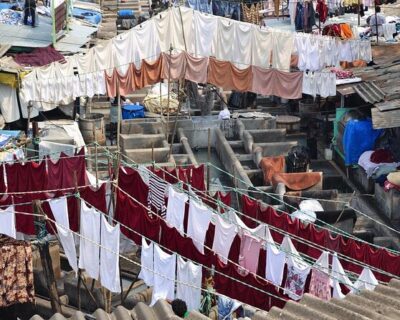
Dharavi slum tour in Mumbai by Female tour guides of the slum
Read our review →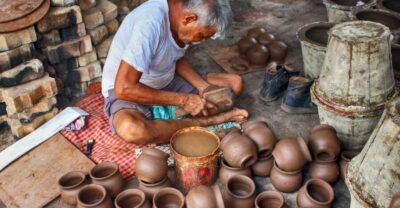
Dharavi Slum Slumdog Millionaire Tour with a Local
Read our review →
Mumbai Slum Tour – Visit Dharavi Slum with Local Guide
Read our review →
Dhobi Ghat Laundry and Dharavi Slum Tour with Local
Read our review →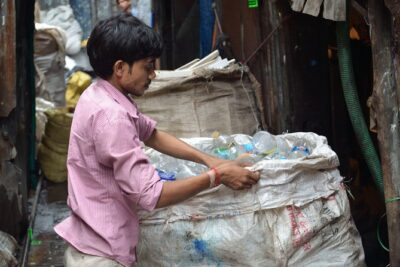
Browse the lists this tour appears in