
Reviewed · DHARAVI SLUM TOURS
Private Tour in Mumbai Slum with Sightseeing
Mumbai’s sharpest contrast comes into view on this private day tour: the working neighborhoods of Dharavi, the family-run washing pens of Dhobi Ghat, and grand landmarks such as the Gateway of India and Chhatrapati Shivaji Terminus. The Dharavi visit is meant to explain daily life, work, and social issues, not simply provide a quick roadside glimpse.
I like two things right away. First, a large share of the money goes back into Dharavi, which gives the visit a useful local purpose. Second, you get a private air-conditioned vehicle and a guide who can adjust the day, with guides such as Sajid, Abhi, Bala, and Hitesh Vaidya praised for clear English and strong local insight. The main drawback is pace: ten stops in roughly eight hours can feel packed, and you should tell your guide early if you want fewer shopping stops or more time at historic sights.
In This Review
- Key points to know before booking
- Dharavi: Work, Homes, and Community Life
- Dhobi Ghat’s Family Laundry System
- Antilia and Banganga: Two Very Different Mumbai Stories
- Jain Temple and Mani Bhavan
- Crawford Market and Chhatrapati Shivaji Terminus
- Gateway of India and Kamala Nehru Park
- Why the Private Vehicle Matters in Mumbai
- Is $61.37 a Fair Price?
- Who Will Get the Most From This Tour?
- Should You Book It?
- FAQ
- How long does the private Mumbai tour last?
- What places are visited during the tour?
- How much time is spent in Dharavi?
- Is transport included?
- Is the tour private?
- Is a guide included?
- Is food included?
- Are admission fees included?
- Is the tour suitable for everyone physically?
- What is the cancellation policy?
Key points to know before booking
- Dharavi takes about three hours: You visit working areas, residential lanes, and community neighborhoods while discussing local life and small industries.
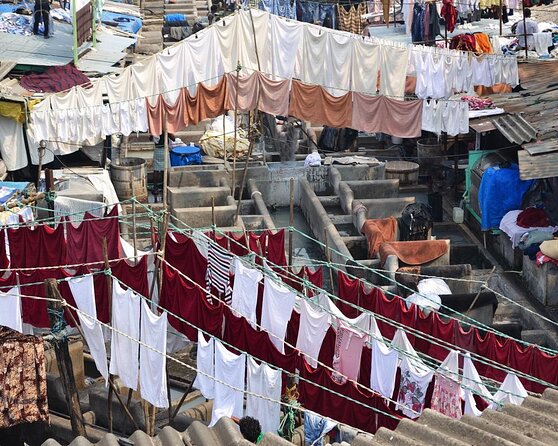
- Dhobi Ghat is more than a photo stop: The one-hour visit explains the outdoor laundry’s family businesses and color-coded washing pens.
- The private format gives you control: You can ask for more history, more local context, or a change to the sightseeing balance.
- The route covers a lot of Mumbai: Antilia, Banganga, a Jain temple, Mani Bhavan, Crawford Market, CST, the Gateway of India, and Kamala Nehru Park are all included.
- Local guiding is a major strength: Several guides, including Sajid and Abhi, are connected to Dharavi and explain the area from personal experience.
- The day is excellent value at $61.37 per person: That price includes private transport and water, though tips are extra and some admission details are not included.
This is not a gentle introduction limited to famous monuments. It is a full look at Mumbai’s working communities, religious traditions, colonial-era buildings, political history, markets, and wealthy modern architecture.
The day lasts about eight hours, with pickup offered and transport in a private air-conditioned vehicle. That matters in Mumbai, where moving between districts can take time and where a private car saves you from piecing together several rides. You also avoid being tied to a large group’s schedule.
The tour is especially useful if you have only a short stay in Mumbai. It covers central and southern sights that would be hard to connect efficiently on your own, while giving most of the morning or afternoon to Dharavi and Dhobi Ghat. The tradeoff is that most stops are brief. You will often have about 30 minutes at a landmark, so this is a broad city orientation rather than a series of long museum visits.
Dharavi: Work, Homes, and Community Life
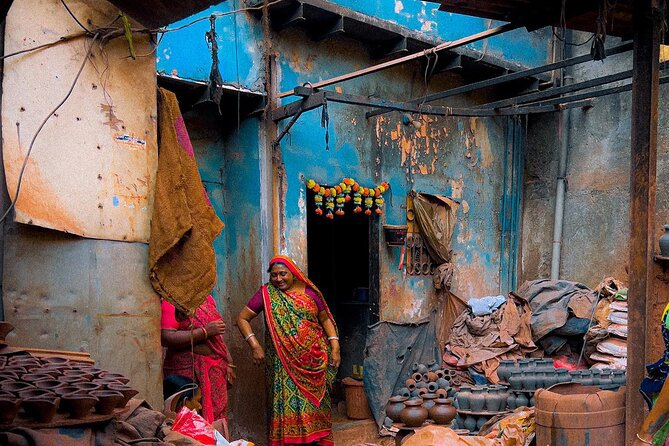
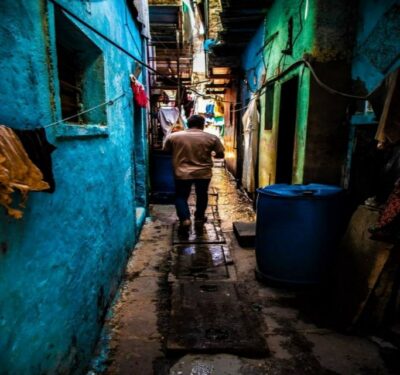
Allow about three hours for Dharavi, the heart of the experience. The purpose is educational: you walk through different neighborhoods and discuss the daily routines, social issues, and small-scale industries that support local families.
A good guide keeps the focus on people and work rather than treating the area as a spectacle. Abhi, Sajid, Bala, and other guides have been praised for explaining the community in direct, easy-to-follow English. Some guides grew up in Dharavi, which can add personal context to the discussion of local life. One particularly useful account describes visits to the industrial area, leather-making activity, a school, and residential sections.
You should expect a walking portion here. The tour requires a moderate level of physical fitness, so comfortable shoes and a willingness to walk through busy, close-set areas are sensible. The description does not promise a specific route, and conditions can vary, so let the guide know about any limits at the start.
The most valuable part is the explanation of how a dense neighborhood functions as both a home and a workplace. Dharavi is not presented as a place without enterprise. The tour looks at the many small businesses operating there and the ways families make a living.
That framing matters. You will see hard conditions, but you will also see the energy, skill, and organization that keep the community going. A thoughtful visitor should listen, avoid turning residents into photo subjects, and follow the guide’s advice about respectful behavior. The supplied details do not state a photography policy, so ask before taking pictures.
The reinvestment promise is another reason this tour may feel more responsible than a standard sightseeing stop. A large portion of the profits goes back into Dharavi. You are still paying for a commercial tour, but the stated aim links your visit to the community rather than separating tourism from local benefit.
More Dharavi walking tours:
- Dharavi slum tour in Mumbai by Female tour guides of the slum
★ 5.0 · 1,976 reviews - Mumbai: Dharavi Slum, DhobiGhat, and Dabbawallas Tour
★ 4.9 · 689 reviews - Dharavi Slum Tour
★ 5.0 · 625 reviews
Dhobi Ghat’s Family Laundry System
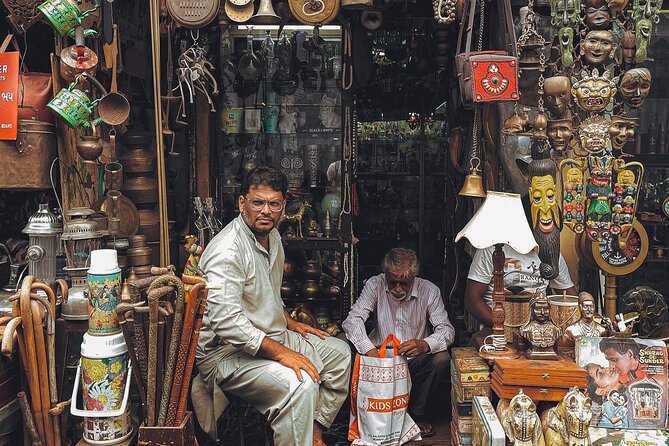
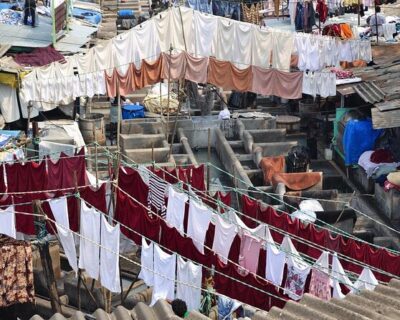
The next major stop is Dhobi Ghat, with about an hour set aside. It is one of Mumbai’s largest outdoor laundry facilities, with rows of washing pens assigned by color and family businesses passed through generations.
This stop works well after Dharavi because it keeps the focus on labor and the city’s everyday systems. You are not just ticking off another landmark. You are seeing how a practical service operates on a large scale and hearing how the work is tied to family tradition.
Dhobi Ghat has also appeared in Bollywood films, which adds a pop-culture connection, but the working laundry is the real reason to stop. The tour description does not specify whether you enter every part of the facility, so expect the guide to explain the operation from the areas included in the visit rather than assume unrestricted access.
An hour is enough to understand the layout and take in the activity without making the stop drag. If you are especially interested in working life, ask your guide for more detail here. If you are more interested in architecture and political history, you may prefer to protect time for the later stops.
Antilia and Banganga: Two Very Different Mumbai Stories
Antilia receives about 30 minutes. It is a striking modern residence in central Mumbai and one of the world’s most expensive private homes. Since admission is not included, treat this as an exterior viewing stop rather than a promised interior visit.
Antilia is useful because it places Mumbai’s extreme wealth beside the working communities seen earlier. The contrast is immediate, and it helps you read the city as more than a collection of unrelated sights. The stop may be brief, but it gives the day a clear social and architectural counterpoint.
Banganga offers a different kind of pause. According to local legend, Lord Rama created the tank by shooting an arrow into the ground to draw out water. The name combines the words for arrow and the Ganges river.
You get about 30 minutes here, and there is no admission charge. The value lies in the story and atmosphere of the sacred water tank, not in a long list of formal exhibits. Your guide can help connect the legend to Mumbai’s religious life and explain why this small site matters within a huge city.
Jain Temple and Mani Bhavan
The Jain Temple stop lasts about 30 minutes and is free to enter. Jainism is a minority religion in India, but its teachings on non-violence and spiritual release have had a wide influence on Indian thought.
This visit gives you a chance to see a religious tradition that can be missed on a standard Mumbai highlights route. Dress and behavior should be respectful, and follow any instructions given at the temple. The tour details do not specify a dress code or interior access rules, so ask your guide if you are unsure.
Mani Bhavan, also scheduled for about 30 minutes, is closely tied to Mahatma Gandhi’s work in India’s independence movement. The house is associated with his campaigns of non-violence and civil disobedience.
This is one of the day’s strongest historical stops, especially if you want more than grand buildings and city views. Thirty minutes is enough for a focused visit, though not enough for a slow museum study. If Gandhi’s life is a priority, tell your guide before the day begins so the private format can work in your favor.
One useful lesson from the experience is that the guide can shape the balance. The route includes many fixed sights, but the private setup allows discussion of your interests. A visitor focused on history should say so plainly rather than assume the guide will know.
More full city sightseeing tours:
- Mumbai: Full-Day Sightseeing Tour of Mumbai
★ 4.9 · 1,822 reviews - Private Mumbai Sightseeing Tour (Traveller’s Choice Award Winner)
★ 5.0 · 1,565 reviews - Highlights of Mumbai Sightseeing Tour: TRAVELLERS CHOICE AWARDED
★ 5.0 · 915 reviews - Highlights of South Mumbai Guided Private Tour in AC Vehicle
★ 5.0 · 620 reviews
Crawford Market and Chhatrapati Shivaji Terminus
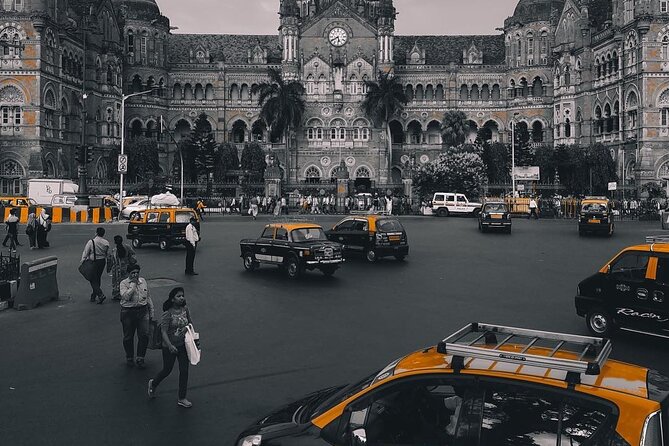
Crawford Market gets about 30 minutes. This historic market reflects Mumbai’s commercial and cultural mix, and it gives you a look at the city as a place where people buy, sell, work, and socialize, not just a backdrop for monuments.
Half an hour is a quick visit. You will get an impression of the market and its role, but you may not have time for a relaxed browse. One point to clarify with your guide is the difference between a market visit and stops at tourist-oriented shops. One account praised the guide for avoiding commission-based stores, while another found that extra time had been used for shopping stops and would have preferred more historic sights.
That is practical advice: tell your guide at the beginning that you want markets for local life, not sales pressure. The tour is described as customizable, so the request is reasonable.
Chhatrapati Shivaji Terminus, usually called CST, is one of Mumbai’s great architectural sights. It remains a working transportation hub as well as a grand historic building shaped by the city’s colonial past.
The planned 30-minute stop lets you see the exterior and take in the building’s scale. Since the details do not promise a guided interior visit or special access, do not book this expecting a long architectural tour. Still, CST is a strong inclusion because it links Mumbai’s past with its daily movement. You are looking at a landmark that still performs its original public function.
Gateway of India and Kamala Nehru Park
The Gateway of India gets another 30-minute stop. This waterfront monument is one of Mumbai’s most recognizable symbols, tied to the city’s imperial past and later national history.
It is an essential orientation point, but it can be crowded. The private vehicle and guide help you fit it into the day without working out the transport yourself. Your time here is likely best used for the landmark, the waterfront setting, and a short explanation of its place in Mumbai’s story.
Kamala Nehru Park closes the sightseeing portion with a different view. The park is known for its giant-shoe design, and from the high point you can look across the city toward Marine Drive.
Admission is not included, so check with your guide about the practical arrangements. The 30-minute stop is enough for the view and the unusual shoe-shaped feature, but not for a long park visit. It is a pleasant finish after a day spent mostly at street level.
Why the Private Vehicle Matters in Mumbai
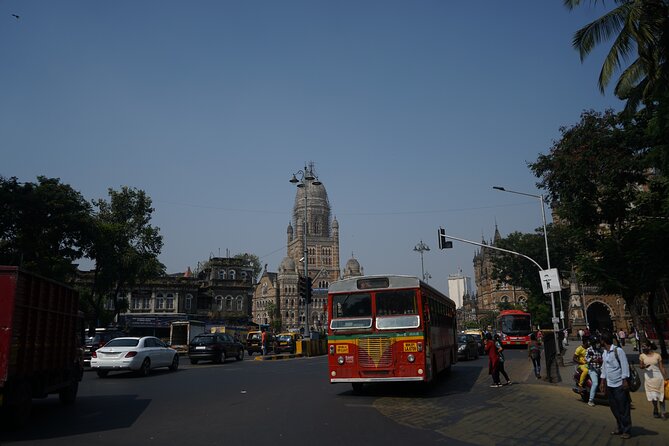
Mumbai’s traffic can consume a surprising part of a sightseeing day. Having a private air-conditioned vehicle with pickup means you can move between Dharavi, Dhobi Ghat, central Mumbai, and the southern landmarks without arranging every transfer yourself.
The vehicle is also a welcome break between walking stops. Water is included, but tips are not, so budget separately for gratuities if your guide and driver provide good service.
The private format is the bigger advantage. Guides such as Sajid, Abhi, Bala, Suraj, Jwetu, and Hitesh Vaidya have been praised for friendly manner, clear explanations, and the ability to respond to requests. Your actual guide is assigned by the operator, so you cannot count on a particular person unless you arrange that directly. Still, the repeated praise for the guiding team is a good sign.
I would use the private setting actively. Ask to spend less time shopping, request more explanation at Mani Bhavan or CST, or ask for another local stop if the schedule allows. The day already contains ten locations, so customization may mean adjusting emphasis rather than adding several more stops.
Is $61.37 a Fair Price?
At $61.37 per person, this tour offers solid value for a full private day, especially if two or more people share the booking. You get roughly eight hours, pickup, an air-conditioned vehicle, a guide, water, and a route that combines Dharavi with major Mumbai sights.
The price is easier to justify if you value convenience and interpretation. You are not simply paying for entry to a monument. You are paying to connect distant parts of the city, understand Dharavi through a local guide, and make sense of places that can seem confusing without context.
Group discounts may improve the price further. The main cost questions are not hidden entrance fees so much as your own expectations. Tips are extra, Antilia admission is not included, and Kamala Nehru Park admission is also listed as not included. The information does not give exact additional amounts, so ask before booking if your budget is tight.
For a solo visitor, $61.37 is still reasonable for private transport and a dedicated guide, though a larger group would usually get better per-person value. For a couple or family, it is a practical way to cover a lot of ground in one day.
Who Will Get the Most From This Tour?
You should book this if you want to understand Mumbai as a working city, not just photograph its famous buildings. It suits first-time visitors, people with one full day available, and anyone who wants a guide to explain local customs, religious sites, history, and community life.
It is also a good match if you value direct conversation. The strongest part of the day comes from asking questions and letting the guide explain what you are seeing. Guides who grew up in or near Dharavi can give the visit a personal angle that a standard city bus cannot provide.
You may want another type of tour if you dislike walking, want long visits inside museums, or prefer a slow schedule with only three or four sights. The itinerary is ambitious, and ten stops mean short visits. You should also speak up if you have no interest in shopping, because extra stops may depend on how the guide reads your spare time.
Confirmation is provided at booking, and free cancellation is available up to 24 hours before the start time for a full refund. Cancellations or changes inside 24 hours are not refunded or accepted, and poor weather can lead to a new date or full refund. The experience requires good weather and a moderate fitness level.
Should You Book It?
I would book this tour if Dharavi is your main reason for coming and you also want a broad introduction to Mumbai. The combination is unusual: three hours of community and industry, Dhobi Ghat’s working laundry, then religious, political, commercial, architectural, and waterfront sights.
Book with clear instructions. Tell the guide you want a respectful, educational Dharavi visit, and say whether your priority is history, religion, architecture, markets, or city life. If you want to avoid sales stops, make that clear before the route begins.
Skip it if you want a slow museum day or a tightly focused architectural tour. For most first-time visitors who want context, private transport, and a serious look at more than Mumbai’s postcard side, the $61.37 price is a strong deal.
FAQ
How long does the private Mumbai tour last?
The experience lasts approximately eight hours.
What places are visited during the tour?
The route includes Dharavi, Dhobi Ghat, Antilia, Banganga, the Jain Temple, Mani Bhavan Gandhi Museum, Crawford Market, Chhatrapati Shivaji Terminus, the Gateway of India, and Kamala Nehru Park.
How much time is spent in Dharavi?
About three hours are allocated to Dharavi, including visits to different neighborhoods and discussion of local life, social issues, and small-scale industries.
Is transport included?
Yes. The tour includes pickup and travel in a private air-conditioned vehicle.
Is the tour private?
Yes. Only your group participates in the activity.
Is a guide included?
Yes. The experience includes a private guide. Guides named in the supplied information include Sajid, Abhi, Bala, Suraj, Jwetu, and Hitesh Vaidya, though a specific guide is not guaranteed.
Is food included?
Food is not listed among the inclusions. A water bottle is included.
Are admission fees included?
Admission is listed as included for Dharavi and Dhobi Ghat. Antilia and Kamala Nehru Park are listed as not included. The other listed stops are shown as free or do not list an admission charge.
Is the tour suitable for everyone physically?
You should have a moderate level of physical fitness. The Dharavi portion includes walking, and the tour requires good weather.
What is the cancellation policy?
You can cancel at least 24 hours before the start time for a full refund. Cancellations or changes made less than 24 hours before the start time are not accepted and are not refunded. If poor weather causes cancellation, you are offered another date or a full refund.
Just added around Mumbai
- Temples & Vineyards: Private Tour to Nashik from Mumbai★ 4.5 · 3 reviews
- Mumbai: Private City sightseeing and Dharavi Slum Tour★ 5.0 · 3 reviews
- Mumbai: Full Day City Sightseeing with Lunch, Car & Guide★ 4.3 · 3 reviews
- Elephanta Island Private Speedboat Tour from Mumbai – 6pax★ 5.0 · 3 reviews
- Mumbai: Elephanta Island and Elephanta Caves Guided Tour★ 4.4 · 3 reviews
- Mumbai Sightseeing Tour by Public Transport with family Lunch★ 5.0 · 3 reviews
- Mumbai by Dawn★ 4.5 · 3 reviews
- Mumbai Dharavi Slum Community Tour★ 5.0 · 3 reviews
Dharavi Slum Tours, compared.
Dharavi slum tour in Mumbai by Female tour guides of the slum
Read our review →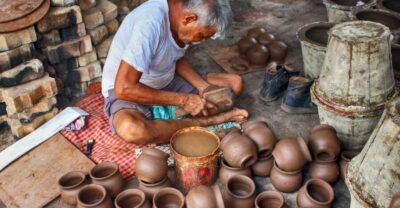

Dharavi Slum Slumdog Millionaire Tour with a Local
Read our review →
Mumbai Slum Tour – Visit Dharavi Slum with Local Guide
Read our review →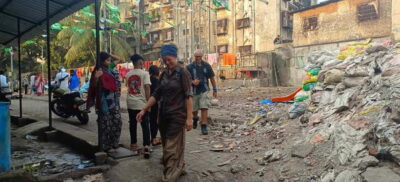
Dhobi Ghat Laundry and Dharavi Slum Tour with Local
Read our review →
Browse the lists this tour appears in