
Reviewed · DHARAVI SLUM TOURS
Private Mumbai Sightseeing Tour Including Dharavi Slum
Dharavi is the heart of this six-hour Mumbai outing. You walk past recycling yards, bakeries, pottery workshops, and small factories where people live and work close together. Then the private car carries you to Mumbai’s grander face: the Gateway of India, Gothic railway stations, Marine Drive, and old British-era buildings. This is not a polished sightseeing loop. It is a look at how the city actually functions.
I like two things right away. The private format lets you ask questions and adjust the pace, while the air-conditioned car saves your feet and patience on Mumbai’s crowded roads. I also like the sharp contrast between Dharavi’s working lanes and landmarks such as Chhatrapati Shivaji Terminus and the Taj Mahal Palace. The main consideration is the Dharavi walk itself: it can feel confronting, and some people may feel uncomfortable being observed in a residential area.
In This Review
- Key points to know before booking
- Why Dharavi changes the way you see Mumbai
- From Chhatrapati Shivaji Terminus to the Gateway
- Gandhi, Jain worship, and the city from above
- Marine Drive, Dhobi Ghat, and the British-era center
- How the private format affects the experience
- The guides and the value of local explanation
- Practical details that affect your day
- Who should book this Mumbai tour?
- Should you book it?
- FAQ
- How long does the private Mumbai sightseeing tour last?
- How many people can join the private tour?
- Where can pickup take place?
- Is transport included?
- Is a guide included?
- How much time is spent in Dharavi?
- Are entrance fees included?
- Is food included?
- What is the cancellation policy?
Key points to know before booking
- Dharavi takes about two hours: Expect narrow lanes, recycling work, cottage industries, bakeries, and the Kumbharwada pottery quarter.
- You see two very different Mumbais: The tour pairs working-class neighborhoods with colonial buildings, grand hotels, religious sites, and Marine Drive.
- Your group stays private: One vehicle carries up to five people, with an English-speaking guide and private transport.
- Pickup is flexible: You can begin from a Mumbai hotel, cruise port, or railway station, with return to the departure point.
- The guides add real value: Aarti, Mukesh, Jaya, Raj, Manoj, and Anthony are among the guides associated with this experience.
- Traffic can affect the day: The route covers a lot, but heavy rain, fires, emergency vehicles, and Mumbai traffic can alter timing.
Why Dharavi changes the way you see Mumbai
Many sightseeing tours treat Dharavi as a quick photo stop. This one gives it the largest block of time, and that is the right choice. You spend roughly two hours on foot, moving through a town within the city rather than simply looking at it from a car window.
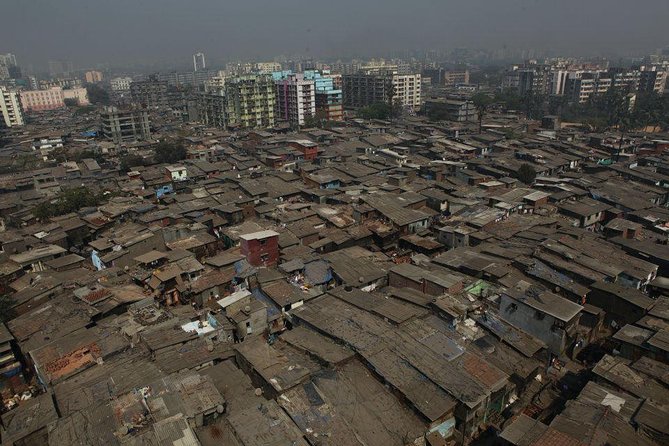
Dharavi is described here as Asia’s biggest slum and home to nearly a million people. Those figures are broad descriptions, but the important point for you is the density. Huts, homes, shops, workshops, and lanes sit in close quarters. This is a residential community and a major place of work, not a museum exhibit.
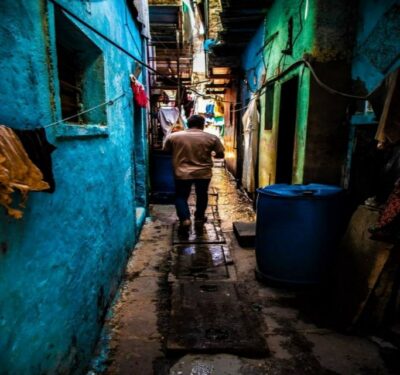
The route heads toward plastic and metal recycling areas, where workers sort materials for reuse. You may also pass small clothing, soap, pottery, and manufacturing units. Bread and sweet shops add the smell of food to the narrow lanes, making the area feel like a functioning neighborhood rather than a single attraction.
The strongest lesson is economic. Dharavi is often reduced to poverty, but the walk shows the skill and effort behind its cottage industries. You see how work is carried out with limited space and how a large community supports itself through many small businesses.
That does not make the visit easy. You are entering a place where people live and work, and some residents may not welcome attention. One account describes feeling watched and challenged by women in the community. Go quietly, follow your guide, avoid intrusive photographs, and remember that the people around you are not part of a show.
The route includes Kumbharwada, the community of clay potters sometimes called the city of lamps. Thousands of handmade pots are crafted and fired here, including oil lamps used during festivals. This is one of the tour’s most distinctive details. It gives you a look at a traditional craft that is more personal and memorable than another pass by a monument.
You do not pay an entrance fee for Dharavi, but the walking portion is the key experience. Wear practical shoes, expect uneven and narrow lanes, and keep your belongings close. The supplied information says most people can participate, but children must be accompanied by an adult.
More Dharavi walking tours:
- Dharavi slum tour in Mumbai by Female tour guides of the slum
★ 5.0 · 1,976 reviews - Mumbai: Dharavi Slum, DhobiGhat, and Dabbawallas Tour
★ 4.9 · 689 reviews - Dharavi Slum Tour
★ 5.0 · 625 reviews
From Chhatrapati Shivaji Terminus to the Gateway
After Dharavi, the tour shifts to Mumbai’s colonial and modern landmarks. The private car matters here. Mumbai traffic can be slow, and the route covers a wide area, from the old central districts to the waterfront and Malabar Hill.
Chhatrapati Shivaji Terminus gets about 25 minutes. The UNESCO-listed station is a grand Gothic building with a busy railway function at its core. It became familiar to international audiences through films about India’s trains, but the real interest is watching a working station operate inside such elaborate architecture.
You will not have a long interior visit, so think of this as a focused stop for architecture and photographs. Your guide can explain Mumbai’s British-era development and the station’s place in the city. The contrast is useful: this is not a silent historic shell. It is an active transport hub.
The Rajabai Clock Tower and University of Mumbai receive about 20 minutes. The tower has a Big Ben-style presence and Gothic design, another reminder of the city’s British influence. The stop is mainly an exterior architectural view, but it helps connect the grand public buildings to the city’s colonial past.
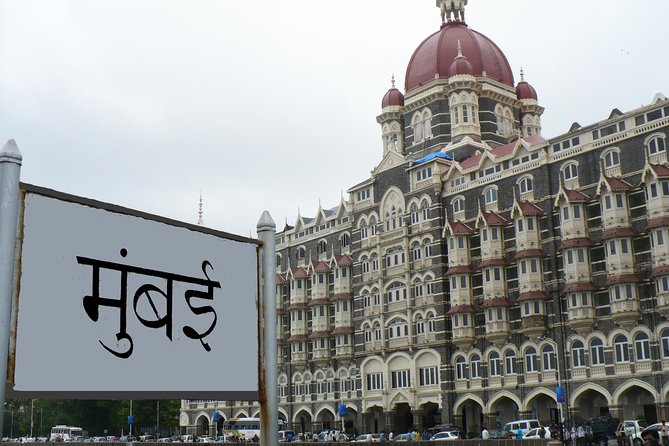
At the Gateway of India, you have about 15 minutes. This is Mumbai’s best-known monument, built to mark the 1911 visit of King George V and Queen Mary. Across from it is the Taj Mahal Palace, whose original building opened in 1903 after being commissioned by Jamshedji Tata.
The two landmarks work well together. One represents imperial ceremony, while the other reflects Indian enterprise and Mumbai’s place as a major commercial city. The short time at the Gateway is enough to see it, but not enough for a slow waterfront visit. If you want a long, relaxed look at the harbor, this packed itinerary may feel rushed.
The Taj Mahal Palace stop lasts about 10 minutes. You see the exterior and hear its story, rather than receiving a hotel tour. It is a quick but worthwhile pause, especially if you appreciate architecture and the layered history around the Gateway.
Gandhi, Jain worship, and the city from above
The itinerary also includes places that keep the day from becoming a parade of monuments. Mani Bhavan Gandhi Museum gets about 20 minutes. The building was the center of Mahatma Gandhi’s political activity in Mumbai from 1917 to 1934. This is the most clearly focused historical stop, and the included entrance fee adds value.
If Gandhi’s role in India’s independence interests you, use your time here carefully. The stop offers context for the city’s political past, which can otherwise get lost between colonial facades and traffic.
The Jain Temple receives about 10 minutes. Its stone carvings and dome painted with the zodiac make it a small but visually detailed stop. It is a place of worship, so treat it with respect and follow any instructions from your guide. The visit is brief, but it adds a religious dimension to a route otherwise heavy on civic and colonial buildings.
Kamala Nehru Park gives you about 15 minutes for a skyline view and the Old Woman’s Shoe landmark. The park sits above the city, so this is a useful change after time spent in tight streets and traffic. The view helps you understand Mumbai’s crowded form from a distance.
Nearby, the Hanging Gardens sit on top of water tanks near the Tower of Silence, a Parsi burial place. The stop lasts about 10 minutes. It is less about a long garden visit and more about seeing how the city uses limited space and how different communities have shaped Mumbai.
Marine Drive, Dhobi Ghat, and the British-era center
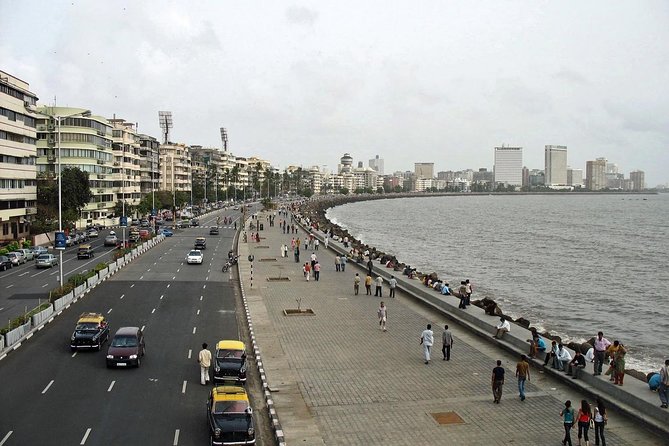
Marine Drive, also called the Queens Necklace, is one of the city’s signature views. The tour includes a drive along the colonial buildings there, rather than promising a long walk or sunset stay. You get a broad sense of the waterfront and the curve of the road, but timing depends heavily on traffic.
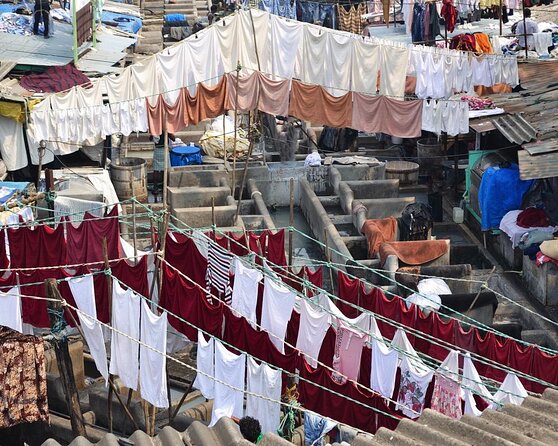
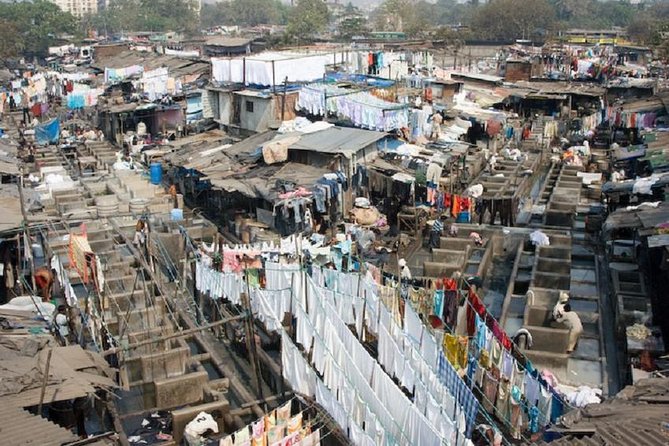
Dhobi Ghat receives about 20 minutes. This open-air laundry area is described as Asia’s biggest, with dhobis washing clothes and linens from hotels and hospitals outdoors. It is another place where Mumbai’s daily work is on public view.
I find Dhobi Ghat valuable because it links the grand hotel you saw earlier with the labor that supports city life. The stop is short, and you may mainly view the operation from an assigned vantage point, but it gives the day a practical edge.
The drive also passes several notable buildings and districts:
- The Prince of Wales Museum, founded after the then Prince of Wales laid its foundation stone in 1905
- Flora Fountain at Hutatma Chowk, an ornate heritage monument
- Kala Ghoda, known for designer cafés, independent galleries, and sidewalk art stalls
- The David Sassoon Library, a famous library and heritage building
- Bombay High Court and the Oval Cricket Ground
- The Telegraph Office and other British-era buildings
Not every pass-by receives a full stop. That distinction matters. If you want to enter museums, linger in Kala Ghoda galleries, or study the David Sassoon Library, you need a slower, more specialized tour. Here, the goal is to cover Mumbai’s main visual and historical markers in one day.
More full city sightseeing tours:
- Mumbai: Full-Day Sightseeing Tour of Mumbai
★ 4.9 · 1,822 reviews - Private Mumbai Sightseeing Tour (Traveller’s Choice Award Winner)
★ 5.0 · 1,565 reviews - Highlights of Mumbai Sightseeing Tour: TRAVELLERS CHOICE AWARDED
★ 5.0 · 915 reviews - Highlights of South Mumbai Guided Private Tour in AC Vehicle
★ 5.0 · 620 reviews
How the private format affects the experience
The price is $184.62 per group of up to five people, not per person. For one person, that is expensive. For five, it works out to roughly $37 per person before any food or drinks, which is a much better deal for a full six-hour private outing with transport and an English-speaking guide.
The private car is more than a comfort feature. Mumbai’s roads can consume a large part of a day, especially when rain or an unusual incident causes delays. One account describes heavy traffic caused by a nearby fire and fire engines, while another notes that heavy rain required a change in the pickup plan. A private setup gives your guide more room to adapt than a fixed coach tour.
The group limit of five is also practical for families or friends. You are not sharing the vehicle with strangers, and you can ask for explanations at the stops that interest you most. The guide can also help keep the day moving when traffic threatens the schedule.
The experience runs about six hours, which is ambitious for this much ground. The benefit is coverage. You see Dharavi, central Mumbai, the waterfront, Malabar Hill, Gandhi’s former base, and major colonial buildings in one outing.
The tradeoff is pace. Most landmark stops last 10 to 25 minutes. You should book this if you prefer a strong overview and personal guidance. You should choose something else if you want long museum visits, extensive shopping time, or an unhurried photography day.
The guides and the value of local explanation
A good guide matters most in Dharavi, where a bare walk through narrow lanes could feel intrusive or confusing. Guides associated with this tour include Aarti, Mukesh, Jaya, Raj, Manoj, and Anthony. Their roles combine city history, local context, and practical help with the route.
Aarti and Mukesh are specifically associated with clear explanations of both the city and Dharavi. Jaya is described as warm and attentive to points of interest, while Raj and chauffeur Manoj handled an adaptable day that went slightly off the planned route. Anthony is noted for answering questions about Dharavi and Mumbai and for guiding the full sightseeing program.
The driver matters, too. Mumbai driving is not a minor detail, and Manoj was praised for driving safely despite traffic. You are in a private air-conditioned car, but the ride can still be tiring if roads are slow. Keep your expectations realistic: private transport improves comfort and control, but it cannot remove Mumbai congestion.
The strong overall rating of 4.9 out of 5 from 81 ratings, with 99 percent recommending the experience, fits the tour’s main strengths: reliable pickup, broad coverage, friendly guides, and a useful introduction for a short stay. It does not erase the ethical concern around Dharavi, so your own attitude will shape the day.
Practical details that affect your day
Pickup is available from a Mumbai hotel, cruise port, or railway station, and the tour returns to the departure point. That makes it particularly useful if you have limited time in the city or are passing through by ship or train.
The tour includes hotel pickup and drop-off, an English-speaking guide, private air-conditioned transport, and entrance fees where applicable. Food and drinks are not included, so plan to eat before or after the outing rather than expecting a meal stop.
Mobile tickets are accepted, and confirmation is received when you book. The price covers a maximum of five people per vehicle. Most people can take part, but children must have an adult with them.
Free cancellation is available if you cancel at least 24 hours before the local start time. Cancellations or changes inside that window are not refunded or accepted.
Who should book this Mumbai tour?
I would choose this for a first visit, a short stop in Mumbai, or a cruise-port day when you want the city explained rather than simply photographed. Families and small groups get the strongest value from the fixed vehicle price.
It also suits you if you want a serious look at working Mumbai. Dharavi is not a comfortable attraction in the usual sense, but it can be an important part of understanding the city. Go with humility and listen to your guide.
I would hesitate if you dislike walking through crowded residential areas, need a slow pace, or want extensive time inside museums. The route is broad and efficient, not leisurely.
Should you book it?
Book this private tour if you want one well-organized day that connects Dharavi’s recycling, pottery, and small industries with Mumbai’s colonial buildings, religious sites, waterfront, and Gandhi history. The best value comes when four or five people share the vehicle.
Skip it if your main goal is a relaxed beachside day or a long museum visit. The Dharavi portion can feel ethically uncomfortable, and the landmark stops are often brief. For the right visitor, though, the contrast is the point: Mumbai’s grand monuments make more sense after you have seen the work and community that keep the city running.
FAQ
How long does the private Mumbai sightseeing tour last?
The tour lasts approximately six hours, including the Dharavi walk and sightseeing by private vehicle.
How many people can join the private tour?
The price covers one vehicle for up to five people. Only your group participates in the private activity.
Where can pickup take place?
Pickup is offered from a Mumbai hotel, cruise port, or railway station. The tour ends back at the departure point.
Is transport included?
Yes. Private transport in an air-conditioned car is included, along with hotel pickup and drop-off.
Is a guide included?
Yes. An English-speaking guide accompanies the tour. Guides associated with the experience include Aarti, Mukesh, Jaya, Raj, Manoj, and Anthony.
How much time is spent in Dharavi?
The Dharavi portion takes about two hours and includes the recycling yard, narrow lanes, small industries, bakeries and sweet shops, and the Kumbharwada pottery area.
Are entrance fees included?
Entrance fees are included where applicable. The listed stops at Dharavi, Chhatrapati Shivaji Terminus, Rajabai Clock Tower, the Gateway of India, Dhobi Ghat, the Taj Mahal Palace exterior, the Jain Temple, Kamala Nehru Park, and Hanging Gardens are shown without separate admission charges. Mani Bhavan Gandhi Museum admission is included.
Is food included?
No. Food and drinks are not included in the tour price.
What is the cancellation policy?
You receive a full refund if you cancel at least 24 hours before the local start time. Cancellations or changes made less than 24 hours before the start are not refunded or accepted.
Just added around Mumbai
- Temples & Vineyards: Private Tour to Nashik from Mumbai★ 4.5 · 3 reviews
- Mumbai: Private City sightseeing and Dharavi Slum Tour★ 5.0 · 3 reviews
- Mumbai: Full Day City Sightseeing with Lunch, Car & Guide★ 4.3 · 3 reviews
- Elephanta Island Private Speedboat Tour from Mumbai – 6pax★ 5.0 · 3 reviews
- Mumbai Sightseeing Tour by Public Transport with family Lunch★ 5.0 · 3 reviews
- Mumbai by Dawn★ 4.5 · 3 reviews
- Mumbai: Elephanta Island and Elephanta Caves Guided Tour★ 4.4 · 3 reviews
- Mumbai Dharavi Slum Community Tour★ 5.0 · 3 reviews
Dharavi Slum Tours, compared.
Dharavi slum tour in Mumbai by Female tour guides of the slum
Read our review →

Dharavi Slum Slumdog Millionaire Tour with a Local
Read our review →
Mumbai Slum Tour – Visit Dharavi Slum with Local Guide
Read our review →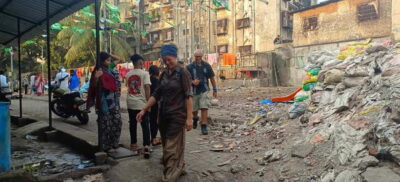
Dhobi Ghat Laundry and Dharavi Slum Tour with Local
Read our review →
Browse the lists this tour appears in