
Reviewed · DHARAVI SLUM TOURS
Private Dharavi Slum Tour
Dharavi is not a sightseeing backdrop. It is a working neighborhood where homes, workshops, shops, and small factories share a tightly packed space. On this two-hour private walk, a guide who lives in the area leads you through narrow lanes and explains how residents make a living through recycling, leather work, pottery, dye production, and food preparation.
I like the student guides from Dharavi, because they can give the area a personal point of view rather than a polished tour script. I also like the private car service, which takes care of the trip from your Mumbai hotel and includes air conditioning, water, tolls, parking, and tax.
The main consideration is simple: you cannot take photographs, and the streets can be cramped, rough, and uncomfortable. This is a serious look at a densely populated community, not a light entertainment stop. Recent bookings have included guides named Aarti and Abishek, though your guide may be someone else.
In This Review
- Key points before you book
- Starting from your Mumbai hotel
- Entering Dharavi’s tightly packed lanes
- The many trades inside one neighborhood
- Meeting different communities in Dharavi
- What the movie connection adds
- Why photography is not allowed
- Is $65 per person fair value?
- What the recent guide feedback tells me
- Who should take this walk?
- Should you book the Private Dharavi Slum Tour?
- FAQ
- How long does the Private Dharavi Slum Tour last?
- How much does the tour cost?
- Where does the tour take place?
- Is hotel pickup included?
- What type of transportation is provided?
- Is the tour private?
- What language does the guide speak?
- Can I take photographs during the tour?
- What should I bring, and can I cancel?
Key points before you book
- Student guides who live in Dharavi lead the walk and explain daily life from a local perspective.
- Working industries are the focus, including plastic recycling, leather manufacturing, dye production, pottery, soap making, and poppadom baking.
- Slumdog Millionaire filming locations are part of Dharavi’s modern public image and may be pointed out during the walk.
- Private pickup and drop-off in Mumbai make the short tour easier to fit into a busy city day.
- Photography is not permitted, so expect to experience the neighborhood without taking pictures.
- The $65 price buys privacy and transport, but the walk itself lasts only two hours and does not include food or shopping.
Starting from your Mumbai hotel
Your guide meets you in the lobby, wearing a purple shirt with a footprint logo. The package includes hotel pickup and drop-off, so you do not need to arrange a taxi to Dharavi or work out where to meet on your own.
The drive is in a private, air-conditioned vehicle. That matters in Mumbai, where heat, traffic, and long transfers can make a short outing feel tiring. Water, tolls, parking, and tax are included too, which keeps the price easier to understand.
The exact pickup time depends on availability. Since the walking portion is only two hours, I would treat this as a compact Mumbai activity rather than a full-day excursion. It can fit before or after other city plans, but you should leave room for traffic when arranging anything immediately afterward.
Your guide speaks English. The guides are described as students living in Dharavi, and that detail gives the walk its clearest point of difference. You are not simply being shown lanes and workshops. You are being introduced to a place by someone with a direct connection to it.
More Dharavi walking tours:
- Dharavi slum tour in Mumbai by Female tour guides of the slum
★ 5.0 · 1,976 reviews - Mumbai: Dharavi Slum, DhobiGhat, and Dabbawallas Tour
★ 4.9 · 689 reviews - Dharavi Slum Tour
★ 5.0 · 625 reviews
Entering Dharavi’s tightly packed lanes
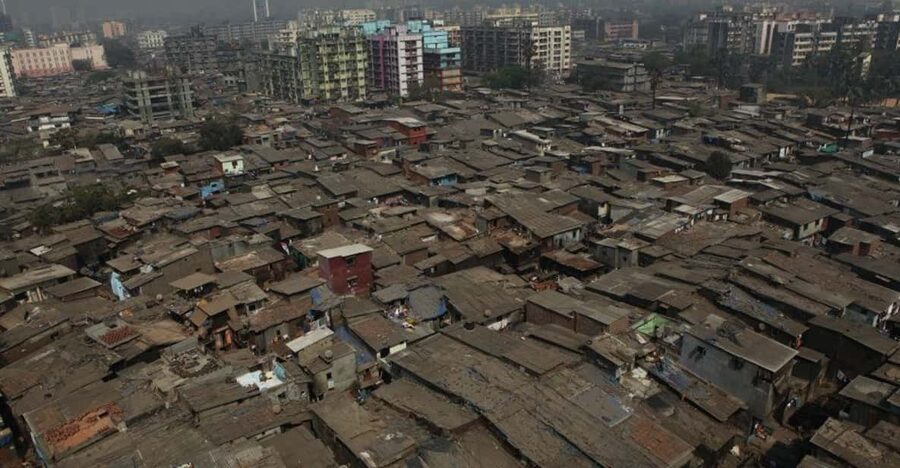
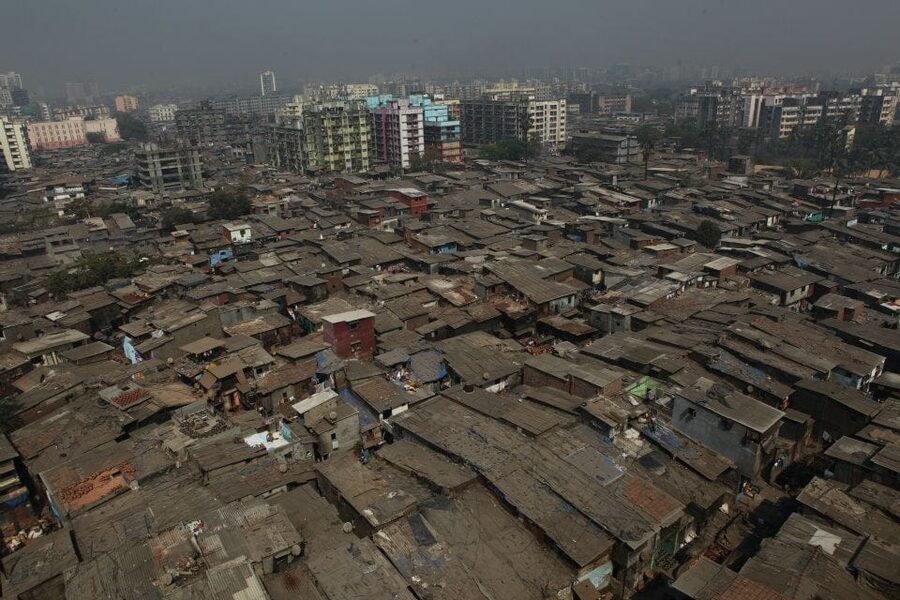
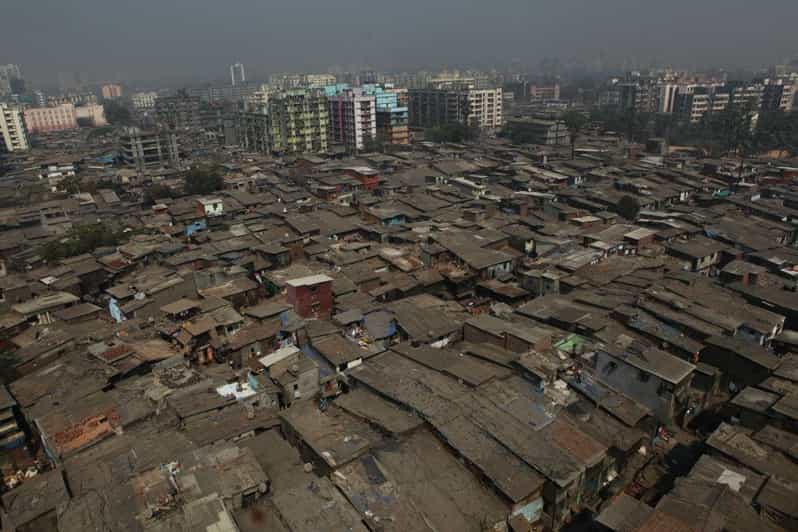
Dharavi covers about 200 hectares, or roughly 500 acres, and population estimates vary widely, from about 300,000 to as many as one million people. Those numbers are uncertain, but they point to the scale of the place: a very large community compressed into a small area.
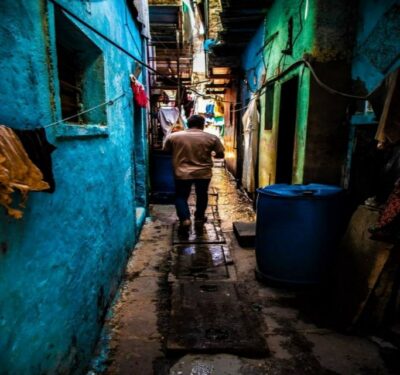
The walk takes place in narrow alleys rather than along broad tourist streets. You will see a neighborhood where homes and workspaces sit close together, with many types of trade operating side by side. That closeness is part of what makes the tour interesting, but it also means you should expect tight passageways and basic surroundings.
The area has serious infrastructure problems. Water comes from public standpipes, toilets are limited and often in poor condition, and weak drainage makes Dharavi vulnerable to flooding during the monsoon. Mahim Creek has also been affected by public health problems connected with inadequate sanitation.
This information is not just background trivia. It helps you understand the contrast between Dharavi’s strong local economy and its difficult public services. A community can have skilled workers, businesses, and a firm sense of identity while still lacking basic facilities. The tour is most useful when you hold both facts in mind.
Wear comfortable shoes. The instructions are brief, but this is the one practical item you should take seriously. You will be walking through cramped lanes, and this is not the place for delicate footwear.
The many trades inside one neighborhood
Dharavi is best understood through its work. The tour introduces you to a range of small industries, giving you a closer look at how materials are reused and how practical goods are produced.
Plastic recycling is one of the better-known activities in the area. The tour also covers the recycling of vegetable oil cans, an unusual detail that shows how much value can be recovered from items other places might discard. You may see how recycling supports both local employment and the wider city economy.
Leather manufacturing is another major subject. Dharavi has long been associated with leather work, and the tour helps place that trade within the neighborhood’s wider network of family businesses and workshops. You should not expect a factory tour with large displays or polished visitor facilities. The interest comes from seeing how work fits into a dense residential setting.
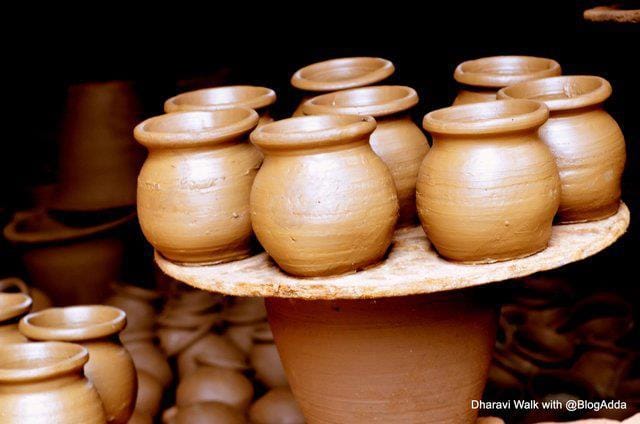
Other activities include dye production, pottery, soap production, poppadom baking, and more. These trades give the walk variety. One moment you may be hearing about discarded containers, and the next you may be learning how a finished product is made and sold.
I find this work-centered approach more useful than simply walking through residential lanes. It shows Dharavi as a place of production and enterprise, not only poverty. At the same time, you should not mistake local industry for easy prosperity. The infrastructure problems remain real, and working conditions may be basic.
Meeting different communities in Dharavi
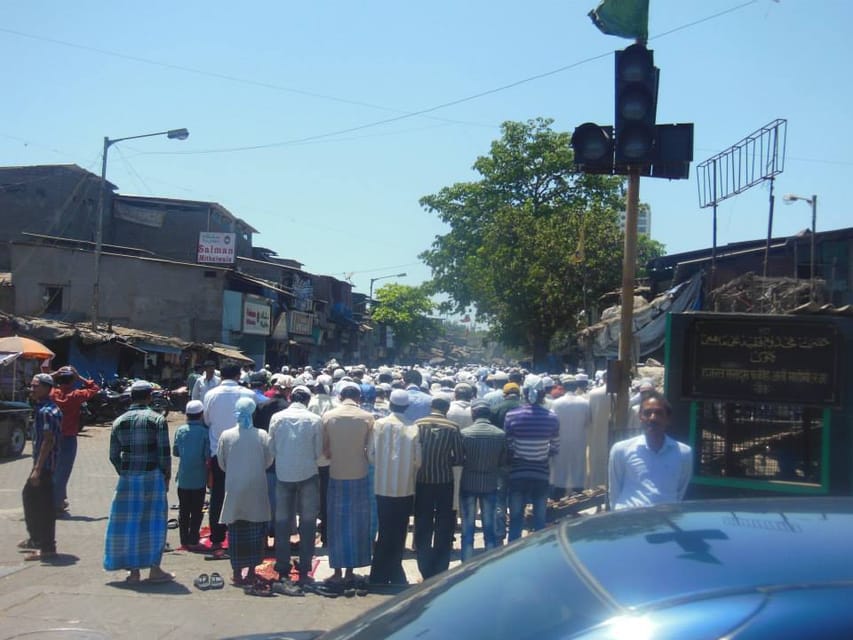
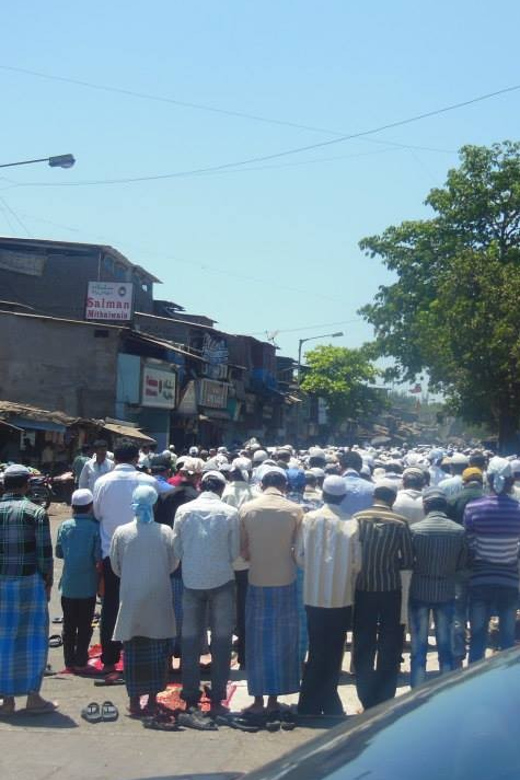
One of the tour’s main aims is to show the area’s range of communities. Dharavi is not a single, uniform block. It is a large neighborhood made up of people with different backgrounds, occupations, and traditions.
A local student guide can help you make sense of that variety. The best questions to ask are practical ones: How do people organize work here? Which trades are common in different sections? How do families use limited space? How do businesses connect with the rest of Mumbai?
Because the group is private, you have more freedom to ask questions than you would on a large shared walk. If you are curious about a particular trade or community, you can ask your guide to spend more time explaining it, provided the route and local conditions allow.
The private format also makes the experience less awkward. You are not trying to hear a guide over a large crowd, and you can move at a pace that suits your group. Still, privacy does not turn Dharavi into a controlled exhibit. You are entering a real neighborhood, so your guide’s instructions and local customs matter.
The tour’s strongest human element comes from that balance. You are shown how the community works, but you are also reminded that people live there. Keep your voice low, follow the guide, and avoid treating ordinary daily activity as a performance.
A few more Mumbai tours and experiences worth a look
- Private Mumbai Sightseeing Tour (Traveller’s Choice Award Winner)
★ 5.0 · 1,565 reviews - Elephanta Caves & Island Guided Private Tour
★ 5.0 · 1,327 reviews - Private Guided Walking Tour in Fort & Colaba
★ 5.0 · 895 reviews - Highlights of South Mumbai Guided Private Tour in AC Vehicle
★ 5.0 · 620 reviews
What the movie connection adds
Dharavi became known around the world after the 2008 film Slumdog Millionaire. The tour includes the chance to discover places connected with the movie’s filming.
This is a useful piece of context, but it should not become the whole point of your visit. A film can make a neighborhood famous while showing only a small part of its life. Dharavi’s recycling, leather work, pottery, food production, and local communities matter far more than its role as a film set.
I would treat the movie connection as an easy way into a larger conversation. You can see why filmmakers found the narrow lanes and tightly packed activity visually striking, then move beyond the screen to learn about the people who live and work there.
The area also opened its first Design Museum in February 2016. That detail fits the wider story of Dharavi as a place where making and design are part of daily life. The tour description does not promise a museum visit, so do not book this activity specifically for that stop. Instead, see it as part of the neighborhood’s changing public identity.
Why photography is not allowed
The no-camera rule is one of the most important parts of this experience. The instructions say that cameras are not allowed and that no photography is permitted.
That may disappoint you, especially in a place with such unusual visual contrasts. Yet the rule has a clear benefit: you are less likely to treat homes, workers, and children as photo subjects. Without a camera in your hand, you can pay closer attention to what your guide is saying and move through the neighborhood with less intrusion.
Bring comfortable shoes, but leave your camera behind. Do not count on taking quick snapshots with your phone either, since the rule is stated broadly as no photography.
If recording images is essential to your trip, this is probably not the right activity. If you can accept a walk based on listening, observing, and asking questions, the restriction should not prevent you from enjoying it.
Is $65 per person fair value?
At $65 per person, this is not the cheapest way to see Dharavi. The price includes a private air-conditioned vehicle, hotel pickup and drop-off, an English-speaking licensed professional guide, water, tolls, parking, and tax.
That package has real value in Mumbai. You avoid arranging transport, you get a private group rather than a shared outing, and you have a local guide for the full walking visit. The car is especially useful if you are staying outside Dharavi or prefer not to manage city transport before and after the tour.
The limitation is duration. Two hours is enough for an introduction, but not enough to understand every part of such a large community. You are paying for a focused orientation, not an all-day study of Dharavi.
Food and shopping are not included. The activity is primarily a guided walk, so do not expect a meal or a shopping allowance to be built into the cost. If you want to buy something, that would be separate, and the tour information does not promise a set shopping stop.
For a private experience with door-to-door transport, I consider the price reasonable for visitors who value convenience and a local guide. Solo visitors may find it expensive compared with a shared walk. Couples or small groups can get better value from the private format.
What the recent guide feedback tells me
The strongest pattern in the available feedback is praise for the guides and drivers. Abishek is described as courteous and well informed, while Aarti is singled out for being kind, professional, and engaging. Mukesh is praised as a careful and helpful driver.
Those details matter because the quality of this experience depends heavily on the people leading it. Dharavi is not a place where a guide can simply point at a few sights and move on. Clear explanations, respectful behavior, and confidence in the lanes make a big difference.
The English-speaking ability of the guides has also been a plus. Mick specifically found the guide’s English good, which is important when the tour involves complicated subjects such as sanitation, local trades, community structure, and the difference between the movie image and daily life.
One older booking raised a practical concern about transportation needing improvement, while the guide was still praised for being polite and helpful. I would keep that in mind without making too much of it. The transport is included and private, but the overall experience can still be affected by Mumbai traffic and vehicle arrangements.
The recorded rating is 5 out of 5 from 13 reviews, with one 4 out of 5 assessment. That is a small sample, so I would focus less on the number and more on the repeated themes: strong guides, courteous service, good English, and a sense of safety during the visit.
Who should take this walk?
I would recommend it to you if you want to understand how a large Mumbai community functions, not just tick off famous monuments. It suits visitors interested in local work, recycling, small business, urban development, and the human side of the city.
It is also a good fit if you prefer a private group. You can ask direct questions, listen more easily, and avoid the fixed rhythm of a large tour.
You should think twice if you want a relaxed stroll, polished visitor facilities, or plenty of photographs. The lanes are narrow, sanitation is poor in parts of the area, and the subject matter can be difficult. This is a serious experience that asks for respect and attention.
Families should make their own call based on the children’s age and comfort, since the supplied information does not specify a minimum age or family program. The same applies to accessibility. No accessibility details are provided, so ask before booking if anyone in your group has mobility needs.
Cancellation is flexible up to 24 hours before the start for a full refund, and you can reserve now and pay later. That is useful if your Mumbai schedule is still shifting.
Should you book the Private Dharavi Slum Tour?
Book it if you want a short, organized introduction to Dharavi led by someone connected to the community. The student-guide format, private transportation, and focus on working trades give it more substance than a quick drive past the area.
I would especially choose it if this is your first visit to Mumbai and you want help understanding the city’s contrasts. You will see recycling, leather work, pottery, dye production, food preparation, and community life in one compact visit.
Skip it if photography is central to your plans or if you are uncomfortable walking through difficult living conditions. Dharavi should be approached with humility, not as a spectacle.
For the right visitor, the tour offers a clear lesson: poverty and enterprise can exist side by side, and a neighborhood often shown in simple terms is far more complex than its movie image.
FAQ
How long does the Private Dharavi Slum Tour last?
The walking tour lasts two hours. The full outing also includes hotel pickup and drop-off in Mumbai, so allow extra time for transportation and traffic.
How much does the tour cost?
The listed price is $65 per person.
Where does the tour take place?
The experience takes place in Dharavi, Mumbai, in Maharashtra, India.
Is hotel pickup included?
Yes. Hotel pickup and drop-off in Mumbai are included. Your guide meets you in the lobby wearing a purple shirt with a footprint logo.
What type of transportation is provided?
You receive private, air-conditioned transportation. Water, tolls, parking, and tax are also included.
Is the tour private?
Yes. It is offered for a private group rather than as a shared group activity.
What language does the guide speak?
The live guide speaks English.
Can I take photographs during the tour?
No. Cameras are not allowed, and the instructions state that no photography is permitted.
What should I bring, and can I cancel?
Bring comfortable shoes. You can cancel up to 24 hours in advance for a full refund, and the reserve-now, pay-later option lets you delay payment when booking.
Just added around Mumbai
- Temples & Vineyards: Private Tour to Nashik from Mumbai★ 4.5 · 3 reviews
- Mumbai: Private City sightseeing and Dharavi Slum Tour★ 5.0 · 3 reviews
- Mumbai: Full Day City Sightseeing with Lunch, Car & Guide★ 4.3 · 3 reviews
- Elephanta Island Private Speedboat Tour from Mumbai – 6pax★ 5.0 · 3 reviews
- Mumbai by Dawn★ 4.5 · 3 reviews
- Mumbai: Elephanta Island and Elephanta Caves Guided Tour★ 4.4 · 3 reviews
- Mumbai Sightseeing Tour by Public Transport with family Lunch★ 5.0 · 3 reviews
- Mumbai Dharavi Slum Community Tour★ 5.0 · 3 reviews
Dharavi Slum Tours, compared.
Dharavi slum tour in Mumbai by Female tour guides of the slum
Read our review →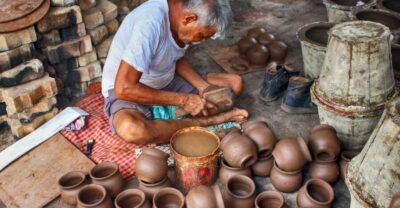
Dharavi Slum Slumdog Millionaire Tour with a Local
Read our review →
Mumbai Slum Tour – Visit Dharavi Slum with Local Guide
Read our review →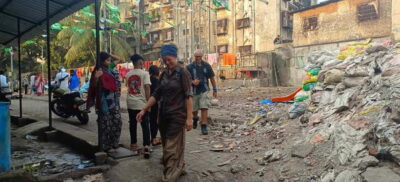
Dhobi Ghat Laundry and Dharavi Slum Tour with Local
Read our review →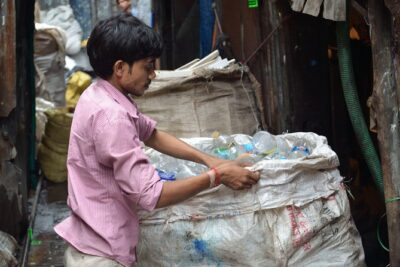
Browse the lists this tour appears in