

Reviewed · DHARAVI SLUM TOURS
Private 8 Hours Mumbai City Sightseeing and Dharavi Slum Tour
Mumbai makes its biggest impression through sharp contrasts: the Gateway of India facing the Taj Mahal Palace, grand British-era buildings beside busy streets, and Dharavi’s tightly packed lanes alongside major commercial districts. This private tour brings those contrasts together, including a two-hour Dharavi walk led by a guide who lives in the area.
I like the private format and the air-conditioned vehicle, especially in Mumbai’s heat and traffic. I also like the range of sights: you get famous landmarks, Gandhi’s former home, the open-air Dhobi Ghat laundry, and time to see Dharavi as a working community rather than just a photo stop.
The main consideration is the pace. The schedule covers a great deal in 7 to 8 hours, and many heritage stops last only five or 15 minutes. If you prefer long museum visits or quiet time at each monument, this will feel brisk.
In This Review
- Key points to know before booking
- Why this Mumbai day works so well
- Starting at the Gateway of India and the Taj Mahal Palace
- Reading Mumbai’s British-era architecture
- CSMT, one of the day’s essential stops
- Marine Drive, Chowpatty, and the city’s edge
- Gandhi’s Mumbai at Mani Bhavan
- Hanging Gardens above Malabar Hill
- Dhobi Ghat, Mumbai’s open-air laundry
- Walking through Dharavi with local context
- What the private format and price really mean
- Who will enjoy this tour most
- Practical details that affect the day
- Should you book this Mumbai city and Dharavi tour?
- FAQ
- How long does the Mumbai city and Dharavi tour last?
- Is hotel pickup included?
- Is the tour private?
- Is transport provided?
- How long is the Dharavi visit?
- Are food and drinks included?
Key points to know before booking
- Dharavi gets serious time: The walking visit lasts about two hours, much longer than a token drive-by.
- Mumbai’s colonial core is covered well: You see CSMT, the High Court, University buildings, Flora Fountain, Kala Ghoda, and other British-era landmarks.
- The tour is private: The $153.08 price covers a group of up to two people, so the cost makes more sense for couples or friends sharing the booking.
- Rakesh can adapt the day: He tailored the timing for a family between flights and kept children aged four, seven, and nine engaged.
- Pickup is limited in the details provided: Round-trip hotel transfers are included from South Mumbai hotels.
- The Dharavi visit needs respect: You are entering a lived-in neighborhood, not a staged attraction. Follow your guide’s direction about photography and personal space.
Why this Mumbai day works so well
Many first-time visitors struggle to decide how to organize Mumbai. The city’s key sights are spread across different areas, traffic can be slow, and the attractions tell very different stories. This tour solves much of that problem by joining the main heritage district, the waterfront, Malabar Hill, Dhobi Ghat, and Dharavi in one private day.
You spend much of the day in a private air-conditioned vehicle, which matters here. Mumbai can be hot, humid, and tiring, and moving between stops by car gives you a break between walks. You still leave the vehicle for the important parts, including the Gandhi Museum, Hanging Gardens, the Dharavi visit, and selected heritage stops.
I see this as a strong orientation tour. It gives you enough context to decide what deserves a longer visit later. It is not designed as a slow architectural study, and it does not include meals or a long sit-down break in the listed schedule, so plan your energy accordingly.
More Dharavi walking tours:
- Dharavi slum tour in Mumbai by Female tour guides of the slum
★ 5.0 · 1,976 reviews - Mumbai: Dharavi Slum, DhobiGhat, and Dabbawallas Tour
★ 4.9 · 689 reviews - Dharavi Slum Tour
★ 5.0 · 625 reviews
Starting at the Gateway of India and the Taj Mahal Palace
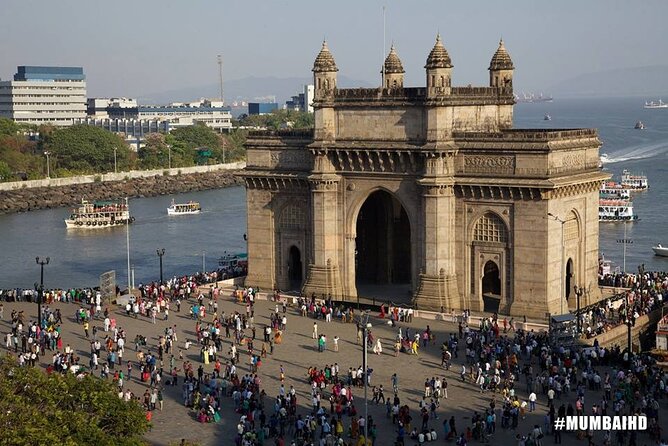
The Gateway of India is a natural opening point. Built to welcome King George V and Queen Mary, the arch faces Mumbai Harbour and is one of the city’s most recognizable landmarks. You have about 15 minutes here, enough for photographs and a first look at the waterfront.
The Taj Mahal Palace is only a short distance away. The hotel is tied to one of Mumbai’s best-known local stories: Jamsetji Tata built it after being refused entry to Watson’s Hotel. The tour includes a brief 10-minute stop, so you should expect to view the grand exterior rather than take a full hotel tour.
These two places work well together. One represents imperial ceremony, while the other reflects Indian enterprise and the city’s long relationship with trade, status, and travel. Your guide can connect the buildings instead of presenting them as isolated photo points.
Reading Mumbai’s British-era architecture
The next group of stops gives you a quick survey of the old administrative and educational center. The University of Mumbai Library and Rajabai Clock Tower were built in the 19th century, with the library dating to 1857. Rajabai is often called the Big Ben of India, though the comparison is more about its public clock role and visual impact than exact design.
You get only about five minutes at each. That is enough to see the exteriors and hear the basic story, but not enough for a detailed architectural inspection. If you enjoy Gothic revival buildings, keep your camera ready and ask your guide to point out the details during the drive.
Watson’s Hotel is a more unusual stop. You see the ruins of a once-famous hotel connected to the story of Tata and the Taj Mahal Palace. The building is not a polished monument, and that is exactly why it helps explain Mumbai. Its worn condition shows how quickly a grand commercial city can change.
At Azad Maidan, the focus shifts from architecture to public life. The Oval cricket ground is linked to India’s most beloved sport. The stop is brief, but it gives you a look at how open spaces in central Mumbai serve both recreation and civic life.
The Bombay High Court adds another imposing British-era facade. You pass through the historic core, where grand public buildings are packed close together. The tour also drives past Flora Fountain, Hutatma Chowk, the Telegraph Office, the India Post Office building, and the Kala Ghoda area.
This section is best understood from the vehicle. You see more than you could comfortably cover on foot in the heat, though traffic may limit how long you can look at individual buildings.
CSMT, one of the day’s essential stops
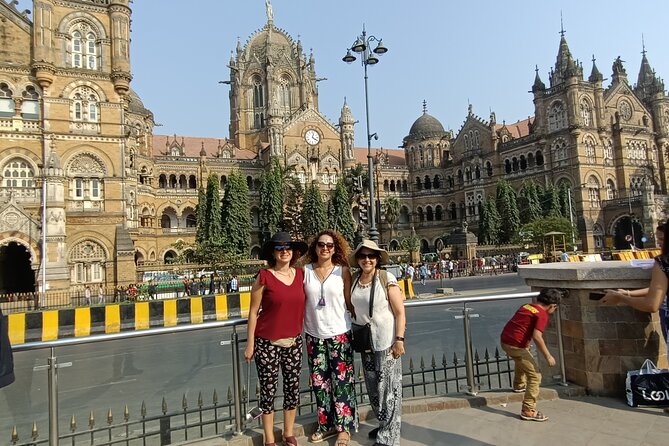
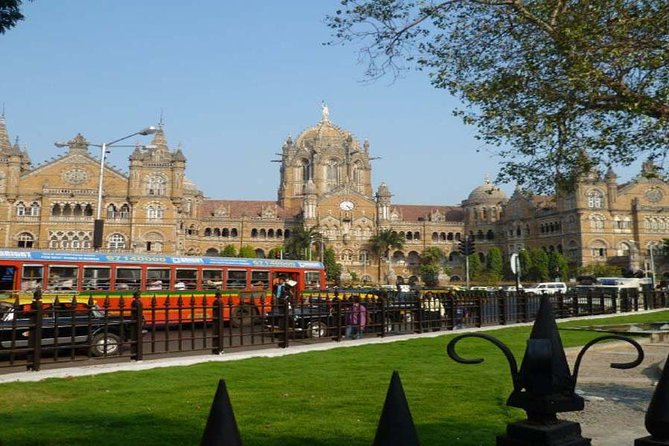
Chhatrapati Shivaji Maharaj Terminus, still often called Victoria Terminus or CST, is the architectural high point of the morning. The station is a UNESCO World Heritage Site, and its exterior combines Victorian Gothic forms with Indian design elements.
You have around 15 minutes here. That gives you time to appreciate the scale, photograph the facade, and understand why the station matters beyond its appearance. It remains a major railway hub, so the setting is active rather than museum-like.
This is one place where a guide adds real value. Mumbai’s older names can be confusing, and the station is commonly known by several versions. Your guide can help connect the colonial name, the current name, and the building’s place in everyday city life.
More full city sightseeing tours:
- Mumbai: Full-Day Sightseeing Tour of Mumbai
★ 4.9 · 1,822 reviews - Private Mumbai Sightseeing Tour (Traveller’s Choice Award Winner)
★ 5.0 · 1,565 reviews - Highlights of Mumbai Sightseeing Tour: TRAVELLERS CHOICE AWARDED
★ 5.0 · 915 reviews - Highlights of South Mumbai Guided Private Tour in AC Vehicle
★ 5.0 · 620 reviews
Marine Drive, Chowpatty, and the city’s edge
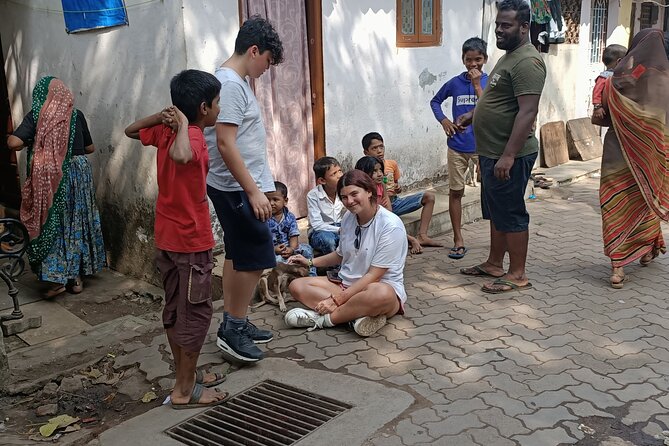
The vehicle then passes Marine Drive and Chowpatty Beach. The 15-minute segment is mainly a scenic drive, not a beach visit. Marine Drive gives you a broad view of Mumbai’s seafront and its famous curve, while Chowpatty offers a glimpse of a public recreation area used by the city.
This is a welcome change after the close architectural stops. You get open views and a sense of Mumbai’s relationship with the Arabian Sea. Do not book this tour expecting a long waterfront stroll, though. The schedule keeps moving.
Gandhi’s Mumbai at Mani Bhavan
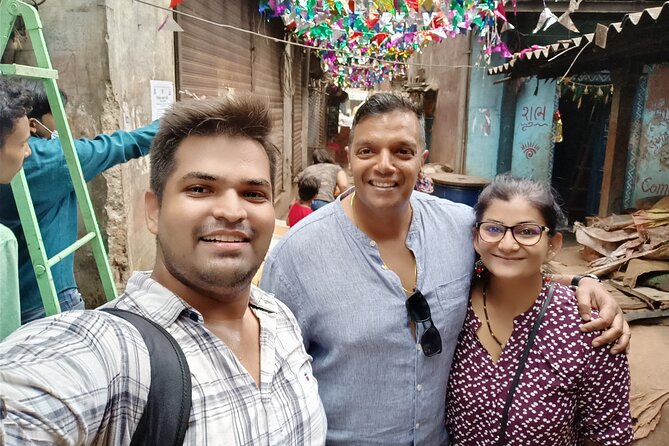
Mani Bhavan Gandhi Museum receives about an hour, making it one of the day’s more substantial stops. Gandhi used this Mumbai residence during important years of his public work, and the building now presents his life and ideas through exhibits connected to the house.
The longer visit matters because it breaks up the quick exterior stops. You have time to look around rather than simply photograph a facade. For many people, this is the most reflective part of the city sightseeing portion.
I also like its place in the route. After seeing Mumbai’s imperial buildings and commercial landmarks, you spend time with a figure associated with India’s independence movement and nonviolent political action. The museum gives the day a stronger historical center.
Hanging Gardens above Malabar Hill
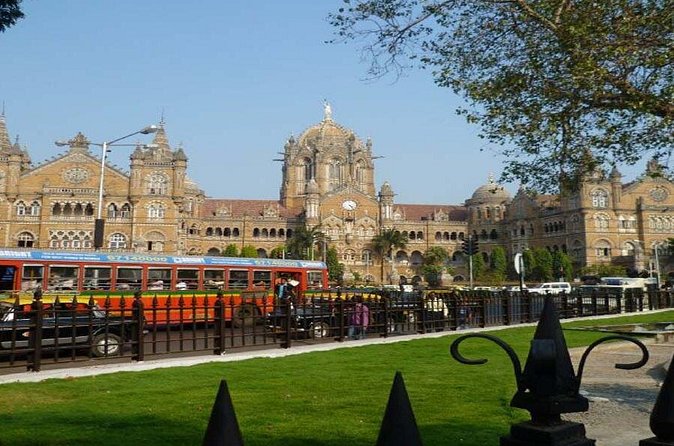
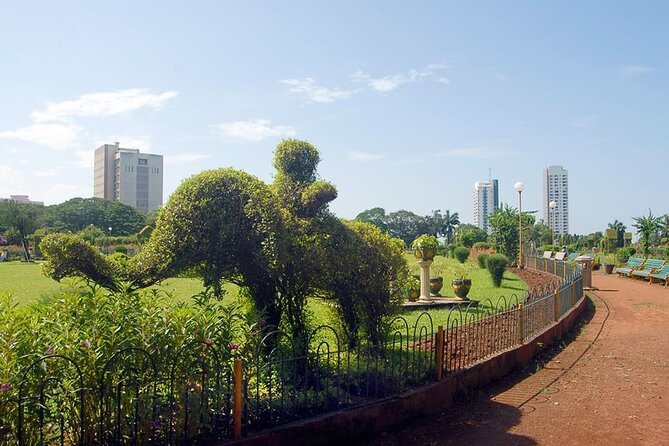
Hanging Gardens sits on top of water tanks near the Tower of Silence, a Parsi burial place. You have about 30 minutes here, enough for a short walk and views over parts of Mumbai.
This stop offers a different kind of city experience. Instead of another monumental building, you get planted open space and a chance to stretch your legs. The nearby Tower of Silence is culturally important, but the tour does not list an interior visit, so expect to see the area from the outside.
The garden also helps with the day’s rhythm. After the vehicle-based heritage circuit and the museum, it provides a quieter pause before Dhobi Ghat and Dharavi.
Dhobi Ghat, Mumbai’s open-air laundry
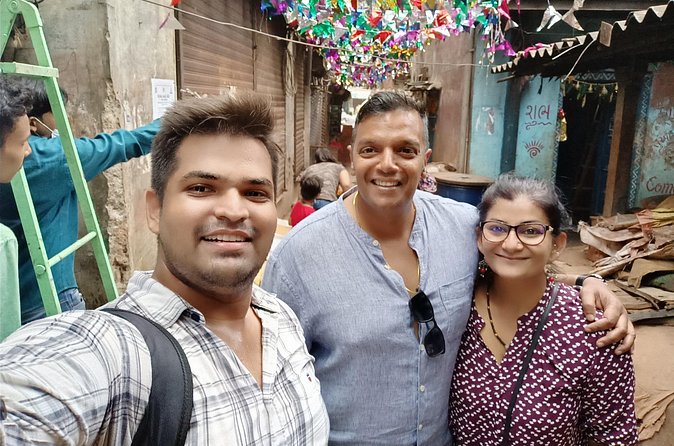
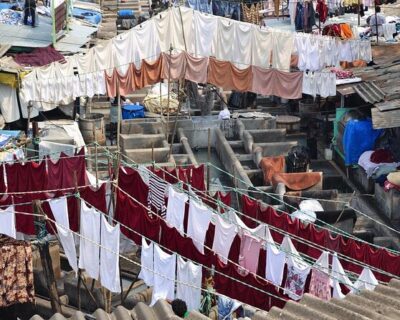
Dhobi Ghat is a 15-minute stop overlooking the famous open-air laundry. Clothes are washed in full view of the public, creating one of Mumbai’s most striking working-city scenes.
The short visit is enough to observe the rows of washing areas and hear how the site functions. It is not a hands-on activity, and you should treat the people working there with the same care you would show anywhere else. The point is to understand a long-running urban service, not to turn workers into a backdrop.
Dhobi Ghat also prepares you for Dharavi. Both places show work taking place in dense urban surroundings, but they are not the same experience. One is a specific laundry operation viewed from a short stop. The other is a large residential and commercial area explored on foot with a local guide.
Walking through Dharavi with local context
The Dharavi portion lasts about two hours, making it a major part of the day rather than an add-on. The tour describes Dharavi as one of Asia’s largest slum areas and notes its estimated annual economic output of about one billion US dollars, with much of that linked to informal recycling industries.
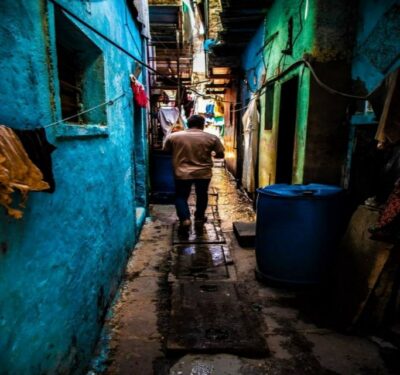
Those figures help correct a common mistake. Dharavi is not only a place of poverty. It is also a working community with homes, small businesses, workshops, and recycling activity. A walking tour can show how people make a living in a very limited amount of space, though you should expect narrow lanes and an environment that may feel intense.
The guide for this portion lives in the area. That local connection can provide useful context that you would not get from simply driving past the neighborhood. You can ask questions and learn how the community functions, but remember that residents are going about their daily lives.
The tour also notes that scenes from Slumdog Millionaire were filmed in Dharavi. That film connection may interest you, but it should not become the main reason for the visit. Dharavi is a real neighborhood, not a movie set, and the stronger value is seeing its work and community life in the present.
The phrase slum tour can feel uncomfortable, and it should make you think about your conduct. Keep photography discreet, listen to the guide, and avoid treating private homes or workers as attractions. The tour’s value depends heavily on whether the visit is handled with respect.
Two hours is a useful amount of time. You are not rushed through in a few minutes, yet the visit remains manageable within a full city day. If you have limited mobility, tell the operator before booking. One highly praised detail about guide Rakesh was his care with an older participant who could not walk far in the heat, including offering to carry a walking aid. That shows the kind of personal attention a private tour can provide, but the tour still includes substantial walking.
What the private format and price really mean
At $153.08 per group of up to two people, this is not priced like a shared bus outing. For a couple, the cost works out to about $76.54 per person before any separate food expenses. The value comes from the private vehicle, hotel pickup and drop-off, and the ability to adjust the pace.
The tour is especially useful if you have only one day in Mumbai, are staying in South Mumbai, or want to cover major sights without learning the city’s transport system first. It also worked for a family whose schedule fell between flights. Rakesh adjusted the timing around their onward travel and kept children aged four, seven, and nine interested.
That flexibility is a major reason to choose private rather than shared transport. You can discuss comfort, timing, and walking needs with the guide. Still, do not assume every request is guaranteed. Confirm your pickup location and any tight flight connection before the day begins.
The stated duration is approximately seven to eight hours. The schedule adds up to a full day, especially with two separate two-hour walking sections. Food and drink are not included, so ask about the day’s practical rhythm and carry what you need within the operator’s guidance.
Who will enjoy this tour most
I would recommend this experience if you want a first, broad look at Mumbai and value explanation over independent wandering. It suits couples, families, and small private groups who want a guide to handle the route and connect the city’s different districts.
It is also a good fit for visitors interested in urban life, public architecture, Gandhi, and the working economy of Dharavi. The day does not present Mumbai as only palaces and postcard views. It shows the city’s institutions, transport, waterfront, labor, and neighborhoods side by side.
You may want a different plan if your priority is shopping, food tasting, nightlife, or long visits inside museums. The tour includes no food or drink and offers mostly exterior heritage visits. Its strength is range, not depth at every stop.
Most travelers can participate, according to the tour information, but the heat and walking deserve attention. The private vehicle helps, and the guide can respond to individual needs, yet Dharavi and the city sightseeing stops are not a completely effortless day.
Practical details that affect the day
Hotel pickup and drop-off are included for South Mumbai hotels. If you are staying elsewhere, confirm the transfer arrangement before paying, since the stated pickup area is specific.
Mobile tickets are offered, and confirmation arrives at booking. Public transport is nearby, but you do not need to rely on it during the tour because transport by air-conditioned vehicle is included.
There is free cancellation up to 24 hours before the local start time. Changes or cancellations inside that window are not accepted for a refund, so keep the policy in mind if your Mumbai plans depend on flight timing.
The tour is operated by Mumbai Dream Tours. The available rating is 5 out of 5 from 13 reviews, with 100 percent recommending it. I would give the greatest weight to the repeated praise for guide care and adaptability, not simply to the score. A private Mumbai tour succeeds or fails largely on the guide’s ability to explain sensitive places, manage heat, and adjust the pace.
Should you book this Mumbai city and Dharavi tour?
Book it if you want a private one-day overview that covers Mumbai’s major colonial sights and gives Dharavi enough time to feel like a real part of the city. The strongest features are the air-conditioned transport, South Mumbai hotel transfers, local guidance in Dharavi, and the option for personal adjustments.
Think twice if you want a slow, specialist tour of architecture or a relaxed day by the sea. The schedule is full, several stops are very short, and the Dharavi walk requires respectful attention and a reasonable level of stamina.
For a first visit, especially with only one free day or a complicated family schedule, this is a practical way to get your bearings while seeing sides of Mumbai that a standard monument tour would miss.
FAQ
How long does the Mumbai city and Dharavi tour last?
The experience lasts approximately seven to eight hours.
Is hotel pickup included?
Yes. Hotel pickup and drop-off are included from South Mumbai hotels.
Is the tour private?
Yes. Only your group participates, with the price covering up to two people.
Is transport provided?
Yes. Transport is provided in an air-conditioned vehicle.
How long is the Dharavi visit?
The Dharavi portion lasts about two hours and includes walking with a guide who lives in the area.
Are food and drinks included?
No. Food and drinks are not included in the tour price.
Just added around Mumbai
- Temples & Vineyards: Private Tour to Nashik from Mumbai★ 4.5 · 3 reviews
- Mumbai: Private City sightseeing and Dharavi Slum Tour★ 5.0 · 3 reviews
- Mumbai: Full Day City Sightseeing with Lunch, Car & Guide★ 4.3 · 3 reviews
- Elephanta Island Private Speedboat Tour from Mumbai – 6pax★ 5.0 · 3 reviews
- Mumbai by Dawn★ 4.5 · 3 reviews
- Mumbai: Elephanta Island and Elephanta Caves Guided Tour★ 4.4 · 3 reviews
- Mumbai Sightseeing Tour by Public Transport with family Lunch★ 5.0 · 3 reviews
- Mumbai Dharavi Slum Community Tour★ 5.0 · 3 reviews
Dharavi Slum Tours, compared.
Dharavi slum tour in Mumbai by Female tour guides of the slum
Read our review →

Dharavi Slum Slumdog Millionaire Tour with a Local
Read our review →
Mumbai Slum Tour – Visit Dharavi Slum with Local Guide
Read our review →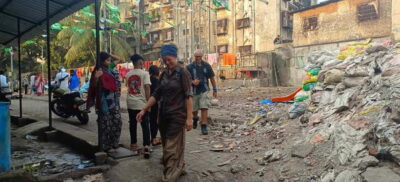
Dhobi Ghat Laundry and Dharavi Slum Tour with Local
Read our review →
Browse the lists this tour appears in