

Reviewed · DHARAVI SLUM TOURS
Mumbai Sightseeing with Dharavi Slum
Dharavi is the heart of this experience: a two-hour walk through a busy residential and working district, guided by someone who can explain daily life with care rather than turning poverty into a photo stop. I like the mix of Mumbai’s grand landmarks and ordinary working spaces, especially Dhobi Ghat and the city’s old colonial center. I also like the private format, which lets Nick or Nikesh adjust the pace and answer real questions.
The main drawback is time. Six hours sounds generous, but Mumbai traffic can eat into it, and the route covers a lot. Dharavi requires walking, while several landmark stops are brief, so this is best for a first look at the city rather than a slow museum tour.
In This Review
- Key points to know before booking
- Why Dharavi gives this Mumbai tour its purpose
- Gateway of India and the Taj Mahal Palace
- Colonial Mumbai on the drive
- Chhatrapati Shivaji Terminus in 15 minutes
- Mani Bhavan and Gandhi’s Mumbai years
- Dhobi Ghat, Mumbai’s open-air laundry
- A two-hour walk through Dharavi
- The city views from Kamala Nehru Park
- How the six-hour format works
- Is $250 a fair price for up to three people?
- Who should book this Mumbai experience?
- Should you book Mumbai Sightseeing with Dharavi Slum?
- FAQ
- How long is the Mumbai Sightseeing with Dharavi Slum tour?
- How many people can join the private tour?
- What is included in the tour price?
- Is lunch included?
- Where does the tour start and end?
- How much time is spent in Dharavi?
- Which major sights are included?
- Can I cancel for a full refund?
Key points to know before booking
- Dharavi gets about two hours: You walk with a guide to see how people live and work in one of Mumbai’s largest informal settlements.
- The tour covers major Mumbai sights: Gateway of India, Taj Mahal Palace Hotel, Chhatrapati Shivaji Terminus, Dhobi Ghat, and more.
- A private group costs $250: The price covers up to three people, making the value better for a small group than for a solo visitor.
- Nick and Nikesh are the named guides: Their role is especially important in Dharavi, where context and respectful conduct matter.
- The vehicle is air-conditioned: That is welcome in Mumbai, especially when moving between distant parts of the city.
- The day lasts about six hours: Lunch is not included, and the published start and end point is Café Coffee Day in Mahim.
Why Dharavi gives this Mumbai tour its purpose
Many city tours rush from monument to monument. This one puts Dharavi at the center. You spend roughly two hours walking with a guide through a place where homes and small businesses sit close together, giving you a direct look at the work and daily routines that are easy to miss from a car window.
The wording around Dharavi can be blunt, but the useful part of the visit is not the label. It is the chance to ask how the area functions, how people earn a living, and how homes and workshops share the same tight streets. A local guide can provide the human context that you will not get from simply passing the area on a train or bus.
This kind of walk needs good judgment. You should listen to your guide, avoid treating residents as scenery, and ask before taking photographs. The experience is strongest when you approach it as a guided conversation about Mumbai’s housing, work, and inequality, not as a spectacle.
Nick is identified as the guide in several accounts, while Nikesh is also named. One particularly useful detail is that the guide has personal ties to Dharavi, which can make the explanations more grounded. The tour provider is Dynamic Mumbai, and the private setup means you are not placed in a large mixed group.
More Dharavi walking tours:
- Dharavi slum tour in Mumbai by Female tour guides of the slum
★ 5.0 · 1,976 reviews - Mumbai: Dharavi Slum, DhobiGhat, and Dabbawallas Tour
★ 4.9 · 689 reviews - Dharavi Slum Tour
★ 5.0 · 625 reviews
Gateway of India and the Taj Mahal Palace
The Gateway of India is one of Mumbai’s essential first stops. Built to welcome King George V and Queen Mary to India, the arch faces the harbor and has become a familiar starting point for city sightseeing.
You get about ten minutes here, so expect a quick orientation and photographs rather than a long historical talk. The Taj Mahal Palace Hotel is directly beside it, creating one of Mumbai’s most recognizable pairings: a grand waterfront monument next to one of the city’s best-known hotels.
That short stop works well if you are new to Mumbai and want to see the city’s postcard center. It is less satisfying if you want quiet time around the Gateway or a longer visit inside the hotel, neither of which is promised.
Colonial Mumbai on the drive
The route takes you past a cluster of British-era buildings and public spaces. Mumbai University, founded in 1857, and the Rajabai Clock Tower offer some of the city’s most distinctive old architecture. The tower is often compared with Big Ben, though the comparison is more about its clock-tower role than its size or setting.
You also pass Watson’s Hotel, now known mainly through its ruins and its link to the Taj Mahal Palace. The story told on the tour is that Jamsetji Tata was refused entry to Watson’s Hotel, prompting him to build the Taj Mahal Hotel. It is a neat piece of Mumbai lore, though you should treat it as a story tied to the city’s memory rather than expect a full historical lecture.
The Oval Cricket Ground adds another local detail. Cricket is not just a sport in India, and seeing the open playing field helps explain how the game fits into public life. The Bombay High Court and Municipality Building continue the architectural theme, with grand facades that reflect Mumbai’s colonial past.
Traffic determines how much of this you can absorb. Some sights are drive-bys, so keep your eyes open and do not expect to enter every building.
Chhatrapati Shivaji Terminus in 15 minutes
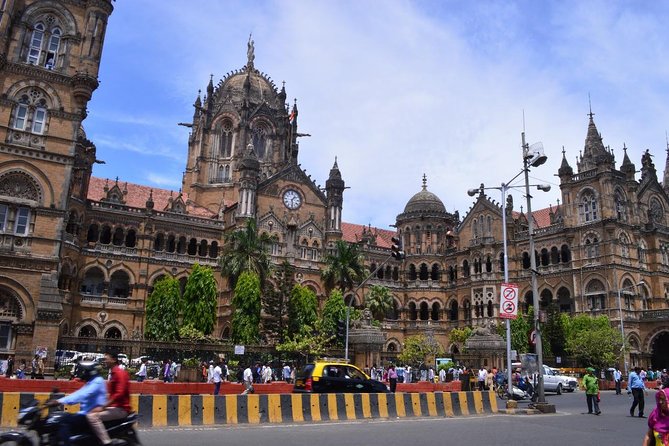
Chhatrapati Shivaji Terminus, often called CST, is a UNESCO World Heritage Site and one of Mumbai’s great train stations. Its elaborate exterior mixes Victorian Gothic design with Indian details, making it more than a transport stop.
The scheduled visit lasts about fifteen minutes. That is enough to admire the exterior and get a sense of the station’s importance, but not enough for a slow architectural study or an extended look at rail operations.
I like this stop because it connects grand design with everyday Mumbai. This is not a museum preserved for display. It remains part of the city’s working transport system. If you want a longer visit, ask in advance whether the timing can be adjusted, but the published plan gives you a short stop.
More full city sightseeing tours:
- Mumbai: Full-Day Sightseeing Tour of Mumbai
★ 4.9 · 1,822 reviews - Private Mumbai Sightseeing Tour (Traveller’s Choice Award Winner)
★ 5.0 · 1,565 reviews - Highlights of Mumbai Sightseeing Tour: TRAVELLERS CHOICE AWARDED
★ 5.0 · 915 reviews - Highlights of South Mumbai Guided Private Tour in AC Vehicle
★ 5.0 · 620 reviews
Mani Bhavan and Gandhi’s Mumbai years
Mani Bhavan Gandhi Museum provides a change of pace. Mahatma Gandhi lived here from 1917 to 1934, and the stop lasts about thirty minutes.
That half hour gives you more time indoors than most of the landmark visits. The museum adds personal and political context to the city, showing the Mumbai setting connected with Gandhi’s work. It is a useful stop for anyone interested in modern Indian history, and it keeps the day from being only about colonial buildings and famous views.
Since admission is included, you do not need to budget a separate entry fee. The visit is still fairly short, so think of it as a focused introduction rather than a full museum afternoon.
Dhobi Ghat, Mumbai’s open-air laundry
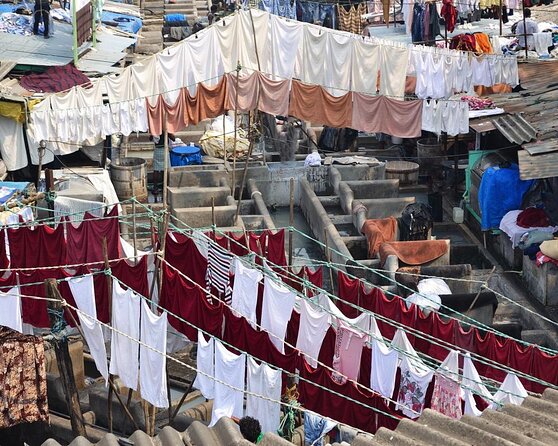
Dhobi Ghat is one of the tour’s most memorable working-city stops. It is described as the world’s largest open-air laundry, where clothes are washed in full public view.
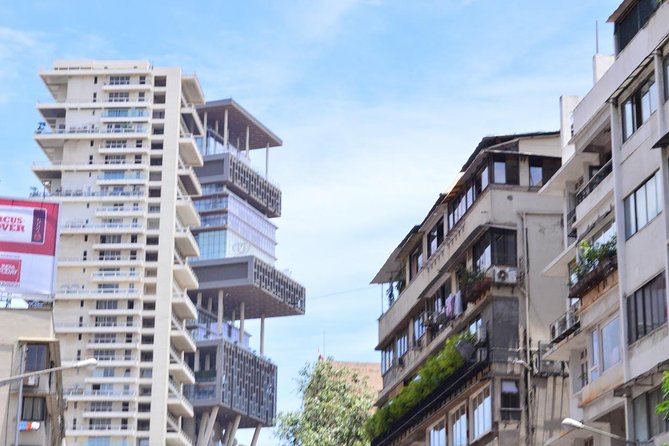
You spend about twenty minutes here. From the viewing area, you can see the scale and organization of the work, along with the striking contrast between a traditional labor system and the high-rise city around it.
This is another place where your attitude matters. Look, listen, and let the guide explain the work instead of treating the people there as a backdrop. The stop is brief, but it gives you a strong sense of how much of Mumbai’s daily service work happens out in the open.
Dhobi Ghat also acts as a bridge between the sightseeing portion and Dharavi. After seeing one specialized working district, you move on to a much larger area where homes, workshops, and local trade occupy the same dense urban space.
A two-hour walk through Dharavi
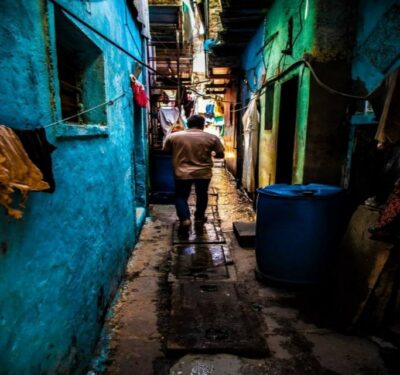
The Dharavi section is the longest single stop, and it is where your guide matters most. You walk through the area to see how people work and live. The tour description presents Dharavi as one of the largest slum areas in Asia, but the experience is more useful when you see it as a complicated neighborhood with homes, businesses, and strong economic activity.
Expect a walking tour rather than a drive-through visit. Comfortable shoes are sensible, and you should be ready for narrow routes, uneven footing, and a busy environment. The provided information does not promise a specific accessibility arrangement, so anyone with mobility concerns should ask Dynamic Mumbai before booking.
The private format is a real advantage here. With only your group of up to three, you can ask questions without holding up a coach full of people. You can also speak with the guide about subjects that matter to you, such as work, housing, schooling, or the difference between what you see in Dharavi and what headlines often suggest.
One strong reason to choose this tour is the personal connection offered by Nick or Nikesh. The guide is described as friendly, safe, and able to give an authentic account of the area. Those qualities matter more here than a long list of dates and facts.
Still, no short visit can explain all of Dharavi. You will see only one part of a large and complicated community. The two-hour walk can challenge your assumptions, but it cannot provide a complete picture of life there. That is not a fault unique to this tour. It is simply a reason to keep your expectations honest.
The city views from Kamala Nehru Park

The wider sightseeing plan also includes Kamala Nehru Park, where you can look across Mumbai’s skyline and see the Old Woman’s Shoe landmark. The stop gives you a break from street-level traffic and dense urban scenes.
Nearby Hanging Gardens sit above water tanks and close to the Tower of Silence, associated with Parsi burial customs. These stops add greenery and views to a day otherwise filled with buildings, roads, laundry, trains, and crowded working districts.
The exact time at these locations is not listed separately, so treat them as part of the driving route rather than guaranteed long visits. Marine Drive and Chowpatty Beach are also drive-past sights. You can see their place in Mumbai’s public life from the vehicle, but this is not a beach outing or a sunset walk.
How the six-hour format works
The tour runs for about six hours and uses an air-conditioned vehicle. That matters in Mumbai, where moving between southern landmarks, central neighborhoods, and Dharavi can take time. Air conditioning will not remove traffic delays, but it makes the transfers easier.
The published meeting point is Café Coffee Day, Unit No. 58, Ground Floor, Ram Mahal Building, Senapati Bapat Marg, Mahim, Mumbai. The activity ends back at the same meeting point. Pickup is offered, but because the listed start and end point is specific, confirm the exact pickup arrangement before you set out.
The schedule shows Dharavi as the first stop, followed by the Gateway of India, CST, Mani Bhavan, and Dhobi Ghat. The wider tour description also includes the colonial buildings, Marine Drive, Chowpatty Beach, Kamala Nehru Park, and Hanging Gardens. Ask the provider how the day will be ordered on your date, since Mumbai traffic and local conditions can affect the sequence.
The tour operates from 7:00 a.m. to 6:00 p.m., Monday through Sunday, according to the stated operating information. Confirmation is sent at booking, and the activity is marked suitable for most participants.
Is $250 a fair price for up to three people?
At $250 per group, the price looks quite different depending on your party size. For three people, it works out to about $83 per person. For two, it is $125 each. For a solo visitor, the same private rate is a much bigger spend.
The cost includes the air-conditioned vehicle and all fees and taxes. Lunch is not included, so plan for your own meal, though the supplied schedule does not specify where or when you will stop to eat.
I see the best value for a couple or small family that wants a private guide and transport without organizing several separate visits. You are paying for the vehicle, the guide’s time, the Dharavi walk, and a broad route across Mumbai. The value is weaker if you mainly want to see the Gateway, CST, and Marine Drive, since many of those stops are short.
The high level of personal attention is the main reason to pay the private-group rate. It is also useful for solo women who prefer a named guide and arranged transport, though you should still confirm pickup details and the day’s plan before booking.
Who should book this Mumbai experience?
I would choose this tour if you have one day in Mumbai and want both the famous sights and a closer look at how the city works. It also fits a cruise stop or short visit, since one booking account describes pickup near the cruise terminal and a full day arranged around a limited stay. Confirm that option directly, as the published meeting point is in Mahim.
This tour suits you if you:
- Want a private experience for up to three people
- Prefer a local guide to a self-guided drive
- Are comfortable walking through Dharavi
- Want Gandhi, colonial architecture, Dhobi Ghat, and major city sights in one day
- Value conversation and local explanation over long museum visits
I would look elsewhere if you want a slow, detailed architectural tour, a food-focused day, or a long visit at each landmark. You should also think carefully about Dharavi before booking. It can be eye-opening, but it asks for respect, patience, and a willingness to listen.
Free cancellation is available if you cancel at least 24 hours before the start time. Inside that window, the fare is not refunded and changes are not accepted.
Should you book Mumbai Sightseeing with Dharavi Slum?
Book it if you want a broad, private introduction to Mumbai with Dharavi as the central experience. The strongest parts are the two-hour guided walk, the chance to travel with Nick or Nikesh, the air-conditioned vehicle, and the mix of landmarks with working neighborhoods.
The main caution is pace. You will cover a lot in six hours, and several famous sights receive only ten to thirty minutes. For a first visit, that tradeoff makes sense. You get orientation, context, and a serious look at one part of Mumbai that many sightseeing routes skip.
For a small group of two or three, $250 can be reasonable. For one person, it is harder to justify unless private transport, safety, and a personal guide are your top priorities.
FAQ
How long is the Mumbai Sightseeing with Dharavi Slum tour?
The experience lasts approximately six hours.
How many people can join the private tour?
The price covers one private group of up to three people.
What is included in the tour price?
An air-conditioned vehicle, all fees, and all taxes are included.
Is lunch included?
No. Lunch is not included in the tour price.
Where does the tour start and end?
The published meeting point is Café Coffee Day, Unit No. 58, Ground Floor, Ram Mahal Building, Senapati Bapat Marg, Mahim, Mumbai. The activity ends back at the meeting point.
How much time is spent in Dharavi?
The guided walk through Dharavi lasts about two hours.
Which major sights are included?
The route includes the Gateway of India, the Taj Mahal Palace Hotel, Chhatrapati Shivaji Terminus, Mani Bhavan Gandhi Museum, Dhobi Ghat, and additional Mumbai sights such as Marine Drive, Chowpatty Beach, Kamala Nehru Park, and Hanging Gardens.
Can I cancel for a full refund?
Yes. You must cancel at least 24 hours before the experience start time for a full refund. Cancellations or changes made within 24 hours are not accepted for a refund.
Just added around Mumbai
- Temples & Vineyards: Private Tour to Nashik from Mumbai★ 4.5 · 3 reviews
- Mumbai: Private City sightseeing and Dharavi Slum Tour★ 5.0 · 3 reviews
- Mumbai: Full Day City Sightseeing with Lunch, Car & Guide★ 4.3 · 3 reviews
- Elephanta Island Private Speedboat Tour from Mumbai – 6pax★ 5.0 · 3 reviews
- Mumbai: Elephanta Island and Elephanta Caves Guided Tour★ 4.4 · 3 reviews
- Mumbai Sightseeing Tour by Public Transport with family Lunch★ 5.0 · 3 reviews
- Mumbai by Dawn★ 4.5 · 3 reviews
- Mumbai: Dhobi Ghat & Dharavi Slum tour★ 4.7 · 3 reviews
Dharavi Slum Tours, compared.
Dharavi slum tour in Mumbai by Female tour guides of the slum
Read our review →

Dharavi Slum Slumdog Millionaire Tour with a Local
Read our review →
Mumbai Slum Tour – Visit Dharavi Slum with Local Guide
Read our review →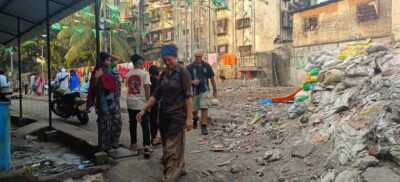
Dhobi Ghat Laundry and Dharavi Slum Tour with Local
Read our review →
Browse the lists this tour appears in