
Reviewed · DHARAVI SLUM TOURS
“Mumbai – Dharavi Slum Tour”
Dharavi is not simply a place to look at from a passing taxi. This two-hour walk takes you into a working community, where recycling centers, pottery studios, leather workshops, and markets sit alongside homes and schools. The focus is on how people live and run small businesses, not on treating the area as a spectacle.
I like the small group limit of 15 because it should make narrow lanes easier to manage and give you a better chance to ask questions. I also like the low price, $8.95, which makes this one of Mumbai’s most accessible guided introductions to Dharavi’s industries and daily life.
The main consideration is the subject itself. This is a walking tour through a crowded, working residential area, not a polished sightseeing route. You should arrive with respect, patience, and an open mind.
In This Review
- Key points to know before booking
- Why Dharavi makes a worthwhile Mumbai stop
- Starting at Third Wave Coffee in Mahim
- The commercial area and Dharavi’s recycling work
- Workshops where work and home meet
- Residential lanes, schools, and local markets
- A two-hour pace with time for questions
- What the $8.95 price really offers
- Practical points for a respectful visit
- Who will get the most from this walk
- Should you book the Dharavi tour?
- FAQ
- How long is the Dharavi Slum Tour?
- Where does the tour start and finish?
- What will I see during the walk?
- How large is the tour group?
- Is hotel pickup available?
- What is the cancellation policy?
Key points to know before booking
- Two distinct sides of Dharavi: The route covers commercial work areas first, then residential lanes, markets, schools, and local industries.
- A close look at recycling: Plastic waste management and recycling are central parts of the walk, with a visit to a plastic recycling factory.
- Only 15 people per group: The cap helps the guide keep the group together in tight passages and allows time for questions.
- Meeting point in Mahim: You meet at Third Wave Coffee on Tip Road, then return there at the end.
- Optional hotel transfers: You can upgrade to door-to-door pickup and drop-off from anywhere in Mumbai.
- Flexible cancellation: Cancel at least 24 hours before the start for a full refund, subject to the weather policy.
Why Dharavi makes a worthwhile Mumbai stop
Mumbai is often presented through grand railway stations, colonial buildings, seaside promenades, and busy markets. Dharavi shows another side of the city: a place where homes and workshops operate close together and where small-scale enterprise is part of ordinary life.
The point of this tour is not to label the community as poor and leave it at that. Your guide explains the work taking place around you, including recycling, pottery, leather production, textiles, and other manufacturing. That context matters. Without it, a narrow lane or crowded workshop can seem confusing. With it, you begin to understand how the area functions.
The tour also gives you a closer look at the entrepreneurial culture associated with Dharavi and made familiar to many people through Slumdog Millionaire. The film connection may be what first brings you here, but the real value is seeing the working community beyond a movie image.
I appreciate that the experience includes both commercial and residential areas. A route focused only on workshops would miss the human side of Dharavi. A route focused only on homes would miss the business activity that supports so many families.
More Dharavi walking tours:
- Dharavi slum tour in Mumbai by Female tour guides of the slum
★ 5.0 · 1,976 reviews - Mumbai: Dharavi Slum, DhobiGhat, and Dabbawallas Tour
★ 4.9 · 689 reviews - Dharavi Slum Tour
★ 5.0 · 625 reviews
Starting at Third Wave Coffee in Mahim
The listed meeting point is Third Wave Coffee, Unit 58, Ground, Ram Mahal, on Senapati Bapat Marg in Marinagar Colony, near Mahim. The activity ends back at this same point.
That arrangement is useful because you do not need to work out a separate return journey from an unfamiliar part of Mumbai. It also makes planning simpler if you are fitting the walk between other city stops. Public transportation is nearby, though the experience does not include standard pickup unless you select the transfer upgrade.
If you prefer not to manage Mumbai traffic or locate the meeting point, the hotel-transfer option covers pickup and drop-off from anywhere in Mumbai. That costs more than the basic tour, but it may be worth it for convenience, especially if you are staying far from Mahim or have limited time.
Arrive ready to walk. The route includes narrow alleys and working areas, so easy movement matters more than dressing for a formal sightseeing visit.
The commercial area and Dharavi’s recycling work
The walk begins in the commercial part of Dharavi. Here, the emphasis is on waste management, recycling, and manufacturing. This is one of the most useful parts of the experience because it shows how discarded material can become part of a local economy.
The plastic recycling factory is a particular highlight. You can expect to see how recycling activity fits into the wider network of small industries. The tour is not just a quick look at piles of material. The guide helps explain the work and its role in the community.
This section may be the most striking for anyone interested in cities, sustainability, or local business. Mumbai produces enormous amounts of waste, and Dharavi’s recycling work gives you a direct view of one way materials are sorted and reused.
At the same time, keep your expectations sensible. This is an operating work area, not a museum with carefully staged displays. Conditions may be crowded, noisy, or rough around the edges. That is part of the setting, but it may not suit someone looking for a relaxed walk with open spaces and photo stops.
Workshops where work and home meet
From the commercial area, the route moves toward studios and production spaces. Depending on the day’s route and access, you may see pottery, textiles, leather work, and other small-scale manufacturing.
The pottery section offers a look at a traditional craft within a modern urban setting. The leather industry shows another side of Dharavi’s production, with skilled work carried out on a local scale. Textile studios add to the picture, helping you see that Dharavi is not built around one single trade.
What I find useful here is the chance to connect the finished product with the people and processes behind it. In a large shop or market, it is easy to see only the final item. In a workshop, you get a better sense of the labor, space, and organization involved.
Your guide is important at this stage. The route can take you through areas that would be hard to locate independently, and explanations help you understand what you are seeing without making assumptions. Previous feedback particularly praised the clear explanations, good pace, and time allowed for questions. That is a strong sign for anyone who prefers conversation over a rushed procession.
A completely different way to spend a day in Mumbai:
- Mumbai: Full-Day Sightseeing Tour of Mumbai
★ 4.9 · 1,822 reviews - Private Mumbai Sightseeing Tour (Traveller’s Choice Award Winner)
★ 5.0 · 1,565 reviews - Elephanta Caves & Island Guided Private Tour
★ 5.0 · 1,327 reviews - Group Guided Walking Tour in Fort and Colaba
★ 5.0 · 1,073 reviews
Residential lanes, schools, and local markets
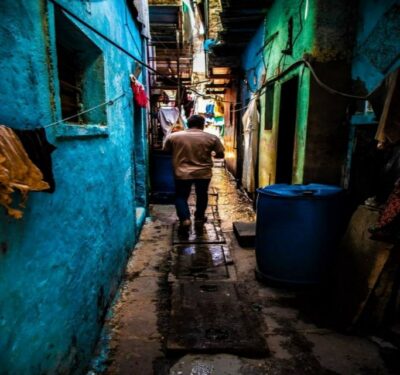
The second half enters Dharavi’s residential area. Here, the experience shifts from production to daily life. You may pass through narrow lanes, local markets, and areas near schools, seeing how ordinary routines continue beside small businesses.
This part requires the most sensitivity. People live and work here, so you are entering someone’s neighborhood, not touring an abandoned site. Follow your guide’s instructions, avoid intrusive behavior, and ask before taking photographs if photography is allowed in a particular spot.
The narrow lanes are also why the group limit matters. A group of 15 is still sizeable, but it is easier to keep together than a large coach group. The walk’s manageable size should also make it easier to hear the guide and pause for questions without blocking the route for long.
The residential section gives the commercial activity a human context. After seeing recycling and manufacturing, you can better understand the close relationship between work, family life, and available space. The tour does not turn Dharavi into a simple lesson with one message. Instead, it gives you several pieces of the area’s daily rhythm.
A two-hour pace with time for questions
The advertised duration is about two hours. That is long enough to cover both the commercial and residential sections, but short enough to fit into a busy Mumbai schedule.
A good two-hour walking tour needs a steady pace. Feedback on this experience points to an organized walk with plenty of time for questions, rather than a hurried route. That balance is important in Dharavi, where stopping too often can obstruct lanes but moving too quickly can leave you with only a blur of impressions.
You should not expect every part of Dharavi to receive equal time. The exact balance may depend on local conditions, the group’s pace, and what is operating on the day. The walk is designed as an introduction, not an exhaustive survey of every industry or neighborhood.
The group size is capped at 15. That is one of the tour’s practical strengths. Smaller groups are better suited to tight lanes, workshops, and conversations. If you are traveling with family or friends, you may also find it easier to stay together than on a large organized excursion.
What the $8.95 price really offers
At $8.95 per person, this is inexpensive for a guided Mumbai experience lasting roughly two hours. You are paying mainly for local access, route planning, and interpretation. Those elements matter in Dharavi because finding the right working areas independently would be difficult, and wandering without context could lead to misunderstandings.
The price does not include the convenience of hotel transportation unless you choose the upgrade. You also return to the meeting point rather than ending at a major Mumbai landmark. Think of the basic fare as a guided walking experience, not a complete transport package.
I see the tour as good value if you want a focused introduction to Dharavi and can reach Mahim on your own. The transfer upgrade makes the total cost less budget-friendly, but it may save time and stress if your hotel is across the city.
The tour is commonly booked around 13 days ahead. That does not mean you must reserve it that early, but it is sensible to book before your Mumbai dates are fixed, especially if you want a particular day or need hotel transfers.
Practical points for a respectful visit
Dharavi is a real community, and your attitude will shape the experience. Come to learn about local work and life, not to collect dramatic images. Listen to the guide, stay with the group, and treat homes, workshops, schools, and markets as places that deserve ordinary courtesy.
Comfortable walking clothes are sensible because the route includes narrow alleys and working areas. The experience requires good weather, and poor weather can lead to a different date or a full refund. The information provided does not specify a particular dress code, photography rule, or restroom arrangement, so ask the operator if any of those details matter to you.
Most people can participate, and the activity is near public transportation. Still, you should consider your own comfort with a two-hour walk through crowded lanes and industrial settings. This is not the best choice if you need a quiet, spacious route or dislike being close to active work areas.
Mobile tickets are accepted, and booking confirmation is provided at the time of reservation. Those small details reduce fuss on the day.
Who will get the most from this walk
I would recommend this tour to you if you want to understand Mumbai through work and community life rather than only through major monuments. It suits curious first-time visitors, photographers who can practice restraint, students of urban development, and anyone interested in recycling or small business.
It also works well for people who want a short activity. Two hours leaves room for another Mumbai attraction, a meal, or an evening plan. The return to the Mahim meeting point makes it easier to continue your day, though you will need to arrange your onward transportation.
Families may appreciate the guide’s explanations, but parents should decide if the subject and setting are right for their children. The experience may be eye-opening, yet it can also raise difficult questions about housing, work, and poverty.
I would hesitate to recommend it to someone who expects a conventional sightseeing tour. There are no grand façades, set-piece views, or polished visitor facilities here. The appeal is in the people, trades, and working streets.
Should you book the Dharavi tour?
Book it if you want a direct, guided look at one of Mumbai’s most complex communities and you are prepared to approach it with respect. The combination of recycling, pottery, leather, textiles, markets, schools, and residential lanes gives you more than a quick pass through one type of workshop.
The strongest reasons to choose it are the $8.95 price, the 15-person limit, the two-hour format, and the guide-led access to places you would struggle to find on your own. The strongest reason to think twice is the setting itself. This is a working neighborhood, and the experience may feel confronting at times.
For the best value, use public transportation to reach Third Wave Coffee in Mahim and choose the basic option. If Mumbai traffic or navigation is a concern, pay extra for hotel pickup and drop-off. Cancel at least 24 hours ahead if your plans change, since cancellations inside that window are not refundable.
FAQ
How long is the Dharavi Slum Tour?
The walking tour lasts approximately two hours.
Where does the tour start and finish?
It starts at Third Wave Coffee, Unit 58, Ground, Ram Mahal, Senapati Bapat Marg, Marinagar Colony, near Mahim in Mumbai. The tour ends back at the same meeting point.
What will I see during the walk?
The route includes Dharavi’s commercial and residential areas, with recycling and waste management, manufacturing, pottery, textiles, leather work, local markets, schools, and narrow residential lanes.
How large is the tour group?
The tour has a maximum of 15 participants.
Is hotel pickup available?
Yes. You can upgrade to include door-to-door hotel transfers from anywhere in Mumbai. The standard meeting point option begins and ends in Mahim.
What is the cancellation policy?
You receive a full refund if you cancel at least 24 hours before the local start time. Cancellations or changes made within 24 hours are not refunded or accepted. If poor weather causes the activity to be canceled, you will be offered another date or a full refund.
Just added around Mumbai
- Temples & Vineyards: Private Tour to Nashik from Mumbai★ 4.5 · 3 reviews
- Mumbai: Private City sightseeing and Dharavi Slum Tour★ 5.0 · 3 reviews
- Mumbai: Full Day City Sightseeing with Lunch, Car & Guide★ 4.3 · 3 reviews
- Elephanta Island Private Speedboat Tour from Mumbai – 6pax★ 5.0 · 3 reviews
- Mumbai by Dawn★ 4.5 · 3 reviews
- Mumbai: Elephanta Island and Elephanta Caves Guided Tour★ 4.4 · 3 reviews
- Mumbai Sightseeing Tour by Public Transport with family Lunch★ 5.0 · 3 reviews
- Mumbai Dharavi Slum Community Tour★ 5.0 · 3 reviews
Dharavi Slum Tours, compared.
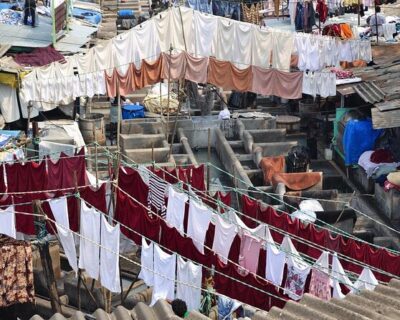
Dharavi slum tour in Mumbai by Female tour guides of the slum
Read our review →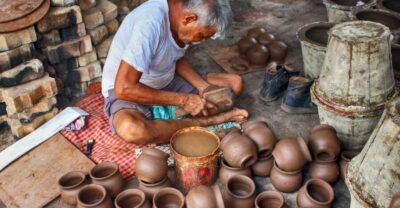
Dharavi Slum Slumdog Millionaire Tour with a Local
Read our review →
Mumbai Slum Tour – Visit Dharavi Slum with Local Guide
Read our review →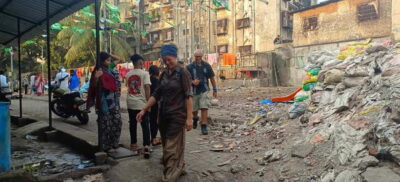
Dhobi Ghat Laundry and Dharavi Slum Tour with Local
Read our review →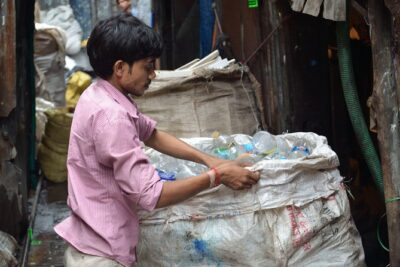
Browse the lists this tour appears in