

Reviewed · DHARAVI SLUM TOURS
Mumbai: City & Slum Full-Day Exploration
Mumbai makes the most sense when you see its grand monuments and working neighborhoods side by side. This tour gives you both: two hours walking through Dharavi with a guide, followed by the Gateway of India, Crawford Market, Dhobi Ghat, and the city’s grand colonial-era buildings.
I like the private vehicle and hotel pickup, which matter in Mumbai’s heavy traffic, and I like the chance to learn about small workshops and household businesses in Dharavi rather than simply viewing the area from a road. The main drawback is pace: six hours covers a lot, so some famous sights are photo stops rather than long visits.
In This Review
- Key points to know before booking
- Why this Mumbai tour works
- Dharavi: the tour’s most important two hours
- Dhobi Ghat and the working city
- CST, Crawford Market, and Mumbai’s old core
- Gateway of India and the city’s colonial-era landmarks
- Marine Drive, Hanging Gardens, and Kamala Nehru Park
- Mani Bhavan and Gandhi’s Mumbai
- The private car and the Mumbai traffic question
- Guide quality and the tone of the Dharavi walk
- Who should book this six-hour exploration?
- Is the $43 price good value?
- Should you book it?
- FAQ
- How long is the Mumbai city and Dharavi tour?
- Is hotel pickup and drop-off included?
- Is the tour private?
- What language does the guide speak?
- How much time is spent in Dharavi?
- Is transportation included?
- Which major Mumbai sights are included?
- Is Mani Bhavan a guided visit?
- Can I cancel for a full refund?
Key points to know before booking
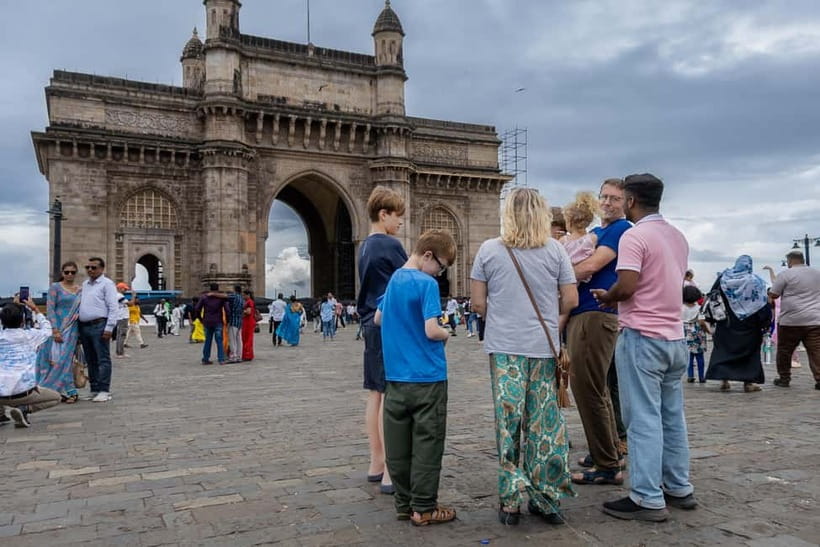
- Dharavi gets the most time: Expect a two-hour guided walk through commercial and residential areas, with local work and daily life explained along the way.
- The car saves energy: Air-conditioned transport, bottled water, and hotel pickup and drop-off make a full Mumbai circuit easier.
- A private group keeps things flexible: Guides can answer your questions and adjust the amount of time spent taking photos.
- The city sights are wide-ranging: You see Gateway of India, CST, Crawford Market, Dhobi Ghat, Marine Drive, Mani Bhavan, and more.
- Guides are a major part of the experience: Past bookings have included Sharon, Pranav, Subhan, Ruqaiyya, and Yash, with special praise for clear explanations and thoughtful handling of Dharavi.
- Expect a respectful, educational visit: The Dharavi walk focuses on work, schooling, community life, and resourcefulness, not poverty as a spectacle.
Why this Mumbai tour works
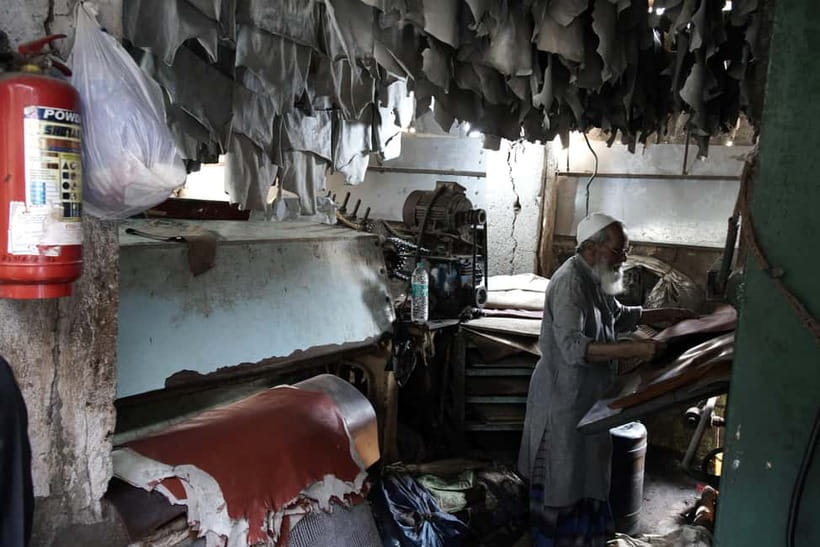
Many Mumbai sightseeing tours stick to monuments and viewpoints. This one adds Dharavi, a neighborhood often reduced to a quick photograph or a film reference. The useful part is the guided walk through both working and residential areas, where you can learn how people live, earn money, and build businesses in a crowded part of the city.
That setting calls for good manners. Keep your camera away unless your guide makes it clear that photographs are welcome, and follow the guide’s lead around residents and workers. The most valuable part of the walk is listening, not collecting dramatic images.
The tour is private, so you are not tied to a large group. That helps when you want to ask about Mumbai’s economy, local industries, or the city’s independence movement. It also helps if you take your time with photographs. One solo visitor found the guides and driver reassuring, and the private format made the day feel comfortable and safe.
At $43 per person, the price is strong if you are traveling with another person or a small private party. You are paying for a six-hour route, a vehicle, a driver, an English-speaking guide, bottled water, and entrance-related fees and taxes. The value comes less from any single monument and more from fitting several parts of Mumbai into one organized day.
More Dharavi walking tours:
- Dharavi slum tour in Mumbai by Female tour guides of the slum
★ 5.0 · 1,976 reviews - Mumbai: Dharavi Slum, DhobiGhat, and Dabbawallas Tour
★ 4.9 · 689 reviews - Dharavi Slum Tour
★ 5.0 · 625 reviews
Dharavi: the tour’s most important two hours
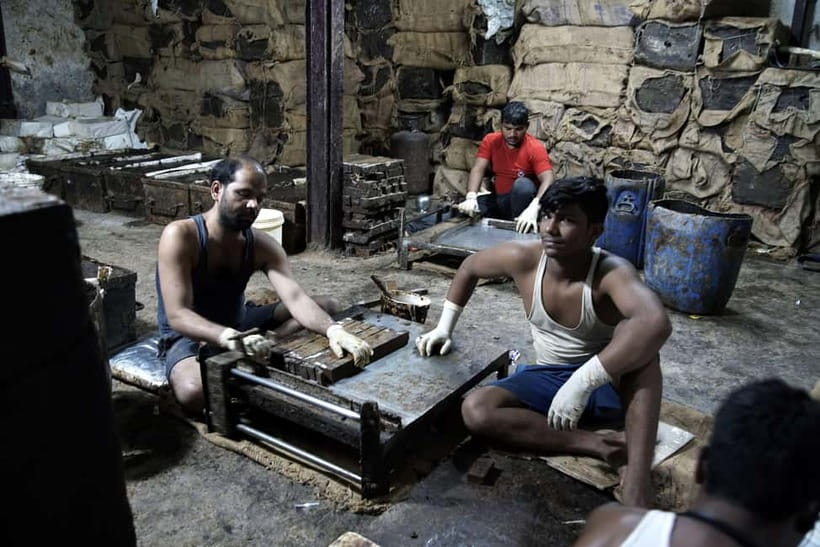
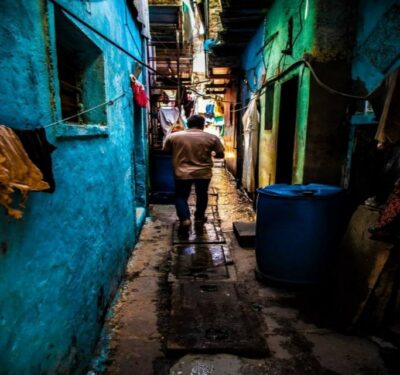
Dharavi receives the longest stop, about two hours, and it deserves that time. Your guide leads you on foot through commercial and residential sections, explaining the small-scale industries and services that support the neighborhood and the wider city.
The walk is not designed as a quick look from a vehicle. You enter the area and see how work and home life can exist close together. The focus is on livelihoods, education, local initiative, and the ways residents manage difficult conditions. That framing gives you a more useful picture than a simple poverty tour.
Guides have included Subhan and Ruqaiyya on past visits. Ruqaiyya was described as being from Dharavi and as having learned English through YouTube, while Subhan was praised for explaining the area with care and for choosing places where visitors were welcome. Those details matter because the quality of this stop depends heavily on tone and judgment.
You may pass workshops and local businesses during the walk. The supplied experience information refers to artisan work and small industries, but it does not promise a particular workshop or purchase. Think of the visit as an introduction to how the neighborhood functions, not a shopping trip.
Wear practical shoes and be ready to walk. The tour description does not give a detailed accessibility rating, so anyone who has trouble walking should ask the operator for current conditions before booking. Dharavi is also the part of the day where respectful behavior matters most. Listen to your guide, avoid intrusive photographs, and remember that people are living and working here.
Dhobi Ghat and the working city
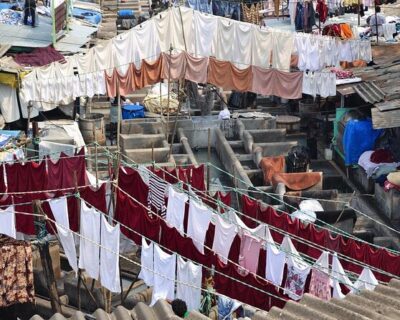
Dhobi Ghat is a brief visit and photo stop, but it adds another useful layer to the day. This open-air laundry is known for its traditional washing methods and its role in Mumbai’s economy.
The stop helps you see labor that is easy to miss when you only visit palaces, museums, and monuments. You learn how an established service operates in the open, with laundry work carried out on a large scale. Since the listed schedule calls this a photo stop and visit, do not expect a long guided session here.
That limited time is part of the tradeoff. You get a quick view of an unusual Mumbai institution, but Dharavi is where the tour gives you the fuller explanation. If you like seeing how a city works behind its postcard sights, Dhobi Ghat earns its place on the route.
CST, Crawford Market, and Mumbai’s old core

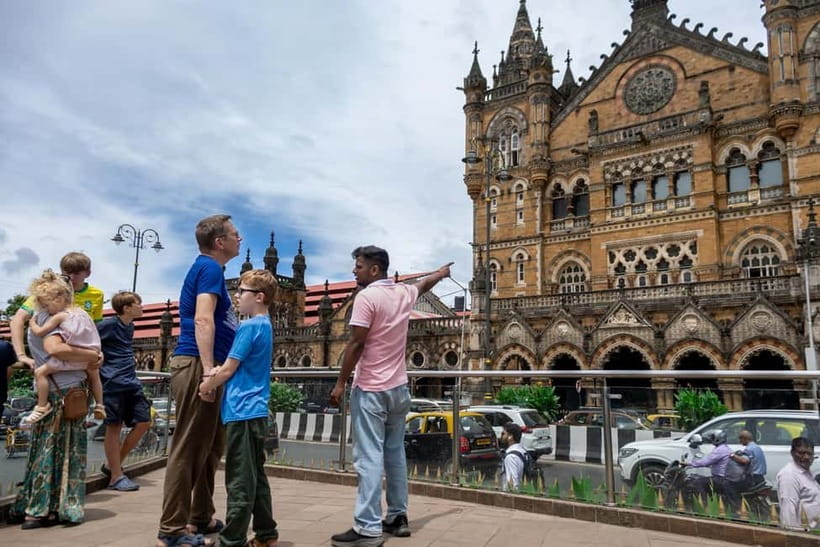
Chhatrapati Shivaji Maharaj Terminus, usually called CST, brings the grand architecture. The station is a UNESCO World Heritage Site, and the tour includes a guided visit and time for photographs.
Look up at the Victorian Gothic design rather than treating the building as a simple transport hub. The stop gives your guide a chance to explain Mumbai’s older civic identity and the role of major public buildings in the city. Because the tour is moving through many sights, the time here may be focused on the exterior and key details rather than an extended architectural study.
Crawford Market shifts the mood from monumental to practical. You walk through a market known for daily trade and a wide range of local goods. This is where you see ordinary commerce, movement, and the quick rhythm of a central Mumbai market.
Keep your expectations sensible. The activity promises a guided visit and walk, not a cooking class or dedicated shopping session. You might find distinctive products and plenty to observe, but the exact stalls and goods can change. Ask your guide questions about what you are seeing, and keep personal purchases secondary to the larger experience.
A few more Mumbai tours and experiences worth a look
- Mumbai: Full-Day Sightseeing Tour of Mumbai
★ 4.9 · 1,822 reviews - Private Full-Day Mumbai Sightseeing Tour with Dharavi Slums
★ 5.0 · 338 reviews - Private Full-Day Mumbai Sightseeing & Dharavi Slum Tour
★ 4.9 · 272 reviews - Ultimate Mumbai Full Day: Sights, Bollywood Dance, Lunch & Spices
★ 5.0 · 201 reviews
Gateway of India and the city’s colonial-era landmarks

The Gateway of India is one of Mumbai’s essential sights. The guide explains its historical significance, while the visit itself is listed as a photo stop and guided visit.
This is a good place to connect the city’s waterfront with its political and imperial past. You will likely have time to see the monument, hear the main background, and take photographs, but not the leisurely pace of a private museum visit. The value is in placing the Gateway within a larger route that also includes working neighborhoods and civic buildings.
The tour then passes through the Oval Maidan area, the University of Mumbai, Rajabai Clock Tower, and the High Court of Bombay. These stops offer more views of Mumbai’s Victorian-era architecture and public institutions. The university, clock tower, and High Court are listed as photo stops or visits, so treat them as exterior sightseeing unless your guide tells you otherwise.
This part of the route is useful for first-time visitors who want to understand how many layers of Mumbai sit close together. You move from the Gateway and waterfront to markets, railway architecture, government buildings, and open public space. It is a broad introduction rather than a specialist architecture tour.
Marine Drive, Hanging Gardens, and Kamala Nehru Park
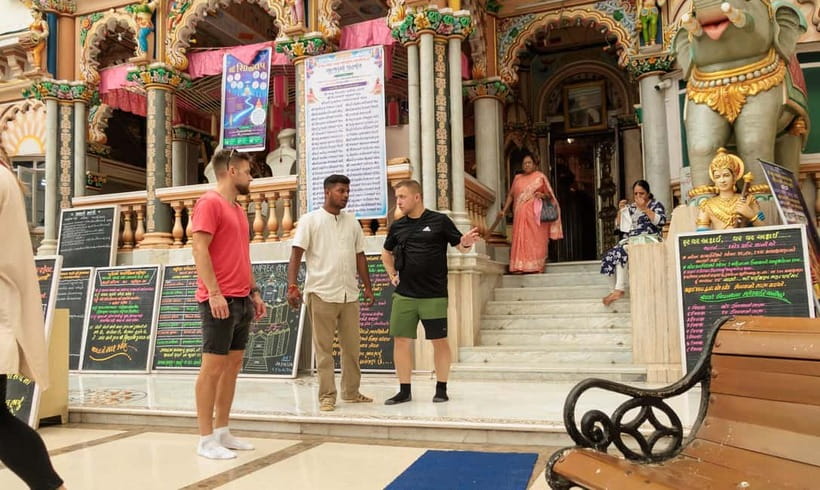
Marine Drive provides the day’s clearest change of pace. After traffic, markets, and close-packed neighborhoods, you pause along the coast for views over the Arabian Sea.
The listing describes Marine Drive as a photo stop, so plan on scenery rather than an extended promenade. Still, it is a worthwhile closing view of Mumbai’s famous shoreline. You will want your camera ready, though traffic and timing can affect how long you stay.
Hanging Gardens and Kamala Nehru Park offer higher viewpoints and a quieter setting. The tour includes visits and guided walks through both. From this area, you can enjoy views toward Marine Drive and the Arabian Sea, giving you a chance to see the city from above.
These parks are not the main reason to book the tour, but they help balance the day. You get a little greenery, open air, and distance from the streets. Since the schedule includes many stops, do not count on a long rest period. The parks are best seen as short scenic walks.
Mani Bhavan and Gandhi’s Mumbai
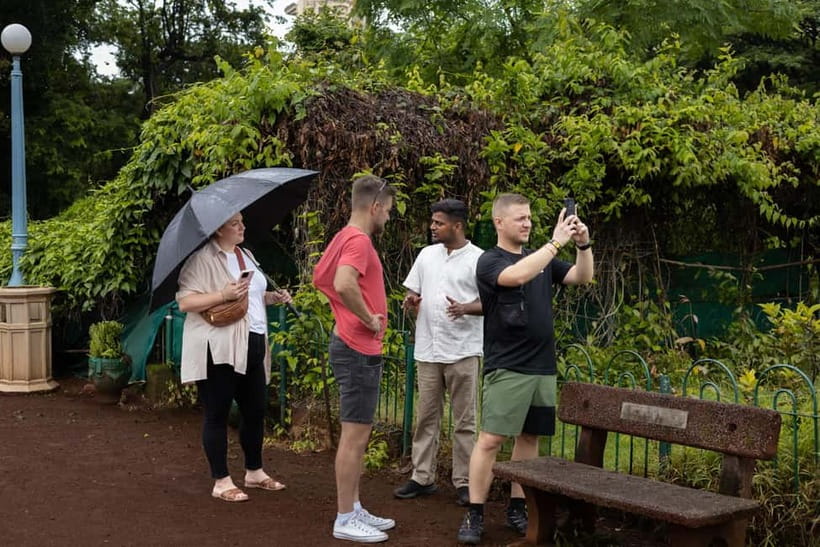
Mani Bhavan was Mahatma Gandhi’s former residence and is included as a self-guided visit. It adds an important political and personal dimension to the route.
Here you can spend time with Gandhi’s connection to Mumbai and the independence movement at your own pace. The self-guided format differs from the rest of the day, since your guide may not provide a continuous explanation inside. If this subject matters to you, save enough attention for the exhibits rather than treating Mani Bhavan as another quick photograph.
This stop also gives the day a useful thread. Mumbai is not only a port, market, railway center, and financial city. It was also a place where national political change was discussed and organized. Mani Bhavan makes that story more personal than a general monument briefing.
The private car and the Mumbai traffic question
Hotel pickup and drop-off are included, along with an air-conditioned vehicle and bottled water. In Mumbai, this is more than a minor convenience. Moving between Dharavi, south Mumbai, the market, parks, and Marine Drive can be tiring when you are handling transport yourself.
Past drivers have included Lalchanda and Saddam. They were praised for arriving on time, driving carefully, keeping the vehicle comfortable, and handling Mumbai’s traffic without adding stress. One driver even helped a visitor find lozenges at a local pharmacy, a small detail that shows how useful a private driver can be during a long day.
The exact pickup time depends on availability and the selected start time, so check that before booking. The stated duration is six hours, and the number of stops means traffic can affect the time available at each place. Your car gets you between sights, but it cannot make Mumbai’s roads move faster.
The private group arrangement is a real benefit for solo visitors, couples, and families who prefer direct questions and less waiting. You will not be sharing the day with a large coach group. That said, a private tour does not turn six hours into a slow-paced museum day. The route remains ambitious.
Guide quality and the tone of the Dharavi walk

The strongest part of this experience is the human guidance. Past bookings have paired different guides with the city and Dharavi portions, including Sharon, Pranav, Subhan, Ruqaiyya, and Yash.
Sharon and Pranav were praised for making Mumbai’s history easy to follow. Yash was noted for explaining the sights patiently, helping with photographs, and knowing good viewpoints. Subhan was singled out for combining clear explanations with sensitivity in Dharavi.
That range of guide experience is useful, but it also points to one practical fact: your guide shapes the day. A good guide will explain what you are seeing without turning residents into a display. Ask direct questions, listen closely, and tell the guide if you want more time at a landmark or fewer photographs.
The English-language format is suitable for visitors who want detailed conversation during the drive and walking portions. The Dharavi walk is where communication matters most, because the setting requires context and care.
Who should book this six-hour exploration?
I would choose this tour if you have limited time in Mumbai and want a broad first look at the city. It suits you especially well if you want both famous sights and an explanation of how people work and live in less formal neighborhoods.
It is also a good fit for solo visitors who value hotel transport and a private setting. Families and small groups may like the ability to ask questions without holding up strangers. The bottled water and air-conditioning are welcome during a packed sightseeing circuit.
I would think twice if you want long visits inside museums, a relaxed food tour, or a specialist study of architecture. Many stops are short visits or photo stops. Dharavi receives two hours, but the Gateway, CST, Dhobi Ghat, Marine Drive, and several civic landmarks share the remaining time.
Dress and act with respect, particularly in Dharavi. Comfortable shoes will help during the two-hour walk and the visits to Crawford Market, Hanging Gardens, and Kamala Nehru Park. The operator lists English as the guide language and private groups as the format.
Is the $43 price good value?
At $43 per person, this is a practical deal for a private six-hour city circuit with transport. The price includes bottled water, an air-conditioned vehicle, and all fees and taxes, along with hotel pickup and drop-off.
The value is strongest when you would otherwise need to arrange several separate rides and pay for a guide. You also gain the Dharavi walk, which is not simply a drive past the neighborhood. If you are traveling alone, the per-person price may feel higher than using public transport, but the convenience and private guidance can justify it.
The compromise is time. You are buying range, not a slow examination of every stop. Go in expecting a well-packed introduction to Mumbai, and the price makes good sense.
Should you book it?
Book this Mumbai tour if you want a direct look at the city’s contrasts, from the Gateway of India and Rajabai Clock Tower to Dhobi Ghat and Dharavi. The private car, hotel transfers, English-speaking guide, and two-hour community walk give you a lot in six hours.
Skip it if your ideal day means lingering at one museum, shopping at length, or taking a slow coastal walk. For most first-time visitors, though, the mix is useful and memorable. Treat Dharavi as a place of work and home, listen to your guide, and you will come away with a more grounded understanding of Mumbai than a monument-only tour can provide.
FAQ
How long is the Mumbai city and Dharavi tour?
The tour lasts six hours, including hotel pickup, sightseeing, the Dharavi walk, and return transportation.
Is hotel pickup and drop-off included?
Yes. Pickup and drop-off in Mumbai are included in the experience.
Is the tour private?
Yes. The activity is offered for a private group rather than a shared large-group tour.
What language does the guide speak?
The live tour guide speaks English, and English is the listed tour language.
How much time is spent in Dharavi?
The Dharavi portion lasts about two hours and includes a guided walk through commercial and residential areas.
Is transportation included?
Yes. Transportation is provided in an air-conditioned vehicle. Bottled water is also included.
Which major Mumbai sights are included?
The route includes the Gateway of India, Chhatrapati Shivaji Maharaj Terminus, Crawford Market, Dhobi Ghat, Marine Drive, Hanging Gardens, Kamala Nehru Park, and Mani Bhavan.
Is Mani Bhavan a guided visit?
Mani Bhavan is listed as a self-guided visit. The tour includes it as the former residence of Mahatma Gandhi.
Can I cancel for a full refund?
Yes. You can cancel up to 24 hours in advance for a full refund. The activity also allows you to reserve now and pay later.
Just added around Mumbai
- Temples & Vineyards: Private Tour to Nashik from Mumbai★ 4.5 · 3 reviews
- Mumbai: Private City sightseeing and Dharavi Slum Tour★ 5.0 · 3 reviews
- Mumbai: Full Day City Sightseeing with Lunch, Car & Guide★ 4.3 · 3 reviews
- Elephanta Island Private Speedboat Tour from Mumbai – 6pax★ 5.0 · 3 reviews
- Mumbai: Elephanta Island and Elephanta Caves Guided Tour★ 4.4 · 3 reviews
- Mumbai Sightseeing Tour by Public Transport with family Lunch★ 5.0 · 3 reviews
- Mumbai by Dawn★ 4.5 · 3 reviews
- Mumbai Dharavi Slum Community Tour★ 5.0 · 3 reviews
Dharavi Slum Tours, compared.
Dharavi slum tour in Mumbai by Female tour guides of the slum
Read our review →

Dharavi Slum Slumdog Millionaire Tour with a Local
Read our review →
Mumbai Slum Tour – Visit Dharavi Slum with Local Guide
Read our review →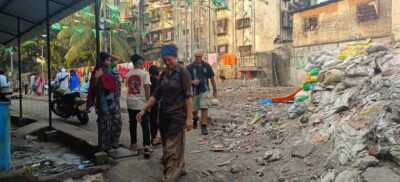
Dhobi Ghat Laundry and Dharavi Slum Tour with Local
Read our review →
Browse the lists this tour appears in