
Reviewed · DHARAVI SLUM TOURS
Dhobi Ghat (Open Air Laundry) with Dharavi Slum Guided Tour
Mumbai’s most revealing sights may be the ones built for work. At Mahalaxmi Dhobi Ghat, hundreds of washing stations form an open-air laundry serving hotels and hospitals. In Dharavi, narrow lanes lead past small workshops, recycling rooms, homes, schools, and places of worship. This tour lets you see both sides of the city’s working life in one half-day.
I like the combination of Dhobi Ghat’s old-fashioned laundry system and Dharavi’s small industries. I also like the private format, air-conditioned transport, bottled water, and a guide who can slow down or explain things in simpler English. One consideration is that Dharavi is a working residential district, not a polished sightseeing site, so the walking can feel close, crowded, and at times uncomfortable.
In This Review
- Key points
- Why this Mumbai tour feels different
- Mahalaxmi Dhobi Ghat and the work of the dhobis
- Walking through Dharavi’s working lanes
- Seeing Dharavi’s recycling process
- Leather, pottery, food, and small-space production
- Homes, schools, hospitals, and community life
- The guide and the private-tour advantage
- What the $30 price includes
- Timing, comfort, and practical concerns
- Who will get the most from this experience
- Should you book this Dhobi Ghat and Dharavi tour?
- FAQ
- How long does the Dhobi Ghat and Dharavi tour last?
- What time does the tour start?
- Where does the tour begin?
- Does the tour include pickup and drop-off?
- Is this a private tour?
- Is transportation included?
- Is food included?
- Is bottled water included?
- What happens if the tour is canceled because of bad weather?
Key points
- Dhobi Ghat dates to 1890, with dhobis washing and drying clothing and linens in the open air.
- Dharavi’s workshops show production up close, including plastic recycling, leather goods, pottery, soap, bakery work, dyeing, and embroidered garments.
- A rooftop stop gives you a broad view of the tightly packed tin-roofed settlement.
- The tour is private, so only your group takes part.
- Rakesh is one named guide, praised for clear explanations, humor, and careful support throughout the day.
- The $30 price includes useful basics, such as private transport, parking and tolls, bottled water, and pickup and drop-off.
Why this Mumbai tour feels different
Many Mumbai sightseeing trips focus on grand buildings, waterfront views, or film connections. This one takes you into places where the city earns its living. You see laundry being processed, plastic being sorted, leather goods being made, and everyday homes sharing space with workshops.
That makes the tour more than a photo stop. You get a look at the systems that keep Mumbai running, along with a clearer sense of how much work can happen in very small spaces.
The day combines a short visit to Dhobi Ghat with a longer guided walk in Dharavi. The advertised duration is about five to six hours, with roughly one hour at the laundry and two hours walking through Dharavi. The remaining time allows for driving, the transition between sites, and a refreshment break.
Since the tour begins at 10:00 am, it works well for a morning start without forcing you out of bed at dawn. The listed meeting point is Third Wave Coffee at Tip Road, Unit 58, Ground, Ram Mahal, Senapati Bapat Marg, Marinagar Colony, near Mahim station. Pickup and drop-off are offered, but you should confirm the exact arrangement when booking because the meeting point is also given as the return point.
More Dhobi Ghat and dabbawala tours:
- Mumbai: Dharavi Slum, DhobiGhat, and Dabbawallas Tour
★ 4.9 · 689 reviews - Mumbai: Dhobi Ghat Laundry and Dharavi Slum Tour with Local
★ 5.0 · 469 reviews - Mumbai: Dharavi Slum & Dhobi Ghat Laundry Tour
★ 5.0 · 352 reviews
Mahalaxmi Dhobi Ghat and the work of the dhobis
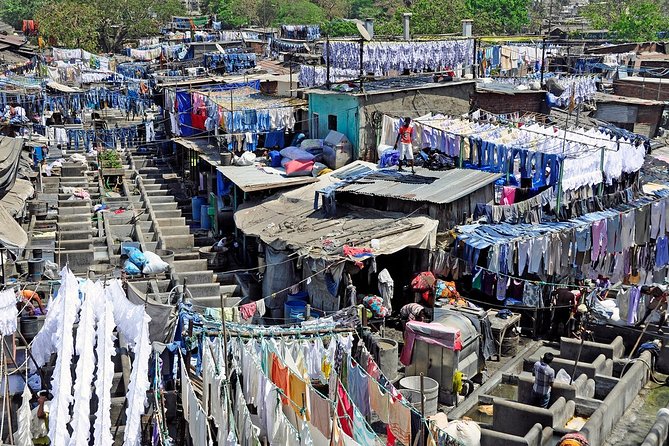
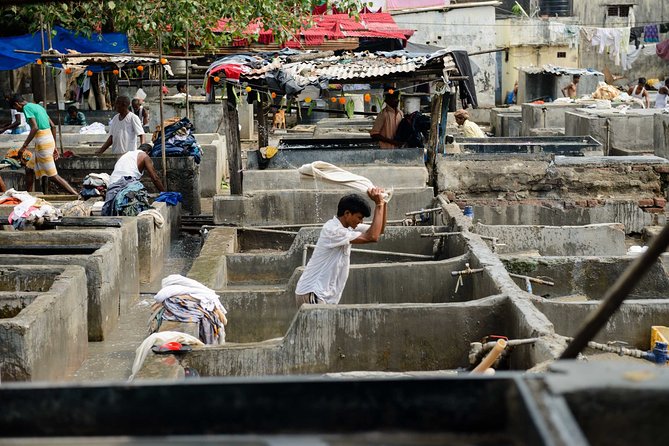
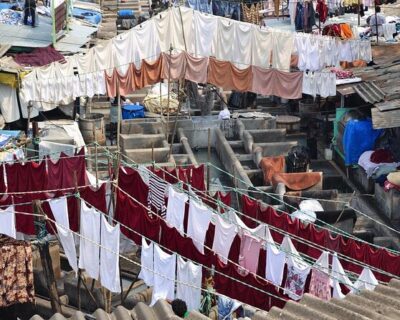
Dhobi Ghat is the first major stop, with about one hour allocated to the visit. Constructed in 1890, it is an open-air laundry where dhobis clean and dry clothes and linens for Mumbai hotels and hospitals.
The setting is striking because the laundry is arranged as a working network rather than a museum display. Washing, drying, folding, and moving linens all take place in the open. You are looking at a commercial service that has continued for well over a century.
I like this stop because it gives you a practical view of Mumbai’s history. Instead of simply hearing that traditional occupations survive in the city, you can see the work area itself and watch how a large volume of laundry is handled.
It is also a strong photography stop, but you should keep your camera use respectful. This is a workplace, not a staged show. Follow your guide’s instructions and avoid treating the people at work as scenery.
The one-hour visit is enough to understand the layout and purpose of Dhobi Ghat, though it will not provide an exhaustive account of every laundry operation. If you want a long, slow photo session, the schedule may feel short. If you want a focused introduction before moving on, the timing makes sense.
Walking through Dharavi’s working lanes
The Dharavi portion lasts about two hours and is conducted on foot. The area is described as one of Asia’s largest slum districts, but that label alone tells you very little. The walk adds detail by showing you the work, homes, and community spaces behind the headline.
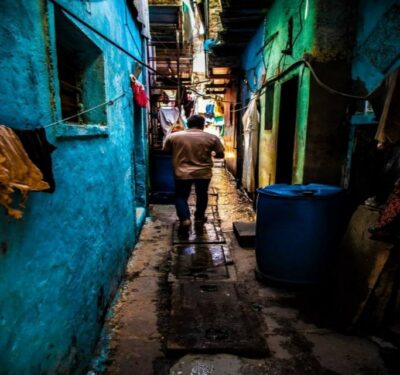
The route includes both commercial and residential areas. You might pass small production rooms, narrow alleys, homes, schools, hospitals, and community facilities in close succession. The key point is that Dharavi is not only a place of poverty. It is also a center of small-scale manufacturing and trade.
That distinction matters. Plastic recycling, leather production, pottery, embroidered clothing, soap making, baking, dyeing, and vegetable-oil recycling all form part of the local economy described for the tour. Some products are sold in India, while others reach international markets.
You should expect a close look at everyday work rather than a broad bus tour view. The walking route takes you into a compact urban area where industrial and residential activity overlap. Good footwear and a willingness to walk through small lanes will make the experience easier, although the tour information does not specify the distance or surface conditions.
Seeing Dharavi’s recycling process
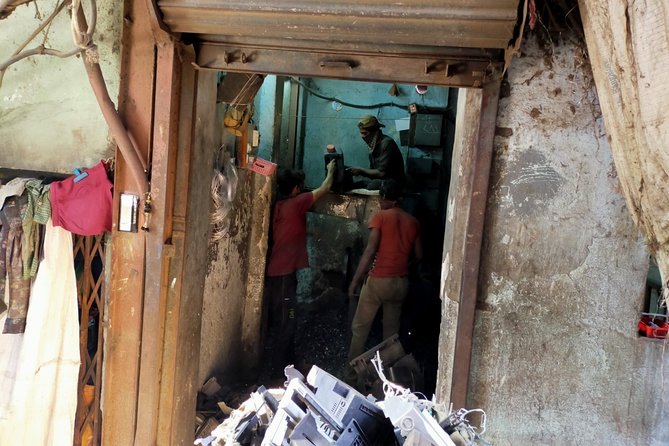
The recycling area is one of the clearest reasons to choose this tour. Plastic and metal arrive in Dharavi from around the world, and the route is intended to show the process from sorting through to finished plastic pellets.
That sequence gives you a better picture than a general statement about recycling. You can connect the discarded material with the labor needed to separate, process, and prepare it for reuse. It also shows how local businesses make use of limited space and available materials.
The tour also includes plastic recycling and the recycling of vegetable oil among its subjects. Since the walk takes place in active work areas, conditions may be basic and the surroundings industrial. That is part of the point, but it may not suit anyone looking for a tidy or carefully arranged attraction.
More Dharavi walking tours:
- Dharavi slum tour in Mumbai by Female tour guides of the slum
★ 5.0 · 1,976 reviews - Dharavi Slum Tour
★ 5.0 · 625 reviews - Dharavi Slum tour in Mumbai by local resident
★ 5.0 · 572 reviews - Mumbai: Dharavi Slum Slumdog Millionaire Tour with a Local
★ 4.9 · 529 reviews
Leather, pottery, food, and small-space production
Dharavi’s workshops cover a wide range of goods. The experience may include leather industries, pottery, soap making, bakeries, color dyeing, and embroidered garments.
I find this part useful because it shows how entrepreneurship works at a very local level. A tiny room can serve as a workshop, storage area, and business base. The tour description emphasizes that these products are made innovatively in small spaces, which is one of the most memorable ideas to carry away from the walk.
The range also prevents the visit from becoming a single-subject recycling tour. You see several types of work and get a sense of how different trades fit into the same district.
Exact workshop access can depend on the route and conditions on the day. The supplied details confirm the types of industries included, but they do not promise that every listed activity will be operating during your visit. Think of the list as the subjects the walk covers, not a guarantee of a full demonstration at every location.
Homes, schools, hospitals, and community life
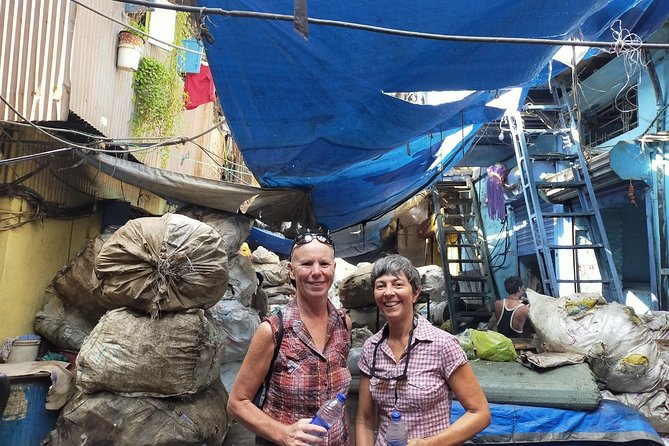
The walk also enters the residential side of Dharavi. You may see homes alongside workshops, as well as schools and hospitals. That change from production areas to family and community spaces helps you understand the district as a lived-in neighborhood.
One unusual detail included in the route is a Muslim community making a shrine for Hindus. It is a small example of the shared spaces and connections that can exist in a dense neighborhood with different religious communities.
A rooftop visit is another planned highlight. From above, you can see how far the tin-roofed hutments extend and how closely the buildings sit together. The view helps you understand the scale of Dharavi, although it should not reduce the neighborhood to a photograph. The rooftop perspective is useful precisely because the walking route shows the people and activities below.
This is where a respectful guide matters most. A named guide, Rakesh, is praised for being pleasant, informative, and attentive from the meeting point onward. Another account describes a guide who adjusted his English, used simpler words, and spoke more slowly for the group. Those details are valuable if English is not your first language.
The guide and the private-tour advantage
This is a private activity, meaning only your group takes part. That can make a real difference in Dharavi, where a large group would be harder to manage in narrow lanes and less pleasant for residents.
A private guide can also adjust the pace and explain a point again when needed. The available feedback specifically highlights clear meeting instructions, steady accompaniment, humor, and explanations adapted to the group’s English level.
The guide is listed as a local English speaker. Rakesh is one guide named in the feedback, but you should not assume he will lead every departure unless the operator confirms it. The important practical advantage is the local guide format, especially for a place where context and courtesy matter.
The tour is not a lecture delivered from a vehicle. At least two hours involve walking, and the guide’s role is to explain what you are seeing as the route moves through commercial and residential areas. If you prefer independent wandering, this may feel structured. If you want help understanding what lies behind the activity around you, the format is a good fit.
What the $30 price includes
At $30 per person, the tour offers reasonable value because several costs are bundled together. You receive a local English-speaking guide, private transportation in an air-conditioned vehicle, bottled water, pickup and drop-off, tolls, parking fees, and admission for the two main stops.
The price is especially useful if you would otherwise need to arrange separate transport between Mahalaxmi and Dharavi. Mumbai traffic can make short distances take time, so having transport included removes one planning problem.
You still pay separately for meals and personal expenses. A refreshment is provided during the tour to help with heat and dehydration, but the information does not promise lunch. Eat before departure or plan to arrange food separately if you need a full meal during the five to six hours.
The private format also changes the value calculation. A cheaper group tour might cost less per person, but this option gives your own group the guide’s attention and avoids being combined with strangers. For couples, families, or friends who want to ask questions freely, that can justify the price.
The experience is often booked well ahead, with an average booking lead time of 41 days. That does not mean every date sells out, but it is a useful signal to reserve early if your Mumbai schedule is fixed.
Timing, comfort, and practical concerns
The listed start time is 10:00 am, and the day lasts about five to six hours. The Dhobi Ghat visit takes about an hour, while the Dharavi walk takes about two hours. Driving and the refreshment break fill out the rest of the schedule.
Bottled water and an air-conditioned vehicle are welcome in Mumbai’s heat. You will still spend a substantial part of the day on foot, so carry water beyond the included bottle if you need more and choose comfortable shoes.
The experience requires good weather. If poor weather causes cancellation, you are offered another date or a full refund. You can cancel for a full refund up to 24 hours before the start time, but changes or cancellations inside that period are not accepted.
Most people can participate, according to the supplied details. The tour information does not provide specific accessibility details, walking distance, or restroom information. If those points affect your decision, ask Shreeji Tours n Travels before paying.
Who will get the most from this experience
I would choose this tour if you want to understand Mumbai through work, local business, and daily life rather than only through famous monuments. It suits first-time visitors who want two distinctive stops without arranging transport themselves.
It is also a good match for photographers, provided you are comfortable taking pictures carefully and following local guidance. Dhobi Ghat offers strong visual detail, while the rooftop visit provides a wide view over Dharavi.
Families with older children may find the recycling and craft work memorable, though parents should decide if the close quarters and residential setting are appropriate for their group. The private format helps because the guide can explain things at your pace.
I would think twice if you dislike walking, prefer formal attractions, or feel uneasy visiting a low-income residential neighborhood. Dharavi should be approached with respect and curiosity, not as a spectacle. The tour’s focus on businesses, community spaces, and skills gives it more substance, but your attitude still shapes the experience.
Should you book this Dhobi Ghat and Dharavi tour?
Book it if you want a practical, people-focused view of Mumbai and value having transport and a private guide handled for you. Dhobi Ghat’s long-running laundry operation and Dharavi’s small industries make a strong pair: one shows an old commercial system, while the other shows present-day production and enterprise.
The $30 price is fair for the included vehicle, guide, admission, water, parking, tolls, and refreshment. The main tradeoff is comfort. You will walk through active working and residential areas, and the day may feel intense rather than easygoing.
Before booking, confirm the pickup details and ask if Rakesh is available if his style matters to you. With that small check made, this is a useful choice for seeing a side of Mumbai that a standard sightseeing route rarely explains.
FAQ
How long does the Dhobi Ghat and Dharavi tour last?
The activity lasts approximately five to six hours. About one hour is allocated to Dhobi Ghat, and about two hours are spent on the guided Dharavi walk.
What time does the tour start?
The listed start time is 10:00 am.
Where does the tour begin?
The specified meeting point is Third Wave Coffee, Tip Road, Unit 58, Ground, Ram Mahal, Senapati Bapat Marg, Marinagar Colony, near Mahim station, Mumbai, Maharashtra 400016.
Does the tour include pickup and drop-off?
Yes. Pickup and drop-off are included, and the stated end point is back at the meeting point. Confirm the exact pickup arrangement with the operator.
Is this a private tour?
Yes. Only your group participates in the private activity.
Is transportation included?
Yes. Private transportation in an air-conditioned vehicle is included, along with toll taxes and parking fees.
Is food included?
No meals are included. A refreshment is provided during the tour, and personal expenses are not covered.
Is bottled water included?
Yes. Mineral water is included.
What happens if the tour is canceled because of bad weather?
Because the experience requires good weather, you will be offered a different date or a full refund if poor weather causes cancellation.
Just added around Mumbai
- Temples & Vineyards: Private Tour to Nashik from Mumbai★ 4.5 · 3 reviews
- Mumbai: Private City sightseeing and Dharavi Slum Tour★ 5.0 · 3 reviews
- Mumbai: Full Day City Sightseeing with Lunch, Car & Guide★ 4.3 · 3 reviews
- Elephanta Island Private Speedboat Tour from Mumbai – 6pax★ 5.0 · 3 reviews
- Mumbai: Elephanta Island and Elephanta Caves Guided Tour★ 4.4 · 3 reviews
- Mumbai Sightseeing Tour by Public Transport with family Lunch★ 5.0 · 3 reviews
- Mumbai by Dawn★ 4.5 · 3 reviews
- Mumbai Scavenger Hunt and Sights Self-Guided Tour★ 5.0 · 3 reviews
Dharavi Slum Tours, compared.
Dharavi slum tour in Mumbai by Female tour guides of the slum
Read our review →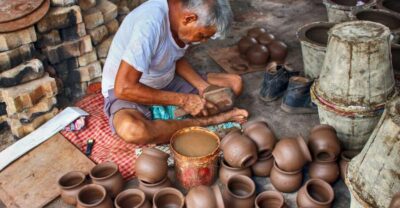
Dharavi Slum Slumdog Millionaire Tour with a Local
Read our review →
Mumbai Slum Tour – Visit Dharavi Slum with Local Guide
Read our review →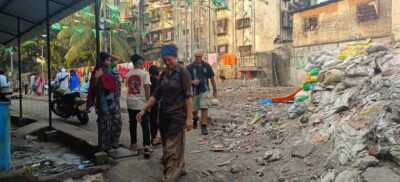
Dhobi Ghat Laundry and Dharavi Slum Tour with Local
Read our review →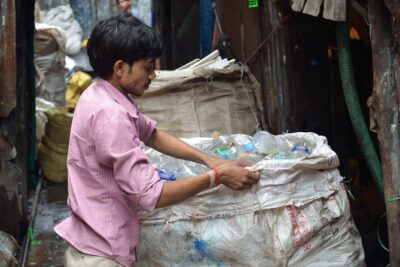
Browse the lists this tour appears in