
Reviewed · DHARAVI SLUM TOURS
Dharavi Tour & Pottery Workshop
Dharavi is more than a label on a map. This three-hour walk takes you into a working part of Mumbai, where recycling, pottery, soap-making, leather work, and food production share close quarters with homes, temples, mosques, churches, and colorful murals. You see people earning a living, not a staged tourist display.
I like two things right away: the route gives you a look at small businesses that are hard to find on your own, and the guide helps place Dharavi in the wider story of Mumbai. Water is provided, and a cold drink at the end gives you a useful pause after walking.
The main consideration is privacy and comfort. Dharavi is a residential neighborhood as well as a business district, so you need to follow your guide’s lead, avoid intrusive photography, and expect narrow, busy streets. The tour can include up to 25 people, which may feel less personal than a tiny walking group.
In This Review
- Key points to know before you book
- Why Dharavi rewards a closer look
- Starting at Mahim Junction Railway Station
- Seeing Dharavi’s working economy
- Residential lanes, murals, and religious buildings
- The final stop at Reality Tours and Travel
- What the $29.09 price really buys
- Practical advice for a better walk
- Who should book this Dharavi experience?
- Cancellation and booking details
- Should you book it?
- FAQ
- Where does the Dharavi tour start?
- Where does the tour end?
- How long does the experience last?
- Is hotel pickup included?
- What should I wear?
- What is included in the price?
- What businesses might I see in Dharavi?
- Will the tour visit residential areas?
- How large can the group be?
- Can I cancel for a full refund?
Key points to know before you book
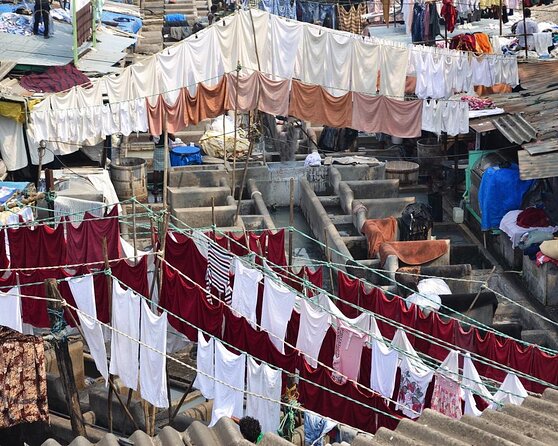
- Working businesses, not a sightseeing set: See recycling, pottery-making, embroidery, baking, soap production, leather tanning, and poppadom-making as part of Dharavi’s everyday economy.
- A walking tour with a serious purpose: The route introduces both commercial and residential areas, helping you understand how homes and workshops operate side by side.
- Mahim Junction is both the start and finish: You arrange your own way to the railway station, then the guide can help with a taxi or other transport afterward.
- A useful drink break is included: You receive bottled water while walking and a soft drink at Reality Tours and Travel.
- The tour adds community context: At the final stop, you learn how money connected with the organization is put back into local projects.
- Good value for a half-day in Mumbai: At $29.09 per person, the price is modest for a guided three-hour visit, especially if you value local context over grand monuments.
Why Dharavi rewards a closer look
Many first-time visitors to Mumbai spend their days around the Gateway of India, Colaba, Marine Drive, and grand railway architecture. Those places matter, but they do not show the full city. Dharavi offers a different view: one built around work, migration, family life, and practical enterprise.
The neighborhood is often described in blunt terms as one of Asia’s largest slum areas. This tour takes a more useful approach. It presents Dharavi as Mumbai’s beating heart, a place where people from many parts of India have made homes and businesses.
That change in viewpoint matters. You are not simply passing through poor streets to take pictures. You are learning how people create income in difficult conditions, how materials are reused, and how different religious and cultural communities live close together.
I find the business focus especially valuable. A short walk past a recycling center or soap factory can tell you more about urban life than a broad lecture about Mumbai. You see the practical side of the city, where labor, space, and resources are carefully managed.
More Dharavi walking tours:
- Dharavi slum tour in Mumbai by Female tour guides of the slum
★ 5.0 · 1,976 reviews - Mumbai: Dharavi Slum, DhobiGhat, and Dabbawallas Tour
★ 4.9 · 689 reviews - Dharavi Slum Tour
★ 5.0 · 625 reviews
Starting at Mahim Junction Railway Station
The meeting point is Mahim Junction Railway Station, and the tour returns there at the end. That is convenient if you are using Mumbai’s public transport, but you need to plan your route to the station yourself because hotel or residence pickup is not included.
Arrive ready to walk. Comfortable shoes are not a minor suggestion here. The route lasts about three hours and includes commercial lanes, residential areas, and stops where you may spend time standing while the guide explains what you are seeing.
The station meeting point also gives the tour a practical beginning. You start from a recognizable transport hub rather than trying to locate an obscure doorway inside the neighborhood. At the end, your guide can help arrange a taxi or other transport to your next destination.
The maximum group size is 25 people. That is manageable for an organized walking tour, though you should not expect the quiet, flexible rhythm of a one-to-one visit. If the group is full, stay near the guide so you can hear explanations and keep up through the streets.
Seeing Dharavi’s working economy
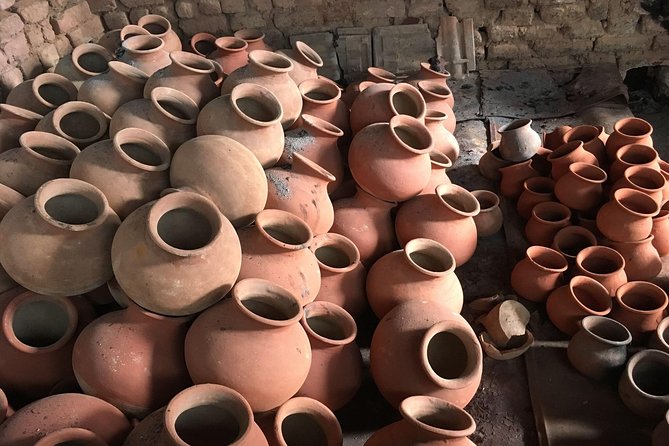
The heart of the walk is the business district. Dharavi is known for a wide range of small-scale industries, and the route may include recycling, pottery-making, embroidery, baking, soap production, leather tanning, and poppadom-making.
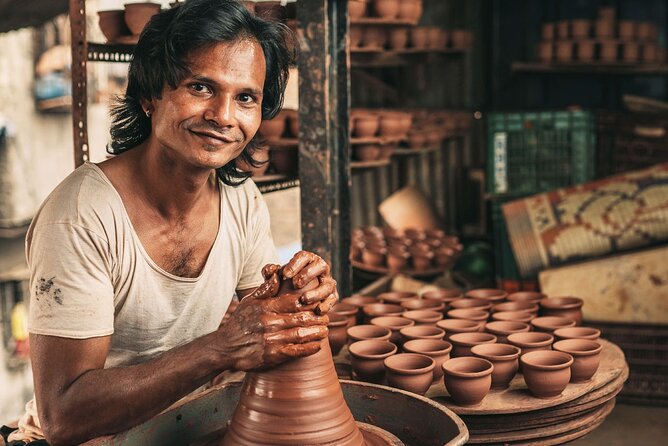
Each activity offers a different lesson. Recycling shows how discarded material can become a source of income. Pottery-making points to a craft tradition that depends on skill, repetition, and careful use of limited space. A soap factory reveals another side of local production, where everyday goods are made close to the people who use them.
Embroidery and leather work help you notice the hands behind products that may otherwise seem anonymous in shops. Bakeries and poppadom-making connect the neighborhood to food businesses and household routines. You are seeing a local economy with many branches, not one single industry.
The tour title includes a pottery workshop, but the supplied details describe pottery-making as one of the activities you visit. Do not assume that you will receive a long hands-on pottery lesson unless the operator confirms it before booking. The dependable expectation is a guided look at pottery work within a larger Dharavi route.
This variety is one reason I think the tour offers good value. You are not paying for one narrow stop. You are using a single morning or afternoon to understand several forms of work that would be difficult to locate independently.
Residential lanes, murals, and religious buildings
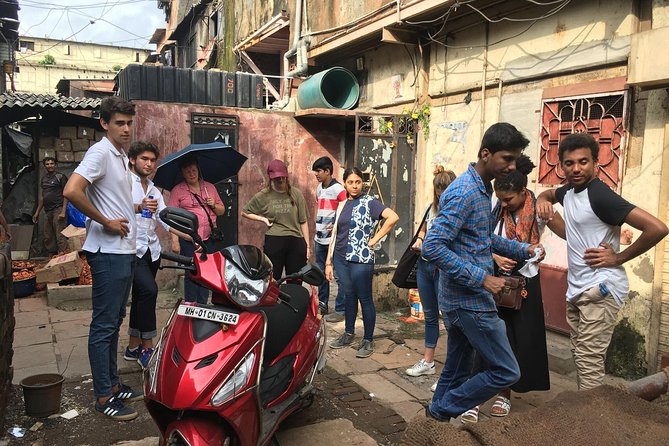
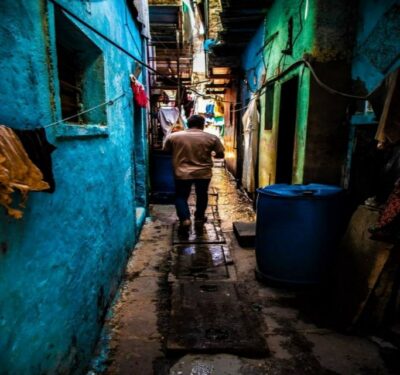
The route also enters residential areas. This changes the tone of the visit. Workshops and factories show how people earn money, while the homes and lanes show where daily life takes place.
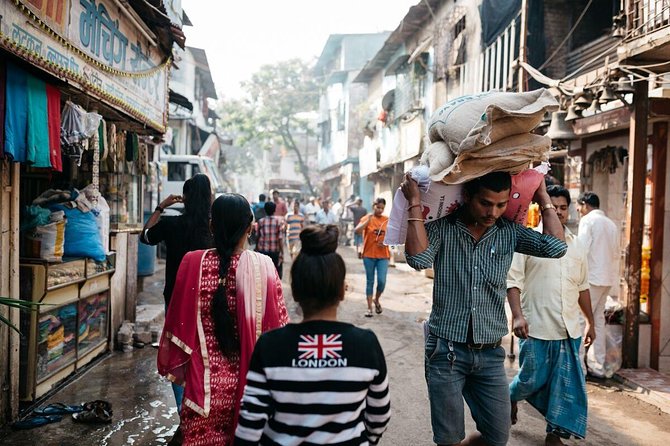
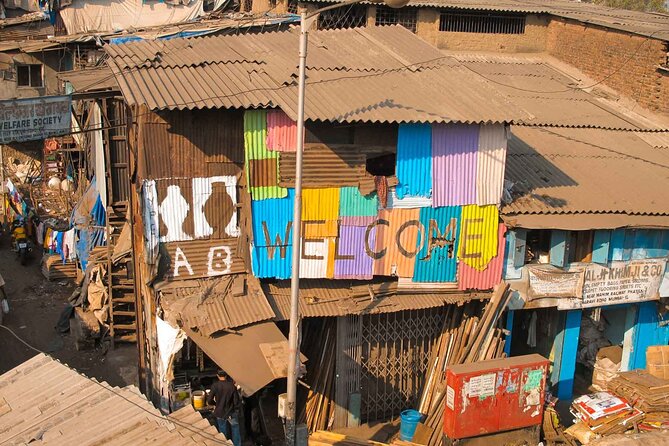
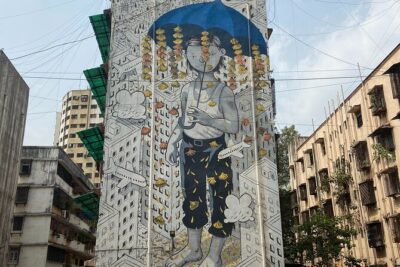
Dharavi is home to people from across India, and that mix can be seen in the neighborhood’s religious and artistic spaces. Temples, mosques, churches, and pagodas stand near one another. Street art adds color to the residential areas and gives you another way to read the community.
This part of the walk requires tact. You are moving through people’s homes and ordinary routines, not a museum. Listen to your guide about where to pause, how to behave, and when photography may be inappropriate. Keep your camera put away unless you are certain it is welcome.
I appreciate that the route includes residential Dharavi rather than limiting itself to businesses. Without this portion, you might leave with a narrow idea of the area as a place of production. With it, you get a fuller sense of a neighborhood where homes, faith, work, and art overlap.
At the same time, this may be the least comfortable part for some people. Streets can feel close and crowded, and you may be aware that your presence is unusual. A respectful attitude is more important than getting a perfect photograph.
A completely different way to spend a day in Mumbai:
- Mumbai: Full-Day Sightseeing Tour of Mumbai
★ 4.9 · 1,822 reviews - Private Mumbai Sightseeing Tour (Traveller’s Choice Award Winner)
★ 5.0 · 1,565 reviews - Elephanta Caves & Island Guided Private Tour
★ 5.0 · 1,327 reviews - Group Guided Walking Tour in Fort and Colaba
★ 5.0 · 1,073 reviews
The final stop at Reality Tours and Travel
After roughly two and a half hours in Dharavi, the tour moves to Reality Tours and Travel for about 20 minutes. You receive a soft drink and hear how funds connected with the organization are reinvested in the community.
That short stop serves two purposes. First, it gives you time to cool down and ask questions after the walk. Second, it explains the purpose behind the tour and how the organization links tourism with local support.
The cold drink is a small benefit, but it is welcome after walking in Mumbai. Bottled water is also included during the tour, which means you do not need to depend on finding a shop during the route.
This closing conversation can help you think about the experience in practical terms. Guided visits to working neighborhoods raise questions about tourism, privacy, and money. Learning how funds are used does not remove every concern, but it gives you important context before you decide if this kind of tour fits your travel style.
What the $29.09 price really buys
At $29.09 per person, this is reasonably priced for a guided experience lasting about three hours. You are paying for an English-speaking local guide, route planning, access to a part of Mumbai that can be hard to approach alone, bottled water, and a cold drink.
The value is strongest if you want explanation and structure. Dharavi is not a place where simply wandering with a map guarantees a meaningful experience. A guide can connect the businesses, homes, religious buildings, and street art into a story that is easier to understand.
The price also compares well with a standard attraction visit because the experience gives you direct contact with the city’s working life. It does not replace Mumbai’s famous sights, and you should not book it expecting polished interiors or a formal museum setting. Its value comes from access, interpretation, and time spent walking through a real neighborhood.
Group discounts may make it more appealing for families or larger parties. Since the group can reach 25 people, ask yourself how much personal attention you want. A larger group keeps the price down, but it may limit spontaneous questions and make it harder to linger at a particular stop.
Practical advice for a better walk
Wear shoes that are comfortable for several hours. Sandals or stiff shoes may become tiring, especially if you are not used to walking on uneven urban streets.
Dress for warm conditions and bring only what you need. A small bag is easier to manage in narrow lanes. Water is supplied, and a cold drink is included later, but you should still prepare for a walking tour in Mumbai’s heat.
Treat photography as a privilege, not a right. Ask before photographing people, homes, workers, or private areas. The most respectful way to experience Dharavi is to pay attention to the guide and the surroundings rather than trying to collect images of every scene.
Plan your onward transport before the tour ends. The guide can help with a taxi or other transport, but your hotel or residence transfer is not included. Since the walk starts and ends at Mahim Junction, you have a clear point from which to continue.
The tour is confirmed at booking, uses a mobile ticket, and is near public transportation. Most people can participate, but you should be comfortable walking for the full duration and managing a busy neighborhood environment.
Who should book this Dharavi experience?
I would choose this tour if you want to understand Mumbai beyond its grand buildings and waterfront views. It suits you if you enjoy local economies, urban neighborhoods, social context, and walking tours that ask you to look carefully at everyday life.
It is also a good fit if you are uneasy about visiting Dharavi alone. The guide provides a planned route and helps you approach businesses and residential areas with more awareness than you might have on your own.
Families with older children may find the business visits educational, particularly the recycling and pottery stops. The tour can also work well for first-time visitors who want a structured introduction to a neighborhood they might otherwise skip.
I would think twice if you want a relaxed sightseeing outing with frequent seats, wide paths, and guaranteed photo opportunities. This is a working residential area, not an attraction designed around visitor comfort. You need patience, good shoes, and a willingness to observe respectfully.
Cancellation and booking details
You can cancel at least 24 hours before the local start time for a full refund. Cancellations or changes made within 24 hours are not refunded or accepted, so check your Mumbai schedule before confirming.
The tour is often booked about nine days ahead. That is useful planning information if your dates are fixed, especially if you want a particular departure time or are traveling with a group.
Should you book it?
Book this Dharavi tour if you want a grounded look at how Mumbai works at street level. The combination of small businesses, residential lanes, street art, religious buildings, and community funding gives you more than a quick walk through an unusual neighborhood.
The strongest reasons to go are the range of businesses and the English-speaking guide who can answer questions as you move. The strongest reasons to hesitate are the walking demands, the possible 25-person group, and the need to behave carefully in residential spaces.
At $29.09, I consider it a good buy for an educational half-day, provided you understand what you are booking. Come for context rather than spectacle, wear comfortable shoes, and let Dharavi be a neighborhood to understand, not a backdrop to collect.
FAQ
Where does the Dharavi tour start?
The tour starts at Mahim Junction Railway Station in Mumbai, Maharashtra.
Where does the tour end?
The tour ends at Mahim Junction Railway Station. The guide can help arrange transport, such as a taxi, to your next destination.
How long does the experience last?
The experience lasts approximately three hours. The Dharavi portion takes about two hours and 30 minutes, followed by about 20 minutes at Reality Tours and Travel.
Is hotel pickup included?
No. Hotel or residence pickup and drop-off are not included. You need to reach Mahim Junction Railway Station on your own.
What should I wear?
Wear comfortable shoes because this is a walking tour. The route includes business areas and residential lanes.
What is included in the price?
The price includes a local English-speaking guide, bottled water, and a cold drink.
What businesses might I see in Dharavi?
The tour may include recycling, pottery-making, embroidery, bakery work, soap production, leather tanning, poppadom-making, and other local businesses.
Will the tour visit residential areas?
Yes. The route includes residential areas and street art, along with temples, mosques, churches, and pagodas in Dharavi.
How large can the group be?
The maximum group size is 25 people.
Can I cancel for a full refund?
Yes. You can cancel at least 24 hours before the experience start time for a full refund. Cancellations or changes made less than 24 hours before the start time are not refunded or accepted.
Just added around Mumbai
- Temples & Vineyards: Private Tour to Nashik from Mumbai★ 4.5 · 3 reviews
- Mumbai: Private City sightseeing and Dharavi Slum Tour★ 5.0 · 3 reviews
- Mumbai: Full Day City Sightseeing with Lunch, Car & Guide★ 4.3 · 3 reviews
- Elephanta Island Private Speedboat Tour from Mumbai – 6pax★ 5.0 · 3 reviews
- Mumbai Sightseeing Tour by Public Transport with family Lunch★ 5.0 · 3 reviews
- Mumbai by Dawn★ 4.5 · 3 reviews
- Mumbai: Elephanta Island and Elephanta Caves Guided Tour★ 4.4 · 3 reviews
- Mumbai Dharavi Slum Community Tour★ 5.0 · 3 reviews
Dharavi Slum Tours, compared.
Dharavi slum tour in Mumbai by Female tour guides of the slum
Read our review →
Dharavi Slum Slumdog Millionaire Tour with a Local
Read our review →
Mumbai Slum Tour – Visit Dharavi Slum with Local Guide
Read our review →
Dhobi Ghat Laundry and Dharavi Slum Tour with Local
Read our review →
Browse the lists this tour appears in