
Reviewed · DHARAVI SLUM TOURS
Dharavi Stories Unfold
Dharavi is more than a place you glimpse from a car window. This three-hour walking tour takes you into one of Mumbai’s most talked-about communities, where pottery, leather work, recycling, and other small industries help drive daily life. I like the focus on working Dharavi, not just the image made famous by a film.
I also like the low price of $9.06, which makes a guided visit accessible, and the chance to hear local stories from guides such as Sam, Max, Sarfaraz Ali, Rohan, and Ali. The main consideration is that this is a walking tour through a dense urban area, so you need moderate physical fitness and a respectful attitude toward the people who live and work here.
In This Review
- Key points before you book
- Why Dharavi is worth seeing with a guide
- Meeting at Third Wave Coffee near Mahim
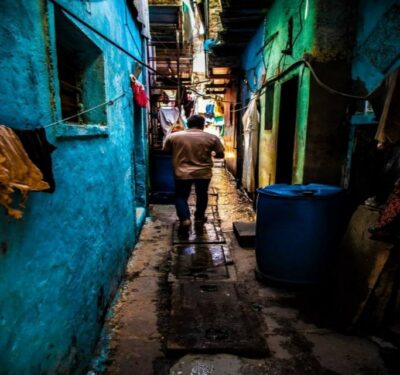
- Walking into Dharavi’s working streets
- The human side of the experience
- What the three hours may feel like
- A closer look at the industries
- Pottery and hands-on production
- Leather work
- Recycling
- Price, group size, and real value
- Who will get the most from this tour
- Practical details that affect your choice
- Should you book Dharavi Stories Unfold?
- FAQ
- How long does the Dharavi tour last?
- Where does the tour begin?
- Where does the tour finish?
- Is bottled water included?
- How many people can join the tour?
- Can I cancel for a full refund?
Key points before you book
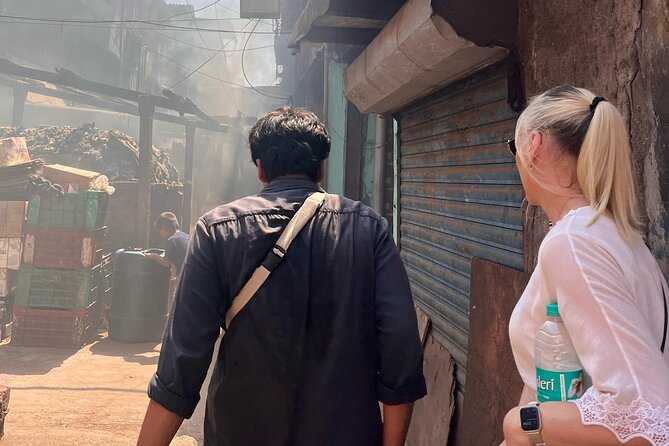
- Three hours inside Dharavi: The whole experience is devoted to the neighborhood rather than a rushed city tour.
- Small-scale industry is the focus: Expect attention on pottery, leather, recycling, and other local businesses.
- English-speaking guides: Sam, Max, Sarfaraz Ali, Rohan, and Ali are among the guides connected with this experience.
- A group of up to 20 people: It is not a private tour, but the stated maximum keeps it more manageable than a large coach outing.
- Low price with water included: At $9.06 per person, the tour offers strong value if you want context and a guided walk.
- Starts and ends near Mahim: Meet at Third Wave Coffee on Senapati Bapat Marg, with the activity returning to the same point.
Why Dharavi is worth seeing with a guide
Dharavi occupies only about 2.1 square kilometers but is home to more than a million people, according to the tour information. That contrast helps explain why an unguided walk would be difficult: the area is compact, crowded, and made up of many work and residential zones that are not obvious from the outside.
I would not come here looking for a polished attraction. Dharavi is a real neighborhood, and the value of the visit comes from seeing how people make a living, organize their streets, and manage daily life in a small area under intense pressure.
The film Slumdog Millionaire brought worldwide attention to Dharavi in 2008. That fame can create a narrow picture, with outsiders expecting only poverty or dramatic photo opportunities. A better tour should give you a fuller view, including the businesses, skills, and local effort that make the area an important part of Mumbai’s economy.
That is where this experience makes sense. Your guide can explain what you are seeing and give meaning to streets that might otherwise seem confusing. The guide also acts as a cultural bridge, helping you understand when to pause, where to look, and how to behave with care.
More Dharavi walking tours:
- Dharavi slum tour in Mumbai by Female tour guides of the slum
★ 5.0 · 1,976 reviews - Mumbai: Dharavi Slum, DhobiGhat, and Dabbawallas Tour
★ 4.9 · 689 reviews - Dharavi Slum Tour
★ 5.0 · 625 reviews
Meeting at Third Wave Coffee near Mahim
The tour begins at Third Wave Coffee Tip Road, Unit 58, Ground, Ram Mahal, Senapati Bapat Marg, Marinagar Colony, near Mahim station. The meeting point is close to public transportation, which is useful if you are staying elsewhere in Mumbai and want to reach the start without arranging a private car.
Allow enough time to find the exact coffee shop and building. The address is detailed, but Mumbai streets can be busy and names may appear in slightly different forms on maps. Your booking confirmation should be available on your phone, since confirmation is provided at the time of booking and the ticket is mobile-friendly.
The same point serves as the ending location. That makes planning easier than a tour that drops you in another part of the city, especially if you have evening plans or need to return to your hotel.
There is no listed hotel pickup, private vehicle, or airport transfer as part of this experience. One past booking referred to a comfortable car ride connected with a wider Mumbai service, but you should not assume that transport is included here. Plan to reach Mahim on your own.
Walking into Dharavi’s working streets
The main stop is Dharavi itself, and the planned duration is about three hours. That gives you time to go beyond a quick look and consider the neighborhood as a place where people live, work, trade, and build small businesses.
The exact sequence of streets is not specified, so you should think of this as a guided area walk rather than a fixed series of named monuments. That is appropriate for Dharavi. The important sights are the working lanes and business areas, not a single building or viewpoint.
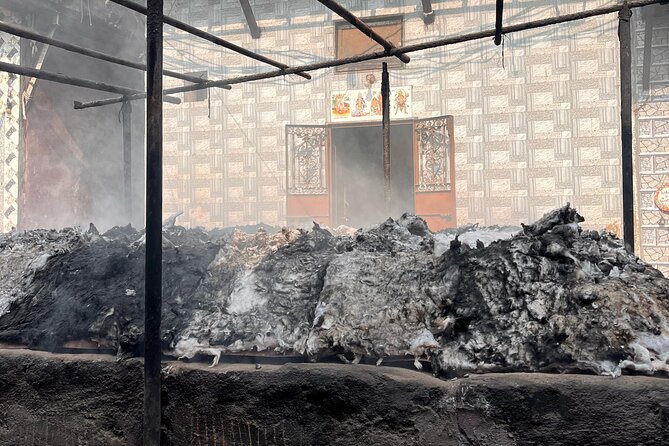
The tour description highlights pottery, leather, and recycling. These industries show why Dharavi matters beyond its reputation. Small workshops can support families and supply goods across Mumbai and beyond, while recycling work forms a major part of the area’s economic life.
You might see activity connected with these trades, though the information does not promise a particular workshop visit or hands-on demonstration. Your guide’s explanation is therefore important. Ask questions about what a business produces, who uses the goods, and how the work fits into the neighborhood.
The tour is also meant to reveal less obvious corners and local stories. That does not mean every street is open for casual exploration. You are entering a lived-in community, so listen closely to your guide and avoid treating homes or workers as scenery.
The human side of the experience
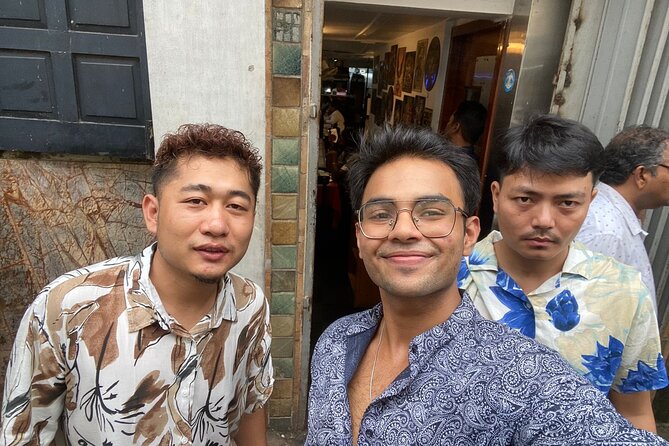
The strongest reason to book is the chance to hear about Dharavi from a person who can place what you see in context. Several guides are named in the tour’s feedback, including Sam, Max, Sarfaraz Ali, Rohan, and Ali. Their roles are described as friendly and informative, with particular praise for the way they explain the area and lead visitors through it.
You may not receive the same guide on every departure. Still, the repeated mention of individual guides suggests that the guide is central to the quality of the experience. If you have a question about community life, local industries, or the effect of Dharavi’s global reputation, ask it directly.
I like that this format can correct a common mistake in slum tourism: reducing a large community to hardship alone. Dharavi certainly faces serious challenges, but the tour also presents hard work, enterprise, and cooperation. You are encouraged to see people as residents and workers, not as a spectacle.
Your own conduct matters. Keep photography conservative and follow your guide’s instructions. Even when photography is not specifically addressed in the booking details, basic respect is essential in a residential area. Look, listen, and avoid blocking doorways or work areas.
A completely different way to spend a day in Mumbai:
- Mumbai: Full-Day Sightseeing Tour of Mumbai
★ 4.9 · 1,822 reviews - Private Mumbai Sightseeing Tour (Traveller’s Choice Award Winner)
★ 5.0 · 1,565 reviews - Elephanta Caves & Island Guided Private Tour
★ 5.0 · 1,327 reviews - Group Guided Walking Tour in Fort and Colaba
★ 5.0 · 1,073 reviews
What the three hours may feel like
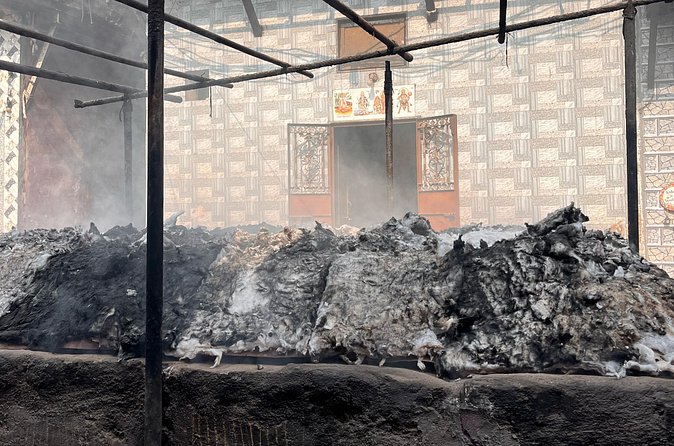
A three-hour walk can sound short on a Mumbai itinerary, but it is long enough to become tiring in a dense city neighborhood. The tour requires moderate physical fitness, and that is worth taking seriously. Expect to walk for much of the visit, with changing surfaces and little reason to assume long seated breaks.
Wear comfortable shoes and carry only what you need. Bottled water is included, which is a useful touch for a walk of this length. Personal expenses are not included, so bring money or a payment method if you plan to buy anything independently, though the tour does not promise shopping stops.
The group maximum is 20 people. That is not the same as a private tour, and you may occasionally be one of several people listening in a narrow lane. Still, a cap of 20 is more practical than a very large group and gives the guide a fair chance to answer questions.
If you prefer quiet, slow photography, this may not be your ideal format. If you want a clear introduction to Dharavi and are comfortable sharing the experience with others, the group setting keeps the price low while still offering guidance.
A closer look at the industries
Pottery and hands-on production
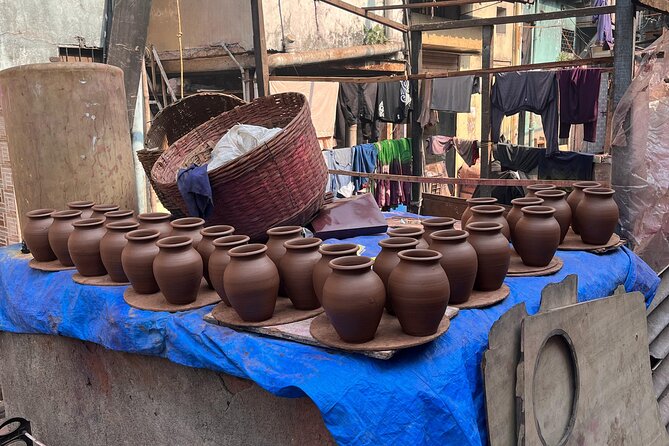
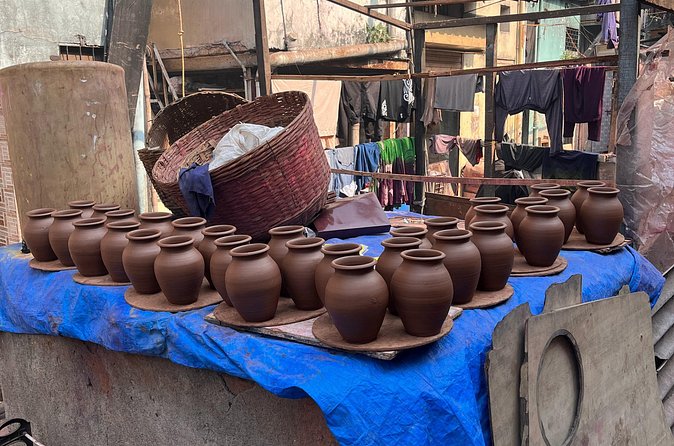
Pottery is one of the specific industries highlighted in the tour. It offers a useful way to see the neighborhood as a place of production rather than simply a residential district. You might learn how a small workshop operates and how traditional skills fit within a modern city economy.
The information does not guarantee that you will meet potters or see a complete production process. Even so, the industry provides a concrete subject for your guide to explain, which is more useful than general comments about poverty or population density.
Leather work
Leather is another named industry. Its presence points to the variety of trades carried out in Dharavi and the way specialized businesses can operate close together. Your guide may help you understand the work areas and how these businesses serve local or wider markets.
Do not expect a shopping tour unless your guide specifically offers an optional addition. The booking details include optional add-ons at checkout, but they do not spell out what those extras are. Check the choices carefully before paying for anything additional.
Recycling
Recycling is perhaps the clearest example of Dharavi’s economic importance. It shows how discarded materials can become part of a working supply chain and how labor, sorting, and small business activity connect within a tight urban area.
The tour does not promise a factory visit or a specific recycling demonstration. What it does offer is a chance to see and discuss an industry that many people overlook when they view Dharavi only through its poorest images.
Price, group size, and real value
At $9.06 per person, this is one of the easier Mumbai experiences to fit into a budget. The price includes an English-speaking guide and bottled water, while personal expenses are extra. Group discounts may also be available, which could help if you are booking for several people.
The value comes from access and explanation, not luxury. You are paying for roughly three hours of organized walking and local interpretation. There is no listed meal, private vehicle, hotel pickup, or premium attraction admission.
I consider the price strong for someone who would otherwise pass through Dharavi without understanding what is happening around them. A guide can turn a confusing walk into a lesson about work, housing, community, and Mumbai’s working class.
The trade-off is a basic format. If you want air-conditioned transport, a private guide, or a tightly scripted sightseeing route, this tour will not meet those expectations. If you want an affordable introduction with a human focus, the cost is hard to fault.
Who will get the most from this tour
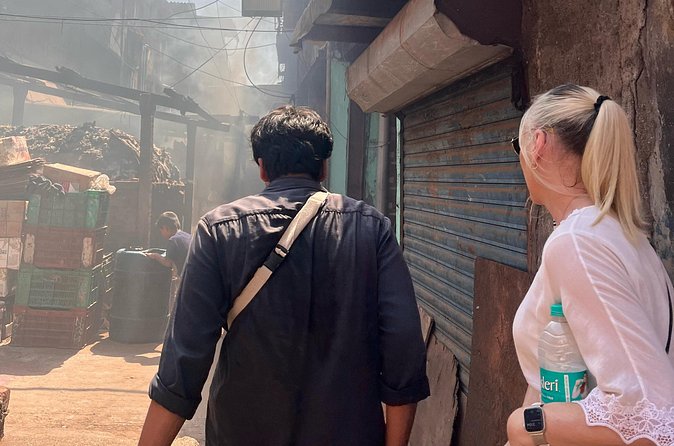
This tour suits first-time Mumbai visitors who want to see a side of the city that is rarely covered by grand monuments and waterfront sights. It is also a good fit for people interested in urban economies, small businesses, community life, or the social effects of global media.
I would recommend it to older children and teenagers who can manage a serious conversation about poverty and work, though the booking information does not specify a minimum age. Families should decide for themselves whether the subject and walking conditions suit their children.
It may also suit repeat visitors who have already seen Mumbai’s major sights. Dharavi gives you a different way to understand the city, especially if you are curious about how millions of people live and work in a limited space.
I would hesitate to recommend it to anyone seeking a photo-focused outing or a comfortable sightseeing ride. The experience asks for attention and restraint. It is not designed as entertainment built around other people’s hardship.
Practical details that affect your choice
Your mobile ticket and booking confirmation make the start simple, but the meeting point still requires care. Look for Third Wave Coffee at the stated Mahim address, and remember that the tour ends back there.
Free cancellation is available if you cancel at least 24 hours before the local start time. Cancellations within 24 hours are not refundable, and late changes are not accepted. The activity also depends on good weather and a minimum number of participants, so an operator cancellation may lead to another date, another experience, or a full refund.
The tour is capped at 20 people, but it is still a group outing. Group discounts are listed, though the exact discount is not given. Ask about the final price if you are booking with friends or family.
Should you book Dharavi Stories Unfold?
Book this tour if you want a low-cost, guide-led look at Dharavi’s industries and community life, and if you are ready to walk respectfully through a real neighborhood. The best reason to go is not the label attached to Dharavi, but the chance to understand the work and people behind it.
Skip it if you want a polished attraction, a private car, or guaranteed access to specific workshops. For most curious visitors with moderate fitness, the three-hour format, low price, central meeting point, and named local guides make this a worthwhile addition to a Mumbai stay.
FAQ
How long does the Dharavi tour last?
The tour lasts approximately two to three hours, with the main Dharavi visit listed as three hours.
Where does the tour begin?
It begins at Third Wave Coffee Tip Road, Unit 58, Ground, Ram Mahal, Senapati Bapat Marg, Marinagar Colony, near Mahim station in Mumbai.
Where does the tour finish?
The activity ends back at the meeting point.
Is bottled water included?
Yes. Bottled water is included with the English-speaking guide service.
How many people can join the tour?
The maximum group size is 20 people.
Can I cancel for a full refund?
Yes, if you cancel at least 24 hours before the experience start time. Cancellations made within 24 hours are not refunded.
Just added around Mumbai
- Temples & Vineyards: Private Tour to Nashik from Mumbai★ 4.5 · 3 reviews
- Mumbai: Private City sightseeing and Dharavi Slum Tour★ 5.0 · 3 reviews
- Mumbai: Full Day City Sightseeing with Lunch, Car & Guide★ 4.3 · 3 reviews
- Elephanta Island Private Speedboat Tour from Mumbai – 6pax★ 5.0 · 3 reviews
- Mumbai by Dawn★ 4.5 · 3 reviews
- Mumbai: Elephanta Island and Elephanta Caves Guided Tour★ 4.4 · 3 reviews
- Mumbai Sightseeing Tour by Public Transport with family Lunch★ 5.0 · 3 reviews
- Mumbai Dharavi Slum Community Tour★ 5.0 · 3 reviews
Dharavi Slum Tours, compared.
Dharavi slum tour in Mumbai by Female tour guides of the slum
Read our review →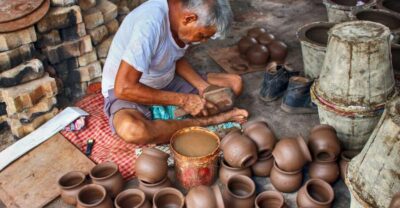
Dharavi Slum Slumdog Millionaire Tour with a Local
Read our review →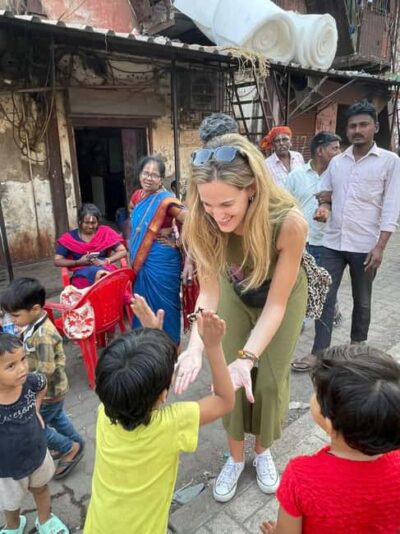
Mumbai Slum Tour – Visit Dharavi Slum with Local Guide
Read our review →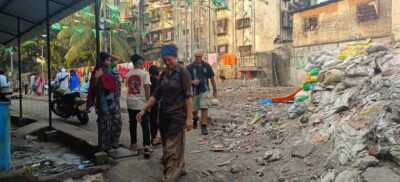
Dhobi Ghat Laundry and Dharavi Slum Tour with Local
Read our review →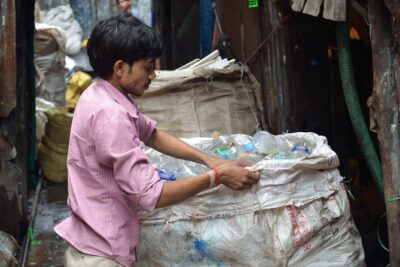
Browse the lists this tour appears in