
Reviewed · DHARAVI SLUM TOURS
Dharavi Slum Tour
Dharavi is far more than the poverty story often told from a distance. On this private walking tour, Ali, a licensed guide born and raised here, takes you through recycling units, leather workshops, pottery areas, markets, schools, and residential lanes. You see how work and home life share a tightly packed space.
I like two things right away. First, the tour gives real attention to small-scale industry, from plastic and cardboard recycling to oil paint cans, luggage, baked goods, and clothing. Second, Ali’s personal connection helps put the place in human terms, not just as a photo stop. The main consideration is that narrow streets, active work areas, and a two-and-a-half-hour walk call for moderate fitness and a respectful attitude.
In This Review
- Key points at a glance
- Seeing Dharavi through work, not a stereotype
- The commercial zone and its recycling economy
- Leather, pottery, and the skill behind small workshops
- Residential lanes, markets, and schools
- A personal guide makes the difference
- Two and a half hours in a compact Mumbai district
- Why the private format is good value at $11.32
- Who will appreciate this walk
- Final call: book it for context and connection
- FAQ
- How long does the Dharavi tour last?
- Where does the tour begin?
- Where does the tour end?
- Is pickup available?
- Is this a private tour?
- Who guides the tour?
- What kinds of places can I see?
- What is included in the price?
- Is food or alcohol included?
- How fit do I need to be?
- Can I cancel for a full refund?
Key points at a glance
- Ali grew up in Dharavi: Your local English-speaking guide knows the area through personal experience, not just a script.
- Recycling is part of the story: See plastic, aluminum, paper, and cardboard handled by small local businesses.
- The work goes beyond recycling: The route can include leather goods, luggage, pottery, oil paint cans, baked goods, and clothing production.
- Residential life is included: Walk through markets and narrow lanes to learn how people live and work in the same compact district.
- It is a private tour: Only your group takes part, giving you room to ask questions as you go.
- The price is modest: At $11.32 per person, the tour offers a lot of local context for a short Mumbai activity.
Seeing Dharavi through work, not a stereotype
Dharavi is often reduced to a single label. This tour gives you a more useful picture. It presents the neighborhood as a place where homes, workshops, shops, schools, and markets sit close together, and where people have built businesses with limited space and resources.
That shift in focus matters. You are not simply looking at hardship from a passing vehicle. You are walking through a working community and learning how different trades fit into daily life. The point is not to pretend that difficult conditions do not exist. It is to understand that poverty is only one part of the story.
Ali’s background is central to the experience. He was born and raised in Dharavi, and the tour is built around local knowledge and personal storytelling. That can make a major difference in a place where context matters. A narrow lane or small workshop means more when you understand who uses it, how the work is done, and why these businesses matter to the community.
The tone described for the experience is respectful and positive. You can expect Ali to explain what you are seeing, answer questions patiently, and focus on the creativity and effort of residents. This makes the tour a better choice for someone who wants to learn rather than simply collect dramatic photographs.
More Dharavi walking tours:
- Dharavi slum tour in Mumbai by Female tour guides of the slum
★ 5.0 · 1,976 reviews - Mumbai: Dharavi Slum, DhobiGhat, and Dabbawallas Tour
★ 4.9 · 689 reviews - Dharavi Slum Tour
★ 5.0 · 625 reviews
The commercial zone and its recycling economy
The tour begins in Dharavi’s commercial area, where the strongest focus is on local industry. This is the most distinctive part of the walk because it reveals the practical systems hidden behind everyday products and waste.
You may see plastic, aluminum, paper, and cardboard recycling. These activities show how discarded materials can become part of a local economy. The work also gives you a closer look at the resourcefulness required to run a business in a dense urban setting.
The experience is not limited to one trade. The route can include workshops connected with leather goods and luggage, along with production of oil paint cans, clothing, baked goods, and other items. Each type of work helps you see Dharavi as a network of small enterprises rather than a single uniform neighborhood.
For me, this is where the tour earns its modest price. You are not just given facts about Mumbai. You are shown how people make a living, how materials move through workshops, and how skill and enterprise shape the area. The tour can also help you understand the value of informal industry in a major city.
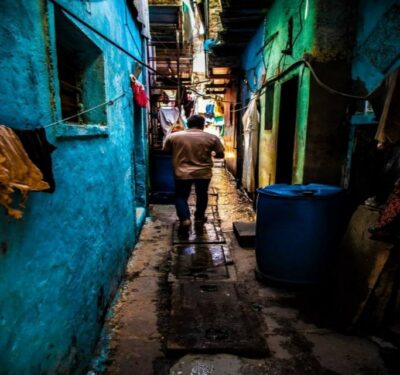
The setting will not be polished. Work areas may be close together, and the route can pass through narrow streets with little separation between business and home. That is part of the reality, but it also means you should pay attention to where you step, listen to instructions, and avoid treating active workplaces as a stage set.
Leather, pottery, and the skill behind small workshops
Leather units and luggage workshops add another layer to the tour. These stops show the handwork and production skills that can be easy to miss when you only see finished goods in shops.
Pottery areas may also be included. Their presence gives the walk a different texture from the recycling units and helps show the range of work found in the community. The tour is strongest when you take time to notice the process, not just the final product.
You should expect Ali to explain the work in plain terms and connect it with the lives of the people who do it. The supplied information does not promise a hands-on workshop or shopping session, so do not book this expecting to make pottery or purchase a custom leather item. The value is in observing and understanding.
A local guide can also help you read the setting with care. You may have questions about wages, working conditions, family businesses, or how different trades operate. Ali’s role is to provide the explanation and help the visit remain respectful.
Residential lanes, markets, and schools
After the commercial area, the walk moves into the residential side of Dharavi. This change is important. You see how people live in a place where commercial and domestic spaces are close together, rather than viewing the district only through its workshops.
The route includes markets and narrow alleyways, with a look at everyday community life. You might see people moving between homes, shops, and work areas. Because the tour is private, your group can pause for questions without having to fit into a large crowd.
Schools are also part of the experience described by the guide. The school element helps broaden the story beyond employment and industry. It reminds you that Dharavi is a lived-in neighborhood with children, families, education, and ordinary routines, not just a destination for observation.
This part of the tour calls for extra courtesy. Keep your voice low in residential areas, follow Ali’s instructions about photography, and remember that people are going about their day. The provided information does not state a specific photography policy, so ask before taking pictures, especially near homes, schools, workers, or individuals.
A completely different way to spend a day in Mumbai:
- Mumbai: Full-Day Sightseeing Tour of Mumbai
★ 4.9 · 1,822 reviews - Private Mumbai Sightseeing Tour (Traveller’s Choice Award Winner)
★ 5.0 · 1,565 reviews - Elephanta Caves & Island Guided Private Tour
★ 5.0 · 1,327 reviews - Group Guided Walking Tour in Fort and Colaba
★ 5.0 · 1,073 reviews
A personal guide makes the difference
A private tour led by someone from the neighborhood offers a different experience from a general city sightseeing route. Ali can shape the pace around your group and answer questions as they arise. You are not limited to a fixed audio guide or a broad overview delivered from a bus.
The experience includes a resident local English-speaking guide, entry to Dharavi, and bottled mineral water. Alcoholic drinks are not included, though that is hardly a concern for a daytime walking tour focused on community life and work.
The guide’s personal story is one of the strongest reasons to choose this activity. Ali describes himself as passionate about helping people understand Mumbai beyond postcard views. His connection to Dharavi gives the tour a human point of view, while the route provides concrete examples of local work and daily routines.
The tour’s tone is also worth considering. It is presented as thoughtful and positive, with attention to strength, creativity, and entrepreneurship. If you want a highly critical urban study focused on housing policy or economic data, this may not be the right format. If you want a direct introduction to the neighborhood through its people and businesses, it should fit well.
Two and a half hours in a compact Mumbai district
The activity lasts about two hours and 30 minutes, with the Dharavi portion listed at roughly two hours. That is enough time to see several types of work and walk through both commercial and residential areas, without taking up an entire day in Mumbai.
The compact schedule is useful if you are fitting this around other sightseeing. You can pair it with a broader Mumbai itinerary rather than giving up a full day. At the same time, this is not a quick photo stop. Two and a half hours on foot requires attention and a moderate level of fitness.
The meeting point is Third Wave CoffeeTip Road, Unit 58, Ground, Ram Mahal, Senapati Bapat Marg, Marinagar Colony, Station, Mahim, Mumbai, Maharashtra 400016. The tour ends back at the same meeting point. Pickup is offered, but you should confirm the exact arrangement when booking rather than assume door-to-door transport.
The meeting point is near public transportation. Since no exact station or transfer instructions are supplied, allow enough time to reach the starting point and keep the confirmation details handy. A mobile ticket is provided, and confirmation arrives at booking.
Why the private format is good value at $11.32
At $11.32 per person, this is an inexpensive way to add a local perspective to a Mumbai visit. The price includes the guide, entry, bottled water, and a private format for your group. That last point is important. A private tour at this price gives you more freedom to ask questions and less pressure to keep up with a large party.
Value here is not about the number of attractions. It comes from access to a part of Mumbai that is difficult to understand through independent wandering alone. Ali provides the background needed to connect the recycling units, workshops, homes, markets, and schools into a larger picture.
There are limits. The tour does not include alcoholic drinks, though that has little effect on the core experience. It also does not promise meals, street food tastings, transport between several city sights, or a formal workshop. If you want food sampling or a full-day Mumbai tour, you will need a different activity or an additional plan.
The tour is booked, on average, 18 days ahead. That suggests you should reserve before your trip if your dates are fixed, particularly if you want a private start time that suits your schedule. Free cancellation is available up to 24 hours before the start time. Inside that window, the payment is not refunded and changes are not accepted.
Who will appreciate this walk
I would recommend this experience to you if you want a local and human view of Mumbai. It suits first-time visitors who want to move beyond major landmarks, students interested in urban communities and small business, and anyone curious about recycling, manufacturing, and neighborhood life.
It is also a good fit for people who prefer a private guide. You can ask direct questions about what you see, and the guide can explain the area in a way that responds to your interests.
You should think twice if you dislike walking through tight urban spaces or if you want a polished attraction with clear visitor facilities. The tour takes place in an active residential and commercial community, not a purpose-built museum. Moderate fitness is required, and you should be ready for a setting that may feel crowded and physically demanding.
Most important, come with the right attitude. The tour is about people’s homes and workplaces. Treat the area as a community first and a sightseeing stop second. Listen, ask before photographing, and let Ali guide you on what is appropriate.
Final call: book it for context and connection
Book this Dharavi tour if you want to understand Mumbai through work, enterprise, and daily life rather than only through famous sights. Ali’s roots in the community, the private format, and the mix of recycling units, workshops, markets, schools, and residential lanes give the two-and-a-half-hour walk a clear purpose.
Skip it if you are seeking a relaxed ride, a food tour, or a standard attraction with little walking. For $11.32, though, the activity offers strong value for an honest look at one of Mumbai’s most misunderstood neighborhoods. Go with curiosity, patience, and respect, and you will gain a more complete view of the city.
FAQ
How long does the Dharavi tour last?
The experience lasts approximately two hours and 30 minutes. The Dharavi walking portion is listed at about two hours.
Where does the tour begin?
It begins at Third Wave CoffeeTip Road, Unit 58, Ground, Ram Mahal, Senapati Bapat Marg, Marinagar Colony, Station, Mahim, Mumbai, Maharashtra 400016, India.
Where does the tour end?
The activity ends back at the meeting point.
Is pickup available?
Pickup is offered. Confirm the specific pickup arrangement when booking, since the supplied meeting point is Third Wave CoffeeTip Road in Mahim.
Is this a private tour?
Yes. Only your group participates in the activity.
Who guides the tour?
The tour is led by Ali, a licensed English-speaking local guide who was born and raised in Dharavi.
What kinds of places can I see?
The tour can include commercial and residential areas, recycling units, leather and luggage workshops, pottery areas, markets, schools, and narrow residential lanes.
What is included in the price?
The price includes the resident local English-speaking guide, private tour service, entry to Dharavi, and bottled mineral water.
Is food or alcohol included?
Alcoholic beverages are not included. The provided details do not list food or street food as an inclusion.
How fit do I need to be?
You should have a moderate level of physical fitness. The experience involves walking through commercial areas, markets, narrow alleyways, and residential parts of Dharavi.
Can I cancel for a full refund?
Yes. You can cancel at least 24 hours before the local start time for a full refund. Cancellations or changes made less than 24 hours before the start time are not refunded.
Just added around Mumbai
- Temples & Vineyards: Private Tour to Nashik from Mumbai★ 4.5 · 3 reviews
- Mumbai: Private City sightseeing and Dharavi Slum Tour★ 5.0 · 3 reviews
- Elephanta Island Private Speedboat Tour from Mumbai – 6pax★ 5.0 · 3 reviews
- Mumbai: Full Day City Sightseeing with Lunch, Car & Guide★ 4.3 · 3 reviews
- Mumbai: Elephanta Island and Elephanta Caves Guided Tour★ 4.4 · 3 reviews
- Mumbai Sightseeing Tour by Public Transport with family Lunch★ 5.0 · 3 reviews
- Mumbai by Dawn★ 4.5 · 3 reviews
- Mumbai Dharavi Slum Community Tour★ 5.0 · 3 reviews
Dharavi Slum Tours, compared.
Dharavi slum tour in Mumbai by Female tour guides of the slum
Read our review →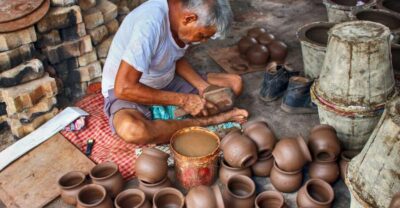
Dharavi Slum Slumdog Millionaire Tour with a Local
Read our review →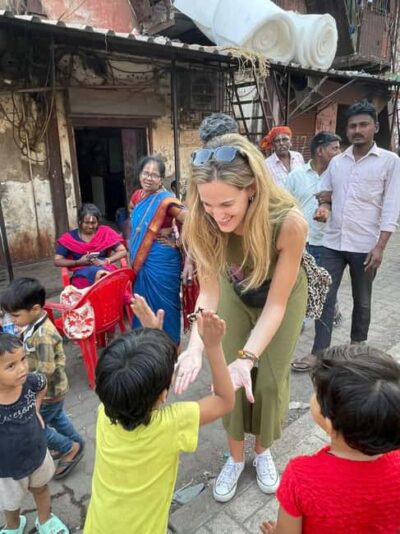
Mumbai Slum Tour – Visit Dharavi Slum with Local Guide
Read our review →
Dhobi Ghat Laundry and Dharavi Slum Tour with Local
Read our review →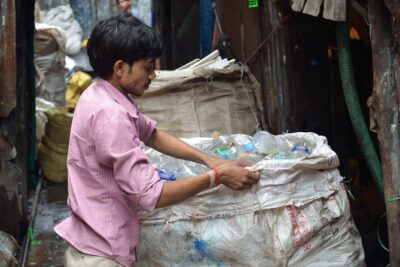
Browse the lists this tour appears in