
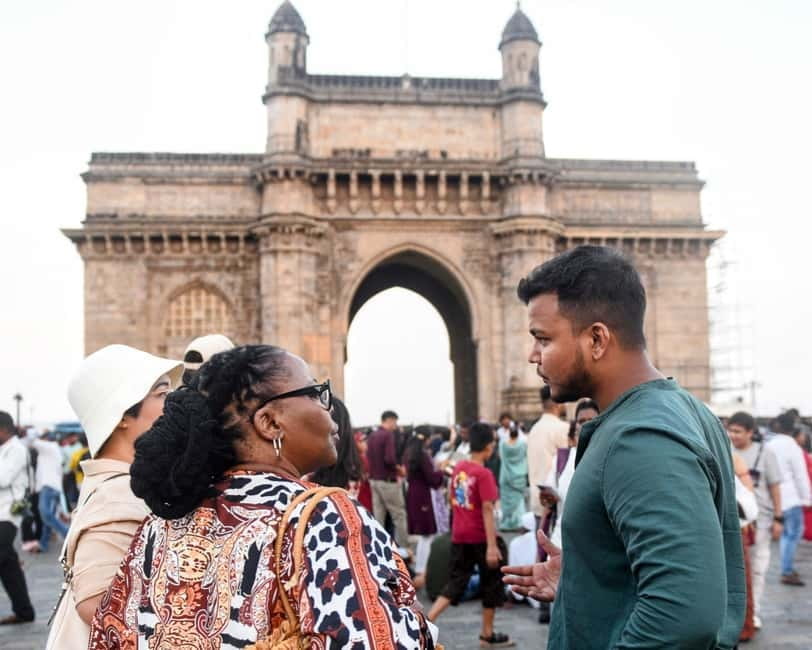
Reviewed · SOUTH MUMBAI HERITAGE WALKS
Victorian Gothic Heritage Quarter and Art Deco Walking Tour
Mumbai’s architectural story unfolds quickly on this walk. In a few city blocks, you move from the Indo-Saracenic dome of the General Post Office to Gothic towers, a neoclassical library, Art Deco buildings, the Gateway of India, and the Taj Mahal Palace. The changing styles are the real attraction, and the route gives you a useful first look at south Mumbai.
I like the compact route and the chance to see daily city life along with famous buildings. I also like that guides including Abhi, Abhishek, Ravi, and Yash have added local facts, photographs, and occasional unscheduled stops. The main drawback is time: two hours is short for ten stops, so some visits are quick exterior explanations rather than extended sightseeing.
In This Review
- Key points at a glance
- Why this walk works as a Mumbai introduction
- From Regal Cinema to the General Post Office
- Town Hall and the Asiatic Society’s neoclassical face
- Horniman Circle, a garden inside the city
- St. Thomas Cathedral and the oldest Anglican church
- The High Court and Rajabai Clock Tower
- Oval Maidan and Mumbai’s cricket habit
- Kala Ghoda and the route’s cultural turn
- The Gateway of India and Taj Mahal Palace
- Guides, group size, and the walking pace
- What the $18.88 price really buys you
- Should you book this Mumbai walking tour?
- FAQ
- How long does the tour last?
- Where does the tour start?
- Where does the tour end?
- What is the price?
- How many people can join the tour?
- Is transportation included?
- Is bottled water included?
- Are admission tickets included?
- Can most people participate?
- What is the cancellation policy?
Key points at a glance

- A ten-stop architectural walk: See Indo-Saracenic, neoclassical, Victorian Gothic, and Art Deco styles in one compact route.
- Starts at Regal Cinema: The meeting point puts you in Colaba, close to several of Mumbai’s best-known sights.
- Includes Oval Maidan: You may see cricket matches on this broad open ground, especially on a Sunday.
- Small-group format: The maximum group size is 15, which should make questions and conversations easier.
- Strong guide feedback: Abhi, Abhishek, Ravi, and Yash are named as guides who have explained the city well and added lesser-known details.
- Ends near Churchgate Station: The finish works well if you plan to continue sightseeing or catch local transport.
Why this walk works as a Mumbai introduction
I see this tour as an architectural orientation rather than a series of building admissions. You are not going inside every landmark, and most stops last only 5 to 15 minutes. The value comes from seeing how Mumbai’s public face changed over time, from imperial-era buildings to the sleek curves and geometric lines of Art Deco.
The route also gives you more than stone and plaster. At Oval Maidan, cricket can turn a formal heritage walk into a glimpse of ordinary weekend life. Around Kala Ghoda, art spaces, street activity, and old commercial buildings add a more modern feel. The Gateway of India and Taj Mahal Palace then provide a grand finish by the water.
The advertised price is $18.88 per person. For a two-hour guided walk, that is a fair price if you want structure, context, and a local guide rather than simply photographing façades on your own. You are paying for interpretation and route planning, not entry tickets, since admission is free at the listed stops.
This is also a practical choice for a first morning in Mumbai. One participant described a longer version of the walk as a useful introduction, with extra stops and a finish at Mumbai Railway Terminus. The standard route ends at Churchgate, but the guide may adjust the walk when time and conditions allow. Do not count on a longer outing, though. Treat the two-hour schedule as the reliable plan.
More South Mumbai heritage walks:
- Group Guided Walking Tour in Fort and Colaba
★ 5.0 · 1,073 reviews - Private Guided Walking Tour in Fort & Colaba
★ 5.0 · 895 reviews - Private Guided Open Jeep Tour in Fort & Colaba
★ 5.0 · 170 reviews
From Regal Cinema to the General Post Office
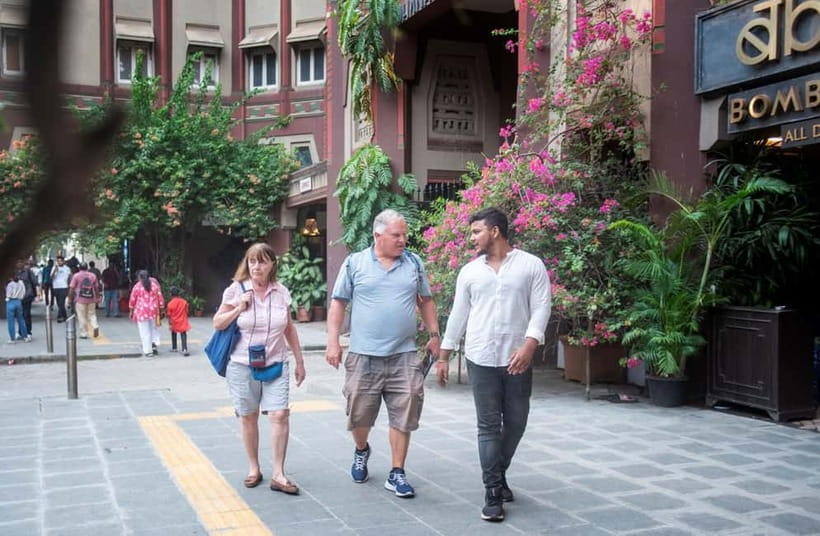
The walk begins at Regal Cinema in Apollo Bandar, Colaba. That is a sensible meeting point because you start among major south Mumbai sights rather than spending the first part of the tour getting into position.
The first stop is the General Post Office, built in 1913 and designed by John Begg. Its Indo-Saracenic style combines Indian architectural references with forms used in British-era public buildings. The scale is impressive, and the building gives your guide an early chance to explain how Mumbai’s institutions were designed to project authority.
You will have about 15 minutes here, with no admission fee. That is enough for an exterior look and a few photographs, but not for a long indoor visit. If you are especially interested in architectural details, listen closely at the start of the explanation, when the guide is likely to set up the design vocabulary used throughout the rest of the walk.
Town Hall and the Asiatic Society’s neoclassical face
The Town Hall, home to the Asiatic Society Library, shifts the mood. Founded in 1804, the institution holds rare manuscripts, old texts, and valuable artifacts. Its neoclassical design is more restrained than the ornate Gothic buildings that come later.
I like this stop because it reminds you that Mumbai’s built heritage is not all pointed arches and decorative stonework. The library represents the city’s intellectual and institutional side, and the guide can help connect the building to the wider development of colonial Bombay.
The planned stop is 15 minutes, again without an entry fee. The tour does not promise access to the library collections, so think of this as an architectural and historical introduction. If you want to study the façade at length, you may need to return independently after the tour.
Horniman Circle, a garden inside the city
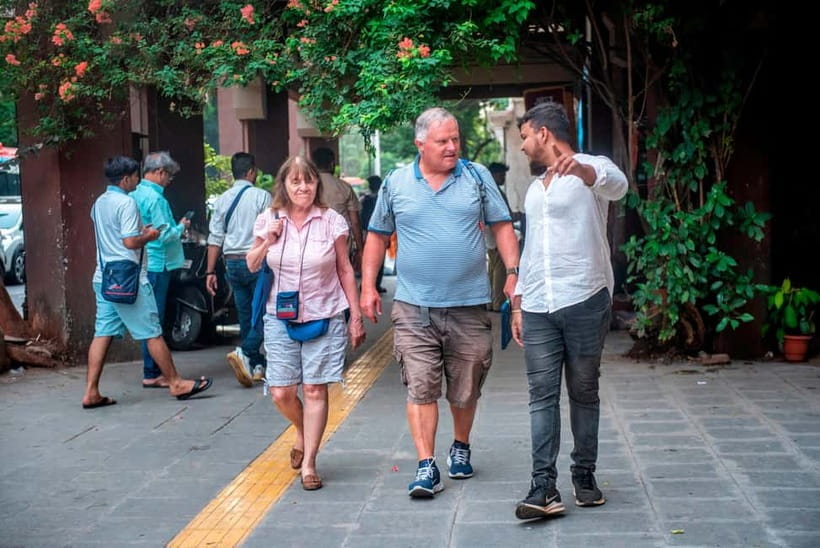
Horniman Circle Garden offers a short pause from the buildings. Created in 1860, it is surrounded by colonial-era structures and named after Benjamin Horniman, a British editor associated with the city.
The garden matters because it shows how open public space was built into the older city plan. You can look across the circular arrangement of buildings and see how architecture, commerce, and civic space fit together. It is a useful place for photographs and for getting a sense of the district’s scale.
The stop lasts about 15 minutes. That is enough to walk through the setting and hear the background, but do not expect a long break. Mumbai’s traffic, pedestrians, and street sounds are part of the scene, so this is not a quiet garden visit in the usual sense.
More guided walks on foot:
- Private Guided Walking Tour in Bandra Queen of Suburbs
★ 5.0 · 383 reviews - Private Guided Spiritual Walk in Banganga Hindu Temples
★ 5.0 · 271 reviews - Mumbai: Dharavi Slum Walking Tour by First Female Tour Guide
★ 4.9 · 192 reviews - Private Guided Non-Veg Street Food Walking Tour in Muslim Quarter
★ 5.0 · 140 reviews
St. Thomas Cathedral and the oldest Anglican church
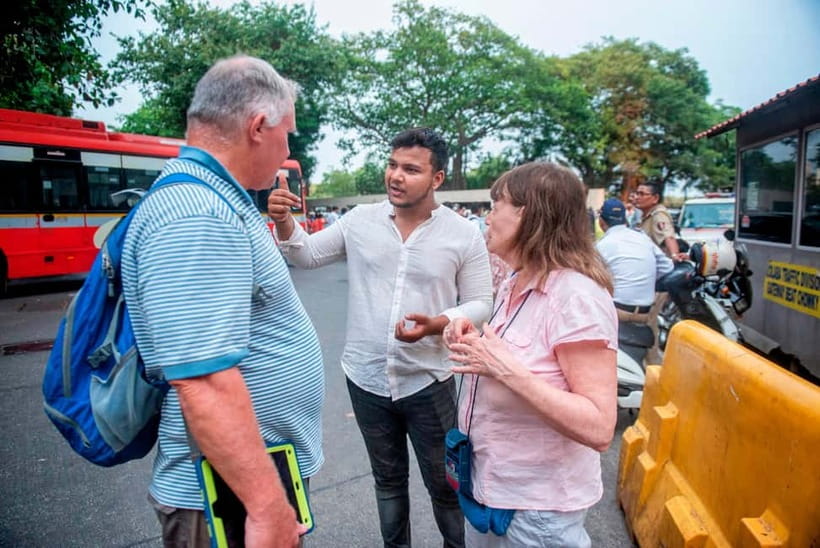
St. Thomas Cathedral was consecrated in 1718 and is described as Mumbai’s oldest Anglican church. Its British colonial design gives the route another point of comparison, especially after the Indian references of the GPO and the classical form of Town Hall.
The church is an important stop for anyone interested in how different communities and institutions shaped the city. I would pay attention to the guide’s explanation rather than rushing to take pictures. The building’s significance lies not only in its age, but also in its place within Mumbai’s religious and civic development.
You get around 15 minutes here. The supplied information confirms the stop and its free admission, but it does not promise a full interior tour or a particular opening arrangement. If entering the church matters to you, ask the guide what is possible on the day.
The High Court and Rajabai Clock Tower
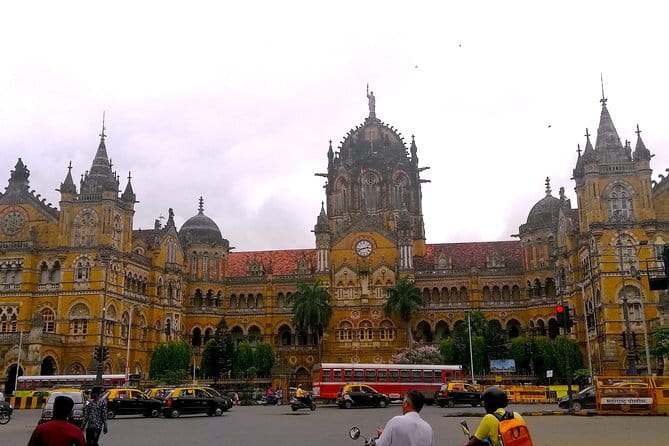
The Bombay High Court brings you into Mumbai’s Victorian Gothic quarter. Inaugurated in 1879, the building remains one of the city’s most recognizable Gothic Revival structures. This is where the walk’s architectural theme becomes especially clear, with towers, ornament, and vertical lines shaping the streetscape.
The building is still a working court, so your visit is primarily an exterior viewing stop. That is not a weakness of the tour so much as a practical reality. The guide can discuss its role in the judicial system, while you take in the façade without treating an active institution like a museum.
Next comes Rajabai Clock Tower, completed in 1878 at the University of Mumbai. Sir George Gilbert Scott designed it, and Premchand Roychand funded it. The tower gives you a strong example of the Victorian Gothic style and a chance to compare a civic building with a university landmark.
Each stop is planned for about 15 minutes. That pace keeps the walk moving, but it also means you will want to stay near the guide. With a group of up to 15, it should be manageable to ask questions, though a slow photographer may need to catch up.
Oval Maidan and Mumbai’s cricket habit
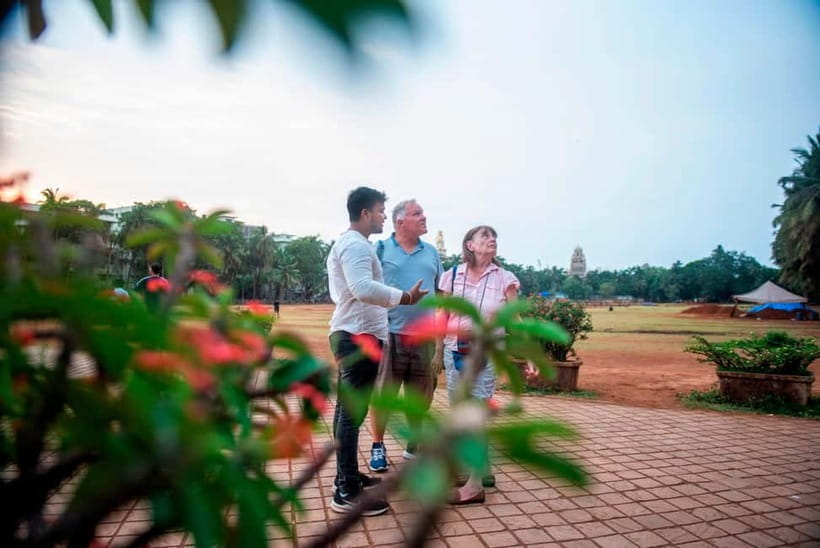
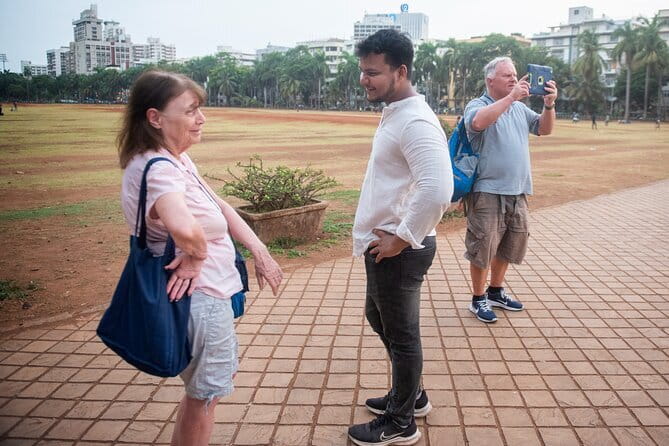
Oval Maidan is one of the most enjoyable parts of the route because it brings the architecture into a living public setting. Established in the 19th century, the ground is flanked by Victorian Gothic buildings on one side and Art Deco structures on the other.
That contrast is the core visual lesson of the tour. Look across the open ground and you can see two very different ideas of modern Mumbai facing each other. The Gothic buildings reach upward with elaborate detail, while the Art Deco side presents cleaner lines and a more streamlined look.
The scheduled stop is 10 minutes. On a Sunday, you may see several cricket matches taking place, which adds a distinctly local scene to the architectural discussion. I would not plan the tour around a cricket match, since the timing is not guaranteed, but Sunday can make this section particularly lively.
Kala Ghoda and the route’s cultural turn
Kala Ghoda, meaning Black Horse, is a cultural district known for galleries, museums, street art, and the Kala Ghoda Arts Festival. The area takes its name from a statue of King Edward VII, although the stop listed here is brief, only about five minutes.
That short timing tells you how to use this part of the walk. You will get an orientation to the district, not a museum visit or gallery crawl. The area deserves more time if you enjoy art, but the tour’s purpose is to connect Kala Ghoda with the larger architectural route.
A particularly useful detail from the guide-led walks is the possibility of less obvious stops, including vintage Bollywood record stalls, Cat Chowk, and a building referred to as the black magic house. These are not guaranteed parts of the standard itinerary, so consider them possible extras rather than promised inclusions. They show how a good guide can add local color when the group and schedule permit.
The Gateway of India and Taj Mahal Palace
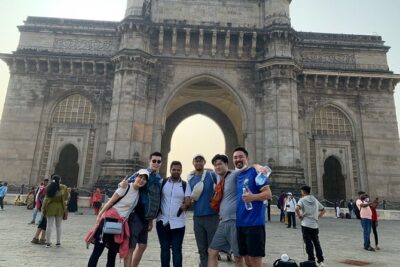
The Gateway of India is the route’s most famous monument. Built in 1924 to commemorate the visit of King George V and Queen Mary, the arch has become one of Mumbai’s defining waterfront symbols.
You get about 10 minutes here. That is enough to understand the monument’s purpose and take in the setting, but the area can be crowded and visually distracting. Stay alert to the guide’s location and use the short stop well. If you want portraits, wide views, or time by the water, return later on your own.
The final landmark is the Taj Mahal Palace, built in 1903. Its luxury-hotel setting and view toward the Arabian Sea give the tour a polished ending. The building is more than a hotel façade: it is part of Mumbai’s public image and a useful counterpoint to the government, religious, academic, and judicial buildings seen earlier.
The stop is listed as five minutes, so expect an exterior introduction rather than a hotel tour. You can appreciate the architecture without booking a room, and the guide can place it within the story of south Mumbai’s grand public and commercial buildings.
Guides, group size, and the walking pace
The strongest pattern in the guide feedback is clear communication and personal attention. Abhi is described as friendly, easy to understand, flexible, and good at sharing lesser-known facts. Abhishek has been praised for answering questions and adding unscheduled stops. Ravi is noted for his enthusiasm for the city’s architecture, while Yash has been credited with storytelling, unusual details, and taking photographs.
Guide assignments can change, so you should not assume a particular person will lead your departure. Still, the range of named guides gives you a useful idea of the intended approach: local explanation, questions, stories beyond the standard dates, and help with photos.
The group limit is 15. That is small enough to keep the guide within earshot and large enough to maintain a social feel. The route lasts roughly two hours, though one reported outing lasted three hours because of added stops. I would wear comfortable shoes, carry sun protection, and keep water handy. A bottle is included, but no private transport is provided.
The walk is near public transportation, and the end point is Churchgate Station. That makes it easy to continue from the heritage district without arranging a car. Most people can participate, but the supplied details do not provide a specific accessibility assessment, so ask the operator if you have mobility concerns.
What the $18.88 price really buys you
At $18.88, this tour is reasonably priced for a small-group city walk covering ten major sights. You do not pay separate admission at the listed stops, and bottled water is included. The main financial value is the guide’s interpretation, since the buildings are easy to see from public streets but harder to understand in sequence.
I would book it if you want a framework for exploring Mumbai on your own. Afterward, you will know which areas deserve a slower return visit, such as Kala Ghoda, the Gateway waterfront, or the streets around the Gothic buildings.
I would hesitate if you want lengthy interior visits, museum time, or a relaxed photography tour. Ten stops in about two hours demands a brisk pace. One guide may add time and side stops, but that depends on the day and should not be treated as part of the fixed offer.
The experience is most useful early in your stay. It gives you names, styles, and street orientation before you tackle the city independently. Repeat visitors can also benefit, especially if they have seen the façades but never understood how the Gothic and Art Deco quarters relate to each other.
Should you book this Mumbai walking tour?
Book it if you want a compact, affordable introduction to south Mumbai’s architecture, with a chance to see cricket at Oval Maidan and hear local stories from guides such as Abhi, Ravi, or Yash. The 92 percent recommendation rate and 4.7 rating point to a generally strong experience, though one poor account warns that guide quality can vary.
My advice is simple: choose this walk for context, orientation, and a friendly small-group outing. Skip it if your priority is entering every landmark or moving at a slow, detailed pace. You can cancel for a full refund up to 24 hours before the start, which gives you some flexibility when shaping your Mumbai plans.
FAQ
How long does the tour last?
The tour lasts approximately two hours.
Where does the tour start?
It starts at Regal Cinema in Apollo Bandar, Colaba, Mumbai.
Where does the tour end?
It ends at Churchgate Station on Maharshi Karve Road.
What is the price?
The listed price is $18.88 per person.
How many people can join the tour?
The group has a maximum of 15 travelers.
Is transportation included?
No. Private transportation is not included. The experience is a walking tour and takes place near public transportation.
Is bottled water included?
Yes. Bottled water is included.
Are admission tickets included?
The listed stops have free admission tickets. The tour information does not promise special interior access to each building.
Can most people participate?
Yes. The tour information states that most travelers can participate. It does not provide a detailed accessibility assessment.
What is the cancellation policy?
You can cancel at least 24 hours before the start time for a full refund. Cancellations or changes made less than 24 hours before the start time are not accepted for a refund.
More Historical Tours in Mumbai
- Best South Mumbai Heritage Walk
★ 5.0 · 122 reviews - Heritage Walk: Recommended by Gigi Hadid as a must-do in Mumbai
★ 5.0 · 122 reviews - Mumbai: South Mumbai Heritage Walking Guided Tour
★ 4.5 · 69 reviews - Hill-station & Heritage: Lonavala & Karla Caves Tour from Mumbai
★ 5.0 · 60 reviews
Just added around Mumbai
- Temples & Vineyards: Private Tour to Nashik from Mumbai★ 4.5 · 3 reviews
- Mumbai: Private City sightseeing and Dharavi Slum Tour★ 5.0 · 3 reviews
- Mumbai: Full Day City Sightseeing with Lunch, Car & Guide★ 4.3 · 3 reviews
- Elephanta Island Private Speedboat Tour from Mumbai – 6pax★ 5.0 · 3 reviews
- Mumbai: Elephanta Island and Elephanta Caves Guided Tour★ 4.4 · 3 reviews
- Mumbai Sightseeing Tour by Public Transport with family Lunch★ 5.0 · 3 reviews
- Mumbai by Dawn★ 4.5 · 3 reviews
- Mumbai Dharavi Slum Community Tour★ 5.0 · 3 reviews
South Mumbai Heritage Walks, compared.



Heritage Walk: Recommended by Gigi Hadid as a must-do in Mumbai
Read our review →
Mumbai 800 Year Worli Village: Talking Goddess, Old Fort & more
Read our review →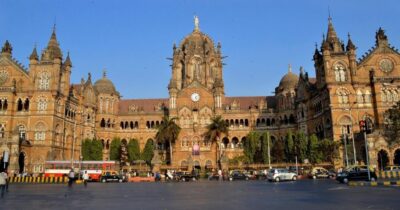
Mumbai Heritage Walk and Elephanta Caves Experience
Read our review →Browse the lists this tour appears in