
Reviewed · SOUTH MUMBAI HERITAGE WALKS
Mumbai: South Mumbai Heritage Walking Guided Tour
South Mumbai reads like an open-air history book, with grand railway halls, Gothic towers, old churches, cast-iron buildings, and the sea-facing sweep of Marine Drive. This walking tour links the major sights into one useful introduction to the city.
I like the way the route brings together famous landmarks and overlooked architectural details. I also like the chance to ask questions as you walk, with guides such as Sanika, Krishna, Ketan, Abhi, Alan, and Alkama praised for making the past easy to follow. The main drawback is simple: you will be on your feet for about three hours, often in a busy city setting, so this is not a gentle sightseeing ride.
In This Review
- Key points at a glance
- Why South Mumbai works so well on foot
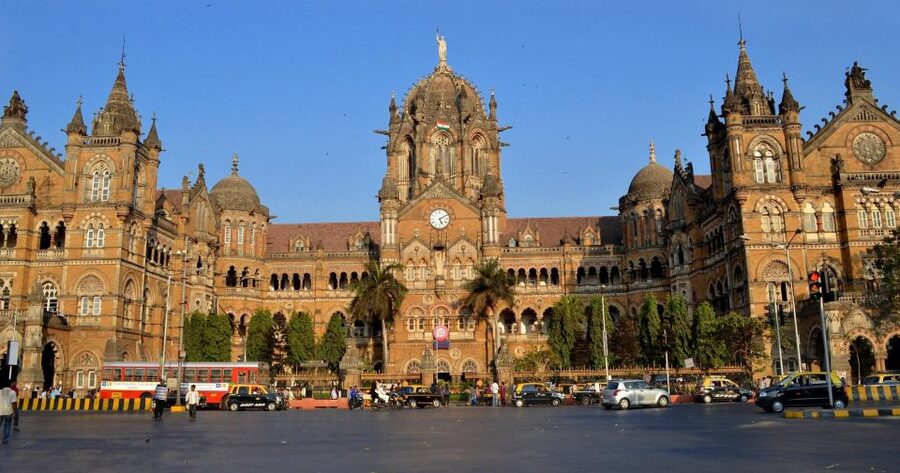
- Chhatrapati Shivaji Terminus sets the tone
- Town Hall and the Asiatic Society’s classical face
- St. Thomas’ Cathedral brings religion into the city story
- Flora Fountain and the civic heart of the city
- University of Mumbai and Bombay High Court
- Kala Ghoda changes the mood
- Watson’s Hotel explains why materials matter
- The Taj Mahal Palace and Colaba’s grand finale
- Gateway of India and the waterfront finish
- Guides who make the difference
- Is $28 a fair price?
- Who should book this walk?
- Should you book the Mumbai Heritage Walking Tour?
- FAQ
- Where does this heritage walking tour take place?
- How long is the Mumbai Heritage Walk?
- What language is the tour offered in?
- Which major landmark is included first?
- Does the tour include the Gateway of India?
- Is Marine Drive included?
- How much does the experience cost?
- Can I cancel or pay later?
Key points at a glance
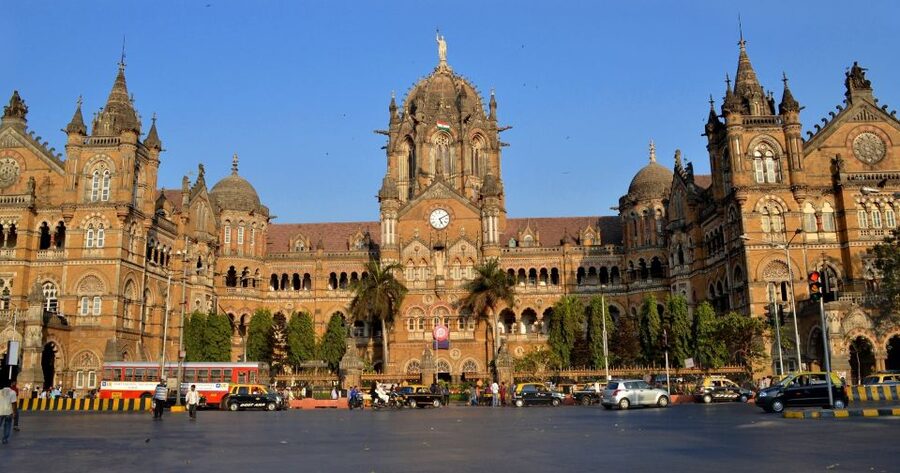
- CST begins the story with a grand railway station: See Chhatrapati Shivaji Terminus, a UNESCO World Heritage Site and one of India’s most striking stations.
- The route covers several South Mumbai districts in one walk: Town Hall, St. Thomas’ Cathedral, Flora Fountain, Kala Ghoda, and Colaba all fit into a single cultural outing.
- Architecture is the main subject: Expect attention to Gothic, colonial, cast-iron, religious, civic, and Indo-European design details.
- The guides add a personal layer: Sanika, Krishna, Ketan, Abhi, Alan, and Alkama are among the named guides praised for clear explanations and warm conversation.
- The three-hour format suits first-time visitors: You can get your bearings and see the main historic sights before exploring Mumbai on your own.
- The $28 price is reasonable for a guided introduction: It makes the most sense if you want context, not just a checklist of photo stops.
Why South Mumbai works so well on foot
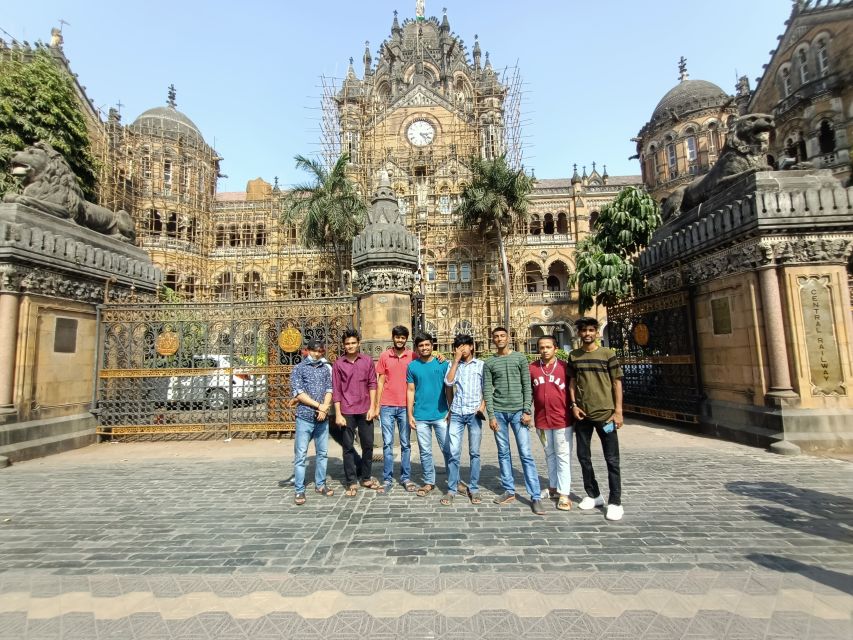
South Mumbai is the city’s best area for a concentrated heritage walk. Important buildings sit relatively close together, but their stories are not always clear when you pass them alone. A guide helps turn a handsome façade into part of a larger story about trade, government, religion, transport, education, and public life.
The walk is connected with Mumbai Heritage Walks, a group established in 1999 by architects Abha Bahl and Brinda Gaitonde. Its stated aim is to raise awareness of Mumbai’s architecture and historic monuments. That background matters because the tour is not only about taking pictures. It is meant to draw your attention to planning, decorative work, building styles, and the social changes behind them.
I would choose this experience early in a Mumbai visit. The route gives you a useful mental map of Old Mumbai, from the railway station and civic buildings to the art district, Colaba, and the waterfront. Afterward, you will recognize places that might otherwise blur together.
More South Mumbai heritage walks:
- Group Guided Walking Tour in Fort and Colaba
★ 5.0 · 1,073 reviews - Private Guided Walking Tour in Fort & Colaba
★ 5.0 · 895 reviews - Private Guided Open Jeep Tour in Fort & Colaba
★ 5.0 · 170 reviews
Chhatrapati Shivaji Terminus sets the tone
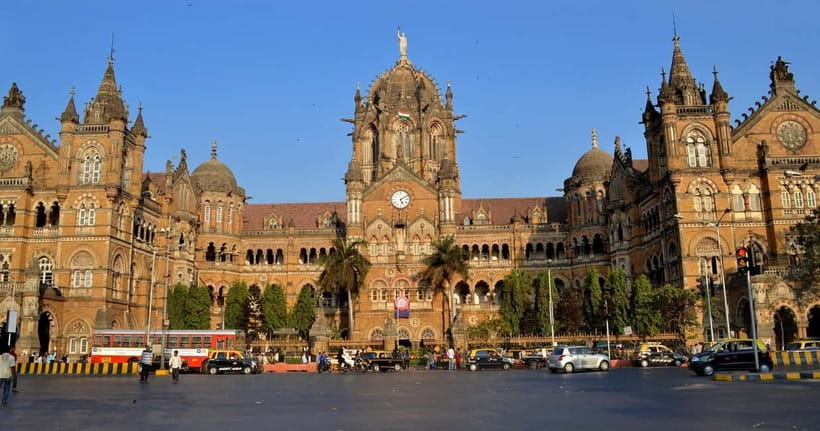
Chhatrapati Shivaji Terminus, usually called CST, is an impressive place to begin. It is both a working railway station and a UNESCO World Heritage Site, so the building has a practical role as well as a ceremonial one.
The station is known for its grand architecture and detailed decoration. A guide can help you look beyond the scale of the building and notice how its design reflects the colonial period and the importance of rail travel to Mumbai’s growth. This is much more useful than simply hearing that it is one of India’s most beautiful stations.
CST also gives the tour a strong sense of place. This is not a quiet museum building set apart from city life. It is part of Mumbai’s daily movement. You see heritage architecture in use, which is one of the most valuable features of a walking tour here.
The station can be visually overwhelming, especially if you are already adjusting to Mumbai’s pace. Stay close to your guide and be ready for the tour to begin in a lively public area rather than a calm courtyard.
Town Hall and the Asiatic Society’s classical face
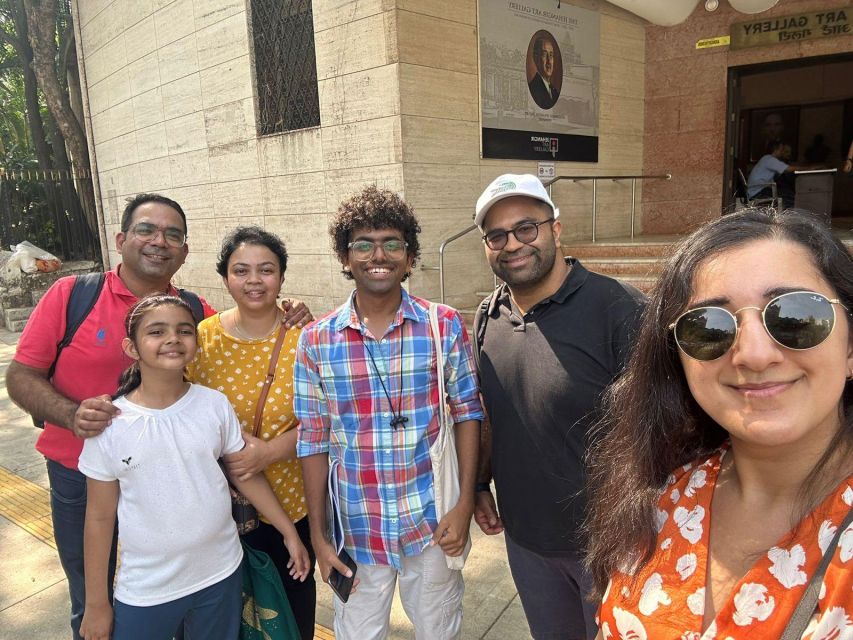
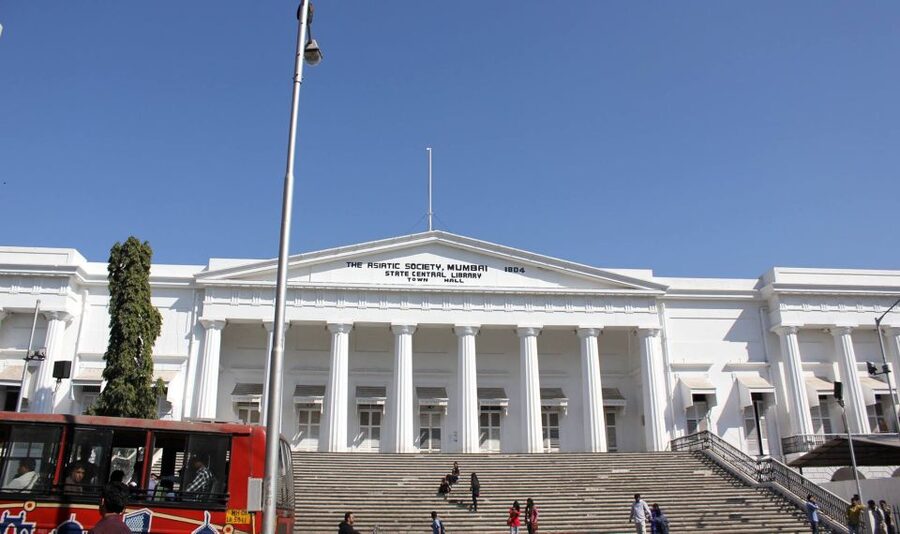
Town Hall, home of the Asiatic Society Library, introduces a different architectural mood. It is a colonial building and one of Mumbai’s oldest libraries, with a formal design that contrasts with the railway station’s elaborate energy.
This stop helps explain how colonial Mumbai organized knowledge and public institutions. The building is not only attractive from the outside. Its library connection gives the guide a way to discuss education, scholarship, and the role of institutions in the city’s development.
I like this part of the walk because it slows the pace. After the noise and scale of CST, Town Hall encourages you to study proportion, columns, and the way civic buildings were designed to project authority. You may find the exterior more rewarding than a quick glance suggests.
St. Thomas’ Cathedral brings religion into the city story
St. Thomas’ Cathedral is a roughly 300-year-old church and the cathedral church of the Diocese of Mumbai of the Church of North India. It adds a religious and social layer to the route.
The cathedral matters because it shows how faith communities helped shape early colonial Mumbai. Its age also gives you a sense of how much of the city has changed around a few enduring structures.
This is a good place to listen carefully rather than rush for another photograph. The value comes from understanding why the cathedral was built, how it fits into the older city, and what its continued presence tells you about Mumbai’s changing population and institutions.
As with any active place of worship, keep your behavior respectful. The tour information does not promise a private interior visit, so think of this as a heritage stop rather than a guaranteed church tour.
More guided walks on foot:
- Private Guided Walking Tour in Bandra Queen of Suburbs
★ 5.0 · 383 reviews - Private Guided Spiritual Walk in Banganga Hindu Temples
★ 5.0 · 271 reviews - Mumbai: Dharavi Slum Walking Tour by First Female Tour Guide
★ 4.9 · 192 reviews - Private Guided Non-Veg Street Food Walking Tour in Muslim Quarter
★ 5.0 · 140 reviews
Flora Fountain and the civic heart of the city
Flora Fountain was built in 1864 and depicts the Roman goddess Flora. Its decorative style makes it an easy landmark, but the guide’s explanation gives it more meaning than a quick photograph can provide.
The fountain sits within an area filled with major civic and legal buildings. That setting lets you see how public monuments were used to shape streets and squares during the colonial period. It is a small feature with a larger urban role.
I find stops like this especially useful on foot. You can compare the fountain with the surrounding façades and notice how the city’s open spaces, roads, and buildings work together. A vehicle would carry you past it. Walking gives you time to connect the pieces.
University of Mumbai and Bombay High Court
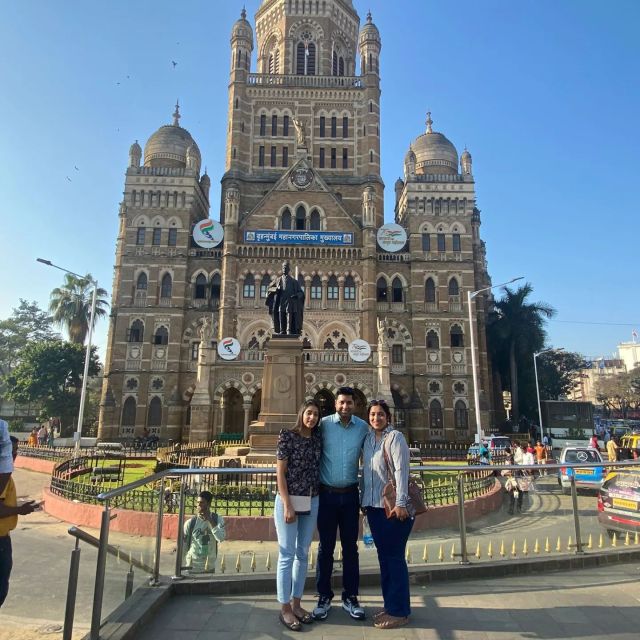
The University of Mumbai is one of India’s oldest and premier universities. The Bombay High Court is one of the country’s oldest high courts and is primarily based in Mumbai. Together, they show the importance of education and law in the city’s public life.
These are not simply two more impressive buildings. They represent systems that helped shape modern Mumbai: higher education, courts, administration, and civic authority. The contrast between them also gives the guide room to explain different architectural purposes.
You may find that this section is more rewarding if you enjoy ideas as much as façades. The tour’s stated focus includes planning elements and ornamental details, so listen for explanations of how the buildings were designed and what their original roles were.
The limitation is that historic institutions can be easier to appreciate from the outside. Do not book this walk expecting extended interior access to every building. The experience is about the city’s public architecture and the connections between sites.
Kala Ghoda changes the mood
Kala Ghoda is a crescent-shaped art district known for its heritage buildings. Compared with the formal civic quarter, it feels more creative and varied.
This section gives the tour a welcome change of pace. You are still looking at old structures, but the district’s art identity helps show that heritage is not frozen in the past. The old buildings remain part of an active cultural area.
I would pay attention to the relationship between the buildings and the street. The point is not only which structure is oldest. It is how a district gains character from a collection of buildings, public spaces, and cultural uses.
The name Kala Ghoda refers to a black horse, but the supplied tour details do not specify a particular monument or sculpture stop connected with that name. Your guide will shape the emphasis here, so this is a good moment to ask questions about the district’s architecture and present-day role.
Watson’s Hotel explains why materials matter
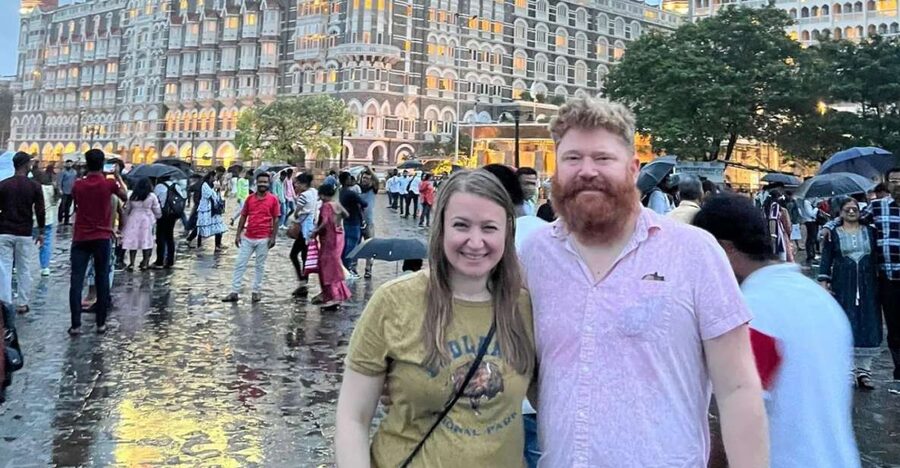
Watson’s Hotel is described as the earliest surviving example of cast-iron architecture in India. That makes it one of the more unusual stops on the route.
Many visitors focus on stone towers and church interiors, but cast iron tells another story about technology, transport, and construction. The building helps you think about how parts could be manufactured and assembled, rather than built entirely on site in the traditional way.
This is exactly the sort of detail that justifies hiring a guide. Without context, you might pass the structure and wonder why it looks different. With an explanation, its material becomes the main attraction.
Do keep your expectations measured. The information provided identifies Watson’s Hotel as a viewing stop, not as a place where you can book a room or tour private interiors.
The Taj Mahal Palace and Colaba’s grand finale
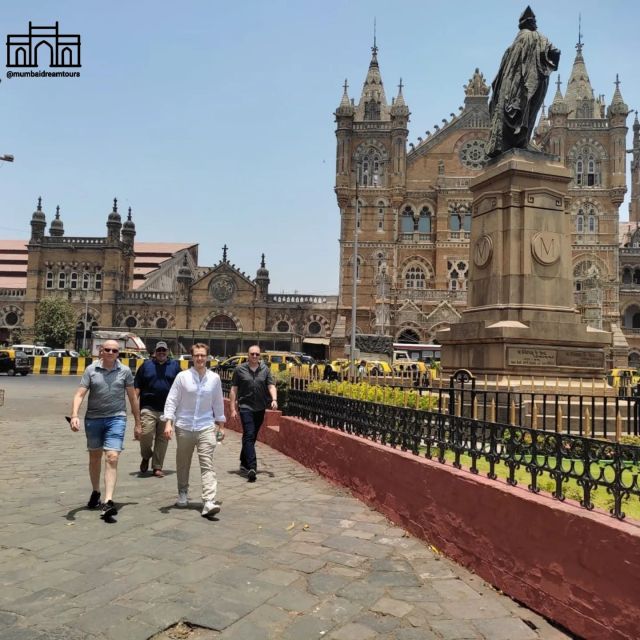
The Taj Mahal Palace is a heritage five-star hotel in Colaba. Its name is tied to luxury and ceremony, but on this walk it also represents the continuing life of South Mumbai’s historic buildings.
The hotel provides a useful contrast with the public institutions earlier in the route. Instead of a station, court, university, or church, you are looking at a landmark associated with hospitality and international visitors. Its setting helps shift the tour toward Colaba and the waterfront.
I like having this stop near the end because it links architecture with the way Mumbai presents itself to the world. You see how the city’s old quarters developed a public image built around hotels, harbor views, shopping streets, and monumental gateways.
The tour does not include a hotel stay or promise access beyond public areas. Treat the Taj Mahal Palace as an exterior heritage sight unless your guide tells you otherwise.
Gateway of India and the waterfront finish
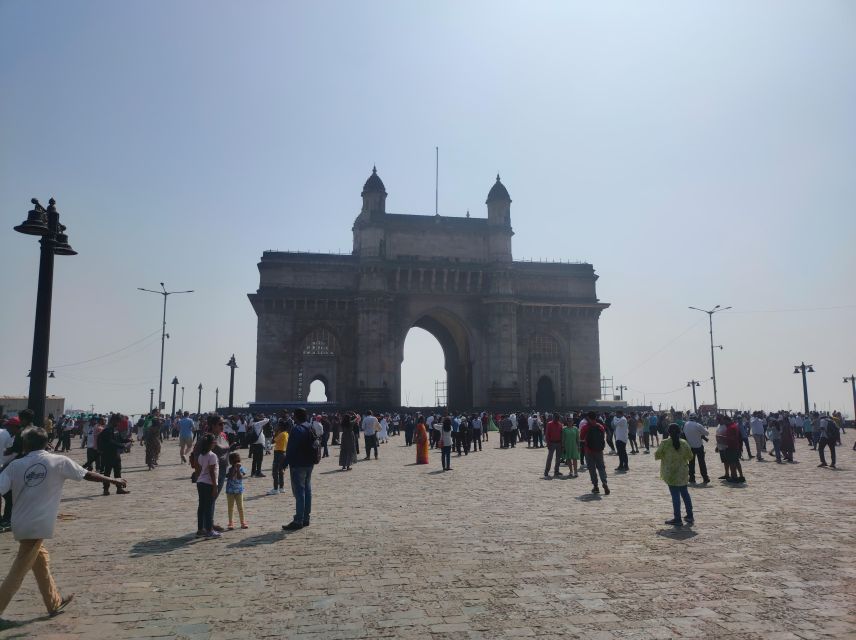
The Gateway of India is an arch monument built in the early 20th century. It is one of Mumbai’s most recognizable landmarks and a fitting endpoint for a South Mumbai heritage walk.
By the time you reach the Gateway, earlier stops should help you read it with more context. It is not just a grand arch beside the water. It belongs to a city shaped by empire, sea trade, migration, transport, and public ceremony.
The waterfront gives the tour a visual finish that the inland civic buildings cannot provide. You get a broad sense of Mumbai’s position on the harbor and a natural place to pause after several hours of walking.
Marine Drive is also highlighted as part of Old Mumbai’s major attractions. The supplied details do not specify exactly how much time is spent there or whether it is a formal final stop on every departure, so check the day’s route with your guide. The same applies to the precise order of the sites.
Guides who make the difference
The strongest feature of this tour is the guide. A three-hour walk can feel flat if it is only a list of dates and building names. Here, the named guides bring different strengths.
Sanika is described as warm, relaxed, and clear when explaining Mumbai’s past. Krishna is praised for answering questions and adapting the walk when one person joined alone. Ketan is noted for studying Indian literature and archaeology, with particular enthusiasm for history. Abhi is described as especially useful for first-time visitors, while Alan is praised for conversation as well as information. Alkama is noted for strong knowledge of the city’s landmarks and history.
You should not assume you will receive a particular guide unless the booking confirms it. Still, these details show the kind of experience to expect: an English-language walk shaped by questions, conversation, and local interpretation rather than a recorded script.
If you have a special interest in architecture, archaeology, religion, literature, or urban planning, say so early. The tour’s stated purpose is educational and imaginative, and the best use of that format is to ask about what catches your eye.
Is $28 a fair price?
At $28 per person, this is a sensible buy if you want a structured introduction to South Mumbai. You are paying for about three hours of orientation, historical explanation, and access to a route that would be harder to understand on your own.
The value is strongest for first-time visitors. You see many of the area’s headline sights in one outing, including CST, Town Hall, St. Thomas’ Cathedral, Flora Fountain, the university, the High Court, Kala Ghoda, Watson’s Hotel, the Taj Mahal Palace, and the Gateway of India.
The value is less clear if you already know Mumbai’s historic center well or prefer to explore entirely at your own pace. You will not have the freedom to linger for a long time at every stop, and the tour focuses on viewing and explanation rather than guaranteed interior visits.
English is the listed language. You can reserve and pay later, and cancellation is allowed up to 24 hours in advance for a full refund. Those terms are useful when your Mumbai schedule is still changing.
Who should book this walk?
I would recommend it to first-time visitors, architecture fans, history-minded walkers, and anyone who wants a clear introduction before exploring South Mumbai alone. It also suits solo visitors, since the guide can make the experience more personal when the group is small.
It is a good choice for people who prefer context over quick sightseeing. You will learn why the buildings matter, not just where they are.
I would think twice if you dislike walking for three hours, want guaranteed time inside every landmark, or need a slow, private itinerary built around one site. The route covers a lot, so comfortable walking shoes, sun protection, and water are practical choices even though those items are not part of the formal tour description.
Should you book the Mumbai Heritage Walking Tour?
Book it if you want to understand South Mumbai rather than simply photograph it. The route covers the city’s major historic symbols, while the guides add the human voice that makes the buildings easier to remember.
The best reason to go is the combination of range and explanation: a UNESCO-listed railway station, old institutions, a cathedral, a cast-iron hotel, an art district, grand Colaba landmarks, and the Gateway of India. At $28, that is a fair introduction, especially at the start of your stay.
Skip it only if the physical walking or fixed three-hour format does not suit you. For most first-time visitors, this is a practical way to get your bearings and see why South Mumbai remains the city’s most rewarding historic quarter.
FAQ
Where does this heritage walking tour take place?
The tour takes place in South Mumbai, in Maharashtra, India. It covers Old Mumbai and major historic areas including the civic center, Kala Ghoda, Colaba, and the waterfront.
How long is the Mumbai Heritage Walk?
The walking tour takes about three hours, based on the tour details provided by past participants.
What language is the tour offered in?
The listed tour language is English.
Which major landmark is included first?
Chhatrapati Shivaji Terminus is included. It is a UNESCO World Heritage Site and one of India’s most notable railway stations.
Does the tour include the Gateway of India?
Yes. The Gateway of India is one of the listed stops, along with the Taj Mahal Palace in the Colaba area.
Is Marine Drive included?
Marine Drive is highlighted as one of Old Mumbai’s important attractions. The supplied details do not specify the exact amount of time spent there or the precise order of stops.
How much does the experience cost?
The listed price is $28 per person.
Can I cancel or pay later?
Yes. You can reserve and pay later, with nothing due at booking. Cancellation up to 24 hours in advance qualifies for a full refund.
More Historical Tours in Mumbai
- Best South Mumbai Heritage Walk
★ 5.0 · 122 reviews - Heritage Walk: Recommended by Gigi Hadid as a must-do in Mumbai
★ 5.0 · 122 reviews - Hill-station & Heritage: Lonavala & Karla Caves Tour from Mumbai
★ 5.0 · 60 reviews - Mumbai Heritage Walk and Elephanta Caves Experience
★ 5.0 · 53 reviews
Just added around Mumbai
- Temples & Vineyards: Private Tour to Nashik from Mumbai★ 4.5 · 3 reviews
- Mumbai: Private City sightseeing and Dharavi Slum Tour★ 5.0 · 3 reviews
- Mumbai: Full Day City Sightseeing with Lunch, Car & Guide★ 4.3 · 3 reviews
- Elephanta Island Private Speedboat Tour from Mumbai – 6pax★ 5.0 · 3 reviews
- Mumbai Sightseeing Tour by Public Transport with family Lunch★ 5.0 · 3 reviews
- Mumbai by Dawn★ 4.5 · 3 reviews
- Mumbai: Elephanta Island and Elephanta Caves Guided Tour★ 4.4 · 3 reviews
- Mumbai Dharavi Slum Community Tour★ 5.0 · 3 reviews
South Mumbai Heritage Walks, compared.



Heritage Walk: Recommended by Gigi Hadid as a must-do in Mumbai
Read our review →
Mumbai 800 Year Worli Village: Talking Goddess, Old Fort & more
Read our review →
Mumbai Heritage Walk and Elephanta Caves Experience
Read our review →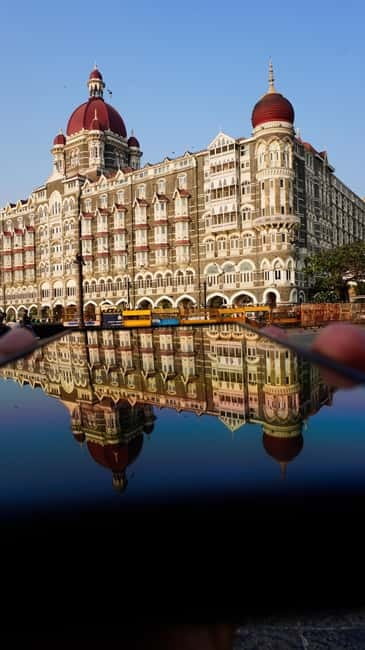
Browse the lists this tour appears in