

Reviewed · SOUTH MUMBAI HERITAGE WALKS
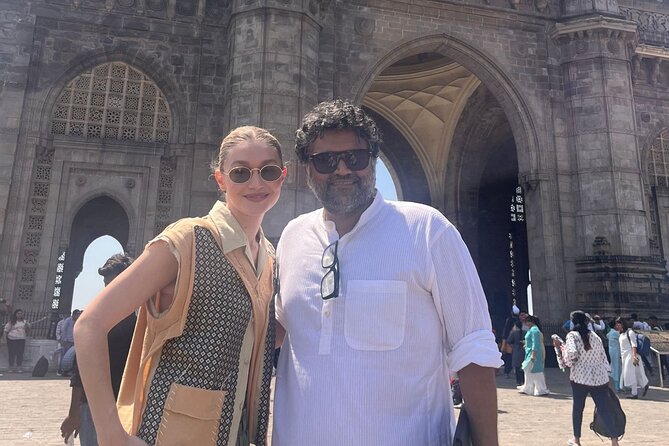
Heritage Walk: Recommended by Gigi Hadid as a must-do in Mumbai
South Mumbai’s past is packed into a walkable stretch of streets, and this private tour brings the city’s grand buildings, old trade routes, Jewish heritage, art scene, and dockside stories into one morning. You move from Town Hall and Horniman Circle to Kala Ghoda and Lion Gate, with a local guide explaining what you are seeing.
I like the private format, since guides such as Meherbeen and Dereck can adjust the pace and focus around your interests. I also like the Yazdani stop, a small but useful break that gives the tour a taste of everyday Mumbai rather than only grand architecture.
The main caution is that this is largely an exterior walking tour. You may hear excellent stories about important buildings without going inside them, so it suits curious walkers more than anyone hoping for museum-style access.
In This Review
- Key points to know before booking
- Why this South Mumbai walk works so well
- Starting at Town Hall and the Asiatic Society
- Horniman Circle, St. Thomas Cathedral, and the city’s public face
- A quick bite at Yazdani Restaurant and Bakery
- Flora Fountain and the making of modern Maharashtra
- The Bombay Stock Exchange and a banyan tree origin
- Keneseth Eliyahoo Synagogue and the Sassoon family
- Kala Ghoda, Watson Hotel, and Mumbai’s art district
- Lion Gate and the old docks
- What the private format changes
- Pickup, timing, and practical planning
- Who should book this heritage walk?
- Should you book the Mumbai Heritage Walk?
- FAQ
- How long does the heritage walk last?
- What is the price per person?
- Is hotel pickup and drop-off included?
- Where does the tour start?
- Where does the tour end?
- Is food included?
- Is this a private tour?
- Can children join for free?
Key points to know before booking
- Town Hall sets the scene: Begin behind the Asiatic Society and learn how the old Bombay Fort shaped the city.
- Yazdani adds a local pause: A quick bite at the famous Parsi bakery breaks up the walking.
- The route links major eras: You move from colonial civic buildings to finance, Jewish heritage, art, and the old docks.
- Private guiding makes a difference: Meherbeen and Dereck have adjusted the experience around individual interests and timing.
- Expect a walking tour, not an interior tour: Most stops are viewed from outside, with admission listed as free.
- The end point is Kala Ghoda: The tour finishes near the art precinct, making it easy to continue exploring on foot.
Why this South Mumbai walk works so well
This experience is designed to help you get your bearings in South Mumbai. It is not a long list of disconnected monuments. The route follows the way the city developed, from the Fort area and civic institutions to commerce, art, community life, and the docks.
At $44.39 per person, the value depends largely on how much you want from a guide. You are paying for a private experience lasting about three to four hours, hotel pickup and drop-off, the guide, taxes, and a snack at Yazdani. For a first morning in Mumbai, that can be a fair price, especially if you prefer asking questions and setting your own pace.
The cost is less attractive if you only want quick photographs of famous buildings. You can see many of these places independently, and the tour does not promise entry into the buildings. Its real value is the connecting story, told while you walk through the streets.
The tour is recommended by Gigi Hadid as a must-do in Mumbai, but the more useful point for you is its practical shape. It covers several major sights without demanding a full day, and the private format gives you more control than a large group outing.
More South Mumbai heritage walks:
- Group Guided Walking Tour in Fort and Colaba
★ 5.0 · 1,073 reviews - Private Guided Walking Tour in Fort & Colaba
★ 5.0 · 895 reviews - Private Guided Open Jeep Tour in Fort & Colaba
★ 5.0 · 170 reviews
Starting at Town Hall and the Asiatic Society
The walk begins at the Asiatic Society in Town Hall, on Shahid Bhagat Singh Road in Fort. The meeting point is outside one of the most important early civic buildings in this part of Mumbai, near the old Bombay Castle.
Your guide starts with the former Bombay Fort. This gives the rest of the tour a clear frame. Instead of seeing South Mumbai as a collection of impressive façades, you begin to understand how the fortified settlement expanded and became a major city.
The first stop takes about five minutes and has no admission charge. That short time is enough for an introduction, but your guide may spend longer here if you have a strong interest in Mumbai’s early development.
The Asiatic Society itself receives a longer explanation. You hear about its mid-1800s setting, the first exhibition of gas lights here, and an amusing story involving Jinnah, the founder of Pakistan. These small anecdotes are useful because they keep the discussion from becoming a dry list of dates.
Do not expect a formal indoor visit based on the information provided. The tour focuses on the place and its stories, and the buildings are generally viewed from outside. If you want to enter the Asiatic Society, ask your guide in advance rather than assuming it is included.
Horniman Circle, St. Thomas Cathedral, and the city’s public face
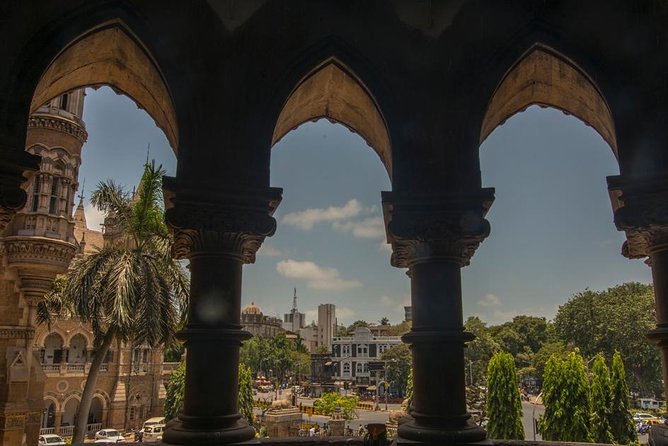
From Town Hall, you walk through the Horniman Circle precinct toward St. Thomas Cathedral. The stop is planned for about 20 minutes, giving you time to look at the surrounding streets and understand how this district developed as a civic and commercial center.
This is one of the better parts of the route for seeing how different layers of Mumbai sit close together. The walk is not limited to one famous landmark. You are moving through a district where gardens, offices, religious buildings, and historic façades share the same compact area.
Because the tour is on foot, your guide can point out details that are easy to miss from a vehicle. The tradeoff is physical effort. You need a moderate level of fitness, and Mumbai’s weather can affect how comfortable the walk feels. Wear practical shoes, and consider choosing a cooler start time if the schedule allows.
The starting and ending times can change because of traffic and conditions on the ground. That flexibility may be helpful in Mumbai, where getting around the city can take longer than expected.
A quick bite at Yazdani Restaurant and Bakery
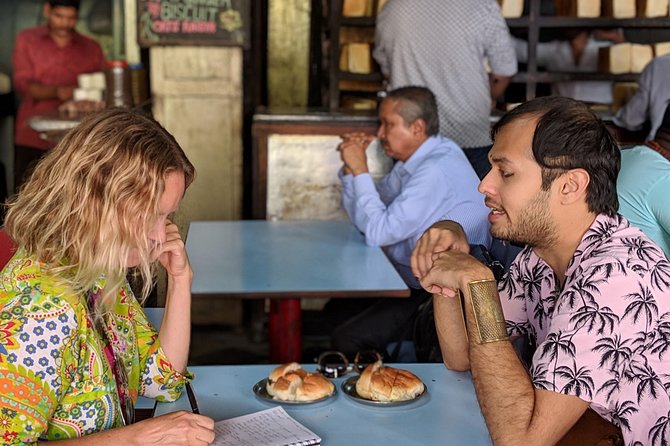
The Yazdani stop lasts about 30 minutes and includes a quick bite. This is not presented as a full meal or food tour. Think of it as a short pause at an iconic Parsi bakery, placed in the middle of a demanding walking route.
I like this stop because it gives the experience a more ordinary, lived-in feel. The tour is full of grand institutions, famous landmarks, and major events. A bakery break adds a small piece of daily city life.
The exact snack is not specified, so you should not book this expecting a particular dish. If you have dietary restrictions, ask the operator before booking. The included item is described only as a quick bite.
One useful detail from the experience is the flexibility around refreshments. A participant on a particularly enjoyable tour discovered mint chai along the way, though that is not listed as a standard inclusion. Treat that as a possible personal find, not something guaranteed by the booking.
More guided walks on foot:
- Private Guided Walking Tour in Bandra Queen of Suburbs
★ 5.0 · 383 reviews - Private Guided Spiritual Walk in Banganga Hindu Temples
★ 5.0 · 271 reviews - Mumbai: Dharavi Slum Walking Tour by First Female Tour Guide
★ 4.9 · 192 reviews - Private Guided Non-Veg Street Food Walking Tour in Muslim Quarter
★ 5.0 · 140 reviews
Flora Fountain and the making of modern Maharashtra
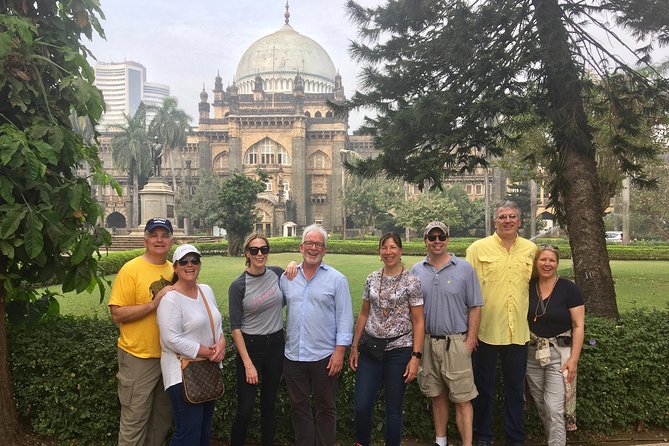
Flora Fountain is next, with about 15 minutes set aside. The fountain marks the point where Bombay expanded beyond the old Fort limits, so it connects the earlier fortification story with the city’s later growth.
Your guide also discusses the division of the state of Maharashtra while you look toward the Hutatma Smarak. This gives the stop a political and regional angle. You are not only looking at a decorative fountain. You are considering how boundaries, public memory, and the identity of the city changed over time.
This is another exterior stop, and no ticket is needed. The setting can be busy, so stay close to your guide when crossing streets or moving between viewpoints. The tour’s value here comes from interpretation rather than access to a building.
The Bombay Stock Exchange and a banyan tree origin
The Bombay Stock Exchange is planned for about 10 minutes. It is the financial center of modern Mumbai, but the story begins in a much humbler place, under a banyan tree.
That contrast makes the stop memorable. You see how informal trading grew into a major institution housed in an imposing structure. The guide uses the building to explain Mumbai’s economic rise, giving you a better sense of why this small area became so important.
Again, you should expect to view the exchange from outside. The tour does not include a stock exchange visit or an indoor financial tour. Ten minutes may feel short, but it works well as one chapter in a route that keeps moving.
Keneseth Eliyahoo Synagogue and the Sassoon family
The walk then reaches Keneseth Eliyahoo Synagogue, where the stop lasts about five minutes. The focus is Mumbai’s Jewish heritage and the Sassoon family’s role in the city.
Five minutes is a brief visit, but the subject adds welcome variety. South Mumbai’s story is not only British colonial architecture and Indian commerce. Jewish communities and families such as the Sassoons also helped shape the city’s trade, buildings, and public life.
The synagogue is another place where you should not assume interior entry. The supplied details describe a discussion of its history, not an included admission. If seeing the inside matters to you, confirm the arrangements before you reserve.
Kala Ghoda, Watson Hotel, and Mumbai’s art district
Kala Ghoda is the longest major stop, at about 25 minutes. This is Mumbai’s art precinct, and it gives the tour a change of mood after the formal civic and financial districts.
The guide continues the Sassoon story here and also explains the Watson Hotel, described as the city’s first iron cast building. You hear about its connection to Mark Twain, adding a literary and international note to the walk.
Kala Ghoda is a practical place to finish because you can continue exploring the area after the tour. The official end point is near the Archana and Harish Mittal Art Initiative at Ador House on K. Dubash Marg. From here, you are already positioned in one of South Mumbai’s main art areas.
The route does not include a gallery tour or museum admission. Still, the setting gives you a useful introduction to the precinct, and you can decide afterward which buildings or cultural sites deserve more of your time.
Lion Gate and the old docks
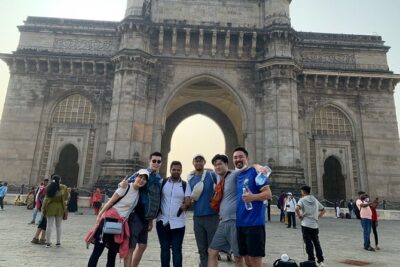
The final stop is Lion Gate, where the tour ends after about 15 minutes. This brings the walk to Mumbai’s old docks, shifting the story from civic buildings and art to shipping, trade, and the port.
The guide covers several unusual subjects here: the mystery of the Ice King, Mumbai’s connection to the American Civil War, and other dockside stories. These details help explain why the port mattered far beyond the immediate waterfront.
Ending at the docks gives the route a satisfying shape. You start with the old Fort and finish with the commercial gateway that helped Mumbai grow. The experience is strongest when you appreciate that broad story rather than treating each stop as an isolated photo opportunity.
What the private format changes
A private tour is especially useful in Mumbai because it lets you ask about the subjects that catch your attention. Dereck has waited for a late party and adjusted the walk around personal interests. Meherbeen has also shaped the experience around individual preferences, and one version of the tour included a local bus hop on and off.
That bus detail is not part of the standard description, so do not count on it. It does show that the route can be adapted when local conditions or the group’s needs make that sensible.
The guide’s flexibility is a major part of the value. If you want more time at the Asiatic Society, less time on finance, or extra context about Jewish Mumbai, say so early. If you prefer a brisk walk, mention that too.
The experience is only for your group, not a mixed party. That usually makes it easier to manage questions, photographs, comfort breaks, and walking speed. It also means the quality of your day depends more heavily on the guide match.
Pickup, timing, and practical planning
Hotel pickup and drop-off are included, but an additional transport cost applies for pickup from hotels in suburban Mumbai. Clarify your hotel location before booking so the advertised price does not surprise you later.
The stated duration is approximately three to four hours. One outing lasted around three and a half to four hours and included a local bus segment, so allow enough space in your day for some variation.
The listed starting point is the Asiatic Society in Fort, while the end point is in Kala Ghoda. Even with pickup and drop-off, the actual walking begins in central South Mumbai and ends several streets away in the art precinct.
The tour requires moderate physical fitness. The route includes several hours on foot, and weather can affect the experience. The operator may cancel because of poor weather, in which case you are offered another date or a full refund.
Children under nine can join free of charge. The tour is not conducted on the day of the Mumbai Marathon, and the order of stops may change at the guide’s discretion.
You can cancel for a full refund up to 24 hours before the start time. Changes or cancellations inside that window are not accepted, so keep your schedule firm once the deadline passes.
Who should book this heritage walk?
I would choose this tour if you have limited time in Mumbai and want a strong first look at South Mumbai. It suits you if you enjoy architecture, city stories, community history, and short stops linked by a walk.
It is also a good fit if you prefer private guiding. The ability to ask questions and adjust the pace can make a major difference, especially when a subject such as the Fort, the Sassoons, or the docks catches your attention.
Families may appreciate the private setup and free admission for children under nine. Still, younger children may find three to four hours of walking tiring, and the route does not appear to be built around games or child-focused activities.
I would hesitate if you mainly want to go inside landmark buildings. One criticism of the experience is fair: many important sites are discussed from the outside. The guide works hard to make the architecture and stories appealing, but the tour is not an interior access pass.
Should you book the Mumbai Heritage Walk?
Book it if you want a compact, private introduction to South Mumbai with a guide who can make the route personal. The best features are the linked story of the Fort, the unusual stops at Yazdani and Lion Gate, and the chance to finish in Kala Ghoda.
Skip it if you want a relaxed vehicle tour, a food-focused outing, or guaranteed entry to historic interiors. At $44.39, the price is reasonable for a private three to four hour walk with transfers and a snack, but the value rests on your interest in stories and streets rather than ticketed attractions.
For a first day in Mumbai, this is a smart way to get oriented. Wear comfortable shoes, confirm the pickup cost if you are staying outside South Mumbai, and tell your guide what you most want to understand before the walk begins.
FAQ
How long does the heritage walk last?
The tour lasts approximately three to four hours. The exact timing can change because of traffic and conditions on the ground.
What is the price per person?
The listed price is $44.39 per person.
Is hotel pickup and drop-off included?
Hotel pickup and drop-off are included. An additional transport cost applies for pickup from hotels in suburban Mumbai.
Where does the tour start?
The tour starts at the Asiatic Society in Mumbai Town Hall, on Shahid Bhagat Singh Road in Fort.
Where does the tour end?
The tour ends at Ador House on K. Dubash Marg in Kala Ghoda, near the Archana and Harish Mittal Art Initiative.
Is food included?
A quick bite at Yazdani Restaurant and Bakery is included. The specific snack is not stated.
Is this a private tour?
Yes. Only your group participates in the activity.
Can children join for free?
Children below nine years of age can take the tour free of charge.
More Historical Tours in Mumbai
- Best South Mumbai Heritage Walk
★ 5.0 · 122 reviews - Mumbai: South Mumbai Heritage Walking Guided Tour
★ 4.5 · 69 reviews - Hill-station & Heritage: Lonavala & Karla Caves Tour from Mumbai
★ 5.0 · 60 reviews - Mumbai Heritage Walk and Elephanta Caves Experience
★ 5.0 · 53 reviews
Just added around Mumbai
- Temples & Vineyards: Private Tour to Nashik from Mumbai★ 4.5 · 3 reviews
- Mumbai: Private City sightseeing and Dharavi Slum Tour★ 5.0 · 3 reviews
- Mumbai: Full Day City Sightseeing with Lunch, Car & Guide★ 4.3 · 3 reviews
- Elephanta Island Private Speedboat Tour from Mumbai – 6pax★ 5.0 · 3 reviews
- Mumbai Sightseeing Tour by Public Transport with family Lunch★ 5.0 · 3 reviews
- Mumbai by Dawn★ 4.5 · 3 reviews
- Mumbai: Elephanta Island and Elephanta Caves Guided Tour★ 4.4 · 3 reviews
- Mumbai Dharavi Slum Community Tour★ 5.0 · 3 reviews
South Mumbai Heritage Walks, compared.


Mumbai 800 Year Worli Village: Talking Goddess, Old Fort & more
Read our review →
Mumbai Heritage Walk and Elephanta Caves Experience
Read our review →
Browse the lists this tour appears in