
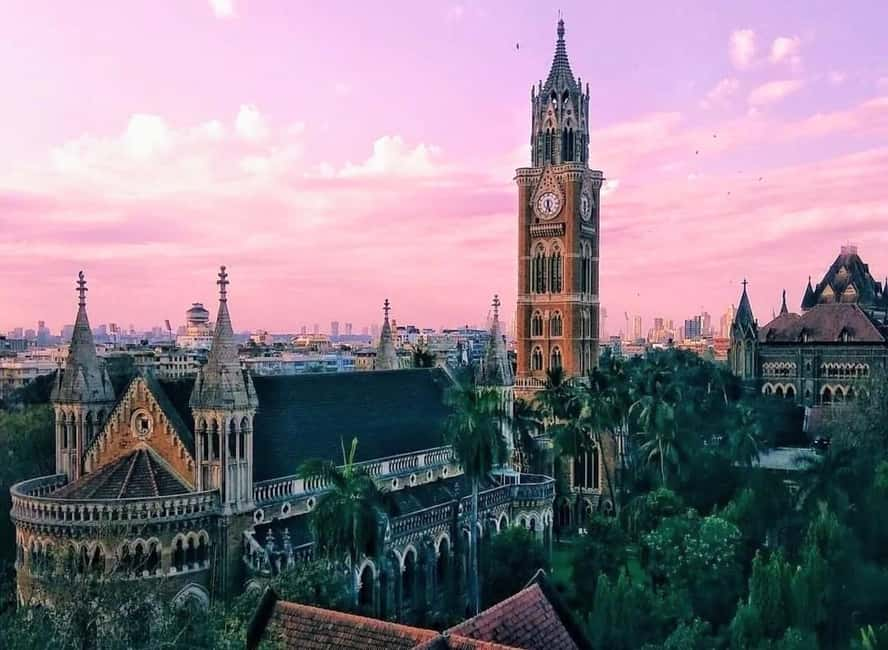
Reviewed · SOUTH MUMBAI HERITAGE WALKS
Stories of Mumbai: Heritage Walk with Hidden Tales
Mumbai’s past is easiest to grasp on foot, one street and story at a time. This private walk links the Gateway of India, Taj Mahal Palace Hotel, Royal Bombay Yacht Club, Colaba Causeway, old bazaars, a Parsi café, and Marine Drive into one long account of how fishing villages became a global financial center. I especially like the small-scale format and the chance to hear local stories in places standard sightseeing routes often skip. The main concern is reliability: one recent booking had a guide arrive more than an hour late, so confirm the meeting time before setting out.
I also like the flexible length, since you can book a shorter 2.5-hour outing or allow as much as six hours for a fuller look at Mumbai’s old quarters. Guides such as Nisar have been praised for their friendliness, useful recommendations, and lively facts. Still, the quality depends heavily on the guide assigned, and you should not assume every advertised courtyard or café visit will happen unless it is confirmed at the start.
In This Review
- Key points to know before you book
- Why this Mumbai heritage walk is different
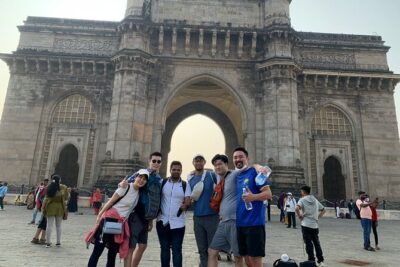
- Starting at the Gateway of India
- Colaba’s hotels, clubs, and trading past
- Old bazaars and the parts of Bombay that remain
- Stories of independence and changing identities
- The Parsi café and a cup of chai
- Reaching Marine Drive at the end
- How much time should you allow?
- What the private format adds
- The guide can make or break the day
- Who will enjoy this most?
- Practical advice before you set out
- Should you book Stories of Mumbai?
- FAQ
- How long does the heritage walk last?
- What language is the tour offered in?
- Is this a private tour?
- What is included in the price?
- Is admission to the Elephanta Caves included?
- Are meals included?
- Can I cancel for a full refund?
Key points to know before you book
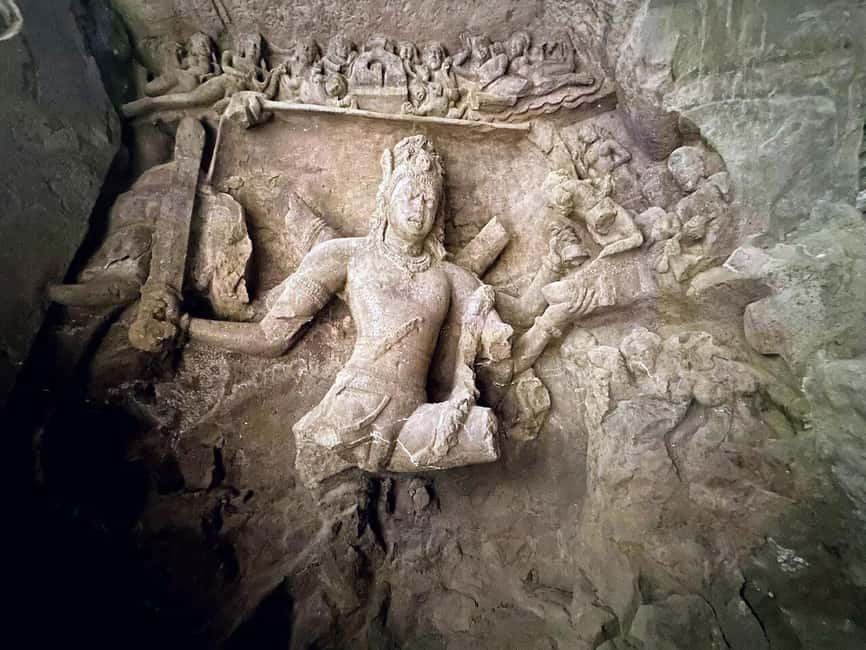
- The Gateway of India gives the walk its strongest opening: Learn how the monument is tied to both British arrival and the end of colonial rule.
- The route mixes grand landmarks with everyday Mumbai: Colaba’s hotels and clubs lead into bazaars, spice markets, cafés, and older residential districts.
- Nisar is a guide worth requesting: He has been praised for friendly service, interesting facts, and practical local recommendations.
- The private format allows flexibility: Pickup, drop-off, timing, and narration can be shaped around your interests.
- Chai and ferry travel are included: Meals beyond tea and admission to the Elephanta Caves are not.
- Allow extra time for walking: Comfortable shoes matter, and Mumbai’s weather can change the feel of a long outdoor tour.
Why this Mumbai heritage walk is different
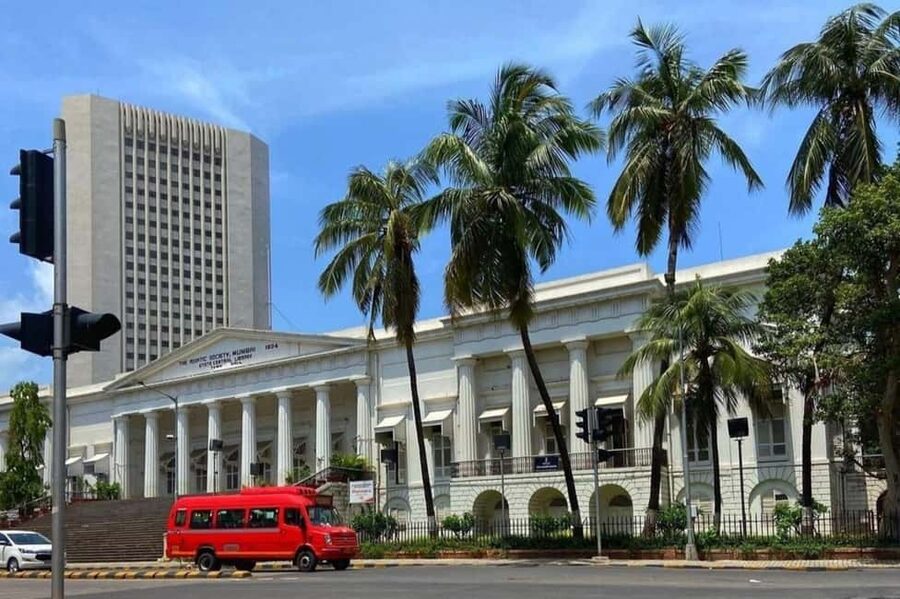
Many Mumbai sightseeing trips give you a quick roll call of famous buildings. This one aims to explain how the city grew, using architecture, markets, religion, trade, and independence-era stories as its thread.
That approach can make familiar sights more meaningful. The Gateway of India is not just a photogenic arch by the harbor. It marks a period when Bombay was a major British port, and it later became a symbol of British departure. The walk uses that contrast to frame Mumbai’s larger story.
You then move through the southern city on foot, where polished colonial buildings sit close to working markets and crowded shopping streets. I like this mix because it keeps the tour from becoming a parade of grand façades. You get a sense of how old Bombay survives within present-day Mumbai.
The experience is private, so you are not tied to a large group’s pace or interests. If you care about photography, you can spend longer with a façade or street scene. If you prefer history, you can ask for more context about trade, independence, or the communities that shaped the city.
There is one important qualification. The experience is described as a storytelling walk, but storytelling depends on the person leading it. A strong guide can turn an ordinary lane into a memorable stop. A late or poorly prepared guide can reduce the same route to a rushed collection of landmarks.
More South Mumbai heritage walks:
- Group Guided Walking Tour in Fort and Colaba
★ 5.0 · 1,073 reviews - Private Guided Walking Tour in Fort & Colaba
★ 5.0 · 895 reviews - Private Guided Open Jeep Tour in Fort & Colaba
★ 5.0 · 170 reviews
Starting at the Gateway of India
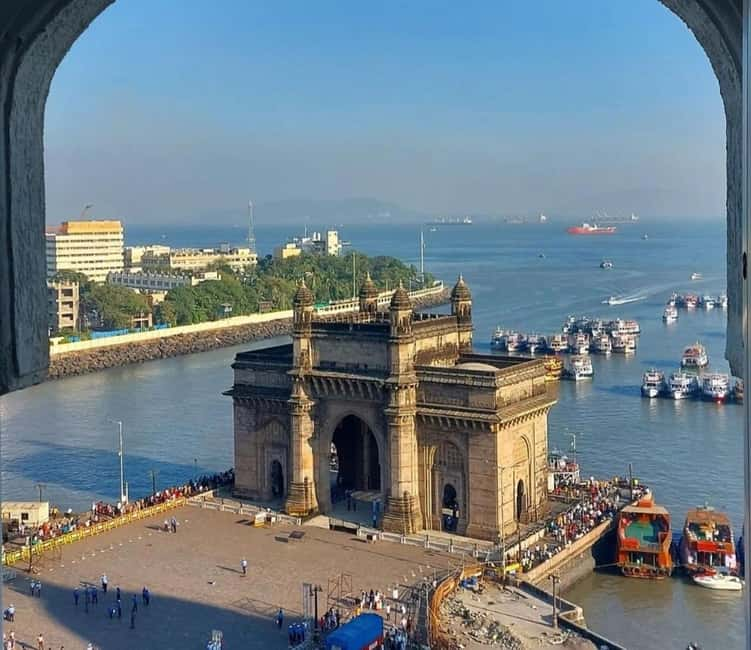
The Gateway of India is the natural place to begin. Built during the colonial period, the monument faces the water and has long been linked with Bombay’s role as a port city.
Your guide uses the site to explain two opposite moments. The Gateway represented British power when it was built, yet it is also associated with the departure of the last British troops after Indian independence. That gives you a useful frame for the rest of the walk: power changes, but buildings and streets often remain.
The area is busy and visually demanding. Give yourself a moment to look beyond the arch. You will find the harbor, ferries, hotel façades, and the constant movement that makes this part of Mumbai feel less like a museum and more like a working city.
The ferry is listed among the inclusions. If your chosen version includes a ferry segment connected with Elephanta, ask exactly how that part fits into your schedule. Elephanta Caves admission is not included, so budget separately if the caves are part of your plan.
Colaba’s hotels, clubs, and trading past
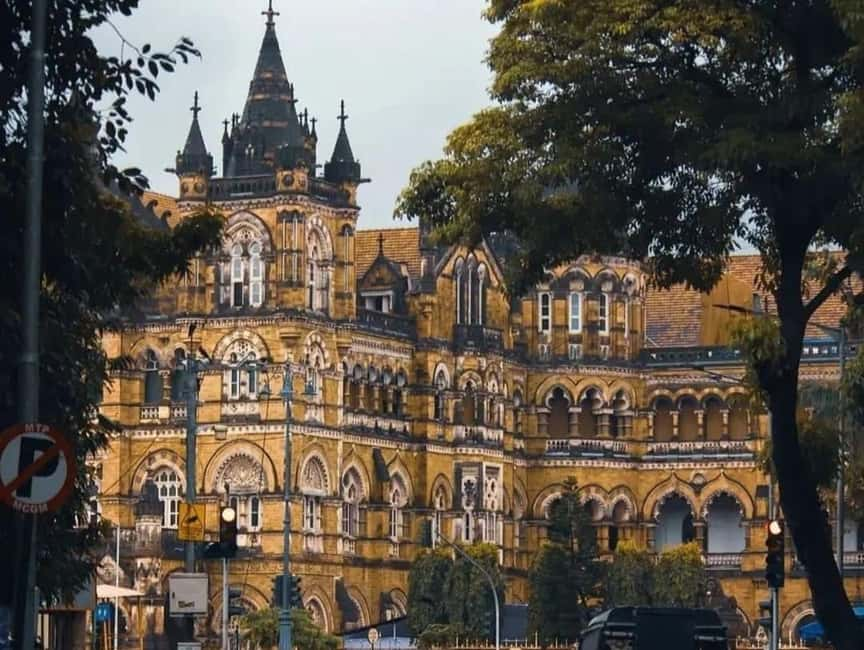
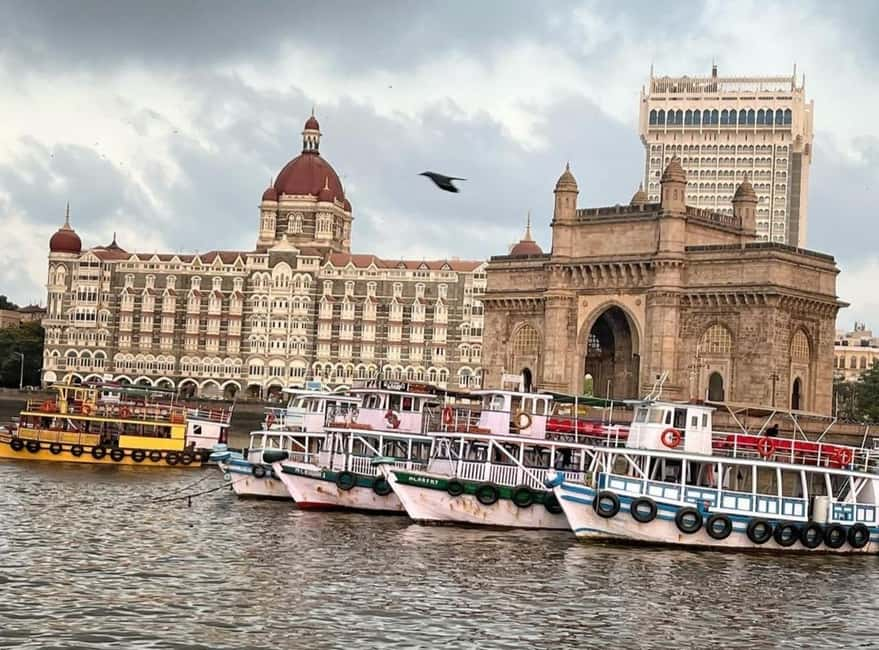
From the Gateway, the walk continues past the Taj Mahal Palace Hotel, the Royal Bombay Yacht Club, and Colaba Causeway.
The Taj Mahal Palace Hotel is one of Mumbai’s best-known colonial-era landmarks. It helps explain the city’s old relationship with shipping, business, luxury, and international visitors. The Royal Bombay Yacht Club adds another piece of that story, showing how social and commercial life once centered around the harbor.
Colaba Causeway changes the mood. It is a shopping street and a daily-use public space, not simply an architectural display. Here you can compare old façades with modern commerce, street activity, and the practical business of city life.
This is a good stretch for photography. You can frame ornate colonial details against signs, shopfronts, and people moving through the street. The guide’s narration matters here, since many buildings reveal little without explanation.
The area can also feel crowded and noisy. You will be walking near active streets, so this is not a quiet architectural stroll. Wear shoes with good support and keep your camera secure.
Old bazaars and the parts of Bombay that remain
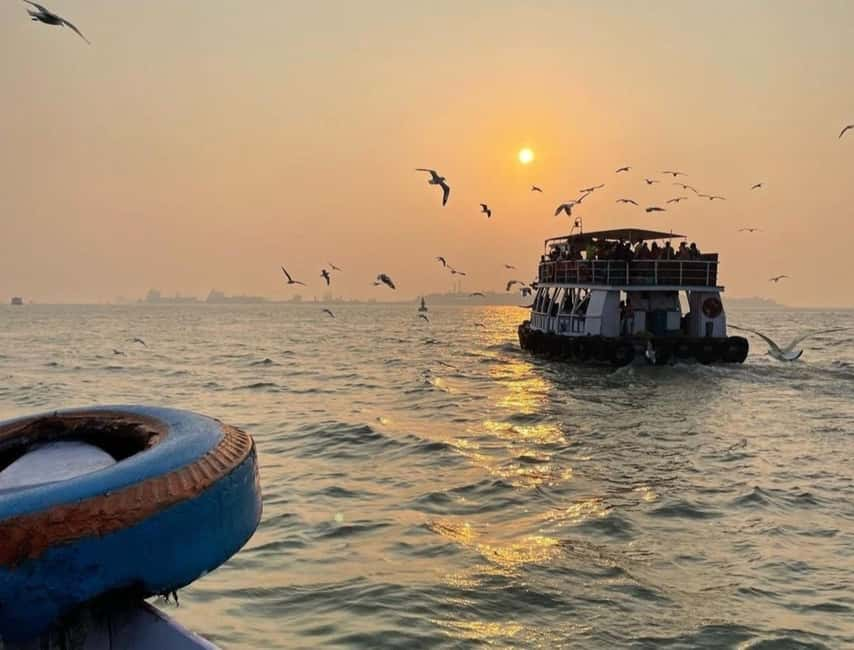
The most appealing promise of this experience is its move away from the main monuments. The route may include old bazaars, spice markets, historic districts, and older water structures such as step wells.
These places help you understand the city through ordinary work. Markets show how food, trade, and neighborhood life continue to shape southern Mumbai. A spice market, in particular, offers a more direct connection to commerce than a polished heritage façade does.
The advertised route also includes colonial courtyards that are rarely part of standard city tours. If access is available on the day, these quieter spaces can provide a welcome pause from Colaba’s traffic and crowds. Ask your guide early whether the courtyards are open and included in your route. That simple question can prevent a mismatch between expectation and experience.
The same advice applies to the so-called secret café stop. The experience includes chai at a local café, and the description points to an old Parsi café. That is a worthwhile detail because Parsi food and café culture form an important part of Mumbai’s social history. But the exact café is not named, so confirm where you will stop and whether the tea break is included in the time available.
More guided walks on foot:
- Private Guided Walking Tour in Bandra Queen of Suburbs
★ 5.0 · 383 reviews - Private Guided Spiritual Walk in Banganga Hindu Temples
★ 5.0 · 271 reviews - Mumbai: Dharavi Slum Walking Tour by First Female Tour Guide
★ 4.9 · 192 reviews - Private Guided Non-Veg Street Food Walking Tour in Muslim Quarter
★ 5.0 · 140 reviews
Stories of independence and changing identities
A good heritage walk should do more than point out dates. It should show how a city’s identity changed as political power, trade, and local communities shifted.
The route connects colonial landmarks with the Indian independence movement. That connection is useful because the southern city can otherwise look like a collection of British-era buildings. Your guide can help place those buildings within the larger story of resistance and self-rule.
You will also hear about Mumbai’s transformation from a cluster of fishing villages to India’s financial capital. The point is not to memorize every date. It is to understand the scale of change. A city that began as scattered coastal settlements became a major port, then a center of finance, film, trade, and migration.
The experience is at its best when the guide links architecture to people. Look for stories about who used a building, who worked in the market, and how older communities remain part of present-day Mumbai. That human angle is likely to stay with you longer than a list of construction dates.
The Parsi café and a cup of chai
Chai is a small inclusion, but it improves the rhythm of the walk. After several streets of buildings, markets, and traffic, a café stop gives you a chance to sit, ask questions, and watch local life at closer range.
The Parsi café reference adds a cultural layer. These cafés are associated with Mumbai’s older urban character and with a style of dining that belongs to the city’s mixed social past. Since only chai is included, do not count on a full meal or snacks as part of the tour.
Meals beyond chai are excluded, so eat beforehand if you are booking the longer version. A two-and-a-half-hour walk may be manageable with a light start, but a six-hour outing can cover a lot of ground. Ask about the planned café break when you confirm the schedule.
Reaching Marine Drive at the end
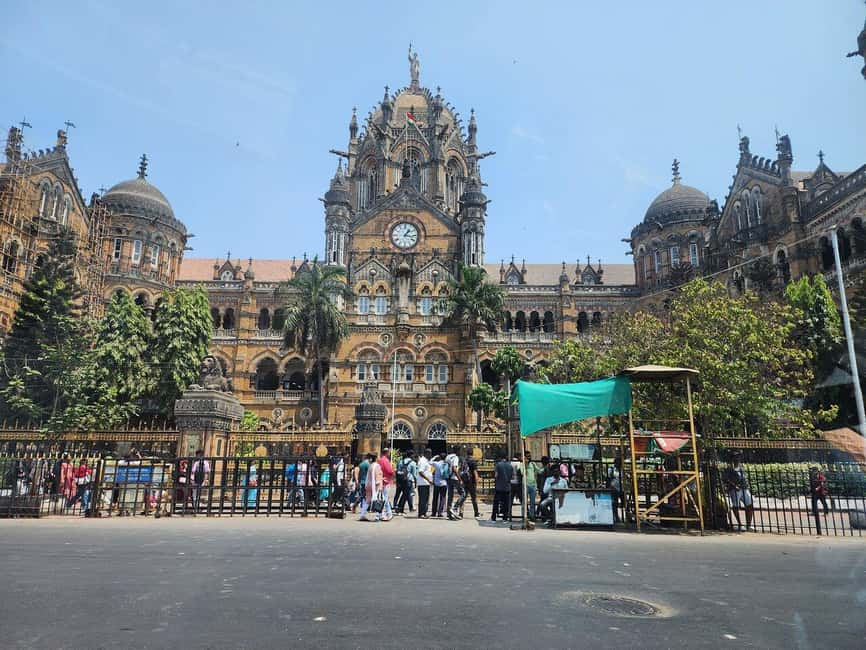
The tour concludes at Marine Drive, where the pace can slow down. After the tighter streets of Colaba, the open waterfront offers room to think about the city’s changes.
Marine Drive works well as a final stop because it presents modern Mumbai rather than colonial Bombay. The view and sea air provide a quiet contrast to the old markets and heritage buildings earlier in the day.
This ending is less about another monument and more about reflection. You can look back at the route as a sequence of changes: port city, colonial center, independence-era city, and modern financial capital. I like that the walk does not end at the first famous building. It gives the story a broader finish.
Weather will affect this part of the experience. Bring water, wear comfortable shoes, and prepare for changing conditions. Bottled water is included, but a hat or rain protection may still be useful depending on the day.
How much time should you allow?
The advertised duration ranges from 2.5 to 6 hours, which is a wide spread. The shorter option makes sense if you want a focused Colaba walk around the Gateway, major landmarks, and nearby streets.
The longer version suits you if you want more markets, café time, historical discussion, or ferry travel. It may also work better for photographers, since you can pause without forcing the guide to rush.
The flexible timing is a real advantage, but it also means you need to check the exact plan before booking. Meeting points can vary by option, and the listed duration does not tell you precisely how much time is spent walking, riding the ferry, or stopping at cafés.
One recent experience lasted about two hours and covered several attractive landmarks with a lot of information. That suggests the shorter format can still feel substantial when the guide keeps the pace moving. On the other hand, one booking suffered from a guide arriving over an hour late, leaving little time for the promised route. Confirm the start time and contact details in advance.
What the private format adds
A private tour costs $10 per person, which is low for an experience that includes a professional English-speaking guide, bottled water, chai, ferry travel, local taxes, and private pickup and drop-off.
The value is strongest if you are traveling with companions and want control over the pace. You can ask for more architecture, more market time, or more stories about Mumbai’s cultural communities. You are also not waiting for a large group to gather before moving on.
Pickup and drop-off make the day easier, especially in a city where traffic can make short distances take time. Still, because the meeting point varies by the option booked, check the exact arrangement rather than assuming the guide will meet you at the Gateway.
The low price also makes this a reasonable first look at Mumbai. You are not paying for a full-day luxury product, and you should set your expectations accordingly. The experience offers a guide, a route, and local context. It does not include meals, Elephanta admission, or a guaranteed deep visit inside every location named in the description.
The guide can make or break the day
The strongest praise has centered on guide Nisar. He has been described as friendly, helpful, accommodating, and good at sharing facts and stories. His recommendations can also be useful if you want ideas for what to see or eat after the walk.
That matters because the tour’s value lies less in transportation than in explanation. The buildings are already there. A good guide connects them, gives you local context, and answers questions without making the walk feel like a school lecture.
The overall rating is 4.2 from five ratings, but the individual experiences are not uniform. Four ratings were positive, including one that praised the architecture and its connection with current culture. Another highlighted a two-hour walk with attractive landmarks and plenty of information.
The outlier is serious. A guide arrived more than an hour late, rushed the route, gave information the customer considered inaccurate, and did not visit the courtyards or other less-known stops described for the experience. That is not a minor inconvenience. If you book, request Nisar if possible and contact Bombay Insider Tours shortly before the start.
Who will enjoy this most?
I would choose this walk if you enjoy cities through stories rather than checklists. It is especially well suited to:
- History lovers who want colonial Bombay, independence, and modern Mumbai connected in one narrative.
- Photographers who want major landmarks, markets, cafés, and street details in one route.
- Culture enthusiasts interested in Parsi café traditions, local markets, and the relationship between old buildings and present-day life.
- First-time visitors who want an introduction to southern Mumbai with a private guide.
- Repeat visitors who have already seen the Gateway and Taj Mahal Palace but want more local context.
It may be less suitable if you want a precise museum-style tour with guaranteed access to every courtyard, a fixed timetable, or a large number of formal interiors. The description points to several special stops, but access and timing can vary.
Practical advice before you set out
Wear comfortable shoes. This is a walking tour, and the longer format can last up to six hours.
Bring a camera, but also keep your attention on the guide. The best parts may be a small detail on a building, a market scene, or a story that does not photograph well.
Prepare for changing weather. Bottled water is provided, yet you should still dress for heat, humidity, or rain.
Ask these questions before the walk begins:
- Which landmarks and markets are included in my chosen duration?
- Is the Parsi café stop available today?
- Will we enter any colonial courtyards?
- How does the ferry fit into the route?
- Is Elephanta Caves admission needed for my option?
You can cancel up to 24 hours before the experience for a full refund, and the reserve-now, pay-later option keeps your plans flexible. Those terms are useful if your Mumbai schedule is still shifting.
Should you book Stories of Mumbai?
Book it if you want a reasonably priced, private introduction to Mumbai that brings together famous landmarks and less familiar corners. The route has a strong shape, from the Gateway of India to Marine Drive, and the combination of architecture, markets, chai, and local stories gives you more context than a quick photo stop.
I would book with two safeguards. First, request Nisar or confirm the guide’s name and experience. Second, verify the start time and ask which special stops are actually planned. With a punctual and prepared guide, this can be a memorable way to understand Mumbai’s past and present. Without that care, the tour may become a rushed walk past buildings you could have seen on your own.
FAQ
How long does the heritage walk last?
The experience lasts between 2.5 and 6 hours, depending on the option and availability. Check the available starting times and selected duration when booking.
What language is the tour offered in?
The live tour is conducted in English by an English-speaking guide.
Is this a private tour?
A private group option is available. Pickup and drop-off are included for the private tour option, and the timing and narration can be flexible.
What is included in the price?
The experience includes a professional English-speaking guide, pickup and drop-off for the private tour option, local taxes, bottled water, chai at a local café, and ferry travel.
Is admission to the Elephanta Caves included?
No. Elephanta Caves entrance is not included.
Are meals included?
Only chai at a local café is included. Meals and personal expenses are not included.
Can I cancel for a full refund?
Yes. You can cancel up to 24 hours in advance for a full refund. A reserve-now, pay-later option is also available.
More Historical Tours in Mumbai
- Heritage Walk: Recommended by Gigi Hadid as a must-do in Mumbai
★ 5.0 · 122 reviews - Best South Mumbai Heritage Walk
★ 5.0 · 122 reviews - Mumbai: South Mumbai Heritage Walking Guided Tour
★ 4.5 · 69 reviews - Hill-station & Heritage: Lonavala & Karla Caves Tour from Mumbai
★ 5.0 · 60 reviews
Just added around Mumbai
- Temples & Vineyards: Private Tour to Nashik from Mumbai★ 4.5 · 3 reviews
- Mumbai: Private City sightseeing and Dharavi Slum Tour★ 5.0 · 3 reviews
- Mumbai: Full Day City Sightseeing with Lunch, Car & Guide★ 4.3 · 3 reviews
- Elephanta Island Private Speedboat Tour from Mumbai – 6pax★ 5.0 · 3 reviews
- Mumbai: Elephanta Island and Elephanta Caves Guided Tour★ 4.4 · 3 reviews
- Mumbai Sightseeing Tour by Public Transport with family Lunch★ 5.0 · 3 reviews
- Mumbai by Dawn★ 4.5 · 3 reviews
- Mumbai Dharavi Slum Community Tour★ 5.0 · 3 reviews
South Mumbai Heritage Walks, compared.



Heritage Walk: Recommended by Gigi Hadid as a must-do in Mumbai
Read our review →
Mumbai 800 Year Worli Village: Talking Goddess, Old Fort & more
Read our review →
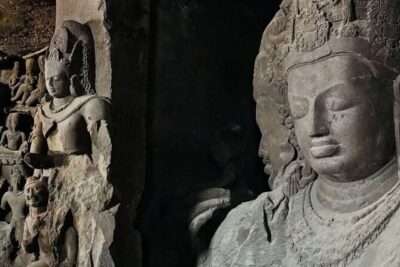
Mumbai Heritage Walk and Elephanta Caves Experience
Read our review →Browse the lists this tour appears in