
Reviewed · MUMBAI JEWISH HERITAGE TOURS
Jewish Heritage Tour
Mumbai’s Jewish story begins long before the city became a modern Indian powerhouse. This four-hour tour connects that story to working docks, historic synagogues, grand civic buildings, and the very practical spectacle of Dhobi Ghat, where laundry is washed outdoors on a huge scale.
I like the short orientation at the start, since the illustrated handouts and notes help you understand India’s Jewish communities before you see their buildings. I also like the mix of Jewish sites and everyday Mumbai scenes, especially Sassoon Docks and the drive past Marine Drive. The main drawback is the tight schedule. You cover a lot of ground in four hours, so this is better for broad context than a slow, detailed study of each synagogue.
In This Review
- Key points to know before you go
- Start with India’s Jewish communities
- Sassoon Docks and Mumbai’s working waterfront
- Knesseth Eliyahoo, the David Sassoon Library, and the Gateway area
- Shaar Harahamim, Mumbai’s oldest synagogue
- Magen David Synagogue and Mumbai’s Jewish communities
- Victoria Terminus and the Bombay Municipal Building
- Dhobi Ghat, an outdoor laundry system
- Marine Drive, Chowpatty, and the city’s grand route
- How the four-hour format works
- Is the $71 price good value?
- Who should book this Jewish heritage tour?
- Should you book it?
- FAQ
- How long does the Jewish Heritage Tour last?
- What is included in the price?
- Is lunch included?
- Which languages are available?
- Where does pickup take place?
- Which synagogues are visited?
- What is the oldest synagogue in Mumbai on this tour?
- Are shorts allowed?
Key points to know before you go
- Mumbai’s oldest synagogue: Visit Shaar Harahamim, also called the Gate of Mercy Synagogue, founded in 1796 by Samaji Hasaji Divekar, later known as Samuel Ezekiel Divekar.
- Three important Jewish sites: See Knesseth Eliyahoo Synagogue, Shaar Harahamim, and Magen David Synagogue.
- Jewish-built Mumbai landmarks: Sassoon Docks and the David Sassoon Library connect the city’s Jewish communities to trade, education, and public life.
- More than synagogues: The route includes Dhobi Ghat, Victoria Terminus, the Bombay Municipal Building, Marine Drive, Chowpatty, Oval Maidan, the High Court, Bombay University, and Flora Fountain.
- Easy transport: Hotel pickup and an air-conditioned car are included, which matters in Mumbai traffic and heat.
- Flexible booking: You can cancel up to 24 hours before the tour for a full refund and reserve now while paying later.
Start with India’s Jewish communities
The tour opens with a brief introduction to Jewish life in India. You learn about the arrival of Jewish communities roughly 2,000 years ago, their spread across different parts of the country, and the main sects and customs found in India.
This opening lesson is more useful than it may sound. Mumbai’s Jewish sites are connected to several communities, not one single group with one shared story. The guide’s illustrated handouts and notes give you names, dates, and background you can refer to as the morning unfolds.
The tour also places Jewish life in a wider Indian setting. The supplied information notes that Jewish people and customs were accepted in India over many centuries. That context helps you look beyond architecture and think about how different communities established themselves while keeping their own traditions.
You should expect an introduction rather than a long academic lecture. With only four hours, the guide needs to keep the history focused. That works well if you want a clear starting point before seeing the city, though visitors looking for a very detailed study of Jewish theology or family history will likely want more time elsewhere.
More Jewish heritage walks:
- Private Mumbai Jewish Heritage Tour: Baghdadi & Bene Israel
★ 5.0 · 36 reviews - Jewish Heritage and Mumbai Highlights Private Full-Day Tour
★ 5.0 · 32 reviews - Private Jewish Heritage Tour
★ 4.5 · 18 reviews
Sassoon Docks and Mumbai’s working waterfront
The first major stop is Sassoon Docks, built by an influential Baghdadi Jewish family. The docks are active in the morning, making this a useful place to see Mumbai as a working city rather than only as a collection of monuments.
The name Sassoon is important in Mumbai. The family’s influence appears elsewhere on the route, including the David Sassoon Library. At the docks, that influence is tied to commerce and the city’s waterfront economy.
Morning timing matters here. The docks are described as especially active early in the day, so ask your guide how long you will have at the stop and where you can safely stand. You may find the scene crowded and noisy, with plenty happening around you. That is part of the point, but it also means this is not a quiet photo stop.
I like beginning here because the tour does not treat Jewish heritage as something sealed inside old buildings. You see a Jewish connection to the practical business of Mumbai, then move on to institutions linked with learning, worship, and public life.
Knesseth Eliyahoo, the David Sassoon Library, and the Gateway area
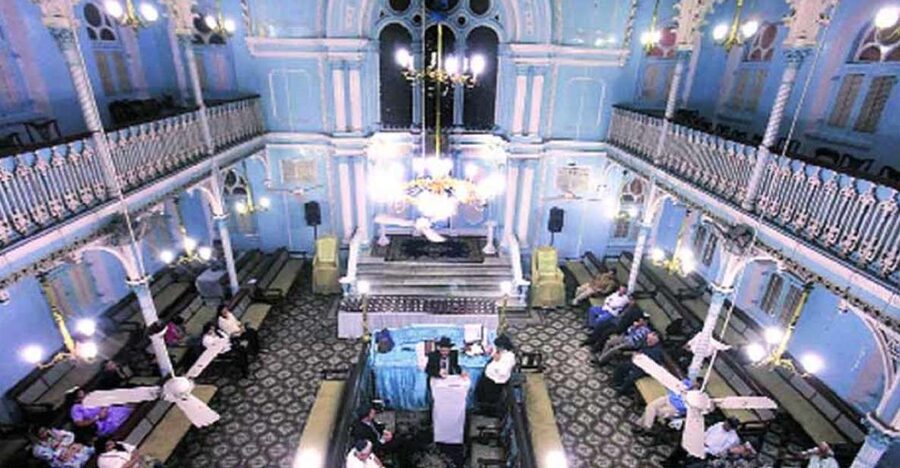
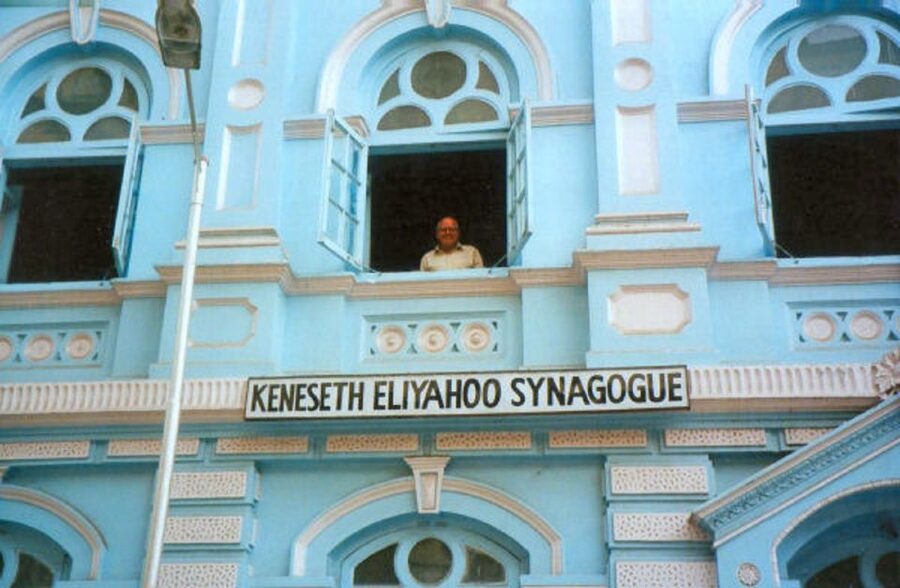
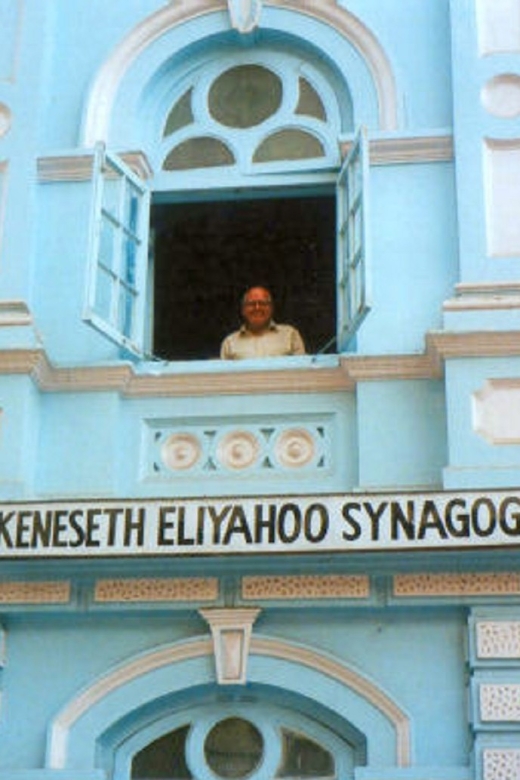
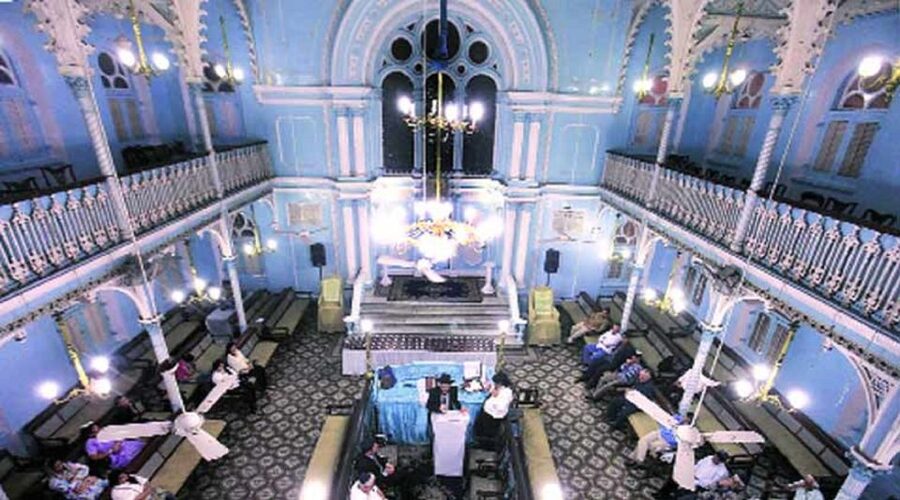
From Sassoon Docks, the route continues toward the Gateway of India area and Knesseth Eliyahoo Synagogue. The synagogue is known for its beautiful interiors, so this is one of the tour’s more architectural stops.
The building gives you a different view of Jewish Mumbai from the docks. Here, the focus shifts from trade to worship and community identity. Take time to look closely at the interior details rather than treating the visit as a quick photograph.
The nearby David Sassoon Library adds another part of the story. Its connection to the Sassoon family shows how Jewish philanthropy helped shape Mumbai beyond religious buildings. A library may not seem like an obvious Jewish heritage stop, but it gives useful context about education and public institutions.
This part of the route is also convenient for first-time visitors because several major Mumbai sights are close together. You get Jewish history while moving through one of the city’s best-known historic areas, rather than spending the entire morning in isolated locations.
Shaar Harahamim, Mumbai’s oldest synagogue
One of the central stops is Shaar Harahamim, also called the Gate of Mercy Synagogue. It was built in 1796 by Samaji Hasaji Divekar, a Bene Israeli who later became known as Samuel Ezekiel Divekar.
That detail matters. The synagogue is not simply an old building connected to Jewish life in general. It links directly to the Bene Israeli community, one of the Jewish communities found in India. The opening orientation should help you place this site within the larger story of Jewish settlement and community development.
The synagogue is described as the oldest synagogue in Mumbai. Its age gives the stop unusual weight, but you should not expect a large museum-style attraction. The value is in the building’s place in the city’s history and in the guide’s explanation of who founded it and why it matters.
Because the tour includes several synagogues in a short period, the guide’s narration will be especially important here. Keep your handouts nearby and note the differences between the communities and buildings as you go. Without that context, the sites could begin to blur together.
A few more Mumbai tours and experiences worth a look
- Best South Mumbai Heritage Walk
★ 5.0 · 122 reviews - Heritage Walk: Recommended by Gigi Hadid as a must-do in Mumbai
★ 5.0 · 122 reviews - Mumbai: South Mumbai Heritage Walking Guided Tour
★ 4.5 · 69 reviews - Hill-station & Heritage: Lonavala & Karla Caves Tour from Mumbai
★ 5.0 · 60 reviews
Magen David Synagogue and Mumbai’s Jewish communities
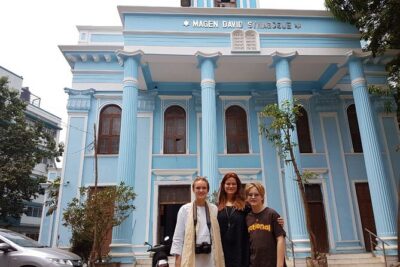
The next synagogue is Magen David, a tall blue building with a Gothic feel. It rises above the surrounding buildings, giving it a strong visual presence even before you learn about its background.
This stop helps break up the architectural rhythm of the tour. Knesseth Eliyahoo offers beautiful interiors, Shaar Harahamim carries the distinction of being Mumbai’s oldest synagogue, and Magen David makes an immediate impression from the street with its height and color.
The tour’s broader value comes from seeing these sites together. You are not looking at one isolated monument. You are tracing different expressions of Jewish life in Mumbai and learning how the city’s Jewish communities developed across time and place.
The information provided does not promise extended interior access at every synagogue, so keep your expectations practical. The exact amount of time at each site may depend on the day and the guide. The four-hour format is designed to connect the major points, not to offer long periods for private reflection at each one.
Victoria Terminus and the Bombay Municipal Building
The tour then moves beyond Jewish heritage to two of Mumbai’s major civic landmarks: Victoria Terminus and the Bombay Municipal Building.
Victoria Terminus, now recognized as a UNESCO World Heritage site, is one of the route’s key visual stops. Its inclusion gives you a chance to see how Mumbai’s colonial-era public architecture fits into the same urban setting as its synagogues, docks, and markets.
The Bombay Municipal Building adds another civic layer. Together, these landmarks show the city’s scale and ambition. They also help you understand why an air-conditioned car is useful. Mumbai is spread out, traffic can slow the journey, and walking between every listed stop would take far longer than four hours.
This is a sightseeing pass through the city, so the amount of time outside the car may vary. If you care most about photographing a particular building, ask the guide early in the tour how the stops will work. The route contains many sights, and a little planning can help you use the short schedule well.
Dhobi Ghat, an outdoor laundry system
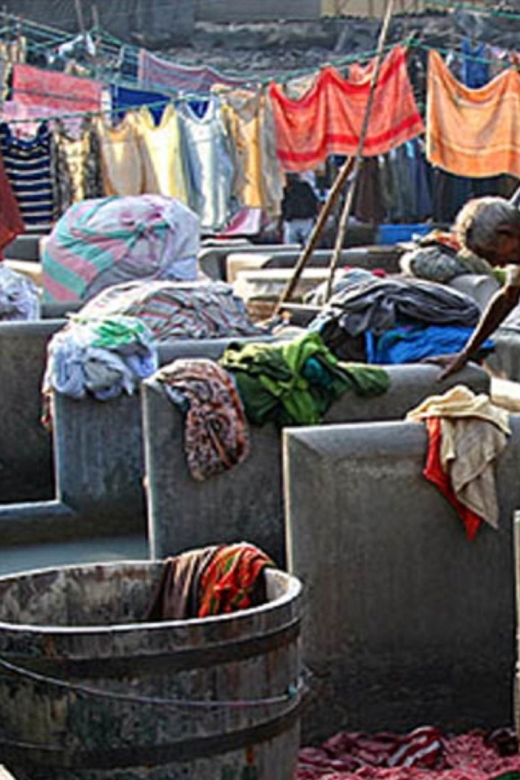
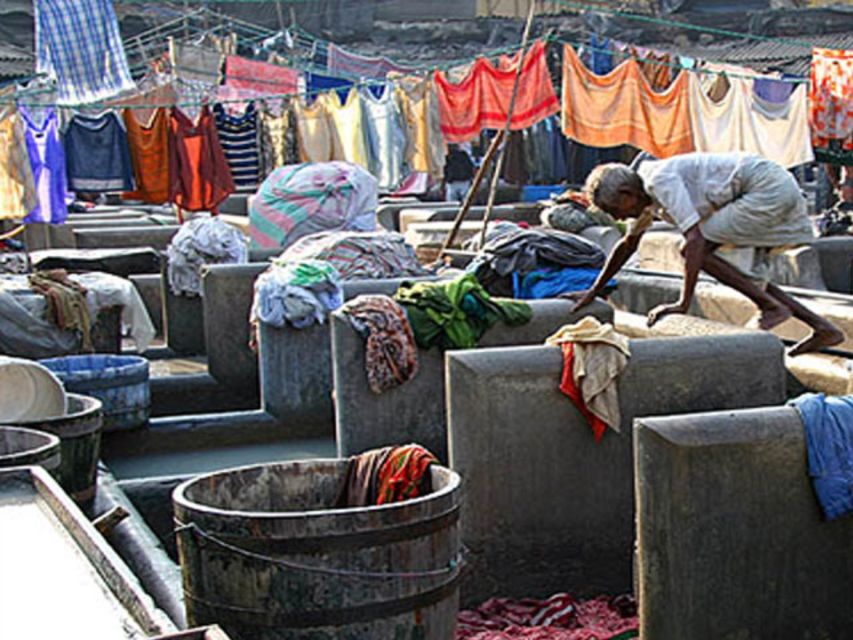
Dhobi Ghat is one of the tour’s most distinctive non-Jewish stops. It is Mumbai’s unique outdoor laundry system, and it gives you a close look at an everyday service that operates on a scale unusual to many visitors.
This stop is valuable because it shows how the city works. The tour is not only about grand buildings and old institutions. It also includes a place tied to ordinary work, showing another side of Mumbai’s social and economic life.
You should follow the guide’s instructions closely here. An outdoor work site is not the same as a formal museum, so be respectful and avoid treating people’s jobs as a staged performance. The information provided does not specify a dedicated viewing platform, so your exact angle and distance may depend on local conditions.
Dhobi Ghat also provides a welcome change of pace after the synagogues and civic buildings. It brings the tour back to the present day and reminds you that Mumbai’s heritage includes working systems as well as preserved architecture.
Marine Drive, Chowpatty, and the city’s grand route
The drive continues through Marine Drive and Chowpatty, with further views of Oval Maidan, the High Court, Bombay University, Flora Fountain, and other less familiar parts of Mumbai.
These portions are especially useful if you are new to the city. You get a broad orientation to central Mumbai without needing to plan separate taxi rides between every sight. The guide can connect the streets and buildings to the city’s changing identity as you move along.
Marine Drive and Chowpatty bring the route toward Mumbai’s seafront. Oval Maidan, the High Court, Bombay University, and Flora Fountain show a different side of the city, with open public spaces and important institutions.
The phrase many unseen places is worth taking seriously, but do not read it as a promise of secret access. It means you will pass through parts of Mumbai that may not appear on a standard first-day sightseeing route. Some will be seen from the car rather than explored on foot.
How the four-hour format works
Four hours is enough to introduce the Jewish history of Mumbai and connect it to several major city sights. It is not enough for long visits at every stop, leisurely meals, or extended time inside each synagogue.
The included air-conditioned car makes the schedule more workable. Hotel pickup in Mumbai saves you from arranging a meeting point, and the vehicle provides relief from the city’s heat and traffic. A live guide is available in English, German, or Spanish, so choose the language that lets you follow historical details most easily.
There is no lunch included. That is not a serious problem for a four-hour tour, but plan accordingly. Depending on the starting time and traffic, you may want to eat before pickup or arrange a meal afterward.
Wear suitable clothing. Shorts are not allowed, so choose respectful, comfortable attire for the synagogue visits. This is also sensible for a route that includes religious buildings and public institutions.
Is the $71 price good value?
At $71 per person, the tour is not the cheapest way to look at Mumbai from a car. Its value depends on how much you want the Jewish history explained rather than simply seeing the buildings from outside.
You are paying for a private-feeling package of transport, hotel pickup, a live guide, a structured history introduction, and a route that joins three synagogues with major Mumbai landmarks. The handouts and notes add practical value because they give you something to review after the tour.
The price looks strongest for a first visit or for anyone with limited time in Mumbai. You avoid piecing together distant sites yourself, and you get a guide who can explain the difference between communities, buildings, and periods.
It is less compelling if you want a slow synagogue-by-synagogue study or plenty of free time at each stop. The route is broad by design. You should book it for context and coverage, not for an unhurried specialist visit.
Who should book this Jewish heritage tour?
I would recommend it to anyone with an interest in Jewish history, Mumbai’s built heritage, or the way religious communities have shaped Indian cities. It also suits you if you want a guided introduction rather than a day spent managing taxis, directions, and opening times.
The tour works particularly well for first-time visitors who want to combine a focused subject with a general city tour. You will see Sassoon Docks, several synagogues, Dhobi Ghat, Victoria Terminus, and Mumbai’s civic and coastal landmarks in one compact outing.
It may not suit you if you dislike driving between stops or prefer to spend a full hour inside one historic building. The schedule covers a lot, and some sights may be viewed briefly or from the vehicle.
Free cancellation up to 24 hours before the tour gives you some flexibility, and the reserve-now, pay-later option can help if your Mumbai plans are still changing. Just remember that the tour has no lunch included and does not permit shorts.
Should you book it?
Book this tour if you want Mumbai’s Jewish story placed in its wider setting. The strongest feature is the combination of clear historical orientation, three important synagogues, Jewish-linked landmarks such as Sassoon Docks and the David Sassoon Library, and everyday city sights such as Dhobi Ghat.
Skip it if your main goal is a long, quiet architectural study of one synagogue. For most visitors, though, the $71 price is reasonable for the coverage, hotel pickup, air-conditioned transport, and multilingual guide. Bring respectful clothing, keep the handouts, and expect a fast-moving introduction to a part of Mumbai that many standard city tours leave out.
FAQ
How long does the Jewish Heritage Tour last?
The tour lasts four hours.
What is included in the price?
An air-conditioned car and a guide are included. Hotel pickup in Mumbai is also included.
Is lunch included?
No. Lunch is not included in the tour price.
Which languages are available?
The live tour guide is available in English, German, and Spanish.
Where does pickup take place?
Pickup is included from your hotel in Mumbai.
Which synagogues are visited?
The route includes Knesseth Eliyahoo Synagogue, Shaar Harahamim or Gate of Mercy Synagogue, and Magen David Synagogue.
What is the oldest synagogue in Mumbai on this tour?
Shaar Harahamim, also called the Gate of Mercy Synagogue, is described as Mumbai’s oldest synagogue. It was built in 1796 by Samaji Hasaji Divekar, also known as Samuel Ezekiel Divekar.
Are shorts allowed?
No. Shorts are not allowed on this tour.
Just added around Mumbai
- Temples & Vineyards: Private Tour to Nashik from Mumbai★ 4.5 · 3 reviews
- Mumbai: Private City sightseeing and Dharavi Slum Tour★ 5.0 · 3 reviews
- Mumbai: Full Day City Sightseeing with Lunch, Car & Guide★ 4.3 · 3 reviews
- Elephanta Island Private Speedboat Tour from Mumbai – 6pax★ 5.0 · 3 reviews
- Mumbai: Elephanta Island and Elephanta Caves Guided Tour★ 4.4 · 3 reviews
- Mumbai Sightseeing Tour by Public Transport with family Lunch★ 5.0 · 3 reviews
- Mumbai by Dawn★ 4.5 · 3 reviews
- Mumbai Dharavi Slum Community Tour★ 5.0 · 3 reviews
Mumbai Jewish Heritage Tours, compared.
Private Mumbai Jewish Heritage Tour: Baghdadi & Bene Israel
Read our review →
Jewish Heritage and Mumbai Highlights Private Full-Day Tour
Read our review →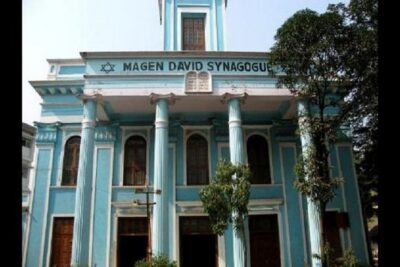
Browse the lists this tour appears in