
Reviewed · MUMBAI JEWISH HERITAGE TOURS
Half-Day Mumbai Jewish Heritage Private Guided Tour
Mumbai’s Jewish story is easy to miss unless you know where to look. This private tour takes you from the blue-shuttered Keneseth Eliyahoo Synagogue to old Bene Israel houses of worship, Chabad India, and the grand David Sassoon Library. Along the way, you see a side of Mumbai that most city tours skip.
I like the private car and door-to-door pickup, which matter in a city where traffic can turn short distances into slow ones. I also like the chance to meet members of the local Jewish community, a personal touch that gives the buildings more meaning than a quick photo stop.
The main consideration is that this is a heritage tour, not a full sightseeing circuit. Some synagogue admission fees are not included, access may depend on local arrangements, and the schedule includes several brief stops rather than long visits inside each building.
In This Review
- Key points to know before booking
- Mumbai’s Jewish story in a single morning
- Keneseth Eliyahoo Synagogue and the city center
- Magen David in Byculla
- Tiphereth Israel and the Gate of Mercy
- A brief look at David Sassoon’s Mumbai
- Chhatrapati Shivaji Terminus adds a grand civic landmark
- Three Bene Israel synagogues in quick succession
- Nariman House and Chabad India
- What Sameer’s guiding style adds
- The $86 price and what it really covers
- Who should book this Mumbai heritage tour?
- Practical details before you go
- Should you book it?
- FAQ
- Where does the tour take place?
- What time does the tour start?
- How long does the experience last?
- Is the tour private?
- How many people does the listed price cover?
- Is pickup available?
- Is transportation included?
- Are meals included?
- Which Jewish communities does the tour discuss?
- Are synagogue admission fees included?
- Can I cancel for a full refund?
Key points to know before booking
- Three Jewish communities in one city: The tour explains the Bene Israel, Malabar Jewish, and Iraqi Jewish traditions that shaped Jewish life in India.
- Eight Jewish sites and landmarks: You visit synagogues in Colaba, Byculla, and other central Mumbai areas, plus Chabad India.
- Private transport for up to two people: The $86 group price includes an air-conditioned vehicle, pickup, drop-off, parking, tolls, and bottled water.
- A 9:00 am start: Plan on roughly five to six hours, with several stops lasting only 5 to 30 minutes.
- A human connection: The experience can include conversations with two Jewish community members and officials, a valuable part of the day.
- Budget for entry fees: Several stops list admission as not included, so the final cost may be higher than the advertised tour price.
Mumbai’s Jewish story in a single morning
India’s Jewish community is made up of three distinct groups: the Bene Israel, the Malabar Jewish community, and Iraqi Jews. Their presence in India reaches back more than 2,000 years, and Hebrew inscriptions in old cemeteries help document that long connection.
You will not get a general introduction to every Jewish community in India. Instead, the tour uses Mumbai’s synagogues and heritage buildings to show how different groups settled, worshipped, and built institutions in the city.
That focus is the tour’s greatest strength. Mumbai is often presented through colonial buildings, markets, Bollywood, and grand railway stations. This experience adds another layer, showing how Jewish communities helped shape the city while maintaining their own traditions.
The community is now much smaller than it once was. That makes the active synagogues especially meaningful. You are not only looking at old facades. Some of these buildings still serve small congregations, and local voices can explain what the sites mean today.
More Jewish heritage walks:
- Private Mumbai Jewish Heritage Tour: Baghdadi & Bene Israel
★ 5.0 · 36 reviews - Jewish Heritage and Mumbai Highlights Private Full-Day Tour
★ 5.0 · 32 reviews - Private Jewish Heritage Tour
★ 4.5 · 18 reviews
Keneseth Eliyahoo Synagogue and the city center
The morning begins at Keneseth Eliyahoo Synagogue in downtown Mumbai. Built for the city’s Sephardic Jewish community, it is the second-oldest Sephardic synagogue in Mumbai and one of the city’s best-known Jewish landmarks.
The planned visit lasts about 30 minutes. That gives you enough time to look at the exterior, learn about the building, and see the surrounding city center without rushing through the entire morning.
Admission is not included here. Ask your guide about current entry arrangements before you set off, since synagogue access can depend on opening hours and local permission. Dress and behavior should be respectful at every religious site, even when your visit is mainly architectural.
This stop works well as an introduction because it places Jewish heritage right in the middle of modern Mumbai. You are not heading to an isolated museum. The synagogue is part of the working city, surrounded by the streets and buildings that made Mumbai a major commercial center.
Magen David in Byculla
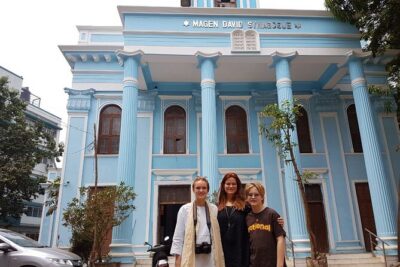
The next major stop is Magen David Synagogue in Byculla. It is described as one of the largest synagogues connected with India’s Jewish community and is also treated as a heritage site.
The visit is scheduled for about 30 minutes, with admission not included. Byculla adds a different setting from the downtown opening stop, helping you see that Jewish life was not confined to one small corner of Mumbai.
Your guide’s explanation matters here. The same building can look like a quiet historic structure if you visit alone. With context about the community that built and used it, the synagogue becomes part of a wider story about migration, family, worship, and changing population numbers.
Do not expect every stop to function like a museum. Some locations may be viewed from outside or visited only briefly. The value comes from the sequence of places and the connections between them.
Tiphereth Israel and the Gate of Mercy
Tiphereth Israel Synagogue and the Gate of Mercy Synagogue are presented as two of Mumbai’s oldest synagogues. They are important stops for understanding the Bene Israel community, one of the three Jewish groups highlighted by the tour.
Tiphereth Israel receives about 30 minutes. The Gate of Mercy stop is much shorter, listed at about five minutes. That difference tells you something useful about the day: the tour includes many locations, but not every building receives the same amount of time.
The Gate of Mercy Synagogue was built in 1796 by the Bene Israel community. Its name refers to one of Mumbai’s earliest Jewish congregations, and its age gives it a special place in the city’s religious history.
A five-minute visit is enough for a quick look and a short explanation, but not a long interior examination. If you are especially interested in synagogue architecture, ask in advance which buildings you can enter and how much time will be available at each one.
A few more Mumbai tours and experiences worth a look
- Heritage Walk: Recommended by Gigi Hadid as a must-do in Mumbai
★ 5.0 · 122 reviews - Best South Mumbai Heritage Walk
★ 5.0 · 122 reviews - Mumbai: South Mumbai Heritage Walking Guided Tour
★ 4.5 · 69 reviews - Hill-station & Heritage: Lonavala & Karla Caves Tour from Mumbai
★ 5.0 · 60 reviews
A brief look at David Sassoon’s Mumbai
The David Sassoon Library appears as an additional heritage stop. It was founded through the Sassoon family’s connection to Mumbai, and the library is one of the city’s recognizable historic structures.
The itinerary does not specify a visit length or admission arrangement for the library. Treat it as a useful connection between Jewish philanthropy and Mumbai’s public institutions rather than as a separate library tour.
This is one reason the experience is more than a checklist of synagogues. Jewish history in Mumbai also appears in civic buildings, education, commerce, and public life. The Sassoon name is part of that broader story.
You may not spend long inside the library, so keep your expectations practical. The stop is most useful if you want to connect the community’s religious buildings with the wider heritage of the city.
Chhatrapati Shivaji Terminus adds a grand civic landmark
Chhatrapati Shivaji Maharaj Terminus, formerly Victoria Terminus and often called VT, gives the day a dramatic change of scale. This historic railway station is a UNESCO World Heritage Site and one of Mumbai’s best-known public buildings.
The scheduled visit lasts about 30 minutes, and admission is listed as free. The station’s architecture provides a strong contrast with the smaller synagogues. Here, the focus shifts from community worship to the grand transport network that helped Mumbai grow.
I like this stop because it keeps the day from becoming too narrow. You see Jewish sites, but you also gain a little of the city’s larger architectural story. Your guide can help place the synagogues within the same urban setting as the railway station, library, and commercial districts.
The station is still a working transport hub, so expect a public place rather than a quiet monument. Thirty minutes is enough for an overview, but not for a detailed architectural study.
Three Bene Israel synagogues in quick succession
The tour returns to Jewish heritage with Share Rason Synagogue, Magen Hassidim Synagogue, and the Gate of Mercy Synagogue.
Share Rason is the second-oldest Bene Israel synagogue in Mumbai. It was built in 1843 after a disagreement within the management of the earlier Gate of Mercy congregation. That detail gives you a clear example of how community institutions developed over time, including the internal decisions that led to new houses of worship.
The visit is planned for about 15 minutes, and admission is not included. Magen Hassidim receives another 15 minutes. It is described as the largest Bene Israel building in Mumbai and remains operational with a small congregation.
The word operational is important. You are seeing a living religious site, not just an abandoned historic shell. The small congregation also reflects the community’s reduced size, a point that gives the tour an honest edge. This is heritage that still exists, but it needs care and continued local support.
The Gate of Mercy stop is listed earlier and again among the Bene Israel sites. The itinerary uses the name in more than one place, so the exact order may vary. Your guide can clarify whether the schedule includes one visit or a return to the same synagogue.
Nariman House and Chabad India
Chabad India is based at Nariman House, a five-storey building in Colaba and a recognizable landmark in South Mumbai. The site served as a Chabad house, a Hasidic Jewish outreach center.
The planned visit lasts about 30 minutes, and admission is included. This stop brings the story into the present. The earlier synagogues connect you with older Bene Israel, Sephardic, and Iraqi Jewish chapters, while Chabad represents a more recent form of Jewish outreach in Mumbai.
Nariman House also carries difficult modern history. The information provided identifies it as a landmark Chabad house, but does not give a detailed program about that history. Ask your guide what will be covered so you know how much of the visit will focus on the building, Chabad’s work, or the wider Jewish community.
Because the stop is in Colaba, it fits naturally with the tour’s city-center route. It also gives you a final chance to ask questions about the community today.
What Sameer’s guiding style adds
Sameer is named in the account of this experience, and the strongest personal detail is the opportunity to speak with two Jewish community members and officials. That kind of contact can change the feel of the day.
A guide can explain dates and names, but community conversations help you understand how a small, active congregation relates to its old buildings. You may hear details that are not obvious from a plaque or a quick exterior visit.
The tour is conducted in English and is private, so you can ask questions without trying to keep up with a large group. That is useful if your interest is family heritage, Jewish migration, synagogue architecture, or the history of Bene Israel communities.
Still, keep expectations grounded. The supplied information does not promise that every synagogue will be open for a long interior visit or that a community member will be available at every stop. The meeting with local members is a major attraction, but timing and access can affect how it works on the day.
The $86 price and what it really covers
The price is $86 per group of up to two people. For two people, that works out to $43 each before any admission charges, meals, or personal expenses.
That is a fair value if you want a private vehicle and a full morning of guided transport around Mumbai. Pickup and drop-off, toll taxes, parking fees, bottled water, and an air-conditioned vehicle are included. Those inclusions matter in Mumbai, where a private car can save time and reduce the stress of arranging separate rides between distant neighborhoods.
The price is less attractive if you mainly want a quick look at one or two synagogues. In that case, a broader city tour or self-guided visit may suit you better, if access can be arranged.
You should also allow for entry fees at several synagogues. Keneseth Eliyahoo, Magen David, Tiphereth Israel, Share Rason, and Magen Hassidim list admission as not included. The Gate of Mercy and Chhatrapati Shivaji Terminus are listed as free, while Chabad India is included.
No meals are included. The start time is 9:00 am, and the full outing lasts approximately five to six hours, so eat beforehand or plan to buy food afterward.
Who should book this Mumbai heritage tour?
I would recommend it most strongly for people with a personal or family connection to Jewish history, especially anyone interested in Bene Israel communities. It also suits architecture fans who want to see historic synagogues that are easy to miss on a standard Mumbai route.
The private format is useful for couples, parent and adult child pairs, or two friends who want to ask detailed questions. Since the price covers up to two people rather than charging separately for each seat, it is best value when shared by two.
You should be comfortable with a varied pace. Some visits last 30 minutes, while the Gate of Mercy stop is listed at only five minutes. The day is designed to connect many places, not to give you an hour inside every synagogue.
If you want a relaxed religious study visit with long periods at each building, this may feel too compressed. If you want a focused introduction with transport, local context, and several real sites in one morning, the format makes sense.
Practical details before you go
Pickup is offered, and drop-off is included. Confirm the exact pickup point when booking, since the supplied details identify the service but do not list a fixed hotel or street meeting point.
The tour uses private transportation and provides an air-conditioned vehicle and bottled water. Parking and toll fees are covered, so you do not need to manage those costs during the route.
Confirmation is provided at booking, and most people can participate. The activity is private, meaning only your own group takes part.
Free cancellation is available if you cancel at least 24 hours before the 9:00 am start time. Changes made inside that 24-hour window are not accepted, and the amount paid is not refunded. The experience also requires good weather. If poor weather causes cancellation, you will be offered another date or a full refund.
Should you book it?
Book this tour if you want Mumbai beyond its famous monuments and you value local contact as much as sightseeing. The combination of eight Jewish sites, an English-speaking guide, private transport, and access to community voices gives you a focused way to understand a small but important part of the city.
I would be cautious if your main goal is guaranteed, lengthy interior access at every synagogue. Several admission fees are extra, the schedule is tight, and some stops are very short.
For two people who want a personal Jewish heritage day with the comfort of a private car, $86 is sensible value. Just confirm synagogue access, entry costs, and the exact order of stops before setting out.
FAQ
Where does the tour take place?
The tour takes place in Mumbai, India, including downtown Mumbai, Byculla, Colaba, and other central areas.
What time does the tour start?
The tour starts at 9:00 am.
How long does the experience last?
The tour lasts approximately five to six hours.
Is the tour private?
Yes. Only your own group participates in the activity.
How many people does the listed price cover?
The $86 price covers a group of up to two people.
Is pickup available?
Yes. Pickup and drop-off are included.
Is transportation included?
Yes. Private transportation in an air-conditioned vehicle is included, along with toll taxes, parking fees, and bottled water.
Are meals included?
No. Meals and personal expenses are not included.
Which Jewish communities does the tour discuss?
The tour covers the Bene Israel, Malabar Jewish, and Iraqi Jewish communities of India.
Are synagogue admission fees included?
Admission is not included at Keneseth Eliyahoo, Magen David, Tiphereth Israel, Share Rason, and Magen Hassidim. The Gate of Mercy and Chhatrapati Shivaji Terminus are listed as free, and admission to Chabad India is included.
Can I cancel for a full refund?
Yes, if you cancel at least 24 hours before the experience’s start time. Poor-weather cancellations offer another date or a full refund.
More Half-Day in Mumbai
- Mumbai: Elephanta Caves Half-Day Guided Tour with Expert
★ 4.8 · 1,032 reviews - Private Half-Day Sightseeing Tour in Mumbai
★ 5.0 · 430 reviews - From Mumbai: Half-Day Elephanta Caves Tour with Ferry Ride
★ 4.9 · 284 reviews - Essence of Mumbai: Half-Day Private Tour
★ 4.4 · 157 reviews
Just added around Mumbai
- Temples & Vineyards: Private Tour to Nashik from Mumbai★ 4.5 · 3 reviews
- Mumbai: Private City sightseeing and Dharavi Slum Tour★ 5.0 · 3 reviews
- Mumbai: Full Day City Sightseeing with Lunch, Car & Guide★ 4.3 · 3 reviews
- Elephanta Island Private Speedboat Tour from Mumbai – 6pax★ 5.0 · 3 reviews
- Mumbai: Elephanta Island and Elephanta Caves Guided Tour★ 4.4 · 3 reviews
- Mumbai Sightseeing Tour by Public Transport with family Lunch★ 5.0 · 3 reviews
- Mumbai by Dawn★ 4.5 · 3 reviews
- Mumbai Dharavi Slum Community Tour★ 5.0 · 3 reviews
Mumbai Jewish Heritage Tours, compared.
Private Mumbai Jewish Heritage Tour: Baghdadi & Bene Israel
Read our review →
Jewish Heritage and Mumbai Highlights Private Full-Day Tour
Read our review →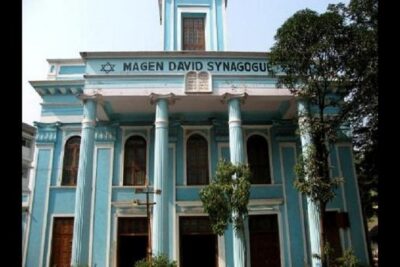
Browse the lists this tour appears in