
Reviewed · MUMBAI JEWISH HERITAGE TOURS
Jewish heritage tour of Mumbai
Mumbai’s Jewish story comes into focus through its working waterfront, old synagogues, schools, libraries, and trading districts. This seven-hour tour links those places with major city sights, giving you a useful look at a small but important part of Mumbai’s past.
I like the mix of historic Jewish sites and everyday Mumbai, especially Sassoon Docks and the views from David Sassoon Library. I also like the practical pickup service from a hotel or port, which saves you from arranging transport across a large city. The main consideration is depth: the guide explains the sites clearly, but you may want more detailed background than the tour always provides.
In This Review
- Key points to know before booking
- Why Mumbai’s Jewish story works best as a city tour
- Sassoon Docks: Jewish connections beside Mumbai’s fishing boats
- Knesseth Eliyahoo Synagogue and its blue interior
- David Sassoon Library and the Fort District view
- Gate of Mercy, Mumbai’s oldest synagogue
- Magen David Synagogue and the Sassoon Children’s School
- Victoria Terminus, Crawford Market, and Dhobi Ghat
- What the $135 price includes
- Timing, clothing, and the booking decision
- Should you book the Jewish heritage tour of Mumbai?
- FAQ
- How long is the Jewish heritage tour of Mumbai?
- What time does the tour start?
- Is hotel pickup included?
- Is port pickup available?
- What is the price?
- What sites are visited?
- Which Mumbai landmarks are included?
- Is lunch included?
- What should I wear?
- What is the cancellation policy?
Key points to know before booking
- Sassoon Docks adds a working-city perspective: You begin with a fishing dock rather than a quiet monument.
- Knesseth Eliyahoo Synagogue has a striking blue design: Its interior and exterior make it one of the tour’s most memorable stops.
- Gate of Mercy dates to 1796: Also called Shaar Harahamim, it is Mumbai’s oldest synagogue.
- The route includes several Jewish institutions: You visit Magen David Synagogue and see the Sassoon Children’s School.
- Mumbai landmarks fill out the day: You pass Victoria Terminus, Crawford Market, and Dhobi Ghat.
- Pickup and a small group make the long route easier: The group is capped at 16, and hotel and port transfers are included.
Why Mumbai’s Jewish story works best as a city tour
Mumbai’s Jewish heritage is spread across the city rather than gathered in one museum. That is the main reason this experience is useful. You move between religious buildings, community institutions, commercial areas, and working neighborhoods while hearing how Jewish life became part of Mumbai’s wider story.
The tour does not treat Jewish history as an isolated subject. You see the places alongside the Fort District, the docks, markets, railway architecture, and laundry district. That broader setting matters. It helps you understand that these synagogues were tied to business, education, shipping, family life, and the daily rhythm of Mumbai.
The route lasts about seven hours and begins at 8:30 a.m. That is a substantial morning and afternoon, but the length makes sense because the stops are spread around the city. You are not simply walking between two nearby buildings. Pickup and drop-off are included, which is especially useful if you are staying at a hotel or arriving by cruise ship.
The group can include up to 16 people. That is not a private tour, but it is smaller than a large coach outing. If you want to ask about Jewish customs, architecture, or the community’s place in Mumbai, a group of this size should give you a reasonable chance to do so.
More Jewish heritage walks:
- Private Mumbai Jewish Heritage Tour: Baghdadi & Bene Israel
★ 5.0 · 36 reviews - Jewish Heritage and Mumbai Highlights Private Full-Day Tour
★ 5.0 · 32 reviews - Private Jewish Heritage Tour
★ 4.5 · 18 reviews
Sassoon Docks: Jewish connections beside Mumbai’s fishing boats
Sassoon Docks is a strong opening because it shows Mumbai as a working port city. It is a fishing boat village and dock where the tour describes about 40 percent of India’s fish being caught. That figure gives the place real weight, but the bigger value is the setting itself: you begin amid an active part of Mumbai rather than with a polished historic façade.
The Sassoon name also provides an early link to the city’s Jewish heritage. The stop helps connect the Sassoon family’s presence in Mumbai with the city’s waterfront economy and commercial growth. You will hear stories about Jews in Mumbai and their heritage in the city and beyond while seeing the kind of environment where trade and transport shaped urban life.
This is not the sort of stop to treat as a quick photo opportunity. The dock gives your guide a chance to explain how communities become part of a city through work and commerce. You also get a change of pace from the synagogues that follow.
The practical drawback is that a working dock may feel less orderly than a museum or formal monument. Your attention will be split between the guide’s explanation and the activity around you. That is part of the appeal, but you should expect a real neighborhood setting rather than a carefully staged attraction.
Knesseth Eliyahoo Synagogue and its blue interior
Knesseth Eliyahoo Synagogue is likely to be one of the visual high points. Its blue exterior and interior give the building a clear identity, and the color makes it easy to remember among Mumbai’s many historic structures.
The synagogue also has books for sale on Jewish culture. That detail gives the visit a little more substance than a simple look inside. You can connect the building to Jewish learning and cultural life, not only to architecture.
Your guide explains the synagogue and places it within the wider story of Jews in Mumbai. The experience is strongest if you listen for those connections rather than focusing only on the photographs. Ask questions if you want more detail, since the available feedback suggests the explanations are clear but may not always go as far as a history specialist would like.
Dress matters here. The stated dress code is formal, so plan clothing that shows respect at religious sites. The tour does not provide a separate list of clothing rules, so following the formal requirement is the safest approach.
David Sassoon Library and the Fort District view
The David Sassoon Library adds a different kind of stop. Rather than visiting a synagogue, you go to a historic library associated with the Sassoon name and visit its deck for a view over Mumbai’s Fort District.
That viewpoint helps you read the city. Fort is one of the areas where Mumbai’s commercial, civic, and colonial-era buildings come together, and looking over it gives your guide a natural way to discuss the city’s layout. You also get a break from interior visits and a chance to see how the surrounding district fits together.
I like this part because it adds scale. A heritage tour can become a string of rooms and dates. The library deck lets you pause and look outward, connecting the Jewish institutions to the streets and buildings around them.
Access to the deck is part of the planned visit, but the provided details do not promise a long library tour or extensive time for browsing. You should think of this as a viewpoint and heritage stop, not a full research visit.
A few more Mumbai tours and experiences worth a look
- Heritage Walk: Recommended by Gigi Hadid as a must-do in Mumbai
★ 5.0 · 122 reviews - Best South Mumbai Heritage Walk
★ 5.0 · 122 reviews - Mumbai: South Mumbai Heritage Walking Guided Tour
★ 4.5 · 69 reviews - Hill-station & Heritage: Lonavala & Karla Caves Tour from Mumbai
★ 5.0 · 60 reviews
Gate of Mercy, Mumbai’s oldest synagogue
Shaar Harahamim, also called the Gate of Mercy Synagogue, was built in 1796. That date makes it a key stop for understanding the age of Mumbai’s Jewish community.
The building’s importance is not based only on its appearance. Its early date gives the guide a clear starting point for discussing Jewish settlement and religious life in Mumbai. You can compare it with the later buildings on the route and see how the community’s institutions developed over time.
This is the sort of place where a good explanation matters as much as the structure itself. The tour promises stories about Jews and their heritage, so listen for the links between the synagogue, the community, and the changing city around it.
The tour information does not describe the building’s current interior condition, opening arrangements, or the length of the visit. That means your exact experience inside may depend on the day’s access. The synagogue is included as a scheduled stop, but it is wise to allow for the possibility that the guide will explain some details from outside if entry conditions change.
Magen David Synagogue and the Sassoon Children’s School
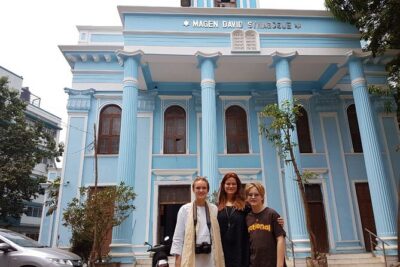
Magen David Synagogue extends the story beyond a single landmark. Along with the Sassoon Children’s School, it shows how Jewish community life included education as well as worship.
That pairing is valuable because it brings ordinary community needs into view. A synagogue is the most obvious symbol of Jewish heritage, but a school shows how families planned for the future and built institutions for children. The tour’s focus is stronger for including both.
You will not simply collect names of buildings. The guide’s role is to explain how these places relate to Jewish life in Mumbai and to the city’s wider history. Still, the level of detail may feel brief if you already have a strong academic interest in Indian Jewish communities. One published assessment gave the tour four out of five and noted that the guide explained well but could have offered more information. I would keep that limitation in mind when deciding how much background to read beforehand.
Victoria Terminus, Crawford Market, and Dhobi Ghat
The drive between heritage stops includes several major Mumbai landmarks. Victoria Terminus, now commonly associated with Chhatrapati Shivaji Maharaj Terminus, is described here as an especially beautiful Saracenic building. Even from the vehicle, it gives you a look at the scale and ornament of Mumbai’s historic railway architecture.
Crawford Market adds another piece of the city’s commercial life. The route does not promise a dedicated market visit, so expect to pass by rather than shop or spend extended time inside. Still, the sight helps place the Jewish story in a city shaped by trade and movement.
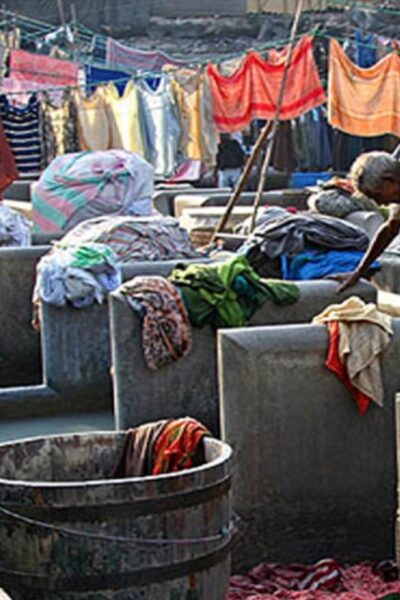
You also pass Dhobi Ghat, described as the largest open-air laundry. This is a useful reminder that Mumbai’s historic districts are not frozen displays. People still work, commute, trade, and live among the buildings you are studying.
These drive-by landmarks make the tour broader, but they also create a tradeoff. You cover more of Mumbai, yet not every sight receives a full stop. If you want a detailed visit to Victoria Terminus, Crawford Market, or Dhobi Ghat, you may need separate time elsewhere in your schedule.
What the $135 price includes
At $135 per person, this is not a budget sightseeing ride. The price makes more sense if you value the guide, the Jewish heritage focus, and the transport across several parts of Mumbai.
The tour includes a professional guide, hotel pickup and drop-off, port pickup and drop-off, and all taxes, fees, and handling charges. Those transfers matter in Mumbai because the route covers distant areas and the day begins early. You are paying for a focused subject combined with the convenience of not arranging each journey yourself.
Admission tickets are listed as free, so there is no separate entrance cost identified for the main stops. Lunch is not included. Since the experience lasts about seven hours, you should plan for that omission rather than assume a meal is part of the day.
Value depends on your interests. If you only want a quick look at one synagogue, the price may feel high. If you want Jewish heritage explained alongside Mumbai’s docks, Fort District, markets, railway architecture, and laundry district, the long route and included transfers make the cost easier to justify.
Timing, clothing, and the booking decision
The 8:30 a.m. start sets the tone for the day. You need to be ready on time for pickup, especially if you are boarding from a port. The tour is usually booked 19 days ahead, which suggests that planning early is sensible if your Mumbai dates are fixed.
Formal dress is required. I would take that instruction seriously because the route includes religious buildings. The activity is near public transportation, and most people can participate, but the supplied details do not give a more specific accessibility description.
Free cancellation is available up to 24 hours before the local start time. Inside that window, the amount paid is not refunded, and changes are not accepted. That policy is fairly clear, but Mumbai traffic, port schedules, and hotel plans can shift, so make any changes before the cutoff.
This tour suits you best if:
- You want Jewish history explained in the context of Mumbai.
- You prefer a guided route to planning several distant sites yourself.
- You are staying at a hotel or arriving at the port.
- You enjoy working neighborhoods as much as formal monuments.
- You can commit most of a day to the subject.
It may not suit you if you want a private scholar-led experience, long visits inside every building, or a food-focused tour. The group can reach 16 people, and the guide’s explanations may leave you wanting more detail if you already know the basics.
Should you book the Jewish heritage tour of Mumbai?
Book it if you want a clear introduction to Mumbai’s Jewish sites with transport handled for you. The best features are the unusual mix of places: a major fishing dock, a blue synagogue, a 1796 house of worship, a library viewpoint, a school, and several city landmarks.
Go in with realistic expectations. This is a broad city tour rather than an intensive academic study, and lunch is on you. Read a little about Mumbai’s Jewish communities before you go, arrive ready for the 8:30 a.m. pickup, dress formally, and ask questions when you want more context. For a first look at this lesser-known side of Mumbai, the route offers solid value, especially for visitors arriving by port or staying outside the historic center.
FAQ
How long is the Jewish heritage tour of Mumbai?
The tour lasts approximately seven hours.
What time does the tour start?
The scheduled start time is 8:30 a.m.
Is hotel pickup included?
Yes. Hotel pickup and drop-off are included.
Is port pickup available?
Yes. Port pickup and drop-off are included.
What is the price?
The listed price is $135 per person.
What sites are visited?
The route includes Sassoon Docks, Knesseth Eliyahoo Synagogue, David Sassoon Library, Shaar Harahamim or Gate of Mercy Synagogue, Magen David Synagogue, and the Sassoon Children’s School.
Which Mumbai landmarks are included?
You drive past Victoria Terminus, Crawford Market, and Dhobi Ghat, among other Mumbai sights.
Is lunch included?
No. Lunch is not included in the tour price.
What should I wear?
The stated dress code is formal.
What is the cancellation policy?
You can cancel at least 24 hours before the local start time for a full refund. Cancellations and changes made within 24 hours are not accepted for a refund.
Just added around Mumbai
- Temples & Vineyards: Private Tour to Nashik from Mumbai★ 4.5 · 3 reviews
- Mumbai: Private City sightseeing and Dharavi Slum Tour★ 5.0 · 3 reviews
- Elephanta Island Private Speedboat Tour from Mumbai – 6pax★ 5.0 · 3 reviews
- Mumbai: Full Day City Sightseeing with Lunch, Car & Guide★ 4.3 · 3 reviews
- Mumbai: Elephanta Island and Elephanta Caves Guided Tour★ 4.4 · 3 reviews
- Mumbai Sightseeing Tour by Public Transport with family Lunch★ 5.0 · 3 reviews
- Mumbai by Dawn★ 4.5 · 3 reviews
- Mumbai Dharavi Slum Community Tour★ 5.0 · 3 reviews
Mumbai Jewish Heritage Tours, compared.
Private Mumbai Jewish Heritage Tour: Baghdadi & Bene Israel
Read our review →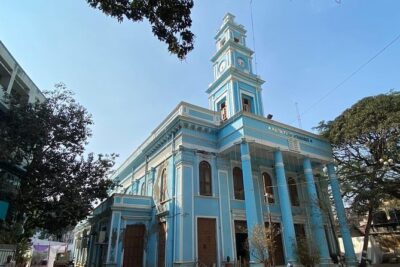
Jewish Heritage and Mumbai Highlights Private Full-Day Tour
Read our review →
Browse the lists this tour appears in