
Reviewed · MUMBAI WALKING TOURS
Mumbai: Sightseeing by Walk or Car
Mumbai reveals itself in layers on this four-hour tour: grand Gothic buildings, sacred corners, crowded markets, seaside roads, and the extraordinary working world of Dhobi Ghat. You get a quick but thoughtful introduction rather than a simple parade of photo stops.
I like the mix of famous sights and less expected places such as Banganga Tank and the Jain Temple. I also like the local guide format, especially since guides such as Balaji and Sajid explain daily life, religion, politics, and the city’s changes in plain English. The main catch is the pace: four hours and many stops mean short visits, and traffic or rain can change the plan.
In This Review
- Key points to know before booking
- Starting outside Regal Cinema in Colaba
- Colaba, the Gateway of India, and the first city views
- Crawford Market and the city’s everyday rhythm
- Mani Bhavan, Gandhi’s Mumbai home
- Banganga Tank, a sacred corner of Mumbai
- The Jain Temple and Mumbai’s religious traditions
- Marine Drive, the Queen’s Necklace, and changing Mumbai
- Chhatrapati Shivaji Terminus and Mumbai’s grand architecture
- Dhobi Ghat and the working city
- What the guides add to the four-hour route
- Is $36 good value for Mumbai?
- Who should book this Mumbai tour?
- FAQ
- Where does the group tour meet?
- What languages are available?
- How long does the experience last?
- Is transportation included?
- Is food included?
- Is bottled water provided?
- What should I wear at the religious sites?
- Is the tour suitable for wheelchair users?
- Can I cancel the booking?
- Should you book it?
Key points to know before booking
- Dhobi Ghat brings Mumbai’s working life into view: See the huge open-air laundry where clothes are washed and sorted by hand.
- Mani Bhavan adds a strong historical pause: Visit the Mumbai home where Gandhi once lived.
- You mix driving with short walks: This is easier than a fully walking tour, but it is not designed for limited mobility.
- Banganga Tank offers a quieter side of the city: A sacred water tank gives you a break from South Mumbai’s grand public buildings.
- Local guides make the difference: Balaji and Sajid have been praised for clear explanations, patience, and practical help.
- The $36 price favors convenience: You cover a wide stretch of Mumbai with transport, a guide, water, and train tickets included.
Starting outside Regal Cinema in Colaba
Your meeting point is outside Regal Cinema in Colaba, one of South Mumbai’s easiest landmarks to recognize. Arrive 10 minutes early. The guide will be waiting outside with the name supplied at booking, so keep your phone charged and check the meeting details before leaving your hotel.
The tour is built for a first look at Mumbai. You will not spend a full hour inside each attraction. Instead, you will move between landmark buildings, religious sites, market streets, viewpoints, and ordinary working areas, with the guide explaining how they fit together.
For a group tour, you share the air-conditioned vehicle and route with other people. That keeps the price down and makes the day social, but it also gives you less control over timing. A private option includes hotel pickup and drop-off in South Mumbai, and pickup is also offered from Navi Mumbai according to the tour information.
The schedule includes short walks at selected stops. Comfortable shoes matter, even though this is not a long-distance walking tour. You will also want sunglasses, a sun hat, modest clothing, and a refillable bottle. Bottled water is supplied.
More guided walks on foot:
- Group Guided Walking Tour in Fort and Colaba
★ 5.0 · 1,073 reviews - Private Guided Walking Tour in Fort & Colaba
★ 5.0 · 895 reviews - Private Guided Walking Tour in Bandra Queen of Suburbs
★ 5.0 · 383 reviews
Colaba, the Gateway of India, and the first city views
Regal Cinema places you close to some of Mumbai’s best-known sights. The opening stretch includes a photo stop at the Gateway of India, the grand waterfront arch that has become one of the city’s signature images.
You can expect about 15 minutes here. That is enough for photographs and a guide’s explanation, but not enough for a slow waterfront visit. If you want time to sit by the harbor, watch boats, or explore nearby streets at length, return on your own later.
The Gateway works well as an opening stop because it gives you an immediate sense of Mumbai’s public face. It is formal, monumental, and tied to the city’s colonial-era architecture. Your guide can help connect the building to the wider story of South Mumbai without leaving you to guess what you are looking at.
The route also includes views of Mumbai University and the High Court. Their old-world architecture adds contrast to the modern towers elsewhere in the city. You will likely see these from the vehicle or during brief photo pauses, so think of them as orientation points rather than full visits.
Crawford Market and the city’s everyday rhythm
Crawford Market, now also known as Mahatma Jyotiba Phule Mandai, is the tour’s short walking stop. The planned walk lasts about 15 minutes, which gives you a taste of the market rather than a full shopping trip.
That limited time can be useful. Markets in Mumbai can feel confusing at first, with many lanes, sounds, products, and people moving at once. A local guide helps you focus on what matters and keeps the stop from turning into a tiring wander.
You may find that this is one of the most practical parts of the tour because it shifts your attention away from monuments. Mumbai is not only grand railway stations and sea views. It is also buying, selling, carrying, washing, eating, and working, often in very tight quarters.
Do not plan to eat here as part of the tour. Food is not included, and the schedule does not promise a market meal or tasting. If you are hungry, ask the guide about timing, but do not assume there will be a dedicated food stop.
Mani Bhavan, Gandhi’s Mumbai home
The visit to Mani Bhavan lasts about 20 minutes. This is one of the more focused stops, and it gives the tour a clear historical anchor.
Mani Bhavan was Gandhi’s former home in Mumbai. You step inside rather than simply photographing the exterior, so this stop offers more context than a quick roadside view. The setting helps explain Gandhi’s connection to the city and gives you a calmer indoor break from traffic and heat.
I especially like this part for visitors who want more than architecture. The guide can connect the house to broader questions about India’s independence movement, public life, and the way Gandhi is remembered in Mumbai.
Twenty minutes is still brief. You will not have time for a slow, detailed museum visit, so treat Mani Bhavan as a well-chosen introduction. If this is a major interest for you, note the name and consider returning with more time.
More full city sightseeing tours:
- Mumbai: Full-Day Sightseeing Tour of Mumbai
★ 4.9 · 1,822 reviews - Private Mumbai Sightseeing Tour (Traveller’s Choice Award Winner)
★ 5.0 · 1,565 reviews - Highlights of Mumbai Sightseeing Tour: TRAVELLERS CHOICE AWARDED
★ 5.0 · 915 reviews - Highlights of South Mumbai Guided Private Tour in AC Vehicle
★ 5.0 · 620 reviews
Banganga Tank, a sacred corner of Mumbai
Banganga Tank is a surprising change of mood. The tour includes a photo stop and visit of about 15 minutes at this sacred water tank, a place that can feel far removed from Mumbai’s traffic and tall buildings.
The value here is contrast. You move from colonial buildings and commercial streets to a religious site where the city’s spiritual life is more visible. The guide can explain the importance of the tank and answer questions about local religious practice.
This is not a polished attraction designed only for sightseeing. Surfaces may be uneven, and the site can include stairs. Modest dress is required at religious places, so avoid sleeveless tops and short skirts.
Photography is allowed in many places on the tour, but religious or historical sites may have restrictions. Ask before taking close photographs, especially if people are praying or carrying out rituals.
The Jain Temple and Mumbai’s religious traditions
The Jain Temple is another short visit, with around 15 minutes for a photo stop and look inside. Its intricate carvings provide a detailed visual counterpoint to the heavy Gothic stonework of CST and the broad form of the Gateway of India.
A Jain temple is also a useful place to learn how religion shapes daily life in Mumbai. Your guide speaks English or Hindi and can explain the basic setting, customs, and details you are seeing. This is where a local conversation adds more than a printed description.
Keep your clothing modest and follow instructions about footwear or photography if they apply at the site. The supplied information does not specify every temple rule, so ask the guide rather than guessing.
The short timing is both a strength and a weakness. You get a varied overview without spending the whole morning in one place, but you may wish for longer if you care about religious art or architecture.
Marine Drive, the Queen’s Necklace, and changing Mumbai
The vehicle portion includes a drive along Marine Drive, the sweeping seaside boulevard known locally as the Queen’s Necklace. The name comes from the curve of the road and its lights, especially when viewed from above.
You will not necessarily stop for a long walk here. The route is meant to give you a broad view of the waterfront and the city’s shape. That works well in an air-conditioned vehicle, particularly when the heat is strong or traffic makes walking less pleasant.
The tour also includes a city viewing gallery, where you can see Mumbai’s mixture of colonial buildings, modern high-rises, and older neighborhoods. This is a useful visual summary of the city. Mumbai does not fit one neat picture, and the changing skyline helps you understand that quickly.
You may also pass Antilia, the famously extravagant private residence. It is an unusual sight because it represents a very different side of Mumbai from the market workers and laundry staff you see elsewhere. The guide can help place that contrast in the city’s wider economic picture.
Some stops are listed only as photo stops of 10 or 15 minutes. That means the exact viewing point may depend on traffic, weather, public holidays, and the group’s pace. In rain or heavy traffic, the operator may adjust or skip certain places for comfort and safety.
Chhatrapati Shivaji Terminus and Mumbai’s grand architecture
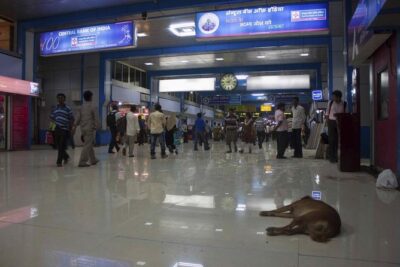
Chhatrapati Shivaji Terminus, often called CST, is one of the tour’s major visual highlights. This working railway station is known for its elaborate Gothic design, and it shows how transport, architecture, and city life meet in Mumbai.
You may see it as a photo stop rather than take a full architectural tour. Even so, it is worth paying attention to the details. Look for the mix of Gothic forms and Indian decorative touches, and watch the constant movement around the station.
The station is not a quiet monument. It remains part of Mumbai’s daily transport system, so the setting can be noisy and crowded. That is part of its appeal, but it also means you need to stay close to the guide and watch your belongings.
Train tickets are included. The supplied information does not spell out exactly where they are used in the route, so ask the guide at the start if the train segment is part of your departure or return arrangement.
Dhobi Ghat and the working city
Dhobi Ghat is the most unusual final stop. It is widely known as the world’s largest open-air laundry, where hundreds of workers wash and organize clothes by hand.
This is not a staged cultural show. You are looking at a real workplace, and the guide’s explanation matters. The stop can help you understand the labor behind Mumbai’s hotels, homes, businesses, and institutions. It also brings the tour back to everyday life after the grand monuments and historical homes.
The timing is short, around 15 minutes in the listed route. You will mainly observe and photograph from the appropriate viewing area rather than wander through the worksite. Follow the guide’s directions and ask before taking close photographs of workers.
There is a small route detail worth checking before you book. The tour description says the group experience ends at Dhobi Ghat, with help available for returning to Colaba or reaching the nearest train station. The stated itinerary also lists arrival back at Regal Cinema. Traffic, group arrangements, and whether you choose a private tour may affect this, so confirm the exact end point when you meet the guide.
What the guides add to the four-hour route
The strongest reason to choose this experience is the guide rather than any single monument. The tour is designed as a conversation about Mumbai’s religion, food, architecture, politics, daily routines, and changing neighborhoods.
Balaji has been praised for being honest, authentic, informative, and willing to answer questions without making the day feel rushed. Sajid has been described as professional, engaging, and helpful with onward directions. Another guide, described as a Dharavi resident, was able to explain the local economy and political debates about rehabilitation plans.
Those details matter because Mumbai can be hard to read from a car window. A guide who lives in the city can explain what you are seeing and help you understand the difference between a ceremonial landmark and a place people use every day.
The vehicle also received specific praise for being clean and new, and the driver or guide helped with photographs. That can make a real difference when you have only 15 minutes at a stop.
Is $36 good value for Mumbai?
At $36 per person, this is a sensible price if you want broad coverage in a short time. You receive an English or Hindi speaking guide, air-conditioned transport for the group format, bottled water, and train tickets. You also avoid arranging separate taxis between widely scattered sights.
The value is strongest for a first visit, a short stay, or a day when you want someone else to handle the route. You see religious sites, history, architecture, transport, markets, the waterfront, and working Mumbai in one compact outing.
The price does not buy long visits or much personal control. Food is not included, and you will not have the freedom to linger at every favorite stop. If you already know South Mumbai well, a private tour may offer better value because hotel pickup and drop-off are included from South Mumbai, with more room for questions and adjustments.
The cancellation terms are friendly: you can cancel up to 24 hours ahead for a full refund, and you can reserve now and pay later. That helps if your Mumbai schedule may shift.
Who should book this Mumbai tour?
I would choose this tour if you want a broad introduction without spending four hours walking in the heat. It suits first-time visitors, short-stay visitors, solo travelers who want a guide, couples, and anyone curious about both famous sights and ordinary city work.
It is also a good fit if you want direct explanations rather than a large scripted tour. The guide can adapt the conversation to your interests, within the limits of a shared route.
I would be cautious if you have back, heart, or mobility problems, are pregnant, use a wheelchair, or suffer from motion sickness. The tour is not suitable for wheelchair users or people with limited mobility, and the route includes uneven surfaces, stairs, vehicle movement, and short walks.
FAQ
Where does the group tour meet?
The group tour meets outside Regal Cinema in Colaba, South Mumbai. Arrive at least 10 minutes before departure.
What languages are available?
The tour is conducted in English or Hindi.
How long does the experience last?
The tour lasts four hours. Starting times depend on availability.
Is transportation included?
Yes. The group tour uses shared air-conditioned transportation, and train tickets are included. Private tours include hotel pickup and drop-off from South Mumbai, with pickup also offered from Navi Mumbai according to the tour information.
Is food included?
No. Food is not included in the price.
Is bottled water provided?
Yes. Packaged water is included. Carrying a refillable bottle is also recommended.
What should I wear at the religious sites?
Wear modest clothing. Avoid sleeveless tops and short skirts when visiting religious places.
Is the tour suitable for wheelchair users?
No. The tour is not suitable for wheelchair users or people with limited mobility because some places have uneven surfaces or stairs.
Can I cancel the booking?
Yes. You can cancel up to 24 hours in advance for a full refund. You can also reserve now and pay later.
Should you book it?
Book this tour if you want to understand Mumbai quickly, with a local guide filling in the gaps between the sights. The best parts are the sharp contrasts: Gandhi’s home, a sacred tank, a Jain temple, a Gothic railway station, Marine Drive, and the hand-worked laundry at Dhobi Ghat.
Skip it if you want a slow museum day, a food tour, or a fully accessible route. For most first-time visitors who value context and convenience, $36 is fair, provided you accept the short stops and confirm whether your group ends at Dhobi Ghat or returns to Regal Cinema.
Just added around Mumbai
- Temples & Vineyards: Private Tour to Nashik from Mumbai★ 4.5 · 3 reviews
- Mumbai: Private City sightseeing and Dharavi Slum Tour★ 5.0 · 3 reviews
- Mumbai: Full Day City Sightseeing with Lunch, Car & Guide★ 4.3 · 3 reviews
- Elephanta Island Private Speedboat Tour from Mumbai – 6pax★ 5.0 · 3 reviews
- Mumbai: Elephanta Island and Elephanta Caves Guided Tour★ 4.4 · 3 reviews
- Mumbai Sightseeing Tour by Public Transport with family Lunch★ 5.0 · 3 reviews
- Mumbai by Dawn★ 4.5 · 3 reviews
- Mumbai Dharavi Slum Community Tour★ 5.0 · 3 reviews
Mumbai Walking Tours, compared.
Private Guided Walking Tour in Bandra Queen of Suburbs
Read our review →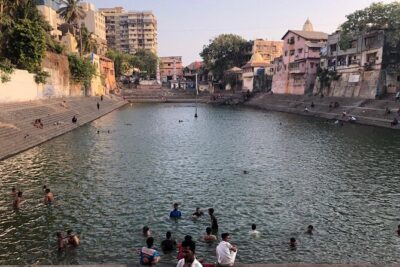
Private Guided Spiritual Walk in Banganga Hindu Temples
Read our review →
Dharavi Slum Walking Tour by First Female Tour Guide
Read our review →
Private Guided Non-Veg Street Food Walking Tour in Muslim Quarter
Read our review →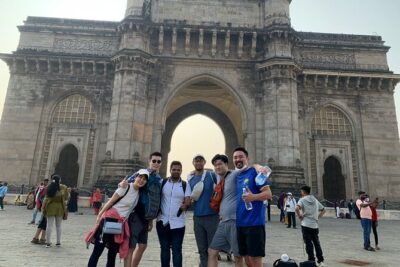

Heritage Walk: Recommended by Gigi Hadid as a must-do in Mumbai
Read our review →Browse the lists this tour appears in