
Reviewed · MUMBAI TEMPLE & SPIRITUAL TOURS
Banganga Walkeshwar Walking Tour
Mumbai’s Banganga quarter gives you something the city’s grand monuments cannot: a close look at everyday religious life in an old neighborhood. In about two and a half hours, you walk around Walkeshwar, visit Banganga Tank and its surrounding temples, then see the open-air Dhobi Ghat.
I like the 18 temples packed into this route, each with its own story, and I like the way the tank serves as more than a religious site. It is also a play area, meeting place, washing space, and setting for puja. The main drawback is that the experience can feel less polished than a standard sightseeing circuit, with narrow lanes, slum housing, and living religious spaces requiring tact and respect.
- Banganga Tank is used for worship, washing, social gatherings, and daily neighborhood life.
- Walkeshwar’s 18 temples make this more than a single-monument stop.
- Memorial stones called pallias connect the area with Gujarati traditions of honoring dead warriors.
- Deepstambhas, or pillars of light, mark entrances and temples, with local beliefs linking each to a buried saint.
- Dhobi Ghat adds a working Mumbai site, with laundry carried out in the open air.
- The experience costs $18.13 per person, accepts a mobile ticket, and allows up to 15 people.
In This Review
- Why Banganga Feels Different From Central Mumbai
- Starting at Walkeshwar’s Old Temples
- Reading the Memorial Stones and Deepstambhas
- Banganga Tank as a Working Neighborhood Space
- The Narrow Street Around Banganga
- Dhobi Ghat and Mumbai’s Open-Air Laundry
- What $18.13 Buys You
- Timing, Meeting Point, and Booking Details
- Who Will Enjoy This Walk Most
- Should You Book Banganga Walkeshwar?
- FAQ
- How long does the Banganga Walkeshwar Walking Tour last?
- How much does the tour cost?
- Where does the tour begin?
- Where does the tour end?
- What language does the guide speak?
- What places are included in the detailed route?
- Is admission included?
- Is food or drink included?
- How many people can join the tour?
- Can I cancel for a full refund?
Why Banganga Feels Different From Central Mumbai
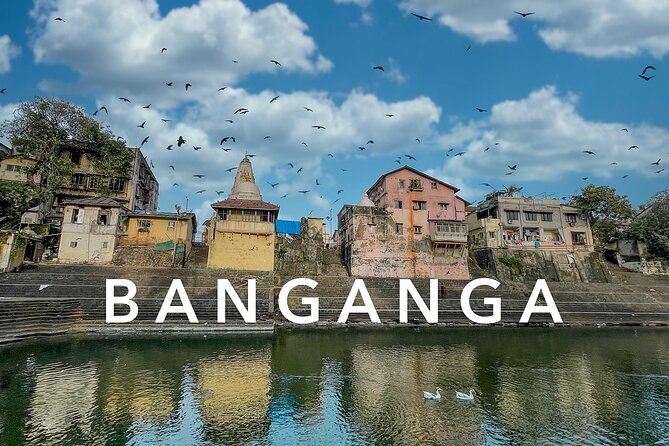
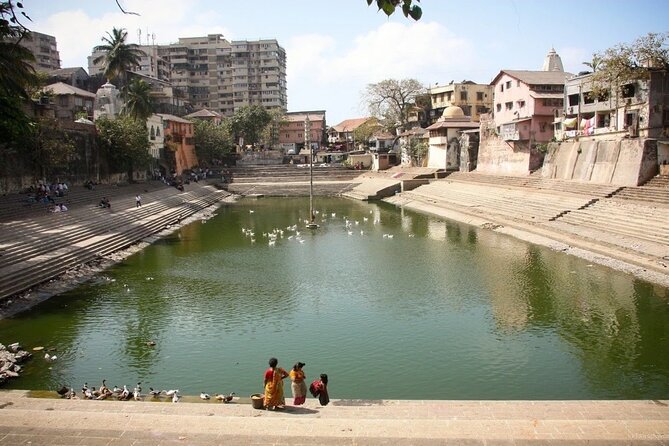
Mumbai often introduces itself through grand buildings, colonial facades, and packed roads. Banganga offers a quieter kind of surprise. Here, a sacred tank sits among temples, homes, religious rest houses, and narrow lanes. The setting feels less like a formal attraction and more like a neighborhood that happens to carry centuries of religious meaning.
That distinction matters. You are not simply walking up to a monument, taking a picture, and moving on. You are seeing a place still used by local residents. Children may use the steps as a play area. People may sit and talk nearby. Washing can be spread out to dry, and worship takes place beside ordinary household activity.
I like this mix because it gives you a better sense of how heritage works in Mumbai. It is not always separated from daily life behind a gate. At Banganga, history, faith, housing, and work share the same small patch of ground.
The tour is described as a Banganga Walkeshwar walking experience, yet the wider description also refers to private transportation and a private vehicle between attractions. The detailed route centers on Walkeshwar, Banganga, and Dhobi Ghat. If you are booking specifically for Gateway of India, Victoria Terminus, Bombay High Court, or Hanging Gardens, confirm the exact route before paying. Those sights appear in the broader description, but they are not part of the detailed stop-by-stop plan supplied here.
Starting at Walkeshwar’s Old Temples
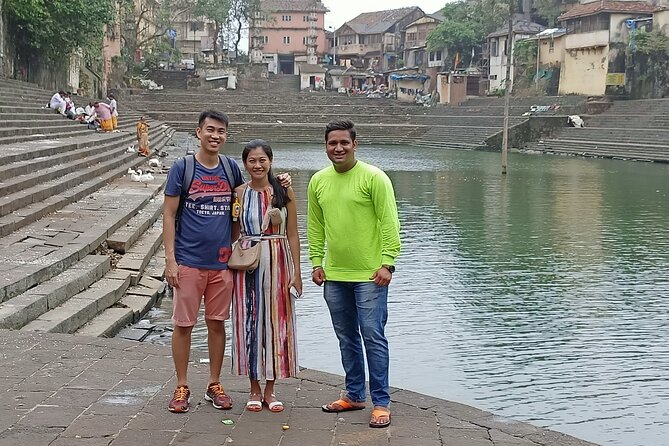
The tour begins at Hotel Banganga Arogya Bhavan, Shop No. 91, on Road Shubash Chowk in Walkeshwar, Malabar Hill. This is also where the activity ends, so you do not need to arrange a separate finish point.
The opening section focuses on Walkeshwar as one of the oldest continually inhabited places in Mumbai. That claim gives the walk its basic shape. Instead of looking only at famous city landmarks, you are tracing a living settlement where religious buildings and homes sit close together.
The route includes 18 temples, and the guide explains the stories connected with them. This is where an English-speaking guide adds real value. Without context, a temple walk can become a string of similar-looking entrances and shrines. With explanation, you can begin to understand why each place matters and how the temples fit together.
The supplied information does not name every temple or give a fixed order for visiting them. That is worth keeping in mind if you want a highly structured architectural tour. The strength here is the chance to hear local stories while walking from one site to the next, rather than receiving only dates and building names.
Past feedback names guides including Ajay, Dhaval, and Sid, with Ajay receiving particular praise for detailed explanations and genuine interest in the area. Guide assignments can vary, so treat those names as examples rather than a promise. The important point is that the guide is meant to provide the interpretation that turns a short walk into a cultural tour.
More temple and shrine visits:
- Private Guided Spiritual Walk in Banganga Hindu Temples
★ 5.0 · 271 reviews - Mumbai: Kanheri Caves and The Golden Pagoda Temple
★ 4.7 · 108 reviews - Sanjay Gandhi National Park(SGNP) + Kenheri Caves + Lion Safari + Jain Temple
★ 5.0 · 88 reviews
Reading the Memorial Stones and Deepstambhas
Two details give this walk a stronger local focus than a basic temple visit: the memorial stones and the deepstambhas.
The memorial stones, known as pallias, honor dead warriors and are worshiped by Gujarati communities. They are easy to overlook if you are walking quickly. A guide can explain their role and help you see that the neighborhood’s religious life is not limited to large temples or famous images.
The deepstambhas are pillars of light placed at the entrance to Banganga Tank and at important temples. The local belief that a saint is buried beneath each pillar adds another layer to the route. You do not need to accept every tradition literally to appreciate what it tells you about the place. These pillars mark sacred boundaries and help show how the neighborhood organizes its religious space.
This section is best approached with patience. The details are small, and the meaning may not be obvious from a quick photograph. I would keep your phone ready for notes, but also give the guide your attention. The value lies in the explanation, not in collecting a long list of images.
Banganga Tank as a Working Neighborhood Space
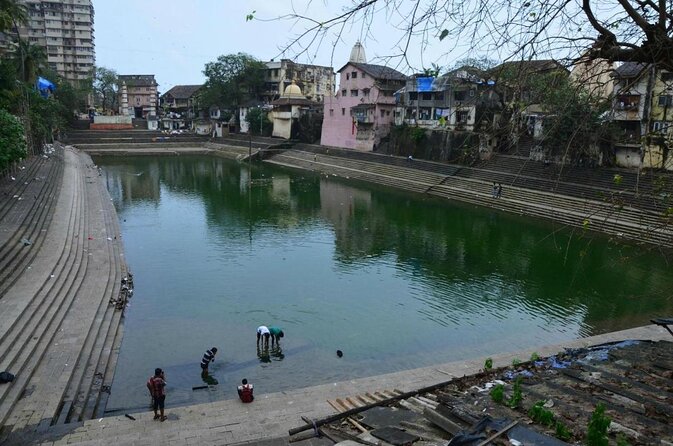
Banganga Tank is the centerpiece of the walk. Its steps serve several purposes at once: children play there, residents meet, washing dries there, and people perform puja. That range of uses is what makes the tank memorable.
Many city tours present religious sites as silent places to admire. Banganga is more active and more ordinary. You may see domestic routines close to sacred activity, which can feel surprising if you expect a carefully managed monument. The setting asks you to observe without treating people’s daily lives as a show.
The guide’s role is especially important here. You will want help understanding the religious meaning of the tank, but you also need a sense of when to stand back. Dress and behavior should be respectful around temples and worship. The provided details do not list a formal dress code, so practical modesty and quiet attention are sensible choices.
Admission is listed as free, which helps the price feel reasonable. You are paying mainly for the guide and the interpretation, not for entry to a ticketed attraction. That is a good fit if you enjoy local context and would otherwise have trouble making sense of the site on your own.
The tank is not presented as a restored museum piece. The surrounding homes, laundry, religious rest houses, and migrant communities are part of what you see. Some people will value this honesty. Others may find the surroundings visually rough or uncomfortable. I would choose this tour for its social and cultural reality, not for a neat, polished presentation.
The Narrow Street Around Banganga
After the tank, the walk continues along the street around it. This lane is lined with temples, homes, and dharamsalas, or religious rest houses. The close quarters help you see how the area functions beyond its central water tank.
The street also reflects the pressure of urban Mumbai. Migrant communities and slum-dwellers have occupied parts of the area for several decades. This is not a side note that should be edited out of the experience. It is part of the current story of Walkeshwar, and it may prompt difficult questions about housing, migration, and who gets to remain in valuable city neighborhoods.
You should approach this portion with care. People live here, and the route is not a theatrical set. Avoid photographing residents without permission and listen when your guide explains the local situation. A good guide can give the area context without turning poverty into entertainment.
This section may be the tour’s biggest consideration. The experience places you near modest housing and slum communities, and not everyone will be comfortable with that. If you want a purely architectural walk, you may prefer a more conventional Mumbai sightseeing tour. If you want to see how sacred places and urban hardship exist side by side, this adds important depth.
More guided walks on foot:
- Group Guided Walking Tour in Fort and Colaba
★ 5.0 · 1,073 reviews - Private Guided Walking Tour in Fort & Colaba
★ 5.0 · 895 reviews - Private Guided Walking Tour in Bandra Queen of Suburbs
★ 5.0 · 383 reviews - Mumbai: Dharavi Slum Walking Tour by First Female Tour Guide
★ 4.9 · 192 reviews
Dhobi Ghat and Mumbai’s Open-Air Laundry
The final listed stop is Dhobi Ghat, described here as Mumbai’s second-largest laundry. The laundry operates in the open air and was built by the British. It provides a sharp change from the temples and tank.
At Banganga, the focus is worship, neighborhood life, and old religious traditions. At Dhobi Ghat, the focus shifts to work. You see a practical service carried out in a highly visible way, rather than hidden inside a modern industrial building.
The stop is scheduled for about 30 minutes, while the Walkeshwar portion receives about two hours. That balance makes sense. Banganga has many connected points to explain, while Dhobi Ghat works as a shorter concluding look at Mumbai’s working life.
The information does not specify whether the tour enters the laundry area or views it from a particular point. I would expect the guide to explain what you are seeing, but confirm the viewing arrangement if that detail matters to you. The stop is still useful because it broadens the tour beyond temples and religious history.
What $18.13 Buys You

At $18.13 per person, this is a low-cost guided experience for a two-hour-thirty-minute outing. Admission to the listed sites is free, and food and drink are not included. Your main purchase is the English-speaking guide’s time, local explanation, and route planning.
That is good value if you would otherwise walk through Banganga without understanding the memorial stones, temple network, deepstambhas, or social uses of the tank. It is also a sensible first look for someone who wants a small-scale introduction to Mumbai rather than a full-day city circuit.
The value is less clear if you are expecting private transportation, a private vehicle, and a long list of famous landmarks all within the same short session. The description mentions a private sightseeing tour and vehicle, while the detailed plan presents a walking route with two main areas. Ask the operator to clarify whether transport is used only to connect the listed sites or whether additional Mumbai landmarks are included.
The group can reach 15 people, so do not assume that the word private guarantees a one-person or family-only outing. A group of that size is still manageable for a neighborhood walk, but it may feel less personal in narrow lanes. The listed guide names, including Ajay, Dhaval, and Sid, are not a guarantee of who will lead your departure.
Timing, Meeting Point, and Booking Details
The tour starts and finishes at Hotel Banganga Arogya Bhavan, Shop No. 91, Road Shubash Chowk, Walkeshwar, Malabar Hill, Mumbai, Maharashtra 400006. This fixed return point is handy if you are building the walk into a larger day around Malabar Hill.
The duration is approximately two hours and thirty minutes. Allow yourself enough time to arrive at the meeting point, since the walk begins in a specific part of Mumbai rather than at a broad landmark.
A mobile ticket is accepted, and confirmation is provided when you book. The activity is listed as suitable for most people, with a maximum group size of 15. No food or drink is included, so plan those separately.
The tour is often booked about 40 days ahead. That does not mean you must always book that early, but it is useful evidence that advance planning can matter. Free cancellation is available if you cancel at least 24 hours before the local start time. Inside that window, the payment is not refunded, and changes are not accepted.
Who Will Enjoy This Walk Most
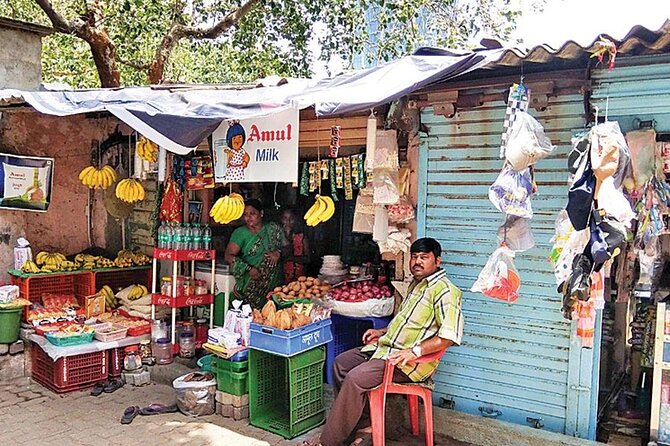
I would recommend Banganga Walkeshwar to you if you like old neighborhoods, religious traditions, and working city spaces more than a checklist of famous buildings. It suits a first-time visitor who wants a compact cultural introduction, and it also suits someone who has already seen Mumbai’s main sights and wants a less familiar corner.
It can work well for people who have lived in Mumbai but never visited Banganga. The route is not only for first-time city visitors. Its appeal comes from the stories and details that are easy to miss even when you know the city well.
You should think twice if your priority is a fully private tour with a guaranteed named guide, a private vehicle throughout, or a broad route covering Gateway of India, Victoria Terminus, the High Court, and Hanging Gardens. Those landmarks are mentioned in the general description, but the detailed plan does not confirm that they are visited.
You should also be comfortable walking through a lived-in neighborhood where housing conditions vary. This is a place to observe respectfully, not a polished attraction designed for quick photos.
Should You Book Banganga Walkeshwar?
Book it if you want a short, affordable walk built around the real texture of Mumbai. The combination of 18 temples, Banganga Tank, Gujarati memorial stones, deepstambhas, religious rest houses, migrant communities, and Dhobi Ghat gives you more range than the modest price suggests.
I especially like the fact that the tank is shown as part of daily life, not just as a sacred object. I also value the guide-led explanations, with Ajay, Dhaval, and Sid among the names associated with strong service. Just confirm the exact route, transport arrangements, and guide before booking if those details are important to you.
For $18.13, this is a good choice for context and local character. It is not the right pick if you want a polished grand-tour circuit or a guaranteed private experience limited to your own party.
FAQ
How long does the Banganga Walkeshwar Walking Tour last?
The tour lasts approximately 2 hours and 30 minutes.
How much does the tour cost?
The listed price is $18.13 per person.
Where does the tour begin?
It begins at Hotel Banganga Arogya Bhavan, Shop No. 91, Shop No. 91, Road Shubash Chowk, Walkeshwar, Malabar Hill, Mumbai, Maharashtra 400006, India.
Where does the tour end?
The activity ends back at the meeting point.
What language does the guide speak?
The tour includes an English-speaking guide.
What places are included in the detailed route?
The detailed route covers Walkeshwar, Banganga Tank and its surrounding street, and Dhobi Ghat.
Is admission included?
Admission is listed as free for the tour stops.
Is food or drink included?
No. Food and drink are not included.
How many people can join the tour?
The activity has a maximum of 15 people.
Can I cancel for a full refund?
Yes. You can receive a full refund if you cancel at least 24 hours before the experience’s start time. Cancellations within 24 hours are not refunded.
Just added around Mumbai
- Temples & Vineyards: Private Tour to Nashik from Mumbai★ 4.5 · 3 reviews
- Mumbai: Private City sightseeing and Dharavi Slum Tour★ 5.0 · 3 reviews
- Mumbai: Full Day City Sightseeing with Lunch, Car & Guide★ 4.3 · 3 reviews
- Elephanta Island Private Speedboat Tour from Mumbai – 6pax★ 5.0 · 3 reviews
- Mumbai: Elephanta Island and Elephanta Caves Guided Tour★ 4.4 · 3 reviews
- Mumbai Sightseeing Tour by Public Transport with family Lunch★ 5.0 · 3 reviews
- Mumbai by Dawn★ 4.5 · 3 reviews
- Mumbai: Dhobi Ghat & Dharavi Slum tour★ 4.7 · 3 reviews
Mumbai Temple & Spiritual Tours, compared.
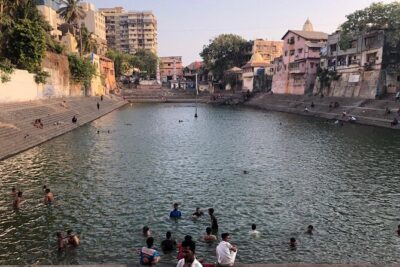
Private Guided Spiritual Walk in Banganga Hindu Temples
Read our review →
Sanjay Gandhi National Park(SGNP) + Kenheri Caves + Lion Safari + Jain Temple
Read our review →
Sanjay Gandhi National Park+ Kanheri Caves + Temple +Tigar Safari
Read our review →
Buddhist Kanheri Caves with Golden Pagoda Temple
Read our review →
Browse the lists this tour appears in