
Reviewed · MUMBAI COOKING CLASSES
Mumbai Coastal Cooking: From Fishing Net to Flavourful Plate
Mumbai’s coastal story makes most sense when you see it through food. This three-hour private experience takes you toward the city’s fishing community, through a local market, and into a fisherman’s home kitchen, where Kavitha teaches you to prepare fish curry, fried fish, roti, and other regional dishes. The home cooking is the heart of the experience, not a staged restaurant demonstration.
I like two things right away: you meet people connected to Mumbai’s old fishing culture, and you get to eat a meal you helped prepare. Kavitha speaks excellent English, and her husband Ravi may join the conversation. The main consideration is flexibility. Access to the fishing village can change, and one recent visit became a longer home cooking session instead of the full village route.
In This Review
- Key points to know before booking
- Why Mumbai’s coast belongs on your dinner plate
- Reaching the fishing village by tuk-tuk
- The fish market and the people behind the catch
- Cooking with Kavitha in a local home
- What you may cook and eat
- Three hours, private group, and real value
- Who will enjoy this most
- Practical details for a smoother visit
- Should you book Mumbai Coastal Cooking?
- FAQ
- How long does the Mumbai Coastal Cooking experience last?
- What is included in the price?
- Who leads the cooking class?
- What food will I learn to prepare?
- Is the experience private?
- Can the fishing village visit change?
Key points to know before booking
- Kavitha’s home kitchen: Learn fish curry, fried fish, roti, chapati, rice, and local bread in a personal setting.
- Mumbai’s fishing roots: Visit a beach, fishing boats, docks, net weaving areas, and a long-established fishing village when access permits.
- Market contact: Walk through a seafood market and see fisherwomen selling the day’s catch in colorful sarees.
- Private format: You have a small, personal setting rather than a large class, with English-language hosting.
- Flexible itinerary: Access restrictions can replace the village visit with extra cooking, conversation, and time in the home.
- Good value at $21: The price includes the tuk-tuk ride, market and village visits, and the cooking class.
Why Mumbai’s coast belongs on your dinner plate
Mumbai was once a group of seven islands, and fishing was a central occupation long before the city became a giant commercial center. That older identity can be hard to spot among trains, towers, traffic, and packed streets. This experience gives you a direct way to connect the seafood on your plate with the people, tools, and markets behind it.
The tour is not only about preparing a recipe. You see how coastal life shapes local food. Fish appears in the market, in the home kitchen, and in the stories shared around the meal. That link gives the experience more weight than a standard cooking class held in a polished studio.
You meet at a designated point, which can change according to the option you book. From there, the plan is to take a tuk-tuk toward the fishing village. The ride is part of the local feel, though you should expect ordinary city transport rather than a private sightseeing vehicle with a fixed scenic route.
More Indian cooking classes:
- Mumbai: Indian Cooking Class & Cultural Delights
★ 5.0 · 38 reviews - Indian Curry 5-Hour Cooking Classes In Mumbai
★ 5.0 · 22 reviews - Private Vegetarian Indian Cooking Class in Mumbai
★ 5.0 · 17 reviews
Reaching the fishing village by tuk-tuk
The village visit is designed to introduce you to one of Mumbai’s oldest communities. You may begin at a historic festive ground with a connection to the British period, then continue toward the beach and working docks. These stops help explain the area as a lived-in neighborhood, not just a photo backdrop.
At the beach, you can see fishing boats and watch traditional work around the shore. You may also observe net weaving, a practical skill that connects directly to the catch later seen in the market. I like this sequence because it adds useful context. You are not simply told that fishing matters here. You see the boats, nets, sellers, and food as parts of one system.
The docks can be active and crowded, so this is a street-level experience rather than a quiet coastal walk. Keep your attention on the guide and your footing as you move through working areas. The tour information does not promise a boat ride or time on the water, so book it for the community and working harbor views, not for a cruise.
Access can also change the route. On one recent visit, entry to the fishermen’s village was not possible because of restrictions. Instead, the experience began at Kavitha’s home and focused on cooking and conversation for about three hours. That is an important point to understand before you pay: the village portion is a meaningful part of the plan, but it may not always happen exactly as described.
The fish market and the people behind the catch
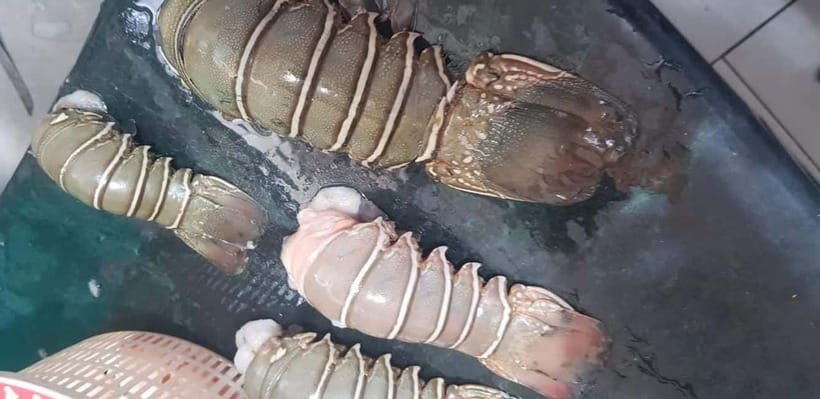
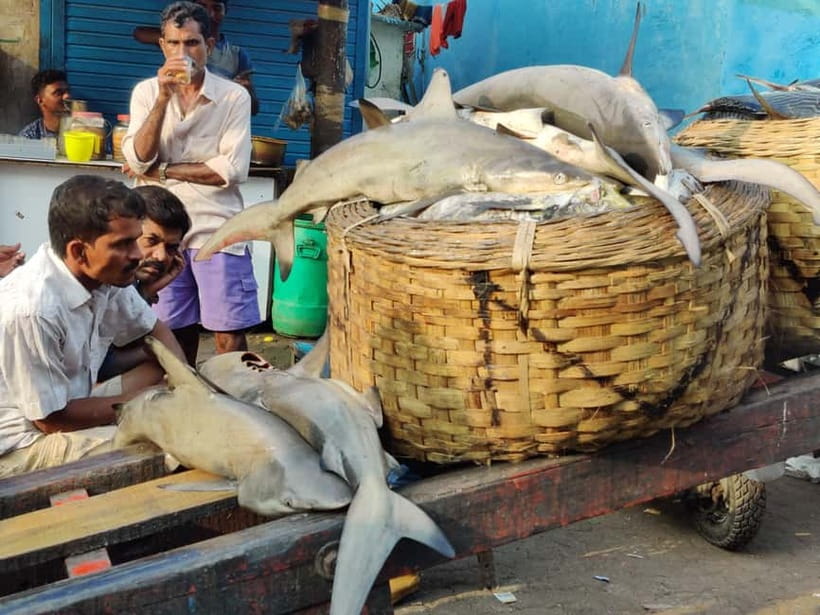
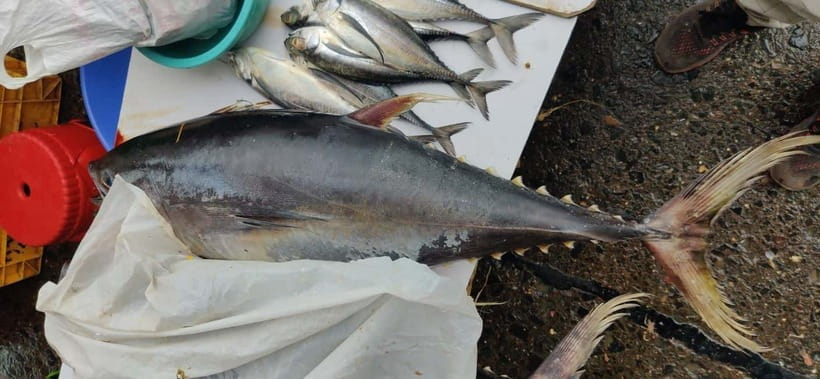
The market stop brings you close to the daily business of seafood. You can expect fresh fish, direct selling, and fisherwomen in colorful sarees handling their trade. This is the kind of place where a guide adds real value, since local customs, names, and buying habits are easier to understand with someone who can explain them.
I would not treat this as a market photo stop only. Watch how the sellers work, notice the range of seafood, and ask questions through your host. The market gives you a better sense of why Mumbai’s coastal cooking relies on fresh fish and strong seasoning. It also provides a useful contrast with the home kitchen, where the ingredients become a shared meal.
One couple’s experience included shopping in a residential area reached by metro. That route may vary by booking option, but it shows the local tone of the activity. You are not being taken only to a tourist shopping street. You may pass through an everyday neighborhood where people are doing ordinary errands, which can be more revealing than a polished market built for visitors.
The market can be lively, wet, crowded, and strongly scented. If you prefer controlled indoor settings, this may not be your favorite stop. If you want to see how food is bought before it reaches the cooking pot, it is one of the more useful parts of the experience.
Cooking with Kavitha in a local home
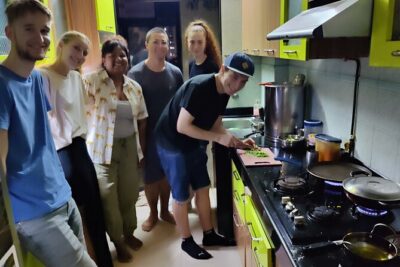
The final part takes place in a local fisherman’s home, with Kavitha leading the class. This is where the activity becomes personal. Instead of watching a chef work from a distance, you help with the preparation and can ask questions as each dish comes together.
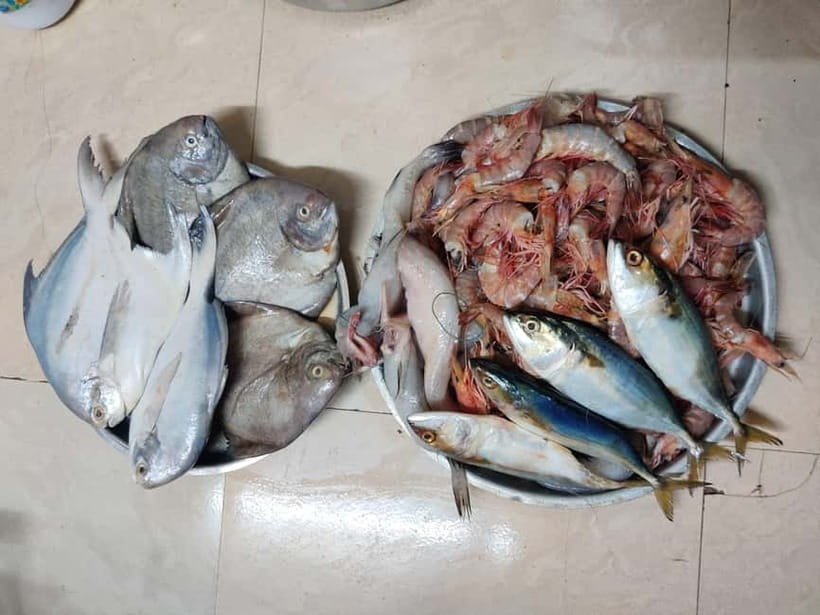
The exact menu can vary, but the planned dishes include fish curry, chicken dishes, local fisherman’s bread, and a sour-spicy drink. The hands-on sessions described by participants included mandeli, a small fish that was fried, fish curry, rice, roti, and chapati. You may be invited to fry a batch of fish or help shape and cook the bread.
Kavitha’s teaching style is a strong reason to book. She explains the process step by step and speaks very good English. That matters in a cooking class, since the value is not just eating the result. You want to understand what you are doing, ask why an ingredient is used, and get help when the dough or fish needs attention.
The meal is also a chance to talk about food culture across India. Kavitha has been praised for answering questions about her life, hopes, and everyday routines, while Ravi may join once the food is ready. That conversation is not a scripted cultural show. It is the informal exchange that makes a home visit feel different from a commercial class.
The setting also gives you a fuller view of Mumbai life. A home in the Dharavi area challenged one visitor’s assumptions about the neighborhood and became the most meaningful part of the time in Mumbai. That does not mean the tour turns the area into a subject for sightseeing. It means the personal welcome can replace quick impressions with a more direct human connection.
A completely different way to spend a day in Mumbai:
- Dharavi slum tour in Mumbai by Female tour guides of the slum
★ 5.0 · 1,976 reviews - Mumbai: Full-Day Sightseeing Tour of Mumbai
★ 4.9 · 1,822 reviews - Private Mumbai Sightseeing Tour (Traveller’s Choice Award Winner)
★ 5.0 · 1,565 reviews - Elephanta Caves & Island Guided Private Tour
★ 5.0 · 1,327 reviews
What you may cook and eat
The seafood is the main reason to choose this class. Fish curry and fried fish show two different sides of coastal cooking: one built around sauce and seasoning, the other around texture and careful frying. Mandeli was singled out as especially delicious, and it can be a fun dish to help prepare because you may handle the frying yourself.
Roti and chapati add a useful lesson in everyday Indian cooking. You learn how flour becomes a soft flatbread and how small changes in handling affect the result. Local fisherman’s bread is also part of the planned food experience, giving you something beyond the familiar curry-and-rice combination.
Rice rounds out the meal, while the sour-spicy drink adds a regional touch. The description also includes chicken dishes, though the hands-on menu may focus more heavily on seafood. If you have dietary restrictions or want a strictly fish-based class, ask for clarification before booking, since the supplied details do not specify substitutions.
Eating together at the end is a key part of the design. You are not handed a boxed meal and sent away. You sit down with the host and share what you made, which gives the class a natural finish and more time for conversation.
Three hours, private group, and real value
At $21 per person, this is inexpensive for a private experience that includes a tuk-tuk ride, a market visit, a village visit when possible, and a coastal cooking class. The value is strongest if you care about local contact and food instruction. A simple restaurant meal might cost less, but it would not include the market, net weaving, host conversation, or the chance to prepare the dishes yourself.
The advertised duration is three hours. In practice, the home portion can run longer. One visit lasted about four hours, while another spent roughly three hours cooking and talking after the village route changed. You should allow some flexibility rather than scheduling a tight airport transfer or another fixed appointment immediately afterward.
The private-group format is another plus. You can ask questions without competing with a large class, and the host can give you direct help with the cooking. It is especially suitable for couples, solo visitors, and small groups who want conversation rather than a lecture.
At the same time, the modest price and neighborhood setting mean you should not expect a luxury food studio. The experience is built around local homes, markets, and working areas. Its strengths are warmth, access, and food, not polished production or a perfectly fixed route.
Who will enjoy this most
I would choose this for you if food is one of your main ways of understanding a city. It suits curious eaters, home cooks, couples, and solo visitors who enjoy asking questions and sharing a table with a host. The English-language format makes it easier to follow the recipes and talk about Indian food beyond the dishes on the table.
It is also a good pick if you have already seen Mumbai’s major landmarks and want something rooted in daily life. The fishing village, market, docks, and home kitchen add a human scale that sightseeing buses rarely provide.
You may want a different activity if your priority is a guaranteed visit to the fishing village, a formal chef-led class, or a tightly timed three-hour schedule. Access restrictions can alter the route, and the strongest part of the experience may end up being the home cooking rather than the coastal walk.
The activity is also less suitable for someone who wants only a seafood tasting. You are expected to take part, listen, ask questions, and help with the meal. The reward comes from participation.
Practical details for a smoother visit
Check the meeting point for your chosen option, since it may vary. The host or greeter speaks English, and the group is private. The included tuk-tuk ride covers the planned transfer to the fishing village, but the exact transport arrangements can depend on the route.
Wear clothes that are comfortable for a market and home cooking. The market and docks are working places, not formal attractions, so choose practical footwear and avoid clothing you would be upset to stain. This is simple advice, but it can make the day more comfortable.
Give the host your food preferences and restrictions when you book or before the class begins. The listed dishes include fish, chicken, bread, rice, and a sour-spicy drink, but the details do not state how allergies or dietary substitutions are handled.
You can cancel up to 24 hours before the activity for a full refund, and you can reserve now and pay later. Those policies help if your Mumbai plans are still shifting, though they do not remove the need to confirm the meeting point and current route.
Should you book Mumbai Coastal Cooking?
Book it if you want a personal introduction to Mumbai through seafood, neighborhood markets, and a family kitchen. Kavitha’s patient instruction and warm conversation are the strongest reasons to go, and the $21 price is fair for a private class with food and local transport included.
Go in with an open schedule and a flexible attitude. The fishing village visit may be affected by access rules, but the home cooking can still make the experience worthwhile. If you want a guaranteed harbor tour, choose another activity. If you want fish curry, fried mandeli, roti, and a genuine conversation over a shared meal, this is an easy recommendation.
FAQ
How long does the Mumbai Coastal Cooking experience last?
The advertised duration is three hours. The home cooking portion may last longer, with one recorded visit taking about four hours.
What is included in the price?
The $21 price includes a visit to the fisherman’s village, a tuk-tuk ride, a fish market visit, and the coastal food cooking class.
Who leads the cooking class?
Kavitha leads the cooking class and speaks English. Her husband Ravi may also join the meal and conversation.
What food will I learn to prepare?
The planned dishes include fish curry, chicken dishes, local fisherman’s bread, and a sour-spicy drink. Cooking sessions have also included fried mandeli, rice, roti, and chapati.
Is the experience private?
Yes. The activity is offered as a private group experience with an English-speaking host or greeter.
Can the fishing village visit change?
Yes. Access restrictions may prevent the village visit. In that case, the experience can take place at Kavitha’s home with additional cooking and conversation.
Just added around Mumbai
- Temples & Vineyards: Private Tour to Nashik from Mumbai★ 4.5 · 3 reviews
- Mumbai: Private City sightseeing and Dharavi Slum Tour★ 5.0 · 3 reviews
- Mumbai: Full Day City Sightseeing with Lunch, Car & Guide★ 4.3 · 3 reviews
- Elephanta Island Private Speedboat Tour from Mumbai – 6pax★ 5.0 · 3 reviews
- Mumbai: Elephanta Island and Elephanta Caves Guided Tour★ 4.4 · 3 reviews
- Mumbai Sightseeing Tour by Public Transport with family Lunch★ 5.0 · 3 reviews
- Mumbai by Dawn★ 4.5 · 3 reviews
- Mumbai Dharavi Slum Community Tour★ 5.0 · 3 reviews
Mumbai Cooking Classes, compared.
Private Vegetarian Indian Cooking Class in Mumbai
Read our review →
Private Market Tour and Vegetarian Cooking Class in Mumbai
Read our review →
Mumbai Market Tour & Maharashtrian Cooking Class with Chef Reshma
Read our review →
Authentic Mumbai: Home-Cooked Meal with a Local Host
Read our review →Browse the lists this tour appears in