
Reviewed · MUMBAI COOKING CLASSES
Mumbai: Indian Cooking Class & Cultural Delights
Mumbai’s best food lessons often begin away from a restaurant table. Here, you start with a market visit, then return to cook a multi-course Maharashtrian meal with a local home cook. The food is the main event, but the conversations about daily life, ingredients, and Mumbai’s past give the three-hour class its real character.
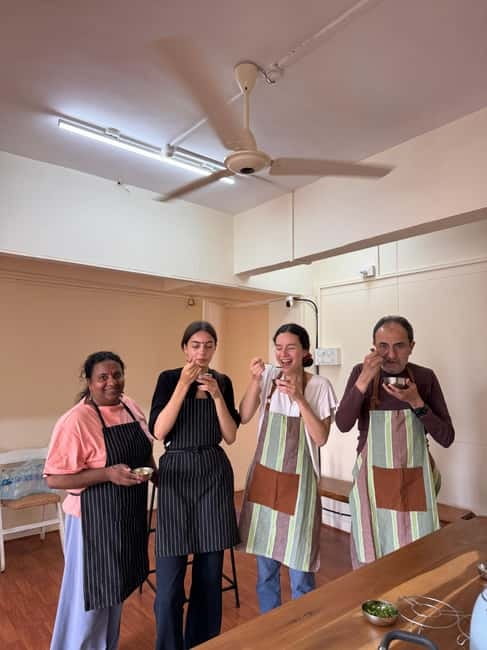
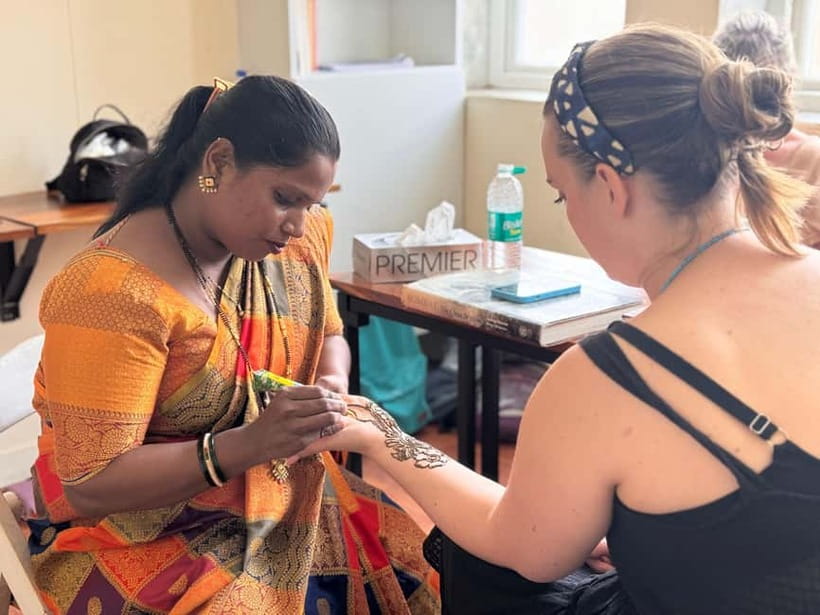
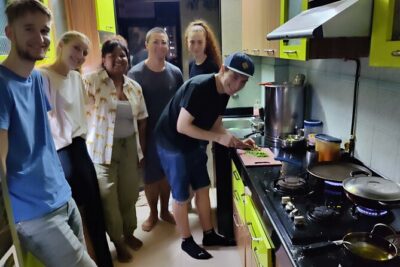
I like the small group of six, which gives you room to chop, stir, ask questions, and work at your own station. I also like the warm personal touch: sessions have included guide Dinesh, cook Trupti, a traditional welcome ritual, local chai, recipe sheets, and even henna.
The main consideration is that this is a hands-on class, not a demonstration where you simply watch. You need to be ready to cook several dishes in a short period, and transportation to the meeting point is not included.
In This Review
- Key points to know before you book
- A Mumbai cooking class that begins at the market
- Meeting the cook and settling into the kitchen
- What you actually cook during the three hours
- The cultural side goes beyond the food
- Sitting down to eat your own lunch
- Why the small group matters
- Is $27 a good value?
- Who should book this experience?
- How this compares with a standard Mumbai food tour
- Practical advice for a smoother class
- Should you book the Mumbai Indian cooking class?
- FAQ
- How long does the Mumbai cooking class last?
- Where is the meeting point?
- Is the cooking class suitable for beginners?
- How many people can join the class?
- What is included in the price?
- Can I cancel or pay later?
Key points to know before you book
- Start at Star Anise patisserie: Meet at the entrance, with no pickup or drop-off provided.
- See the ingredients at a local market: The market visit connects the finished meal with the produce and spices used to make it.
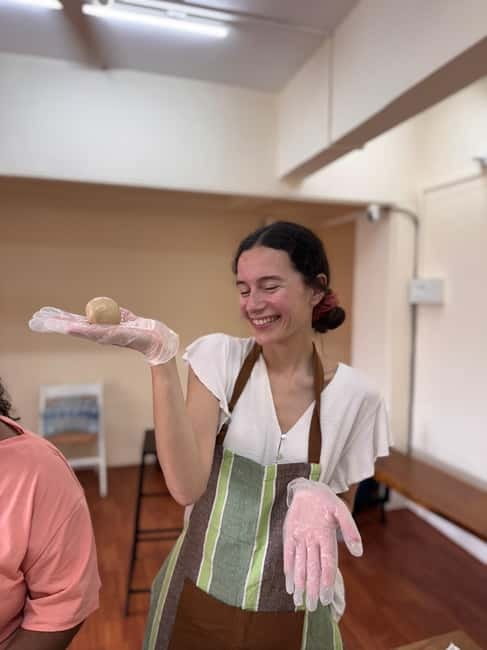
- Cook several dishes yourself: Past sessions have included around five recipes, thali dishes, chapati, and paratha.
- Learn from a home cook: The local chef demonstrates each dish, then guides you as you prepare it.
- Eat what you make: The class ends with a shared multi-course lunch, often served as a thali.
- Good for beginners: You do not need previous cooking experience, and the group is capped at six.
A Mumbai cooking class that begins at the market
The clever part of this experience is the order. You do not walk into a kitchen and face a pile of unfamiliar spices with no context. Instead, you first visit a local market and see where some of the food comes from.
That short walk helps you make sense of the cooking class. Fresh fruit, vegetables, fish, spices, and other ingredients are no longer abstract items in a recipe. They are part of the food system you have just seen in action. Guide Dinesh uses the outing to explain food and local culture, and some sessions include a cup of chai.
The market is not presented as a major sightseeing stop, so keep your expectations in check. You are not signing up for a full market tour or a shopping trip with free time to browse every stall. It is a useful introduction before the cooking begins, and it gives the rest of the activity a stronger local setting.
I especially like this opening for first-time visitors to Mumbai. Food markets can feel confusing when you do not know what you are seeing. A guide who explains ingredients and cooking traditions helps you pay attention to details you might otherwise miss.
More Indian cooking classes:
- Indian Curry 5-Hour Cooking Classes In Mumbai
★ 5.0 · 22 reviews - Private Vegetarian Indian Cooking Class in Mumbai
★ 5.0 · 17 reviews - Private Cooking Class in Mumbai
★ 5.0 · 15 reviews
Meeting the cook and settling into the kitchen
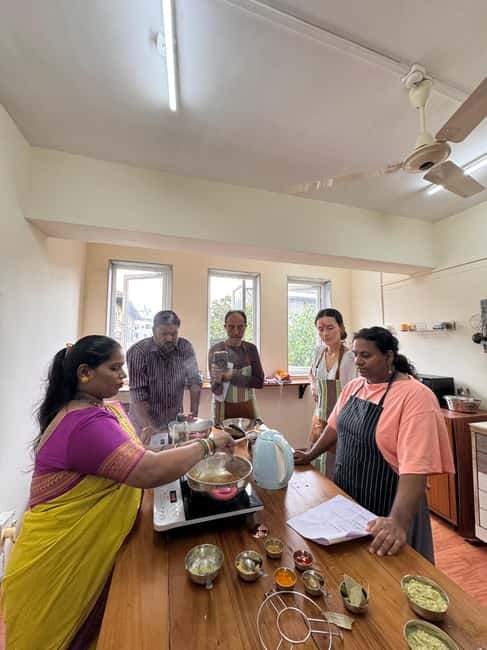
After the market visit, you head to the kitchen or cooking studio for the main lesson. The setting has been described as clean, peaceful, and comfortable, with several cooking stations. One account noted four stations, which matters because it means you are not expected to crowd around a single counter.
The class has a home-style feel rather than the polished mood of a formal culinary school. The local cook demonstrates each dish, while the guide explains the method, ingredients, and cultural background. In some sessions, the cook has been Trupti, with Dinesh handling the guiding and explanations.
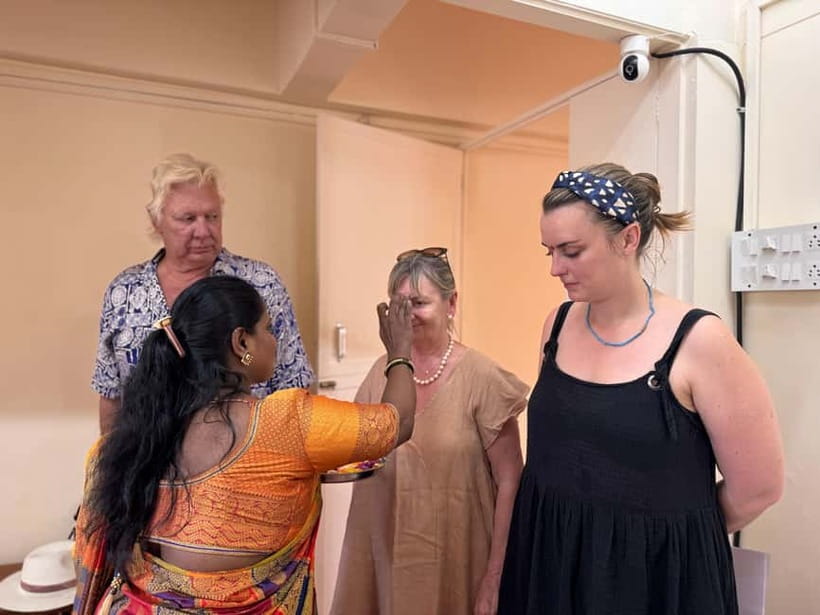
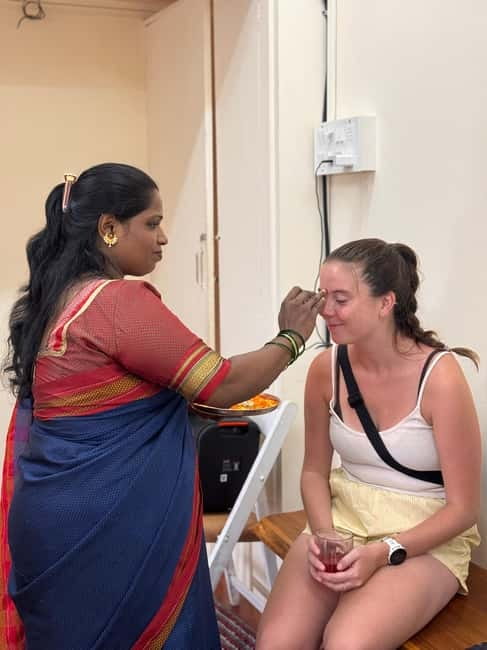
The welcome can include a traditional ritual, and the hosts make an effort to help you feel at ease. That personal greeting is more than decoration. Cooking in someone else’s kitchen can feel awkward at first, especially when you are working with unfamiliar techniques. A friendly start makes it easier to ask basic questions.
Do not worry if you are not confident in the kitchen. The experience is designed for beginners, and the teaching follows a clear pattern: watch a demonstration, try the recipe yourself, then receive help as you go. You are not left to guess how much spice to add or when a dish is ready.
What you actually cook during the three hours
The exact menu can vary, but you should expect a multi-course meal with several traditional Indian dishes. Several sessions have involved about five recipes, followed by lunch. Chapati and paratha have also been included when participants were especially interested in learning how to make them.
This variety is one of the strongest reasons to book the class. You are not learning one curry and calling it a day. You get a sense of how different parts of a meal work together, from vegetables and sauces to flatbreads and side dishes.
The demonstrations also challenge some common assumptions about Indian cooking. One useful lesson is that strong flavor does not require every dish to be heavy with cream or fat. You learn how spices, fresh ingredients, timing, and cooking methods create taste.
The flatbread practice is likely to be one of the more memorable parts. Chapati and paratha require a feel for dough, shaping, and heat, so they offer a practical skill you can repeat at home. If this is a priority for you, mention it when arranging the class. A previous session added these items because the participants wanted extra practice.
You should also receive recipes to take away. That makes the experience more useful than a meal you enjoy once and forget. Recipe sheets let you try the dishes again, although you may need to adapt measurements and ingredients depending on what is available where you live.
The cultural side goes beyond the food
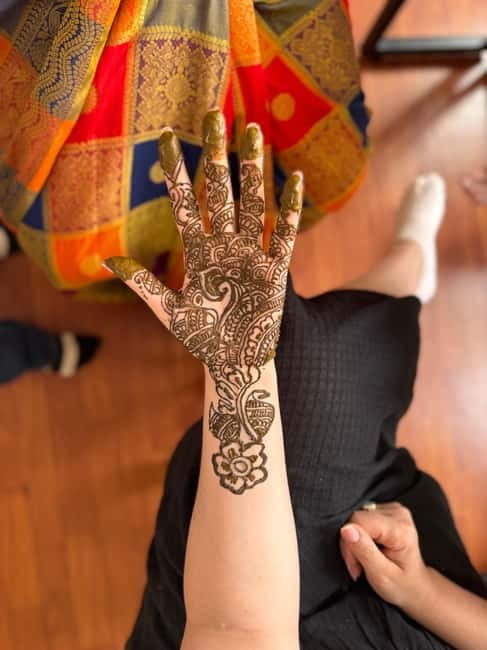
Food is the thread running through the class, but the activity also includes cultural activities that connect cooking with daily life in Mumbai and Maharashtra. Dinesh has explained food history, Indian cuisine, and the local area during the experience.
Some sessions have included a lesson about colonial Bombay, which adds a useful layer to the market and meal. Mumbai’s food traditions are not isolated from the city’s wider story. Ingredients, trade, migration, family customs, and changing neighborhoods all shape what ends up on the plate.
The tone is informal. You can ask questions as they occur instead of waiting for a formal lecture. That suits a cooking class because your questions are often practical: Why is this spice added now? How can I make the dish less hot? What can I use at home? Which part of the recipe matters most?
Henna has also been offered during at least one session. It should be treated as a possible cultural extra rather than a guaranteed part of every booking. The same applies to details such as chai, a traditional welcome, and specific dishes. The core promise is the market visit, cooking class, cultural activities, and meal.
A completely different way to spend a day in Mumbai:
- Dharavi slum tour in Mumbai by Female tour guides of the slum
★ 5.0 · 1,976 reviews - Mumbai: Full-Day Sightseeing Tour of Mumbai
★ 4.9 · 1,822 reviews - Private Mumbai Sightseeing Tour (Traveller’s Choice Award Winner)
★ 5.0 · 1,565 reviews - Elephanta Caves & Island Guided Private Tour
★ 5.0 · 1,327 reviews
Sitting down to eat your own lunch
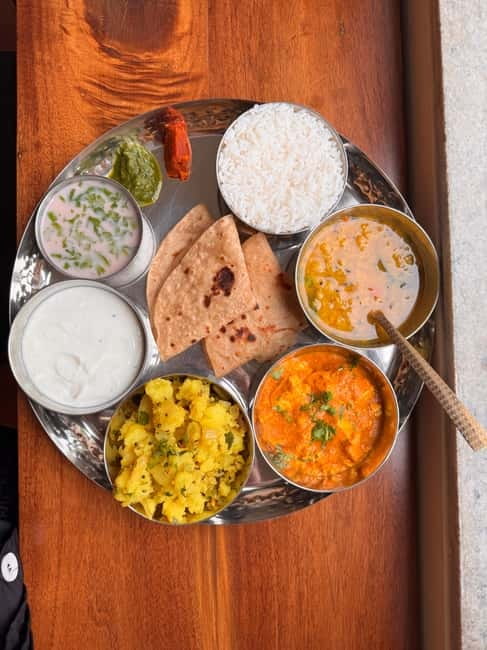
At the end, you sit down and eat the food prepared during the class. In several sessions, this has been served as a thali, giving you a chance to taste the full group of dishes together rather than sampling them one at a time from the stove.
This shared meal is where the activity pays off. You have watched the cook, handled the ingredients, made mistakes, corrected them, and then helped produce a complete lunch. The food has meaning because you understand the work behind it.
The meal is also social. The small group and hosts sit together, creating time for more conversation after the cooking stops. If you are traveling alone, this is a pleasant way to meet people without the forced feeling of a large group tour.
Do keep in mind that the class is only three hours. You will be cooking and eating within that window, so the pace may feel active. This is not a long, leisurely food workshop with hours to experiment. The advantage is that it fits easily into a Mumbai sightseeing day.
Why the small group matters
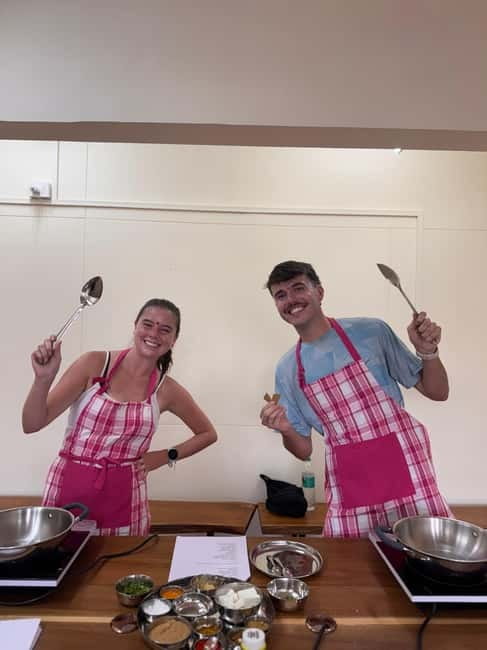
A maximum of six participants is a real advantage here. Cooking classes can become frustrating when ten or fifteen people gather around a demonstration and then take turns with one knife or one pan. This format gives you a better chance to participate in each recipe.
The class has also accommodated solo participants. One person had a one-on-one session, while another described four cooking stations and a calm setting. Group size can vary below the six-person limit, so you may have more individual attention than expected, but you should not book on the assumption that every session will be private.
The guide and cook share different roles. The cook shows you the physical techniques, while Dinesh has been praised for explaining the food, culture, and local area. That combination works well. You get practical instruction without losing the wider context.
I would choose this class over a large commercial cooking event if your goal is conversation and direct help. If you prefer to watch rather than participate, however, the small group does not change the basic nature of the experience. You will be expected to take part.
Is $27 a good value?
At $27 per person, this is a strong value for a three-hour activity that combines a market visit, guided instruction, cultural discussion, hands-on cooking, and a complete meal. You are paying for more than lunch, but the lunch helps make the price easy to judge.
A restaurant meal in Mumbai would not give you the same practical skill or access to a local cook. A market walk alone would cost less, but it would not show you how those ingredients become a traditional meal. The class brings the two pieces together.
The recipe sheets add lasting value. So does the chance to ask about techniques you can use at home. If you have any interest in Indian food, the class can continue to pay off after your trip because you leave with methods, not just photographs.
Personal expenses and transportation are not included. Plan for your own way to the entrance of Star Anise patisserie and any spending outside the activity. The meeting point is specific, so allow enough time to arrive without rushing.
Free cancellation is available up to 24 hours before the start for a full refund, and you can reserve now and pay later. Those terms are useful if your Mumbai schedule is still changing.
Who should book this experience?
I would recommend it to first-time visitors who want contact with local life but do not want a full-day cultural tour. It also suits food lovers, couples, solo visitors, and families or friends who enjoy doing something together.
You do not need to cook well. In fact, beginners may get the most from the class because the demonstrations and guided practice show you techniques from the ground up. Experienced home cooks will still find value in learning regional recipes, flatbread methods, spice combinations, and food customs.
It is a good choice if you want a break from sightseeing. Three hours in a kitchen gives you a quieter way to experience Mumbai, with the market and cultural explanations keeping it connected to the city.
You may want to skip it if you have strict dietary needs that have not been discussed in advance, or if you strongly dislike group cooking. The available information confirms a hands-on class and a multi-course meal, but it does not provide a fixed menu or detailed dietary policy. Ask before booking if ingredients are a major concern.
The activity is wheelchair accessible, which makes it more practical for many visitors. Transportation is not provided, so you will still need to arrange your route to the meeting point.
How this compares with a standard Mumbai food tour
A standard food tour usually keeps you moving from one tasting stop to another. This class gives you fewer stops but more direct involvement. You are not simply sampling someone else’s cooking. You are learning how the meal is assembled and then eating the result.
The market visit gives the class some of the sightseeing value of a food walk. The cooking portion adds a skill-based element, while the conversation about food history and local customs gives you more background than a simple tasting.
The trade-off is that you will not sample a long list of restaurant specialties across the city. The experience centers on Maharashtrian home cooking, so book it for depth and participation rather than maximum variety.
Practical advice for a smoother class
Meet at the entrance of Star Anise patisserie, and remember that transport is not included. Check the available starting times when booking because the activity lasts three hours.
Wear something comfortable for cooking and walking through the market. Since you will be preparing several dishes, clothing that allows easy movement is more useful than anything formal.
Ask questions early. If you want to learn chapati or paratha, say so at the start. One past session successfully added these items when participants made their interest clear.
Expect the menu to be traditional, but do not assume every dish will be identical from one date to another. The experience is built around local cooking rather than a rigid restaurant menu.
Finally, bring an appetite. The class ends with a substantial meal made by the group, and the food is not an afterthought. It is the reward for the work.
Should you book the Mumbai Indian cooking class?
Yes, if you want a friendly, practical introduction to Maharashtrian food and daily culture. The combination of a local market, a home cook, a guide such as Dinesh, several recipes, cultural conversation, and a shared lunch offers plenty for $27.
I would especially choose it for beginners, solo visitors, and anyone who wants to take a useful skill home. The only real caution is that you must participate, and the menu and extras may vary.
Book this class if you want to leave Mumbai with more than a full stomach. You can leave with recipes, new cooking skills, and a clearer sense of how local food fits into everyday life.
FAQ
How long does the Mumbai cooking class last?
The experience lasts three hours, including the market visit, cooking activities, cultural elements, and shared meal.
Where is the meeting point?
Meet at the entrance of Star Anise patisserie. Transportation to and from the location is not included.
Is the cooking class suitable for beginners?
Yes. No previous cooking experience is required, and the class includes demonstrations followed by guided hands-on cooking.
How many people can join the class?
It is a small-group activity limited to six participants. Some sessions may have fewer people, including a one-on-one class.
What is included in the price?
The $27 price includes an authentic Maharashtrian cooking class, a market visit, cultural activities, multi-course meal preparation, and the meal you prepare.
Can I cancel or pay later?
You can cancel up to 24 hours in advance for a full refund. You can also reserve your place and pay later.
Just added around Mumbai
- Temples & Vineyards: Private Tour to Nashik from Mumbai★ 4.5 · 3 reviews
- Mumbai: Private City sightseeing and Dharavi Slum Tour★ 5.0 · 3 reviews
- Mumbai: Full Day City Sightseeing with Lunch, Car & Guide★ 4.3 · 3 reviews
- Elephanta Island Private Speedboat Tour from Mumbai – 6pax★ 5.0 · 3 reviews
- Mumbai: Elephanta Island and Elephanta Caves Guided Tour★ 4.4 · 3 reviews
- Mumbai Sightseeing Tour by Public Transport with family Lunch★ 5.0 · 3 reviews
- Mumbai by Dawn★ 4.5 · 3 reviews
- Mumbai Dharavi Slum Community Tour★ 5.0 · 3 reviews
Mumbai Cooking Classes, compared.
Private Vegetarian Indian Cooking Class in Mumbai
Read our review →
Private Market Tour and Vegetarian Cooking Class in Mumbai
Read our review →
Mumbai Market Tour & Maharashtrian Cooking Class with Chef Reshma
Read our review →
Authentic Mumbai: Home-Cooked Meal with a Local Host
Read our review →
Authentic Indian Cooking Class in Mumbai in a Local Home
Read our review →Browse the lists this tour appears in