
Reviewed · KANHERI CAVES & GLOBAL PAGODA TOURS
Mumbai: Buddhist Kanheri Caves & optional Pagoda Temple trip
Mumbai’s Kanheri Caves offer something unusual: ancient Buddhist monuments inside a national park still surrounded by the modern city. You walk past rock-cut halls, carved figures, inscriptions, and meditation spaces cut into Black Mountain, then can add the enormous Global Vipassana Pagoda for a look at living Buddhist practice.
I like the easy transport in a private air-conditioned car, and I like having a guide who can give the stone chambers a human story. Guides Ganesh and Alam receive especially strong praise for clear explanations, good timing, and a sense of humor. The main drawback is physical: reaching the upper caves means climbing more than 50 steps, so this is not a good choice if stairs are difficult.
In This Review
- Key points to know
- Why Kanheri makes a strong Mumbai day trip
- Starting at Sanjay Gandhi National Park
- Entering the Kanheri Caves
- The climb and what to wear
- A guide can change how much you see
- Adding the Global Vipassana Pagoda
- Ancient caves and a modern monument in one day
- Is $30 good value?
- Who should book this outing?
- Booking details worth checking
- Should you book the Kanheri and Pagoda tour?
- FAQ
- How long does the tour take?
- Where does the tour begin?
- Is hotel pickup included?
- How much walking and climbing is involved?
- What should I bring?
- Is the Global Vipassana Pagoda included?
- Can I cancel the booking?
Key points to know
- Kanheri is ancient Buddhist architecture inside Mumbai: The caves date from the 1st century BC to the 10th century AD.
- The park setting changes the feel of the outing: Sanjay Gandhi National Park gives you a break from the city while remaining within Mumbai.
- The Pagoda is an optional modern counterpoint: Its stone dome was built without supporting pillars and contains the world’s largest meditation hall.
- Ganesh and Alam are notable guide names: Both are praised for detailed explanations, punctuality, and a friendly style.
- The tour length depends on your choice: Plan roughly 3 to 7 hours, with the Pagoda option taking longer.
- Comfortable shoes matter: You will climb more than 50 steps at Kanheri, and shorts are not allowed.
Why Kanheri makes a strong Mumbai day trip
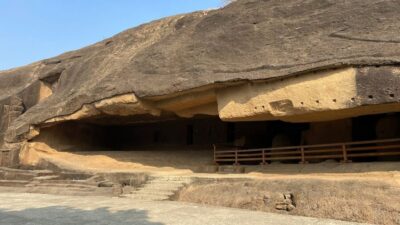
Mumbai is famous for grand colonial buildings, crowded markets, film culture, and waterfront views. Kanheri gives you a different side of the city. The site is not a polished palace or a single dramatic monument. It is a large group of caves cut into a basalt outcrop over many centuries, with spaces shaped for worship, teaching, and meditation.
That gradual development is what makes the site interesting. You are not looking at one finished building from one period. Instead, the caves show how a Buddhist community used the same mountain over a long stretch of time. A guide can help you notice the difference between a simple cell, a prayer hall, a carved relief, and an inscription.
The setting inside Sanjay Gandhi National Park adds another layer. The park is a major protected area within Mumbai’s metropolitan limits and is one of the most visited national parks in the world. You get history and archaeology without spending the day traveling far outside the city.
I would choose this outing if you have already seen some of central Mumbai and want a quieter, more substantial half-day. It also works well for anyone interested in Buddhist art, ancient engineering, or the way religious sites develop over time.
More Kanheri Caves and Global Pagoda trips:
- Mumbai: Kanheri Caves and The Golden Pagoda Temple
★ 4.7 · 108 reviews - Sanjay Gandhi National Park(SGNP) + Kenheri Caves + Lion Safari + Jain Temple
★ 5.0 · 88 reviews - Sanjay Gandhi National Park+ Kanheri Caves + Temple +Tigar Safari
★ 5.0 · 54 reviews
Starting at Sanjay Gandhi National Park
You can meet the guide at the entrance gate of Sanjay Gandhi National Park, or select an option with hotel pickup and drop-off. With the pickup option, you ride in a private air-conditioned vehicle, which is useful in Mumbai’s heat and traffic. It also removes the need to arrange a separate ride to Borivali.
The stated drop-off choices are Andheri, Mumbai, or Sanjay Gandhi National Park in Borivali. Check the exact option before booking, since the starting point and included hotel service depend on your selection.
The park is more than a gateway to the caves. It gives the outing a change of pace before the archaeology begins. Once inside, the setting feels removed from Mumbai’s dense streets, even though the city is close by. I would still allow flexibility in your day, since the total duration ranges from about 3 to 7 hours depending on transport, the chosen stops, and whether you include the Pagoda.
Entering the Kanheri Caves
The guided Kanheri visit lasts about 2.5 hours. That is a useful amount of time for this site because the caves are not a quick walk-by attraction. You need time to move between spaces and understand what you are seeing.
The caves were cut into a massive basalt outcrop known in Sanskrit as Krishnagiri, or Black Mountain, on Salsette Island. Buddhist monks and communities used the site across a long period, from the 1st century BC through the 10th century AD.
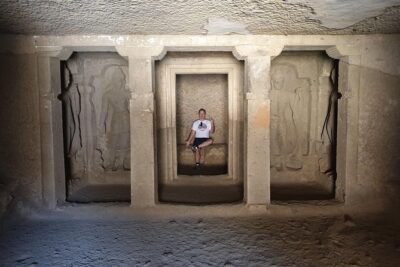
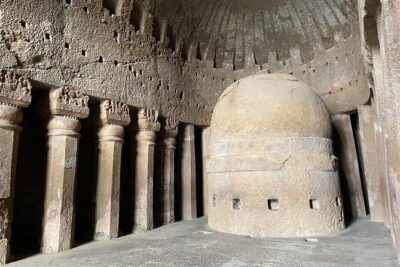
Inside and around the caves, you can see Buddhist sculptures, relief carvings, paintings, and inscriptions. Some spaces are plain and functional. Others have more formal religious features. This contrast helps you understand that Kanheri was not simply a collection of decorated rooms. It was a working religious center with spaces suited to different needs.
A guide is particularly useful here. Without context, a rock-cut chamber can look like just another old room. With explanation, you can begin to read the site as a place for prayer, study, residence, and meditation. Ganesh is praised for giving detailed explanations while keeping the tour lively. Alam is also singled out for clear insight and professional organization.
The site has a strong physical quality. You can see where the mountain was cut and shaped, rather than looking at freestanding buildings assembled from separate blocks. That makes the construction process easier to appreciate. It also means the ground and steps are part of the visit, not just a route between attractions.
The climb and what to wear
You will need to climb more than 50 steps to reach the top of the Kanheri Caves. This is the most important practical point for many people. The outing is not suitable for people with mobility impairments, and anyone with trouble on stairs should think carefully before booking.
Wear comfortable shoes with a secure sole. Sunglasses are also recommended, and you should bring a passport or another form of identification. Shorts are not allowed, so choose longer clothing from the start rather than trying to adjust your outfit at the entrance.
The information provided does not promise a particular amount of shade, rest stops, or seating, so dress for a warm outdoor visit. The private air-conditioned car helps between stops, but it does not remove the walking and climbing at the caves.
If you are visiting during monsoon season, weather can affect comfort on the route. Alam was praised for reading the clouds and helping keep a monsoon outing running smoothly. That does not guarantee dry conditions, but it does point to the value of having a local guide who watches the weather rather than simply following a fixed script.
More temple and shrine visits:
- Private Guided Spiritual Walk in Banganga Hindu Temples
★ 5.0 · 271 reviews - Mumbai Markets and Temples Tour
★ 5.0 · 59 reviews - Mumbai: Buddhist Kanheri Caves with Golden Pagoda Temple
★ 4.8 · 47 reviews - Mumbai: Local Markets & Temples Tour
★ 4.6 · 45 reviews
A guide can change how much you see
The caves reward questions. Ask about the purpose of the chambers, the Buddhist symbols, the carvings, and the inscriptions. A strong guide should connect the visible stonework with the people who used it, rather than giving you only dates.
The best feedback about this outing focuses on the guides’ timing, explanations, and personality. Ganesh is described as both funny and highly informed, while Alam is praised for being accommodating and professional. That combination matters at an archaeological site. You want facts, but you also want the visit to keep moving and feel approachable.
There is one useful note of balance. One booking was happy with the organization but wanted more explanation about the history and culture connected with the site. Guide quality can vary by assignment, so it is sensible to tell your guide at the beginning that you want extra historical detail, not just a route through the caves.
The tour is offered in English. If you care deeply about Buddhist art or ancient Indian history, prepare a few questions in advance. That gives the guide a clear sense of what you want from the 2.5-hour visit.
Adding the Global Vipassana Pagoda
The Pagoda option extends the outing beyond ancient rock-cut Buddhism. After Kanheri, you head toward the Global Vipassana Pagoda and take a short ferry ride. The ferry is included in the listed package, along with the entrance fee for Kanheri Caves and the national park.
The Global Vipassana Pagoda is described as the world’s largest meditation hall. Its enormous stone dome was built without supporting pillars, which makes the structure notable from an engineering point of view as well as a religious one.
This stop gives you a useful comparison. Kanheri shows Buddhist practice in caves shaped over centuries. The Pagoda presents a modern interpretation of meditation and Buddhist identity in a large purpose-built monument. Seeing both in one day lets you compare ancient and contemporary forms without pretending they are the same kind of place.
The Pagoda visit lasts about one hour. That is enough for a focused stop, but it is not a long retreat or a full meditation course. The attraction is best understood as a place to observe the architecture, learn about its purpose, and experience a quieter atmosphere.
One especially memorable possibility comes from the way the outing connects meditation across time. At Kanheri, you may be able to sit quietly in the caves and think about how people used those spaces for meditation thousands of years ago. The tour does not promise a formal meditation session, so treat this as a personal moment rather than an organized class.
Ancient caves and a modern monument in one day
The two main stops work because they are different. Kanheri is intimate, irregular, and shaped by the mountain. The Pagoda is monumental, open in concept, and built to hold a very large meditation hall.
I like this pairing for visitors who want more than a standard sightseeing circuit. The caves supply archaeology and age. The Pagoda supplies a current religious setting and a major architectural statement. Together, they give you a wider view of Buddhism than either stop alone.
The trade-off is time. The basic Kanheri outing can fit into a shorter schedule, while the Pagoda option can push the day toward the upper end of the 3 to 7-hour range. Add hotel pickup and drop-off, and your total time will depend on where you are staying and the traffic conditions.
If your priority is ancient history, choose Kanheri and spend your attention there. If you want the strongest contrast and can spare the extra hours, add the Pagoda.
Is $30 good value?
At about $30 per person, the price is reasonable for the included elements, especially if your selected option includes private air-conditioned transport, an English-speaking guide, hotel pickup and drop-off, park access, the Kanheri entrance fee, and the ferry ticket.
The value depends on the option you book. Hotel transport has practical worth in Mumbai, where getting across the city can take time and effort. A guide also matters more here than at a simple viewpoint because the meaning of the caves is not always obvious from the carvings alone.
The Pagoda option should be judged as an extension rather than an automatic bargain. You pay for more time, another major Buddhist site, and the ferry ride. If you are keen on religious architecture, it is a sensible addition. If you have a tight schedule or mainly want ancient monuments, the caves alone may be enough.
Personal expenses are not included. The listed package covers the stated admissions and transport elements, but you should still plan for anything personal you choose to buy during the day.
Who should book this outing?
I would recommend it to:
- People interested in Buddhist history and architecture
- Visitors who want a break from central Mumbai’s busy streets
- First-time visitors looking for a guided archaeological site
- Anyone who values hotel pickup and private air-conditioned transport
- Photographers and history fans who enjoy rock-cut monuments
- People who want to compare ancient Kanheri with the modern Vipassana Pagoda
I would be cautious about booking it if stairs are a serious problem. The climb of more than 50 steps is not a minor detail, and the tour is specifically listed as unsuitable for people with mobility impairments.
It is also less suitable if you want a completely relaxed day with almost no walking. The car makes the transfers easier, but Kanheri remains an active site visit, not a drive-up monument.
Booking details worth checking
Free cancellation is available up to 24 hours before the activity for a full refund. You can also reserve now and pay later, which helps if your Mumbai plans are still changing.
The meeting point is the entrance gate of Sanjay Gandhi National Park unless you select an option with pickup. For hotel pickup, the guide reports to the concierge desk. Confirm the exact starting arrangement when you book.
The tour is conducted in English, and the advertised duration is 3 to 7 hours. The shorter timing likely suits the cave-focused option, while the Pagoda and transport choices can make the day longer. Drop-off is available in Andheri, Mumbai, or at Sanjay Gandhi National Park in Borivali, depending on the chosen option.
Should you book the Kanheri and Pagoda tour?
Book it if you want a well-organized route to an important Buddhist site and prefer having a local guide explain what the stonework means. The strongest reasons to choose it are the private car, included admissions, the park setting, and guides such as Ganesh and Alam, who bring both detail and good timing to the visit.
Choose the Pagoda add-on if you want a broader Buddhist experience and have enough time for the ferry and additional stop. Skip it if your main interest is ancient archaeology or your schedule is tight.
For most reasonably mobile visitors, this is a good-value way to see a side of Mumbai that many city itineraries miss. Just wear proper shoes, avoid shorts, and be ready for the climb.
FAQ
How long does the tour take?
The experience lasts about 3 to 7 hours, depending on the selected option and whether you include the Global Vipassana Pagoda.
Where does the tour begin?
The meeting point is the entrance gate of Sanjay Gandhi National Park. Hotel pickup is available if you select an option that includes it.
Is hotel pickup included?
Hotel pickup and drop-off are included only with the applicable selected option. With that option, the guide reports to the hotel concierge desk.
How much walking and climbing is involved?
You need to climb more than 50 steps to reach the top of the Kanheri Caves. The activity is not suitable for people with mobility impairments.
What should I bring?
Bring a passport or other identification, comfortable shoes, and sunglasses. Shorts are not allowed.
Is the Global Vipassana Pagoda included?
The Pagoda is included only if you select the option that contains it. That option also includes a short ferry ride, and the Pagoda visit lasts about one hour.
Can I cancel the booking?
You can cancel up to 24 hours in advance for a full refund. The activity also offers a reserve-now-and-pay-later option.
Just added around Mumbai
- Temples & Vineyards: Private Tour to Nashik from Mumbai★ 4.5 · 3 reviews
- Mumbai: Private City sightseeing and Dharavi Slum Tour★ 5.0 · 3 reviews
- Mumbai: Full Day City Sightseeing with Lunch, Car & Guide★ 4.3 · 3 reviews
- Elephanta Island Private Speedboat Tour from Mumbai – 6pax★ 5.0 · 3 reviews
- Mumbai: Elephanta Island and Elephanta Caves Guided Tour★ 4.4 · 3 reviews
- Mumbai Sightseeing Tour by Public Transport with family Lunch★ 5.0 · 3 reviews
- Mumbai by Dawn★ 4.5 · 3 reviews
- Mumbai Dharavi Slum Community Tour★ 5.0 · 3 reviews
Kanheri Caves & Global Pagoda Tours, compared.
Sanjay Gandhi National Park(SGNP) + Kenheri Caves + Lion Safari + Jain Temple
Read our review →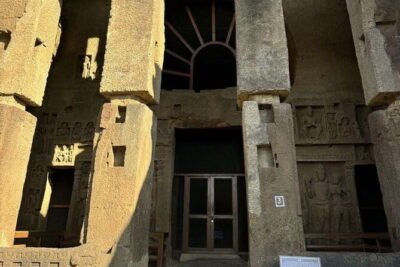
Sanjay Gandhi National Park+ Kanheri Caves + Temple +Tigar Safari
Read our review →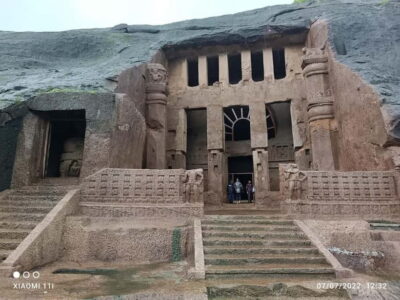
Buddhist Kanheri Caves with Golden Pagoda Temple
Read our review →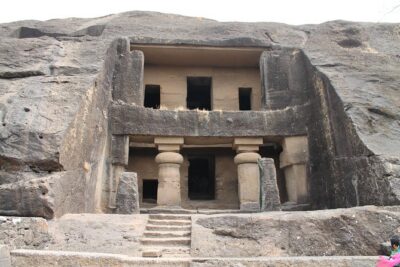
Kanheri Cave with Global Vipassana Pagoda Tour in Private Vehicle
Read our review →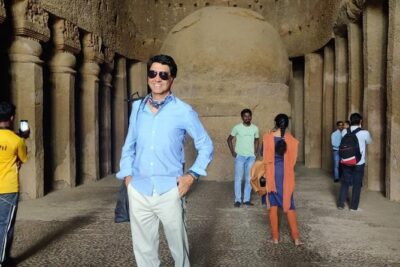
Private Guided Tour in Kanheri Cave with Transfers
Read our review →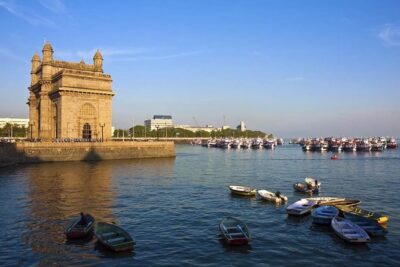
South Mumbai City with Kanheri Cave Tour in Private Vehicle
Read our review →Browse the lists this tour appears in