
Reviewed · MUMBAI MARKET & BAZAAR TOURS
Magical Markets Tour in Mumbai with a local
Mumbai’s market districts are the real show here. In two hours, you move from flower sellers and pooja goods to gold shops, textiles, antiques, spices, and imported food. The route gives you a close look at daily city life rather than a polished sightseeing circuit. Bhuleshwar Market and Mumba Devi Temple are the strongest parts.
I like the chance to ask a local guide how to shop, what to notice, and how the different markets fit together. I also like the small maximum of 15 people and the choice of a morning or evening departure. The drawback is that this is a walking tour through cramped, crowded lanes, so it may feel intense if you prefer open spaces or a slow pace.
In This Review
- Key points
- Why Mumbai’s markets make a good first walk
- Bhuleshwar Market: flowers, food, and everyday goods
- Mumba Devi Temple and the name Mumbai
- Zaveri Bazaar: Mumbai’s jewelry quarter
- Kalbadevi, Chor Bazaar, and the changing street scene
- Mangaldas Market and Mumbai’s textile trade
- Crawford Market: food, imported treats, and old Mumbai
- What the guide adds to the experience
- Is $12.44 good value for two hours?
- Morning or evening: choosing the better departure
- Who should book this Mumbai market walk?
- Should you book the Magical Markets Tour?
- FAQ
- How long is the Magical Markets Tour in Mumbai?
- How much does the tour cost?
- Where does the tour start?
- Where does the tour finish?
- What markets are included?
- Does the tour visit Mumba Devi Temple?
- Can I choose a morning or evening tour?
- How many people can join the tour?
- What is the cancellation policy?
Key points
- Markets with very different personalities: Bhuleshwar sells flowers, religious goods, household items, and produce, while Zaveri Bazaar focuses on jewelry and gold.
- A meaningful temple stop: Mumba Devi Temple connects the modern city to the goddess from whom Mumbai takes its name.
- Useful shopping guidance: Your guide can help you understand the goods, ask questions, and judge what deserves your attention.
- A long list of local districts: The route includes Kalbadevi, Chor Bazaar, Mangaldas Market, and Crawford Market, though the exact order may vary.
- Good value at $12.44: The low price works well for a first look at central Mumbai markets, especially if you want context rather than a shopping spree.
Why Mumbai’s markets make a good first walk
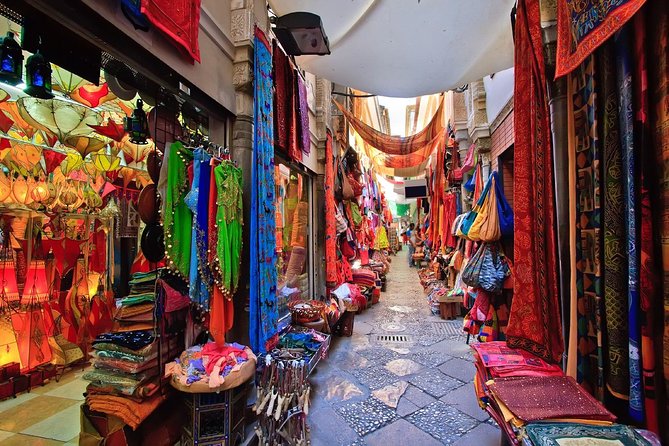
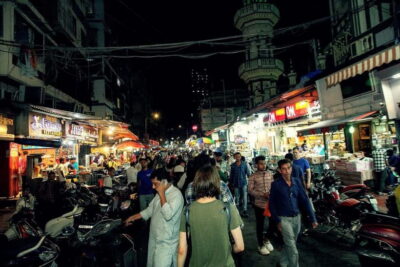
This tour puts you in the middle of old market neighborhoods where shopping is not separated from ordinary city life. You see goods being sold for worship, cooking, clothing, decoration, and daily use. That mix tells you more about Mumbai than a row of souvenir shops ever could.
The route begins at Shree Swaminarayan Mandir, also called the Vadtal Gadi temple, on Kika Street in Bhuleshwar. From there, your guide leads you through market streets and lanes around Bhuleshwar, Kalbadevi, and nearby commercial areas. You return to the same meeting point at the end.
I like this setup because the meeting point is specific, and the tour stays focused on one compact part of the city. You do not spend the two hours sitting in a vehicle between sights. The trade-off is that the walk is tied to a busy urban district, not a quiet historical quarter.
The tour is offered in the morning and evening. That gives you some control over heat, light, and your wider Mumbai plans. Dress for the weather, and remember that umbrellas are not included during the rainy or hot season. A scarf or jacket is also not supplied if you feel cool between October and March.
More market and bazaar walks:
- Mumbai: Street Food and Night Markets Tour
★ 4.9 · 719 reviews - Mumbai Street Food & Night Markets
★ 5.0 · 225 reviews - Mumbai Street Food and Evening Bazaar Tour
★ 5.0 · 172 reviews
Bhuleshwar Market: flowers, food, and everyday goods
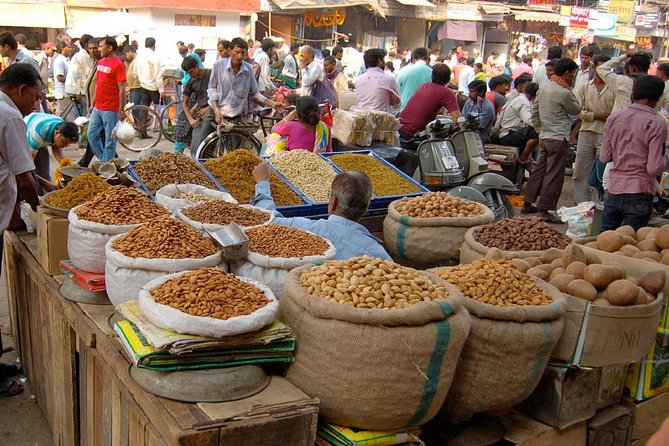
Bhuleshwar Market is likely to be the most varied section of the walk. Its narrow lanes contain fruit and vegetables, fake jewelry, rose petals, religious and pooja items, home goods, and fabric accessories. You may find yourself looking in several directions at once, since the market’s appeal comes from the close mix of products.
The flower and worship goods are especially useful for understanding local customs. Rose petals and other offerings are not simply decorative merchandise. They are part of temple visits and household religious practice, and a local guide can explain why particular items appear in the market.
The lane itself may feel dingy and cramped. That is not a flaw to hide, but it is worth knowing before you book. You should expect a working market with uneven visual order, tight passageways, and plenty of activity around you. Wear shoes suited to walking and keep your belongings secure in the crowd.
This is also where shopping advice has real value. You can ask your guide about fabric accessories, household items, or small religious purchases before spending money. The tour is not presented as a dedicated shopping trip, so you should see it as a way to learn what you are looking at first.
Mumba Devi Temple and the name Mumbai
The visit to Mumba Devi Temple gives the walk a clear cultural anchor. Mumbai takes its name from Mumbadevi, the goddess honored here. That small piece of context changes how you see the surrounding market streets. The city name is no longer just a label on a map. It connects to a place of worship in the same district.
The temple is included as one of the main stops, and the stated meeting point is another temple, Shree Swaminarayan Mandir. That means religious sites are part of the structure of the experience, not an afterthought between shops.
You should dress sensibly for a temple visit and follow any instructions given at the site. The supplied information does not specify rules about photography, footwear, or entry, so ask your guide on the day rather than assuming. The stop may be brief, but it gives the market walk more meaning than a simple list of shopping streets.
Zaveri Bazaar: Mumbai’s jewelry quarter
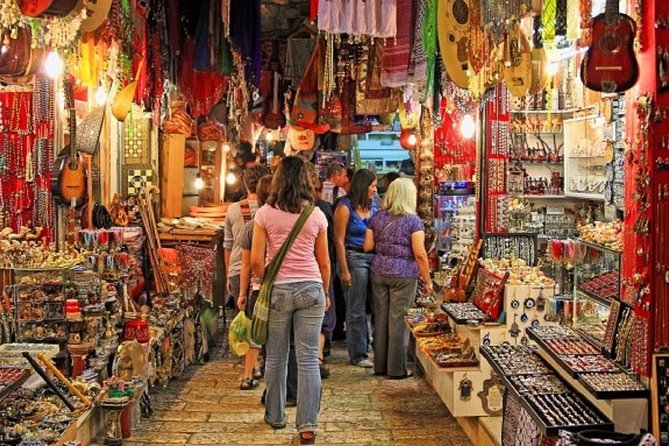
Zaveri Bazaar is described as Mumbai’s largest jewelry market. Here, the subject shifts from flowers and produce to ornamentation, gold, glittering stones, and finished jewelry. Even if you do not plan to buy anything, the concentration of shops makes this a useful stop for seeing how specialized the city’s commercial districts can be.
Do not feel pressure to shop simply because you are walking through a jewelry area. The value for most people is observation and explanation. Your guide can help you understand what you are seeing and offer general shopping tips, while you decide if any purchase makes sense.
A market like this can be exciting, but you should keep your expectations practical. The tour does not promise private appointments, appraisals, or purchase guarantees. It gives you access to the area and local conversation, not a formal jewelry-buying service.
A completely different way to spend a day in Mumbai:
- Dharavi slum tour in Mumbai by Female tour guides of the slum
★ 5.0 · 1,976 reviews - Mumbai: Full-Day Sightseeing Tour of Mumbai
★ 4.9 · 1,822 reviews - Private Mumbai Sightseeing Tour (Traveller’s Choice Award Winner)
★ 5.0 · 1,565 reviews - Elephanta Caves & Island Guided Private Tour
★ 5.0 · 1,327 reviews
Kalbadevi, Chor Bazaar, and the changing street scene
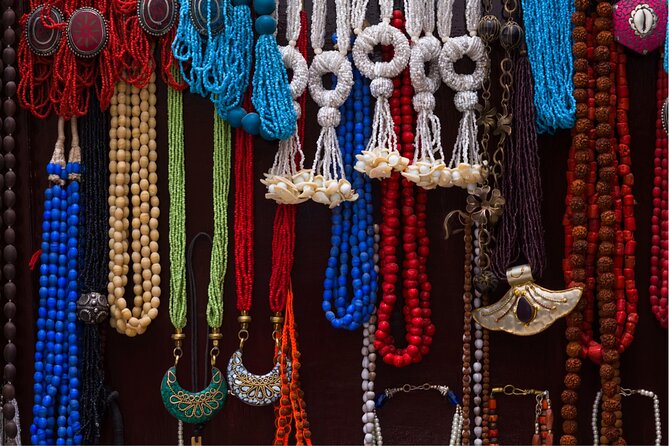
The walk continues through Kalbadevi’s streets and alleys. This part of Mumbai links several different kinds of commerce, including Chor Bazaar, known for antiques and furniture, and a flower alley. The contrast is useful. One stretch may focus on old objects and furnishings, while another is filled with flowers and offerings.
Chor Bazaar has a name that attracts attention, but the supplied details only establish its reputation for antiques and furniture. I would treat it as a place to browse and observe rather than assume that every item has a certain age or history. If you are interested in an object, ask questions and check details carefully before buying.
The flower alley adds another strong visual section to the tour. Flowers appear earlier in Bhuleshwar as well, but a concentrated lane gives you a better sense of their role in the local economy and religious life. You might also see how market districts specialize even when they sit close together.
This is one reason a guide helps. Without context, the lanes can blur into a stream of shops. With a local storyteller, you have someone to connect the products, streets, and customs.
Mangaldas Market and Mumbai’s textile trade
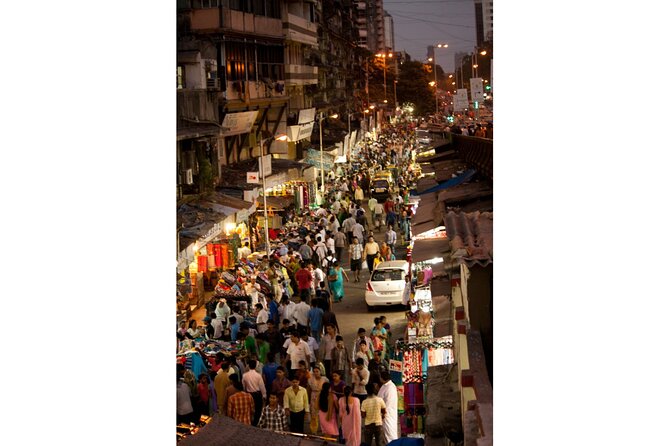
Mangaldas Market began in 1893 and is known for silk and textiles. The market includes tailors and designer boutiques that make clothing from the available fabrics. This stop should appeal to you if you like Indian textiles, custom clothing, or the practical side of fashion.
The important point is that this is not only a place to look at finished garments. The market is tied to the fabric trade and to the people who turn fabric into clothing. You can learn how the material, tailoring, and design sides of the business meet in one district.
Do not book the walk expecting a guaranteed custom outfit within two hours. The information promises a chance to see the market and learn about local art and craft, not a tailoring appointment or a completed garment. If you want to buy fabric, use the walk to get oriented, then return later with more time.
The guide’s role is helpful here. You can ask about textures, uses, and the difference between browsing and buying. The experience includes conversations about local art and craft, which gives the textile stop more purpose than a quick pass through a fabric shop.
Crawford Market: food, imported treats, and old Mumbai

Crawford Market is one of South Mumbai’s best-known markets. It opened in 1871 and is associated with fruits and vegetables, imported cheese, and handmade chocolate. After the more specialized stops, it offers another change of pace and product.
The food selection makes this a good place to pay attention to variety. You may see ordinary produce alongside items that are less familiar or more specialized. Imported cheese and handcrafted chocolate also show how the market serves different tastes and budgets.
The information does not specify tastings, food purchases, or the exact amount of time spent inside Crawford Market. Plan to look and listen rather than expect a food tour. If you want to buy something, check with the guide about what is practical during the walk and how to carry it.
The market’s age also adds useful context. Opened in 1871, it belongs to Mumbai’s older commercial story, but the appeal is not just the date. It remains relevant because it connects food, trade, and daily shopping in one central place.
What the guide adds to the experience
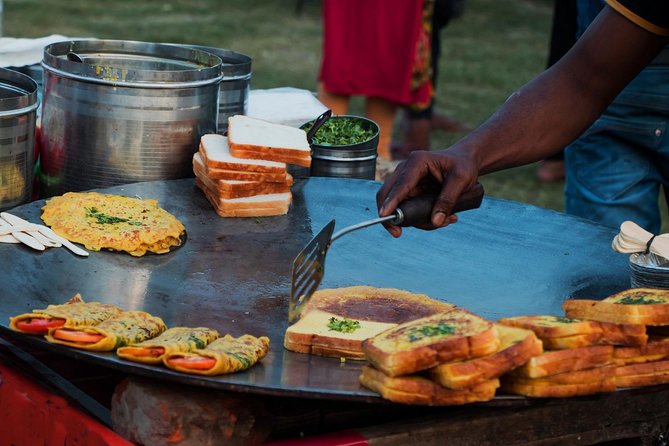
The tour includes a friendly storyteller or guide trained by Yo Tours. The guide is there to explain the markets, share city stories, offer shopping tips, and talk about local art and craft. A review specifically praises Nasir as an excellent resource, though the supplied details do not guarantee that he will lead every departure.
That distinction matters. If you have read about Nasir, you should not assume he is automatically assigned to your group. Still, the guide-led format is the main reason to choose this experience instead of walking through the same districts alone.
I would use the guide actively. Ask why a market is known for a certain product, how a temple connects to the neighborhood, and which items are mainly for local use. Ask before photographing religious sites or people. These small questions can turn a fast walk into a clearer picture of Mumbai.
The group can include up to 15 people. That is not a private tour, but it is still small enough for questions if everyone stays engaged. If you want constant one-to-one attention, a private experience would suit you better. At this price, the group format is a fair trade.
Is $12.44 good value for two hours?
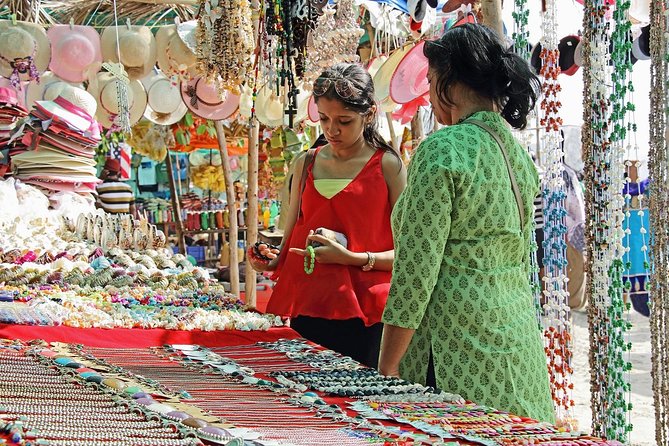
At $12.44 per person, this is inexpensive for a guided introduction to several central market areas. You are paying for a local escort, explanations, shopping guidance, and a planned route that connects places you might otherwise visit without context.
The value is strongest if you are new to Mumbai and want a quick orientation. In two hours, you can learn which districts focus on jewelry, textiles, flowers, antiques, food, and religious goods. That knowledge can help you decide where to return on your own later.
The price is less compelling if you want a long shopping session or a slow photography walk. The route covers many named areas, and two hours is not enough for extended browsing at every stop. You may pass through some markets quickly, especially if the group pauses at the temple or spends time answering questions.
Group discounts are available, although the supplied information does not state the discount amount. Free cancellation is allowed up to 24 hours before the start time for a full refund. Inside 24 hours, cancellations and changes are not accepted, so keep that deadline in mind when making plans.
Morning or evening: choosing the better departure
The morning and evening options let you match the tour to your day. A morning start may suit you if you want to shop later, while an evening start can work if your daytime plans cover other parts of Mumbai. The information does not give exact departure times, so confirm the available slot when booking.
Weather matters. Mumbai can be hot or wet, and the tour does not provide umbrellas. Bring your own protection during the rainy season or summer. Between October and March, take a light scarf or jacket if you tend to feel cool, since those items are also not included.
Because the activity ends back at Shree Swaminarayan Mandir, you have a fixed point for continuing your day. The supplied details do not include transport between the meeting point and your hotel, so arrange your own way to and from the temple.
Who should book this Mumbai market walk?
I would recommend it to first-time visitors who want a quick, direct introduction to old market districts. It also suits shoppers who want to learn before spending, people interested in textiles and jewelry, and anyone who prefers local streets to formal museum displays.
It is a good match for curious eaters and craft fans, too. Flowers, spices, fabrics, jewelry, furniture, imported cheese, and handmade chocolate give the walk a broad range of subjects. The art and craft conversations add another layer for people who want to understand how goods are made and sold.
I would hesitate to recommend it to anyone seeking a relaxed stroll. The narrow lanes and crowded commercial setting are central to the experience. If you have mobility concerns, check before booking, since the supplied information only says that most people can participate and does not provide detailed accessibility information.
The tour also works best when you are willing to stay flexible. The description covers many markets, but only the starting temple is labeled as a formal itinerary stop. The order, time at each location, and exact coverage may depend on the guide and conditions on the day.
Should you book the Magical Markets Tour?
Book it if you want a low-cost, guide-led look at Mumbai’s everyday commerce, with a temple visit and useful shopping advice included. The mix of Bhuleshwar, Zaveri Bazaar, Mangaldas Market, Chor Bazaar, and Crawford Market gives you plenty to see in a short time.
Skip it if your priority is a private shopping appointment, a calm walk, or detailed time at one market. For most visitors, though, the $12.44 price makes this a sensible first step. You get the most from it by treating the tour as an introduction, then returning to the markets that catch your interest.
FAQ
How long is the Magical Markets Tour in Mumbai?
The tour lasts approximately two hours.
How much does the tour cost?
The listed price is $12.44 per person.
Where does the tour start?
It starts at Shree Swaminarayan Mandir, also called Vadtal Gadi, at XR3J+J33, Kika Street, Charni Road East, Bhuleshwar, Mumbai.
Where does the tour finish?
The activity ends back at the meeting point.
What markets are included?
The experience covers Bhuleshwar Market, Zaveri Bazaar, Kalbadevi, Chor Bazaar, Mangaldas Market, and Crawford Market. The exact order and timing are not specified.
Does the tour visit Mumba Devi Temple?
Yes. Visiting Mumba Devi Temple is part of the experience, and the city takes its name from the goddess Mumbadevi.
Can I choose a morning or evening tour?
Yes. The experience offers a choice between a morning and an evening tour time.
How many people can join the tour?
The maximum group size is 15 people.
What is the cancellation policy?
You can cancel at least 24 hours before the start time for a full refund. Cancellations or changes made within 24 hours are not accepted and are not refunded.
Just added around Mumbai
- Temples & Vineyards: Private Tour to Nashik from Mumbai★ 4.5 · 3 reviews
- Mumbai: Private City sightseeing and Dharavi Slum Tour★ 5.0 · 3 reviews
- Mumbai: Full Day City Sightseeing with Lunch, Car & Guide★ 4.3 · 3 reviews
- Elephanta Island Private Speedboat Tour from Mumbai – 6pax★ 5.0 · 3 reviews
- Mumbai by Dawn★ 4.5 · 3 reviews
- Mumbai: Elephanta Island and Elephanta Caves Guided Tour★ 4.4 · 3 reviews
- Mumbai Sightseeing Tour by Public Transport with family Lunch★ 5.0 · 3 reviews
- Mumbai Dharavi Slum Community Tour★ 5.0 · 3 reviews
Mumbai Market & Bazaar Tours, compared.

Mumbai Morning Market Tour of Flowers, Fish, and More
Read our review →Private Guided Walking Tour of Street Markets (Bazaars)
Read our review →Mumbai Morning Market Tour of Flowers, Fish, and More
Read our review →
Mumbai Street Food Tour with Evening Bazaar Walk
Read our review →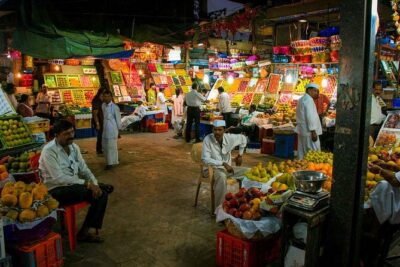
Browse the lists this tour appears in