
Reviewed · MUMBAI MARKET & BAZAAR TOURS
Mumbai Morning Market Tour of Flowers, Fish, and More
Mumbai is at its most revealing before breakfast. At Sassoon Dock, fish sellers are already at work while most of the city is still dark, and later the flower and vegetable markets fill the air with coriander, chilies, seafood, and fresh blossoms. This is a hands-on look at working Mumbai, not a parade of famous buildings.
I like two things especially: the guide helps you handle crowded streets and local transport, and the route links several very different trades in one morning. Guides such as Subhan, Jawwad, Jay, Sharon, and Chirag have been praised for clear English and thoughtful pacing. The drawback is simple: you must wake early, and the fish market can be wet, slippery, and strongly scented.
In This Review
- Key points at a glance
- Why the early start matters
- Sassoon Dock and the fish market
- Riding Mumbai’s local train
- Dhobi Ghat and the work behind clean clothes
- Dadar’s vegetable market
- Dadar Flower Market
- Churchgate, CSMT, and route details
- Guides, drivers, and the human side of the tour
- Is $19 a fair price?
- What to wear and bring
- Who should book this morning tour?
- Should you book it?
- FAQ
- How long does the Mumbai market tour last?
- Where is the meeting point?
- Which markets are included?
- Is the local train ride included?
- Are food and drinks included?
- What language does the guide speak?
Key points at a glance
- Fish auction at Sassoon Dock: See the early seafood trade, including sorting, cleaning, prawns, shrimp, and the daily catch.
- Local train ride included: Learn how to use Mumbai’s rail system with a guide beside you.
- Three market worlds: Compare the smells and work of fish, vegetables, and flowers in one compact outing.
- Dhobi Ghat stop: Watch laundry work connected to hotels, hospitals, homes, and other parts of the city.
- Chai and street food: A small tea break, and sometimes a samosa or vada pav, adds a tasty local pause.
- Good practical value: At $19 per person, transport, guiding, hotel pickup and drop-off options, and the train ride are included.
Why the early start matters
This tour works because it follows the city’s working clock. The markets begin their business long before sightseeing buses appear, and some start winding down by the time the wider city gets moving. Starting times vary, with options reported around 5:00, 5:30, 6:00, and 7:00 a.m., so check the exact departure when booking.
The earliest departures offer the best chance of seeing the fish market at sunrise. A later 7:00 a.m. start can be easier on your sleep and may avoid the sharpest rush at Sassoon Dock, though exact market conditions can change. Several guests found the early morning worth the lost sleep, especially because roads are less crowded and jet lag can work in your favor.
The full outing takes about three to three and a half hours. That is enough time for a strong introduction, but not enough for long, unhurried browsing at every stop. I would treat this as a fast-moving cultural tour, not a shopping morning.
More market and bazaar walks:
- Mumbai: Street Food and Night Markets Tour
★ 4.9 · 719 reviews - Mumbai Street Food & Night Markets
★ 5.0 · 225 reviews - Mumbai Street Food and Evening Bazaar Tour
★ 5.0 · 172 reviews
Sassoon Dock and the fish market
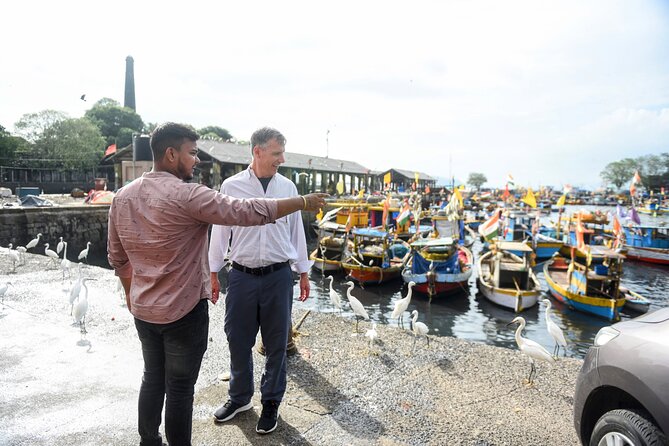
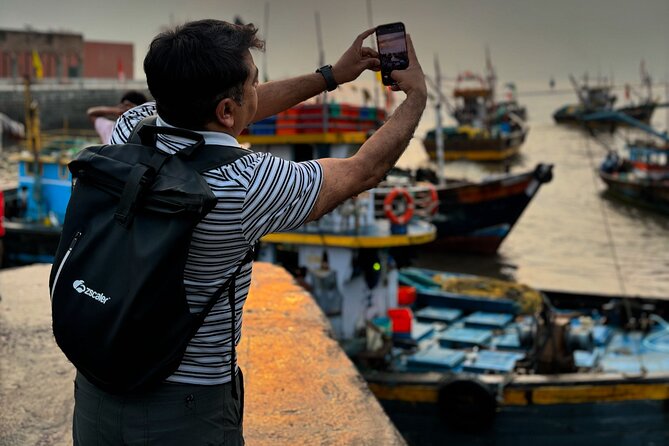
The fish market is the tour’s strongest opening. Sassoon Dock is a working port and market where women sell fish and men display the day’s catch. You’ll see vendors arranging seafood, buyers making decisions, and auctions taking place around you.
The point is not only to look at fish. Your guide can explain how the market operates, who does which work, and how seafood moves from the dock into Mumbai’s kitchens. The cleaning and preparation of prawns, shrimp, and other seafood gives you a close view of labor that is normally hidden behind a restaurant menu.
This stop is full of sharp contrasts. Fish, ice, water, baskets, shouted prices, and dawn light create a scene that feels far removed from Mumbai’s grand hotels. The smells are part of the experience, but they are not gentle. Wear shoes with a firm sole and clothing you do not mind getting damp or dirty. One useful tip from the tour is to dress for a wet floor and avoid delicate footwear.
Your guide also matters most here. The market can be confusing, and it is easy to pause in the wrong place or lose sight of your group. Guides including Jay, Jawwad, Subhan, and Chirag have been praised for staying close, answering questions, translating when needed, and helping visitors cross roads safely.
Photography should be handled with care. The supplied information does not set out a formal camera rule, so ask your guide before taking close pictures of sellers or their work. You are entering a workplace, not a staged attraction.
Riding Mumbai’s local train
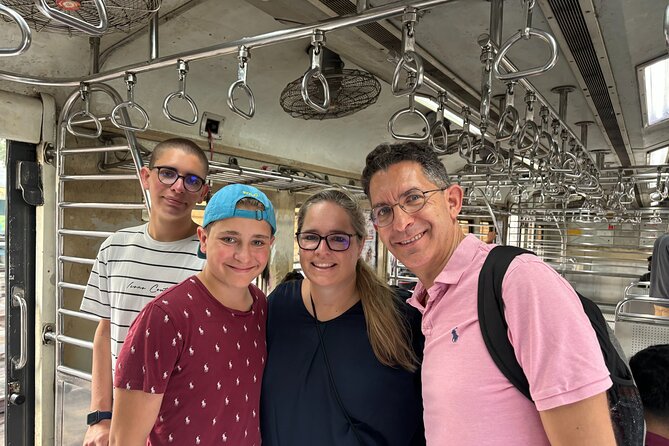
The local train is more than a way to get from one stop to the next. It gives you a short lesson in how Mumbai moves. Your guide shows you how to use the railway system, helps you reach the right station, and stays with you through the transfer.
For a first-time visitor, this can be the most useful part of the morning. Mumbai’s trains have a reputation for crowds, and the timing of your ride matters. Some departures aim to travel before the trains become too packed. One later-starting guest still found the ride rewarding, while another guide helped a visitor reach the station after the tour ended.
The rail segment is also a good test of your comfort level. You need to walk, board a train, and stay alert in public spaces. If you dislike crowded transport or have mobility concerns, ask about the precise route before booking. The tour description also refers to local taxi or bus transport at different points, depending on the day and selected option, so the exact sequence may vary.
Dhobi Ghat and the work behind clean clothes
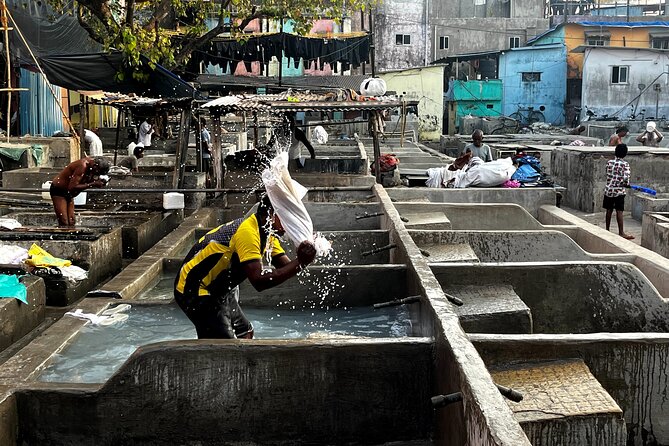
Dhobi Ghat brings a different kind of working Mumbai into view. Washers clean more than 2,000 pieces of clothing each day, serving hotels, hospitals, private homes, and other customers. From the outside, you see rows of washing areas and a large system of sorting, cleaning, and returning clothes.
The stop usually lasts about 30 minutes and works mainly as a visit and photo stop. That is enough to understand the basic operation, but not enough to explore every corner or follow one garment through the entire process.
I like this stop because it changes the way you look at the city. The fish market shows food entering the urban economy. Dhobi Ghat shows the service work that keeps the city running after the meal is over. Your guide can add the local background and explain how the operation fits into everyday life.
Keep your expectations realistic. This is an observation stop, not a workshop, and the view may depend on traffic, timing, and where you are allowed to stand. The value comes from the explanation and the connection between the site and the city’s daily routines.
More early morning and dawn tours:
- The Original Mumbai by Dawn – Recommended by Nigella Lawson & Nat Geo Traveller!
★ 5.0 · 610 reviews - Mumbai Private Sunrise/Sunset Sailing 8ppl Boat Tour
★ 4.5 · 86 reviews - Mumbai Morning Market Tour of Flowers, Fish, and More
★ 5.0 · 82 reviews - Mumbai: Morning Bicycle Tour
★ 5.0 · 40 reviews
Dadar’s vegetable market
The Dadar fruit and vegetable market gives the morning a new set of smells. Coriander, chilies, fruit, and other produce replace the salt and seafood of Sassoon Dock. The market is a useful place to notice how sellers arrange goods, how buyers compare produce, and how much movement is needed to feed a city as large as Mumbai.
The planned visit lasts about 30 minutes. Your guide can point out local produce and explain trading practices, but you should not expect a slow food walk with tastings included. Food and drinks are not part of the stated price, although several tours included a small snack or tea stop.
This is also where a guide’s local knowledge pays off. A well-timed explanation turns piles of vegetables into a picture of supply, work, and household cooking. Without help, you might see only a noisy market and miss the meaning behind the activity.
Dadar Flower Market
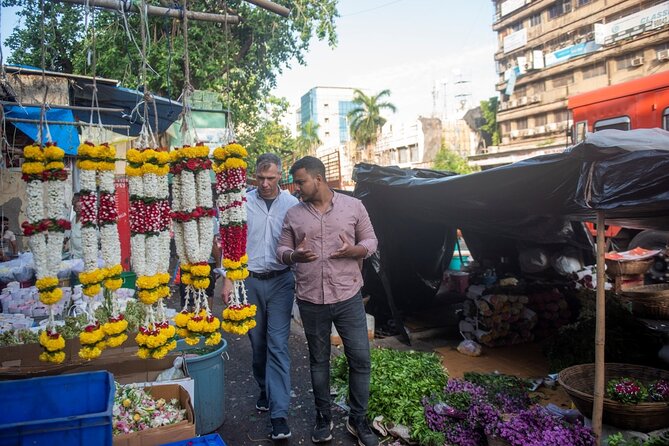
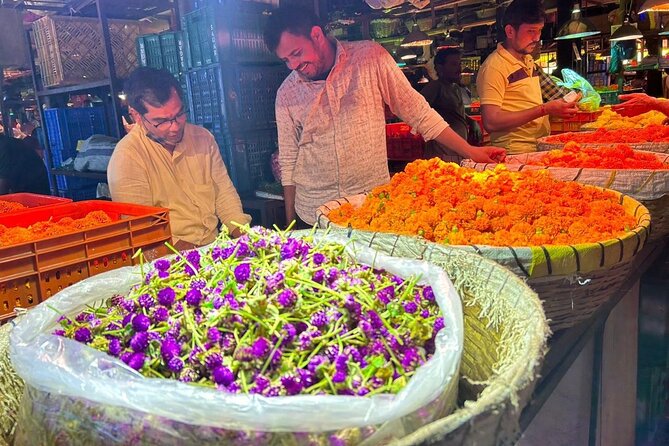
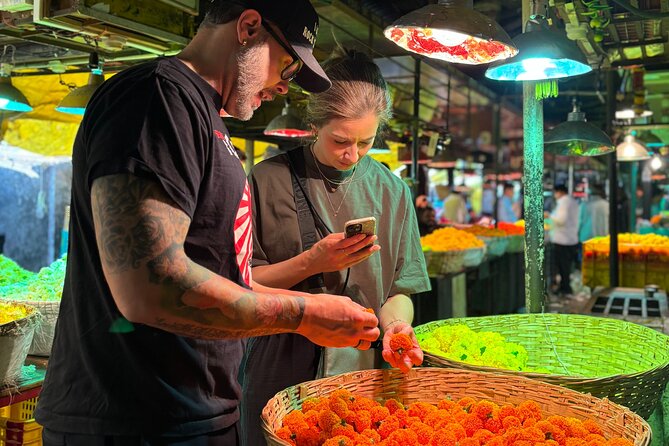
The flower market is usually the gentlest finish, at least in terms of smell. Garlands and loose flowers add color and perfume after the stronger odors of fish and produce. It is an excellent place to slow down for photographs, though the market is still a working space with narrow, active paths.
The tour allows roughly 30 minutes here. You may see flowers being sorted, bundled, and prepared for sale. The guide can explain how flowers fit into local customs and daily commerce, rather than leaving you with a quick photo and no context.
This stop is especially good for photographers, but the best pictures are not always the most intrusive ones. Stay close to your guide, ask before photographing people, and leave room for sellers carrying baskets or bundles.
The listed ending point is Flower Market Dadar in Mumbai. If you choose hotel drop-off, confirm the pickup and return details when booking, since the package describes hotel transport as included while the meeting point for some options is Pizza Express Colaba near the Gateway of India.
Churchgate, CSMT, and route details
The route information includes a 15-minute visit to Churchgate Railway Station. The inclusions also mention the iconic Chhatrapati Shivaji Maharaj Terminus, commonly called CSMT, but the stop list does not clearly place CSMT as a separate scheduled visit.
That difference is worth checking before you reserve. You may pass through or stop near a major railway station, but do not assume you will receive a full CSMT sightseeing visit unless the selected option says so. This is a small planning detail, yet it matters if you are choosing the tour mainly for architecture.
The railway stops help connect the markets to Mumbai’s wider transport system. They are not the central reason to book, but they make the morning feel like a real city outing rather than a sequence of isolated attractions.
Guides, drivers, and the human side of the tour
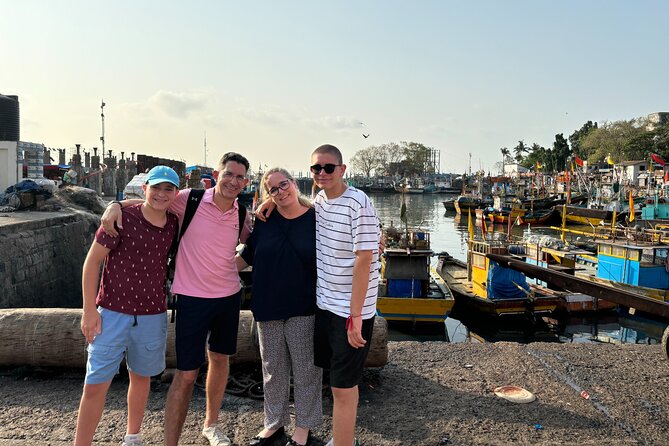
The provider is Cityscape Mumbai Tours, and the experience uses several guides and drivers. Names appearing in the supplied information include Subhan, Jawwad, also called Jay, Chirag, Sharon, Abhi, Ayan, Javid, Yash, and others.
The strongest pattern is clear English, practical help, and care in crowded places. Guides have helped with translation, road crossings, train use, finding snacks, and reaching a station after the formal tour. Sharon was also described as adapting the pace when a participant was unwell, which is a useful sign for families or anyone who may need flexibility.
Drivers are part of the value when hotel pickup is selected. Deepak, Saddam, Pranav, Satyam, Wasim, and others are named in the supplied comments, with special praise for calm and safe driving. A private vehicle between some stops can save time in a city where road delays can quickly eat into a three-hour schedule.
Group size is not stated, so do not assume a private tour. The booking information says pickup is optional and that you may meet your guide and driver at your hotel, depending on the option. The general meeting point is Pizza Express Colaba near the Gateway of India.
Is $19 a fair price?
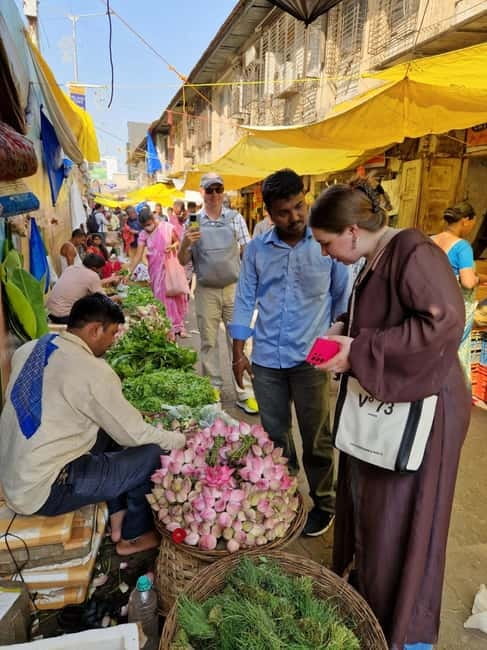
At $19 per person, this is strong value if you want access and explanation rather than luxury. You are paying for a guide, transport elements, the local train ride, hotel pickup and drop-off where included in your option, and several difficult-to-reach working districts in one morning.
Try doing the same route alone and you would need to work out the market locations, rail connections, timing, and street navigation yourself. You might save money on transport, but you would also lose the context that makes the markets worth seeing. The guide is particularly useful at Sassoon Dock and on the train.
Food and drinks are not included. You may have the chance to buy chai, samosa, or vada pav, but budget separately and carry small cash if you want to purchase something. The exact snack stop is not guaranteed by the inclusions.
The main tradeoff is time. Three hours is efficient, but the route is packed. You will see a lot, yet you may wish for longer at the flower market or Dhobi Ghat. If you prefer slow photography or extended shopping, a private arrangement or separate market visit may suit you better.
What to wear and bring
You do not need special equipment, but a few choices will make the morning easier.
- Wear robust, closed shoes with grip. The fish market may be wet and slippery.
- Choose clothing that can handle strong smells, splashes, and crowded streets.
- Bring a small amount of money for optional chai, snacks, or purchases.
- Keep your belongings secure during the train ride and in busy markets.
- Stay near the guide when crossing roads and moving through tight spaces.
- Bring a phone for the early meeting details, since some guides contact participants through WhatsApp the day before.
The tour is available in English. The guides’ ability to explain local practices and help with translation is one of its practical strengths.
Who should book this morning tour?
I would recommend it to first-time visitors who want to see how Mumbai works beyond its postcard sights. It also suits people with limited time, since the route combines seafood, produce, flowers, laundry, rail travel, and city history before the day has properly begun.
It is a good match for solo visitors who want help with transport and road crossings. Couples and families can benefit from hotel pickup and the steady guidance through crowded places. Local residents may enjoy it too, especially if they have not visited these markets or Dhobi Ghat before.
I would think twice if you need a late start, dislike strong food smells, or want a relaxed photography walk. The 5:00 or 5:30 a.m. options are demanding, and the market floors are not polished sightseeing spaces.
Should you book it?
Book this tour if you want real daily commerce rather than another round of monuments. The strongest reasons are the sunrise fish market, the local train lesson, and the guide’s help connecting each stop to Mumbai life.
Choose a later departure if available and if sleep matters more than seeing the fish market at its busiest. Before paying, confirm your start time, pickup arrangement, exact railway stop, and whether CSMT is included as a proper visit or only referenced in the wider route.
The free cancellation policy allows cancellation up to 24 hours in advance for a full refund, and reserve-now, pay-later booking is available. Those flexible terms make it easier to fit this early outing into a changing Mumbai schedule.
FAQ
How long does the Mumbai market tour last?
The tour lasts about three to three and a half hours. Starting times vary, so check the available options when booking.
Where is the meeting point?
The stated meeting point is Pizza Express Colaba near the Gateway of India. Hotel pickup is available with selected options, so confirm which option you are choosing.
Which markets are included?
The route includes Sassoon Dock Fish Market, Dadar Fruit and Vegetable Market, and Dadar Flower Market. It also includes a visit to Dhobi Ghat.
Is the local train ride included?
Yes. The local train ride is included in the tour package, with the guide helping you use the railway system.
Are food and drinks included?
No. Food and drinks are not included, though the morning may include an opportunity to stop for chai or a street snack at your own expense.
What language does the guide speak?
The tour is conducted in English with a live English-speaking guide.
Just added around Mumbai
- Temples & Vineyards: Private Tour to Nashik from Mumbai★ 4.5 · 3 reviews
- Mumbai: Private City sightseeing and Dharavi Slum Tour★ 5.0 · 3 reviews
- Mumbai: Full Day City Sightseeing with Lunch, Car & Guide★ 4.3 · 3 reviews
- Elephanta Island Private Speedboat Tour from Mumbai – 6pax★ 5.0 · 3 reviews
- Mumbai: Elephanta Island and Elephanta Caves Guided Tour★ 4.4 · 3 reviews
- Mumbai Sightseeing Tour by Public Transport with family Lunch★ 5.0 · 3 reviews
- Mumbai by Dawn★ 4.5 · 3 reviews
- Mumbai Dharavi Slum Community Tour★ 5.0 · 3 reviews
Mumbai Market & Bazaar Tours, compared.
Private Guided Walking Tour of Street Markets (Bazaars)
Read our review →
Mumbai Morning Market Tour of Flowers, Fish, and More
Read our review →
Mumbai Street Food Tour with Evening Bazaar Walk
Read our review →

Mumbai Street Food & Bazaar Tour with Local Transport
Read our review →Browse the lists this tour appears in