
Reviewed · MUMBAI COOKING CLASSES
Vegetarian Indian Cuisine Virtual Cooking Class Experience from Mumbai
The most interesting part of this class is its setting: you cook with Kajal from her family home in Mumbai’s largest slum, rather than from a polished culinary studio. She learned these recipes from her mother and older sister, while Shailesh handles the camera, giving you a close look at the cooking and plenty of room to ask questions.
I like the small group limit of six, which should make the session feel more personal than a large online demonstration. I also like that you receive the ingredient list and instructions soon after booking, giving you time to shop and flag anything you cannot find. The main drawback is simple: this is a home-led Skype session, not a professional cooking production, so video quality and camera angles may be basic.
In This Review
- Key points to know before booking
- Cooking matar paneer in a Mumbai home
- Meeting Kajal and Shailesh on Skype
- Getting ready with the ingredient list
- Why the small home setting matters
- What the 90-minute session feels like
- The value of a $20 online cooking class
- Who will enjoy this class most
- Practical booking advice for the Mumbai time zone
- The strongest reason to book
- Should you book this Mumbai cooking class?
- FAQ
- Where does the virtual cooking class take place?
- Who teaches the cooking class?
- What dish will I learn to make?
- How long does the class last?
- What platform is used for the class?
- How many people can join?
- What time zone are the sessions listed in?
- Can I cancel for a refund?
Key points to know before booking
- Cook from a Mumbai family home: Kajal teaches recipes learned from her mother and older sister.
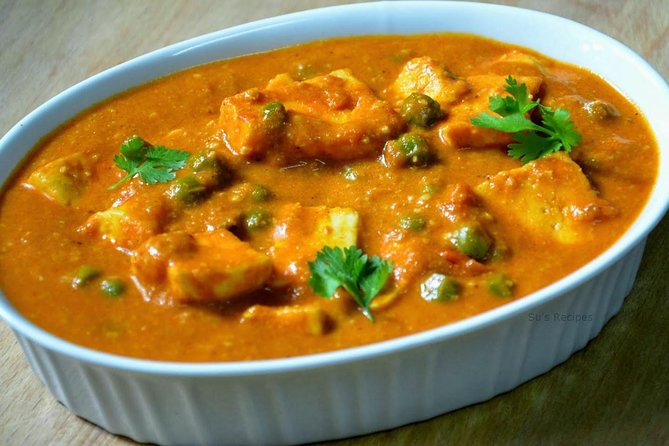
- Make matar paneer: The featured dish is a popular cottage cheese and pea curry, also called mattar paneer.
- Ask questions while cooking: The live Skype format lets you get help during each step.
- Plan your ingredients early: The ingredient list and instructions arrive after booking, and you can tell the chef about hard-to-find items.
- Expect a cultural exchange: Family, home life, and Indian food traditions are part of the experience.
- Allow 90 minutes and check the time zone: Sessions run on Indian Standard Time and cost $20 per person.
Cooking matar paneer in a Mumbai home
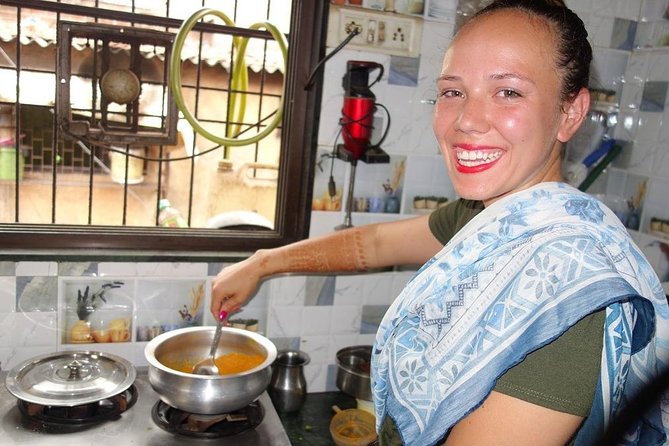
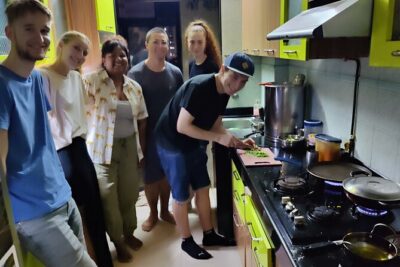
This experience is less about watching a chef perform and more about cooking alongside a Mumbai local. Kajal leads the class from her home kitchen, using recipes passed down through her family. Her mother and older sister taught her to cook, and that family connection gives the class a personal frame from the start.
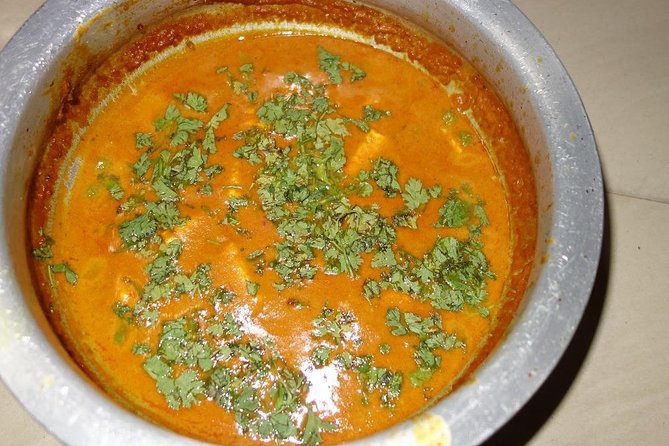
The central recipe is matar paneer, a North Indian favorite made with peas and paneer, or cottage cheese, in a spiced gravy. Kajal began food tours in 2017, and she considers matar paneer her favorite dish. That makes it a sensible choice for an online class: it is popular, vegetarian, and familiar enough to appeal to first-time cooks while still showing you how Indian home cooking comes together.
You should expect a hands-on session. The aim is for you to prepare each part of the dish at home rather than simply watch someone else cook. The live format matters here. If a sauce looks too thick, you are unsure about a step, or you need to clarify the timing, you can ask while the pan is still on the stove.
The class lasts about one hour and 30 minutes. That is long enough for a guided recipe and conversation without turning the evening into a major project. Still, you should have your ingredients measured or at least laid out before the call begins. Online cooking is much easier when you are not hunting through cupboards while the instructor has moved to the next step.
More Indian cooking classes:
- Mumbai: Indian Cooking Class & Cultural Delights
★ 5.0 · 38 reviews - Indian Curry 5-Hour Cooking Classes In Mumbai
★ 5.0 · 22 reviews - Private Vegetarian Indian Cooking Class in Mumbai
★ 5.0 · 17 reviews
Meeting Kajal and Shailesh on Skype
Kajal is the chef and Shailesh holds the camera. That division of work is useful. Kajal can concentrate on explaining the food and responding to questions while Shailesh works to show what is happening in the pan.
Do not expect a studio-grade broadcast. The hosts openly describe the session as a home experience, and professional-level videography is not part of the promise. You might see a basic camera angle or occasional limits in how closely the cooking can be shown. For this kind of class, I would treat that as part of the trade-off rather than a surprise.
The reward is direct contact with the people running the class. A polished video can show you a recipe, but it cannot answer your question in the moment. A live call from a real home kitchen gives you a chance to ask about ingredients, preparation, and the food’s place in family life.
The group limit is six people. That is one of the strongest practical features. With fewer participants on the call, you have a better chance of getting the chef’s attention, and the session should feel less like a public broadcast. The experience provider is Mystical Mumbai, and the class is designed around a small, personal connection rather than a large online audience.
Getting ready with the ingredient list
After booking, you receive the ingredient list and cooking instructions. One participant received these almost right away and was asked to tell the hosts if an ingredient could not be found locally. That is an important detail, especially for home cooks outside India.
Indian recipes can call for ingredients that vary from one grocery market to another. The advance list lets you check what you already have, shop for the rest, and contact the chef about anything unavailable. You should not wait until the class starts to discover that a key item is missing.
The class also asks you to tell the chef about food allergies. Do this before the session, not during it. The information provided does not promise that every recipe can be adapted for every allergy, so you should discuss concerns in advance and decide if the ingredients are suitable for you.
The class is vegetarian, but that does not automatically mean it suits every dietary need. Paneer is dairy, for example, and you should check the ingredient list carefully if you avoid milk products or follow a restricted diet. The supplied information does not state that the recipes are vegan, gluten-free, or suitable for a particular medical diet.
Online recipes are provided to help you follow along. They also give you something useful after the call. Instead of trying to remember every quantity and step, you can return to the recipe later and prepare the dish again.
Why the small home setting matters
The setting is a key part of the experience. You are not only learning how to make a curry. You are meeting a family, hearing about their home and culture, and seeing how food connects to everyday life in Mumbai.
The hosts describe their home as being in Mumbai’s largest slum. That detail gives the class a social and personal dimension, but you should approach it with respect. This is not a virtual sightseeing tour or a staged look at a neighborhood. The focus remains on cooking and conversation in the family home.
I like that the experience does not pretend to be something it is not. You are not promised a restaurant kitchen, a trained culinary-school instructor, or a slick television-style production. You are promised a chance to cook with a local home chef and hear the stories around the food.
That distinction will help you decide if the class fits. If you want exact professional demonstrations, multiple dishes, advanced knife work, or a formal lesson plan, this may feel modest. If you want a personal introduction to Indian home cooking, the informal setting is likely to be a strength.
A few more Mumbai tours and experiences worth a look
- Discover Mumbai’s street & beach with Vegetarian food tour
★ 4.8 · 46 reviews - Private Market Tour and Vegetarian Cooking Class in Mumbai
★ 4.5 · 15 reviews - Private Market Tour and Vegan Indian Cooking Demo in Andheri West Mumbai
★ 5.0 · 5 reviews
What the 90-minute session feels like
The class is structured around cooking, but its value is not measured only by how quickly you finish the recipe. You get time to work through the food-making process and ask questions as you go.
A typical flow should include connecting with Kajal and Shailesh, checking that everyone has the needed ingredients, and moving through the recipe with live guidance. The supplied details do not set out every individual cooking step, so you should not expect a fixed minute-by-minute schedule. The experience is built around the featured dishes, especially matar paneer, and the conversation that grows around them.
The live Skype connection means you need a reliable internet connection. If your signal is weak, the experience can become frustrating quickly. Check your connection before the start time, keep your device charged, and place it where you can cook while still seeing the screen.
The camera may be managed by Shailesh while Kajal teaches. That should make the cooking easier to follow than a single fixed webcam, though the hosts do not claim professional video quality. You will get the most from the class if you are comfortable with a relaxed, home-based format.
Available times are listed in Indian Standard Time. Check the conversion carefully before you book. A time that looks convenient in Mumbai may fall early in the morning, late at night, or during the middle of your workday elsewhere.
The value of a $20 online cooking class
At $20 per person, the class is priced as an affordable live activity rather than a luxury cooking lesson. For about 90 minutes, you receive instruction, recipes, a small group setting, and a personal connection with a Mumbai family. That is a fair value if you use the class as both a meal lesson and a cultural experience.
The price looks especially reasonable for people who would otherwise need to pay for a separate online activity and then find an Indian cooking lesson. You also end with a recipe you can prepare again, which gives the experience some life beyond the call.
The value depends on your expectations. You are paying for access to Kajal’s attention and family recipes, not for professional filming or a certificate. If the main goal is to master a highly technical culinary method, a formal cooking school may be a better fit. If you want a friendly introduction to a well-known Indian vegetarian dish, $20 keeps the risk low.
The class is also more appealing for couples, families, or friends who can cook together from separate homes. The maximum is six participants, so the format can work well for a small private group, although the supplied information does not specify whether every booking is private.
Who will enjoy this class most
I would recommend this class to home cooks who like food with a story. You do not need to be an expert, and the experience is designed for cooking and learning with a local home chef rather than for professional chefs.
It is a good choice if you:
- Like vegetarian Indian food
- Want to learn a popular dish such as matar paneer
- Prefer live instruction to a recorded video
- Enjoy asking questions while you cook
- Want to meet a Mumbai family from home
- Appreciate small-group activities
- Can shop for ingredients before the class
It may be less suitable if you need polished video, a formal classroom setting, or a lesson focused only on technique. The hosts are clear that the cultural stories and home setting matter as much as the finished meal.
You should also think about your kitchen setup. You need a working internet connection and enough space to cook while following the Skype call. The class information does not specify the required equipment, so you should be ready to use your normal home cookware and clarify any concerns with the chef before the session.
Practical booking advice for the Mumbai time zone
The experience is usually booked about seven days ahead, so planning roughly a week in advance is sensible. That gives you time to receive the instructions, shop for ingredients, test your connection, and adjust for Indian Standard Time.
Confirmation arrives when you book. Since this is a virtual experience, there is no need to plan transport to Mumbai, though the listing notes pickup as an available feature. In practice, the important preparation is digital rather than physical: confirm the meeting details, check Skype, and make sure your internet connection is stable.
You can cancel for a full refund if you do so at least 24 hours before the start time. Cancellations within 24 hours are not refunded, and changes made inside that period are not accepted. The cut-off follows the local time in India, so keep the time-zone difference in mind.
The class accepts a maximum of six participants. That limit is worth noting when you compare this with larger online demonstrations. A smaller group can give you more time with Kajal, though the exact amount of individual attention will depend on how many people are booked into your session.
The strongest reason to book
The best reason to book is the combination of live cooking and personal storytelling. You can find Indian recipes in any cookbook, but this class adds the voice of someone who learned them at home and now teaches them from her own Mumbai kitchen.
The second strong point is the preparation support. Receiving the ingredients and instructions soon after booking helps you avoid a rushed shopping trip, and the chance to flag hard-to-find items is useful for cooks outside India.
The main caution is to keep your expectations realistic. The camera work may be simple, and the class is not presented as professional culinary training. You are choosing an authentic home lesson, not a studio production.
Should you book this Mumbai cooking class?
Book it if you want a low-cost, live introduction to vegetarian Indian cooking with a real Mumbai home chef. Kajal’s family connection to the recipes, Shailesh’s camera work, the six-person limit, and the supplied recipes make this more personal than a standard recorded cooking video.
Skip it if you need advanced instruction, guaranteed professional video, or recipes tailored to a strict diet without prior confirmation. For most curious home cooks, though, the $20 price and 90-minute format make this an easy way to spend an evening cooking something new while meeting people in Mumbai.
FAQ
Where does the virtual cooking class take place?
The class is led from Kajal’s family home in Mumbai’s largest slum.
Who teaches the cooking class?
Kajal is the chef. She learned the recipes from her mother and older sister. Shailesh holds the camera during the session.
What dish will I learn to make?
Matar paneer, also called mattar paneer, is the featured dish. It is a cottage cheese gravy with peas and is one of India’s popular vegetarian dishes.
How long does the class last?
The virtual cooking class lasts approximately one hour and 30 minutes.
What platform is used for the class?
The live session takes place on Skype.
How many people can join?
The maximum group size is six participants.
What time zone are the sessions listed in?
Available times are given in Indian Standard Time, or IST.
Can I cancel for a refund?
Yes. You can receive a full refund if you cancel at least 24 hours before the experience starts. Cancellations within 24 hours are not refunded.
Just added around Mumbai
- Temples & Vineyards: Private Tour to Nashik from Mumbai★ 4.5 · 3 reviews
- Mumbai: Private City sightseeing and Dharavi Slum Tour★ 5.0 · 3 reviews
- Mumbai: Full Day City Sightseeing with Lunch, Car & Guide★ 4.3 · 3 reviews
- Elephanta Island Private Speedboat Tour from Mumbai – 6pax★ 5.0 · 3 reviews
- Mumbai: Elephanta Island and Elephanta Caves Guided Tour★ 4.4 · 3 reviews
- Mumbai Sightseeing Tour by Public Transport with family Lunch★ 5.0 · 3 reviews
- Mumbai by Dawn★ 4.5 · 3 reviews
- Mumbai Dharavi Slum Community Tour★ 5.0 · 3 reviews
Mumbai Cooking Classes, compared.
Private Vegetarian Indian Cooking Class in Mumbai
Read our review →
Private Market Tour and Vegetarian Cooking Class in Mumbai
Read our review →
Mumbai Market Tour & Maharashtrian Cooking Class with Chef Reshma
Read our review →
Authentic Mumbai: Home-Cooked Meal with a Local Host
Read our review →Browse the lists this tour appears in