
Reviewed · MUMBAI
Traditional Indian Immersive Cultural Experience
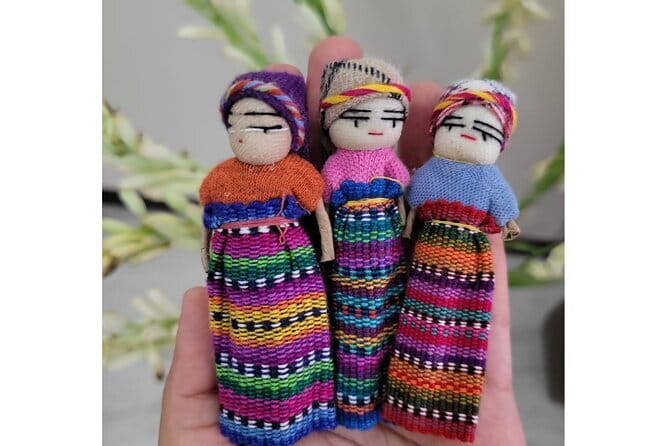
Mumbai’s most personal museums are often found behind ordinary doors. In Worli, this three-hour visit takes you into a residential apartment studio filled with about 300 dolls, masks, and figurines from across India, plus pieces from Japan, Iran, Nepal, Bhutan, Indonesia, Ukraine, and elsewhere. The objects are the starting point for stories about tribes, customs, textiles, faith, geography, and daily life.
I like the collection’s wide cultural range, especially the attention given to craft forms that are close to disappearing. I also like the two-part format, which moves from objects and folk traditions to drawings about motherhood, travel, isolation, and the force of the human mind. The main consideration is the setting: this is a private apartment studio, not a large public museum, and children under 10 are not admitted because the exhibits are fragile.
In This Review
- Key points to know before you book
- A private collection in the heart of Worli
- Part one: dolls, masks, and figurines from across India
- The international dolls and the value of comparison
- Folk stories, tribes, textiles, and everyday customs
- Part two: drawings about motherhood, travel, and isolation
- Why the three-hour length matters
- How the setting affects your visit
- Is $54 a fair price?
- Who should book this experience?
- Booking, cancellation, and practical details
- Should you book it?
- FAQ
- Where does the experience begin?
- Where does the experience end?
- How long does the experience last?
- What are the opening hours?
- Are children under 10 allowed to participate?
- Can I cancel for a full refund?
Key points to know before you book
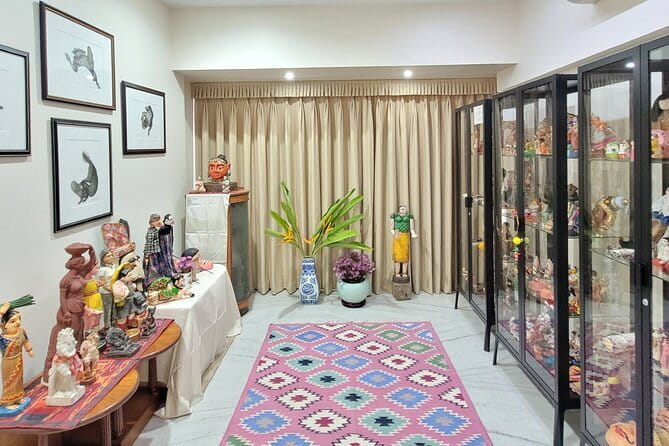
- About 300 pieces in a private apartment studio: Expect dolls, masks, and figurines displayed in glass cabinets in Worli.
- Indian crafts explained through stories: The presentation links objects to indigenous communities, local customs, textiles, legends, religion, and social life.
- A second stop focused on drawings: The visit continues with artwork inspired by motherhood, mental intensity, pandemic isolation, and journeys through rural India.
- International pieces add comparison: The collection includes dolls from countries such as Japan, Iran, Nepal, Bhutan, Indonesia, and Ukraine.
- Private three-hour experience: Only your group participates, giving the visit a more personal feel than a standard museum tour.
- Best for older children and culture lovers: Entry is restricted for anyone under 10 because of the delicate displays.
A private collection in the heart of Worli
The experience begins at WeWork, 1st floor, 264 to 265 Dr Annie Besant Road, in Worli. The listed meeting point is useful because it gives you a clear place to begin, while the collection itself is housed in a residential apartment studio nearby within the stated activity location.
That change of setting is part of the appeal. You are not filing through a formal gallery with rows of labels and a fixed audio guide. Instead, you enter a small personal space where the objects have been gathered, protected, and explained by people with a strong interest in Indian craft traditions and travel.
The collection has received recognition from the office of Prime Minister Narendra Modi and has been covered by major Indian newspapers. That does not replace your own judgment, but it helps explain why the experience is more than a casual display of decorative dolls.
The studio contains around 300 pieces behind glass cabinets. Glass protection matters here. Many folk objects are delicate, and some craft traditions are hard to find in ordinary city museums. You can look closely without handling the pieces, while the guide supplies the context that a label alone cannot provide.
Other Mumbai tours people book alongside this one:
- Dharavi slum tour in Mumbai by Female tour guides of the slum
★ 5.0 · 1,976 reviews - Mumbai: Full-Day Sightseeing Tour of Mumbai
★ 4.9 · 1,822 reviews - Private Mumbai Sightseeing Tour (Traveller’s Choice Award Winner)
★ 5.0 · 1,565 reviews
Part one: dolls, masks, and figurines from across India
The first part is the heart of the visit. You move through dolls, masks, and figurines made in different parts of India, with the presentation organized around the stories and traditions tied to them.
A doll may tell you something about clothing, family life, ritual, or regional identity. A mask may connect with performance, religion, village customs, or a local legend. A figurine can point toward a community’s work, beliefs, celebrations, or way of seeing the natural world.
I like this approach because it keeps craft from being treated as mere decoration. India’s handmade objects often carry several meanings at once. They can be art, teaching tools, religious symbols, characters from oral stories, records of dress, or reminders of a community’s past.
The guide discusses historical, geographical, social, and religious meaning rather than simply naming the material or region. You might hear how an object relates to an indigenous tribe, how a textile tradition developed, or why a particular form has become less common.
Some of the craft forms are described as being on the brink of extinction. That gives the display a serious purpose. You are not only looking at charming figures. You are also seeing traces of skills and customs that may not easily pass to another generation.
The personal travel stories add another layer. Anecdotes from journeys through India help connect the objects to real places and encounters, rather than leaving them as anonymous items in a cabinet. For a visitor who wants to understand why a craft matters, these stories can make the difference between glancing at an artifact and remembering it.
The international dolls and the value of comparison
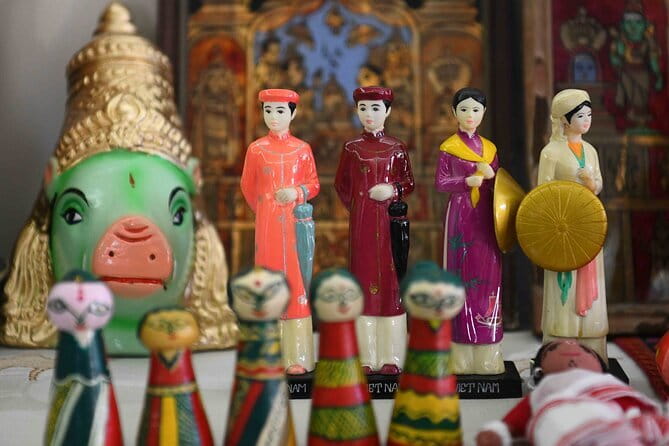
Although the main focus is India, the studio also includes dolls from Japan, Iran, Nepal, Bhutan, Indonesia, Ukraine, and other countries. This international material gives you a useful point of comparison.
You can consider how different cultures represent people through clothing, posture, facial features, materials, and scale. The comparison also makes the Indian collection easier to understand. Customs that might first seem highly local begin to fit into a wider human habit of using figures to preserve stories, identity, ceremony, and social roles.
The international pieces do not turn the visit into a general world-culture museum. Indian craft remains the main subject. Still, the extra examples prevent the display from feeling narrow and show how folk art can cross borders in surprising ways.
If you have a special interest in dolls, masks, textiles, or folk art, you will probably want to spend time asking questions. The experience is private, so your group can focus on the areas that interest you most rather than following a preset crowd schedule.
Folk stories, tribes, textiles, and everyday customs
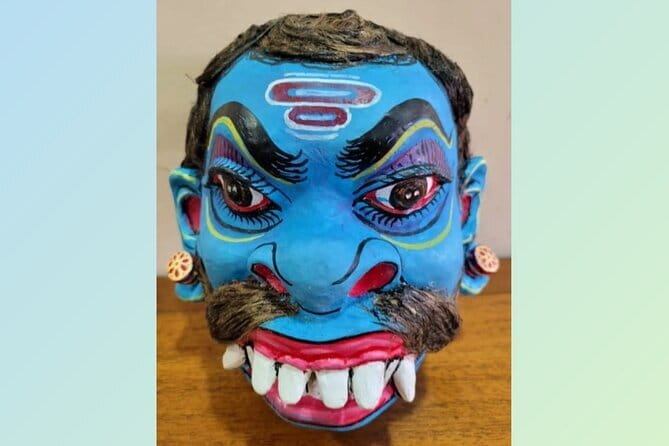
The talk is designed to go beyond dates and names. Folk stories and legends are a major part of the presentation, along with information about indigenous tribes, local customs, and textiles.
This is where the tour can feel like a cultural class rather than a simple museum visit. Stories help explain why an object was made and how it might have been used or understood. Textiles reveal social details such as clothing traditions, regional materials, and the ways communities express belonging.
The material also touches on cultural norms and beliefs. That makes the experience useful for visitors who want more than a quick introduction to Indian art. You get a sense of how craft sits inside ordinary life, religious practice, oral storytelling, and community memory.
One caution: the supplied information does not list the names of the guides, nor does it promise a particular language beyond the information presented. If you need a specific guide or language, ask when booking. Confirmation is sent within 48 hours, subject to availability.
A completely different way to spend a day in Mumbai:
- Elephanta Caves & Island Guided Private Tour
★ 5.0 · 1,327 reviews - Group Guided Walking Tour in Fort and Colaba
★ 5.0 · 1,073 reviews - Mumbai: Elephanta Caves Half-Day Guided Tour with Expert
★ 4.8 · 1,032 reviews - Highlights of Mumbai Sightseeing Tour: TRAVELLERS CHOICE AWARDED
★ 5.0 · 915 reviews
Part two: drawings about motherhood, travel, and isolation

After the collection of objects, the experience shifts to a walkthrough of drawings. This is not a repeat of the first section. The subject changes from traditional craft forms to personal and contemporary themes.
The drawings cover motherhood, the explosiveness of the mind, isolation during the recent pandemic, and journeys through rural parts of India. These themes give the second half a more inward tone.
I like the contrast. The dolls and masks connect you with community traditions and inherited stories. The drawings ask you to consider private emotion, memory, mental pressure, and personal observation. Together, the two parts show culture as something inherited, but also something continually interpreted and reshaped.
The rural travel drawings may also connect with the first part’s interest in local communities and crafts. You are not promised a field trip or a live craft demonstration, but the artwork offers another way to see rural India through the maker’s experience.
The pandemic drawings are especially relevant because they record a period of isolation that affected daily life around the world. Their presence gives the visit a modern counterpoint to the older objects in the cabinets.
Why the three-hour length matters
Three hours is a generous amount of time for a small collection. That can be a strength if you enjoy conversation, close looking, and stories. You are not forced to race through 300 objects in a short museum slot.
The time also allows the presentation to cover several subjects: art, history, geography, social customs, religion, folk tales, tribes, textiles, and personal travel. A shorter visit might show you the objects but leave little room for the ideas behind them.
The tradeoff is simple. If you prefer a fast sightseeing stop, three hours may feel long, especially in a private studio with a compact display area. This experience suits you best if you are willing to listen and ask questions. It is less suitable if you only want a quick photo opportunity or a large gallery with monumental works.
Because the activity is private, only your group participates. That is helpful for families with older children, couples, and small groups with a shared interest in culture. It also means the pace may feel more personal than a large public tour, though the exact format depends on the guide and your group’s questions.
How the setting affects your visit

A private apartment studio offers intimacy, but it also comes with limits. You should expect a domestic setting rather than broad museum facilities. The exhibits are in glass cabinets, and the fragile nature of the pieces explains the age restriction.
Children under 10 are not admitted. For families, this is an important point to settle before booking. Older children who already enjoy art, stories, or history may find the visit rewarding, but the material is best suited to people who can listen carefully and treat a private collection with care.
The activity is near public transportation, which makes the Worli meeting point practical. The experience begins and ends at the same meeting point, so you do not need to arrange a separate return transfer through the tour.
Opening hours are listed daily from 11:00 a.m. to 5:00 p.m. between March 3, 2024, and November 26, 2026. Since confirmation depends on availability, do not assume that every time within those hours is automatically open. Wait for confirmation before fixing the rest of your day around it.
Is $54 a fair price?
At $54, this is not priced like a free public gallery or a short neighborhood walk. You are paying for a private three-hour presentation, access to a personal collection, and interpretation that covers much more than the objects’ appearance.
The value depends on how much context you want. If you are interested in Indian craft, folk art, textiles, oral traditions, or social customs, the price can make sense because the collection brings many subjects together in one sitting. You also get the benefit of a private group rather than a general admission crowd.
The price is harder to justify if you mainly want to see famous paintings, major monuments, or a large state museum. This is a specialized experience, and its worth comes from the stories, research, and personal presentation.
I would treat it as a focused cultural appointment, not as a replacement for Mumbai’s larger museums. It works best alongside the city’s major sights, giving you a closer look at handmade traditions after you have seen the broader urban picture.
Who should book this experience?
I would recommend it most strongly to:
- Art and craft lovers who want to understand meaning, not just appearance
- Visitors interested in Indian tribes, textiles, legends, and local customs
- Families with children aged 10 and older who enjoy cultural discussion
- Couples or small private groups looking for a quieter Mumbai activity
- People who enjoy personal collections and story-led presentations
- Visitors who want a break from crowded monuments and busy city streets
You should think twice if you need step-free details, a large gallery environment, or a quick activity that takes less than an hour. The supplied information confirms the location is near public transportation and that most people can participate, but it does not provide detailed information about stairs, elevators, or other physical access features.
The same applies if you are looking for a hands-on craft workshop. This visit involves looking, listening, and discussing. There is no stated demonstration or making session.
Booking, cancellation, and practical details
The activity accepts mobile tickets, and confirmation arrives within 48 hours if space is available. The tour operates daily between 11:00 a.m. and 5:00 p.m., with the stated meeting point at WeWork on Dr Annie Besant Road in Worli.
You can cancel for a full refund if you do so at least 24 hours before the start time. Cancellations or changes made less than 24 hours ahead are not refunded or accepted, and the cut-off uses Mumbai local time.
I would allow the full three hours and avoid scheduling a tight appointment immediately afterward. The collection covers many subjects, and the personal format works best when you are not watching the clock.
Should you book it?
Book this if you want stories behind Indian craft, a private setting, and a close look at objects that may not appear in ordinary sightseeing programs. The strongest part is the combination of rare or endangered craft forms with explanations of folklore, tribes, textiles, customs, and belief.
The drawings make the experience more varied and give it a modern personal edge. The main drawbacks are the specialized subject, the apartment setting, the three-hour commitment, and the ban on children under 10.
For culture lovers, the $54 price is reasonable because you are paying for time, access, and interpretation rather than a quick display. If your Mumbai schedule is built around famous landmarks and fast stops, choose another activity. If you want a thoughtful look at India’s handmade traditions and the ideas surrounding them, this is a strong choice.
FAQ
Where does the experience begin?
It begins at WeWork, 1st floor, 264 to 265 Dr Annie Besant Road, Municipal Colony, Worli Shivaji Nagar, Worli, Mumbai, Maharashtra 400025, India.
Where does the experience end?
The activity ends back at the meeting point.
How long does the experience last?
It lasts approximately three hours.
What are the opening hours?
The experience is listed from 11:00 a.m. to 5:00 p.m., Monday through Sunday, for the period from March 3, 2024, through November 26, 2026.
Are children under 10 allowed to participate?
No. Entry is restricted for children under 10 because the exhibits are fragile.
Can I cancel for a full refund?
Yes. You can receive a full refund if you cancel at least 24 hours before the experience starts. Changes or cancellations made less than 24 hours before the start time are not accepted or refunded.
Just added around Mumbai
- Temples & Vineyards: Private Tour to Nashik from Mumbai★ 4.5 · 3 reviews
- Mumbai: Private City sightseeing and Dharavi Slum Tour★ 5.0 · 3 reviews
- Mumbai: Full Day City Sightseeing with Lunch, Car & Guide★ 4.3 · 3 reviews
- Elephanta Island Private Speedboat Tour from Mumbai – 6pax★ 5.0 · 3 reviews
- Mumbai: Elephanta Island and Elephanta Caves Guided Tour★ 4.4 · 3 reviews
- Mumbai Sightseeing Tour by Public Transport with family Lunch★ 5.0 · 3 reviews
- Mumbai by Dawn★ 4.5 · 3 reviews
- Mumbai Dharavi Slum Community Tour★ 5.0 · 3 reviews