
Reviewed · MUMBAI BICYCLE TOURS
Mumbai Bicycle Tour
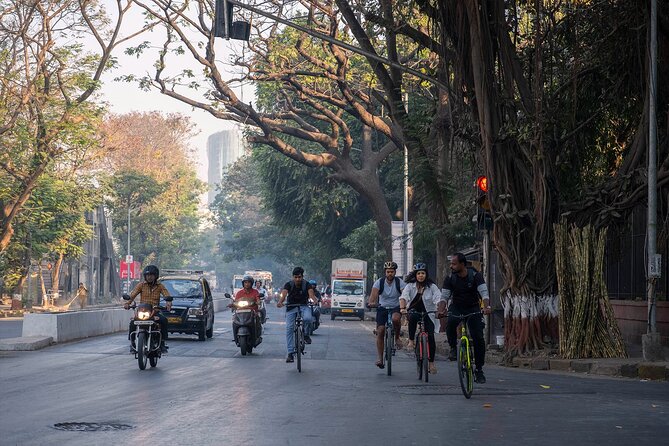
Mumbai is at its most revealing just after sunrise, when flower sellers set up, railway commuters pour into CST, fishing crews work Sassoon Dock, and the streets have not yet reached their daytime roar. This 3-hour-45-minute bicycle tour gives you a close look at South Mumbai that a taxi window cannot match.
I like the route’s mix of grand sights and ordinary city life, especially the early start and cooler air. I also like the useful finish: after markets, temples, cows, and sea views, you sit down for an Indian breakfast with the guide and your group.
The main consideration is traffic. The guides do a good job managing crossings, but Mumbai roads can feel intimidating at first, and one rider had trouble finding a properly fitting helmet. Bring a calm attitude, follow instructions closely, and confirm your helmet fits before setting off.
In This Review
- Key points to know before you book
- Why dawn is the right time to ride Mumbai
- Gateway of India and the quiet start in Colaba
- Fort and Chhatrapati Shivaji Terminus
- Crawford Market and Mumbai’s working food trade
- Bhuleshwar, Kalbadevi, and the cow shelter
- Mumba Devi Temple and the flower alley
- Three kilometers beside the Arabian Sea
- Sassoon Dock and the less polished side of Mumbai
- Breakfast at Madras Cafe
- How much value do you get for $39.14?
- Safety, helmets, and the real level of effort
- Who will enjoy this Mumbai bike tour most?
- Should you book it?
- FAQ
- What time does the Mumbai Bicycle Tour begin?
- Where does the tour start?
- Where does the tour end?
- How long does the bicycle tour last?
- What is included in the price?
- Is hotel pickup included?
- What is the minimum age?
- Is the route difficult?
- How large can the group be?
- Can I cancel for a full refund?
Key points to know before you book
- Sunrise timing: Meet at Cusrow Baug in Colaba at 6:15 am, before the heat and crowds build.
- A true city route: Ride through Fort, Crawford Market, Bhuleshwar, Kalbadevi, Marine Drive, and Sassoon Dock.
- More than sightseeing: You will see commuters, flower sellers, sacred cows, fish workers, and local shoppers beginning their day.
- Flat and relaxed riding: The route is suitable for most participants aged 7 and above, with no hills and a leisurely pace.
- Guides who take safety seriously: Guides including Raj, Rishi, Javed, and Hitesh have been praised for clear explanations and careful road support.
- Breakfast is included: The tour ends at Madras Cafe on Colaba Causeway with a typical Indian breakfast.
Why dawn is the right time to ride Mumbai
This tour uses the quietest useful window of the day. At 6:15 am, Mumbai is awake, but it has not yet reached its full volume. That matters in a city where heat, traffic, and crowds can quickly turn a short ride into hard work.
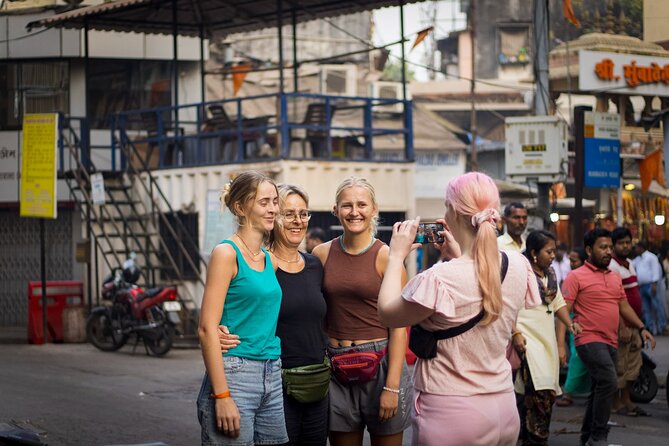
You begin at Cusrow Baug Colony in Apollo Bandar, near the Gateway of India. The start is in Colaba, a practical base for exploring South Mumbai, though the meeting point can be difficult to spot in the dim early light. I would check the location on a map the night before and allow extra time.
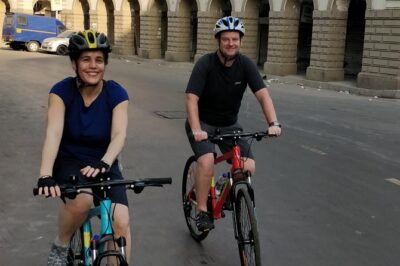
You receive a bicycle and helmet, meet the English-speaking guide, and set off at an easy pace. The bikes are generally described as reliable, and some riders found them new and easy to adjust. The route is flat, and the bicycles do not have gears, so you will not be tackling steep climbs.
The ride is not a race or a fitness challenge. Expect frequent stops and roughly 14 kilometers of cycling, based on the experience described by riders. You need to be comfortable on a bike, but you do not need advanced cycling skills.
More rides by bicycle:
- Mumbai: Morning Bicycle Tour
★ 5.0 · 40 reviews - PRIVATE Mumbai Full Day Tour in Premium Car/Bus/Moped with GUIDE
★ 5.0 · 32 reviews - Mumbai: Early Morning Bicycle Tour
★ 4.8 · 30 reviews
Gateway of India and the quiet start in Colaba
The first stop is the Gateway of India, the grand waterfront arch built in 1924. Its design draws on Hindu and Islamic architectural forms, and its position beside the harbor made it the traditional first sight for many people arriving in Mumbai by boat.
The stop is brief, about five minutes, but it gives you an immediate sense of South Mumbai’s scale. You are close to the waterfront, historic hotels, and the broad open space around the monument. In the early morning, the setting feels far calmer than it does later in the day.
This is also a good moment to settle into the bike. The first few minutes of riding through an unfamiliar city can feel tense, especially if you are not used to Indian traffic. The guides generally ride with the group and help manage road crossings, which is one of the most important parts of the experience.
Fort and Chhatrapati Shivaji Terminus
From Colaba, the route heads through the back streets of Fort. This former business district dates to the 18th century, and its streets bring together colonial-era buildings, offices, shops, and early commuters.
The cycling is valuable here because you can slow down and notice details between the major sights. You are not simply being driven from monument to monument. You get a feel for how South Mumbai changes block by block as the morning begins.
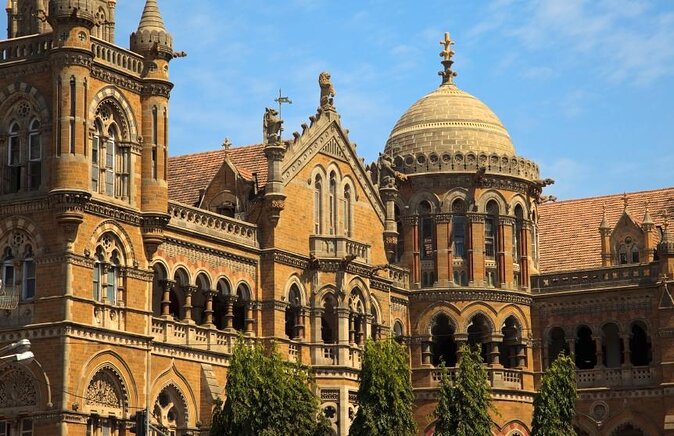
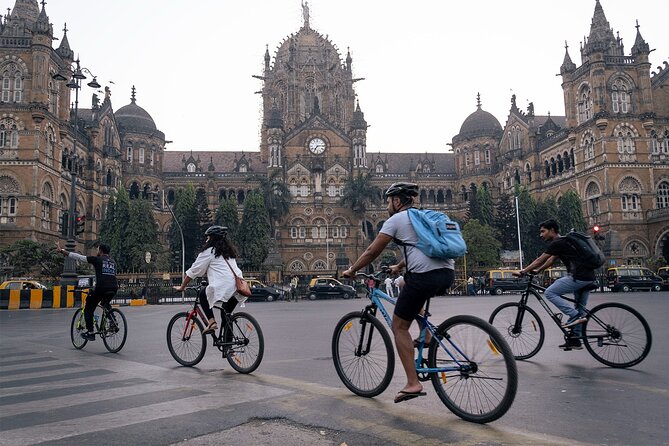
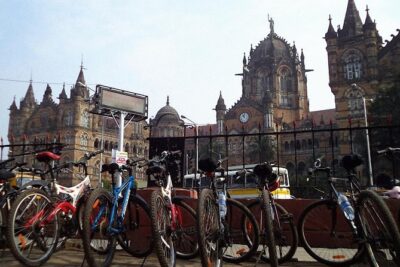
The next major stop is Chhatrapati Shivaji Terminus, usually called CST. Formerly Victoria Terminus, this railway station is one of India’s great Victorian Gothic buildings and a UNESCO World Heritage site. The tour gives you about ten minutes to take in the architecture and the flow of passengers.
CST is also a working station, not a quiet museum piece. Thousands of commuters arrive during the morning rush, and that contrast is the point. The building’s carved details and dramatic roofline are impressive, but the station is just as interesting as a living part of the city.
If you recognize CST from Slumdog Millionaire, you may enjoy the cinematic connection. Still, the station is worth seeing for more than its film appearance. It shows how Mumbai’s old architectural grandeur and daily commuter system operate side by side.
Crawford Market and Mumbai’s working food trade
At Crawford Market, you leave the bikes for about 25 minutes and go inside for a quick look. This is one of Mumbai’s major fruit, vegetable, and meat markets, serving local shoppers and traders.
The market is a stronger part of the tour than a standard photo stop because it gives you a look at the city’s food supply at street level. You may encounter strong smells, wet floors, crowded passages, and the direct working rhythm of a wholesale market. That can be confronting, especially around the meat section, but it is also one of the most honest parts of the morning.
The building was the first in India to receive electricity, an unusual detail that adds context to its age and importance. Your guide can connect the market’s past with the commerce still taking place inside it.
Wear shoes you can use comfortably in a market environment, and avoid bringing anything you do not want to carry carefully. The tour data does not specify a dress code or storage arrangements, so traveling light is sensible.
A completely different way to spend a day in Mumbai:
- Dharavi slum tour in Mumbai by Female tour guides of the slum
★ 5.0 · 1,976 reviews - Mumbai: Full-Day Sightseeing Tour of Mumbai
★ 4.9 · 1,822 reviews - Private Mumbai Sightseeing Tour (Traveller’s Choice Award Winner)
★ 5.0 · 1,565 reviews - Elephanta Caves & Island Guided Private Tour
★ 5.0 · 1,327 reviews
Bhuleshwar, Kalbadevi, and the cow shelter
The route continues through Bhuleshwar and Kalbadevi, two busy bazaar districts where the city’s commercial side comes into focus. These streets are less polished than the waterfront and grand public buildings, but they offer a better sense of everyday Mumbai.
You then stop at Bombay Panjrapole, a shelter for more than 350 sacred cows and other smaller animals. You have the chance to feed the cows, an experience many people find memorable because it brings you into contact with a local religious tradition rather than keeping you outside as an observer.
This stop is also a useful reminder that Mumbai contains many different kinds of urban space. Within a few minutes of markets and traffic, you can be standing in a place centered on animal care and religious practice.
The tour description refers to feeding the cows as a way to collect good karma. Treat the stop respectfully, follow the guide’s instructions, and remember that animals and religious sites deserve a quieter approach than the surrounding streets.
Mumba Devi Temple and the flower alley
The next stop is Mumba Devi Temple, the historic Hindu temple connected to Mumbai’s name. You leave the bicycles and spend about 20 minutes looking inside.
This is a meaningful pause in the route because it links the modern name of the city to an older religious tradition. It also breaks up the riding at a useful point. You are cycling, but the tour is designed around short visits, explanations, and changes of scene.
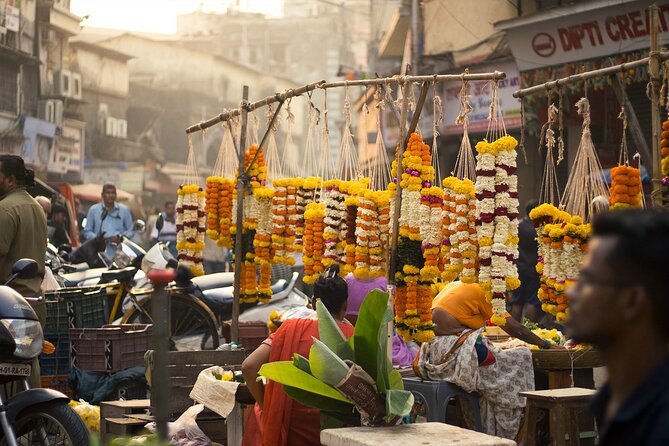
After the temple, you ride through Mumbai’s flower alley, where colorful marigold garlands are prepared and sold. The flowers bring a bright visual change after the darker market interiors and dense commercial streets.
This section is a good example of why a bicycle works well here. You move slowly enough to see the small businesses and street activity, while still covering a large part of South Mumbai before breakfast.
Three kilometers beside the Arabian Sea
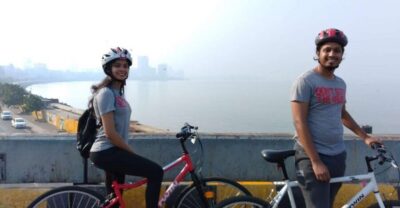
Marine Drive gives you the most open riding of the morning. The group cycles about three kilometers along the promenade beside the Arabian Sea, with roughly 30 minutes set aside for this part of the route.
Marine Drive is famous for its evening crowds, when friends and couples gather along the waterfront. Early in the day, it is much quieter, and the cooler air makes this one of the easiest and most pleasant stretches of the ride.
After the tight lanes of the bazaars, the promenade feels like a release. You have room to pedal, look toward the sea, and catch your breath. It is also one of the few sections where the route feels less gritty and more scenic.
Do not expect a long beach stop or a swimming break. This is a cycling segment along the promenade, not a separate seaside activity. Its value comes from the change in pace and setting.
Sassoon Dock and the less polished side of Mumbai
The final major stop is Sassoon Dock, South Mumbai’s major fishing area. You see fishermen unloading their catch and women and children cleaning shrimp as the market gets to work.
This is the most intense stop on the route. Expect strong seafood smells, wet working areas, and a scene that is busy with labor rather than arranged for sightseeing. If you want a polished tourist attraction, this may not suit you. If you want to understand how the city is fed and how its waterfront economy works, it is an important visit.
The guides can help explain what you are seeing and keep the group moving through the working area. Stay alert, avoid blocking people who are doing their jobs, and be prepared for a less comfortable setting than Marine Drive or the Gateway.
For me, this is where the tour earns its place in a Mumbai itinerary. The route includes famous architecture, but it also takes you into places you are unlikely to reach by simply following a first-time visitor’s list of sights.
Breakfast at Madras Cafe
The ride ends back in Colaba at Madras Cafe, on Colaba Causeway, at Aziz Mansion. You sit down for a typical Indian breakfast with the guide and the rest of the group.
This is more than a convenient ending. After an early start and several hours in the saddle, food and conversation give the morning a natural finish. You can compare what you saw, ask follow-up questions, and enjoy the social side of a small group outing.
Breakfast is included in the $39.14 price, along with the bicycle, helmet, and English-speaking guide. The tour does not include hotel pickup or drop-off, so you need to reach Cusrow Baug independently and make your own way afterward.
How much value do you get for $39.14?
At $39.14 per person, this is good value if you want several hours of guided sightseeing with transport between neighborhoods built into the experience. You are not paying only for bicycle hire. The price also covers the guide, route planning, safety support, market and temple visits, and breakfast.
The route covers a lot in one morning: the Gateway of India, CST, Crawford Market, the bazaars, Bombay Panjrapole, Mumba Devi Temple, the flower alley, Marine Drive, and Sassoon Dock. Doing all of that independently would require several separate journeys and some confidence navigating unfamiliar streets.
You can choose an economical group tour or a private option. The group tour can include up to 25 people, although the experience may feel more personal when the group is smaller. Group discounts are available, and a mobile ticket is provided.
The private option may be worth considering if you want more control over the pace or more direct time with the guide. The supplied information does not state the private-tour price, so compare it at booking rather than assuming the difference.
Safety, helmets, and the real level of effort
The tour is described as relaxed and suitable for most people aged 7 and older. The ground is flat, and the route does not demand hill climbing. The main challenge is not fitness. It is staying comfortable and focused while moving through Mumbai traffic.
Several riders specifically praised guides for helping the group cross roads and for making them feel protected. That support matters, but it does not remove the need to pay attention. You should be able to ride confidently, listen to instructions, and accept that some moments may feel scary.
Helmet fit deserves special attention. Most people received bicycles and helmets as part of the tour, but one rider said the available helmets did not fit properly, and others felt helmet use should be mandatory. Ask for a correctly fitting helmet before you leave. If it does not sit securely, raise the issue immediately.
Wear comfortable clothing, bring only what you need, and prepare for an early morning start. The route begins before the heat becomes severe, but it still involves several hours outdoors and active riding.
Who will enjoy this Mumbai bike tour most?
I would choose this tour if you want to see Mumbai through its daily routines rather than only its famous facades. It suits people who like markets, religious sites, working neighborhoods, local food, and a little controlled uncertainty.
It is also a strong first-morning activity. You cover a large section of South Mumbai, learn how the districts fit together, and finish near Colaba with plenty of the day still ahead.
Families can take part because the minimum age is 7, though parents should decide if their children are comfortable cycling near traffic. The flat route helps, but the city environment remains active and unpredictable.
I would think twice if you dislike strong smells, fish markets, crowded streets, or riding near vehicles. This is not a gentle sightseeing pedal along empty lanes from start to finish. It is a real city ride, with guides helping you manage the rougher edges.
The tour has a 99 percent recommendation rate and a 4.9 rating from 137 reviews, which matches the strongest pattern in the feedback: praise for the guides, the route, the bikes, the balance between riding and stops, and the breakfast. The few reservations center on traffic, the hard-to-find meeting point, and helmet fit.
Should you book it?
Book this Mumbai bicycle tour if you want a lively, practical introduction to South Mumbai and are comfortable with an early alarm. The best parts are the chance to see the city waking up, the mix of grand buildings and working markets, and the careful help from guides such as Raj, Rishi, Javed, and Hitesh.
Skip it if you want a slow, polished, traffic-free ride or if fish markets and animal shelters are not your idea of sightseeing. For most active visitors, though, the $39.14 price buys a memorable morning, useful local context, breakfast, and a far closer look at Mumbai than a standard coach tour.
FAQ
What time does the Mumbai Bicycle Tour begin?
The tour begins at 6:15 am.
Where does the tour start?
It starts at Cusrow Baug Colony, Apollo Bandar, Colaba, Mumbai.
Where does the tour end?
The tour ends at Madras Cafe at Aziz Mansion on Colaba Causeway in Apollo Bandar, Colaba.
How long does the bicycle tour last?
The tour lasts approximately 3 hours and 45 minutes.
What is included in the price?
The price includes a bicycle, helmet, English-speaking guide, and breakfast.
Is hotel pickup included?
No. Hotel pickup and drop-off are not included.
What is the minimum age?
The minimum age is 7 years.
Is the route difficult?
The tour follows flat terrain at a relaxed pace. Most participants can take part, but you should be comfortable riding a bicycle around city traffic.
How large can the group be?
The maximum group size is 25 people. A private tour option is also available.
Can I cancel for a full refund?
Yes. You can cancel at least 24 hours before the local start time for a full refund. Cancellations or changes made less than 24 hours before the start are not accepted for a refund.
Just added around Mumbai
- Temples & Vineyards: Private Tour to Nashik from Mumbai★ 4.5 · 3 reviews
- Mumbai: Private City sightseeing and Dharavi Slum Tour★ 5.0 · 3 reviews
- Mumbai: Full Day City Sightseeing with Lunch, Car & Guide★ 4.3 · 3 reviews
- Elephanta Island Private Speedboat Tour from Mumbai – 6pax★ 5.0 · 3 reviews
- Mumbai Sightseeing Tour by Public Transport with family Lunch★ 5.0 · 3 reviews
- Mumbai by Dawn★ 4.5 · 3 reviews
- Mumbai: Elephanta Island and Elephanta Caves Guided Tour★ 4.4 · 3 reviews
- Mumbai Dharavi Slum Community Tour★ 5.0 · 3 reviews
Mumbai Bicycle Tours, compared.
PRIVATE Mumbai Full Day Tour in Premium Car/Bus/Moped with GUIDE
Read our review →
Early Morning Old Mumbai Private Cycle Tour With Breakfast
Read our review →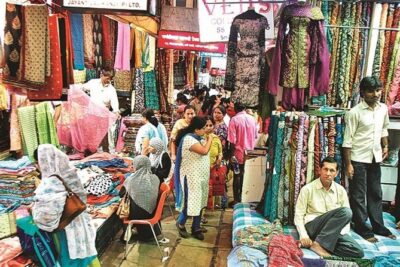
3 Hours Early Morning in South Mumbai Heritage Bicycle Tour
Read our review →
Mumbai City Sightseeing Guided Tour on a Bicycle
Read our review →Browse the lists this tour appears in