
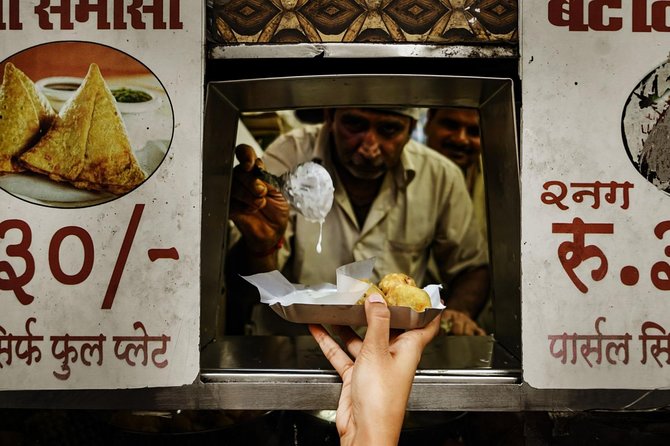
Reviewed · MUMBAI STREET FOOD TOURS
Bombay Express Mumbai Food Tour with 15+ Tastings
Mumbai reveals itself quickly through its food, and this tour gets you eating from the first part of the afternoon. Over four hours, you’ll try 15 or more tastings, ride a local commuter train, and move from Churchgate to Marine Lines, Zaveri Bazaar, Mangaldas, and the area near Mumbadevi Temple.
I like the small group, capped at eight, and the way the tour mixes street stalls with long-running local eateries. I also like that your guide, people such as Pooja, Ronnie, Morgan, or Shailesh, explains the food and the communities behind it. The catch is simple: this is a walking-heavy outing, with one report putting the total at about 15,000 steps, and the generous tasting list can be too much if you arrive after lunch.
In This Review
- Key points at a glance
- Why this Mumbai food tour feels different
- Starting at Churchgate with a hungry stomach
- The short train ride to Marine Lines
- Marine Lines, Parsi food culture, and more chaat
- Charcoal papads and the food lanes of Zaveri Bazaar
- Mangaldas and the city beyond the main sights
- Desserts, moong dal halwa, and a final paan
- How much food should you expect?
- Walking, weather, and practical comfort
- Is $45 a fair price?
- Who should book this food walk?
- FAQ
- Where does the Mumbai food tour begin?
- Where does the tour finish?
- How long does the experience last?
- How many food tastings are included?
- Is the tour suitable for vegetarians?
- Is the tour suitable for people with mobility limitations?
- Should you book the Bombay Express?
Key points at a glance
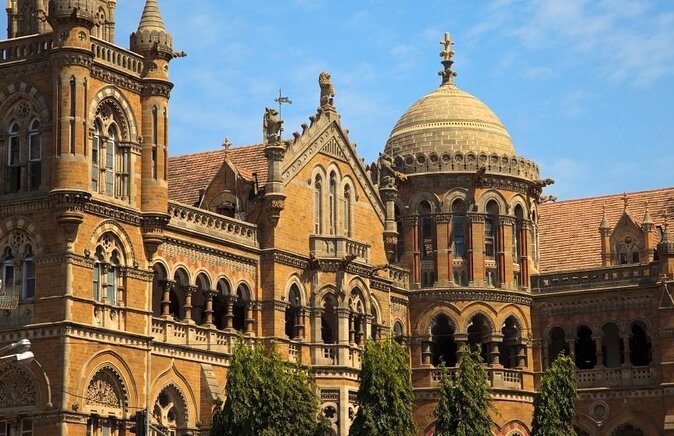
- 15-plus tastings in four hours: Expect chaat, dosas, papads, curries, sweets, paan, and more.
- A short Mumbai train ride: The roughly 10-minute trip gives you a quick look at daily commuter life.
- Local places you may not find alone: The route includes street vendors, old eateries, Parsi community areas, and food lanes.
- Small groups of up to eight: This makes it easier to ask questions and keep up through crowded streets.
- A substantial walking day: Wear comfortable shoes and plan for heat, crowds, and many short stops.
- Good value for serious eaters: The $45 price includes food, drinks, train tickets, entrance fees, bottled water, and the guide.
Why this Mumbai food tour feels different
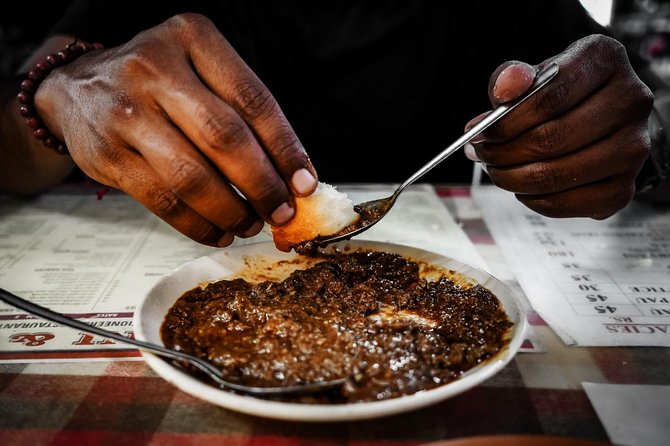
Many food tours keep you in one neighborhood and serve a handful of familiar dishes. This one uses food as a reason to cross several parts of south Mumbai. You begin near Churchgate, take the train toward Marine Lines, walk through food districts, and finish by Shree Mumbadevi Temple.
That movement matters. You are not just sitting at a restaurant while a guide lists ingredients. You see how the city changes from one block to the next, and you eat in places built for local customers rather than for sightseeing groups.
The tour is limited to eight people, which is a useful size for Mumbai. A larger party would be awkward at small stalls and narrow food lanes. In a group this size, you can ask about cooking methods, religious communities, ingredients, and local customs without shouting over everyone else.
The English-speaking guides are central to the experience. Pooja is praised for showing people places they would not have found alone, while Ronnie is noted for explaining both the history of each stop and how the food is prepared. Other guides named by past participants include Morgan, Puja, Nikesh, Sagar, and Shailesh. The guide you get will shape the pace and exact rhythm of the afternoon, but the intended style is clear: eat often, walk between stops, and ask questions.
More street food walks and tastings:
- Mumbai: Street Food and Night Markets Tour
★ 4.9 · 719 reviews - Mumbai Street Food Tour
★ 5.0 · 269 reviews - Bombay Express Mumbai Food Tour with 15+ Tastings
★ 5.0 · 265 reviews
Starting at Churchgate with a hungry stomach
Meet at Chaayos Cafe at Churchgate, next to Churchgate station and close to the Fort district. The full address is Express Building, Shop No. 1, Ground Floor, Part B, 14 IMC Marg, opposite Government Law College.
This is a sensible meeting point because it is near a major station and gives the group an easy start in south Mumbai. Arrive ready to eat, not merely ready for a snack. The tour includes enough food to replace lunch, and arriving full means you will miss some of the best parts.
The opening 90 minutes combine walking, city commentary, and food stops. You may begin with familiar-looking street snacks, then move into dishes that require a little explanation. Chaat is a likely early focus, with its sharp chutneys, crunchy toppings, and layers of sweet, salty, spicy, and sour flavors.
The value of a guide becomes clear here. Chaat is not one dish but a family of snacks, and the balance of chutney, fried elements, yogurt, spice, and texture can vary from stall to stall. Instead of guessing what to order, you can sample the versions selected for the group and learn how each one fits Mumbai’s food culture.
The short train ride to Marine Lines
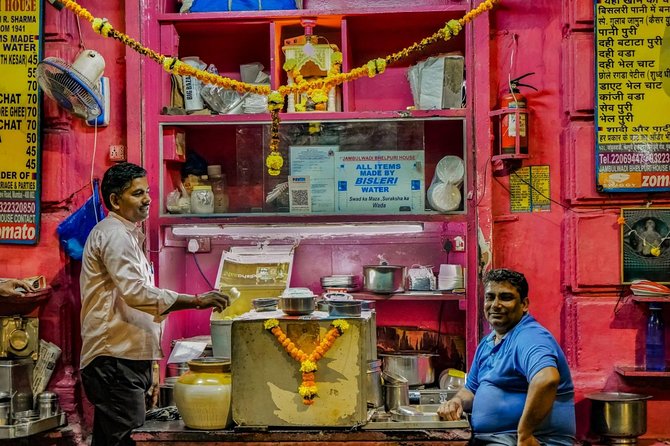
The train segment lasts about 10 minutes. Mumbai’s commuter trains run frequently, with open-doored trains departing about every five minutes, so you should not face a long wait under normal conditions.
This is not a scenic rail excursion. It is a brief slice of ordinary city transport. You ride with the group, watch the city pass at street level, and get a sense of how much daily life in Mumbai depends on the railway network.
You should take the train section seriously if you have mobility concerns. The tour is not suitable for people with mobility impairments, and the trains have open doors. Pregnant women are also advised not to book. Follow your guide closely, keep your belongings secure, and wear shoes that are comfortable for quick boarding and walking.
The train ticket is included, so you do not need to sort out the fare yourself. That small detail helps the group move without stopping to handle separate payments.
Marine Lines, Parsi food culture, and more chaat
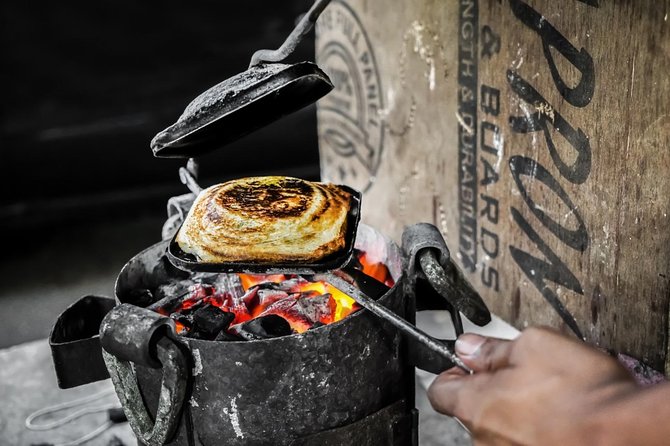
After getting off at Marine Lines, the group heads toward chaat vendors and one of Mumbai’s remaining Parsi communities. This is one of the more unusual parts of the route because it ties food to the people who helped shape the city.
The Parsi community has a distinct place in Mumbai’s cultural life, and the tour uses local food to introduce that story. You are not simply told that the city has many culinary influences. You see how communities, migration, religion, and local trade have helped shape what appears on the plate.
The precise tastings can vary, but the tour description points to a wide range. You may eat buttery aubergine curry with crisp papads, slow-cooked mutton kheema, chutney-spiked pudla, and cheese-filled dosas. The menu may also include vegetarian alternatives, since the experience is suitable for vegetarians and pescatarians.
One point needs clarification before you book. The advertised food list includes mutton kheema, yet one past outing was entirely vegetarian. If meat is important to you, ask the provider what the current menu includes. If you prefer vegetarian food, the tour appears well suited to you, with plenty of plant-based dishes across the route.
A completely different way to spend a day in Mumbai:
- Dharavi slum tour in Mumbai by Female tour guides of the slum
★ 5.0 · 1,976 reviews - Mumbai: Full-Day Sightseeing Tour of Mumbai
★ 4.9 · 1,822 reviews - Private Mumbai Sightseeing Tour (Traveller’s Choice Award Winner)
★ 5.0 · 1,565 reviews - Elephanta Caves & Island Guided Private Tour
★ 5.0 · 1,327 reviews
Charcoal papads and the food lanes of Zaveri Bazaar
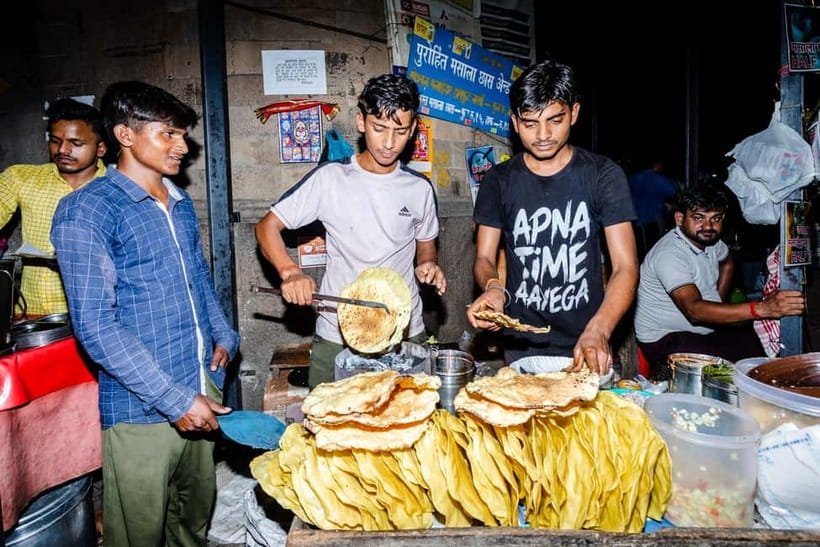
The tour continues through Zaveri Bazaar, where narrow khau galli alleyways bring together small food businesses serving local workers and shoppers. This is the sort of setting that makes a food walk worthwhile. You are moving through a working part of the city, not a polished dining district designed around sightseeing.
Papads are a good example of how a familiar food can taste different in its local setting. Here, the crispy lentil wafers are cooked over charcoal. That method adds a smoky note and a different texture from the packaged versions many people know.
You will also have the chance to try dosas with cheese and other fillings. A dosa is crisp at the edges, soft inside, and especially filling when paired with rich toppings. Since this tour offers repeated tastings, you may only receive a portion of each item, but the cumulative effect is still substantial.
The food comes at a steady pace. You eat, walk, listen, and eat again. That rhythm is fun, but it is not relaxed fine dining. Crowded lanes, standing-room stops, and short walks between venues are part of the deal.
Mangaldas and the city beyond the main sights
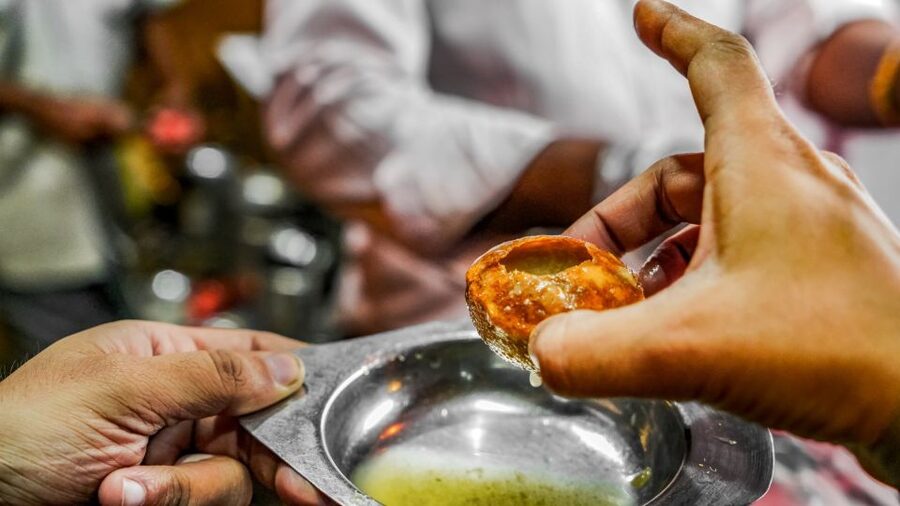
The route passes through Mangaldas, another district where the tour focuses on ordinary local life. This adds useful balance to the food stops. You see the setting in which people shop, work, commute, and grab quick meals, rather than viewing Mumbai only through its grand landmarks.
The route also includes local eateries that have served customers for decades. Some stops are street joints, while others are modest restaurants. This mix is one of the strongest features of the outing. Street food gives you speed, smoke, crunch, and strong seasoning. Restaurant stops offer a chance to sit, slow down slightly, and try food prepared in a more complete meal style.
Expect items such as aubergine curry, papads, pudla, dosas, and possibly kheema, along with additional dishes that make up the 15-plus tasting count. The tour can include a Keralan thali, according to one past experience, though that person would have preferred more distinctly Mumbai dishes such as vada pav.
That is a fair limitation to keep in mind. The experience offers a broad look at food in Mumbai, but not every dish will be a classic associated only with the city. If your goal is a strictly Mumbai-only menu, ask about the current stops. If your goal is to understand how different Indian food traditions meet in Mumbai, the broader selection is a benefit.
Desserts, moong dal halwa, and a final paan
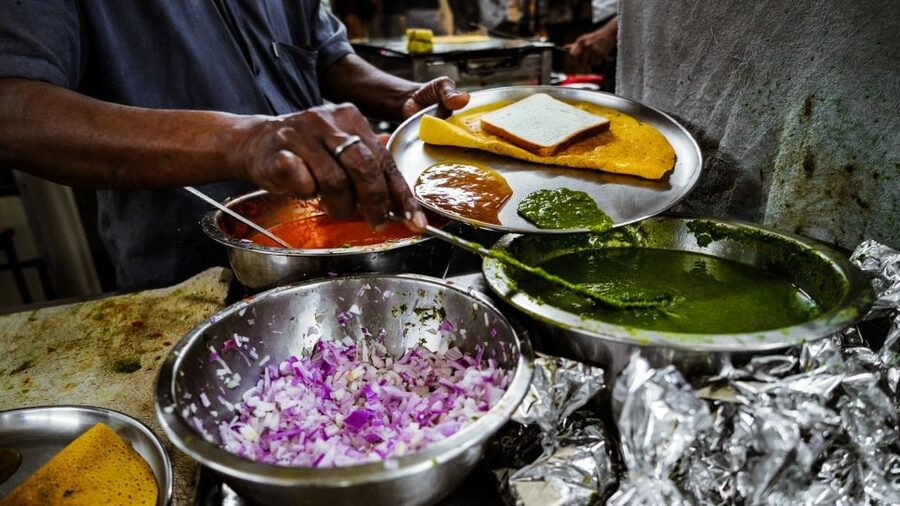
The final food section turns toward sweets and paan. Moong dal halwa provides the rich, creamy finish you would expect from a dessert made for small portions rather than casual snacking.
The paan stop is a memorable way to end. Betel leaves are wrapped around dried fruits, nuts, and syrups, creating a combination of textures and flavors that may be new to you. Paan can be sweet, aromatic, and intense, so this is a good moment to ask your guide what is inside before you take a bite.
The tour finishes opposite Shree Mumbadevi Temple. Your guide can help you find a taxi, and Uber is recommended in India. Hotel pickup and drop-off are not included, so you need to arrange your own way back after the final stop.
Ending near the temple gives the afternoon a clear finish and puts you in an area with strong religious and commercial importance. You leave with more than a list of dishes. You have seen several parts of south Mumbai and learned how food connects to the city’s communities.
How much food should you expect?

A lot. The tour advertises more than 15 tastings, and the portions may be small, but the number of stops adds up quickly. One past itinerary included about 15 dishes across roughly 10 venues, with enough food to leave even a strong eater full.
Treat this as lunch and perhaps dinner in one. Do not schedule a major meal immediately afterward. If you have a small appetite, pace yourself and tell the guide early. It is better to sample sensibly than to force every bite and feel unwell halfway through.
The variety is a major strength. You are not eating 15 versions of the same fried snack. The route covers chaat, curries, papads, dosas, halwa, paan, and other dishes. That gives you a wider sense of Mumbai’s food habits, from fast street snacks to slow-cooked dishes and sweets.
The tradeoff is that you may not receive a deep lesson on every dish. With so many tastings in four hours, explanations need to be concise. Ask about the foods that interest you most, especially if you want to understand a particular community or cooking method.
Walking, weather, and practical comfort
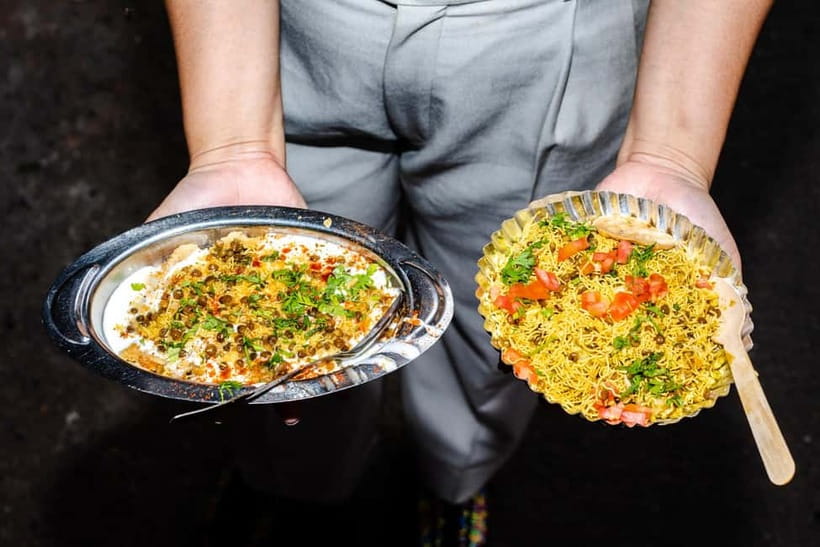
Plan on a physically active four hours. The route includes station movement, train boarding, neighborhood walks, crowded streets, and repeated stops where you may stand while eating. A past participant counted roughly 15,000 steps, which is a useful warning for anyone expecting a gentle stroll.
Wear comfortable shoes. Bring an umbrella, especially during Mumbai’s wet months, and carry only what you can manage easily in a crowd. Bottled water is included, but you should still dress for a warm city walk.
The tour is not suitable for pregnant women or people with mobility impairments. If you recently had surgery, use crutches, or struggle with stairs and fast walking, this is not the right outing. One person had to leave before the final stops because the pace and distance were too demanding, even though the guide tried to slow down.
Food allergies and dietary needs deserve a direct question before booking. The tour is listed as suitable for vegetarians and pescatarians, but the food can include dairy, chutneys, spice, and ingredients that vary from stop to stop. Alcohol is not included.
Is $45 a fair price?
At $45 per person, the cost includes the English-speaking guide, all food and drink tastings, bottled water, the commuter train ticket, and entrance fees. You are paying for a four-hour route with more than 15 food samples and a small group of no more than eight.
That is good value if you want to taste widely and avoid spending time choosing safe or worthwhile stops on your own. The guide also adds practical value by handling the route, explaining the dishes, and helping the group move through areas that can be confusing for a first-time visitor.
The price is less appealing if you eat very little, want a seated restaurant meal, or prefer to explore slowly. You are paying for variety and access, not luxury. Some stops are busy local venues, and the experience is built around movement.
The included train fare and water are minor savings, but the food count is the main reason the price works. If you tried 15-plus items separately, you could easily spend a large part of the day arranging, ordering, and navigating. This tour turns that work into one guided route.
Who should book this food walk?
I would choose it for a first visit to Mumbai, especially if you want food to introduce you to the city. It suits curious eaters who like small portions, local transport, crowded neighborhoods, and dishes that may not appear on a standard restaurant menu.
It is also a strong choice for vegetarians and pescatarians, though meat eaters should confirm the current menu if they specifically want kheema or other meat dishes. The route has enough variety that you should not feel limited by avoiding alcohol, since alcoholic drinks are not part of the experience.
You should skip it if you need a slow pace, have mobility limitations, dislike public transport, or want a short list of signature dishes with plenty of time at each stop. You should also avoid eating a full lunch beforehand. This is one of those tours where arriving hungry is practical advice, not a slogan.
FAQ
Where does the Mumbai food tour begin?
It begins at Chaayos Cafe at Churchgate, next to Churchgate train station and near the Fort district. The address is Express Building, Shop No. 1, Ground Floor, Part B, 14 IMC Marg, opposite Government Law College, Mumbai, Maharashtra 400020.
Where does the tour finish?
The tour ends opposite Shree Mumbadevi Temple. Hotel transportation is not included, but the guide can help you find a taxi. Uber is recommended in India.
How long does the experience last?
The tour lasts four hours. The listed schedule includes about 1.5 hours of walking and tastings, a 10-minute train ride, another 1.5 hours of walking and tastings, and a final 45-minute food and walking section.
How many food tastings are included?
You receive more than 15 food and drink tastings. Possible dishes include chaat snacks, aubergine curry, papads, pudla, dosas, moong dal halwa, paan, and possibly mutton kheema.
Is the tour suitable for vegetarians?
Yes. The experience is listed as suitable for vegetarians and pescatarians. Since the advertised menu can include mutton kheema and menus may vary, ask about the current food selection if you have a strict preference.
Is the tour suitable for people with mobility limitations?
No. It is not suitable for people with mobility impairments or pregnant women. The tour involves substantial walking, public transport, crowded areas, and train boarding. Comfortable shoes are recommended.
Should you book the Bombay Express?
Book this tour if you want a full, food-centered afternoon that also shows you working parts of Mumbai. The best reasons are the 15-plus tastings, the small group, the local train ride, and the chance to eat in places you might miss without a guide.
Skip it if you want a quiet meal, a short walk, or complete control over the menu. For everyone else, $45 is a reasonable price for a packed four-hour introduction to Mumbai’s food culture. Come very hungry, wear good shoes, and ask about meat and dietary options before you set out.
Just added around Mumbai
- Temples & Vineyards: Private Tour to Nashik from Mumbai★ 4.5 · 3 reviews
- Mumbai: Private City sightseeing and Dharavi Slum Tour★ 5.0 · 3 reviews
- Mumbai: Full Day City Sightseeing with Lunch, Car & Guide★ 4.3 · 3 reviews
- Elephanta Island Private Speedboat Tour from Mumbai – 6pax★ 5.0 · 3 reviews
- Mumbai Sightseeing Tour by Public Transport with family Lunch★ 5.0 · 3 reviews
- Mumbai by Dawn★ 4.5 · 3 reviews
- Mumbai: Elephanta Island and Elephanta Caves Guided Tour★ 4.4 · 3 reviews
- Mumbai Dharavi Slum Community Tour★ 5.0 · 3 reviews
Mumbai Street Food Tours, compared.
Bombay Express Mumbai Food Tour with 15+ Tastings
Read our review →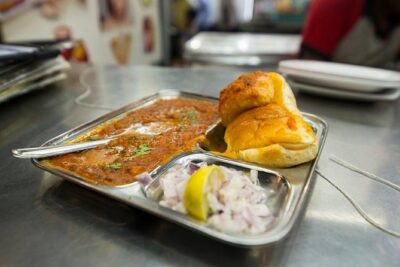
Winner Mumbai Street Food Tour in the World Top 20 by Guardian
Read our review →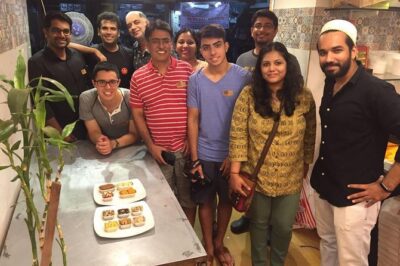
Private Guided Non-Veg Street Food Walking Tour in Muslim Quarter
Read our review →Browse the lists this tour appears in