
Reviewed · MUMBAI CITY SIGHTSEEING TOURS
Best Mumbai Group Sightseeing Tour
Mumbai packs imperial architecture, sacred spaces, working neighborhoods, sea views, and modern city life into a remarkably small area. This four-hour group tour gives you a broad first look, from the Gateway of India and the Taj Mahal Palace to the hand-washed clothes of Dhobi Ghat and the Gothic façade of CSMT.
I like the mix of major sights and everyday Mumbai, especially Dhobi Ghat and Mani Bhavan. I also like having an air-conditioned vehicle and a guide who can explain the city while you move between distant districts. The trade-off is clear: with eleven listed stops in about four hours, most visits will be brief, and traffic can reduce your time at the sights.
In This Review
- Key points to know before booking
- A fast introduction to Mumbai’s many sides
- Gateway of India and the Taj Mahal Palace
- Dhobi Ghat: Mumbai at work
- University, High Court, and the city’s old civic center
- Kala Ghoda and the museum stop
- Marine Drive and the sea-facing side of Mumbai
- ISKCON Chowpatty and Malabar Hill gardens
- Mani Bhavan and Mahatma Gandhi’s Mumbai years
- CSMT and the BMC Building
- How the four hours work in practice
- Who should book this Mumbai tour?
- FAQ
- How long does the Mumbai sightseeing tour last?
- How much does the tour cost?
- How large is the group?
- Is transportation included?
- Are food and lunch included?
- Which admissions are specifically included?
- Can cruise ship passengers book this experience?
- Can I bring luggage?
- What is the cancellation policy?
Key points to know before booking
- Eleven stops in roughly four hours: Expect an overview rather than long museum visits or leisurely walks.
- A useful mix of Mumbai: You see colonial buildings, religious sites, public gardens, a working laundry, museums, and the Arabian Sea.
- Small group limit: The group can have up to 15 people, making it more personal than a large coach excursion.
- Two especially worthwhile stops: Mani Bhavan gives important independence-era context, while Dhobi Ghat offers a look at a working Mumbai institution.
- Air-conditioned shared transport: This matters in Mumbai traffic and heat, though transfer times can change during the day.
- Guides associated with the operator include Rahul and Pooja: Pooja has led visits focused on Dharavi’s leather, plastic, and pottery work, while Rahul has guided full-day city outings and helped visitors understand museum displays.
A fast introduction to Mumbai’s many sides
At $69 per person, this is best viewed as a time-saving orientation tour. You are paying for a guide, shared transport, fuel charges, taxes, and an air-conditioned vehicle, not just entrance to a collection of monuments.
That price can make sense if you have only one day in Mumbai, are arriving from a cruise ship, or want someone else to handle the city’s distances and traffic. It is less attractive if you prefer to spend an hour at each museum, stop for a full meal, or explore each neighborhood on foot.
The group limit of 15 is helpful. It is large enough to keep the price below a private tour, but small enough that you should be able to hear the guide and ask questions. Still, this is a road-based city tour. You will see plenty through the vehicle windows, and several stops are likely photo breaks rather than full visits.
The operator has used guides named Rahul and Pooja. Pooja is associated with tours that explain Dharavi’s small-scale leather, plastics, and pottery work. Rahul has led city tours and museum visits, including explanations of old coins, sculptures, and animal skeletons. Your assigned guide may be different, but these examples suggest the strongest part of the experience is likely to be the spoken explanation between stops.
More full city sightseeing tours:
- Mumbai: Full-Day Sightseeing Tour of Mumbai
★ 4.9 · 1,822 reviews - Private Mumbai Sightseeing Tour (Traveller’s Choice Award Winner)
★ 5.0 · 1,565 reviews - Highlights of Mumbai Sightseeing Tour: TRAVELLERS CHOICE AWARDED
★ 5.0 · 915 reviews
Gateway of India and the Taj Mahal Palace
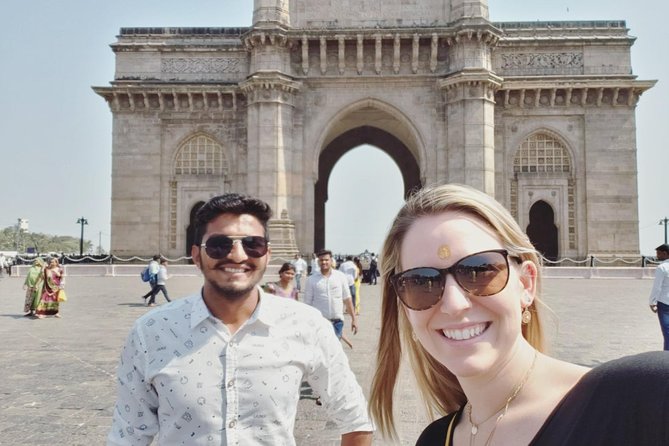
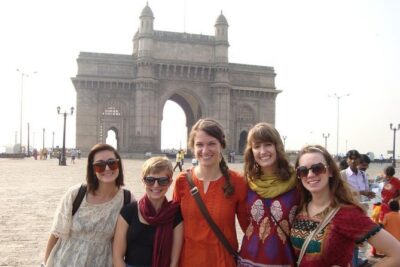
The Gateway of India is the natural opening scene. Built in 1924 to mark the visit of King George V and Queen Mary, it faces the Arabian Sea in Colaba and has become one of Mumbai’s most recognizable meeting points.
You have about 15 minutes here. That is enough to see the arch, take photographs, and listen to a quick explanation of its imperial setting. It is not enough for a slow walk around Colaba or time at the nearby waterfront.
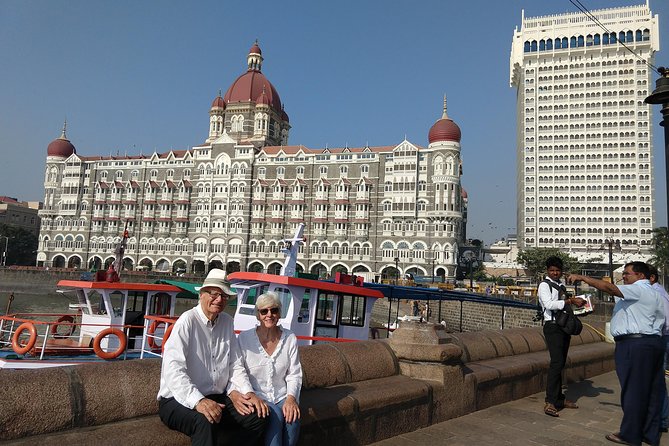
Across the area, the Taj Mahal Palace adds a different chapter. Opened in 1903, this grand hotel is known for its architecture and place in Mumbai’s story of hospitality. The planned visit is only about 10 minutes, so expect an exterior look and perhaps a short explanation rather than a hotel tour.
These first stops work well together. The Gateway represents imperial ambition, while the Taj Palace reflects Mumbai’s long connection with commerce, luxury, and international visitors. Keep your expectations practical: this is a snapshot of Colaba, not a full neighborhood walk.
Dhobi Ghat: Mumbai at work
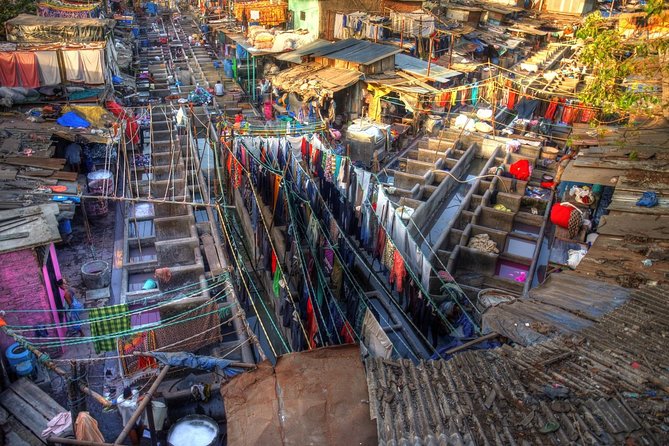
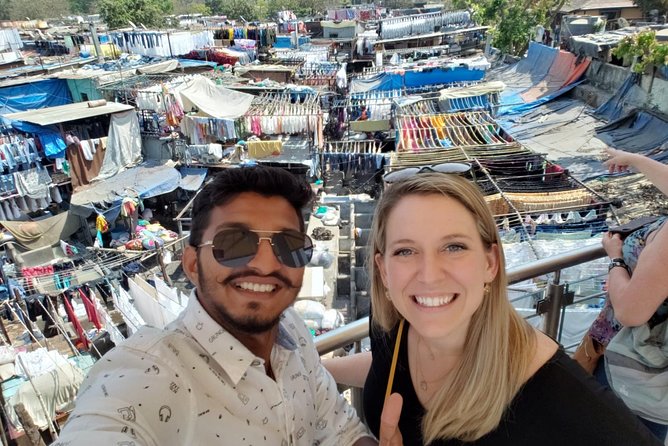
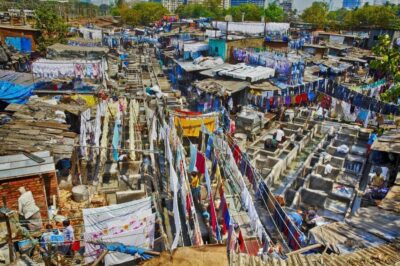
Dhobi Ghat is one of the most distinctive stops because it is not simply a monument. It is an open-air laundry where clothes are washed by hand in communal washing areas.
The scheduled visit is 15 minutes. From a viewing point, you can watch the rows of washing stations and see how a large working operation fits into the city. Your guide is important here, since the scene can be hard to understand from a quick glance alone.
I like this stop because it shifts the focus away from grand buildings. Mumbai is not only gateways, hotels, and museums. It is also work, routine, and tightly organized industries operating in full view of the city.
Do remember that Dhobi Ghat is a working place, not a staged attraction. Follow your guide’s directions about where to stand and what you may photograph. The short timing also means you should not expect a detailed visit inside the laundry area.
University, High Court, and the city’s old civic center
The University of Mumbai, founded in 1857, introduces the city’s academic heritage. Its Vidya Nagari campus is associated with one of India’s oldest universities and its broad range of undergraduate and postgraduate study.
The Bombay High Court, established in 1862, is another architectural and civic landmark. It serves Maharashtra and Goa and is known for its historic design and role in India’s legal system.
The provided schedule does not give a separate duration for the High Court, so your time there may be a quick exterior view while moving through the city. That is typical of a compact sightseeing route. You will get context and photographs, but not an inside legal tour.
These stops are worthwhile for people who enjoy architecture and public institutions. They also show how Mumbai’s colonial-era buildings remain part of daily city life, rather than sitting apart as museum pieces.
A completely different way to spend a day in Mumbai:
- Dharavi slum tour in Mumbai by Female tour guides of the slum
★ 5.0 · 1,976 reviews - Elephanta Caves & Island Guided Private Tour
★ 5.0 · 1,327 reviews - Group Guided Walking Tour in Fort and Colaba
★ 5.0 · 1,073 reviews - Mumbai: Elephanta Caves Half-Day Guided Tour with Expert
★ 4.8 · 1,032 reviews
Kala Ghoda and the museum stop
Kala Ghoda is one of South Mumbai’s best areas for art, galleries, cafés, boutiques, and heritage buildings. It is also linked with the annual Kala Ghoda Arts Festival, which brings art, music, dance, and theater into the neighborhood.
The Chhatrapati Shivaji Maharaj Vastu Sangrahalaya, formerly the Prince of Wales Museum, is the cultural center of this part of the route. Its galleries include artifacts, sculptures, artworks, miniature paintings, and weaponry connected with different periods of Indian history.
An accredited guide is set to meet you at the museum entrance and lead you through the galleries. That matters because a museum this broad can feel scattered without explanation. A good guide can help you focus on the objects that best explain India’s many traditions.
The timing is the main question. No exact duration is supplied for the museum visit, while the entire tour is only about four hours. If museum collections are your main reason for visiting, ask the operator how much time is planned before you book. Also note that the tour information specifically lists admission as included for Mani Bhavan and CSMT, but does not clearly state a separate admission inclusion for this museum.
Marine Drive and the sea-facing side of Mumbai
Marine Drive curves for about 3.6 kilometers along the Arabian Sea. Its streetlights form the famous Queen’s Necklace effect after dark, while the promenade offers views of the water, the road, and Mumbai’s Art Deco buildings.
The planned stop is only 10 minutes. That is enough to step out, take in the sea air, and photograph the curve of the road. It is not enough for the full promenade walk, a sunset sit-down, or a close look at the Art Deco architecture.
I like having Marine Drive in the route because it gives you a needed change of pace. After museums and civic buildings, the open waterfront shows how Mumbai residents use public space. If traffic or timing changes, this may become a roadside photo stop, so do not book this tour solely for a long seaside stroll.
ISKCON Chowpatty and Malabar Hill gardens
ISKCON Girgaon, also called ISKCON Chowpatty, is dedicated to Lord Krishna and functions as a spiritual and cultural center. Daily prayers, devotional singing, and spiritual lectures take place there, and the site includes a vegetarian restaurant and gift shop.
You have about 20 minutes. That should allow a brief look at the temple and a quiet pause in the middle of a packed schedule. Dress and behave respectfully, and follow any instructions about photography or movement inside the temple.
The next two stops are on Malabar Hill. Hanging Gardens, also called Pherozeshah Mehta Gardens, has terraced paths, trimmed hedges shaped like animals, and views toward the Arabian Sea and the city.
Kamala Nehru Park is known for its Old Woman’s Shoe structure and views over Marine Drive. It is a simple, family-friendly stop with space to stretch your legs.
Each garden receives about 15 minutes. That is enough to see the main feature and take photographs, but not enough for a relaxed garden visit. The two stops can also feel repetitive if you are short on time, though the views provide a pleasant break from the vehicle.
Mani Bhavan and Mahatma Gandhi’s Mumbai years
Mani Bhavan is likely to be the most meaningful historical stop for many people. Mahatma Gandhi used this house as a residence from 1917 to 1934, and it now serves as a museum and memorial connected with his work and India’s independence movement.
The visit lasts about 30 minutes, the longest clearly stated stop on the route. The museum includes photographs, documents, personal items, a library, and a preserved room. This is where a guide can add real value by connecting the objects with Gandhi’s ideas and political work.
Admission is included here. If you have any interest in India’s independence movement, this is one stop I would protect from being rushed. The building offers a more personal view of Gandhi than a large public monument, and the preserved room gives the visit a direct, human scale.
The route’s schedule leaves little spare time, so traffic could affect this stop. If this museum matters to you, confirm the day’s timing with the operator, especially if you are arriving from a cruise ship with a fixed return time.
CSMT and the BMC Building
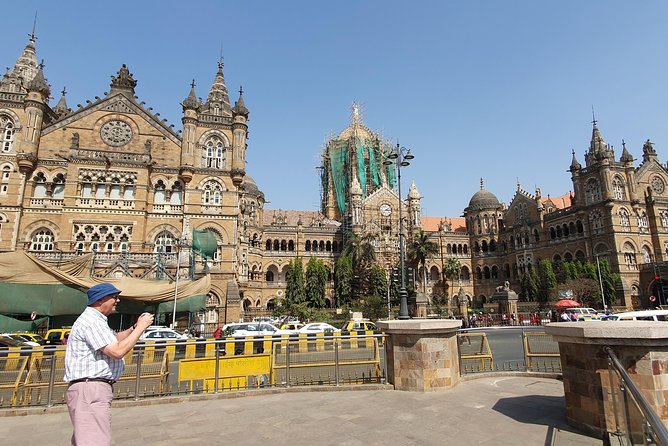
Chhatrapati Shivaji Maharaj Terminus, usually called CSMT, is both a major railway station and a UNESCO World Heritage Site. Completed in 1887 as Victoria Terminus, it combines Victorian Gothic Revival design with Indian architectural details.
The façade includes intricate carvings, a central dome, and a powerful sense of scale. It is also a working transport hub, so you see Mumbai’s colonial past beside the daily movement of commuters.
The planned visit lasts 15 minutes, with admission included. That is enough to appreciate the exterior and hear the main architectural points. It is not a full station exploration, and you should expect crowds and active railway operations around you.
Opposite CSMT is the Brihanmumbai Municipal Corporation building, completed in 1893. Its Gothic Revival design includes domes, turrets, and a central tower. It remains the headquarters of Mumbai’s civic administration.
The BMC Building receives about 10 minutes. Together, these buildings make a strong final pair: one represents the city’s rail network, the other its municipal government. If architecture is your priority, you may wish the tour allowed more time here.
How the four hours work in practice
The listed route contains eleven main stops, plus several additional cultural and civic sights. Even without traffic, that is a lot to fit into four hours. Some locations are close enough for a quick stop, while others require road transfers across Mumbai.
The air-conditioned vehicle is a practical advantage. Mumbai can be hot, humid, and tiring, and shared transport saves you from arranging several taxis or learning multiple routes in one morning.
Traffic is the major variable. Transfer times are approximate, and the exact duration depends on the time of day and road conditions. You should treat the schedule as a framework, not a minute-by-minute promise.
Food and drinks are not included, and there is no lunch. Eat before the tour or plan a meal afterward. The temple has a vegetarian restaurant, but the short scheduled visit does not guarantee time for a meal there.
Cruise ship passengers must provide the ship name, docking time, disembarkation time, and re-boarding time when booking. That information is essential, since the tour includes shared transfers and Mumbai traffic can be unpredictable.
The tour accepts mobile tickets, allows service animals, and is near public transportation. Most people can participate. Luggage is limited to one suitcase and one carry-on per person, and large items such as surfboards, golf clubs, or bicycles require advance confirmation.
You can cancel for a full refund up to 24 hours before the local start time. Changes or cancellations made less than 24 hours before departure are not accepted for a refund.
Who should book this Mumbai tour?
I would recommend it to a first-time visitor who wants a broad city introduction without arranging separate transport. It also suits cruise passengers, people with limited time, and anyone who prefers a guide to explain architecture, religion, public institutions, and local work.
It is a good fit for social travelers too. The group can include people from several countries, and the maximum size of 15 keeps the setting fairly manageable.
I would not choose it if your goal is a long visit to one museum, a detailed Dharavi tour, an extended walk through Kala Ghoda, or a relaxed afternoon at Marine Drive. The schedule favors range over depth.
Book this tour if you want to see many of Mumbai’s defining sights in one organized outing and you accept brief stops. Skip it in favor of a private or specialized tour if you want more control over timing. At $69, the value comes from the guide, vehicle, and wide coverage, not from long visits at every stop.
FAQ
How long does the Mumbai sightseeing tour last?
The tour lasts approximately four hours.
How much does the tour cost?
The listed price is $69 per person.
How large is the group?
The maximum group size is 15 travelers.
Is transportation included?
Yes. The tour includes round-trip shared transfers in an air-conditioned vehicle.
Are food and lunch included?
No. Food, drinks, and lunch are not included.
Which admissions are specifically included?
Admission is specifically listed as included for Mani Bhavan Gandhi Museum and Chhatrapati Shivaji Terminus. The other listed stops show free admission or do not specify an included ticket.
Can cruise ship passengers book this experience?
Yes. Cruise ship passengers must provide the ship name, docking time, disembarkation time, and re-boarding time when booking.
Can I bring luggage?
Each person may bring a maximum of one suitcase and one carry-on bag. Oversized or extra luggage may be restricted, so confirm with the operator in advance.
What is the cancellation policy?
You can cancel at least 24 hours before the local start time for a full refund. Cancellations or changes made less than 24 hours before departure are not accepted.
Just added around Mumbai
- Temples & Vineyards: Private Tour to Nashik from Mumbai★ 4.5 · 3 reviews
- Mumbai: Private City sightseeing and Dharavi Slum Tour★ 5.0 · 3 reviews
- Mumbai: Full Day City Sightseeing with Lunch, Car & Guide★ 4.3 · 3 reviews
- Elephanta Island Private Speedboat Tour from Mumbai – 6pax★ 5.0 · 3 reviews
- Mumbai Sightseeing Tour by Public Transport with family Lunch★ 5.0 · 3 reviews
- Mumbai by Dawn★ 4.5 · 3 reviews
- Mumbai: Elephanta Island and Elephanta Caves Guided Tour★ 4.4 · 3 reviews
- Mumbai Dharavi Slum Community Tour★ 5.0 · 3 reviews
Mumbai City Sightseeing Tours, compared.
Private Mumbai Sightseeing Tour (Traveller’s Choice Award Winner)
Read our review →
Highlights of Mumbai Sightseeing Tour: TRAVELLERS CHOICE AWARDED
Read our review →
Highlights of South Mumbai Guided Private Tour in AC Vehicle
Read our review →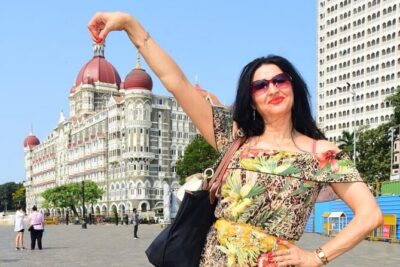
Private Mumbai Sightseeing Tour(Travellers Choice Award Winner)
Read our review →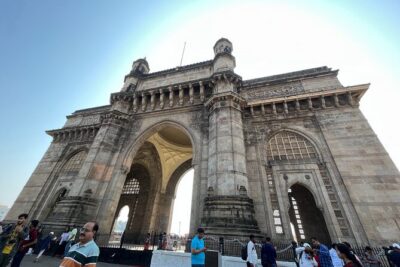
Private Elephanta Caves & Mumbai Sightseeing Tour with AC Car
Read our review →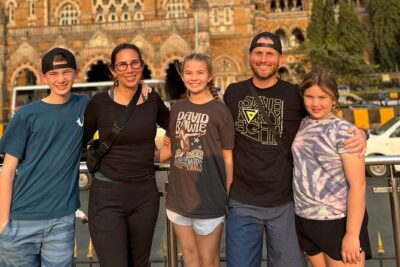
Private Mumbai Sightseeing Tour with Local English Guide
Read our review →Browse the lists this tour appears in