

Reviewed · MUMBAI CITY SIGHTSEEING TOURS
Private Mumbai 25 sights in one tour as recommended by Gigi Hadid
Mumbai packs grand railway stations, sea views, cricket fields, laundry yards, art districts, and colonial buildings into one crowded city. This private tour gives you a fast, guided sweep of 25 major sights, including the Gateway of India, Chhatrapati Shivaji Terminus, Marine Drive, Dhobi Ghat, and Mani Bhavan.
I like the private vehicle and hotel pickup, especially when you have only one day in Mumbai. I also like the mix of famous buildings and working city scenes, from the dabbawalas at Churchgate to the open-air laundry at Dhobi Ghat. The tradeoff is time: three to four hours means many stops are quick looks, and traffic can change the order or shorten the visit.
In This Review
- Key points at a glance
- A fast introduction to Mumbai’s many faces
- Gateway of India and Mumbai’s grand waterfront
- Colonial Mumbai around Wellington Circle
- Kala Ghoda, libraries, and old institutions
- University architecture, Rajabai, and the Oval Maidan
- Churchgate and the dabbawalas
- CST, one of India’s great railway buildings
- Marine Drive and the sea-facing pause
- Mani Bhavan and Gandhi’s Mumbai
- Dhobi Ghat and the working city
- What $83.25 buys you
- Who will get the most from this tour
- Should you book it?
- FAQ
- How long does the Mumbai private tour last?
- What time does the tour start?
- Is hotel pickup included?
- Is this a private tour?
- How many Mumbai sights does the tour cover?
- Is transport provided during the tour?
- Is a guide included?
- Are admission fees included?
- Can children join the tour?
- Can I cancel for a full refund?
Key points at a glance
- 25 sights in roughly 3 to 4 hours: A useful first look at South Mumbai and a few central city highlights.
- Private transport and guide: Your group travels by private vehicle, with hotel pickup and drop-off included.
- Strong architectural focus: See the Gateway of India, Kala Ghoda, CST, the University buildings, and Rajabai Clock Tower.
- Working Mumbai, not just monuments: The route includes dabbawalas, Dhobi Ghat, Oval Maidan cricket, and Churchgate station.
- Krupesh is a named guide: He is specifically associated with a comfortable car, clear stories, and a well-paced day.
- Good value for a short first visit: At $83.25 per person, the price makes more sense when several people share the private vehicle.
A fast introduction to Mumbai’s many faces
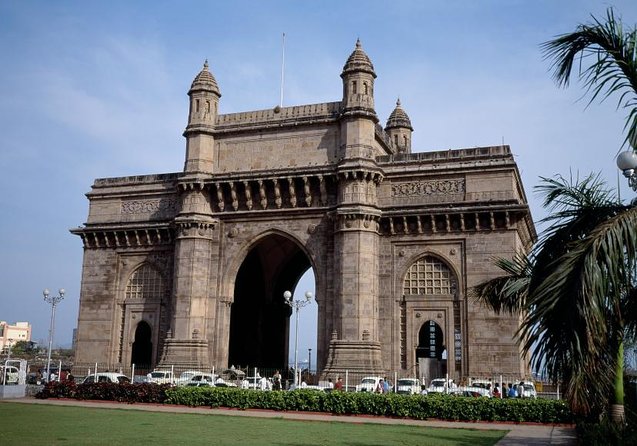
This is not a slow museum tour or a long walking expedition. It is a city orientation by car, with short walks and photo stops arranged around a broad list of landmarks.
You begin at 9:30 am, though the operator can change the start and end timing because of traffic. That flexibility matters in Mumbai, where a short road distance can take far longer than expected. The exact sequence is also left to the guide on the day.
The tour is private, so only your group participates. That gives you more freedom than a large coach tour. You can ask questions, linger briefly at a favorite building, or move on when a quick stop has given you enough.
I would treat this as a first-day overview, not a complete visit to Mumbai. It helps you understand how the city fits together. Afterward, you can return to the places that deserve more time.
More full city sightseeing tours:
- Mumbai: Full-Day Sightseeing Tour of Mumbai
★ 4.9 · 1,822 reviews - Private Mumbai Sightseeing Tour (Traveller’s Choice Award Winner)
★ 5.0 · 1,565 reviews - Highlights of Mumbai Sightseeing Tour: TRAVELLERS CHOICE AWARDED
★ 5.0 · 915 reviews
Gateway of India and Mumbai’s grand waterfront
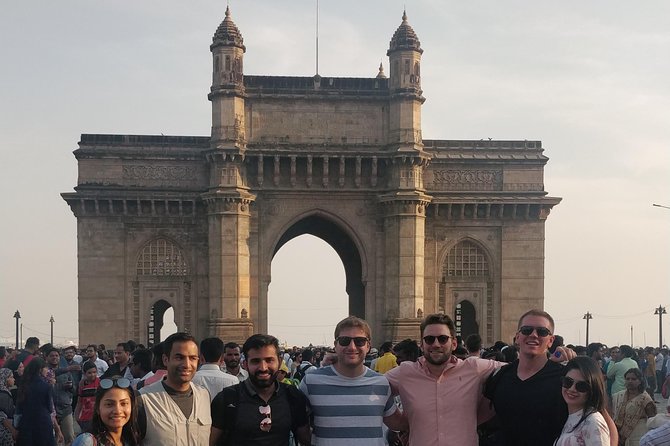
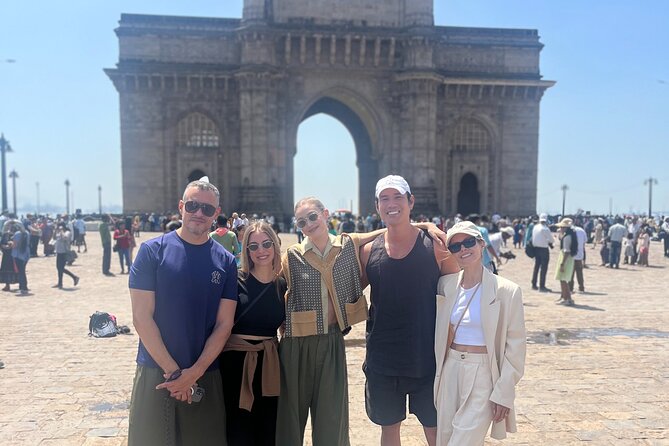
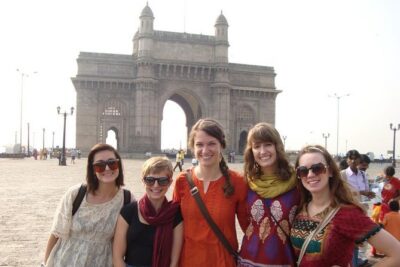
The Gateway of India is the natural opening stop. This stone arch is one of Mumbai’s best-known symbols, built to welcome the British monarch to the city.
You get about five minutes here, with no admission charge. That is enough for photographs and a quick explanation, but not enough for a leisurely waterfront visit. If you want time to watch the harbor, study the architecture, or explore the area around the monument, plan to return later.
Nearby, the statue of Chhatrapati Shivaji Maharaj receives about ten minutes. Shivaji Maharaj was a Maratha king who fought the Mughals, and his place in Maharashtra’s public life is easy to see in the city’s statues and street names.
The vehicle then passes several important buildings, including the landmark hotel that has hosted Barack Obama, the Beatles, and other famous figures. You also see the Royal Mumbai Yacht Club, one of the city’s older clubs, located between Charles and Adams Street.
These drive-by sights show one advantage of a private car: you can cover a lot of ground without spending the morning figuring out local transport. The disadvantage is just as clear. Some buildings are seen from the road rather than entered.
Colonial Mumbai around Wellington Circle
The Maharashtra Police Headquarters is another exterior stop. The building area was once known as Mendham’s Point and was connected with an earlier sailors’ club. Its design includes work by John Lockwood Kipling, better known in the city for his connection to the arts and architecture.
At Wellington Fountain, you have about five minutes. The fountain commemorates the Duke of Wellington, Sir Arthur Wellesley, who fought Napoleon at Waterloo. It is a compact stop, but it helps explain how many South Mumbai streets and public buildings reflect the British period.
The National Gallery of Modern Art follows as an exterior or passing point. It is a government-run contemporary art gallery, but the tour does not promise a full gallery visit. If modern Indian art is high on your list, you should set aside separate time.
You also pass an iconic Mumbai museum. The name is not specified in the tour details, so do not book this expecting a museum admission or a guided indoor visit. The value here is the city context, not a full museum experience.
Kala Ghoda, libraries, and old institutions
Kala Ghoda Art Precinct is one of the most appealing parts of the route. You spend about 25 minutes in this art district, the longest stop in the early portion of the tour.
The guide connects the area with Sassoon and Jewish history, as well as Watson Hotel, described here as Mumbai’s first iron-cast building. Mark Twain stayed there during his time in the city. The old hotel is now in poor condition and faces the threat of being removed, which gives this stop a sense of urgency.
You also see Mumbai’s oldest college, whose former students included Lokmanya Tilak, Dadabhai Naoroji, and B. R. Ambedkar. It temporarily housed the University of Mumbai while university construction was underway. These details turn a collection of grand facades into a picture of the city’s educational and political life.
The David Sassoon Library and Reading Room gets about ten minutes. It began as a mechanical institute and was later converted into a library overlooking Kala Ghoda. This is the kind of stop I value on an introductory tour because it is easy to miss when you are focused only on the Gateway of India and CST.
The route also includes an Art Deco building that was once home to the Bollywood actress Zubeida, Mumbai’s most iconic cinema, and a former wayside inn now known as Punjab Grill. The stops are brief, so the guide’s explanation matters more than the amount of time spent outside each building.
A few more Mumbai tours and experiences worth a look
- Elephanta Caves & Island Guided Private Tour
★ 5.0 · 1,327 reviews - Private Guided Walking Tour in Fort & Colaba
★ 5.0 · 895 reviews - Highlights of South Mumbai Guided Private Tour in AC Vehicle
★ 5.0 · 620 reviews - Private Mumbai Sightseeing Tour(Travellers Choice Award Winner)
★ 5.0 · 565 reviews
University architecture, Rajabai, and the Oval Maidan
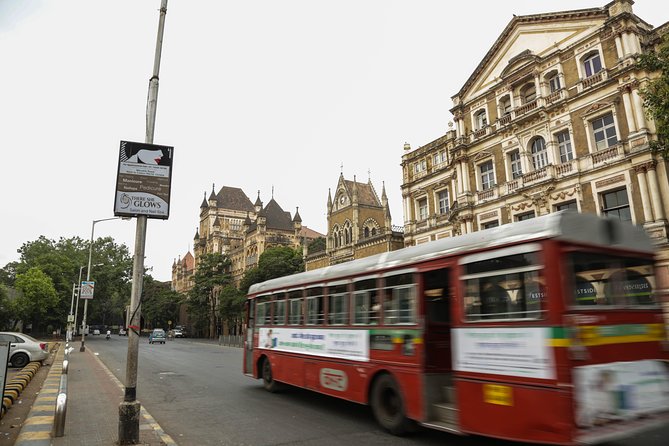
The University of Mumbai Library receives about 15 minutes. Its arches and detailed architecture make it one of the more photogenic exterior stops.
Next comes Rajabai Clock Tower, often compared with Big Ben. It was funded by Mumbai businessman Premchand Roychand and still plays old British tunes every 15 minutes. The tour details do not promise that you will hear a chime during your visit, but your guide can point out the tower’s role in the university complex.
The High Court’s principal bench is designed like a German castle. It is also linked with the abolition of the jury system in India. Again, this is an exterior viewing stop, not a court tour.
At Oval Maidan, you walk for about ten minutes. The broad field is used by aspiring cricketers practicing the game. This is a small but useful break from buildings. You see a public space used for everyday city life, not only a preserved monument.
This section is best for visitors who enjoy architecture and civic history. If you prefer markets, food, or interior visits, it may feel too heavy on facades. The guide can help by explaining what you are seeing rather than simply pointing at buildings.
Churchgate and the dabbawalas
Churchgate Railway Station is one of the route’s most distinctive working-city stops. The dabbawalas collect and deliver lunch boxes across Mumbai with remarkable precision, carrying about 500,000 boxes each day according to the tour information.
The stop lasts about 15 minutes. Do not plan around a dabbawala encounter on a weekend, because the dabbawala portion is listed as closed then. Even on a weekday, the experience is about seeing the system in operation, not joining a delivery route or entering a private workplace.
This is one reason I prefer this tour to a route made only of monuments. You get a glimpse of how Mumbai works during an ordinary day. The dabbawalas are not presented as a staged show, and the guide’s explanation gives the station more meaning than a quick photograph would.
CST, one of India’s great railway buildings
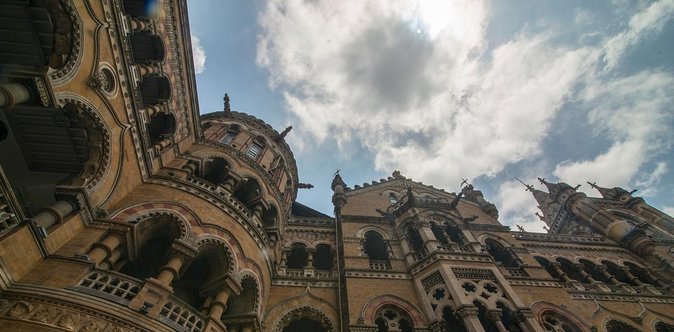
Chhatrapati Shivaji Terminus, formerly Victoria Terminus, is one of the major highlights. The building combines elaborate architectural detail with the daily pressure of a huge working station.
The tour allows about 15 minutes here and identifies the station as one of India’s most architecturally impressive buildings. It also notes roughly 660,000 daily footfalls, a figure that helps explain the scale of the place.
You should expect a brief look rather than a complete architectural study. The station is active, crowded, and used by commuters, so your guide will likely focus on the exterior and the best points for photographs. Keep your group together and follow the guide’s instructions around traffic and station entrances.
CST alone can justify a return visit. On this tour, it works as a powerful midpoint: you see a grand colonial-era structure that still serves the city every day.
Marine Drive and the sea-facing pause
Marine Drive gives the itinerary a change of pace. After several historic buildings and railway stations, you stop for about ten minutes to look out over the sea.
The appeal is simple: the curved waterfront road, open views, and a sense of Mumbai as a coastal city. Ten minutes is enough to stretch your legs and take photographs, but not enough for a long promenade.
Traffic and weather will affect how enjoyable this stop feels. The tour requires good weather and may be canceled if conditions are poor. If Marine Drive matters greatly to you, ask the guide whether you can return independently for a longer walk.
Mani Bhavan and Gandhi’s Mumbai
Mani Bhavan Gandhi Museum is the one clearly identified indoor museum visit, with about 20 minutes allotted and admission included.
The museum offers an organized look at Gandhi’s life through its archives. Twenty minutes is not long, but it gives the tour a quieter, more reflective pause after the noise of roads, stations, and waterfront viewpoints.
I like having this stop in the route because it adds political and personal context to the city. You are not only seeing buildings linked with colonial rule and commerce. You are also visiting a place tied to Gandhi’s work and public life.
The short timing is the main limitation. If you have a strong interest in Gandhi, you will want to return for a slower visit. For a first introduction, the included admission and focused stop are useful.
Dhobi Ghat and the working city
Dhobi Ghat is an open-air laundry and one of the tour’s most unusual stops. The visit lasts about five minutes, so expect an exterior look rather than a long guided walk through the laundry area.
The phrase human washing machines is colorful, but remember that this is a real workplace. Watch respectfully, follow the guide’s instructions, and avoid assuming that a quick viewpoint explains every part of the operation.
The stop works well beside the dabbawalas. Both show large systems built around human labor and careful routines. Together, they give you a more grounded picture of Mumbai than a route limited to grand hotels and monuments.
The final drive-bys include a famous cinema and a site connected with Mumbai’s raising of the Indian flag after independence. These are useful finishing details, but they are not full visits. The experience covers a wide area by giving several sights a short introduction.
What $83.25 buys you
At $83.25 per person, this is not the cheapest way to see Mumbai. Its value depends heavily on your group size, hotel location, and available time.
You are paying for a private vehicle, a professional guide, hotel pickup and drop-off, taxes, and a route that covers a large number of sights in one morning. If you tried to arrange separate rides and guide services for the Gateway of India, Kala Ghoda, CST, Marine Drive, Mani Bhavan, and Dhobi Ghat, the convenience could quickly outweigh the difference in price.
The value improves for a small private group, especially if you have limited time or do not want to manage Mumbai traffic yourself. Group discounts may also help. Children under 10 can join free of charge.
There is an extra transport cost for pickup from suburban Mumbai hotels. Food and drinks are not included. An English-speaking guide is part of the standard arrangement, while another language guide costs extra.
For luxury vehicles, you need to contact the operator’s office. The standard vehicle is described as comfortable and clean, which matches the practical aim of this tour.
Who will get the most from this tour
I would choose this for a first visit, a short stop in Mumbai, or a morning when you want to understand the city before exploring on your own. It suits people who want a guide to explain the buildings rather than spend hours researching them in advance.
It also works for families and small groups. The private format avoids the fixed pace and social uncertainty of a large shared bus. Hotel pickup is especially helpful if you are still learning Mumbai’s layout.
You should look elsewhere if you want long museum visits, a full food tour, or extended time inside every landmark. The tour is built around breadth. You see 25 sights, but many receive only five to fifteen minutes, and some are drive-bys.
A moderate level of physical fitness is required. You will walk at several stops, including Kala Ghoda and Oval Maidan, but the private vehicle handles most of the distances.
Free cancellation is available until 24 hours before the start time. Last-minute changes are not accepted, and poor weather can lead to a new date or full refund. The tour does not operate on the day of the Mumbai Marathon.
Should you book it?
Book this tour if you want a well-organized first look at Mumbai and value a private car, hotel pickup, and a local guide more than long time at individual sights. The strongest parts are the range of stops, the mix of famous landmarks and working neighborhoods, and the chance to hear the city explained by a guide such as Krupesh.
Go in with the right expectations. This is a sampler, not a series of full tours. Keep another day, or at least another afternoon, for the places that catch your interest, especially CST, Kala Ghoda, Marine Drive, Mani Bhavan, and the Gateway of India.
FAQ
How long does the Mumbai private tour last?
The tour lasts approximately 3 to 4 hours.
What time does the tour start?
The listed start time is 9:30 am. The operator may adjust the start and end times because of traffic.
Is hotel pickup included?
Yes. Hotel pickup and drop-off are included, though pickup from suburban Mumbai hotels may require an additional transport payment.
Is this a private tour?
Yes. Only your group participates in the activity.
How many Mumbai sights does the tour cover?
The tour is designed to cover 25 sights, including major landmarks, drive-by buildings, and working city locations.
Is transport provided during the tour?
Yes. Transport by private vehicle is included.
Is a guide included?
Yes. A professional English-speaking guide is included. A guide in another language costs extra.
Are admission fees included?
All fees and taxes are included, and admission to Mani Bhavan Gandhi Museum is included. Most other listed stops are free exterior or public-area visits.
Can children join the tour?
Yes. Children below 10 years of age can take the tour free of charge.
Can I cancel for a full refund?
You can cancel for a full refund at least 24 hours before the experience start time. Poor weather cancellations may result in a different date or a full refund.
Just added around Mumbai
- Temples & Vineyards: Private Tour to Nashik from Mumbai★ 4.5 · 3 reviews
- Mumbai: Private City sightseeing and Dharavi Slum Tour★ 5.0 · 3 reviews
- Mumbai: Full Day City Sightseeing with Lunch, Car & Guide★ 4.3 · 3 reviews
- Elephanta Island Private Speedboat Tour from Mumbai – 6pax★ 5.0 · 3 reviews
- Mumbai: Elephanta Island and Elephanta Caves Guided Tour★ 4.4 · 3 reviews
- Mumbai Sightseeing Tour by Public Transport with family Lunch★ 5.0 · 3 reviews
- Mumbai by Dawn★ 4.5 · 3 reviews
- Mumbai Dharavi Slum Community Tour★ 5.0 · 3 reviews
Mumbai City Sightseeing Tours, compared.

Private Mumbai Sightseeing Tour (Traveller’s Choice Award Winner)
Read our review →
Highlights of Mumbai Sightseeing Tour: TRAVELLERS CHOICE AWARDED
Read our review →
Highlights of South Mumbai Guided Private Tour in AC Vehicle
Read our review →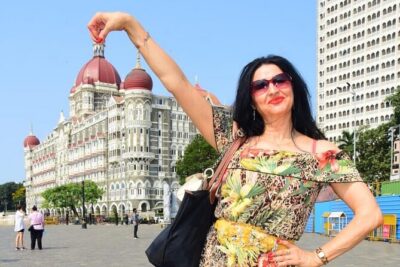
Private Mumbai Sightseeing Tour(Travellers Choice Award Winner)
Read our review →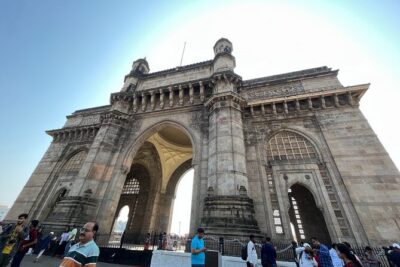
Private Elephanta Caves & Mumbai Sightseeing Tour with AC Car
Read our review →
Private Mumbai Sightseeing Tour with Local English Guide
Read our review →Browse the lists this tour appears in