
Reviewed · ELEPHANTA CAVES TOURS
Mumbai: Private 2-Day City and Elephanta Island Tour
Mumbai is easiest to understand when you see its contrasts side by side: polished colonial buildings, workers sorting lunch tins, open-air laundry, crowded neighborhoods, and ancient stone temples. This two-day private or small-group tour connects those pieces with a local English-speaking guide and a driver.
I like the close look at dabbawallas and dhobis, two working traditions that are easy to miss on your own. I also like the practical transport, including hotel pickup, an air-conditioned vehicle, bottled water, and the ferry to Elephanta Island.
The main consideration is pace. Day one covers a long list of sights, while Elephanta requires a ferry ride, walking, steps, and an extra $7 monument fee. One traveler also felt the caves could be visited independently, although the island guide added useful context.
In This Review
- Key points at a glance
- Mumbai in two days, with the city’s contrasts up front
- Churchgate and the lunch-box network
- Gateway of India and the Taj Mahal Palace Hotel
- CST, Mumbai’s great railway landmark
- Marine Drive, Nariman Point, and Chowpatty Beach
- Mani Bhavan and Mumbai’s political memory
- Dhobi Ghat, Mumbai’s open-air laundry
- Dharavi, with context instead of easy judgments
- Ferrying to Elephanta Island
- The toy train and the climb to Elephanta Caves
- Exploring the island village
- How the $25 price holds up
- What the guides add
- Who should book this experience?
- Should you book the Mumbai and Elephanta tour?
- FAQ
- How long does the tour last?
- What is included in the price?
- Is the Elephanta monument fee included?
- Are meals included?
- Where does pickup take place?
- What language does the guide speak?
- Is the tour private?
- Is the ferry to Elephanta Island included?
- Can the tour be canceled because of weather?
Key points at a glance
- Churchgate’s dabbawallas: Watch lunch-box carriers sort and move their famous metal tiffins.
- Dhobi Ghat and Dharavi: See two working communities, with a local guide helping explain daily life.
- CST railway station: Admire one of Mumbai’s finest Victorian Gothic buildings and a UNESCO World Heritage Site.
- Elephanta’s stone sculptures: See images of Kalyansundara, Gangadhara, and Ardhanariswara in the island caves.
- Guides with local experience: Guides including Nisar, Nitin, Yash, Sunny, Sahil, Chirag, and Ashwara have led this experience.
- Good value at $25: Transport, ferry, guide, pickup, and taxes are included, but the Elephanta entry fee and meals are extra.
Mumbai in two days, with the city’s contrasts up front
I like this tour because it does not reduce Mumbai to grand hotels and postcard views. You get the Gateway of India and the Taj Mahal Palace Hotel, but you also see the people and systems that keep the city moving.
The city day is arranged by vehicle, which matters in Mumbai. Distances can take time, and an air-conditioned car gives you a useful break between stops. Pickup can be arranged at your hotel or another Mumbai address, so you do not need to find a distant meeting point.
This is a private or small-group experience, not a large coach outing. That gives you room to ask questions and adjust the conversation. The exact guide can vary, but names connected with the tour include Nisar, Nitin, Yash Kadam, Sunny, Sahil, Chirag, and Ashwara. Yash, in particular, was praised for his friendly manner and for explaining Indian history and religion during the city day.
More Elephanta Caves trips with the ferry:
- Elephanta Caves & Island Guided Private Tour
★ 5.0 · 1,327 reviews - Mumbai: Elephanta Caves Half-Day Guided Tour with Expert
★ 4.8 · 1,032 reviews - Private Elephanta Caves & Mumbai Sightseeing Tour with AC Car
★ 5.0 · 389 reviews
Churchgate and the lunch-box network
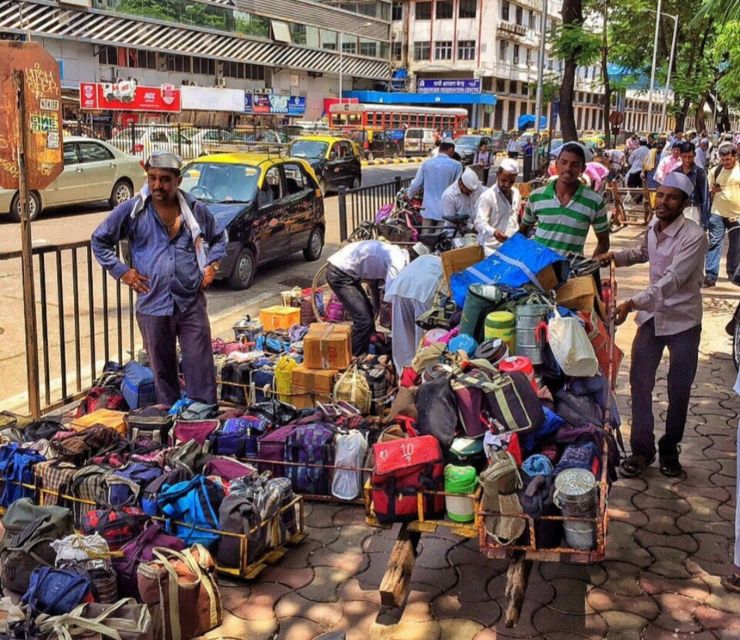
The first stop at Churchgate Railway Station introduces one of Mumbai’s most famous working systems: the dabbawallas. These lunch-box carriers collect meals, sort them, move them through the railway network, and deliver them to office workers.
The value here is not just seeing people carry tins. Your guide can explain how the service fits into Mumbai’s workday and why it has become such a strong part of the city’s identity. Go in expecting a working scene rather than a staged show. The dabbawallas are doing their jobs, so the best approach is to watch respectfully and let your guide point out what matters.
This stop also gives you a sense of Mumbai as a city powered by coordination. The grand buildings may attract the camera, but the lunch-box network shows the city from street level.
Gateway of India and the Taj Mahal Palace Hotel
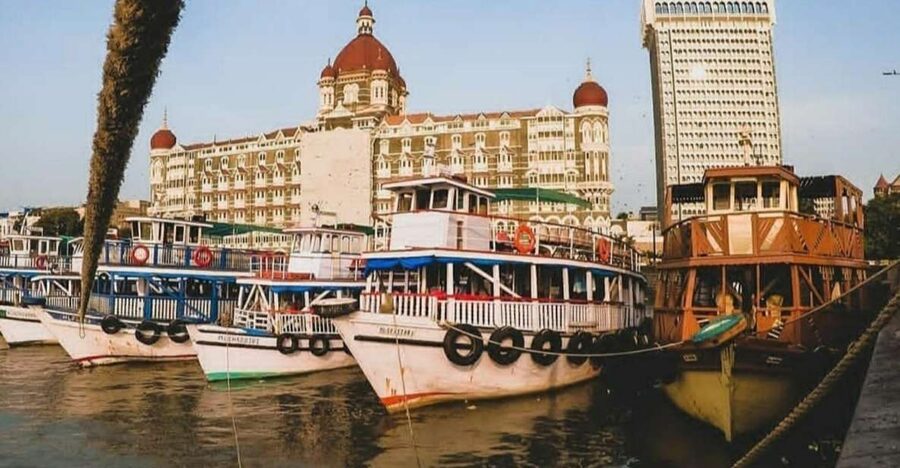
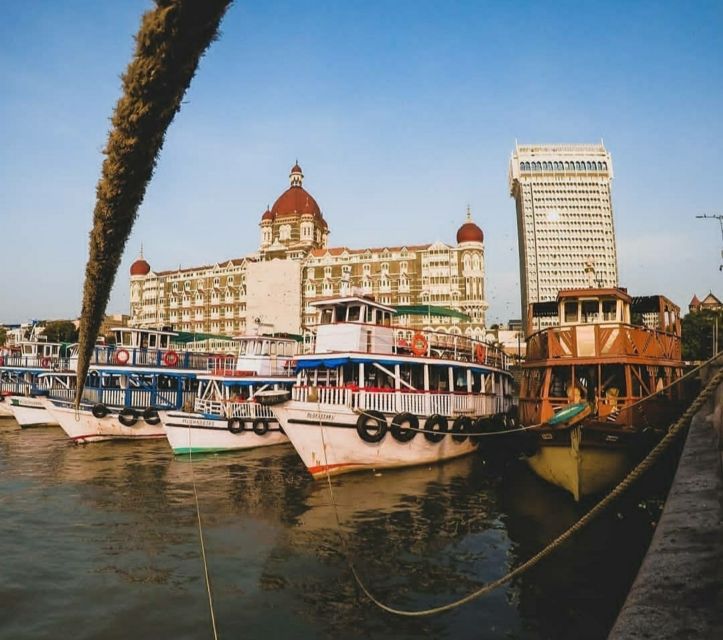
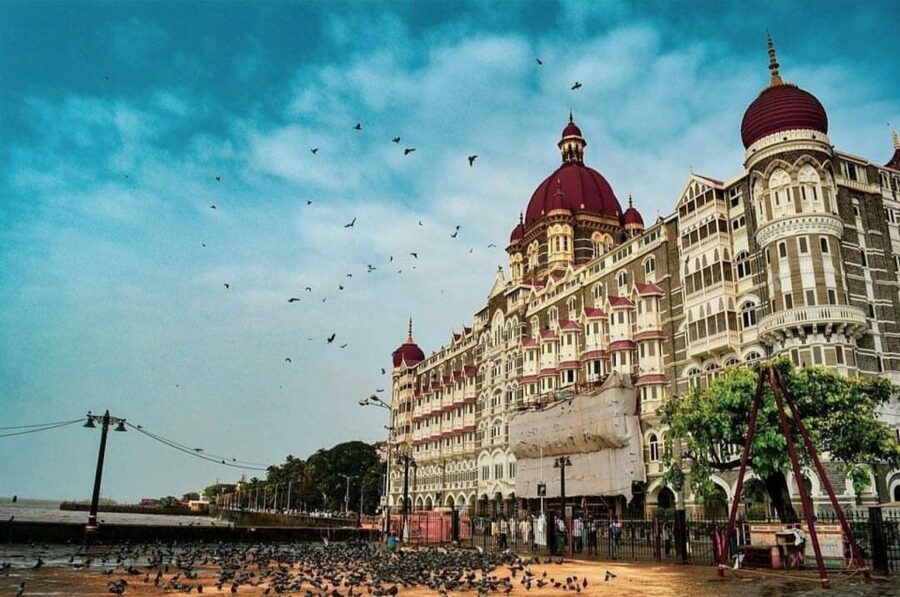
The Gateway of India is one of Mumbai’s essential landmarks. Its broad arch faces the harbor and is closely tied to the city’s colonial past and its role as a major port.
Across from it, the Taj Mahal Palace Hotel supplies a very different kind of image: polished, grand, and closely linked with Mumbai’s public life. Your guide can place both sights in context as you move through the waterfront area.
These are popular stops, so expect other people around you. The benefit of visiting with a guide is that you can spend less time wondering what you are looking at and more time noticing how the Gateway, harbor, hotel, and surrounding streets fit together.
CST, Mumbai’s great railway landmark
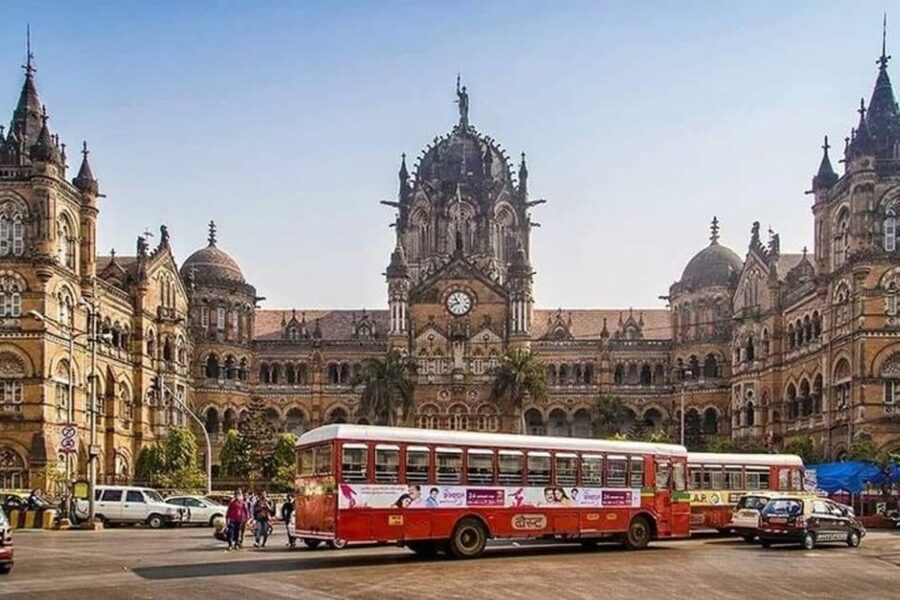
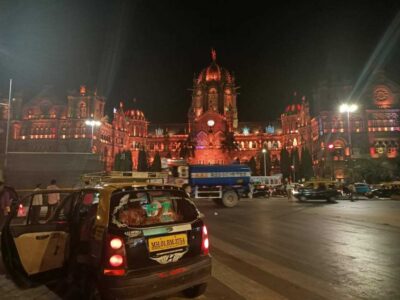
Chhatrapati Shivaji Terminus, often called CST or Victoria Terminus, is one of the strongest architectural stops on the tour. It is a UNESCO World Heritage Site, and its ornate Victorian Gothic design makes it much more than a place to catch a train.
I would give this stop proper attention rather than treating it as a quick photo break. The station represents the old British-era city, but it remains part of Mumbai’s working transport network. That mix of ceremony and everyday use is what makes it special.
The nearby Municipal Building adds another piece of the city’s historic civic center. Your guide can help you read the buildings as part of a larger urban story instead of isolated monuments.
A few more Mumbai tours and experiences worth a look
- Mumbai Gems: 2-Day Private Tour with Elephanta, Slum & Dabbawala
★ 5.0 · 63 reviews - Mumbai : Private 2 Days Agra Taj mahal & Delhi Tours From Mumbai
★ 5.0 · 46 reviews - Two Days Mumbai Tour Package : City + Slum + Elephanta + Market
★ 4.5 · 24 reviews - 2-Day Tour to The Taj Mahal, Agra from Mumbai with Both Side Commercial Flights
★ 5.0 · 23 reviews
Marine Drive, Nariman Point, and Chowpatty Beach
The route then moves through some of Mumbai’s best-known public spaces. Marine Drive curves along the water, while Nariman Point brings you into the city’s modern business district.
Chowpatty Beach offers a different mood. It is a public gathering place rather than a quiet resort beach, and it helps show how Mumbai uses limited open space. You might find the scene crowded and noisy, but that is part of the point. This is city life in public, not a postcard made for solitude.
The tour also includes the Hanging Gardens. This stop gives you a change of pace after the traffic and buildings, though the visit may feel brief if the schedule is full. I would treat it as a pleasant pause rather than the day’s main attraction.
Mani Bhavan and Mumbai’s political memory
Mani Bhavan is connected with Mahatma Gandhi and offers a more reflective stop during the city tour. It helps move the day beyond architecture and transport into India’s modern political story.
The tour description does not specify how much time you spend inside each location, so ask your guide early if Mani Bhavan is a priority for you. Day one covers many places, and a private arrangement gives you a better chance to signal which stops deserve extra attention.
Dhobi Ghat, Mumbai’s open-air laundry
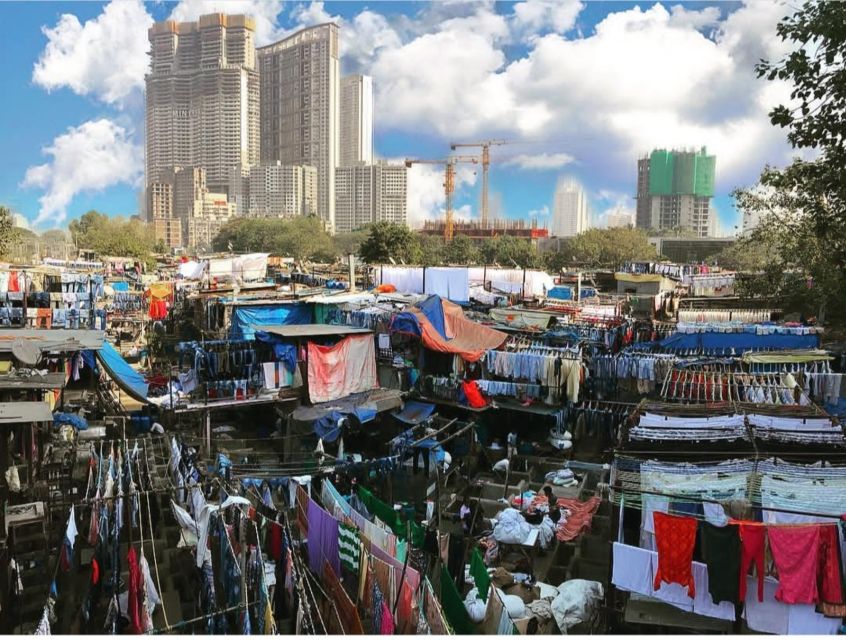
Dhobi Ghat is one of the tour’s most memorable working scenes. It is often described as Mumbai’s largest human-powered washing machine, with dhobis carrying out a long-established laundry service in a highly organized outdoor setting.
This is a useful stop because it shows labor rather than spectacle. You are not simply looking at an old building. You are watching people sort, wash, and handle clothes as part of a real service economy.
Approach with care. A guide can explain what you are seeing and help you avoid turning someone’s workplace into a quick photo backdrop. The point is to understand how the city functions, not to collect pictures of people at work.
Dharavi, with context instead of easy judgments
The Dharavi portion takes you to a less polished side of Mumbai. It can be confronting, but it also offers a look at energy, work, and community that you will not get from the waterfront monuments.
A local guide from the area may lead this part of the experience. One account specifically noted that the Dharavi guide had grown up there, which can add useful local context. That does not make the visit simple or remove the need for sensitivity, but it can help you see the area as more than a label.
I would book this part only if you are prepared to listen and observe respectfully. Dharavi should not be treated as a curiosity. Ask your guide about the people, businesses, and daily routines you see, and keep your camera away unless you have permission.
One German-speaking visitor also reported seeing Bollywood production activity during the wider Mumbai experience. Bollywood is not listed as a fixed stop, so do not book this tour expecting a film-set visit. Still, the account shows that the city day can reveal unexpected working scenes.
Ferrying to Elephanta Island
Day two begins with pickup and a ferry ride to Elephanta Island. The crossing takes about one hour, so this is not a quick add-on to the city tour.
The ferry creates a clear change in pace. After traffic, rail stations, and dense streets, you have time to look back toward Mumbai and prepare for a quieter archaeological visit. Bring water, though bottled water is included, and wear shoes suited to walking.
The ferry is included in the price. Weather matters, however. One scheduled island visit was canceled because of bad weather, and the payment was refunded. That is a useful reminder to keep some flexibility in your Mumbai plans during poor conditions.
The toy train and the climb to Elephanta Caves
After arriving on the island, you take a small toy train partway toward the caves. It is a fun and slightly quirky touch, but it does not remove the walking involved.
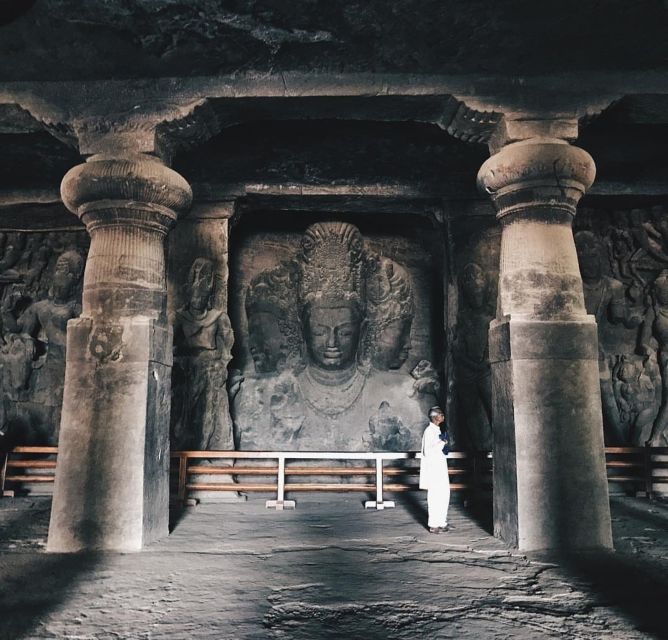
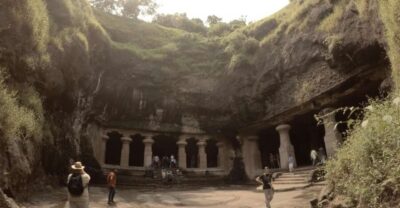
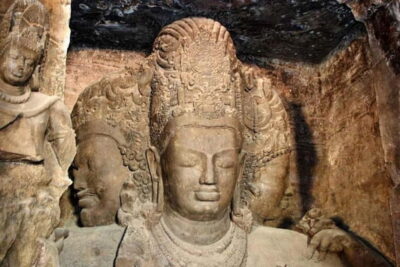
The Elephanta Caves are another UNESCO World Heritage Site. Inside, you see rock-cut Hindu sculptures, including Kalyansundara, Gangadhara, and Ardhanariswara. These figures are not just decorative carvings. They express complex religious ideas through stone, and a good guide can help you understand what the figures represent.
Expect steps and uneven walking. The information does not give an exact step count or accessibility details, so anyone with mobility concerns should ask before booking. The tour is specifically not suitable for pregnant women, and the combination of ferry travel, island walking, and stairs may be tiring.
The monument entry fee is not included. Budget an additional $7 per person. That is an important detail because the advertised price looks very low until you account for this extra charge and your meals.
Exploring the island village
The visit does not end at the caves. You also spend time in Elephanta Island village with your guide.
This helps keep the island from becoming only an archaeological stop. You see a place where people live and work today, alongside one of Mumbai’s major historic sites. The village visit may be especially useful if you want a fuller sense of the island rather than a quick trip from ferry to cave and back.
Afterward, you return by ferry and are taken back to your hotel. If you select the optional Indian cookery class, the experience continues after the island trip. The supplied details do not give the class length, menu, or exact location, so confirm those points before adding it.
How the $25 price holds up
At $25 per person, this is unusually inexpensive for a two-day private or small-group tour. The price includes taxes, handling charges, bottled water, an English-speaking local guide, an air-conditioned vehicle, pickup and drop-off, and the ferry to Elephanta.
That package can offer strong value if you want transport and explanation arranged for you. A private guide is particularly useful on day one, when the stops range from railway logistics to political history and working neighborhoods.
The $25 price does not cover lunch, alcoholic drinks, or the $7 Elephanta monument fee. You should also check the final price and availability for your dates, since the duration is shown as ranging from two hours to two days and starting times depend on availability.
I would not choose this tour simply because it is cheap. I would choose it because the included vehicle and guide make a packed Mumbai itinerary easier to manage. If you prefer to move slowly and spend a long time at only one or two sites, the schedule may feel too full.
What the guides add
The strongest feature of this experience is the human explanation. Several guides are associated with the tour, and direct accounts describe Nisar, Nitin, Yash, Sunny, Sahil, Chirag, and Ashwara as friendly, helpful, and well prepared.
That consistency matters because the itinerary crosses several subjects. You need someone who can explain colonial buildings, Gandhi, religious sculpture, railway life, laundry work, and Dharavi without making the day feel like a list of disconnected stops.
Your guide also helps with transitions. Moving from the hotel to Churchgate, between city landmarks, and then to the ferry is easier when someone is handling the route. On Elephanta, the guide can point out the meaning of the sculptures and help you make sense of the cave complex.
One person felt that an island guide was useful but that reaching the caves independently would have been possible. I agree that Elephanta is not impossible to arrange on your own. The extra value comes from convenience and interpretation, not from access to a place you could never reach without a tour.
Who should book this experience?
I would recommend it to first-time visitors who want a broad introduction to Mumbai in limited time. It suits you especially well if you want to combine major landmarks with working-city scenes such as the dabbawallas, Dhobi Ghat, and Dharavi.
It is also a good fit if you prefer having a driver and guide rather than sorting out Mumbai transport yourself. The private or small-group format should appeal to couples, families, and small parties who want more direct contact with the guide.
You may want a different plan if you dislike early starts, long transport periods, or tightly packed sightseeing. The tour also may not suit anyone who wants an entirely independent Elephanta visit, or who would feel uncomfortable visiting Dharavi.
English is the stated tour language. Pickup is optional but can be arranged at your hotel or another address in Mumbai if you provide the location in advance.
Should you book the Mumbai and Elephanta tour?
Book it if you want breadth, local explanation, and simple transport at a low price. The best parts are the working scenes, especially Churchgate’s dabbawallas, Dhobi Ghat, and the sensitive Dharavi visit, followed by the very different world of Elephanta’s carved temples.
Before paying, check the exact start times, confirm pickup, and allow for the extra $7 monument charge. Ask how much time is planned at the stops you care about most. If the weather looks poor, keep a backup plan because the ferry trip can be canceled.
I would choose this tour for a first Mumbai visit when I wanted to understand the city quickly without seeing only its famous facades. I would skip it only if I wanted a slow, self-guided schedule or preferred to arrange Elephanta independently.
FAQ
How long does the tour last?
The experience is designed as a two-day tour, with one day for Mumbai and one day for Elephanta Island. The booking information also displays a duration range of two hours to two days, so check the available schedule for your date.
What is included in the price?
The price includes taxes, fees, handling charges, bottled water, an English-speaking local guide, an air-conditioned vehicle, pickup and drop-off, and the ferry to Elephanta Island.
Is the Elephanta monument fee included?
No. The Elephanta Monuments Fee is listed separately at $7 per person.
Are meals included?
No. Lunch is not included, and alcoholic drinks are also excluded.
Where does pickup take place?
Your guide can meet you at your hotel or another location of your choosing in Mumbai. Provide the address in advance to arrange pickup.
What language does the guide speak?
The stated tour language is English.
Is the tour private?
Private and small-group options are available. Check the option shown for your selected date when booking.
Is the ferry to Elephanta Island included?
Yes. The ferry is included in the tour price.
Can the tour be canceled because of weather?
Yes. An Elephanta visit was canceled because of bad weather, with a refund issued. You can also cancel up to 24 hours in advance for a full refund under the stated cancellation terms.
Just added around Mumbai
- Temples & Vineyards: Private Tour to Nashik from Mumbai★ 4.5 · 3 reviews
- Mumbai: Private City sightseeing and Dharavi Slum Tour★ 5.0 · 3 reviews
- Mumbai: Full Day City Sightseeing with Lunch, Car & Guide★ 4.3 · 3 reviews
- Elephanta Island Private Speedboat Tour from Mumbai – 6pax★ 5.0 · 3 reviews
- Mumbai: Elephanta Island and Elephanta Caves Guided Tour★ 4.4 · 3 reviews
- Mumbai Sightseeing Tour by Public Transport with family Lunch★ 5.0 · 3 reviews
- Mumbai by Dawn★ 4.5 · 3 reviews
- Mumbai Dharavi Slum Community Tour★ 5.0 · 3 reviews
Elephanta Caves Tours, compared.
Elephanta Caves Half-Day Guided Tour with Expert
Read our review →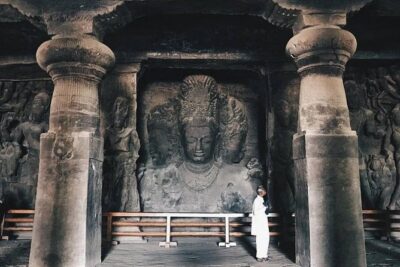
Private Elephanta Caves & Mumbai Sightseeing Tour with AC Car
Read our review →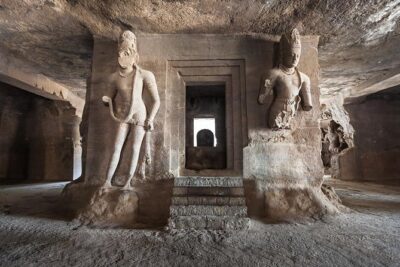
City Tour, Elephanta Caves, Dharavi Slum W/Options
Read our review →Elephanta Caves Exploration: Guided Tour with Ferry Experience
Read our review →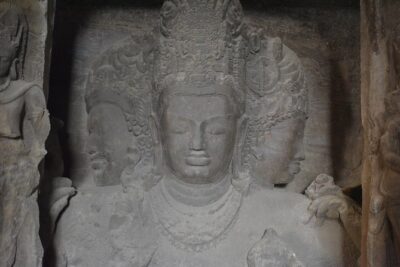
Elephanta Caves & Island Tour with Multiple Options
Read our review →Browse the lists this tour appears in