
Reviewed · MUMBAI CITY SIGHTSEEING TOURS
Mumbai: Full Day Private Mumbai City Tour by Car
Mumbai packs grand colonial buildings, crowded markets, sea views, religious sites, and modern wealth into one sprawling city. This private eight-hour car tour gives you a practical way to connect the pieces without spending your day working out routes or haggling over transport.
I like the wide mix of sights, from the Gateway of India and Chhatrapati Shivaji Terminus to Gandhi’s former home and the open-air Dhobi Ghat laundry. I also like the flexibility of a private group, hotel or airport pickup, bottled water, entrance fees, parking, fuel, taxes, and tolls all included.
The main drawback is the pace. Mumbai has a lot to see, and this route covers it in one day, so some stops are more about seeing and understanding than spending a long time inside each place. Traffic can also affect the order and amount of time at each stop.
In This Review
- Key points to know before booking
- Why a private car works well in Mumbai
- Gateway of India and the Taj Mahal Palace
- Kala Ghoda’s galleries, library, and museum quarter
- Oval Maidan and Rajabai Clock Tower
- Horniman Circle and the Asiatic Society Library
- Chhatrapati Shivaji Terminus, Mumbai’s grand railway landmark
- Crawford Market and the city’s everyday color
- Marine Drive and the Queen’s Necklace
- Mani Bhavan and Gandhi’s Mumbai years
- Malabar Hill, Banganga Tank, and the Hanging Gardens
- Antilia and Dhobi Ghat, two very different Mumbai sights
- What the $82 price includes
- Who should book this Mumbai tour
- Timing, flexibility, and practical expectations
- Should you book it?
- FAQ
- How long does the Mumbai city tour last?
- Is hotel pickup and drop-off included?
- Is the tour private?
- What language does the guide speak?
- Is transport provided during the tour?
- What is included in the price?
Key points to know before booking
- Gateway of India begins the story: You start with Mumbai’s grand waterfront landmark and the Taj Mahal Palace Hotel nearby.
- CST is the architectural high point: Chhatrapati Shivaji Terminus, a UNESCO World Heritage Site, brings together railway history and Gothic Revival design.
- Mani Bhavan adds real personal context: Gandhi’s former Mumbai residence gives the day a quieter, more focused stop.
- You see Mumbai from several angles: Colonial streets, Arabian Sea views, local markets, a laundry district, and Malabar Hill all feature.
- Private transport saves time: An air-conditioned car, hotel or airport pickup, and included parking and tolls make a long city day easier.
- Guide quality matters here: Abdul Shaikh received especially warm praise for his city history and key-attraction coverage, while Mr. Anas was noted for professionalism and a gentle manner.
Why a private car works well in Mumbai
Mumbai is not a city that reveals itself in one compact sightseeing zone. Its best-known places stretch from the southern waterfront to Malabar Hill, with busy roads linking them. A private car lets you cover far more than you could comfortably manage on foot.
You are not simply being driven between photo stops. The guide is there to explain how the buildings and districts fit together. The English-speaking guides include Abdul Shaikh and Mr. Anas, and the strongest comments about the experience focus on clear explanations, polite service, and a full account of Mumbai’s past.
That matters because several stops can look similar at first glance. A Gothic tower, a grand railway station, a market, and a library each need a little context before their importance becomes clear. A private guide can point out what to notice and answer questions as you go.
The air-conditioned car is another practical advantage. Mumbai can be hot, noisy, and tiring, especially during an eight-hour sightseeing day. Having a cool place to reset between stops is worth something, particularly if you are arriving at the airport and want to begin exploring without arranging a separate transfer.
The route can change based on your hotel location. That is normal for a city tour of this length. You should think of the stops as the fixed menu and the order as flexible, not expect a minute-by-minute schedule.
More full city sightseeing tours:
- Mumbai: Full-Day Sightseeing Tour of Mumbai
★ 4.9 · 1,822 reviews - Private Mumbai Sightseeing Tour (Traveller’s Choice Award Winner)
★ 5.0 · 1,565 reviews - Highlights of Mumbai Sightseeing Tour: TRAVELLERS CHOICE AWARDED
★ 5.0 · 915 reviews
Gateway of India and the Taj Mahal Palace
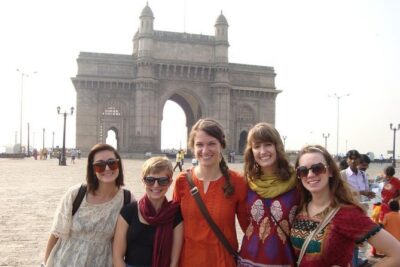
The Gateway of India is an obvious place to begin. Built as a ceremonial arch facing the harbor, it gives you an immediate sense of Mumbai’s position as a major port and meeting point. The broad waterfront setting also makes this one of the easiest places to grasp the city’s scale.
The Taj Mahal Palace Hotel beside it adds a second kind of history. Its ornate exterior and long association with the city give the area a mix of ceremony, old wealth, tourism, and daily public life. You can appreciate the contrast between the formal architecture and the constant movement around the waterfront.
This opening stop is likely to be more visual than museum-like. Your guide can provide the background, but the value comes from seeing the relationship between the gateway, harbor, hotel, and southern Mumbai streets. If you want a quiet start, this may feel busy. If you want a strong first impression, it delivers.
Kala Ghoda’s galleries, library, and museum quarter
Next comes Kala Ghoda, one of the most rewarding parts of the day for anyone interested in architecture and art. The district is known for colonial buildings, museums, and galleries, so you get a chance to see Mumbai as a cultural center rather than only a port or business city.
The route includes the Chhatrapati Shivaji Maharaj Museum, Sassoon Library, and Jehangir Art Gallery. Each offers a different angle. The museum gives the area a formal cultural anchor, the library adds a handsome historic building, and the gallery connects the district with modern artistic life.
Do not expect to spend hours inside every institution. The tour has several major stops still ahead, and the supplied details do not promise extended visits to each one. Instead, treat Kala Ghoda as a chance to walk or pause around a notable quarter while your guide explains what makes its buildings and institutions important.
I especially like this section for first-time visitors who want more than a checklist of monuments. It gives you a better sense of Mumbai’s public culture and its colonial-era architecture. If art is your main interest, ask your guide how much time is possible here before the day begins.
Oval Maidan and Rajabai Clock Tower
The Oval Maidan opens up the city after the tighter streets of the Kala Ghoda area. This large open space gives you a clear view toward some of Mumbai’s most striking Gothic Revival buildings.
The Rajabai Clock Tower is the visual star. Its detailed design and height make it easy to understand why this part of the city is prized by architecture fans. You do not need to be an expert to enjoy it. Look for the contrast between the open ground, the vertical tower, and the older institutional buildings around it.
This is a good place for your guide’s commentary because architectural details can be easy to miss from a passing car. Depending on traffic and timing, you may have more of an exterior viewing experience than a long stop. That is not a flaw, but it is worth knowing if you hope to tour every building you see.
A few more Mumbai tours and experiences worth a look
- Private Full-Day Mumbai Sightseeing Tour with Dharavi Slums
★ 5.0 · 338 reviews - Private Full-Day Mumbai Sightseeing & Dharavi Slum Tour
★ 4.9 · 272 reviews - Ultimate Mumbai Full Day: Sights, Bollywood Dance, Lunch & Spices
★ 5.0 · 201 reviews - Private Full-Day Mumbai City Tour with Elephanta Caves Excursion
★ 5.0 · 113 reviews
Horniman Circle and the Asiatic Society Library
Horniman Circle brings another view of Mumbai’s formal commercial center. The circular layout and surrounding architecture show a planned side of the old city, with handsome facades framing an urban public space.
The Asiatic Society Library is especially useful as a landmark because it represents Mumbai’s long tradition of scholarship and public institutions. The stop adds variety after the Gothic buildings around the Oval Maidan. Instead of seeing one style repeated all day, you move through several kinds of civic architecture.
I would listen closely here to the guide’s explanation of how the districts developed. The buildings are easier to appreciate when you understand their role in the city, not just their appearance. This is also a stop where a private tour helps, since you can ask for clarification instead of relying on a large group’s fixed commentary.
Chhatrapati Shivaji Terminus, Mumbai’s grand railway landmark
Chhatrapati Shivaji Terminus, often called CST, is one of the day’s essential sights. It is a UNESCO World Heritage Site and a remarkable example of Gothic Revival architecture used for a working railway station.
The building’s importance comes from the mix of decoration and daily use. This is not a silent monument separated from city life. It is a transportation hub, so you see grand design serving an active urban purpose. That contrast helps explain Mumbai better than a polished historic building viewed in isolation.
Give yourself time to look upward and outward. The stonework, towers, arches, and overall scale are easy to underestimate if you only snap a quick photograph from the road. Your guide can help identify the details that make the station special.
At the same time, do not expect the station to feel calm. Its function means noise and crowds are part of the setting. For me, that is part of the point, but visitors seeking a slow architectural visit may find this stop hurried.
Crawford Market and the city’s everyday color
Crawford Market changes the mood again. Here, the focus moves from grand public buildings to commerce, food, and the everyday business of a major city.
You can expect a lively atmosphere and colorful local flavors. The value of a guided stop is that you have someone beside you to explain what you are seeing and help place the market within Mumbai’s daily life. It is less polished than the museum district, which is exactly why it adds something important to the day.
The market may not suit you if you dislike noise, crowds, or a fast-moving urban setting. You should also keep personal spending separate from the tour price, since personal expenses are not included. Still, even a short visit can give you a stronger sense of Mumbai than another exterior monument would.
Marine Drive and the Queen’s Necklace
The drive along Marine Drive provides a welcome change of pace. The road curves beside the Arabian Sea, offering broad views and a chance to see one of Mumbai’s best-known public spaces.
Marine Drive is also called the Queen’s Necklace, a name linked to the curve of lights along the shore. You will likely value this part of the route as a visual pause after the tighter streets and busy market. It gives you room to look across the water and understand the city’s relationship with the coast.
This is mainly a drive and viewpoint experience rather than a long seaside outing. The tour still has Mani Bhavan, Malabar Hill, Antilia, and Dhobi Ghat ahead. Enjoy the view, take your photographs, and use the break to ask your guide about the neighborhoods along the route.
Mani Bhavan and Gandhi’s Mumbai years
Mani Bhavan is one of the most meaningful stops for anyone interested in Mahatma Gandhi. It was his former Mumbai residence and is now a museum devoted to his life and work.
Unlike the major architectural landmarks, this visit brings the day down to a personal scale. You are seeing the place connected with Gandhi’s time in the city, not simply another grand civic building. That makes it a useful counterpoint to the Gateway of India, CST, and the colonial districts.
The museum is also a good reason to choose a private guide. A guide can help you connect the building with Gandhi’s wider role and explain why this particular residence matters. The supplied experience details do not specify how long you stay inside, so expect the timing to depend on traffic, your hotel location, and the pace of the rest of the day.
For me, Mani Bhavan is one of the stops that gives the tour emotional weight. It is quieter in subject and more intimate in feel than the city’s large monuments.
Malabar Hill, Banganga Tank, and the Hanging Gardens
Malabar Hill offers a different side of Mumbai, with elevated city views and two distinct points of interest. The ancient Banganga Tank brings a religious and historic setting, while the Hanging Gardens provide a viewpoint over the city.
These stops help break up the architectural focus of the morning. Banganga Tank gives you a place connected with older local traditions, and the gardens give you a chance to look out across Mumbai rather than only at individual buildings.
The views can be one of the best reasons to keep Malabar Hill in the plan. You see how densely the city is arranged and how the coast shapes its neighborhoods. The exact clarity of the view will naturally vary, and the tour does not promise a particular visibility level, but the location itself adds useful perspective.
If you are especially interested in Banganga Tank, ask your guide for context rather than treating it as a quick photograph. Its value is not only visual. It helps show the older cultural layers that remain within modern Mumbai.
Antilia and Dhobi Ghat, two very different Mumbai sights
The drive past Antilia offers a glimpse of modern private wealth. This 27-story private residence belongs to business tycoon Mukesh Ambani and is an unusual sight in a city filled with public landmarks.
You do not visit the residence, so this is a drive-by view. Still, it creates a sharp contrast with the historic buildings earlier in the day. Mumbai can place extreme wealth, working neighborhoods, old institutions, and crowded public spaces close together, and this brief stop helps make that contrast visible.
Dhobi Ghat brings the focus back to work and community. It is known as the world’s largest open-air laundry, and seeing it from the tour route gives you a glimpse of a distinctive working district.
Again, this is not presented as a hands-on visit or a long guided walk through the laundry. You are seeing and learning from the route. I would pay attention to the guide’s explanation and avoid treating an active workplace as a stage set. The point is to understand the scale and character of the operation, not simply collect a striking photograph.
What the $82 price includes
At $82 per person, this is not the cheapest way to see Mumbai. It can still be a fair value if you want private transport and a guide for the full eight hours.
The price includes hotel pickup and drop-off, and the activity information also allows pickup from the Mumbai airport. You get an air-conditioned vehicle, an English-speaking guide, entrance, bottled water, parking fees, fuel, taxes, and tolls. Those bundled costs matter in a city where a day of driving can involve many small charges.
The private format is the biggest value point. You are paying for a custom-feeling day rather than joining a large group with a fixed pace. You can ask questions directly, and the guide can explain the city in a way that fits your interests.
Personal expenses are not included. Plan to pay separately for anything personal you choose to buy. The information does not specify the vehicle model, the exact entrance sites, or the amount of time inside each attraction, so ask for clarification if those details affect your decision.
Who should book this Mumbai tour
I would recommend this experience to a first-time Mumbai visitor with one full day available. It covers the major southern landmarks and adds several places that are harder to connect on your own, including Mani Bhavan, Banganga Tank, Antilia, and Dhobi Ghat.
It also suits solo visitors. One solo booking described the day as informative and enjoyable, with Abdul Shaikh providing a full account of Mumbai and covering the key sights. A private car can be especially useful when you do not want to solve transport and route planning alone.
This is a good fit for couples, families, and small private groups who value comfort and broad coverage. The English-only guide format makes it less suitable if you need another language.
You might prefer a slower, specialist tour if you want to spend most of the day inside museums, focus only on architecture, or explore markets on foot. This is a city overview with meaningful stops, not an in-depth visit to every attraction.
Timing, flexibility, and practical expectations
The tour lasts eight hours, but that does not mean eight hours of uninterrupted sightseeing. Driving between districts takes time, and Mumbai traffic can influence the order of stops. The sequence may vary according to your hotel location.
Start with comfortable walking shoes and keep your schedule afterward reasonably open. The tour includes many locations, so you will want to move efficiently rather than linger at every building.
Free cancellation is available up to 24 hours before the activity for a full refund, and you can reserve now and pay later. Starting times depend on availability, so check the available slot before you commit to other plans.
The current score is 5 out of 5 from four submitted ratings. The strongest praise centers on the guides, especially Abdul Shaikh’s city history and attraction coverage and Mr. Anas’s professional, gentle manner. Those details matter because the guide’s explanations are what turn a fast sightseeing circuit into a useful introduction to Mumbai.
Should you book it?
Book this tour if you want to see a large share of Mumbai in one protected, organized day. The private car, hotel or airport pickup, included transport costs, and broad route make it a strong choice for first-time visitors and solo sightseers.
Skip it if your priority is a slow museum day, extended market time, or independent wandering. The route is ambitious, and traffic may keep some stops brief.
For most people with only one day in Mumbai, I think the balance is good. You get major landmarks, everyday city life, Gandhi’s Mumbai, coastal views, and useful local explanation in one day, with the comfort of a private vehicle.
FAQ
How long does the Mumbai city tour last?
The tour lasts eight hours.
Is hotel pickup and drop-off included?
Yes. Hotel pickup and drop-off are included, and pickup from the Mumbai airport is also available.
Is the tour private?
Yes. This is a private group experience.
What language does the guide speak?
The live tour guide speaks English.
Is transport provided during the tour?
Yes. Sightseeing takes place in an air-conditioned vehicle.
What is included in the price?
The price includes the guide, entrance, bottled water, parking fees, fuel, taxes, tolls, and hotel pickup and drop-off. Personal expenses are not included.
Just added around Mumbai
- Temples & Vineyards: Private Tour to Nashik from Mumbai★ 4.5 · 3 reviews
- Mumbai: Private City sightseeing and Dharavi Slum Tour★ 5.0 · 3 reviews
- Mumbai: Full Day City Sightseeing with Lunch, Car & Guide★ 4.3 · 3 reviews
- Elephanta Island Private Speedboat Tour from Mumbai – 6pax★ 5.0 · 3 reviews
- Mumbai: Elephanta Island and Elephanta Caves Guided Tour★ 4.4 · 3 reviews
- Mumbai Sightseeing Tour by Public Transport with family Lunch★ 5.0 · 3 reviews
- Mumbai by Dawn★ 4.5 · 3 reviews
- Mumbai Dharavi Slum Community Tour★ 5.0 · 3 reviews
Mumbai City Sightseeing Tours, compared.

Private Mumbai Sightseeing Tour (Traveller’s Choice Award Winner)
Read our review →
Highlights of Mumbai Sightseeing Tour: TRAVELLERS CHOICE AWARDED
Read our review →
Highlights of South Mumbai Guided Private Tour in AC Vehicle
Read our review →
Private Mumbai Sightseeing Tour(Travellers Choice Award Winner)
Read our review →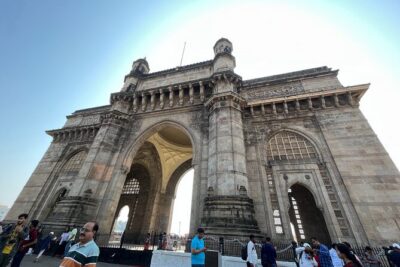
Private Elephanta Caves & Mumbai Sightseeing Tour with AC Car
Read our review →
Private Mumbai Sightseeing Tour with Local English Guide
Read our review →Browse the lists this tour appears in